




Top 17 Most Common Insects in Algiers
Insects, these marvels of nature, distinctively carry roles in our ecosystems - from pollinators to predators. In a place like Algiers, geographical differences drive a diverse swarm of insects! Whether they're aiding in decomposition or acting as pesky invaders, Algiers's environment heavily influences our top 17 most common insects. It's these little creatures that connect us to the enduring cycle of nature.

Most Common Insects
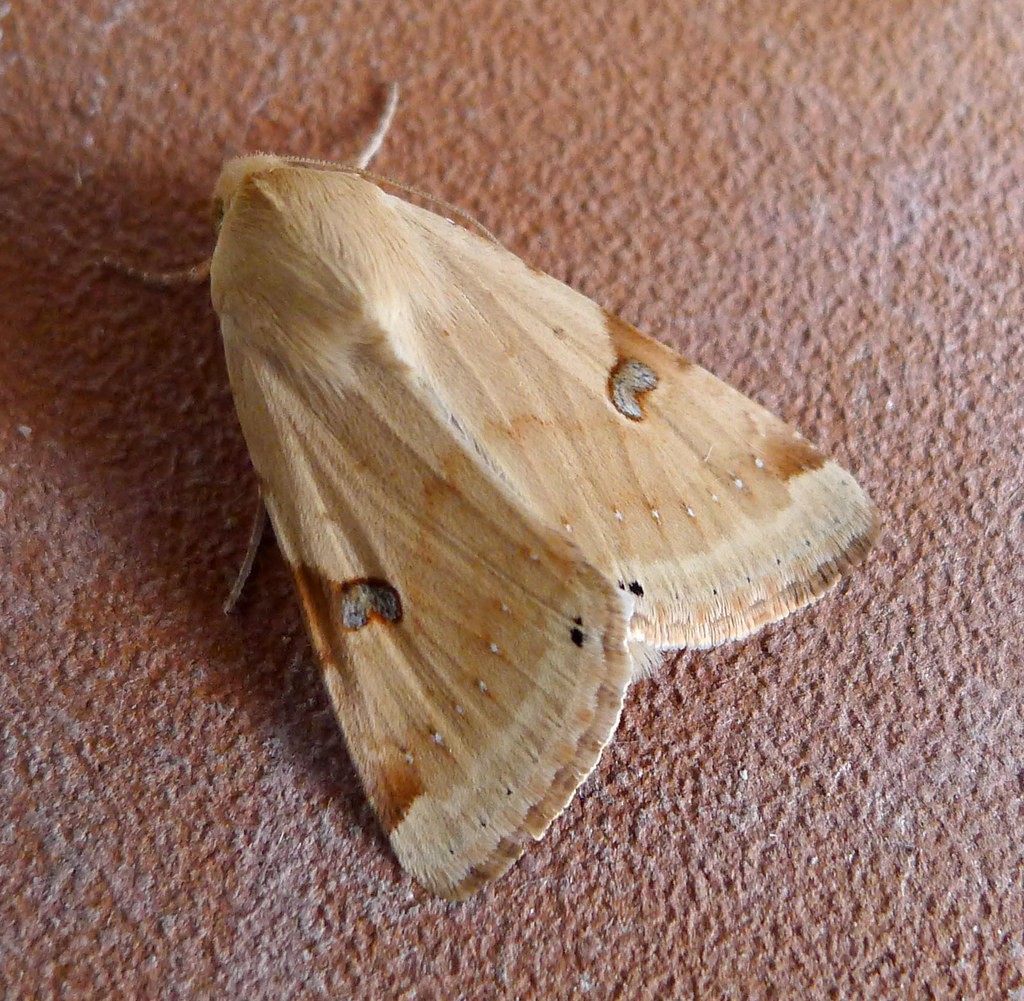
1. Bordered Straw
Heliothis peltigera has a wingspan of 29–40 mm and forewings reaching a length of 16–19 mm. These moths are rather variable in pattern and colour. Forewings are usually greyish ochreous, flushed with pale brown, except the narrow marginal area; lines are brown, indistinct; orbicular stigma is a dark dot. On middle of costa there is a reniform grey dot, with dark brown edge and centre, joined to a brown mark. A brown band appears between outer and submarginal lines. A black dot is present below vein 2 before margin. Hindwings show a broad brown-black marginal border, containing a pale blotch between 2 and 4. Cellspot is dark and fringes are white. Larvae are reddish grey or ochreous, dotted with white. Dorsal and subdorsal lines are dark, while spiracular line is white. This species is quite similar to Heliothis nubigera, that shows less evident kidney markings, and to Helicoverpa armigera, that has lighter colored hindwings. 
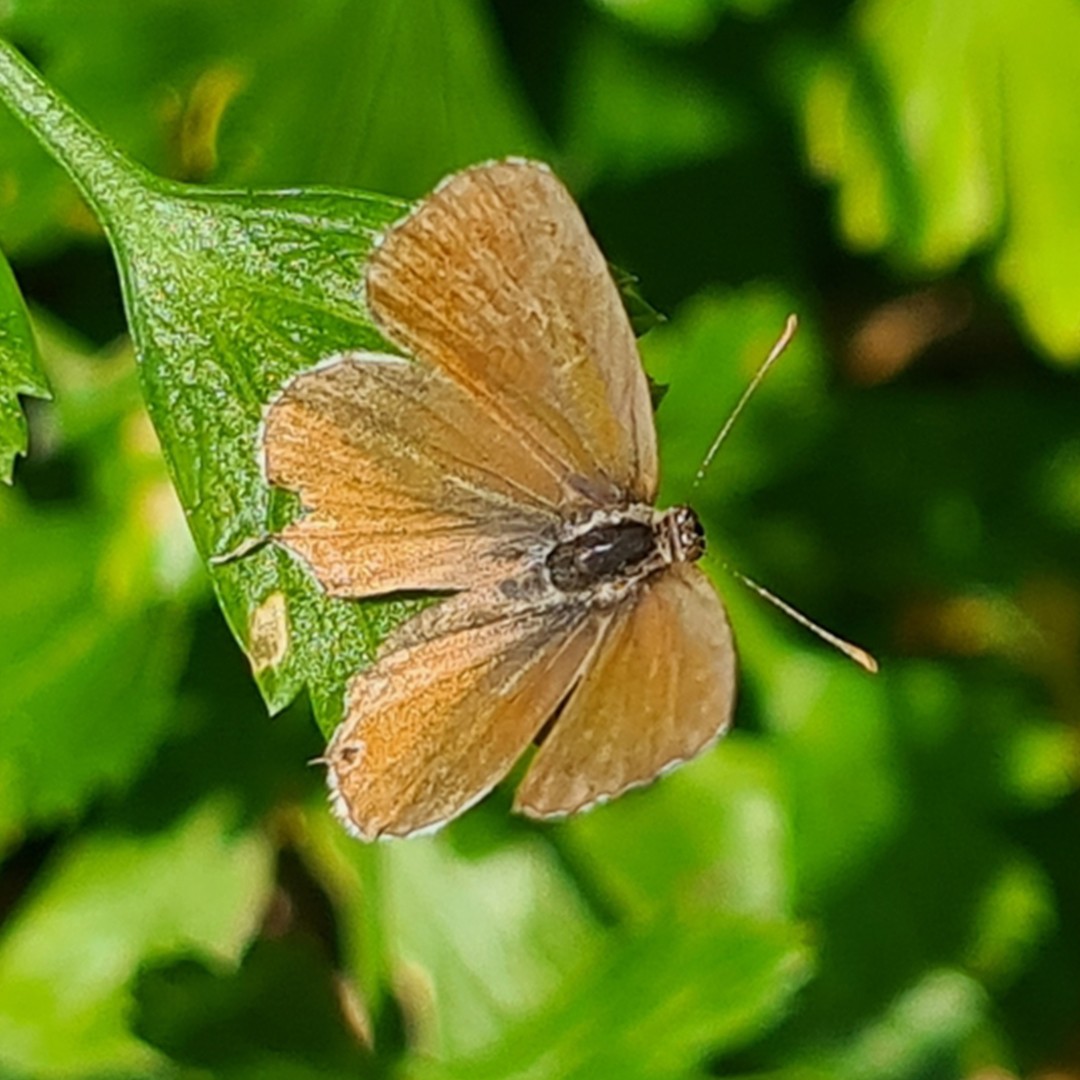
2. Geranium bronze
The adult geranium bronze butterfly's wingspan ranges from 15–23 mm in males and 18–23 mm in females. The wings are brown/bronze with a white border outlining the wings. The underside is a grey-brown with darker bands interlaced with white, creating an intricate pattern. The hindwings contain an eye spot in order to divert predators from attacking. The male and female are similar in appearance.
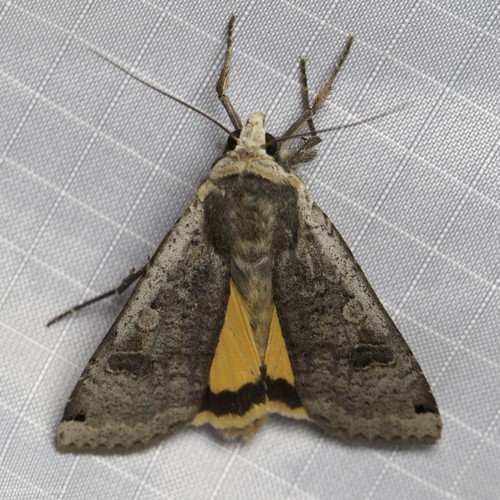
3. Large yellow underwing
An unusually large and heavy species of moth, large yellow underwing (Noctua pronuba) is dreaded by gardeners for the larvae's habit of causing fatal damage to the base of virtually any herbaceous plant. Large migrations occur some years, but how those years are determined is not yet known. Its contrasting colors (yellow-orange and brown) are thought to confuse would-be predators.
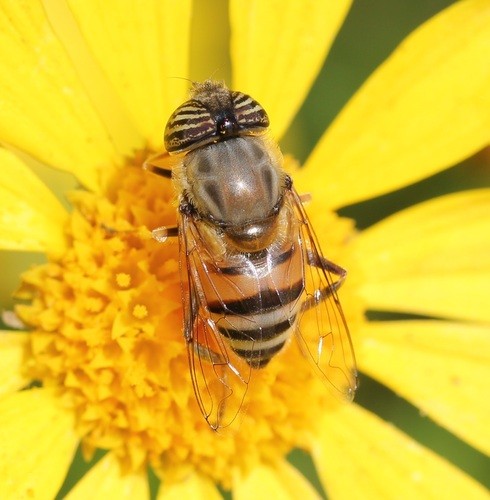
4. Band-eyed drone fly
Eristalinus taeniops can reach a length of 1.09 - 1.4 cm. These hoverflies exhibit a bee-like yellow-black drawing. The thorax has a metallic yellow-brown color and it is densely yellow hairy. Also the scutellum are yellow-brown colored. The abdomen is reddish-yellow, with transversal black bands. The compound eyes have five distinct, vertical, dark stripes. The wings are transparent, usually yellowish-brown at the base, while the halteres are brightly pale yellow colored.
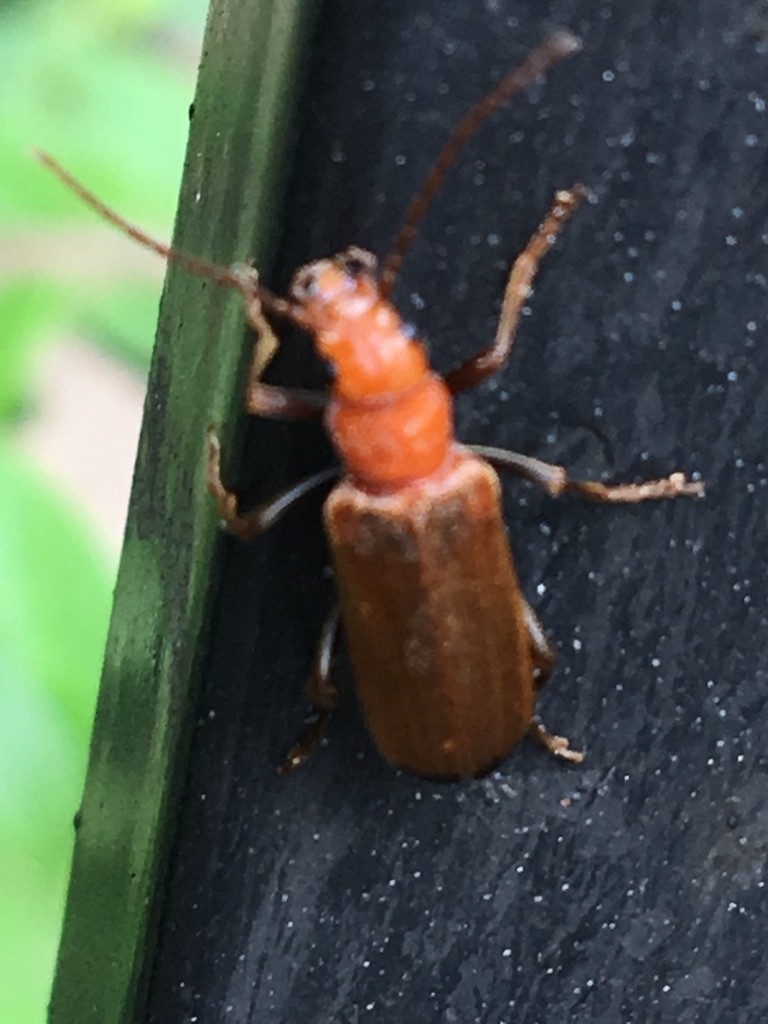
5. Wharf borer
The wharf borer, Nacerdes melanura, belongs to the insect order Coleoptera, the beetles. They belong to the family Oedemeridae, which are commonly known as false blister beetles. Wharf borers are present in all the states of the USA except for Florida. It takes about a year to develop from an egg to an adult. The insect is called the 'wharf borer' because the larval stage of this insect is often found on pilings and timbers of wharves, especially along coastal areas. The adult beetles can be identified via a black band across the end of both elytra, or wing covers. In addition, wharf borers can be distinguished from other members of the family Oedemeridae via the presence of a single spur on the tibia of the forelegs, and the distance between both eyes (twice the length of one eye). Eggs are oviposited on rotten wood where larvae hatch and burrow to feed on rotten wood. Adults do not feed and depend on stored energy reserves accumulated during the larval stage. They are considered to be a pest because they damage wood used in building infrastructures.
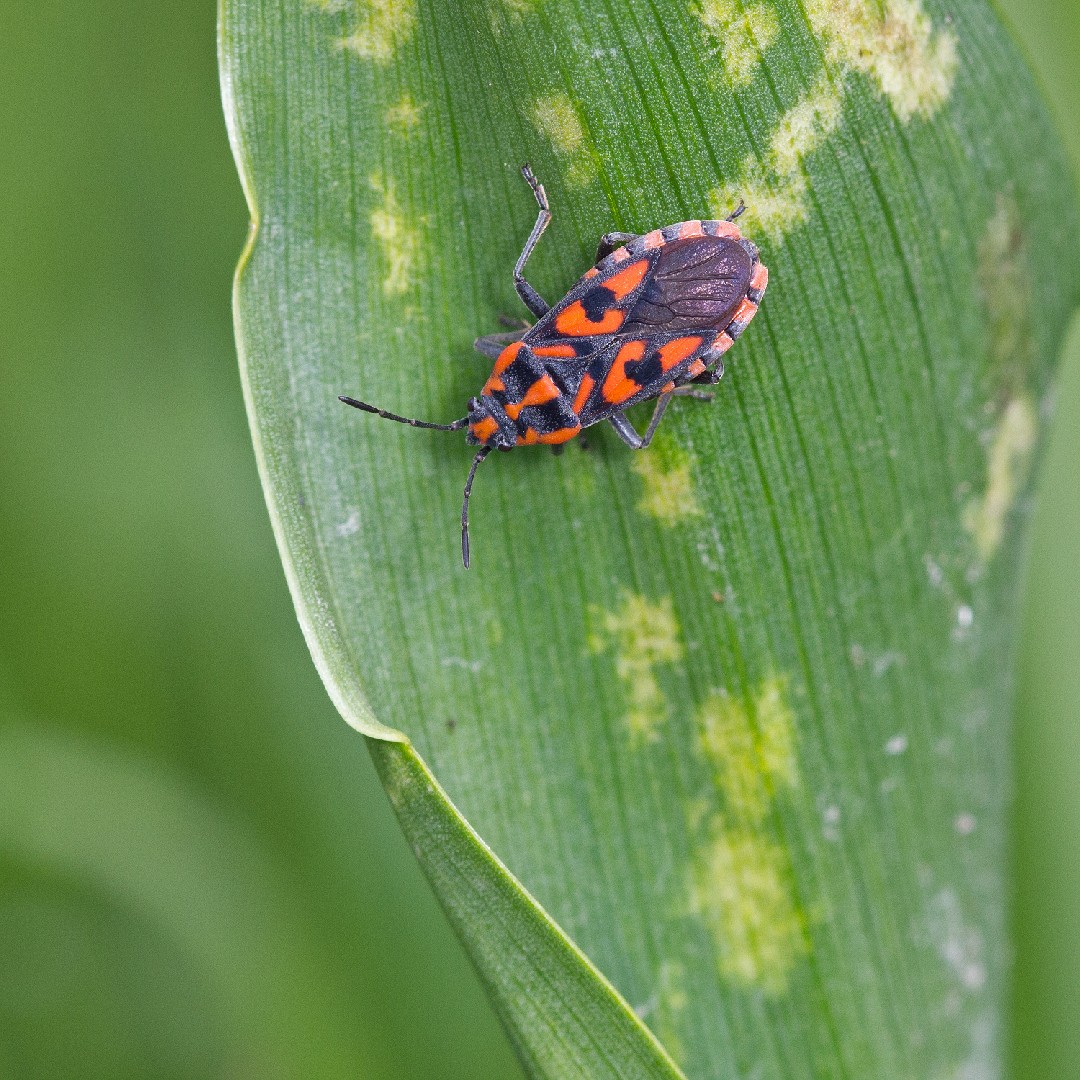
6. Spilostethus saxatilis
Spilostethus saxatilis can reach a length of 0.33–0.49 in. Bodies of these bugs are characterized by black and red markings of different shapes. Pronotum is red, with two broad, irregularly shaped longitudinal black stripes. The hemilytra have black and red markings, while the membrane is black, without white spot. The outer edge of the corium is black. The connexivum is alternately red and black colored. Antennae and legs are black.
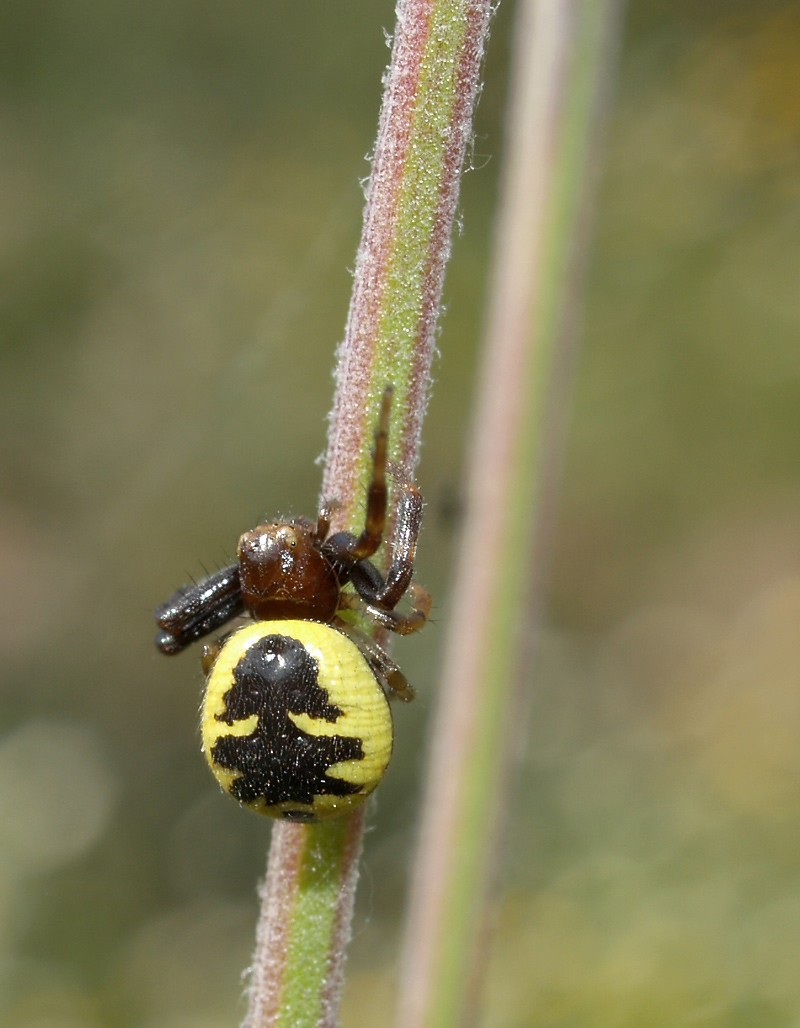
7. Napoleon spider
The adult males reach 2 - 4 mm in length, while females are 7 - 8 mm long. The two pairs of the front legs, used for hunting the flower-feeding insects, are more developed than the rear ones, which have a predominant motor function. Mature males have a black abdomen with two white marks. In mature females, the background colour of the abdomen can be red, yellow or white, with a black pattern which has been noted for a certain resemblance to the silhouette of Napoleon. Prosoma and legs are black or dark brown.
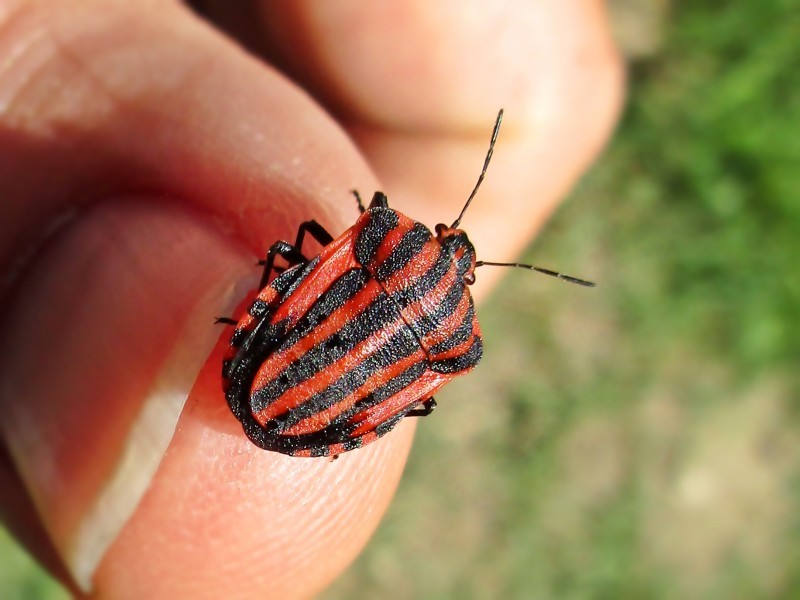
8. North african and sicilian striped shield bug
G. lineatum can reach a length of 8–12 mm (0.31–0.47 in). The body is almost round, with a large shield. The basic color of the upperside of the body is orange yellow, with wide black longitudinal stripes. The pronotum has six black bands. The antennae are black. Also the sides of the abdominal segments (connexivum) are yellow with many small black spots. The legs are mostly orange, which distinguishes it from its relative, G. italicum.
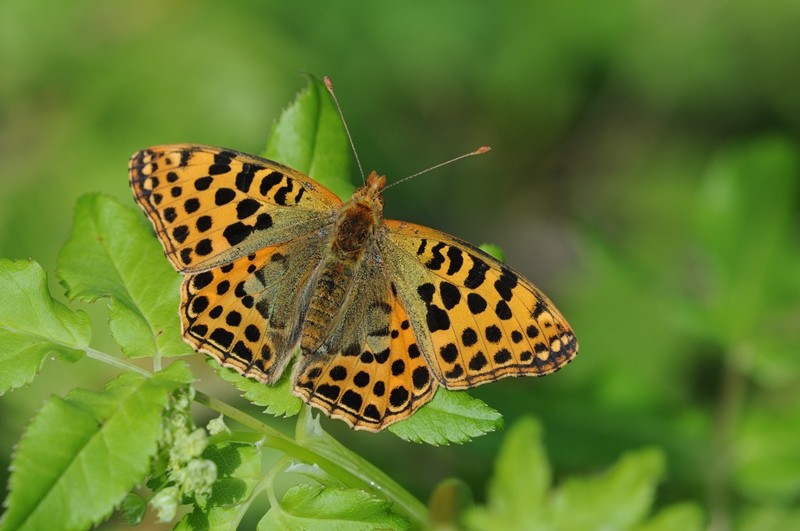
9. Queen of spain fritillary
Issoria lathonia is a medium-sized butterfly with a wingspan of 4 - 4.5 cm. The wings show a deep orange-violet background, with rounded black spots arranged in regular rows and suffused with greenish gray in the females. The underside of the hindwings is decorated with large pearly nacreous spots and it is crossed by a postdiscal row of black eyespots with pearly pupils. Some pearly spots also appear at the apex of the forewings. The caterpillar can reach a length of 3.5 cm. It is grayish brown, with black spots, and relatively short brown spines with white tip, and a double row of dorsal white streaks. The suspended chrysalis is dark brown, with a large white saddle-shaped stain and some smaller ones of the same color, resembling a bird's dropping. The imago is rather similar to Argynnis aglaja, Argynnis adippe and Brenthis daphne, which have the same orange color on the upperside of the wings, but show different markings and spots. Moreover, the underside of the hindwings does not have the large pearly spots characteristic of the queen of spain fritillary.
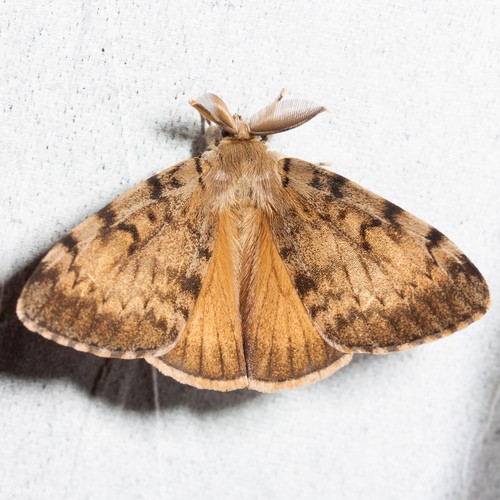
10. Gypsy moth
The gypsy moth (Lymantria dispar) spends nearly its entire life on the same host tree, stripping leaves off of it. However, they will occasionally fly as a colony from one host tree to another. They are commonly recognized by their fuzzy larvae, which have dark bodies with red and blue spots. The adults are usually a pale brown color though.
More







