




Top 19 Most Common Insects in Yerevan
Insects, nature's little soldiers, found in every corner of the varying landscapes of Yerevan, are as diverse as they are beneficial. Their roles in our ecosystem, ranging from valuable pollinators to pesky pests, cannot be overstated. The variety of species is hugely influenced by geography. Our list of the 19 most common insects paints an intriguing picture of Yerevan's entomological panorama, reflecting its distinct environments.

Most Common Insects
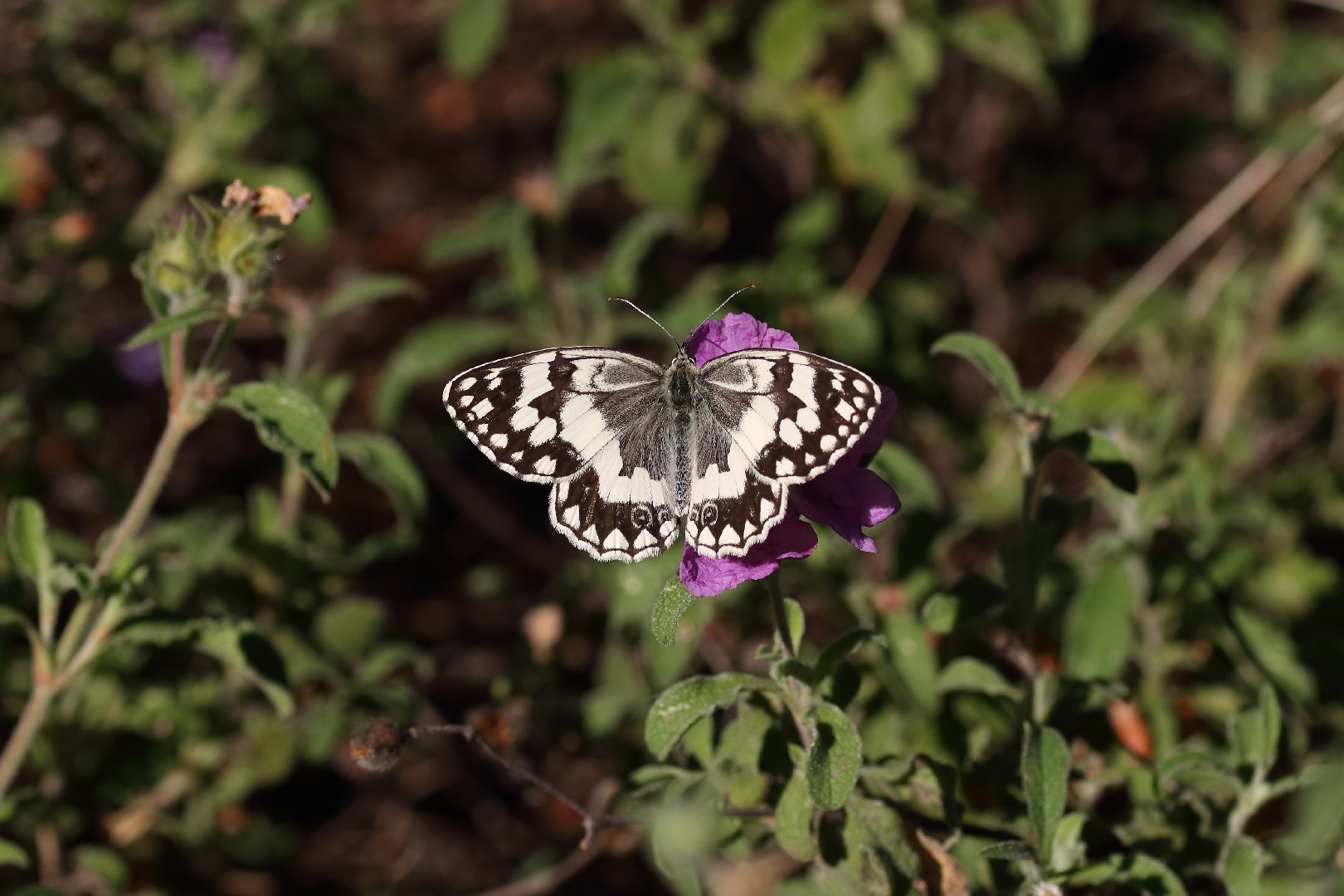
1. Balkan marbled white
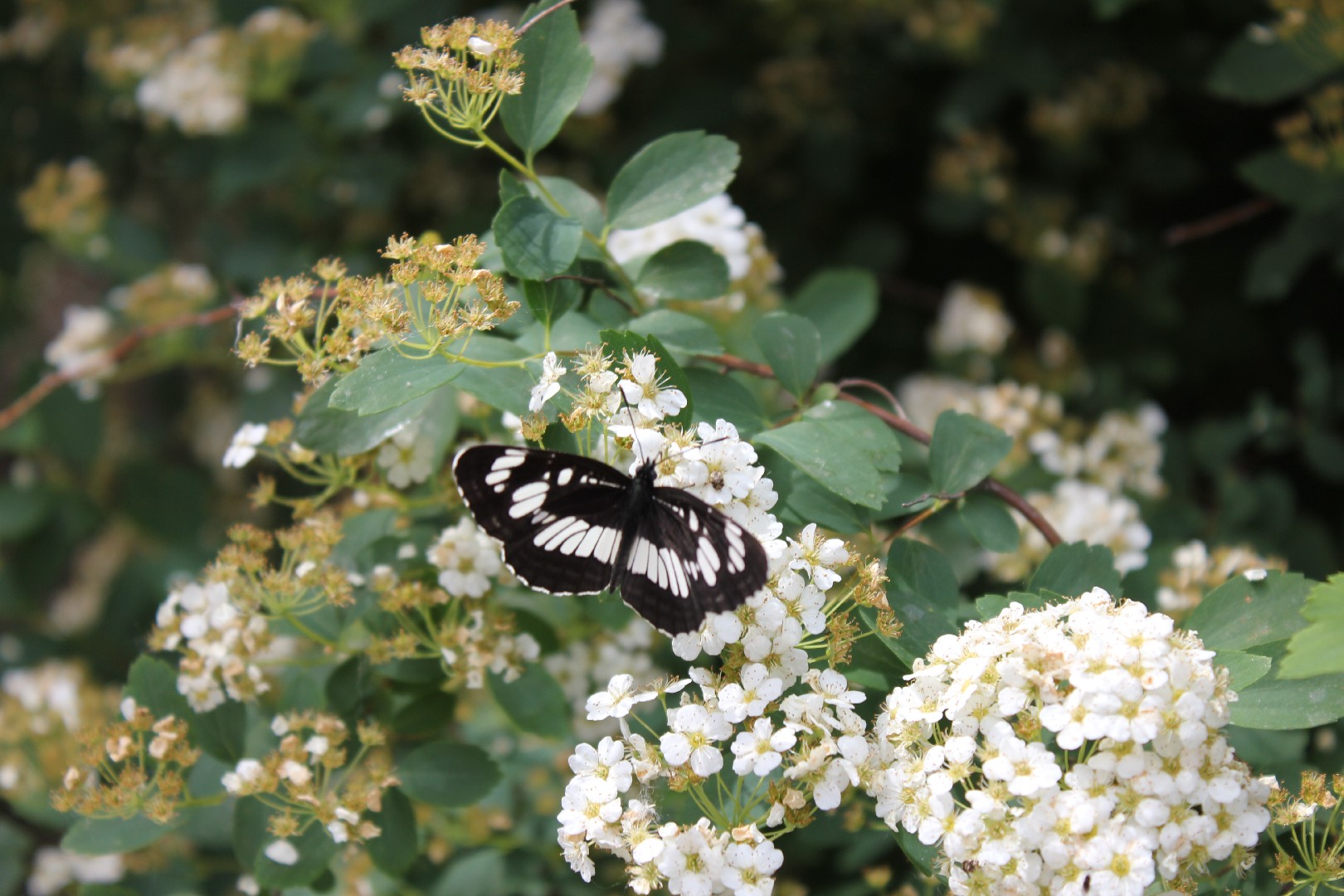
Melanargia larissa, the Balkan marbled white, is a butterfly in the family Nymphalidae. It is found from south-eastern Europe (Croatia, Serbia, Albania, Bulgaria, Greece) and Asia Minor to Transcaucasia and north-western Iran. The habitat consists of dry grasslands, scrubby hillsides and grassy woodland glades. Adults are on wing from mid-May to July in one generation per year. The wingspan is about 52 mm. The nymotypical form larissa Hbn. (38f) is easily recognized by the strongly sooty blackening of the bases of the wings, only the cell having some light places left...the forms allied to larissa can be separated from the japygia- forms only withdifficulty and some arbitrariness. The transverse cell-bar of the forewing is not so close to the centre of the cell, being apparently a little shifted towards the apex of the same, and the median band of the hindwing has a somewhat different position, but also varies rather considerably.The countries inhabited by the forms of larissa are more or less grouped around the Black Sea, while the distribution area of the japygia -forms encircles that of larissa in a wide arch. The larvae feed on Brachypodium species. 

2. Eastern bath white
Pontia edusa is a small to medium-sized migrant butterfly, with a wingspan reaching about 4.5 cm. The upperside of the wings is white, with black stains on the top of the forewing and hindwing. The hindwing undersides have greenish-grey spots. They are greyish-greenish, with black dots and broad yellow stripes, quite similar to the larva of the cabbage butterfly (Pieris brassicae).
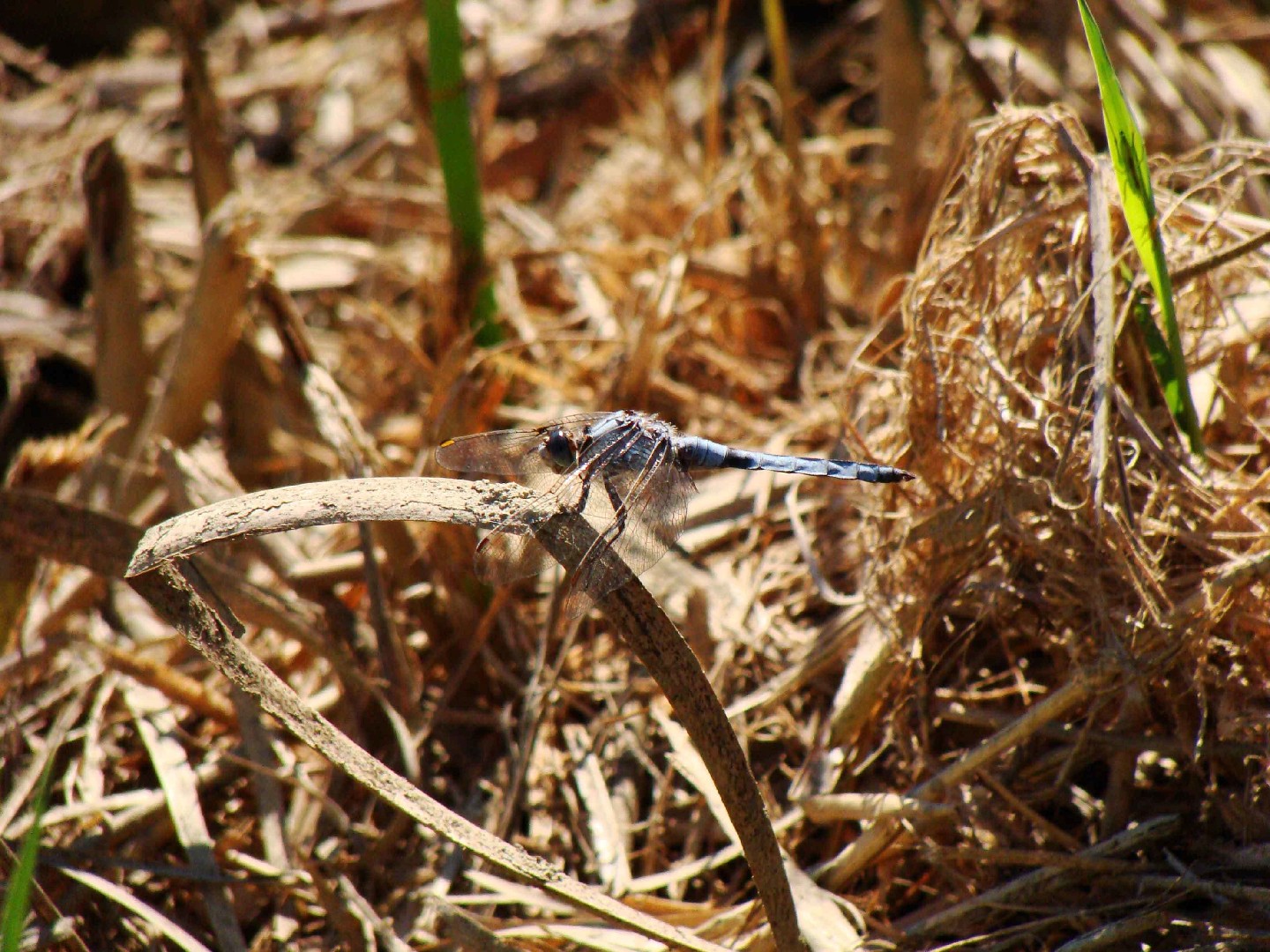
3. Southern skimmer
The adults grow up to 4 - 4.5 cm long. The thorax and the abdomen are pale blue in males, yellowish-brown or greyish-brown in females. Young males are brownish. The abdomen is relatively flattened and shows a thin middorsal black line and distinct points on each segment. The wings are hyaline, with yellow or pale brown pterostigma. The wingspan reaches 7 - 7 cm.
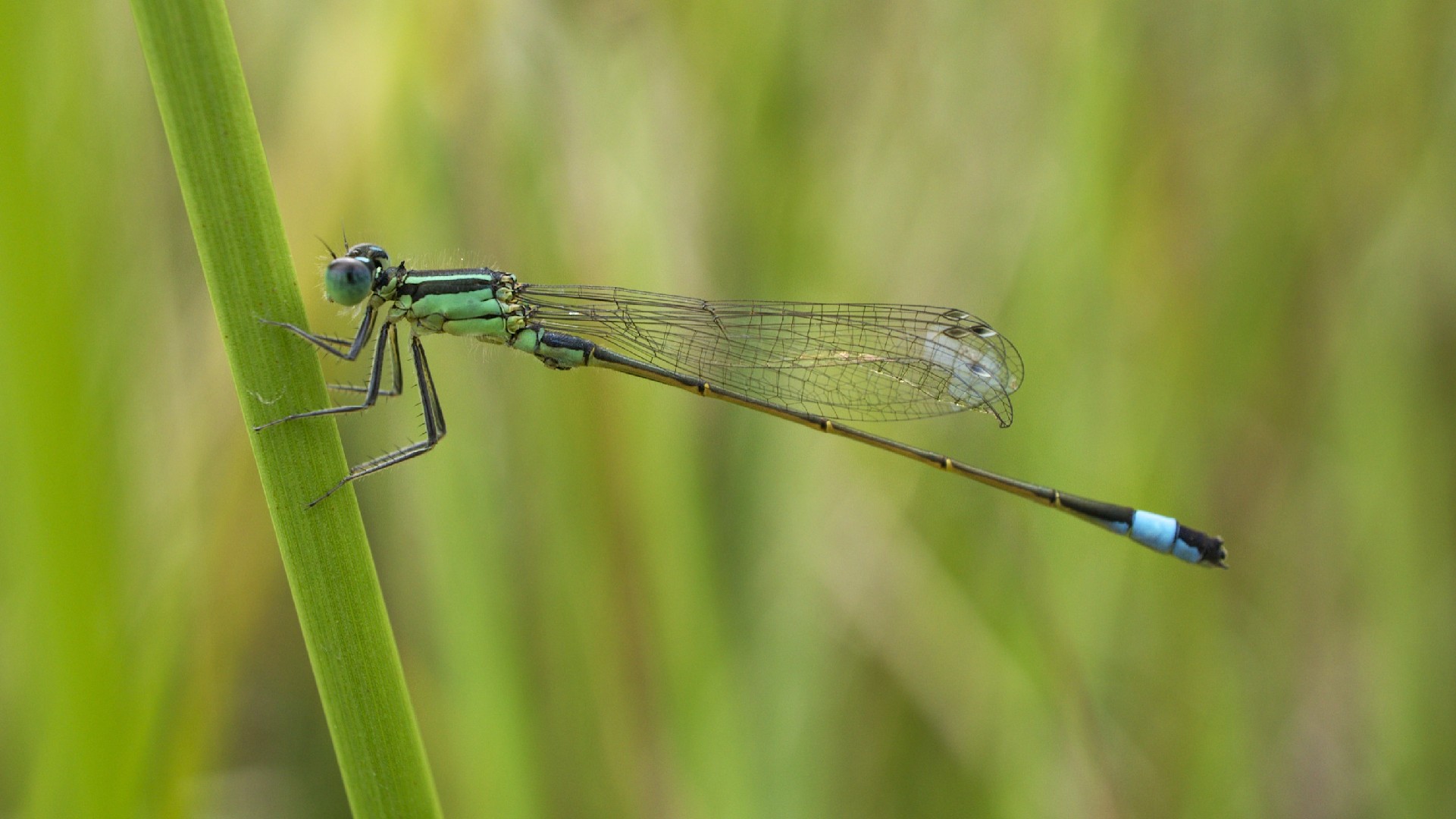
4. Blue-tailed damselfly
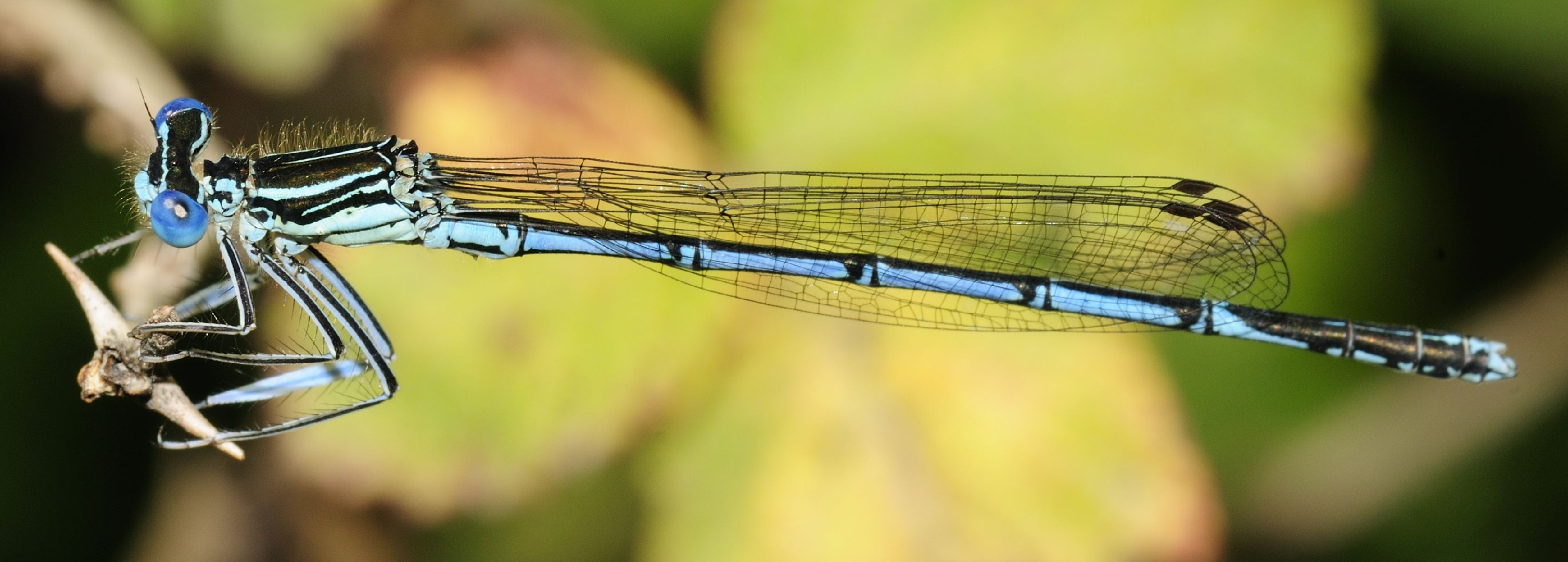
Ischnura elegans can reach a body length of 2.5 - 3.5 cm and a wingspan of about 3.5 cm. Hindwings reach alength of 1.4 - 2 cm. Adult male blue-tailed damselflies have a head and thorax patterned with blue and black. There is a bi-coloured pterostigma on the front wings. Eyes are blue. They have a largely black abdomen with very narrow pale markings where each segment joins the next. Segment eight, however, is entirely pale blue. At rest, the wings of most damselfly species are held back together, unlike dragonflies, which rest with their wings out flat. The thorax of juvenile males has a green tinge. Female blue-tailed Damselflies come in a variety of colour forms.Juveniles may be salmon pink, form rufescens; violet, form violacea and a pale green form. The colour darkens as the damselfly ages. Mature females may be blue like the male, form typica; olive green thorax and brown spot, form infuscans or pale brown thorax and brown spot, form infusca-obseleta.

5. Banded demoiselle
This is a large damselfly with a total length of up to 1.9 in and a hindwing length of up to 1.4 in. Male and female are variable in color and pattern. The male has translucent wings which each have a broad, dark iridescent blue-black spot (or band) across the outer part. On immature dragonflies the spot is dark brown. The body can be a metallic blue or bluish green or a combination of both colours, depending on the time of year and location. The dark wing patch of the male starts at the nodus (the slight dip midway down the upper edge of the wing) but can reach up to the wing-tip in southern races.
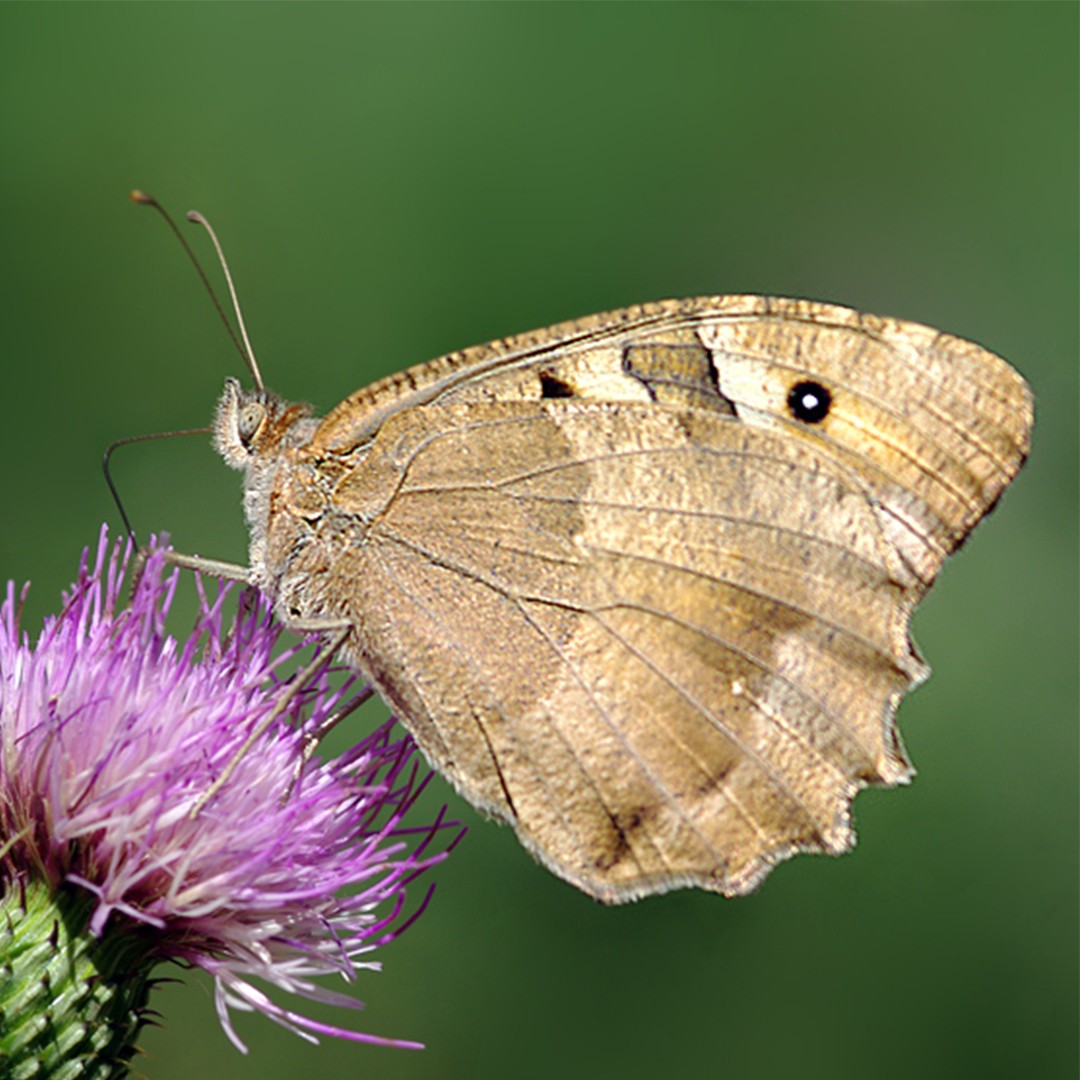
6. The hermit
S. briseis L. (= janthe Pall., daedale Bgstr.) (42b). Very variable in size and markings; recognizable by the flat triangular club of the antenna and the pale costal margin of the forewing. The dark wings are traversed by a band which is usually composed of narrow transverse spots, bearing a distinct apical ocellus and a second similar spot before and somewhat below the middle of the distal margin. Band of the hindwing sometimes shaded. On the underside the male has large dark angular spots at the base of both wings, the female having the hindwing beneath generally uniformly brownish or grey; North France, Germany, Austria, Hungary, and the adjacent districts of Russia. — meridionalis Stgr. (42b) is the South-European form, which is especially common on the Mediterranean coasts of Europe. The white spots composing the band of the forewing are broader than in specimens from Central Europe. — magna Stgr. is the from East Europe, which flies also in some districts of Asia Minor; in size like meridionalis , but the band somewhat broader and purer white, especially on the hindwing. — ab. pirata Esp. (42 f) has the size of the previous, but the band is ochreous ; occurs among white-banded specimens in South and East Europe , and Anterior Asia, being especially large in the last country. — major Oberth. (42 c) is still considerably larger than meridionalis, the band of the forewing being much narrower, and differs at a glance from all the other forms of briseis in the hindwing beneath, on which in the male the dark triangular spot at the middle of the hindmargin is wanting and the dark longitudinal spot above the middle of the cell is quite light green-grey and not sharply defined. This large form is locally not rare in North Africa, in the Aures Mts. and the Kabylie. — hyrcana Stgr. (42 b) is similar to magna, the white band on the upperside being very narrow and the underside very conspicuously variegated ; in Persia and various places of Anterior Asia, especially in the Achal-Tekke country. —fergana Stgr. (42c) is the largest form, which has a rather large white band and in the female a reddish grey underside; from Asia Minor and the Pamir. — turanica Stgr. is nearly as large, the band not being very broad and on the hindwing of the male distinctly tinged with red-brown. — maracandica Stgr. (42 b) , from Samarkand, is a medium-sized form which has very much white, the median band of both wings being very broad and in addition the distal margin of the hindwing being broadly white. — Larva yellowish grey, with a dark dorsal stripe and dark subdorsal lines; two light lateral lines above the spiracles, the stigmata themselves being black; venter light grey; till June on grasses. Pupa brownish yellow, with a darker dorsal stripe. The butterflies from July till September; they prefer chalky soil and love to settle on bare places of the ground and on boulders. The flight is low and hopping in the small northern form, stately, floating and rather fast in tlie large forms from Africa and Asia Minor. The butterfly now and again visits scabious thistles or other composites, keeping the wings tightly closed when resting.
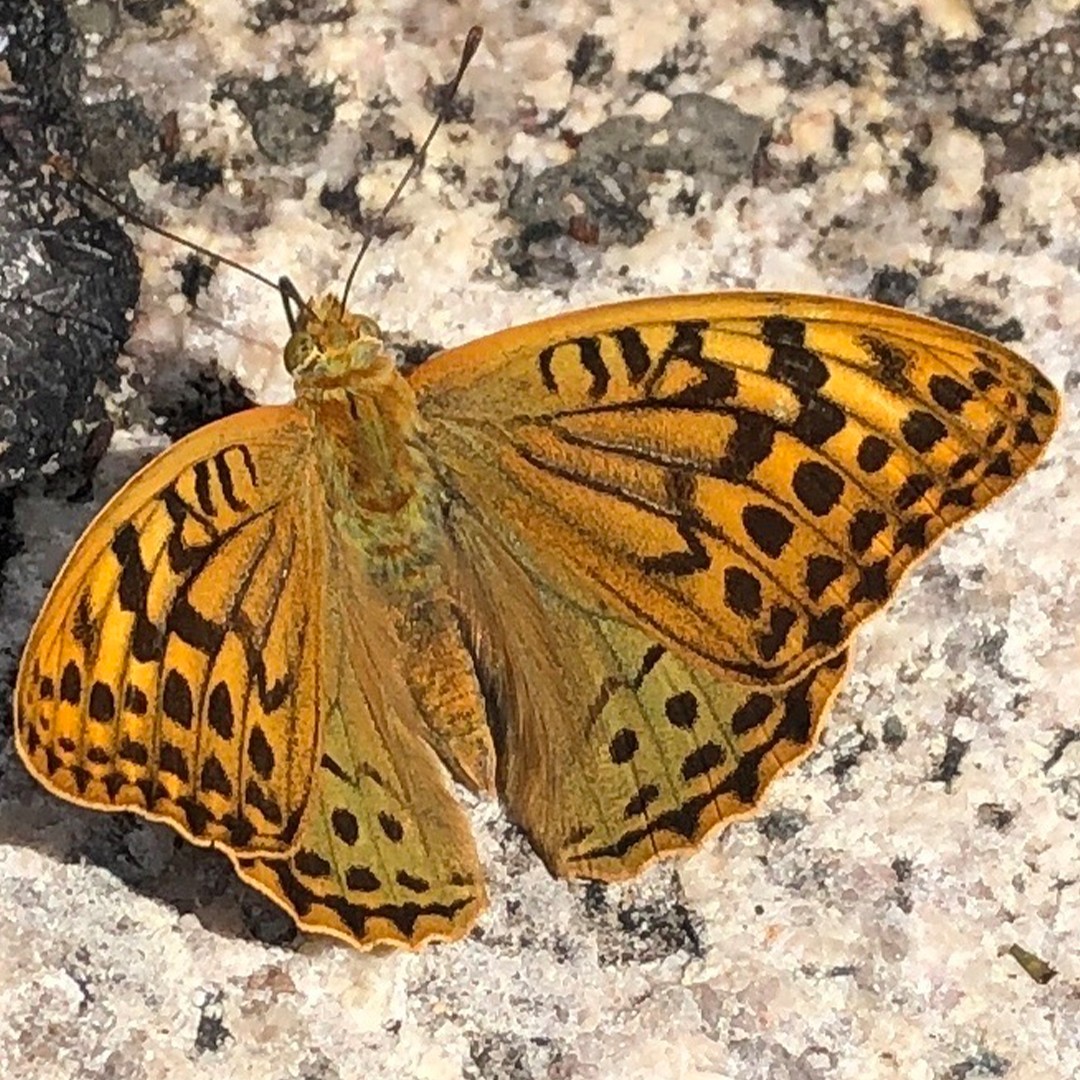
7. Cardinal
The wingspan is 64–80 mm. A. pandora Schiff. (= cinara F., maja Cr.) (71c). The largest European Argynnis. Above strongly recalling valesina, but brighter greenish, densely spotted with black. Beneath quite different, the apex of the forewing and the hindwing bright green, the disc of the forewing fleshy red and spotted with deep black, the hindwing with a few narrow bands, which are more white than silvery and vary strongly in number and development.
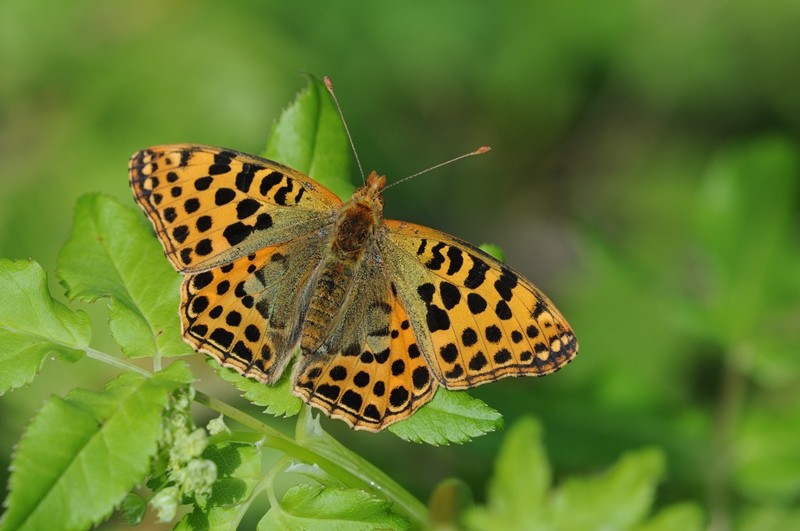
8. Queen of spain fritillary
Issoria lathonia is a medium-sized butterfly with a wingspan of 4 - 4.5 cm. The wings show a deep orange-violet background, with rounded black spots arranged in regular rows and suffused with greenish gray in the females. The underside of the hindwings is decorated with large pearly nacreous spots and it is crossed by a postdiscal row of black eyespots with pearly pupils. Some pearly spots also appear at the apex of the forewings. The caterpillar can reach a length of 3.5 cm. It is grayish brown, with black spots, and relatively short brown spines with white tip, and a double row of dorsal white streaks. The suspended chrysalis is dark brown, with a large white saddle-shaped stain and some smaller ones of the same color, resembling a bird's dropping. The imago is rather similar to Argynnis aglaja, Argynnis adippe and Brenthis daphne, which have the same orange color on the upperside of the wings, but show different markings and spots. Moreover, the underside of the hindwings does not have the large pearly spots characteristic of the queen of spain fritillary.
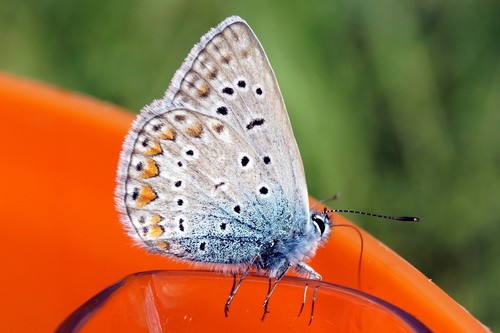
9. Common blue butterfly
Despite its common name, only male specimens of common blue butterfly (Polyommatus icarus) can accurately be described as blue; the females are predominately gray-brown, with only a dusting of blue and a scattering of orange spots. The adults live for only three weeks before dying.
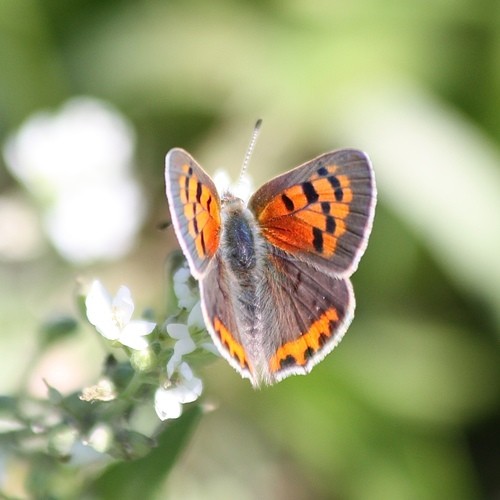
10. Small copper
The upperside forewings are a bright orange with a dark outside edge border and with eight or nine black spots. The hindwings are dark with an orange border. Some females also have a row of blue spots inside the orange border and are known as form caeruleopunctata. The undersides are patterned in a similar way but are paler. The black spots on the forewings are outlined in yellow and the dark colouring is replaced by a pale brownish grey. The hindwings are the same brown/grey colour with small black dots and a narrow orange border. The caterpillars (larvae) are usually green, but some have a purple stripe down the middle of the back and along each side.

More







