




Top 19 Most Common Insects in Bundaberg
Welcome to our list of the top 19 most common insects in Bundaberg. This vibrant state, teeming with diverse insect life, serves as a perfect canvas for biodiversity, with geography playing a key role in this diversity. Insects, both pests and beneficial ones, are crucial players in Bundaberg's delicate ecosystem, highlighting the complex interplay between habitats and their inhabitants. Understanding this relationship helps us appreciate these small yet mighty creatures' roles. Stay tuned for an exciting exploration.

Most Common Insects

1. Blue moon butterfly
Hypolimnas bolina, the great eggfly, common eggfly or in New Zealand the blue moon butterfly is a species of nymphalid butterfly found from Madagascar to Asia and Australia. 
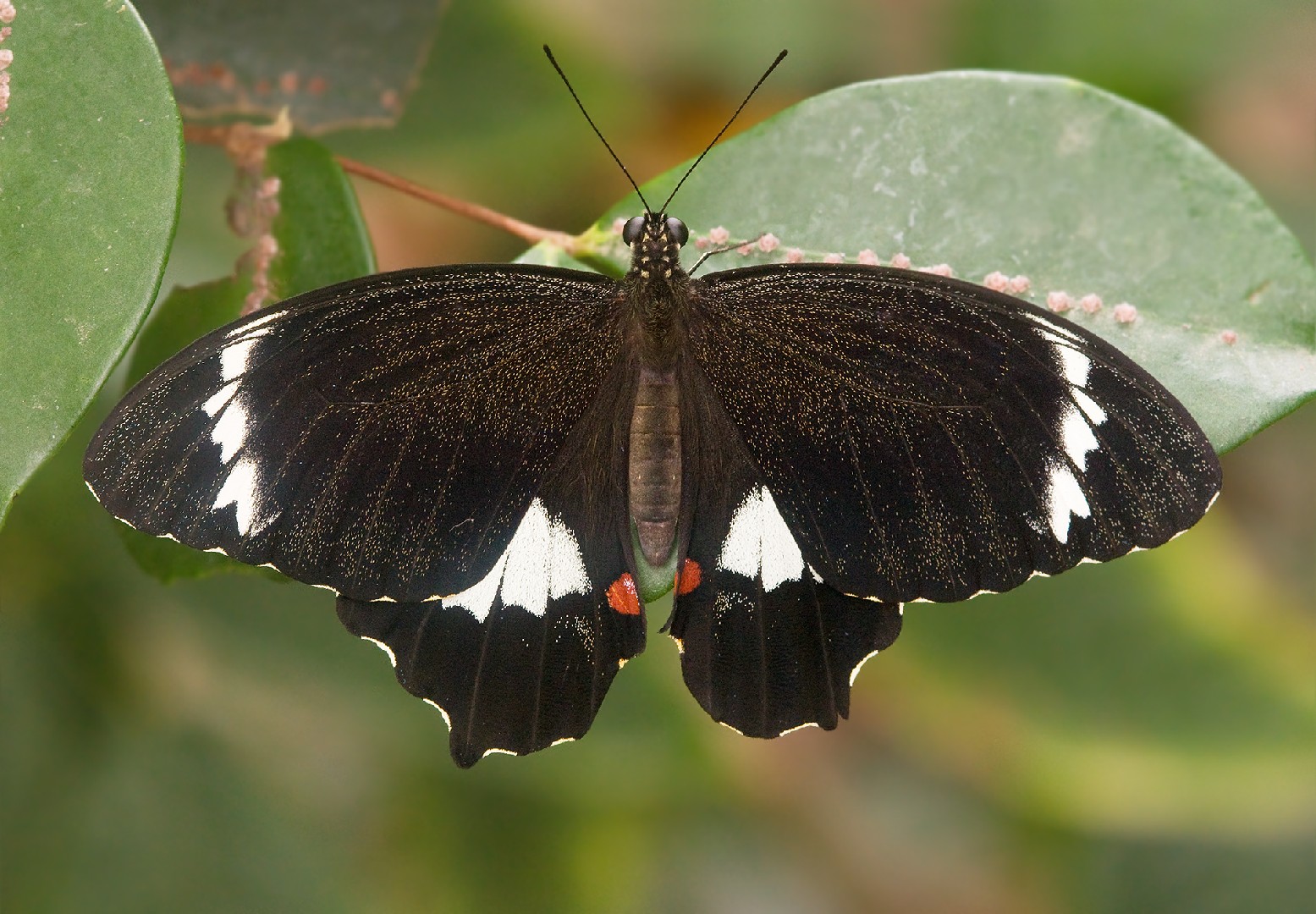
2. Orchard swallowtail
The orchard swallowtail (Papilio aegeus) is a swallowtail butterfly without the long tail. Despite the confusion, it is still a beautiful butterfly that is a combination of black, white, and orange. While they are typically in Australia, they are known to expand their territory to Victoria when citrus trees are abundant. This gives it the secondary name of the Large citrus butterfly.
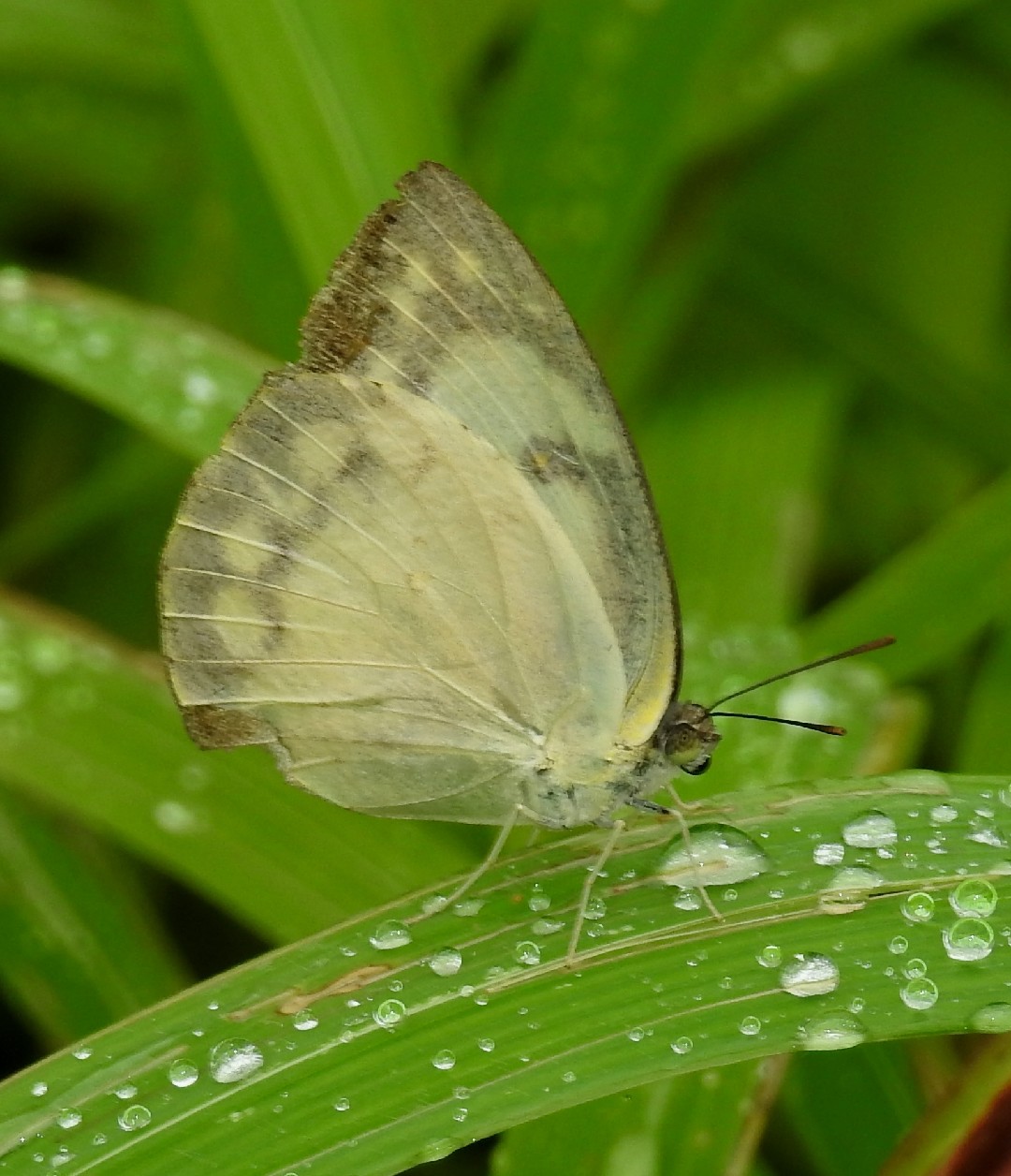
3. Common emigrant
Male. "The upperside of the male is chalky-white, sometimes with a more or less broad and clearly defined basal sulphur-yellow area on both fore and hind wings; this sulphur-yellow colour is at times diffused over the whole surface of the wings, though generally it becomes paler towards the terminal margins. For the fore wing, the whole, or sometimes only the apical half, of the costa narrowly black, this color widened out irregularly at the apex; termen widely black at the apex, the colour narrowed posteriorly. This border in some specimens almost reaches the tornus, in others terminates above vein 4; occasionally it is continued posteriorly by a series of block dots at the apices of the veins. The Hind wing generally are uniform, unmarked, and some specimens bear minute black dots at the apices of the veins. "On the underside the groundcolour is very variable, with white with a slight to strong ochraceous tinge, greenish white or sulphur-yellow. The fore wing is typically without markings, in some specimens with a patch of sulphur-yellow on either side of base of median nervure, in the very yellow examples the tornal area is often widely greenish white, in others (Catopsilia catilla, Cramer) it bears a spot variable in size on the discocellulars. This spot has a pearly centre and an outer reddish line. Many specimens have an irregular angulated narrow discal reddish line (the colour varies in intensity) that runs from the costa obliquely outwards to vein 7, and then obliquely inwards to vein 2, though this line is often absent in specimens that bear the discocellular spot; apex and termen sometimes very narrowly reddish. The hind wing is typically uniform, without markings." Female. "On the female upperside the ground-color varies as in the male, but sometimes it is chalky white at the bases of the wings, with the terminal margins more or less broadly sulphur-yellow. Fore wings always with a round, occasionally quadrate, black discocellular spot variable in size; in some specimens the costa is black only towards the apex of the wing, in others broadly black throughout and opposite the apex of cell so widened out as to touch the discocellular spot. In lightly marked specimens in addition to the discocellular spot, there is only an irregular terminal black band dentate inwardly and widest at the apex of the wing; in others there is in addition a more or less diffuse highly curved macular postdiscal band that extends from the costa obliquely outwards down to vein 7, where it often touches the terminal black band, and thence is continued downward and slightly inclined inwards to interspace 1, getting gradually paler and fainter posteriorly. Hind wing are a series of terminal inter-spacial black spots that vary in size, and in the dark forms coalesce into a terminal black band."
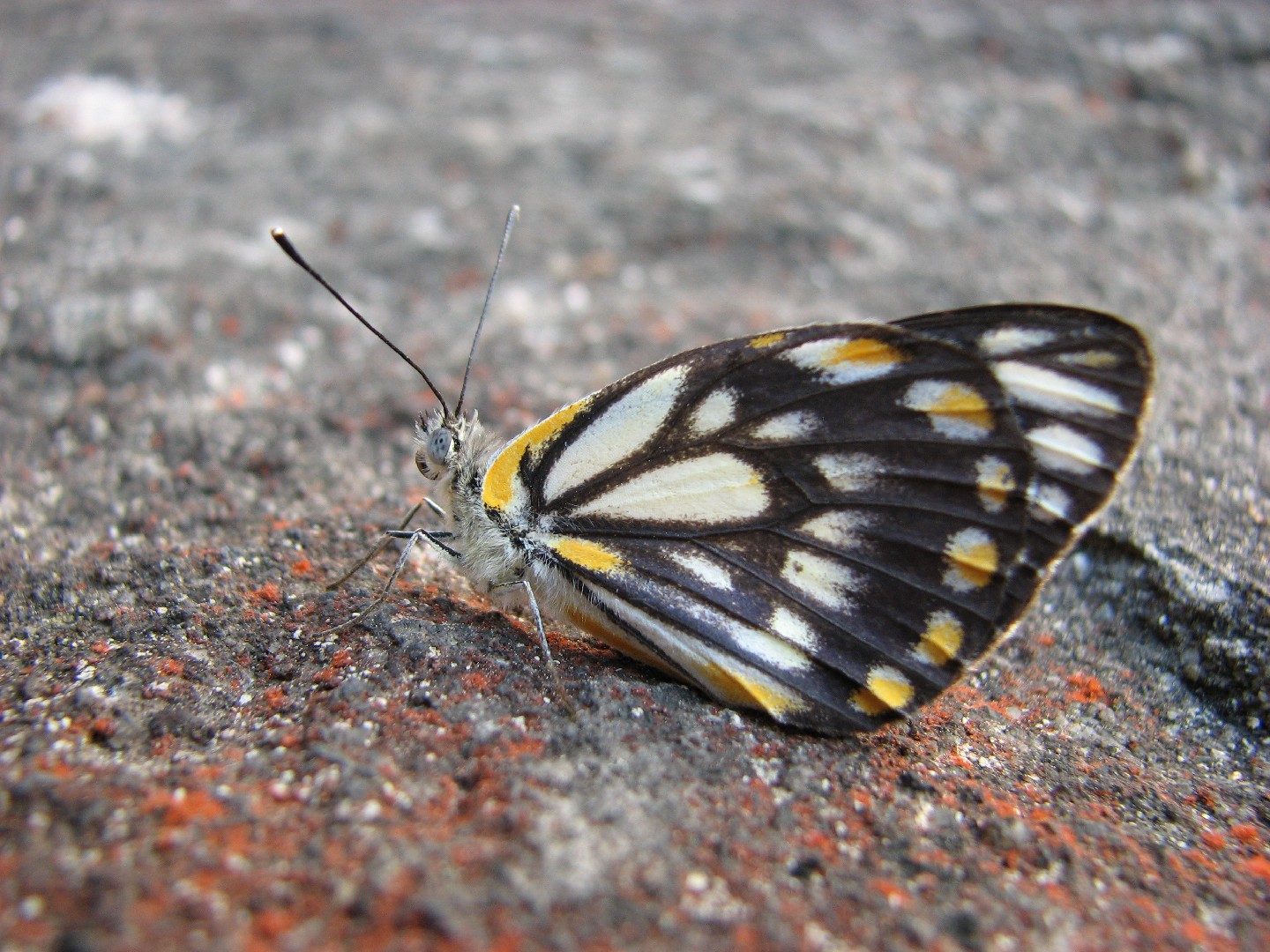
4. Common white
Belenois java (synonymous with Anaphaeis java, Anaphaeis is now seen as subgenus) is a butterfly of the Pieridae family, the whites. Belenois java is scattered in Indonesia and the Australasian region. The image has a wingspan of approximately 5 centimeters in males, and approximately 6 centimeters in females. The butterfly is known as a migratory butterfly.
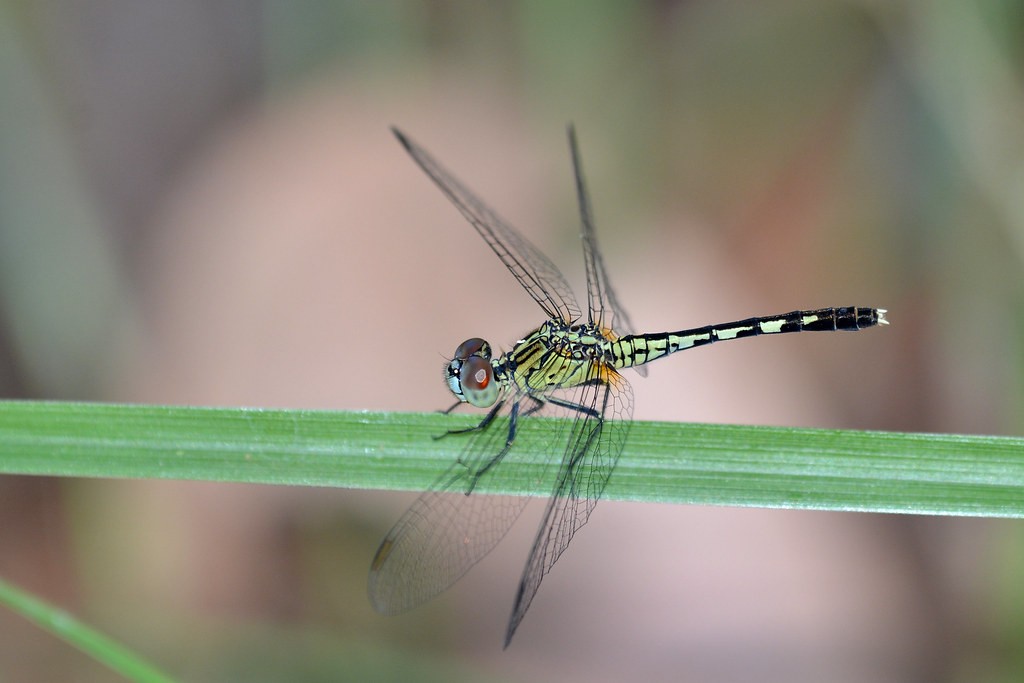
5. Green skimmer
Orthetrum serapia is a medium-sized dragonfly with a wingspan of 60-85mm. Its wings are clear except for a small dark spot at the base of the hindwing. The thorax is greenish to greyish yellow with black markings. The abdomen is black with pale yellow or pale green markings. Orthetrum serapia appears very similar to Orthetrum sabina and can be confused where the range of the two overlap in north-eastern Australia.
6. Orange threadtail
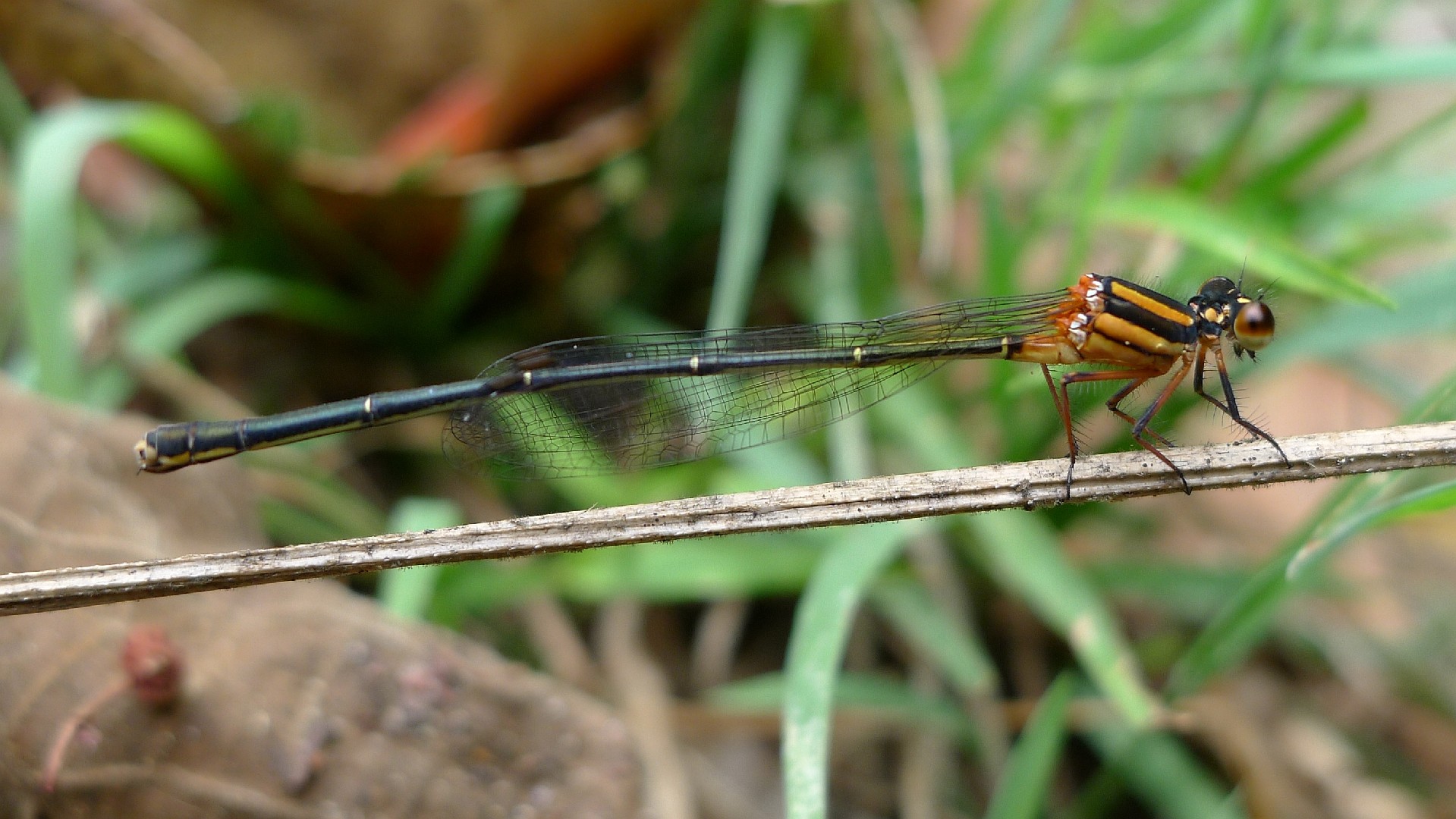
They are medium-sized with a length of around 3.5 cm. Orange threadtails can be found near semi-shaded running water, and usually rest on plants at the water's edge. Orange threadtails may be seen all year round. When at rest, Nososticta damselflies hold their wings closely folded up vertically over their thorax. The male threadtails have an orange-yellow thorax with black patterns. Their abdomen is narrow, black in colour with yellow strips. There is a brown yellow colour at the base of their wings. Females are the same size as the males. They are pale brown in colour and have the same black patterns as the males.
7. Red and blue damsel
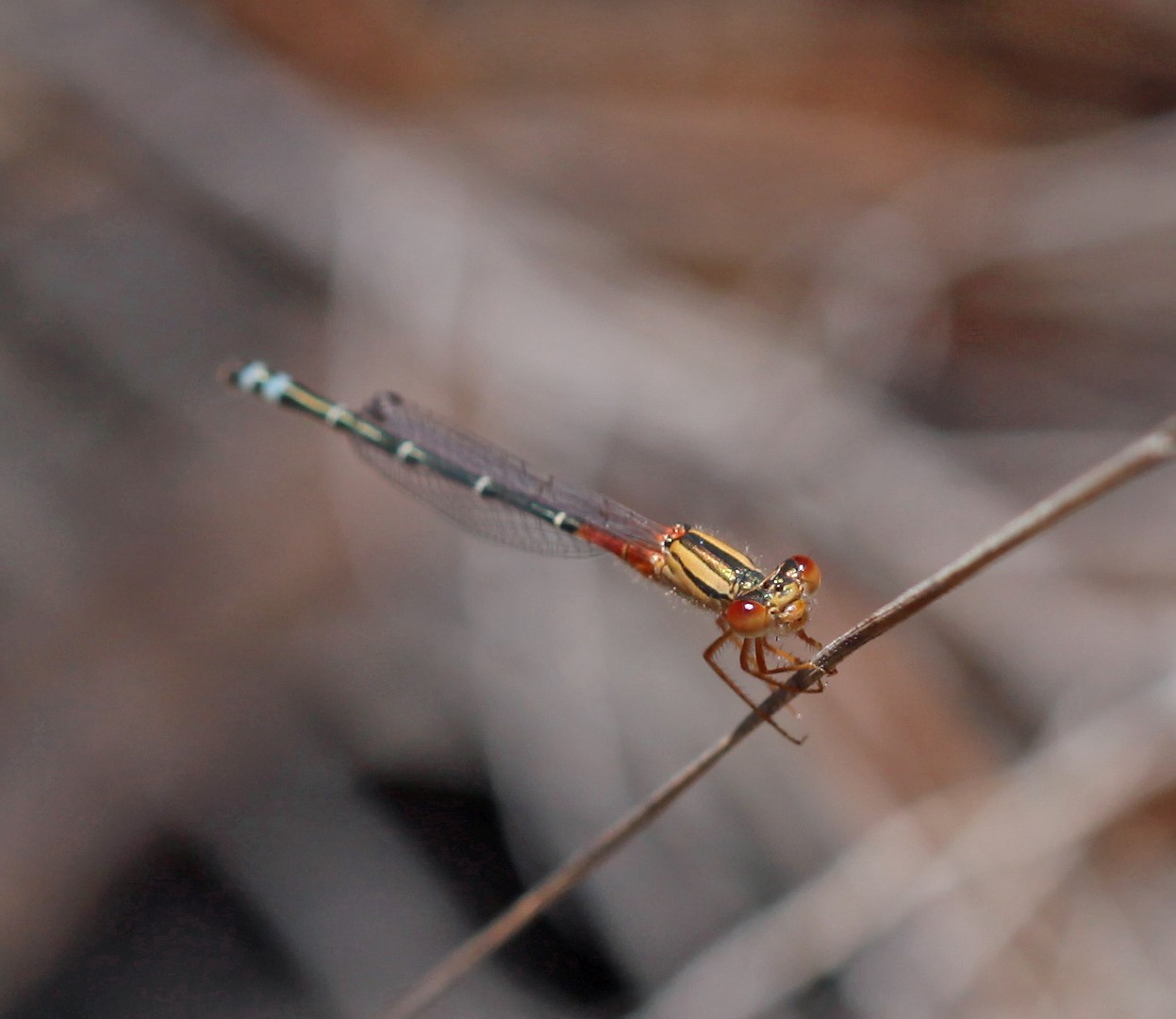
The face and thorax are bright red. The abdomen is pale in colour and 2 - 2.5 cm long. The female and male are similar in colour.
8. Yellow palm dart
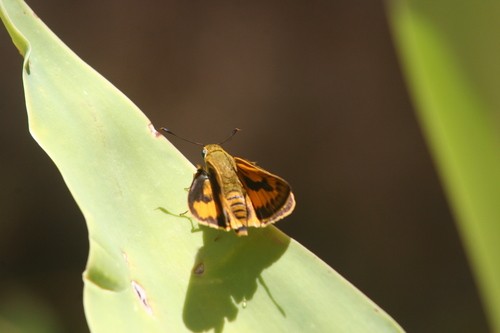
The wingspan is about 4 cm.
9. Small green banded blue
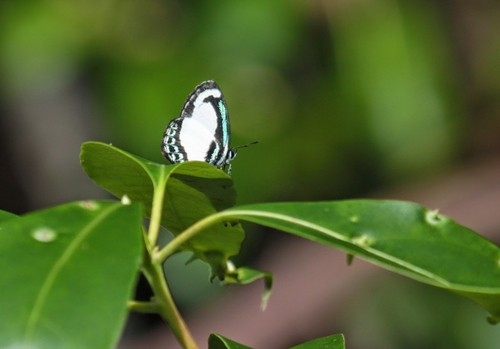
The wingspan is about 30 mm. Adult males are blue with a large white patch on the hindwings. Females are black with a large white patch on the wings.
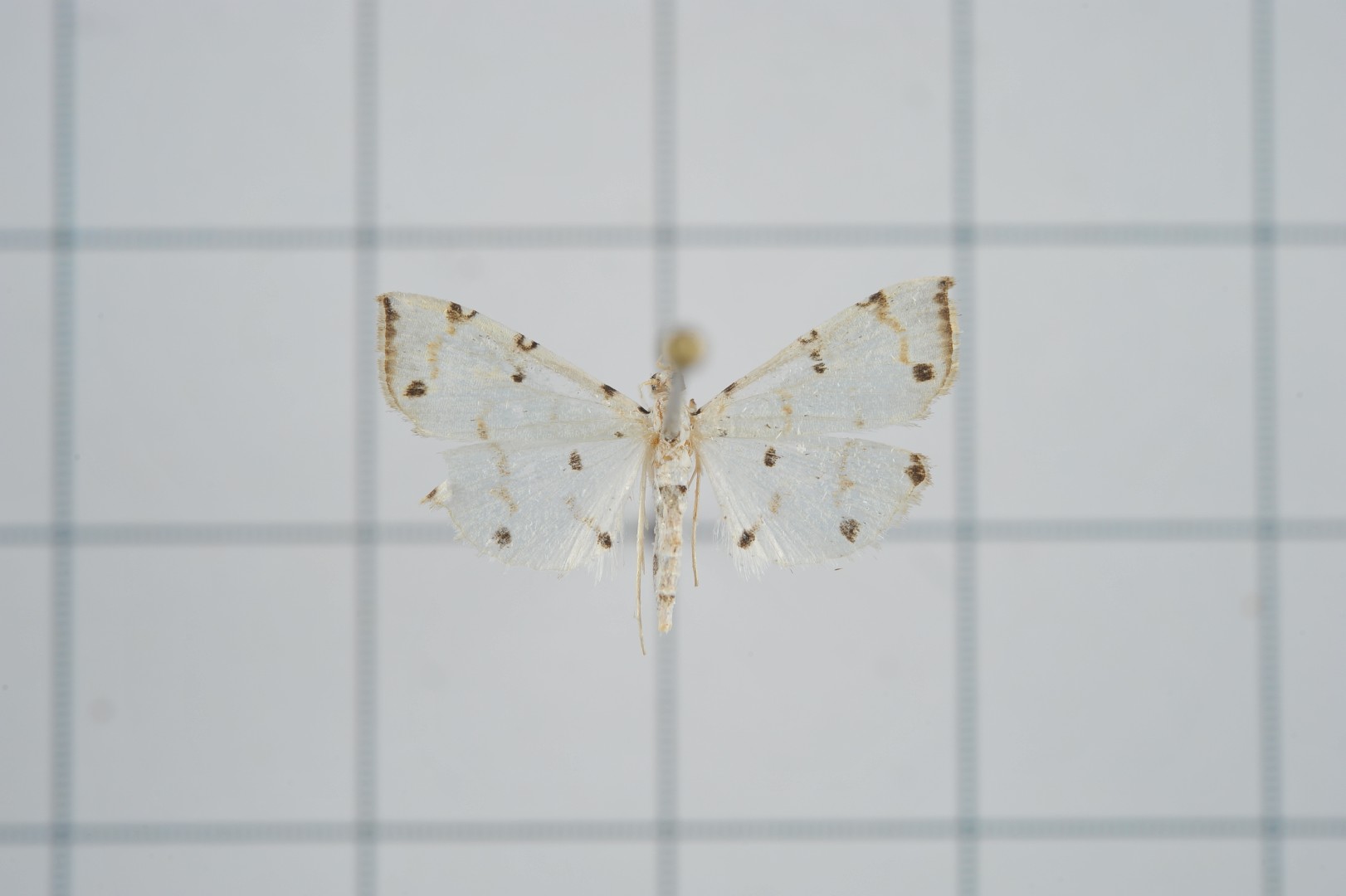
10. Pycnarmon meritalis
Pycnarmon meritalis is a moth in the family Crambidae. It was described by Francis Walker in 1859. It is found in Democratic Republic of the Congo (Katanga, West Kasai), South Africa, Australia, China, Sri Lanka, India, Indonesia (Borneo, Java, Sulawesi, Sumatra), Taiwan and Japan. The wingspan is about 15 mm. Adults are white with several brown spots, mainly at the wing margins.
More







