




Top 20 Most Common Insects in Cairns
Welcome to our list of the top 20 most common insects in Cairns. This vibrant state, teeming with diverse insect life, serves as a perfect canvas for biodiversity, with geography playing a key role in this diversity. Insects, both pests and beneficial ones, are crucial players in Cairns's delicate ecosystem, highlighting the complex interplay between habitats and their inhabitants. Understanding this relationship helps us appreciate these small yet mighty creatures' roles. Stay tuned for an exciting exploration.

Most Common Insects

1. Weaver ant
The weaver ant can be found in silk-woven nests in the foliage of Southeast Asia and Oceania. These ants have a painful bite and prey on other small insects. Larvae have many uses for local regions, including being a popular fishing bait and a good choice of bird food.

2. Blue moon butterfly
Hypolimnas bolina, the great eggfly, common eggfly or in New Zealand the blue moon butterfly is a species of nymphalid butterfly found from Madagascar to Asia and Australia. 
3. Giant grasshopper
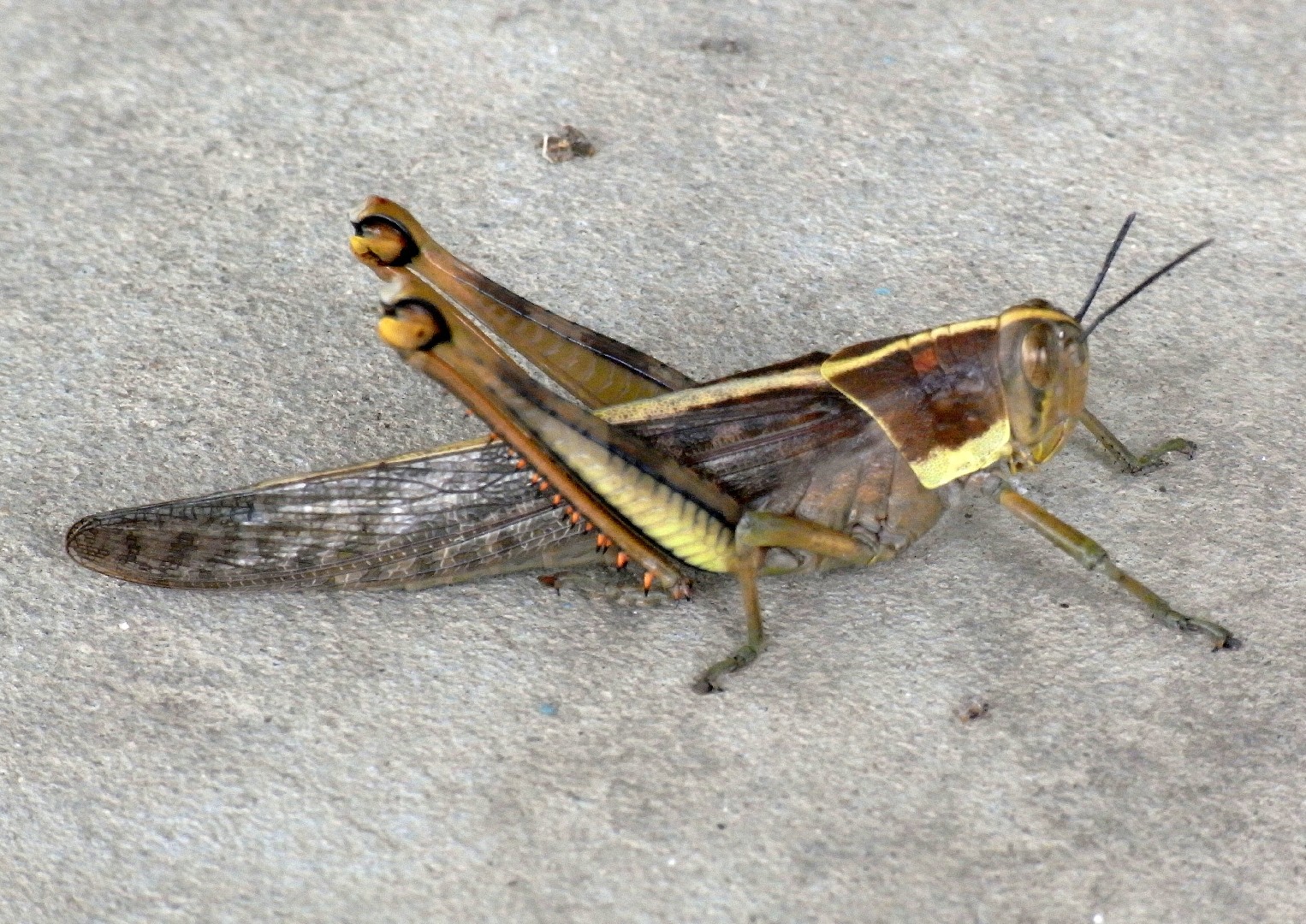
The giant grasshopper (Valanga irregularis), also known as the "hedge grasshopper", is a massive insect with a brown body and dark spots. However, the nymphs are bright green. These grasshoppers have spines on their back legs, which they use to attack predators. They also have large compound eyes that can see objects from meters away.
4. Tropical rockmaster
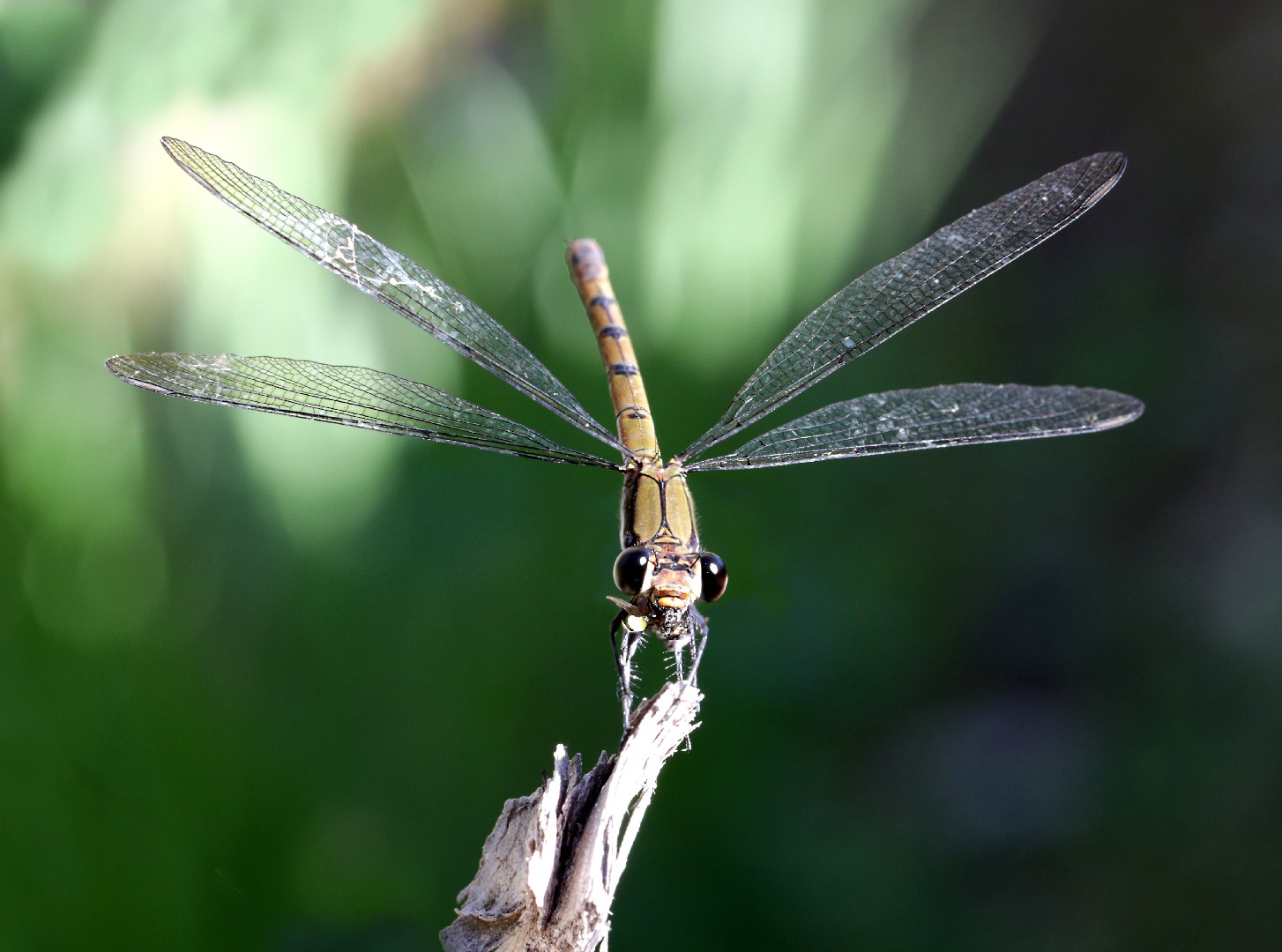
Larvae are wide and flat, with long saccoid gills to breathe underwater. The inner tooth of labial palps is elongated. The specific characters of the larva are mid-ventral, distal width, basal width, and length of median lobe. The male tropical rockmaster has a bright blue and black body with dark wings. It can be distinguished from the sapphire rockmaster (Diphlebia coerulescens) by the smaller size of blue markings at the base (front end) and underside of terga 4 to 6. Its abdomen is otherwise black. Its wings are the widest in the genus, and the hindwings are wider than the forewings. The legs are brownish black. The female tropical rockmaster is predominantly brown and yellow-green, and also has smoky-coloured wings.
5. Northern jewelled spider
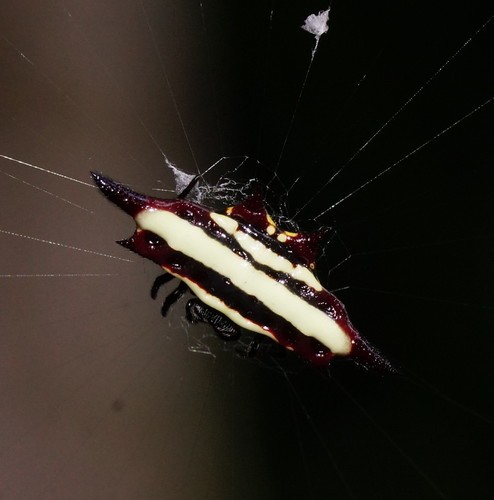
One of the synonyms of the species is Gasteracantha vittata, a name given to it by Ludwig Carl Christian Koch in 1871. However, it was later discovered that Fabricius had described the species earlier, and according to taxonomic rules, the earlier name has precedence and is the only one that should be used. Also, there are other species that were identified G. vittata at times, namely G. irradiata (by Thorell, 1859), G. sanguinolenta (by Keyserling, 1877) and G. transversa (as subspecies G. v. longicornis by Strand, 1907), further complicating the issue.
6. Giant golden orb weaver
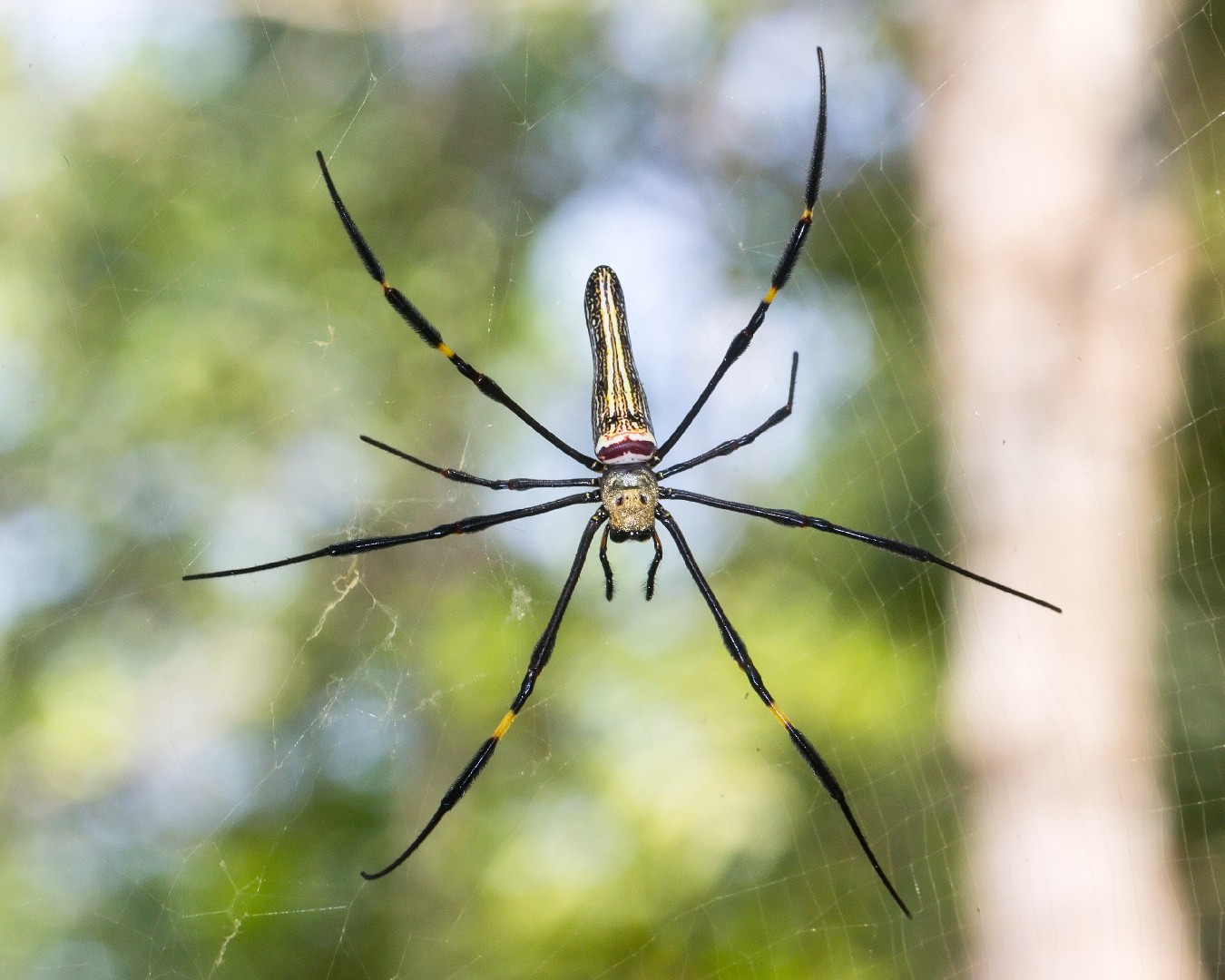
The giant golden orb weaver (Nephila pilipes) is known for spinning a golden web. Despite that being neat, that isn't the weirdest part about them. Females are known to favor gigantism, causing males to be much smaller than average females. Males are known to have mating plugs which attempt to prevent other males from mating, but the size difference can make this tricky.

7. Chocolate argus
Junonia hedonia is a butterfly from the Nymphalidae family. The scientific name of the species was first validly published in 1764 by Carl Linnaeus.
8. Chalky percher
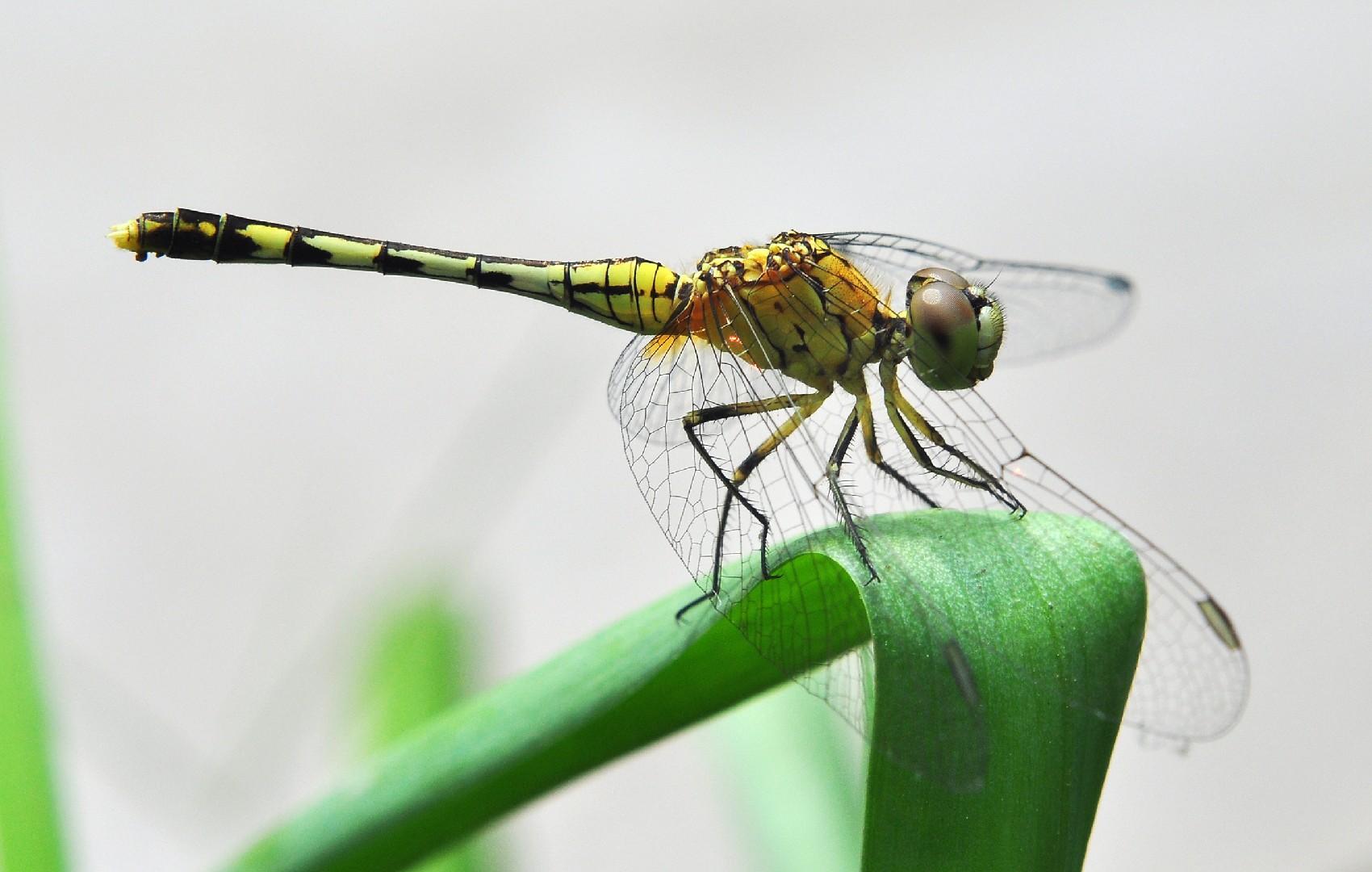
Diplacodes trivialis is small dragonfly with bluish eyes and greenish-yellow or olivaceous thorax and abdomen with black marks. In very old adults, the whole thorax and abdomen become uniform pruinosed blue. Clear wings, without apical or basal markings, and the creamy white anal appendages and deep pruinescence in adults help to distinguish this species from others in its genus.
9. Painted grasshawk
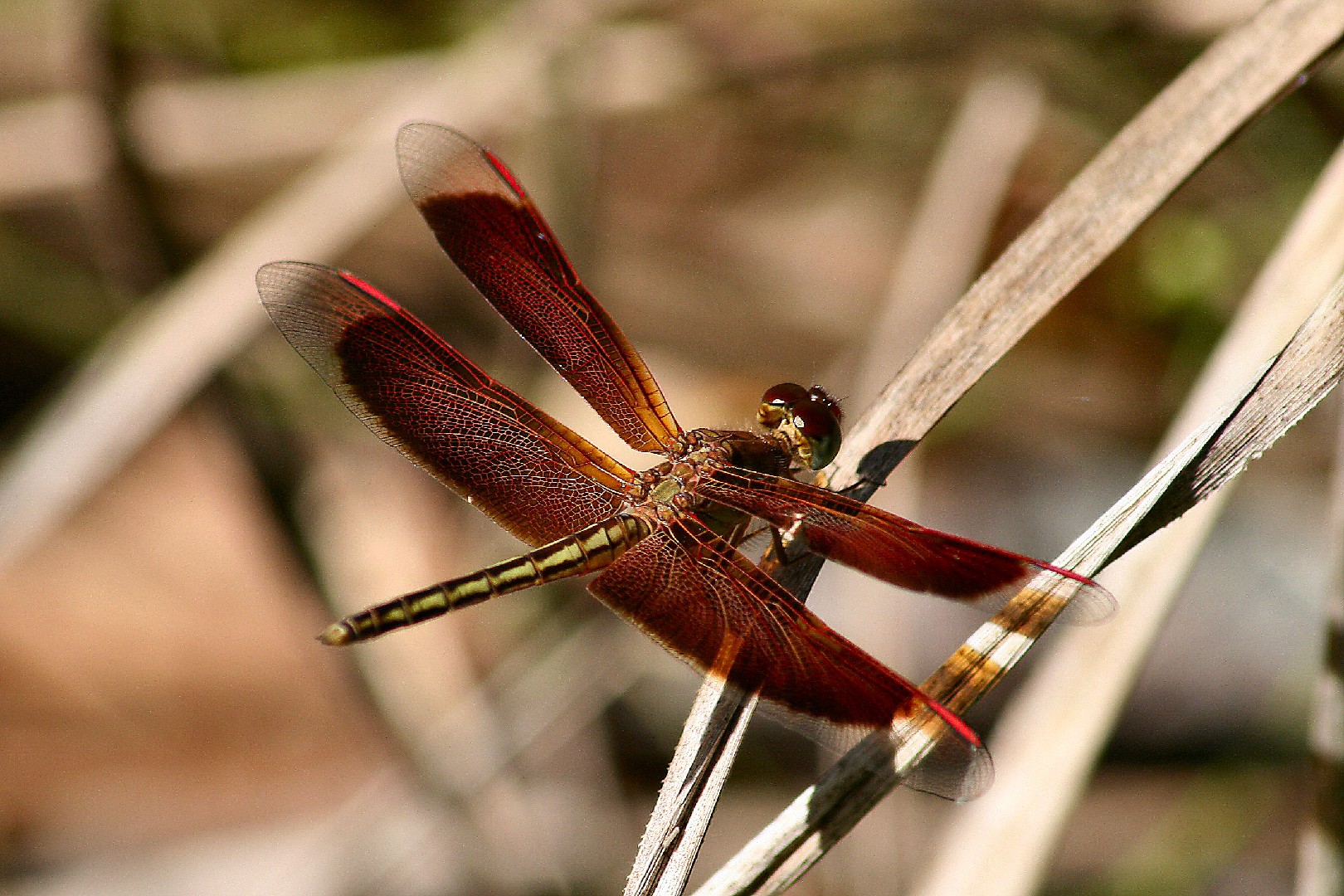
Neurothemis stigmatizans, known as the painted grasshawk, is an Australian species of dragonfly in the family Libellulidae. The genus Neurothemis is distributed from India to the western Pacific. This species is found in northern Australia in an arc from the southern Queensland border to Broome, Western Australia. Neurothemis stigmatizans is a medium sized dragonfly (wingspan 60-85mm) which inhabits still waters in the vicinity of grassy areas. The male abdomen is reddish-brown with a lighter dorsal stripe, his wings have deep reddish-brown markings that extend past the nodus, with paler contrasting veins. The female is pale greenish-yellow with a dark dorsal stripe and side stripe; her wings are mostly hyaline with a dark smudge beyond the nodus and dark wingtips. The pterostigma of both sexes is pink or pale coloured.
10. Fiery skimmer
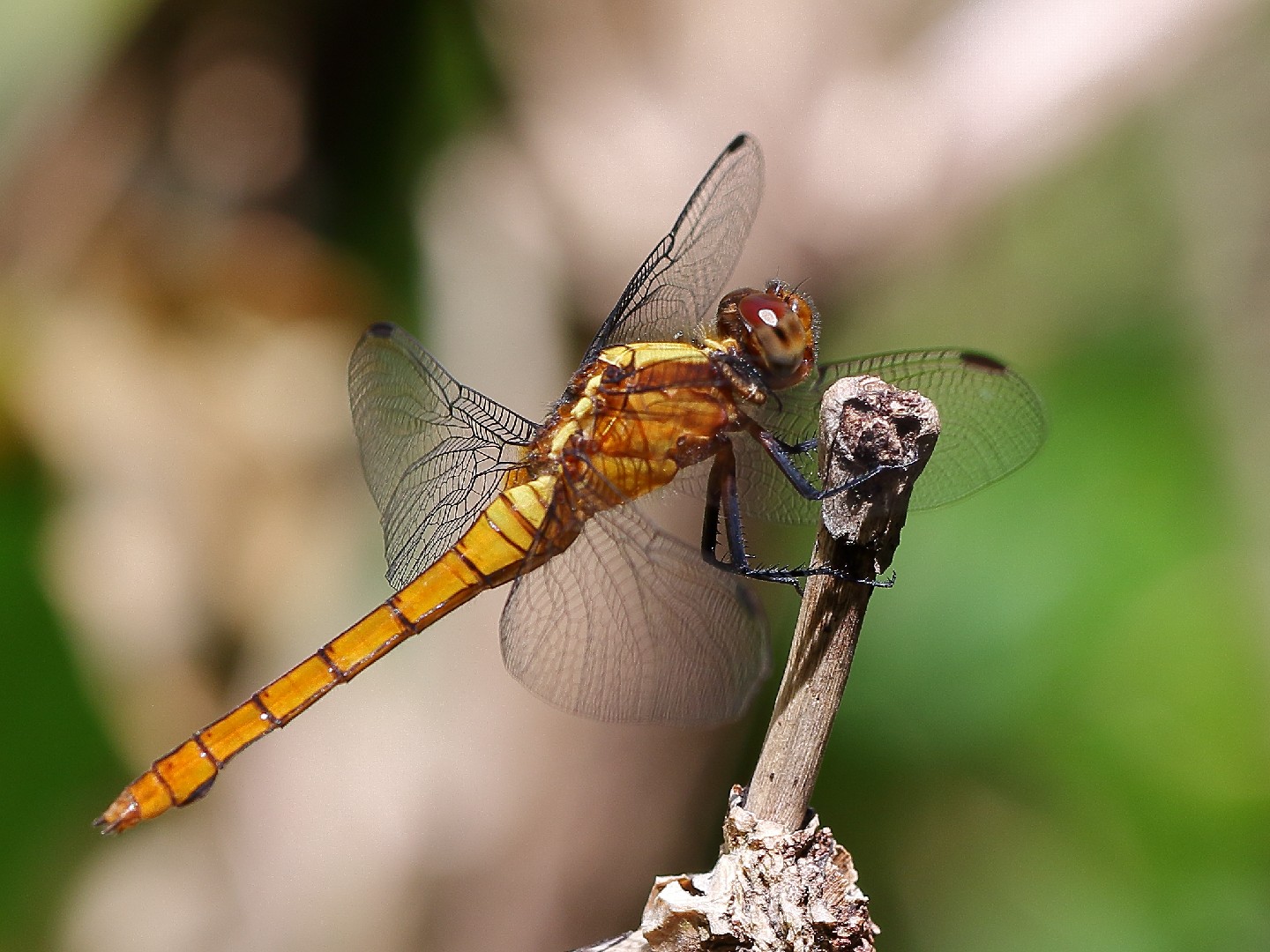
Orthetrum villosovittatum is a medium-sized dragonfly with a wingspan of 6 - 9 cm. Mature males have dark greyish to greenish-brown thoraxes and red abdomens, with the abdomen constricted at segment four. Young males have an amber and black colouring. Females are ochre-coloured.
More







