




Top 19 Most Common Insects in Barda
Insects, with their distinct traits and vast presence, contribute immensely to the diverse ecosystem in Barda. Geographic factors in various regions of Barda uniquely influence this rich insect diversity. The vast array of both pest and beneficial insects reflect the state's environmental health and biodiversity. Stay tuned as we unravel 19 of the most common insects found in Barda, marking their importance in our daily lives.

Most Common Insects
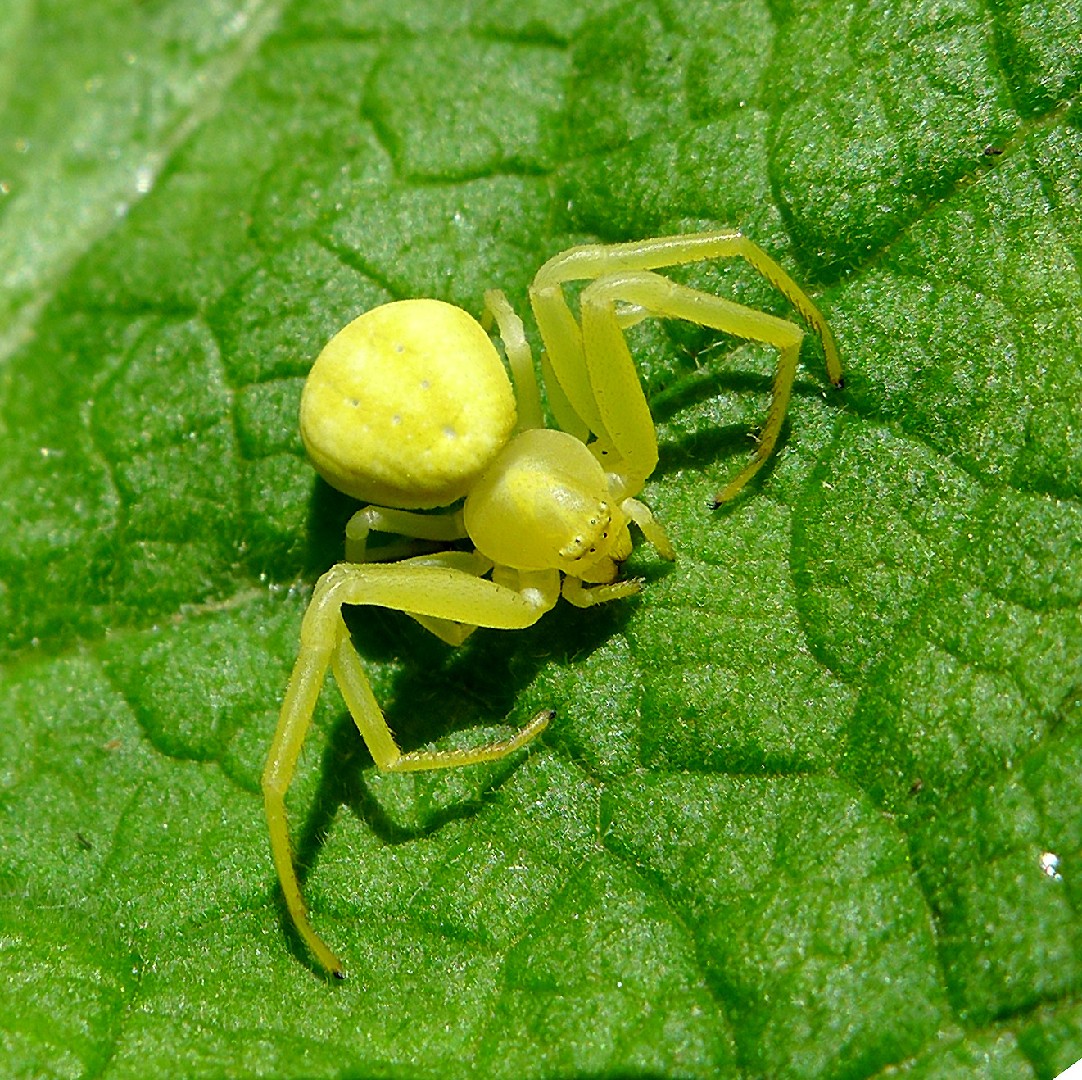
1. Goldenrod crab spider
Rather than for its coloring, goldenrod crab spider (Misumena vatia) is named for its tendency to hunt within sprays of goldenrod. This species is capable of catching and consuming prey several times larger than itself, such as dragonflies or grasshoppers. Loyal parents, the females will guard their eggs until they hatch and the tiny spiders disperse, after which the female will die.

2. Dark spreadwing
This species is up to 48 millimeters long. It is similar to other common Lestes species but it is darker in color with more blue pruinescence. The pterostigmata are large and black. 
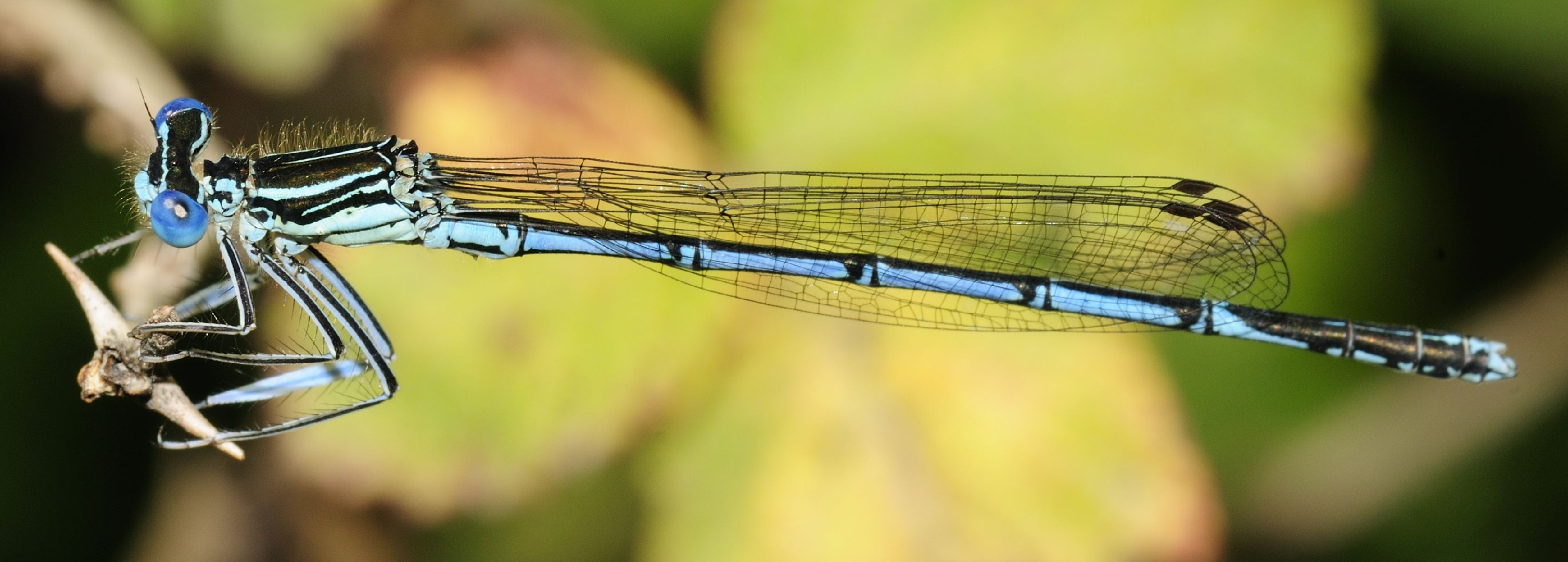
3. White-legged damselfly
The white-legged damselfly or blue featherleg (Platycnemis pennipes) is a damselfly of slow-flowing, muddy waters. It occurs from the Atlantic to Siberia and is often abundant throughout its range.
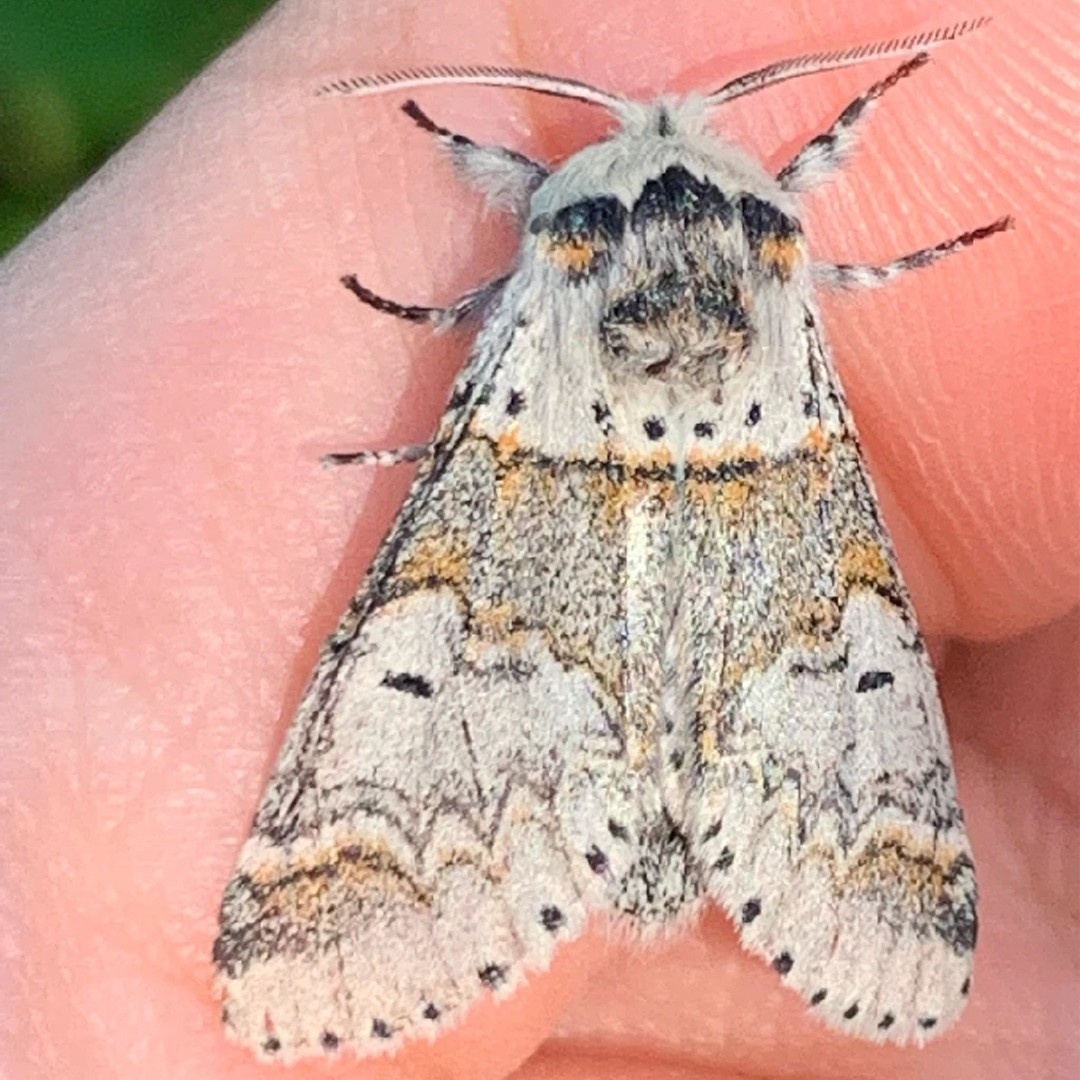
4. Sallow kitten
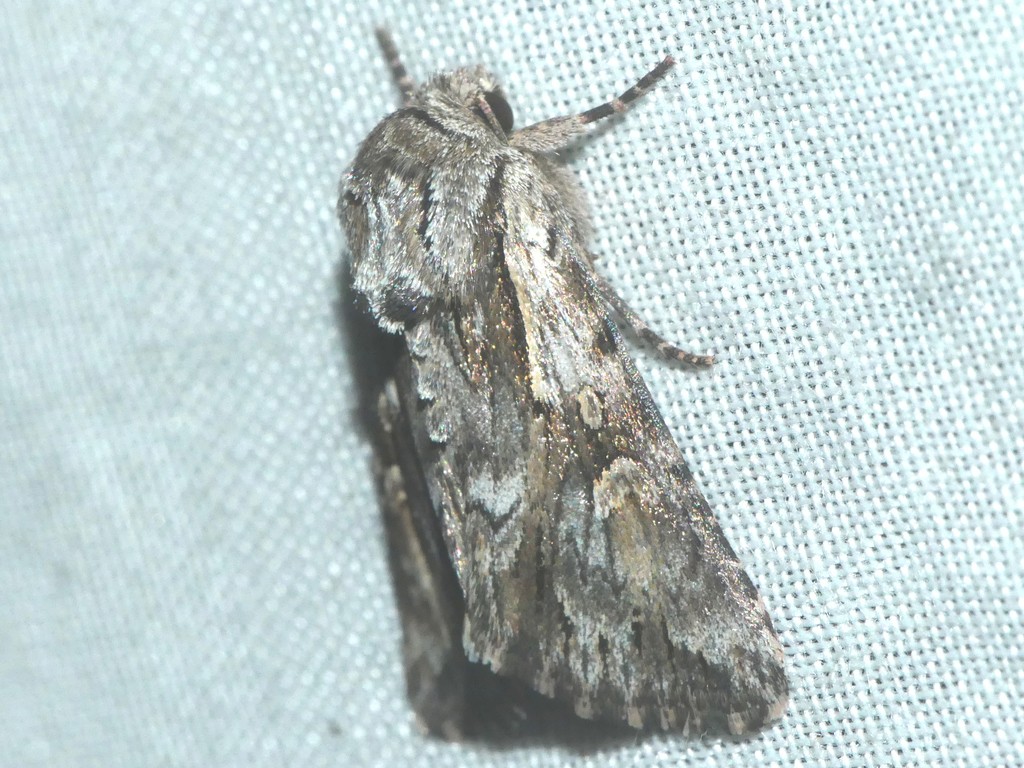
The sallow kitten is grey/white and has a wingspan of 27 to 35 mm. The first part of the wing has a large grey middle band. It differs from the poplar kitten (Furcula bifida) in its generally smaller size, but more especially in the shape of the black line forming the outer margin of the central band; this is always more or less angled or dentate towards the front margin of the wings, whereas, in the poplar kitten, this portion of the line forms a clean curve. The flight period ranges from April to the end of August. Depending on location the moth has one or two generations per year and is attracted to light. Ova The dark purple, hemispericle eggs are laid in batches of two or three on the upper surface of leaves in May or June and again in August. They hatch after nine days. Larva The caterpillar can grow up to 35 mm and is bright green with a purple brown marking on the saddle and can be found from May through to September. The main host plants are willow (Salix species) and occasionally aspen (Populus tremula) and other poplar (Populus species). Larvae can be found on small isolated moorland bushes. Pupa Before pupation the larva hollows out a recess. The pupa is dark purple-brown and pupation takes place in a tough cocoon constructed from a mixture of chewed wood-pulp and silk.
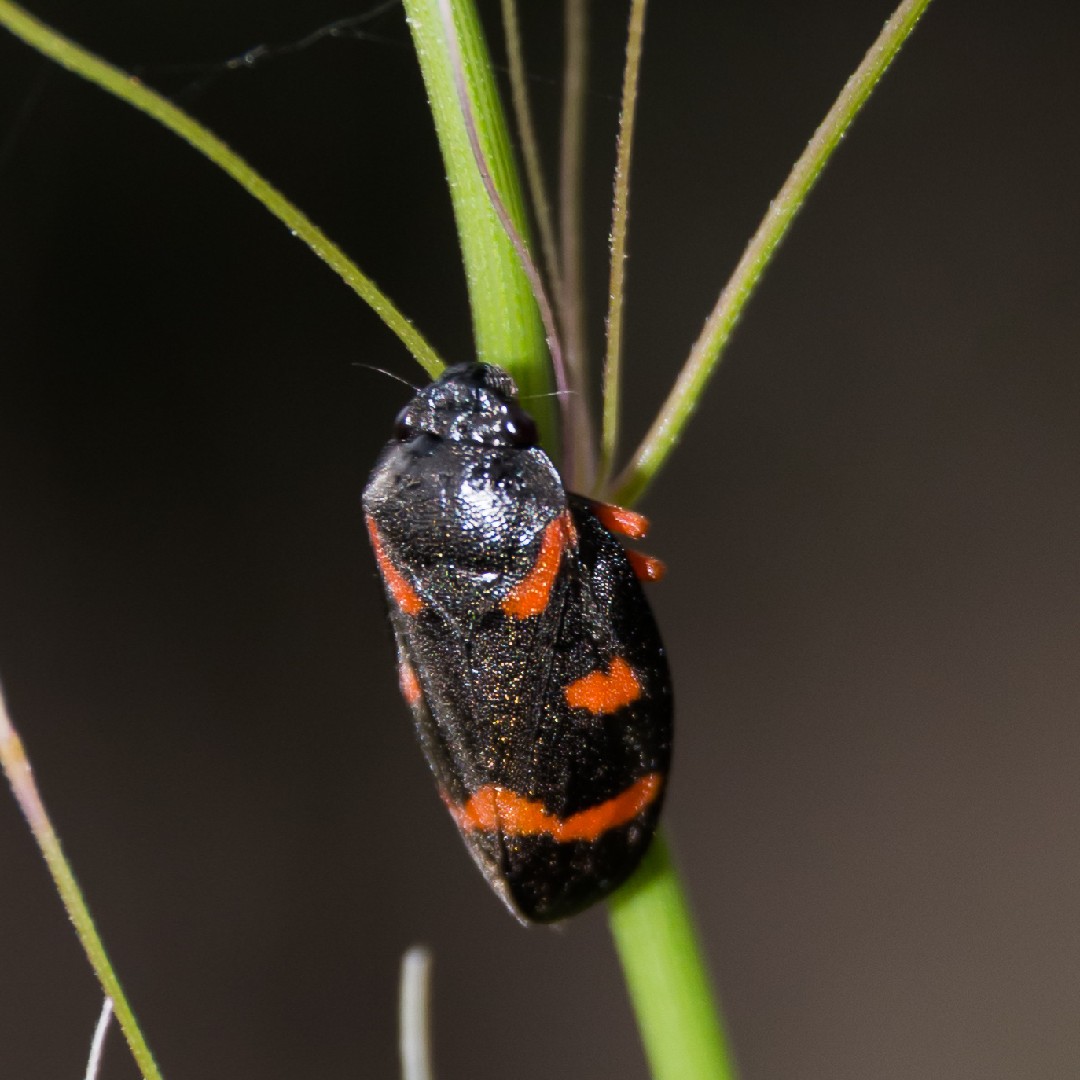
5. Cercopis intermedia
In South Central Europe, blood clots recruited from two genera Cercopis and Haematoloma with a total of five species. On the Balkan Peninsula, another genus of the bloodshot with the species Triecphorella geniculatus is added to Europe. Species of Cercopidae are native to almost all zoogeographischen regions. In the Palaearctic, the blood sclerosis with only twelve species are represented in the tropics, however, they are very rich in species, with not all species outside Central Europe have this black and red color.
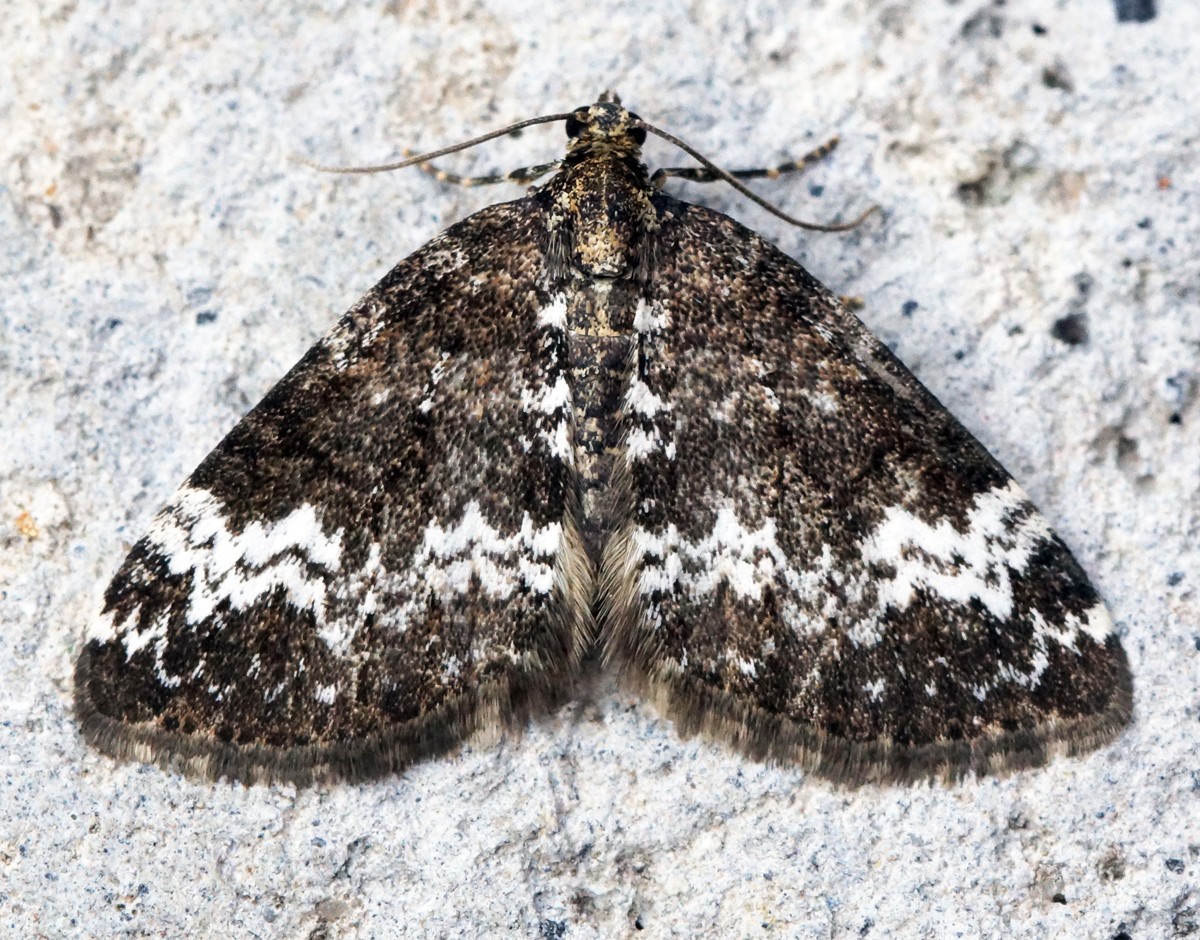
6. Small rivulet
The species is very similar to Perizoma affinitata in colour and pattern but often has a double indention in the inner margin of the band. It is also smaller. "Very similar to affinitata but smaller, with clearer and more regular white marks at the hindmargin of the forewing, tendency towards obsolescence of the pale band on the dark hindwing; distal area of forewing with black dushes on the veins. Generally less variable than affinitata. — peterseni notn. nov. has the white antemedian band well expressed; generally also the postmedian white band is somewhat widened and sometimes even a complete white subbasal is present.
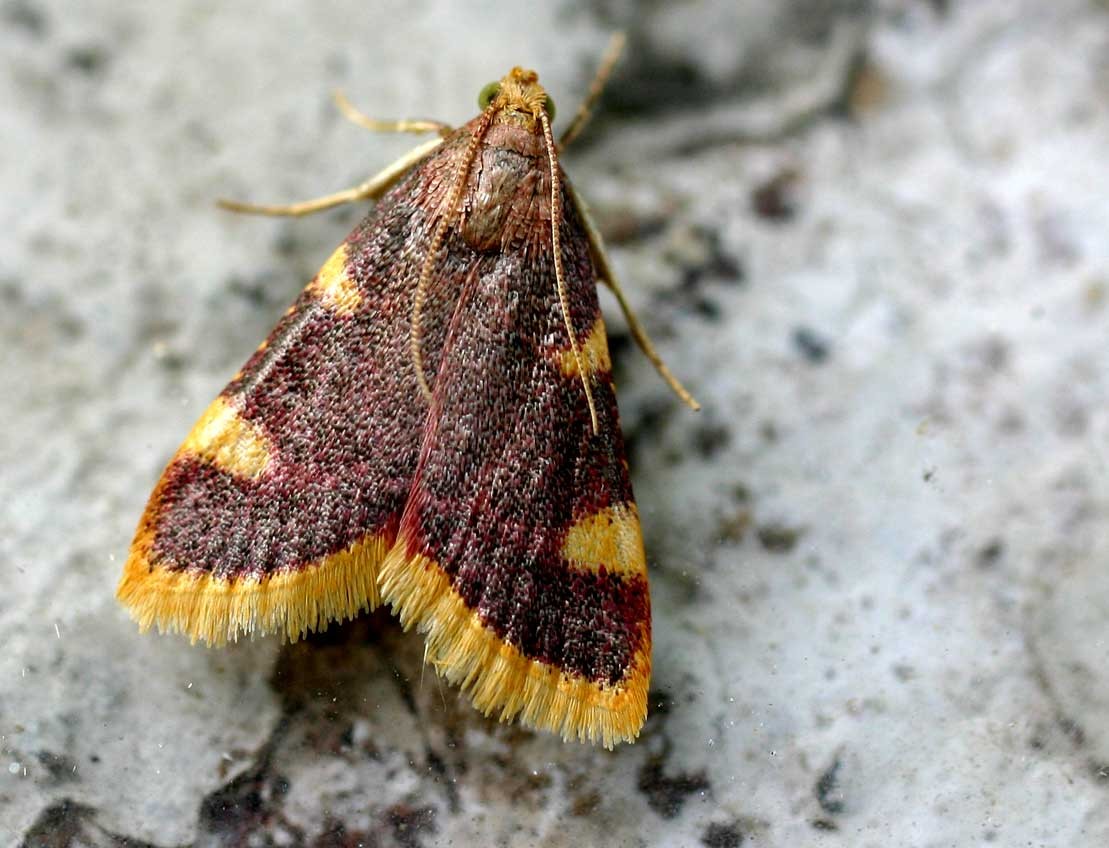
7. Clover hayworm moth
The wingspan is 1.6 - 2.5 cm.
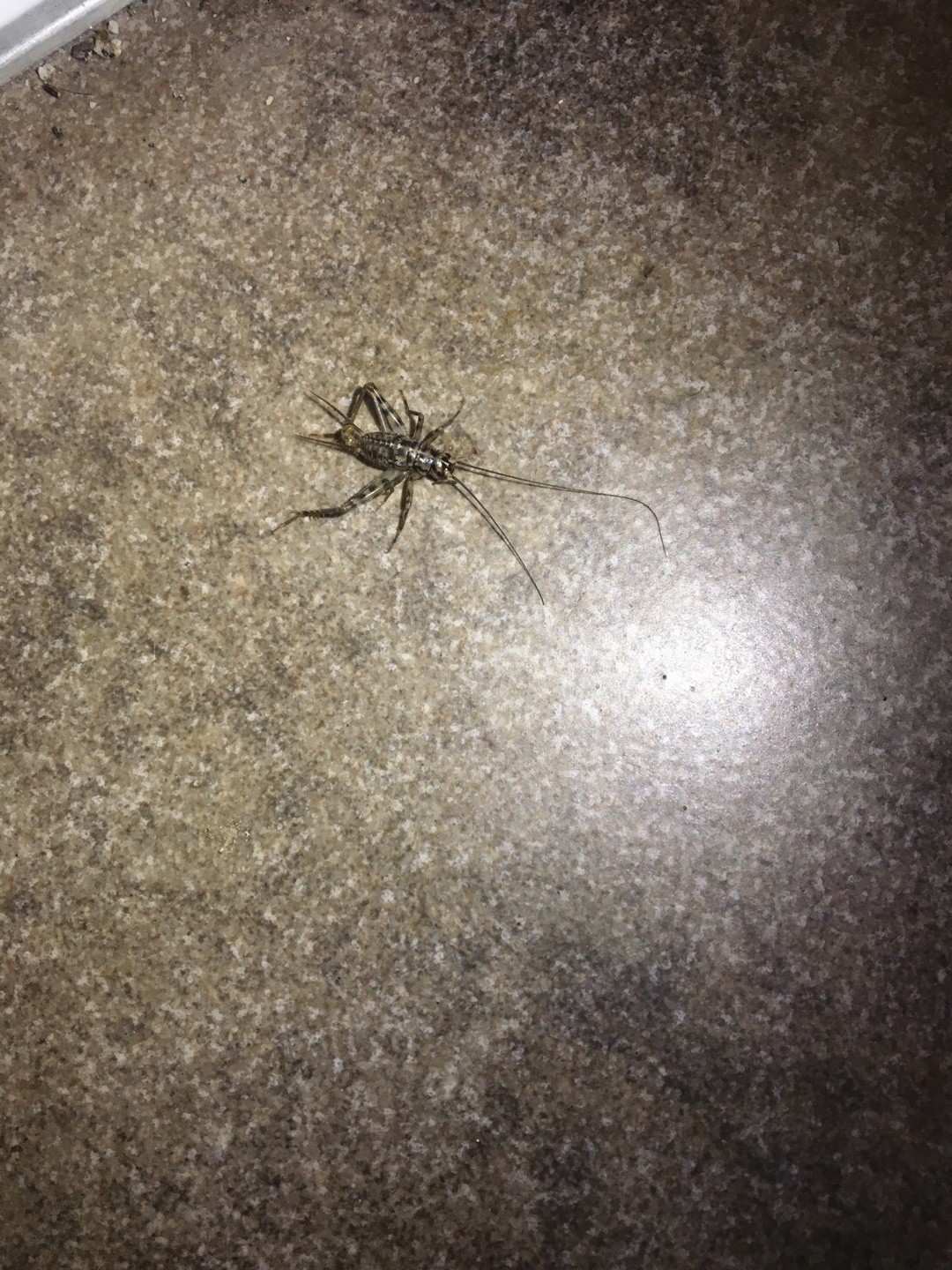
8. Bordeaux cricket
The Eumodicogryllus bordigalensis primarily lives in Europe. However, it has been known to visit various tourist spots and has a fondness for old railyards, such as those spotted in the Czech Republic. They are primarily brownish, but they can be darker as well. They have a sharply defined bright line between their eyes. They are often hiding under stones and gravel.
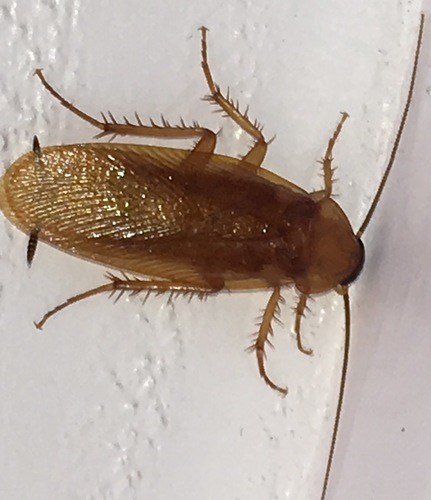
9. Turkestan cockroach
Turkestan cockroachs generally dwell outside, although the males occasionally come indoors for shelter or due to their attraction to light. In the U.S., this species is sometimes used as food for pet reptiles since they do not climb surfaces or burrow into the ground like other types of cockroaches.
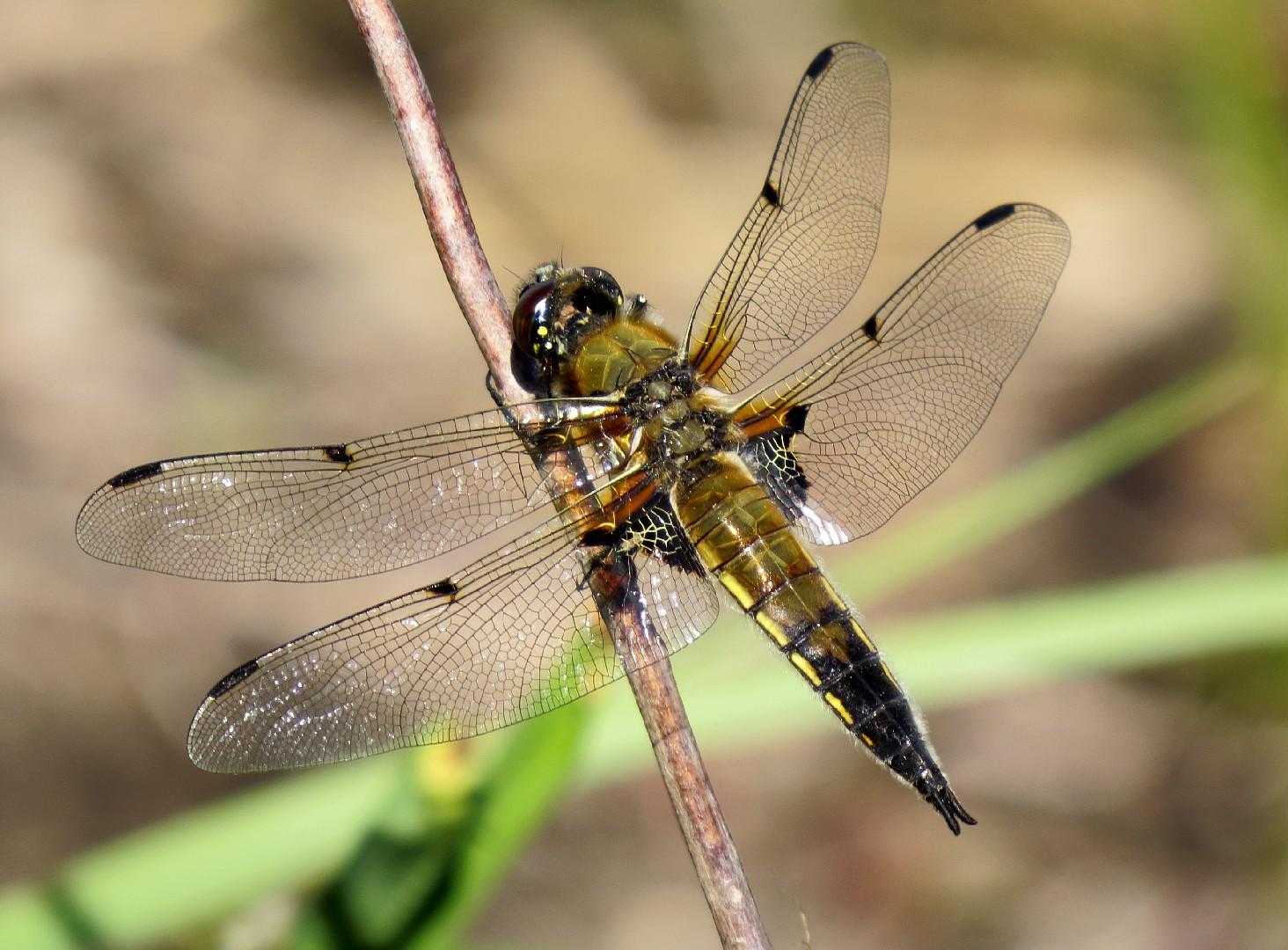
10. Four-spotted chaser
The four-spot (Libellula quadrimaculata) is one of the large dragonflies and reaches a body length of 4 to 4.5 centimeters with wingspan between 7 and 8.5 centimeters. Each of the four wings has a striking dark spot in the area of the distinctive transverse vein (nodus), after which the species received both its scientific and its trivial name. This dragonfly is also known for its mass migrations in swarms of impressive dimensions. The entire stock is not considered to be threatened.
More







