




Top 20 Most Common Insects in Belize
Belize, a stellar realm of biodiversity, is home to a fascinating array of insect life. The distinctiveness of the habitats within Belize profoundly affects the insect population, from the humid rainforests to the arid plains. This diversity, affected by geography, climate, and mankind's footprint, hosts a blend of destructive pests and beneficial organisms. Stay tuned as we shed light on the 20 most common insects in Belize, underlining their intriguing roles in their respective ecosystems.

Most Common Insects
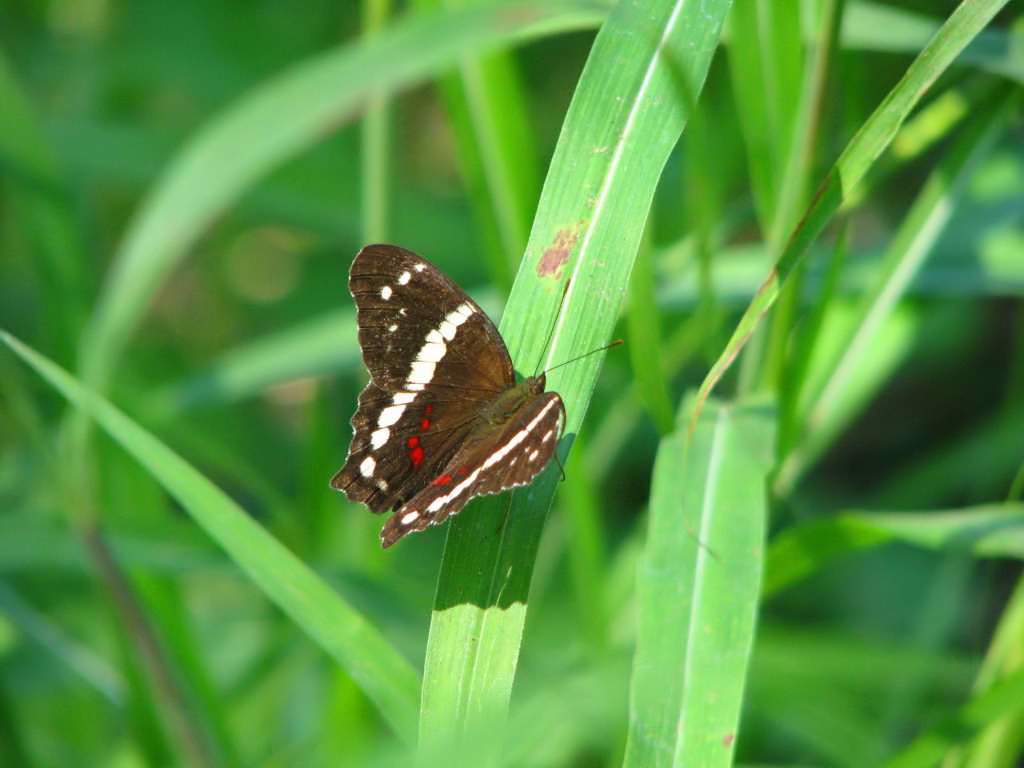
1. Banded peacock
The wingspan of the moths is 60 to 70 millimeters. The basic color of the wings is black-brown to black. On the front wing top, a white, sometimes yellowish bandage extends through the Diskalregion, which continues on the hind wings. Near the apex, some small whitish spots are highlighted. The hind wings show some striking red, sometimes orange spots. The tail at the Analwinkel are very short. All wing bottoms show similar drawing elements as the tops, but these are paler and weaker.
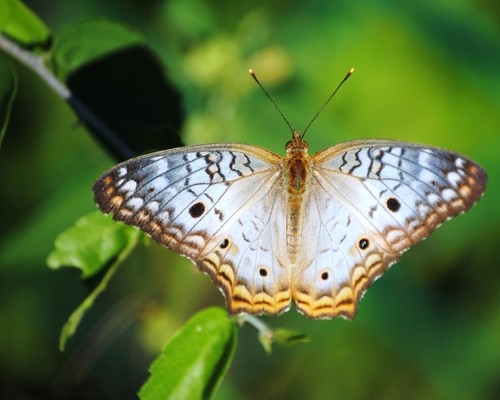
2. White peacock
The wingspan of the moths is 51 to 70 millimeters. The basic color is whitish. On the forewings there is a black, circular spot near the inner angle. At the front edge, two to three oblong, yellow-brown spots stand out. The Submarginalregion is also yellow-brown colored and crossed by dark lines. On the hind wings are two more small, black, circular spots near the tawny and dark-colored submarginal region. A short tail is more or less strong. The wing underside shows similar drawing elements as the top, but these are paler and weaker pronounced.
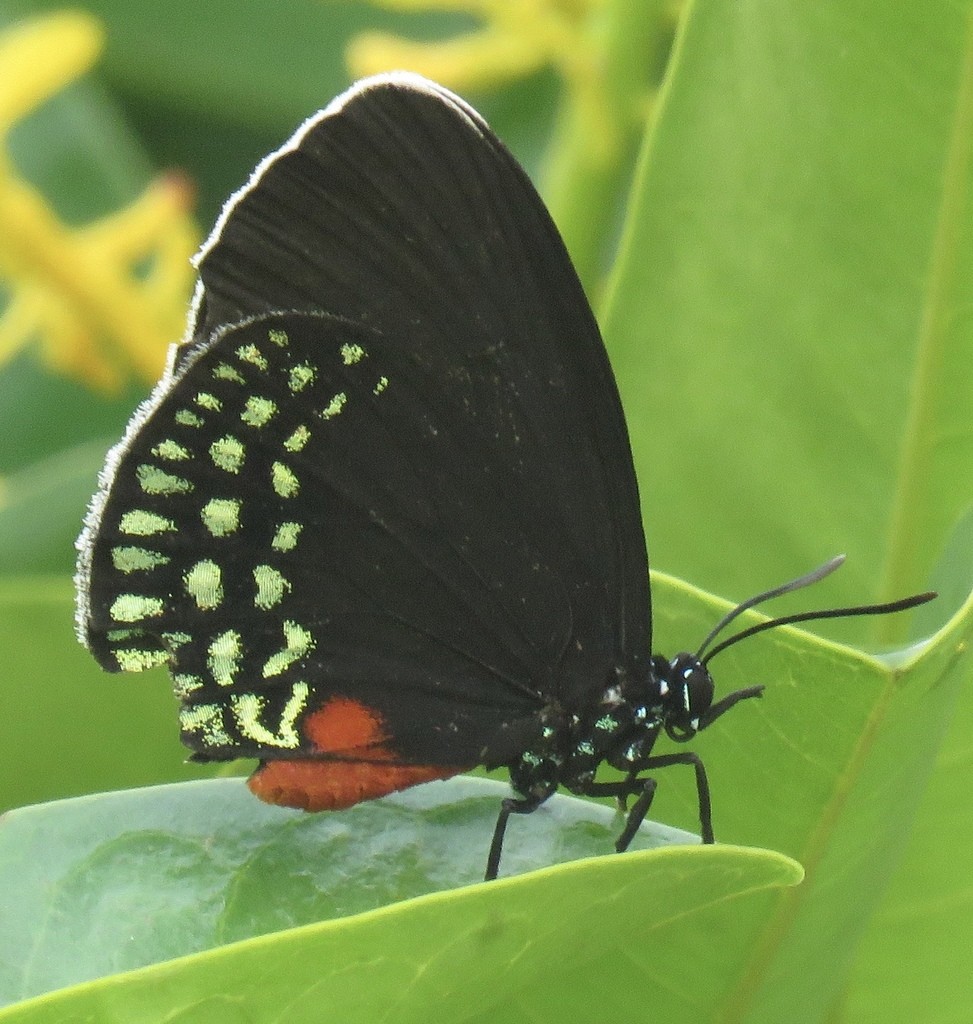
3. Mexican cycadian
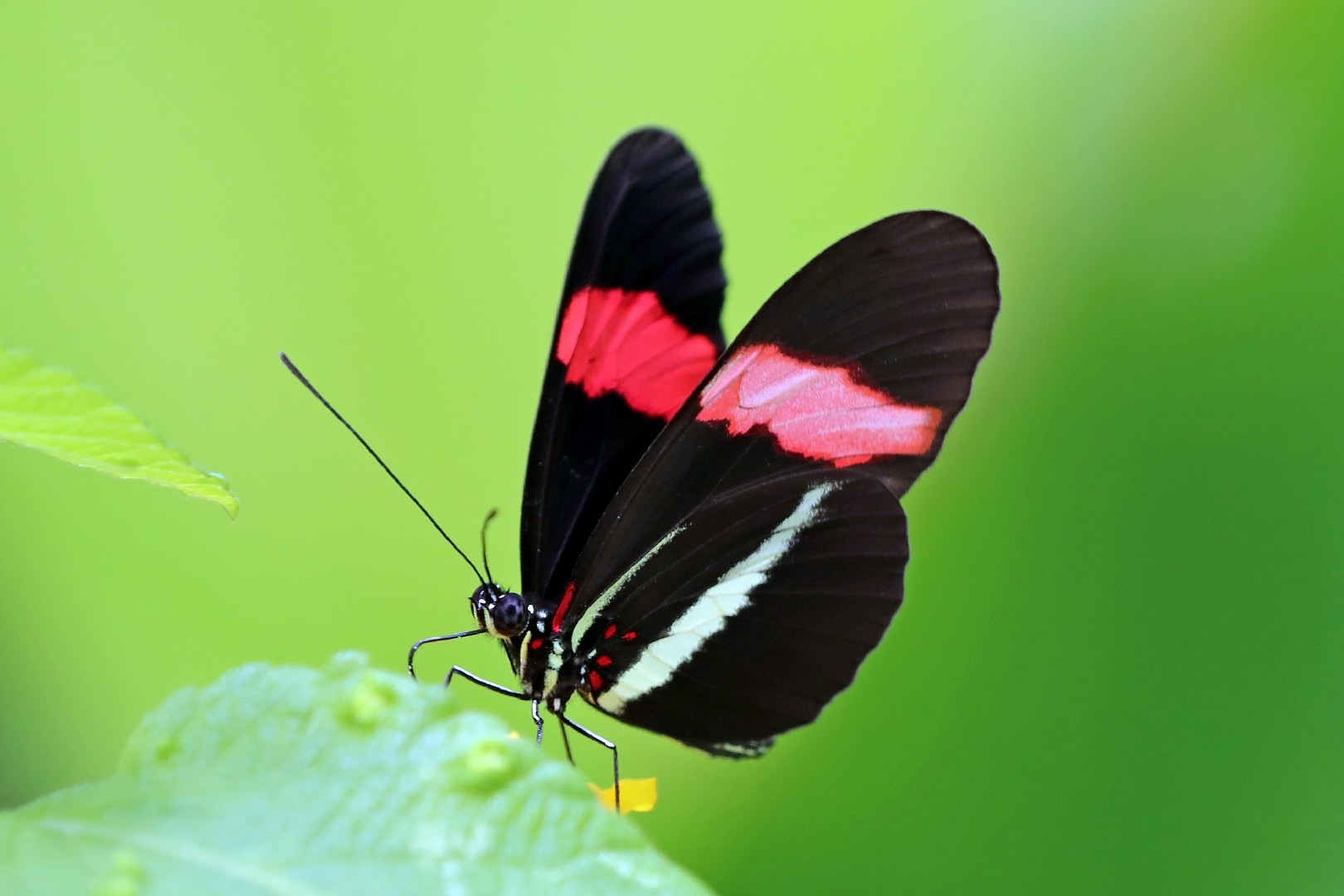
4. Red postman butterfly
The red postman butterfly (Heliconius erato) is a beautiful black and white butterfly that is a skilled actor. It exhibits mimicry to resemble a butterfly similar to the Common postman to deter predators. Also, its favorite host plants are passion flowers. But it has been known to be picky about the quality of the flower.
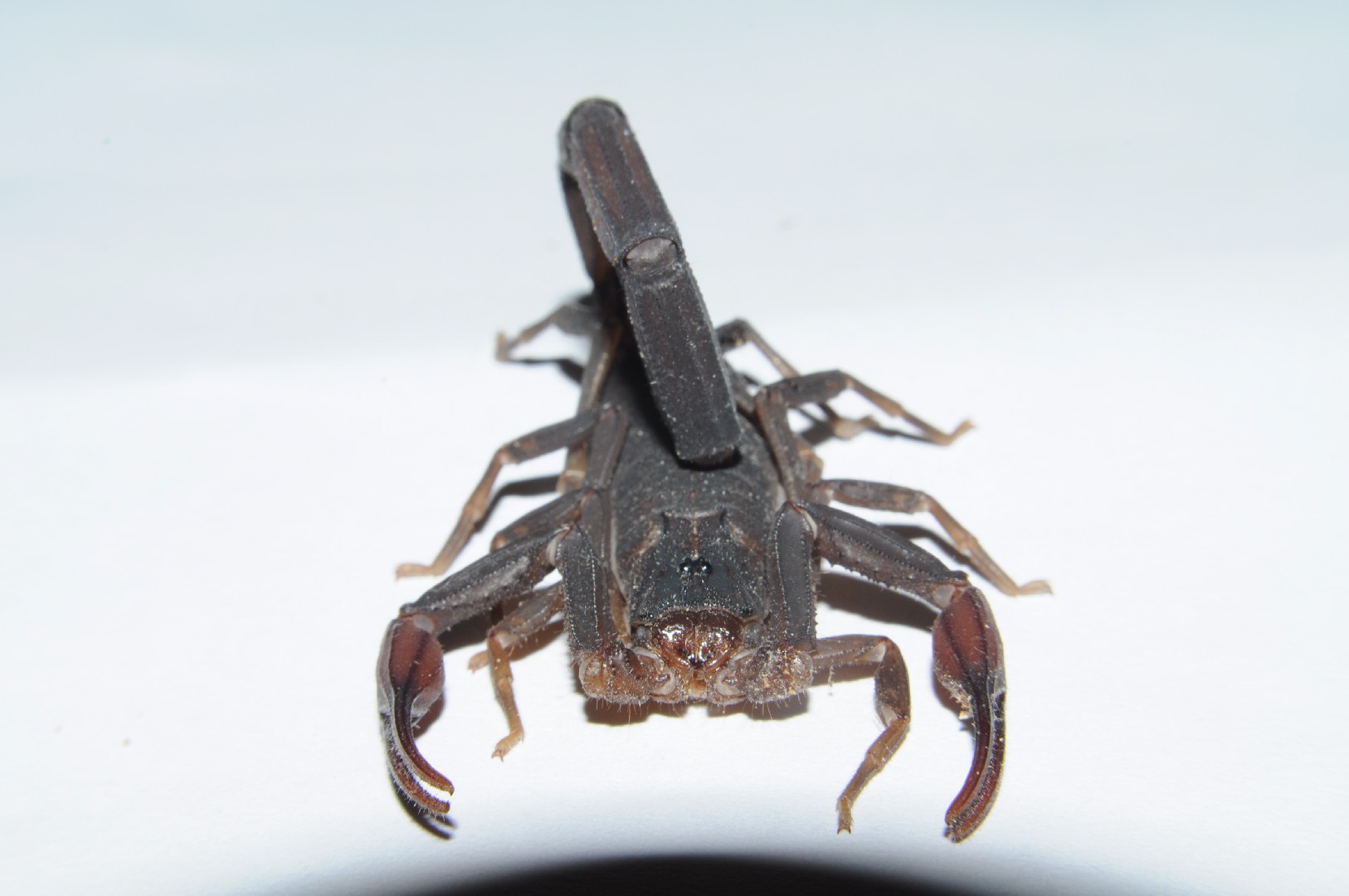
5. Florida bark scorpion
The florida bark scorpion (Centruroides gracilis) have busy parents that can give birth to a wide variance of eggs that vary pretty heavily. They also vary heavily on colors and the time of sexual maturity. Much like humans, these scorpions are pretty different depending on who you meet.
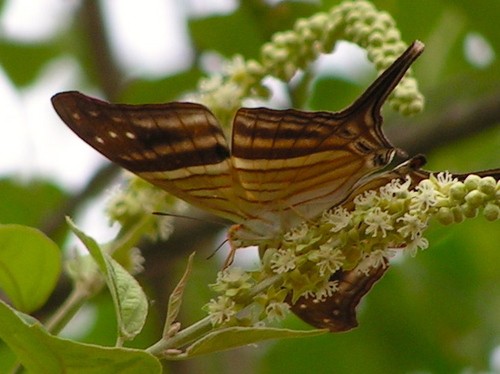
6. Many-banded daggerwing
Marpesia chiron, the many-banded daggerwing, is a species of daggerwings, map butterflies in the family Nymphalidae. It is found in Central America, North America, and South America. The MONA or Hodges number for Marpesia chiron is 4549. 
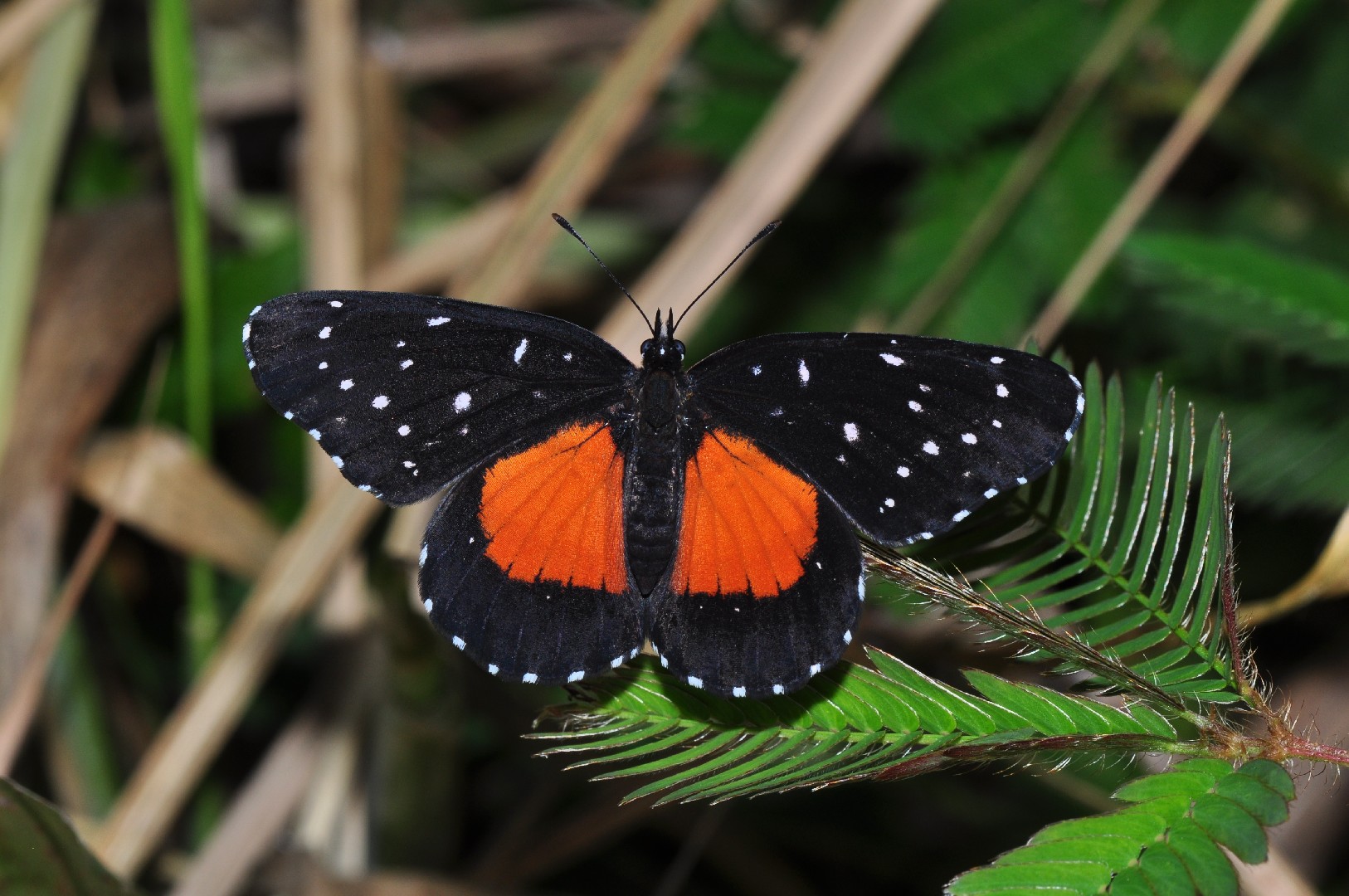
7. Crimson patch
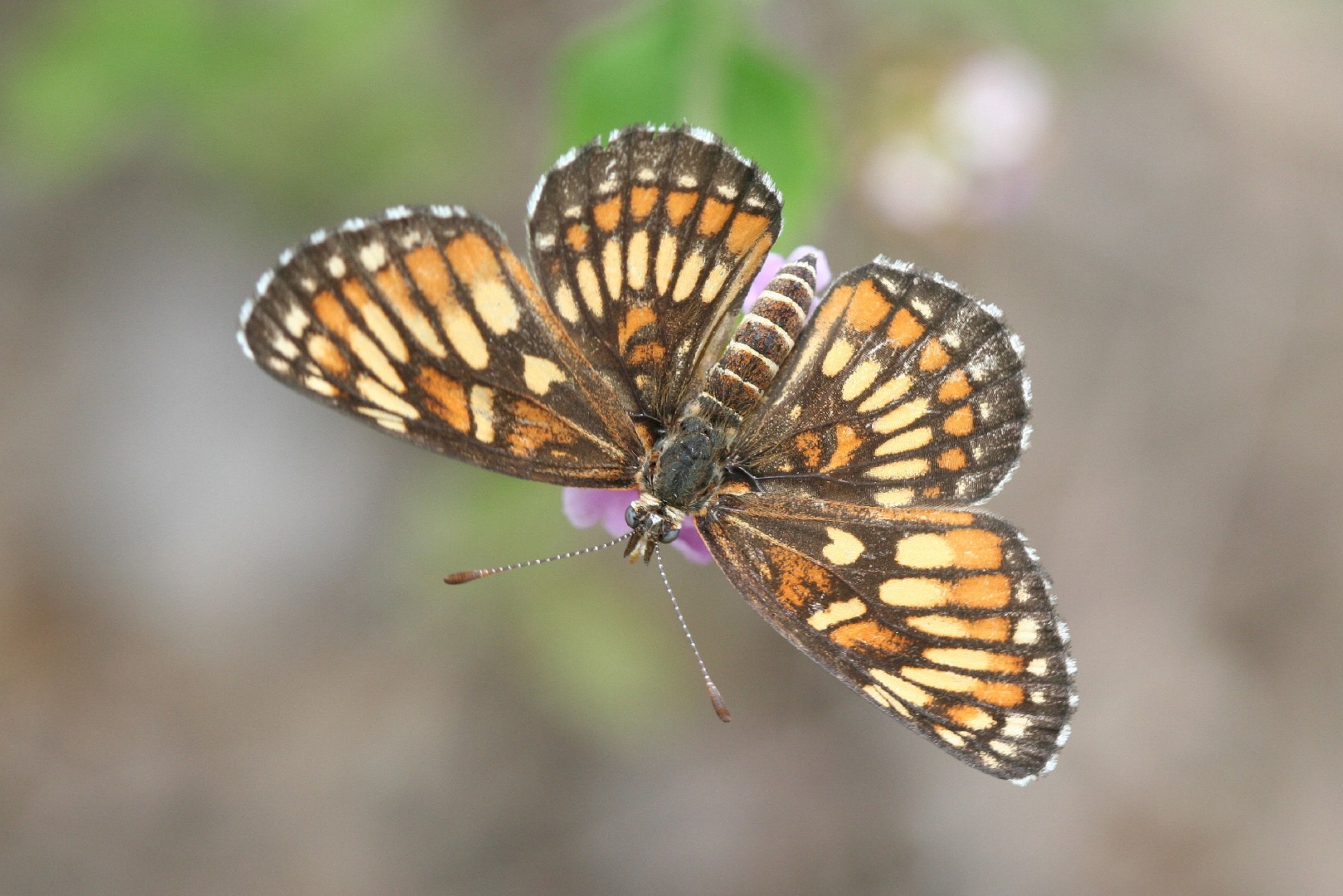
The dorsal and ventral wing surface is black with several undulating rows of small white spots on the medial forewings and along all outer wing margins. On each dorsal hindwing is a medial orange-red patch situated anteriorly. The ventral hindwings have a fragmented yellow proximal patch bordered by a thick postmedial band of red that does not reach the wing margins; maximum wingspan is 5 - 7 cm. The caterpillars are grey white to green with several transverse rows of fleshly black spines.
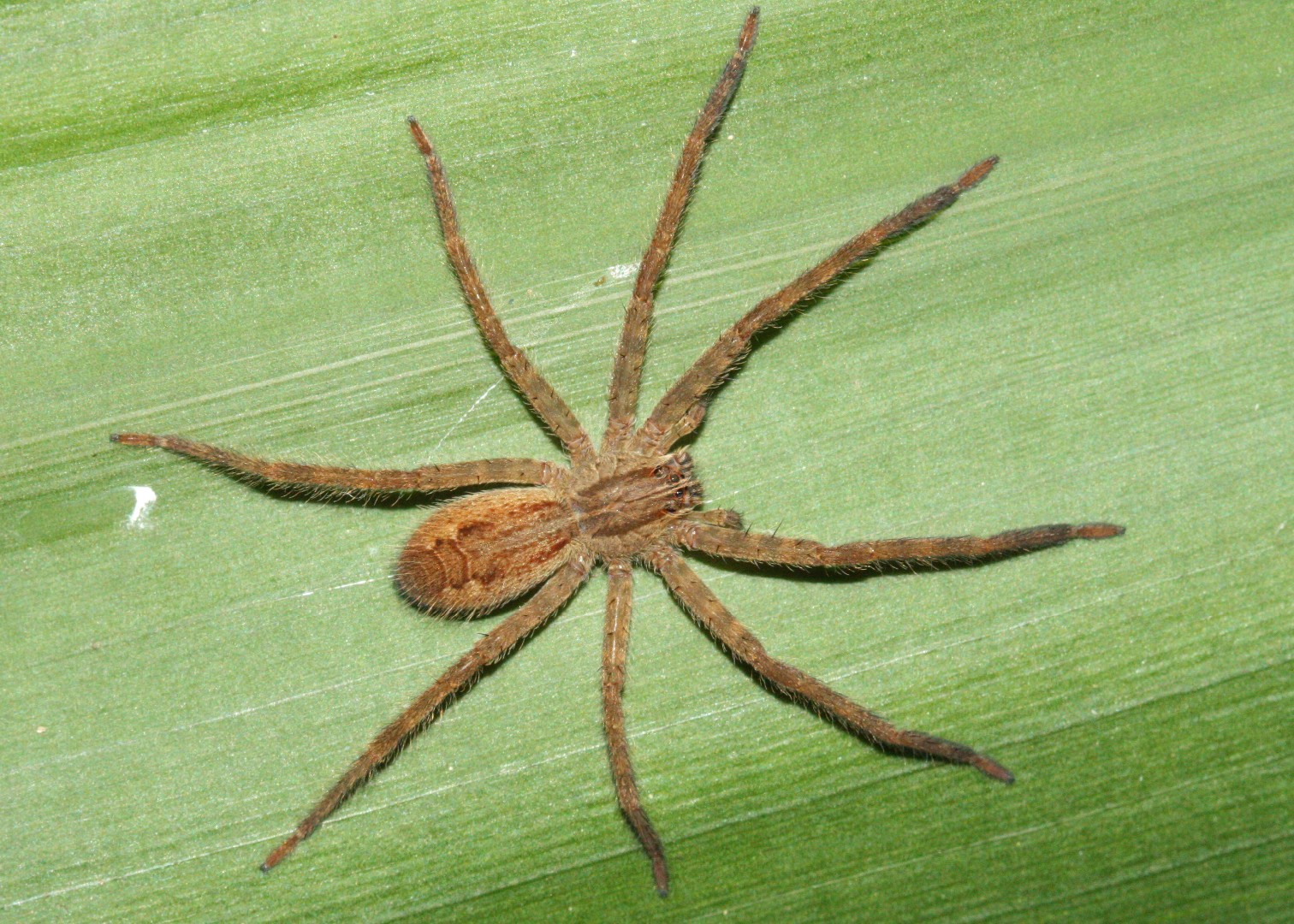
8. Tiger wandering spider
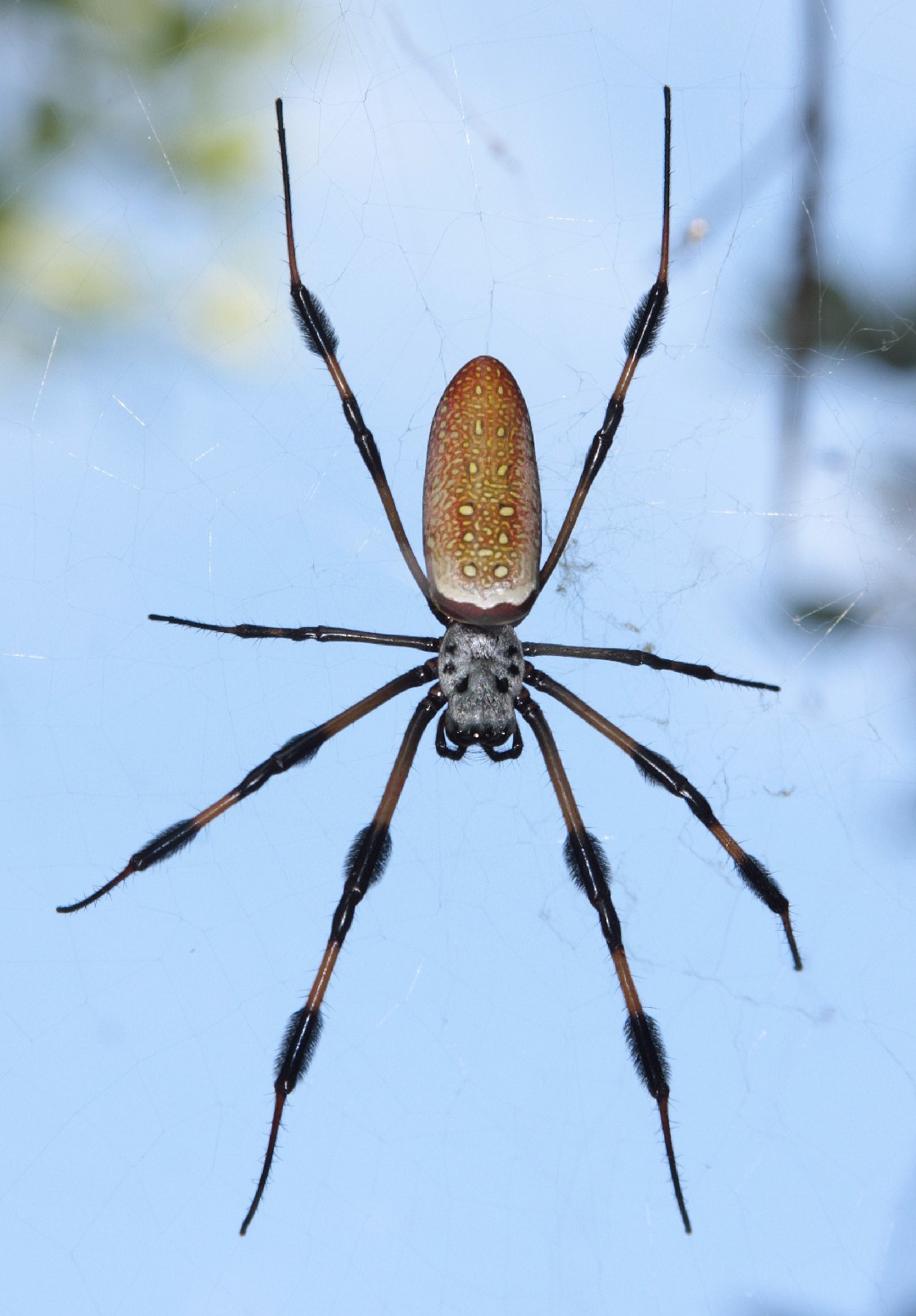
The tiger wandering spider (Cupiennius salei) is part of a group of venomous nocturnal hunting spiders that wander around looking for prey. Apparently, they wandered too far in the early 20th century, as they were accidentally introduced through banana shipments to Germany. Regardless of wanderlust, they are still one of the most studied species of spiders in laboratories.
9. Caribbean hermit crab
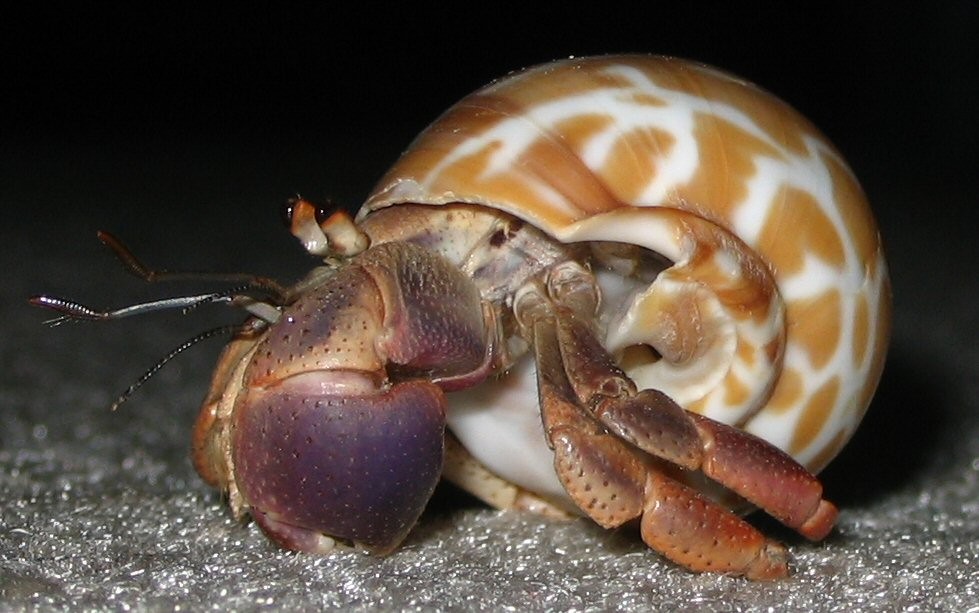
Caribbean hermit crab (Coenobita clypeatus) is a land hermit crab found in many parts of the western Atlantic and the Caribbean sea. This herbivorous and scavenging crab uses modified gills to breathe air. It prefers the shells of West Indian top snail (Cittarium pica). The caribbean hermit crab is one of the two species of hermit crabs found in the pet trade in the US.
10. Black Witch
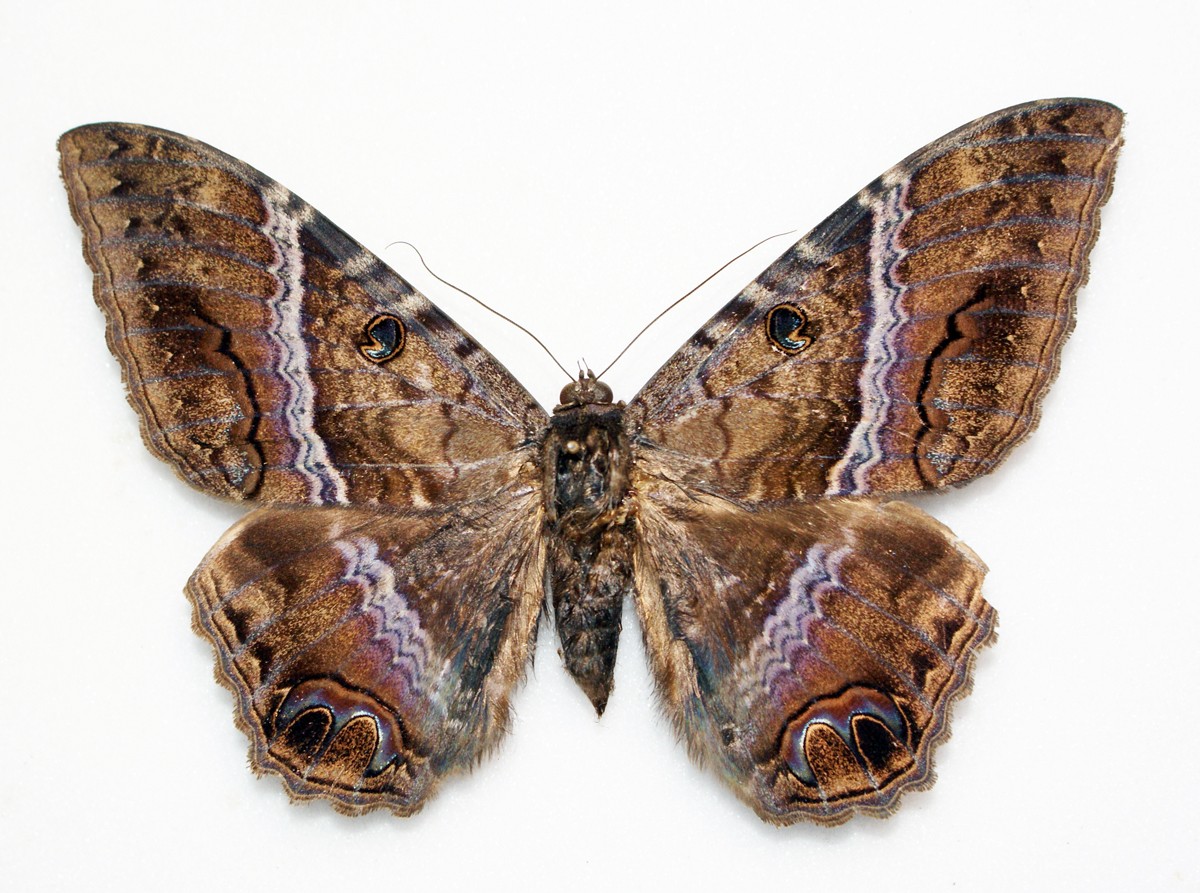
The black Witch (Ascalapha odorata) is given this spooky name because its part in folklore being associated with misfortune or death. In the novel, The Silence of the Lambs, they were placed in the mouths of the victims of Buffalo Bill. They can be identified with darker colorings and undertones of purple and pink.
More







