




Top 18 Most Common Insects in Zepce
Delve into the fascinating world of insects - a realm teeming with diversity and critical ecological roles, right in the heartland of Zepce. Geographical nuances across different parts of the region foster a wide-ranging insect fauna, both pests and beneficial species, each uniquely adapting to their habitat. The insect biodiversity of Zepce exemplifies nature's intricate web of symbiosis and survival. Stay tuned for our curated list of the 18 most common insects!

Most Common Insects
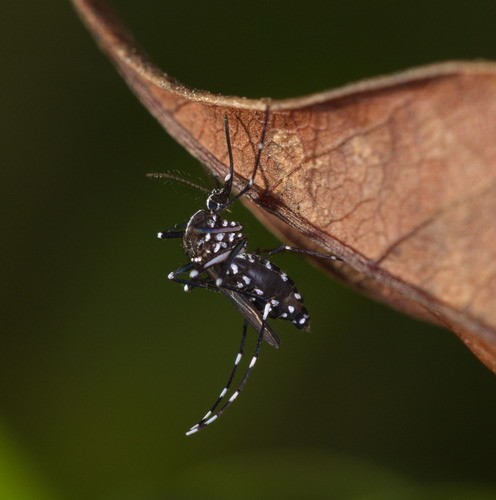
1. Asian Tiger Mosquito
The asian Tiger Mosquito (Aedes albopictus) has recently (the 1970s) infested every corner of the world through the shipment of used tired, lucky bamboo (Dracaena sanderiana), and other similar products. The asian Tiger Mosquito is known to transmit many deadly diseases that include West Nile Virus.
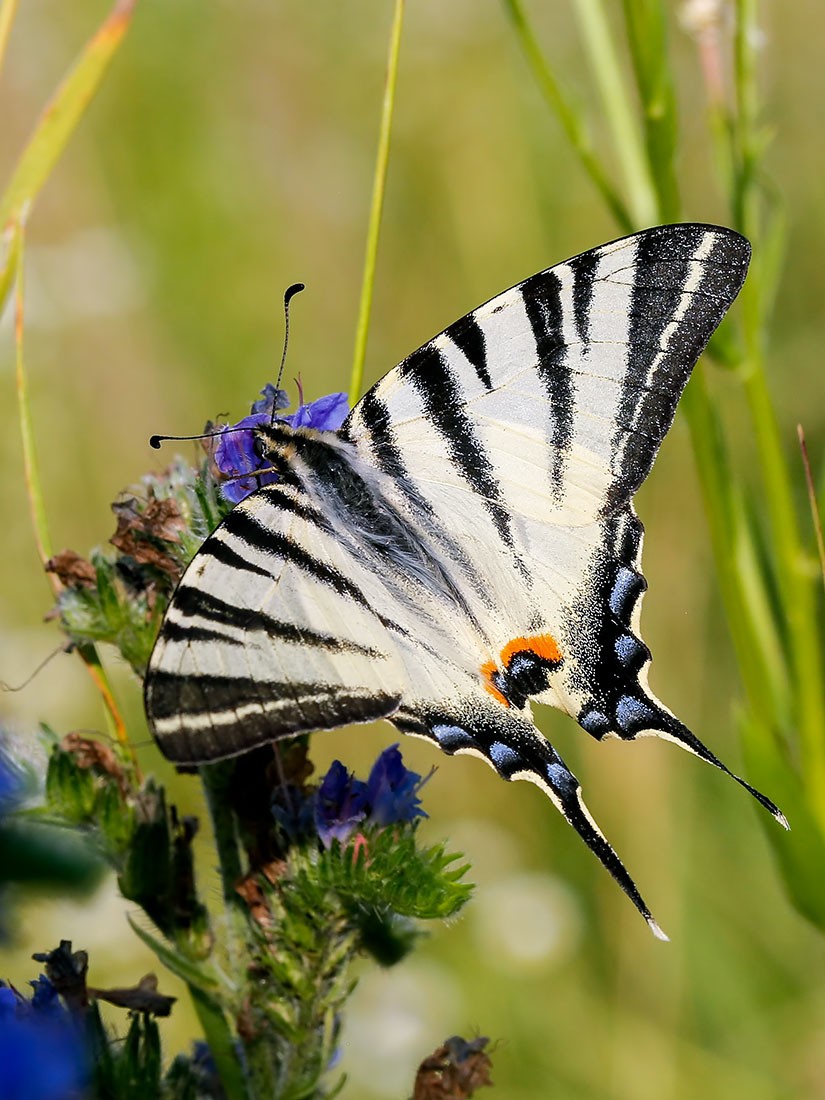
2. Scarce swallowtail
Its slow and floating flight pattern makes it easy to identify the scarce swallowtail as it soars over gardens, orchards, and scrublands. The butterfly has a large presence across Europe, the Middle East, and Asia. The adult lifespan is brief, only two or three weeks. Planting flowers like blackthorn can encourage the butterfly to visit a garden.
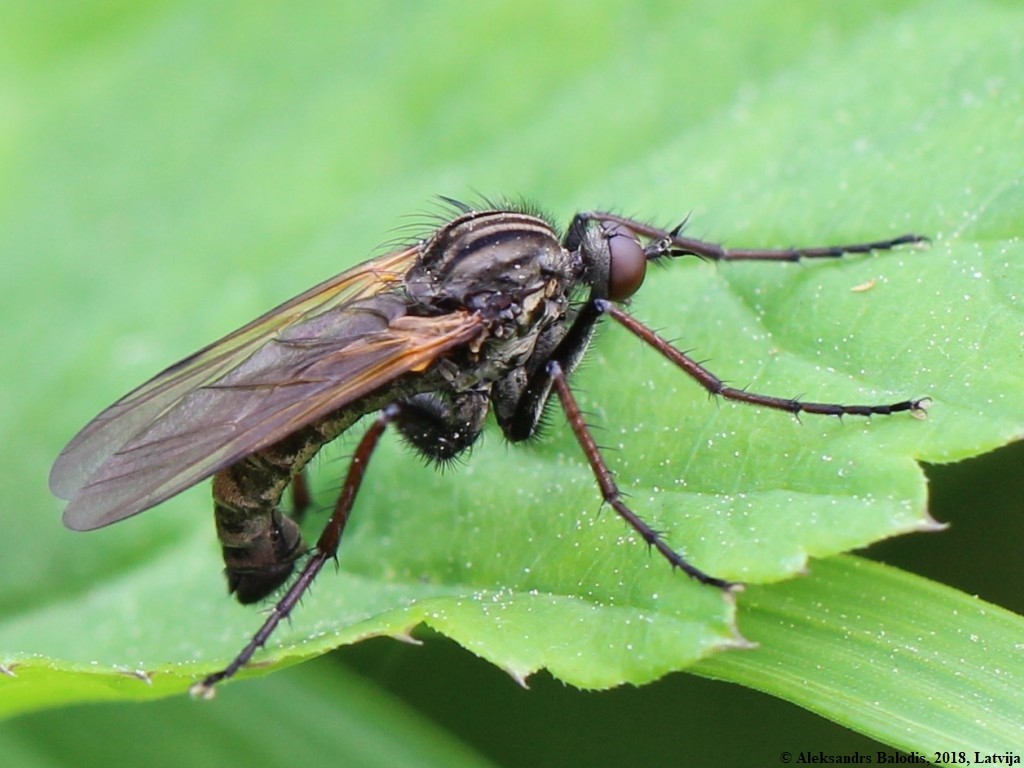
3. Hanging fly
Empis tessellata can reach a length of about 9–11 millimetres (0.35–0.43 in) and a wingspan of 9.3–11 millimetres (0.37–0.43 in). These large dance flies have a strongly black bristled body. The long legs are varying in color, usually they are red-yellow with black thighs. The brown-tinged wings have dark brown veins and rusty-yellow costal margin. The head is small and almost spherical with black antennae, large brown eyes and a long pointed proboscis. The thorax is gray-black in ground color and carries three black longitudinal stripes. The abdomen is elongated and arched, marbled bronze-gray. The 3rd (last) antennal segment bears a two-segmented seta. The sexes are distinguishable by the size of their eyes. In the males, they are narrowly contiguous, widely separated in the females. Empis tessellata is the largest British Empis species, though there are other similar sized species in mainland Europe. 
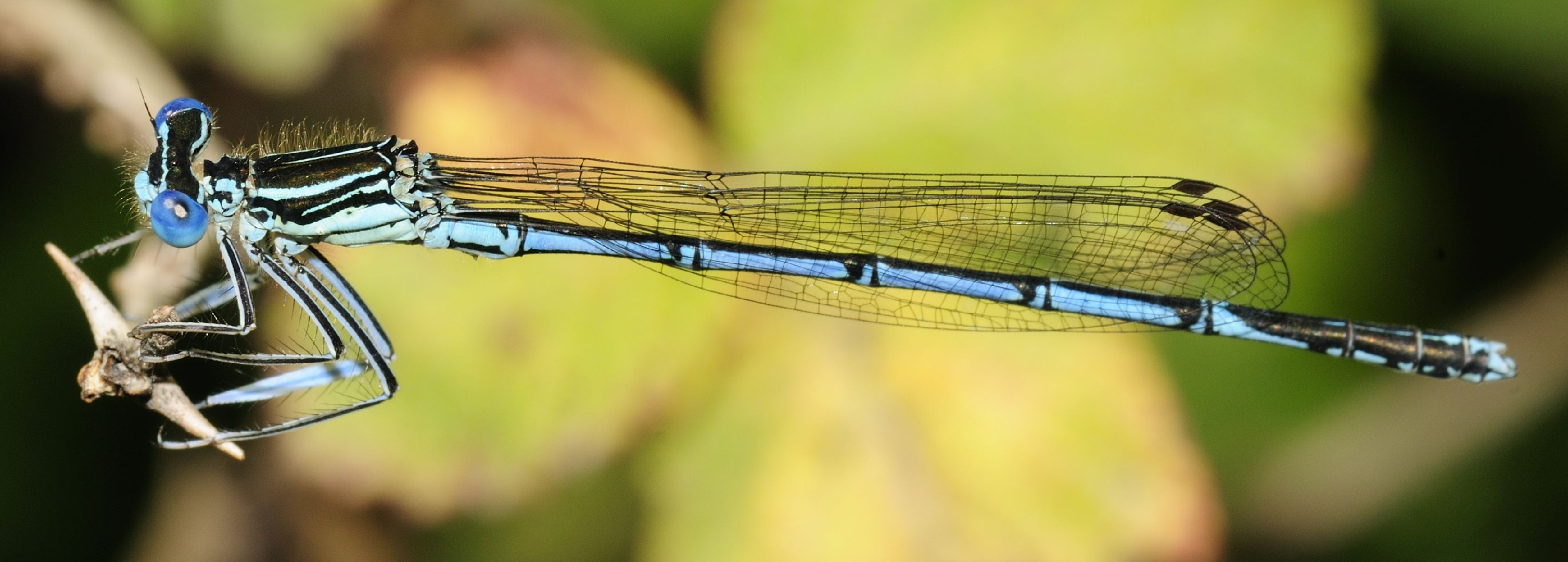
4. White-legged damselfly
The white-legged damselfly or blue featherleg (Platycnemis pennipes) is a damselfly of slow-flowing, muddy waters. It occurs from the Atlantic to Siberia and is often abundant throughout its range.
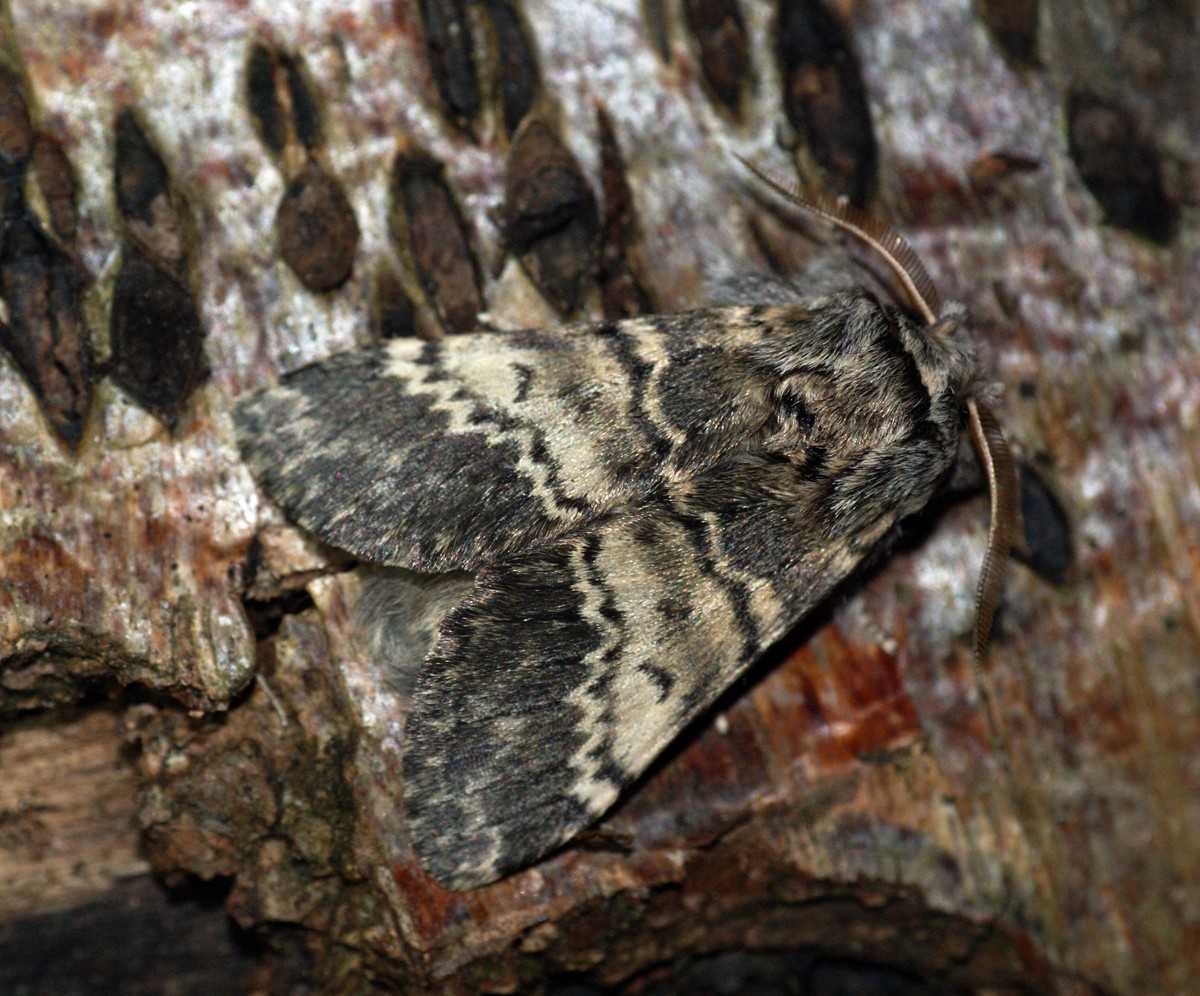
5. Lunar marbled brown
Drymonia ruficornis, the lunar marbled brown, is a moth of the family Notodontidae. It is found in Central and Southern Europe and Anatolia. The wingspan is 35–40 mm. The fore wings are dark fuscous, almost blackish, with a short white line near the base; the central third is white clouded with the ground colour and limited by white edged black wavy lines. There is a black crescent just above the centre of the wing. Hind wings smoky grey with a pale curved line. Drymonia dodonaea is very similar. The moth flies from April to June depending on the location. The larvae feed on oak.
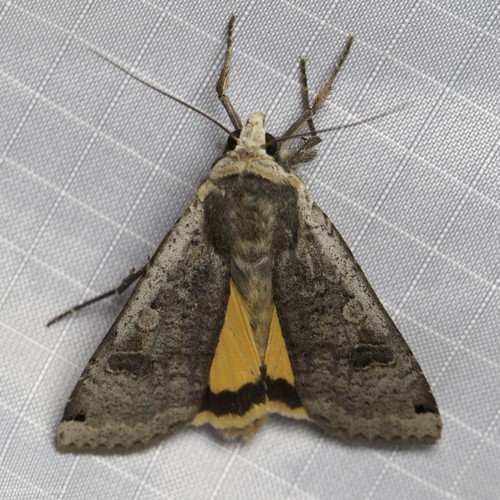
6. Large yellow underwing
An unusually large and heavy species of moth, large yellow underwing (Noctua pronuba) is dreaded by gardeners for the larvae's habit of causing fatal damage to the base of virtually any herbaceous plant. Large migrations occur some years, but how those years are determined is not yet known. Its contrasting colors (yellow-orange and brown) are thought to confuse would-be predators.
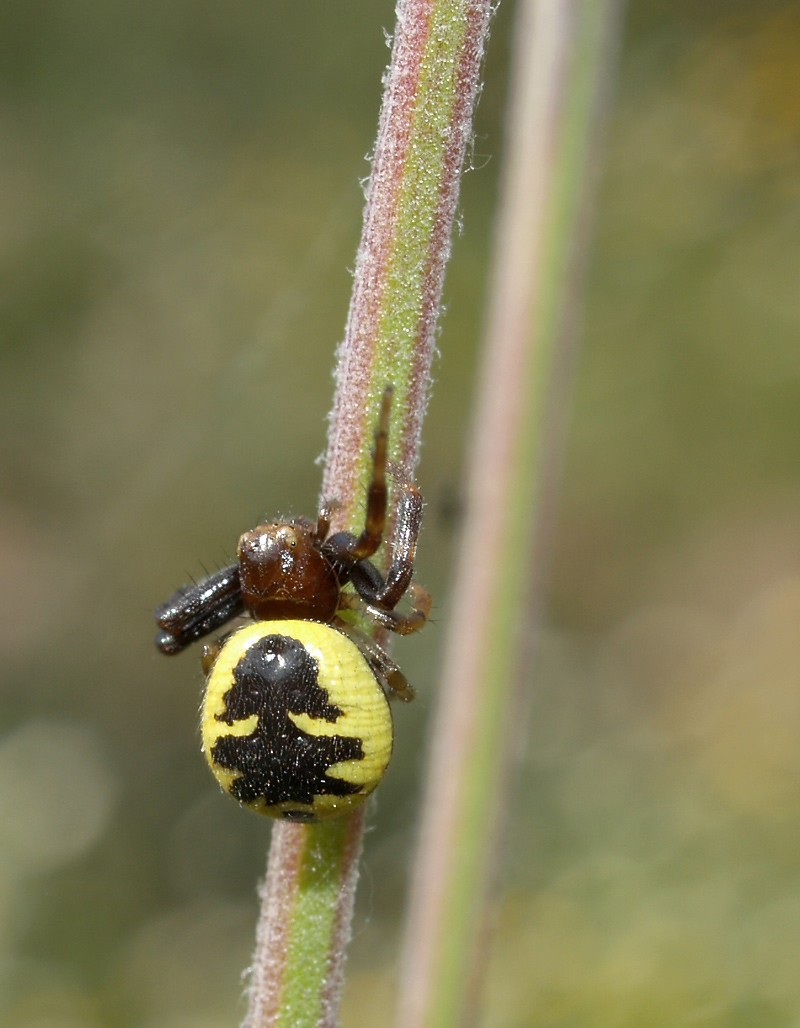
7. Napoleon spider
The adult males reach 2 - 4 mm in length, while females are 7 - 8 mm long. The two pairs of the front legs, used for hunting the flower-feeding insects, are more developed than the rear ones, which have a predominant motor function. Mature males have a black abdomen with two white marks. In mature females, the background colour of the abdomen can be red, yellow or white, with a black pattern which has been noted for a certain resemblance to the silhouette of Napoleon. Prosoma and legs are black or dark brown.
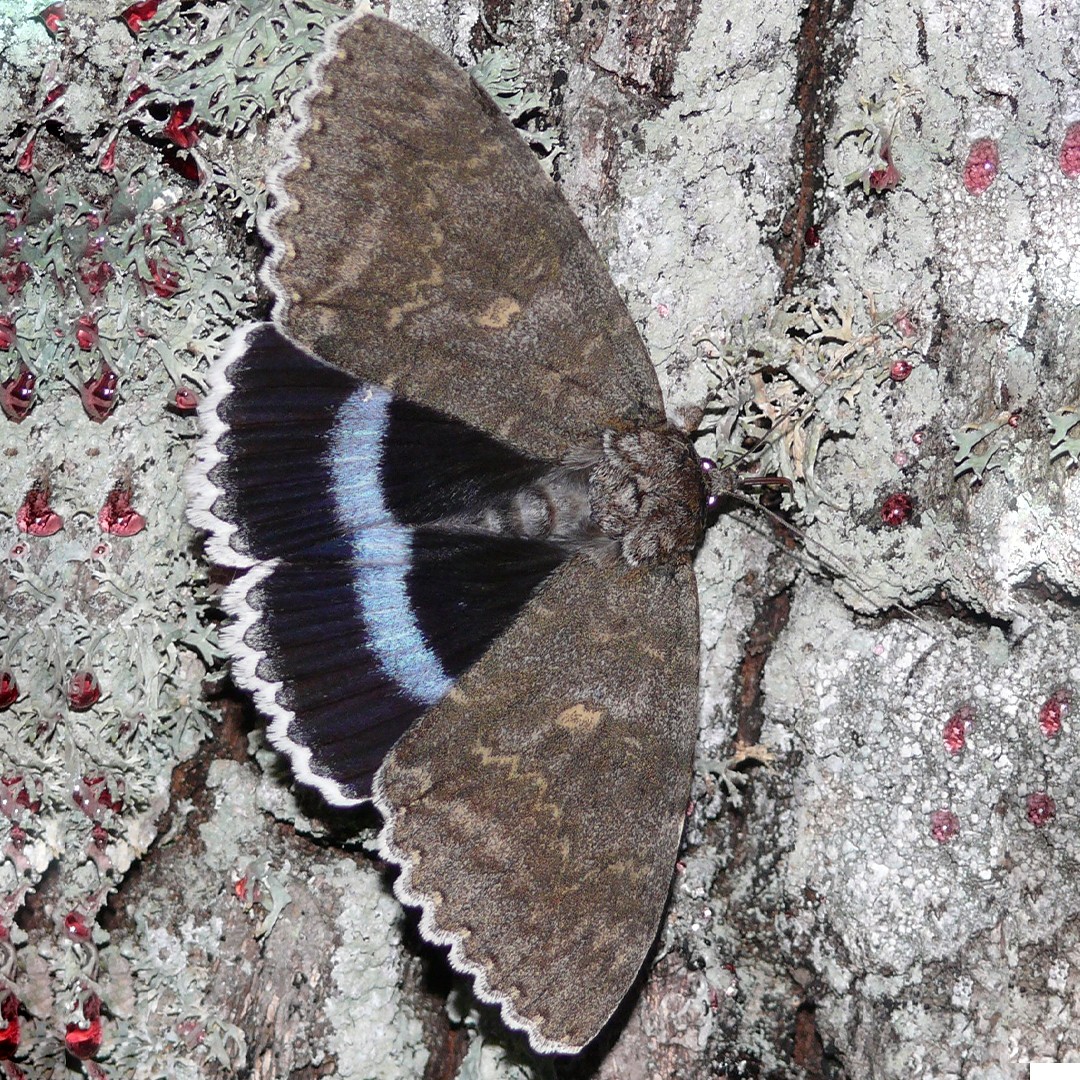
8. Clifden nonpareil
Forewing whitish ochreous, irrorated with pale or dark grey, sometimes with a yellow tinge; inner and outer lines blackish, dentate, double; median and subterminal lines blackish, dentate; reniform stigma with black centre and outline; beneath it a pale yellowish diamond-shaped spot outlined with moerens. dark; hindwing blackish, with a broad blue postmedian band. — ab. moerens Fuchs has the forewing more or less strongly suffused throughout with blackish grey, obscuring the markings; — the form gaudens Stgr. on the other hand, from Central Asia, is very pale, with most of the black scaling obsolete; in the ab. contigua Schultz the pale spot below the reniform stigma is elongated outwards to touch the outer line, often, as well as the outer line itself, strongly yellow-tinged, especially noticeable in examples with the ground colour dark; -angustata Schultz is distinguished by the narrowness of the blue band of the hindwing; — the ab. maculata Kusenov shows a white mark at the lower angle of cell of hindwing. Schultz also records an instance of albinism in the forewings, where the grey scales throughout have become white, and the black lines brownish yellow, the hindwings remaining unaltered.
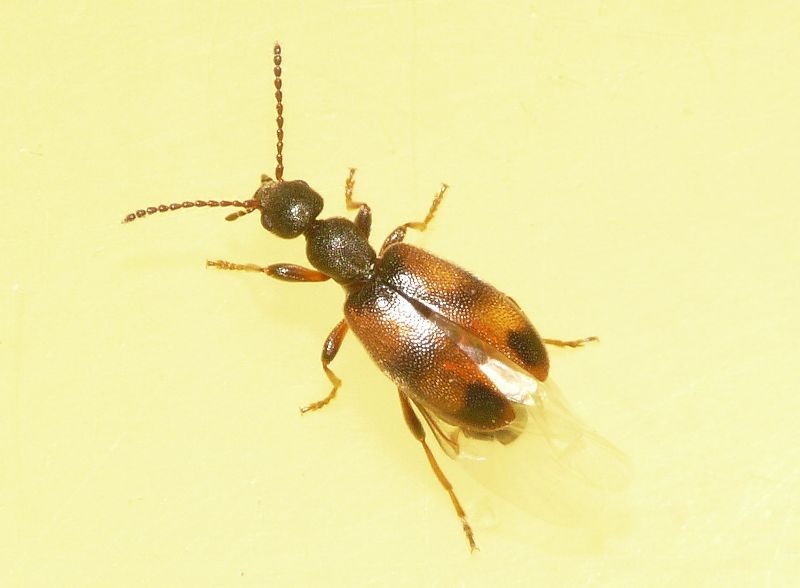
9. Anthicus antherinus
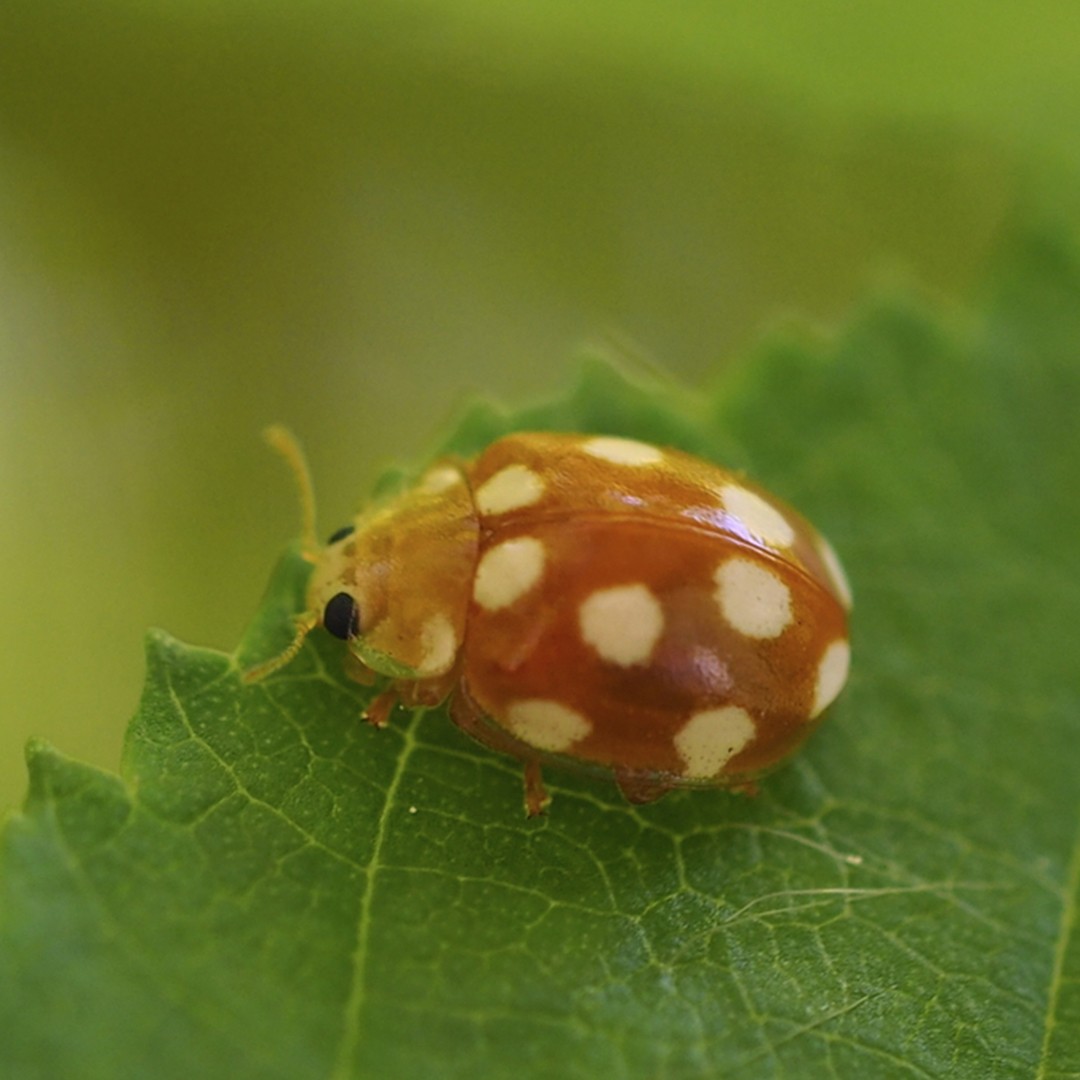
10. Vibidia 12-guttata
Vibidia duodecimguttata can reach a length of about 4 millimetres (0.16 in). These beetles have an oval shaped body. The light brown antennae are quite long. The elytra have a slightly wider side edge. Their entire body has a light brown basic color on the upper and lower side, only the eyes are black. Elytra show 12 whitish spots, six on each elytron (hence the Latin word duodecimguttata, meaning twelve-spotted as if by drops). There is a whitish spot on both sides of the throat. This species is rather similar to Calvia decemguttata and Halyzia sedecimguttata.

More







