




Top 20 Most Common Insects in North Battleford
Insects, a fascinating group known for their six legs and three body parts, inhabit diverse habitats within North Battleford. The rich geographical variations in North Battleford foster an array of insect biodiversity. These tiny creatures play a crucial role in our ecosystem, from being a nuisance as pests to assisting in pollination. The co-existence and interaction between North Battleford's environment and its insects is complex yet intriguing, shaping both value and challenges. Stay tuned as we journey into the top 20 most common insects in North Battleford.

Most Common Insects
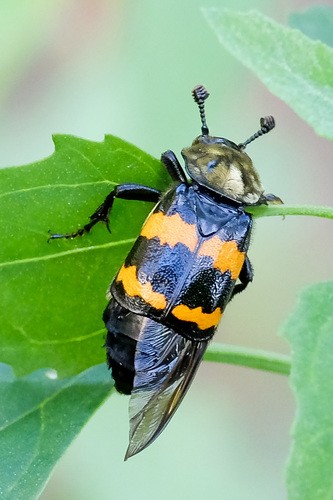
1. Tomentose burying beetle
The tomentose burying beetle (Nicrophorus tomentosus) is also called the gold necked carrion beetle due to the two bright bands on its back. They are also one of the few insects that engage in cooperative parental care. Males and females will place their eggs underneath a carcass, where they may need to remove the soil. Both males and females cooperate in the defense of this carcass as their young grow.

2. Lyre-tipped spreadwing
Lestes unguiculatus, the lyre-tipped spreadwing, is a species of spreadwing in the damselfly family Lestidae. It is found in North America. The IUCN conservation status of Lestes unguiculatus is "LC", least concern, with no immediate threat to the species' survival. The population is stable. The IUCN status was reviewed in 2017. 
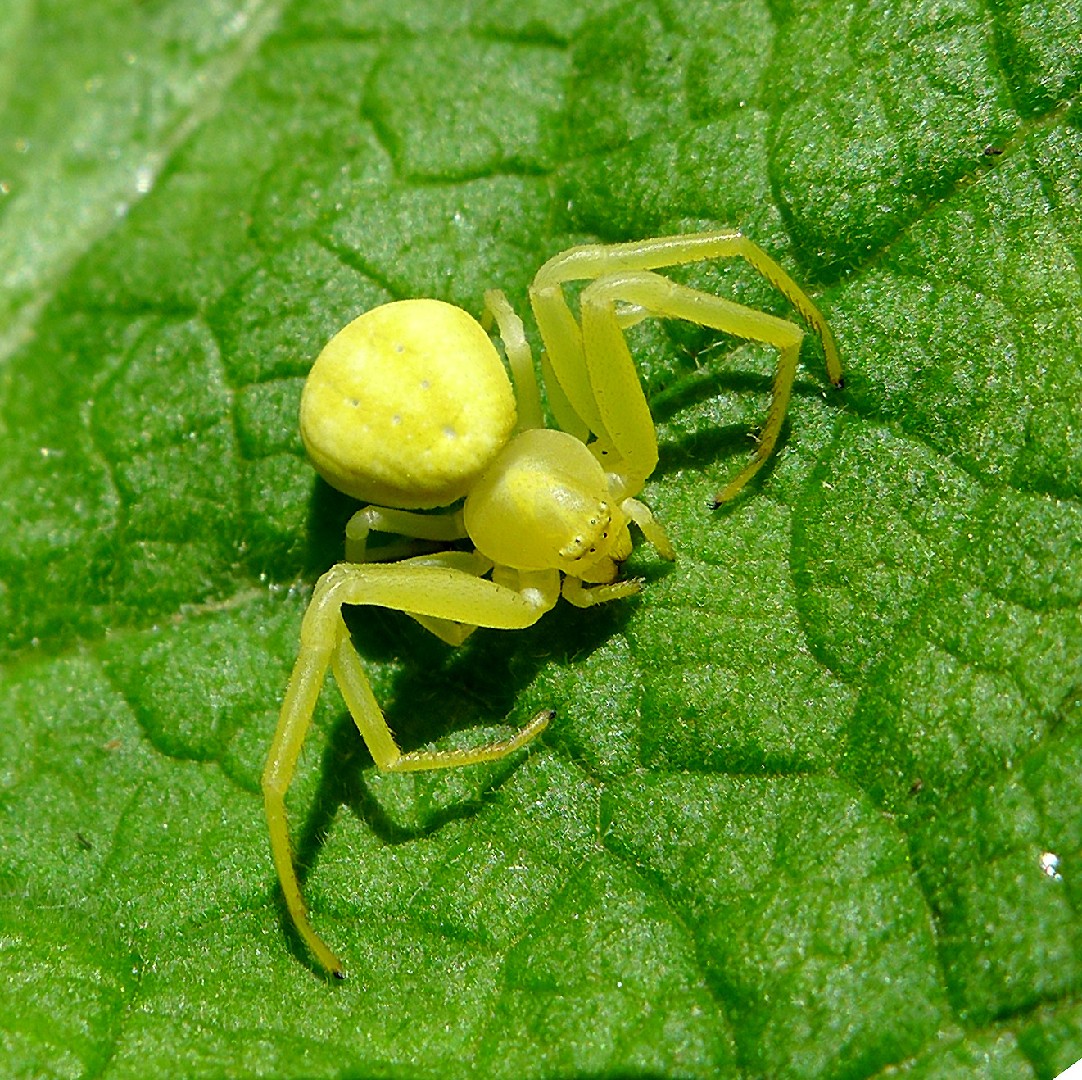
3. Goldenrod crab spider
Rather than for its coloring, goldenrod crab spider (Misumena vatia) is named for its tendency to hunt within sprays of goldenrod. This species is capable of catching and consuming prey several times larger than itself, such as dragonflies or grasshoppers. Loyal parents, the females will guard their eggs until they hatch and the tiny spiders disperse, after which the female will die.
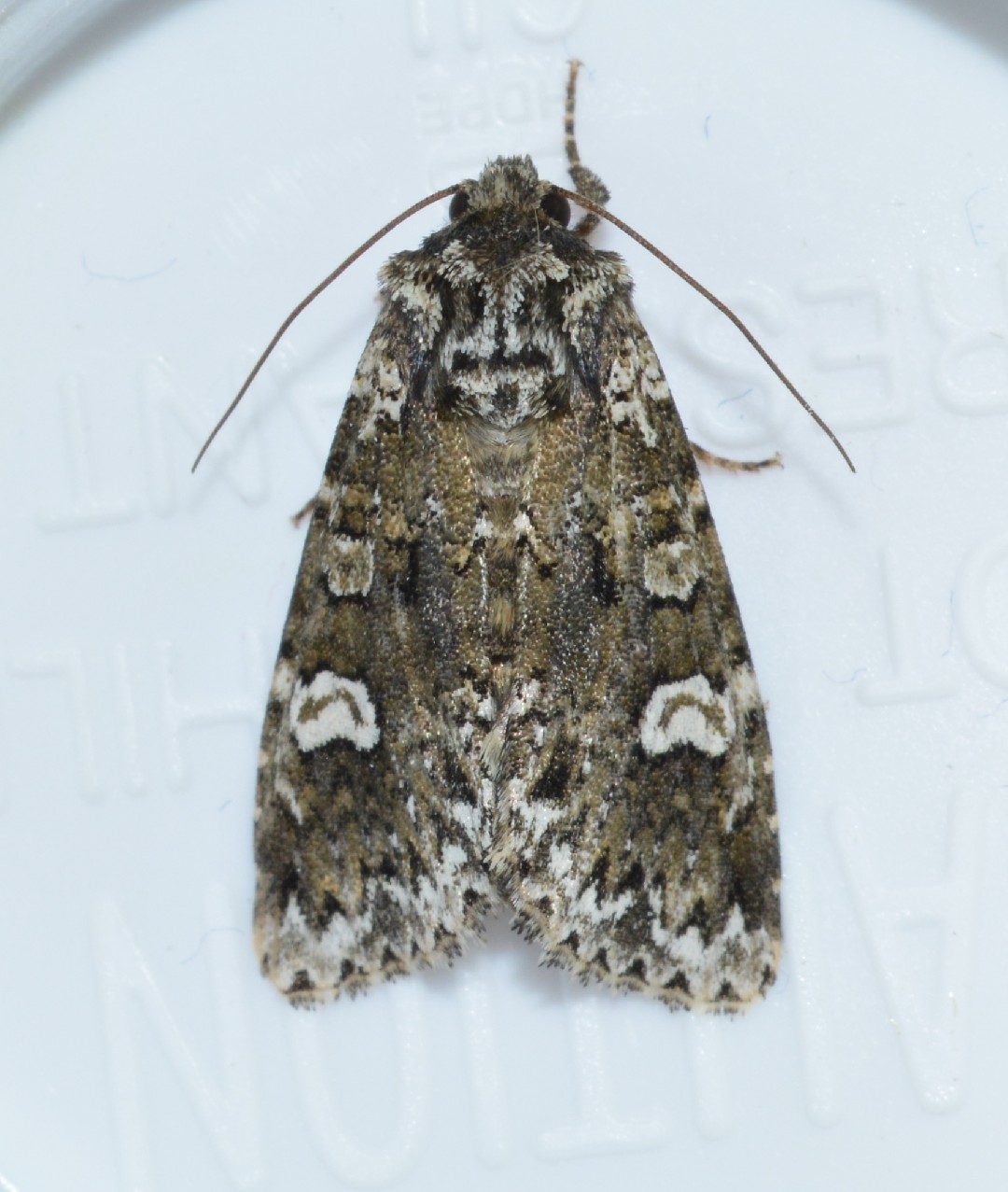
4. Hitched arch
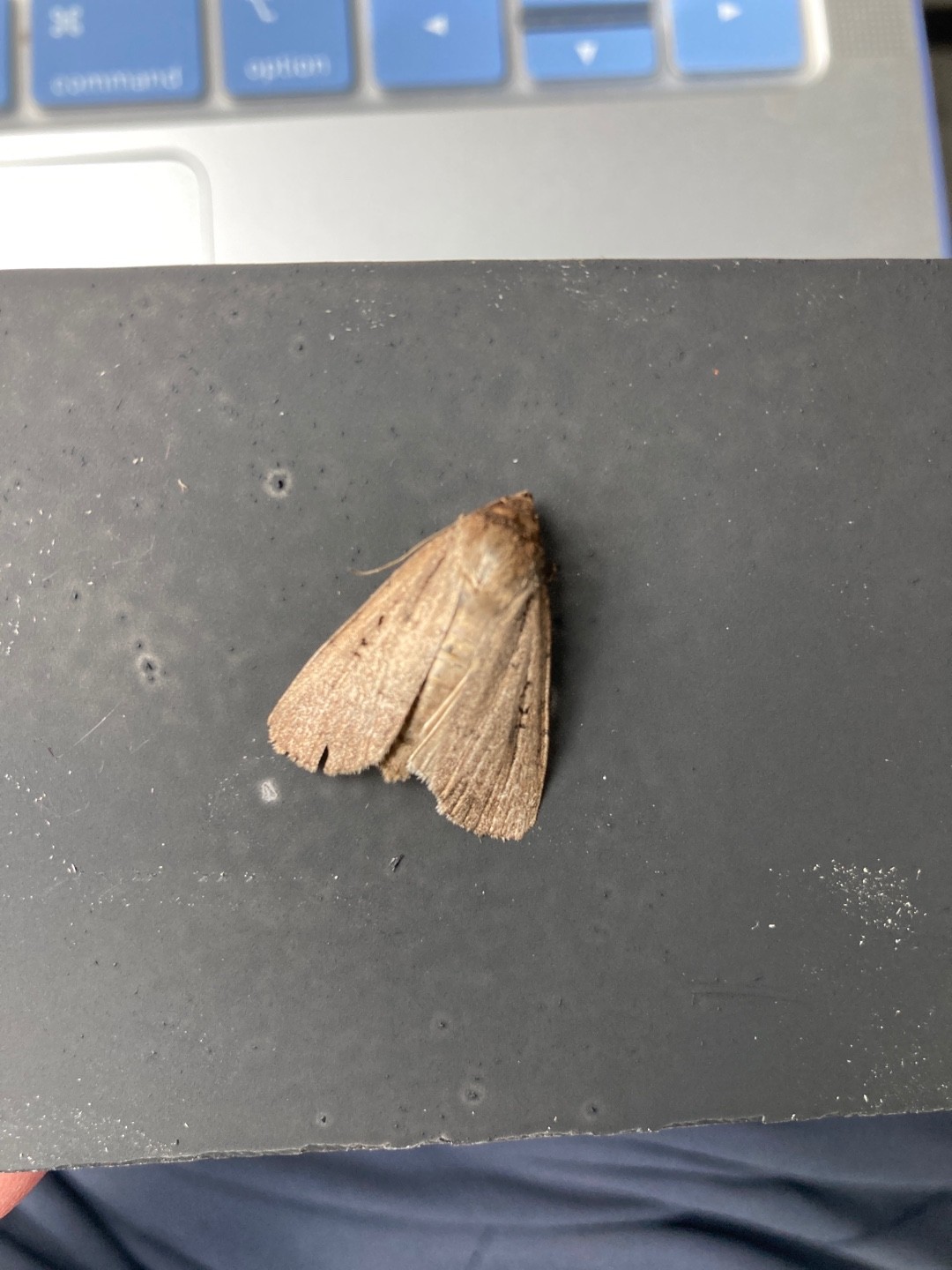
Melanchra adjuncta is a butterfly from the family of owls (Noctuidae). The scientific name of the species was first validly published in 1841 by Boisduval.
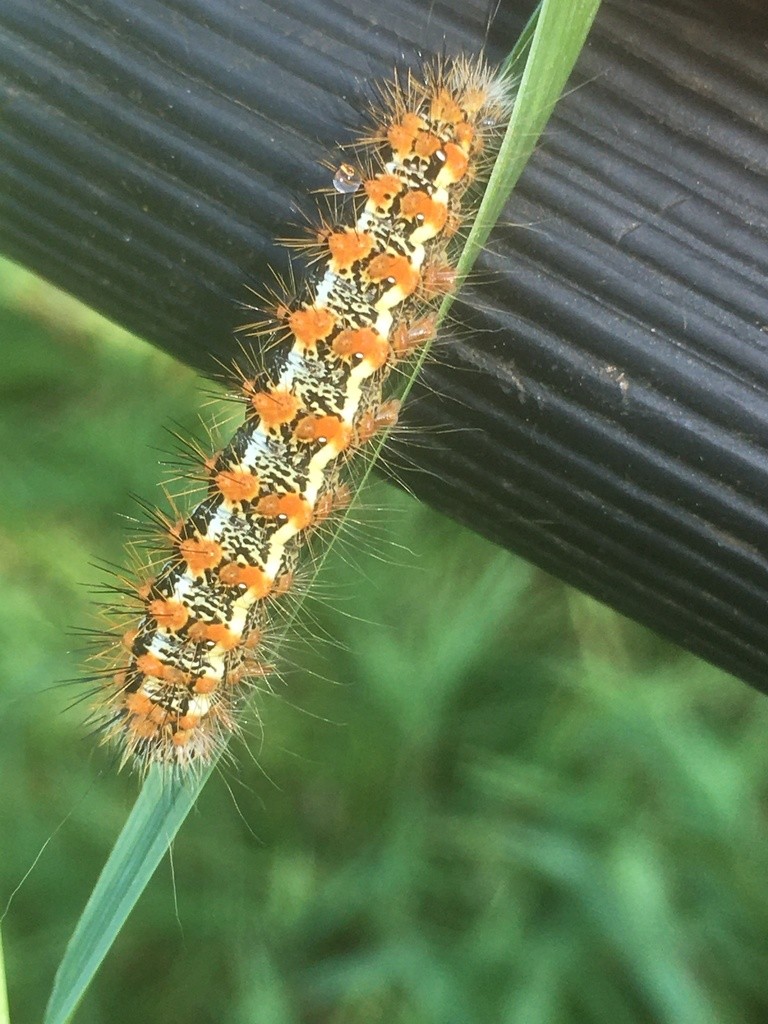
5. Cattail Caterpillar
Acronicta insularis, the cattail caterpillar (when referring to the larva) or Henry's marsh moth (when referring to the adult), is a moth of the family Noctuidae. The species was first described by Gottlieb August Wilhelm Herrich-Schäffer in 1868. It is found from coast to coast throughout the United States and southern Canada (Ontario, Quebec, New Brunswick, Nova Scotia, British Columbia, Alberta, Saskatchewan and Manitoba). The wingspan is 35–40 mm. Adults are on wing from April to September. The larvae feed on Typha and Polygonum species, as well as various grasses and sedges, poplar and willow. Acronicta insularis was formerly called Simyra insularis. In 2015, the genus Simyra, along with Oxicesta and Eogena, were moved to Acronicta based on phylogenetic analysis. The MONA or Hodges number for Acronicta insularis is 9280.
6. Red-lined carrion beetle
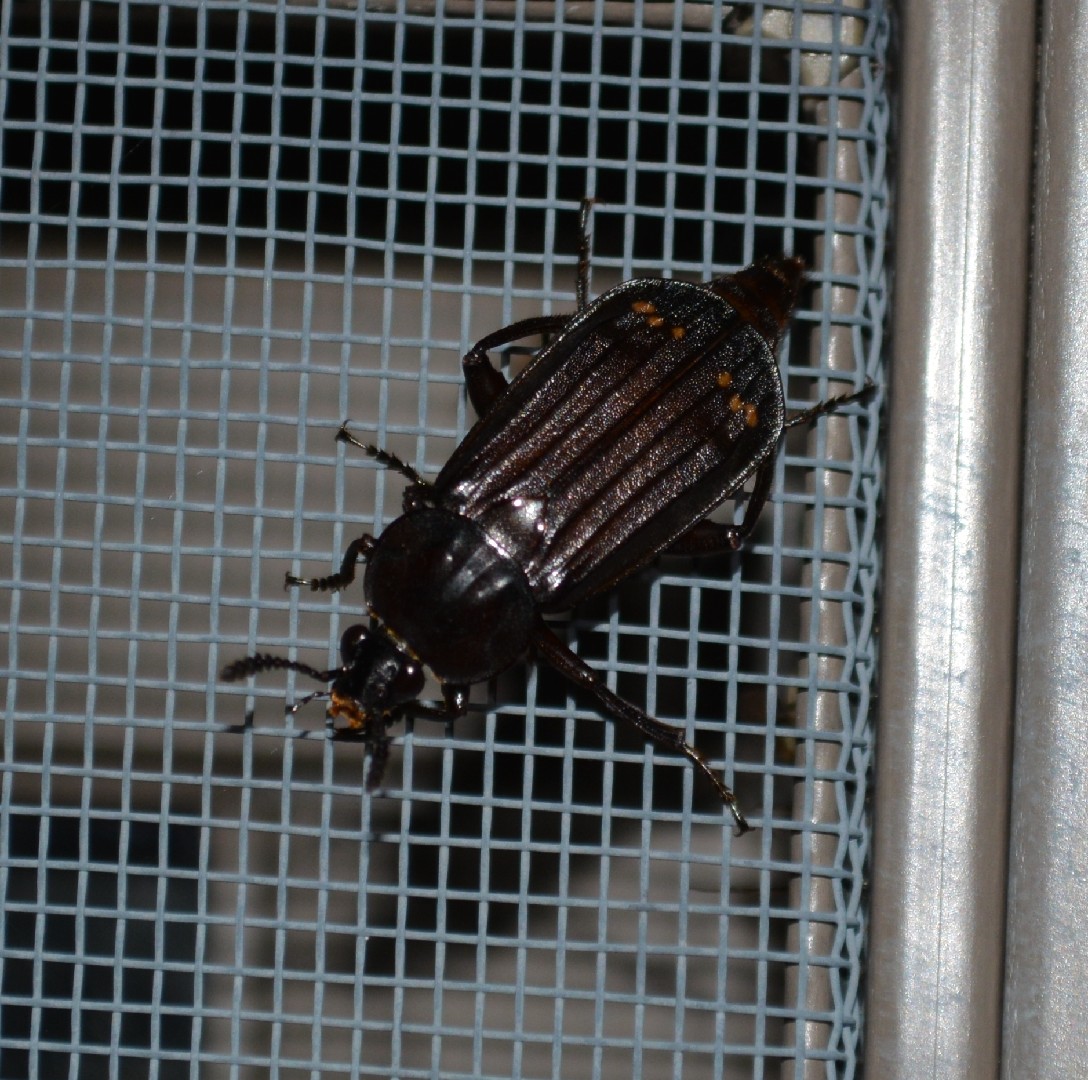
The red-lined carrion beetle (Necrodes surinamensis) is a nocturnal species, often attracted to lights. It's usually found near dead things, especially deceased birds. It also consumes fly larvae, which are abundant near carrion. If threatened, these bugs can release a foul-smelling chemical at all life stages.
7. Sallow kitten
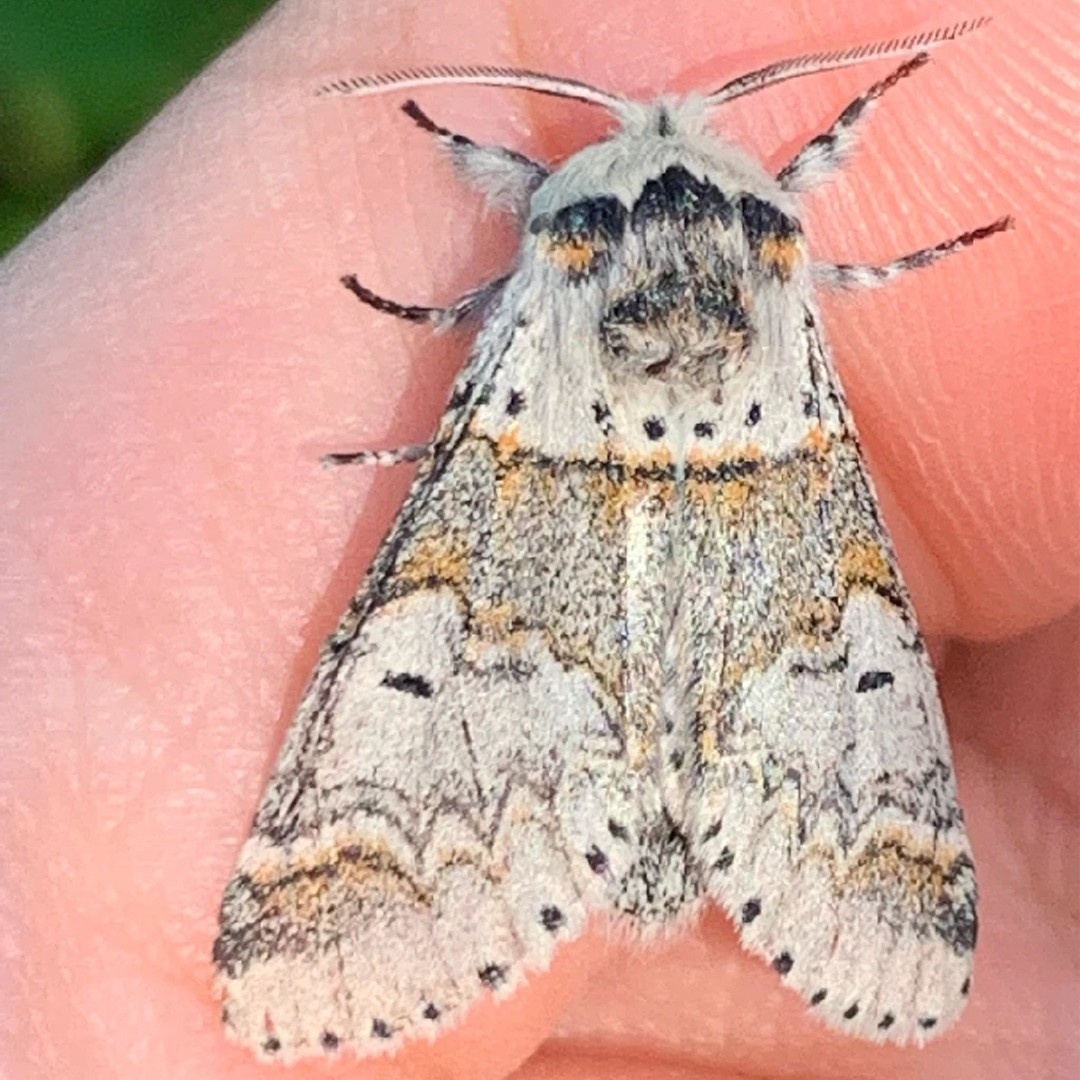
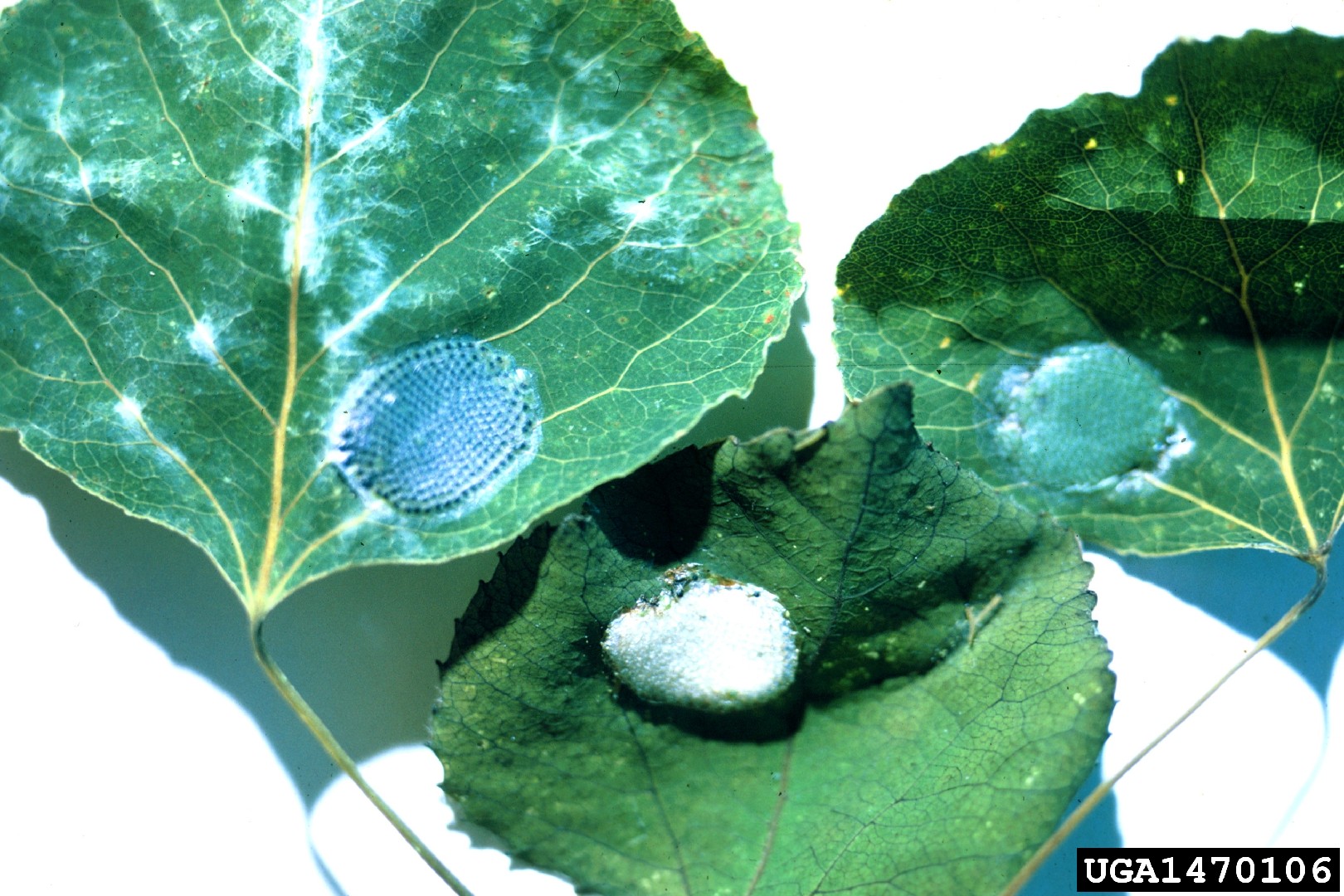
The sallow kitten is grey/white and has a wingspan of 27 to 35 mm. The first part of the wing has a large grey middle band. It differs from the poplar kitten (Furcula bifida) in its generally smaller size, but more especially in the shape of the black line forming the outer margin of the central band; this is always more or less angled or dentate towards the front margin of the wings, whereas, in the poplar kitten, this portion of the line forms a clean curve. The flight period ranges from April to the end of August. Depending on location the moth has one or two generations per year and is attracted to light. Ova The dark purple, hemispericle eggs are laid in batches of two or three on the upper surface of leaves in May or June and again in August. They hatch after nine days. Larva The caterpillar can grow up to 35 mm and is bright green with a purple brown marking on the saddle and can be found from May through to September. The main host plants are willow (Salix species) and occasionally aspen (Populus tremula) and other poplar (Populus species). Larvae can be found on small isolated moorland bushes. Pupa Before pupation the larva hollows out a recess. The pupa is dark purple-brown and pupation takes place in a tough cocoon constructed from a mixture of chewed wood-pulp and silk.
8. Four-spotted ghost moth
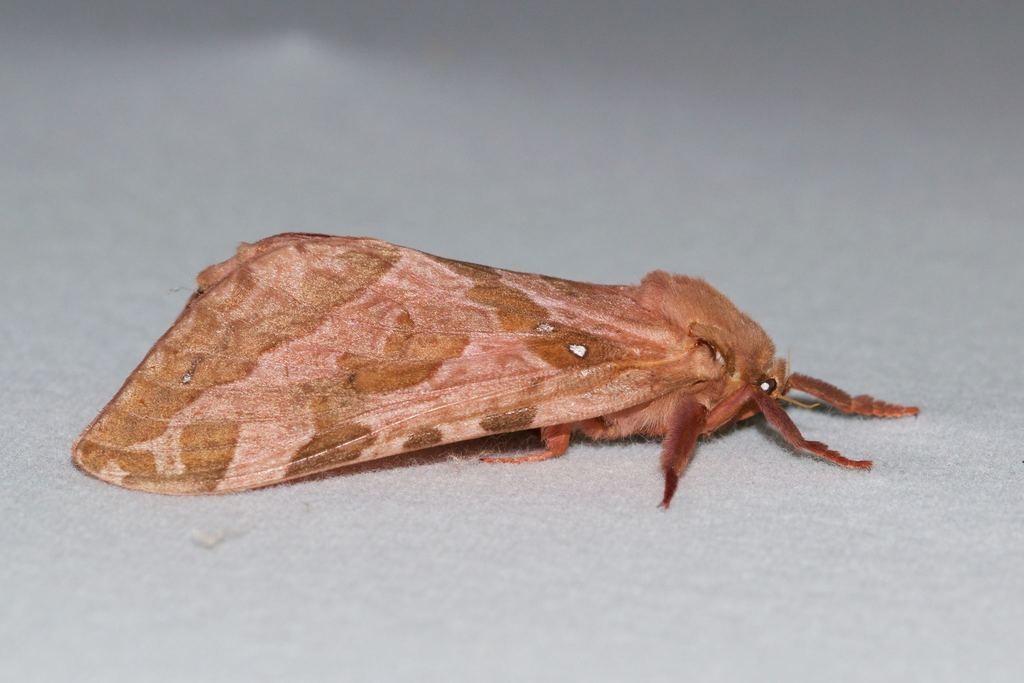
Sthenopis purpurascens, the four-spotted ghost moth, is a species of moth of the family Hepialidae. It was described by Packard in 1863. It is found in Canada and the United States, from Labrador and New York north and west to British Columbia and the Northwest Territories, south in the mountains to Arizona. The wingspan is 66–100 mm. There are two color forms, a purple-grey and a yellow-brown form. The latter was previously thought to be a separate species, Sthenopis quadriguttatus. The forewings have a darker oblique median band, a darker terminal area and darker spots along the costa. There are two small, silver spots near the wing base. The hindwings are purple brown or salmon pink and generally unmarked. The larvae feed on Populus, Salix and Alnus species. They bore into the roots of their host plant. The larvae have a cream-white body and brown head and reach a length of 50–60 cm. They need two years to complete their lifecycle
9. Oregon cycnia moth
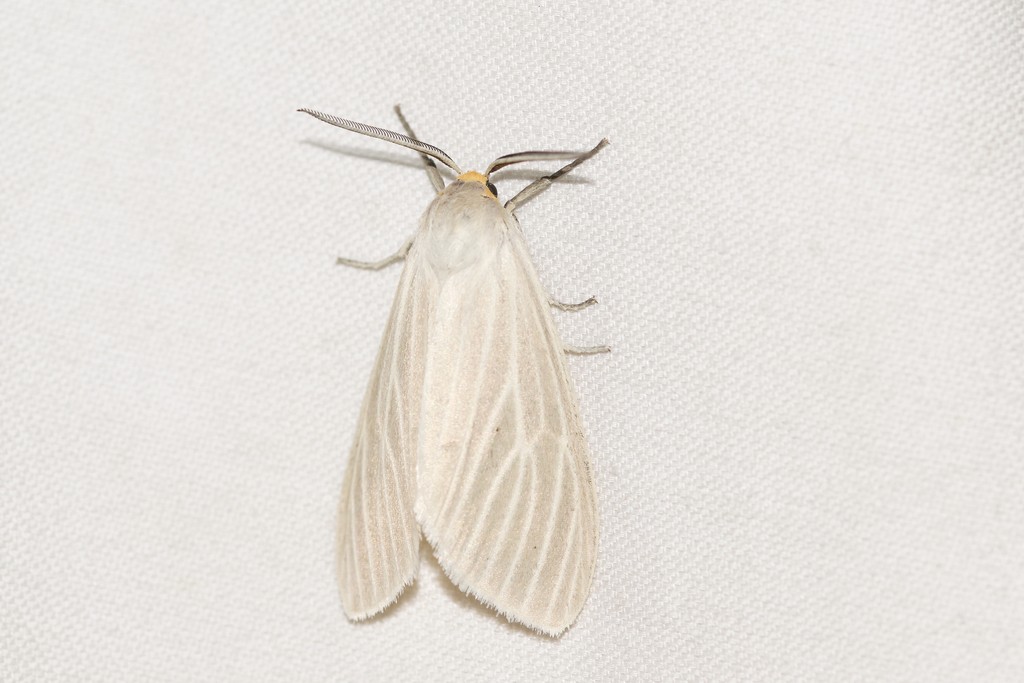
Cycnia oregonensis is a moth in the family Erebidae. It is found in most of North America, from coast to coast and from the border with Mexico north to central Saskatchewan and Nova Scotia. The length of the forewings is 19–20 mm. Throughout most of its range, adults are nearly uniform in color and pattern. Subspecies tristis is limited to a small area near Olympia, Washington and is the only known population of this species in Washington west of the Cascades. It is distinctly grayer and less patterned than all other populations. The larvae feed on Apocynum species.
10. Fall cankerworm
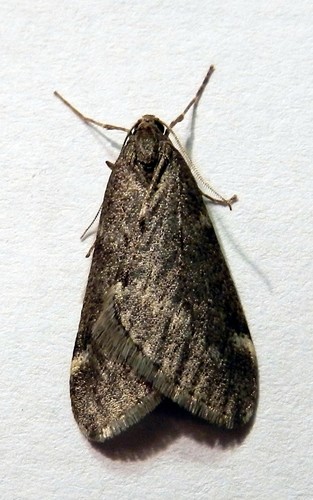
The caterpillars grow to about 2.5 cm long. In color, they vary from light green to a dark brownish green. Light green caterpillars have white lines running down the body from the head to the tip of the abdomen while the darker caterpillars have a black stripe the length of their back. Larvae have three pairs of legs on their thorax and three pairs of prolegs on their abdomen. The first pair of prolegs is much smaller than the last two pairs. The pupa is wrapped in a silk cocoon and is buried just beneath the surface of the ground.Adult males have a 2.5 - 3.5 cm wingspan. The forewings are glossy brown and crossed with irregular white bands. The females are brownish gray, wingless, and 1 - 1.2 cm long. Eggs are grayish brown with a dot and ring on the top and are less than 1 mm in diameter.

More







