




Top 15 Most Common Insects in Chad
Insects, characterized by their segmented bodies and jointed limbs, infest every corner of our planet, including Chad. The biodiversity of these tiny arthropods in the region magnifies when one factors in its geographical diversity, climate variations, and human interaction. The insect population in Chad illuminates the fascinating interplay between ecology and biology, with both beneficial insects and pests adapting to thrive. Stay tuned as we delve into 15 of the most common insects across the varying landscapes of this nation.

Most Common Insects

1. Citrus swallowtail
Papilio demodocus , also known under the English name Citrus Swallowtail ("Citrus Swallowtail"), is a butterfly from the family of the knight butterflies (Papilionidae).
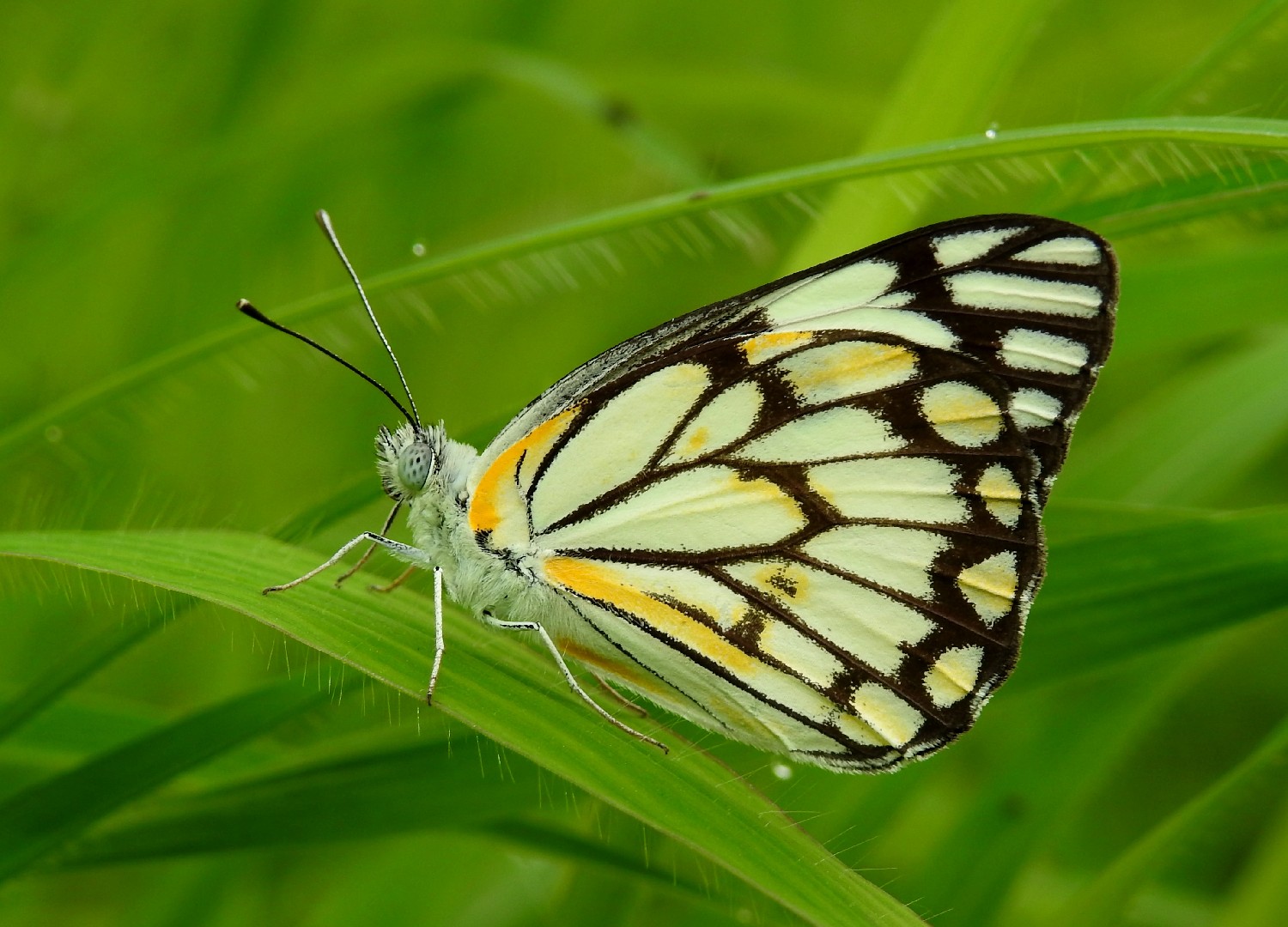
2. Pioneer white
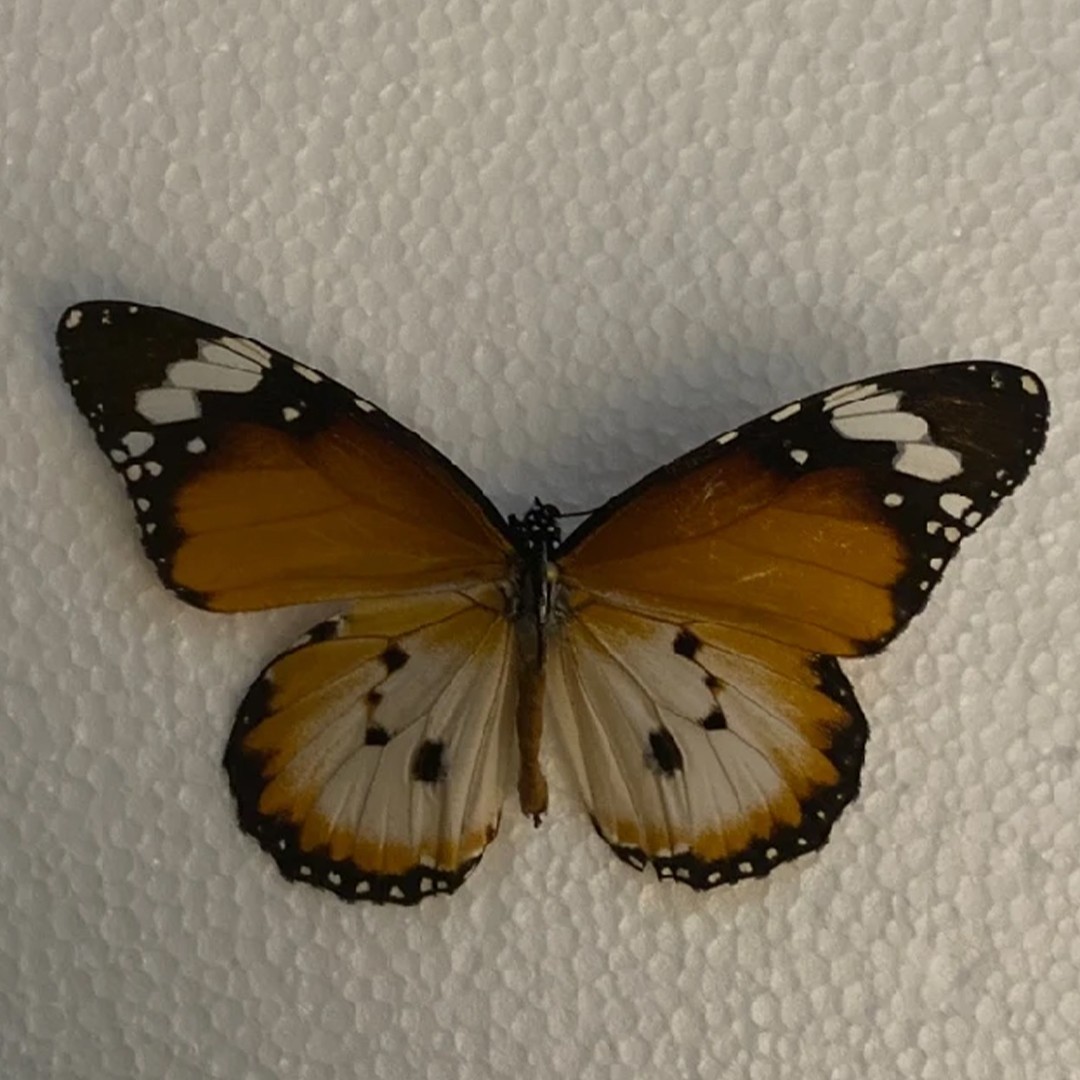
Wet-season form. The upperside of males is white with the forewing having the costa from base to base of vein 11 dusky black and then jet black continuing into a widened and curving short streak along the discocellulars to the lower apex of the cell; apical area diagonally with the termen black, the former with six elongate outwardly pointed spots of the ground colour enclosed one in each of the interspaces 3, 4, 5, 6, 8, and 9. Hindwing: uniform, the black along the venation on the underside seen through by transparency; termen between veins 2 and 6 somewhat broadly black, with a series of four round spots of the ground colour in the interspaces; below vein 2 and above vein 6 the termen is very narrowly black. Underside: forewing white, markings similar, more clearly defined, the white spots within the black apical area larger. Hindwing: yellowish white, all the reins very broadly bordered with black; interspaces 1, 2, 6, and 7 with crossbars of black, beyond which there is a subterminal, somewhat broad, transverse band of black between veins 2 and 6. Cilia of both forewings and hindwings white alternated with black. The ground colour on both upper and undersides variable, often cream coloured above; beneath: in some specimens, the base of cell and the elongate spots in apical area of forewing, and the whole surface of the hindwing varies to rich chrome yellow. Female similar; the black markings on both upper and undersides broader, the white spots on black apical area of forewing often sub-obsolete above. Antennae in both sexes black, sparsely sprinkled with white dots; head, thorax and abdomen above and below white: thorax above often bluish grey. Dry-season form. The dry-season form is similar to the wet-season form but on the upperside the black markings are narrower, the white markings on the black apical area of forewing broader and longer, and on the hindwing the narrow inner margining to the black on the termen very narrow, somewhat obsolescent; therefore, the white subterminal spots have the appearance of opening inwards. Underside: ground colour almost pure white; on the hindwing slightly tinged with yellow. Antennae, head, thorax, and abdomen as in the wet-season form. Wingspan of 4.5 - 6 cm. 
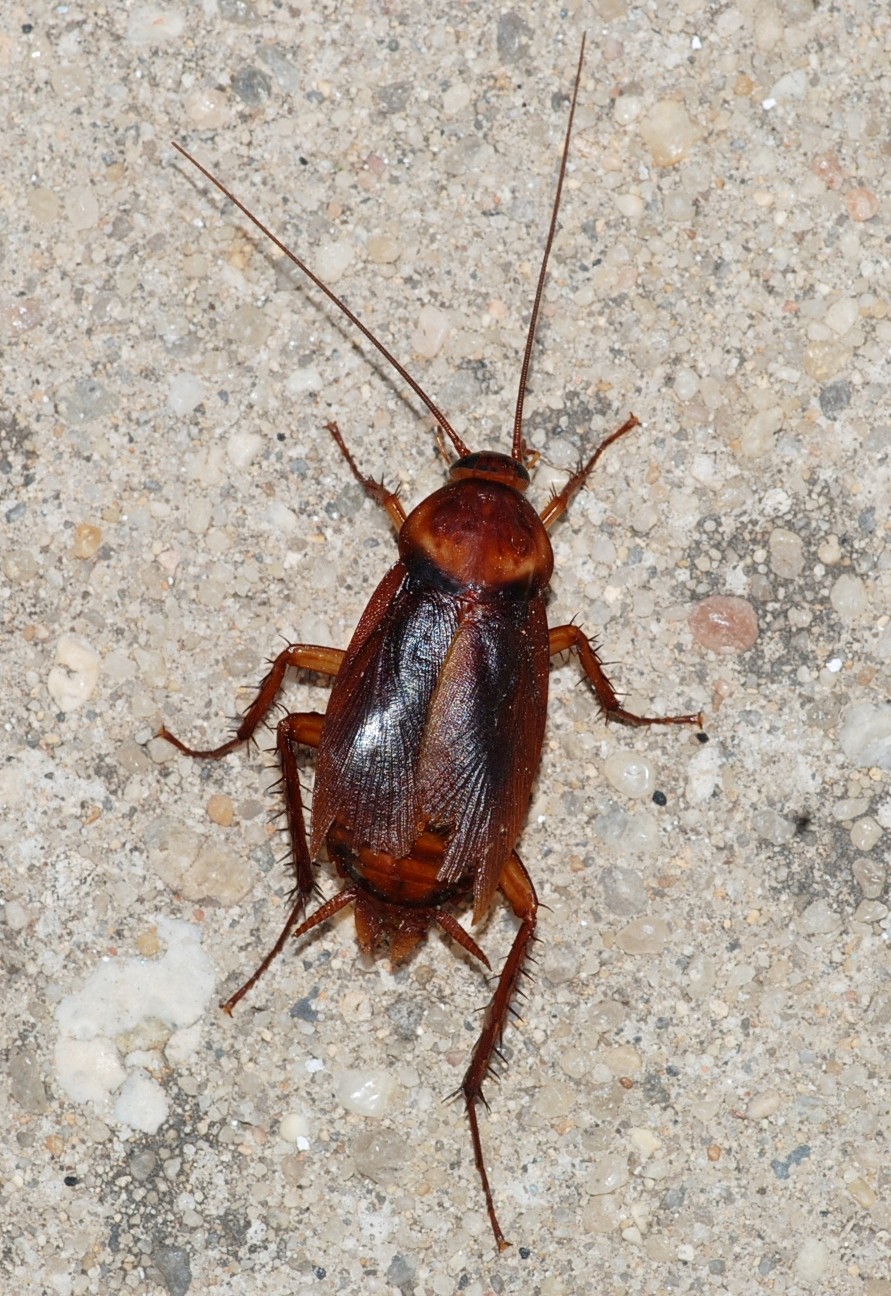
3. American cockroach
Despite its name, american cockroach (Periplaneta americana) is not native to the Americas but rather to Africa and the Middle East, from which it arrived as a result of human commercial patterns. Notably quick and rather resilient, this species is capable of limb regeneration. It requires a certain level of moisture to thrive, and it will avoid drier areas unless it has access to the required level of water.
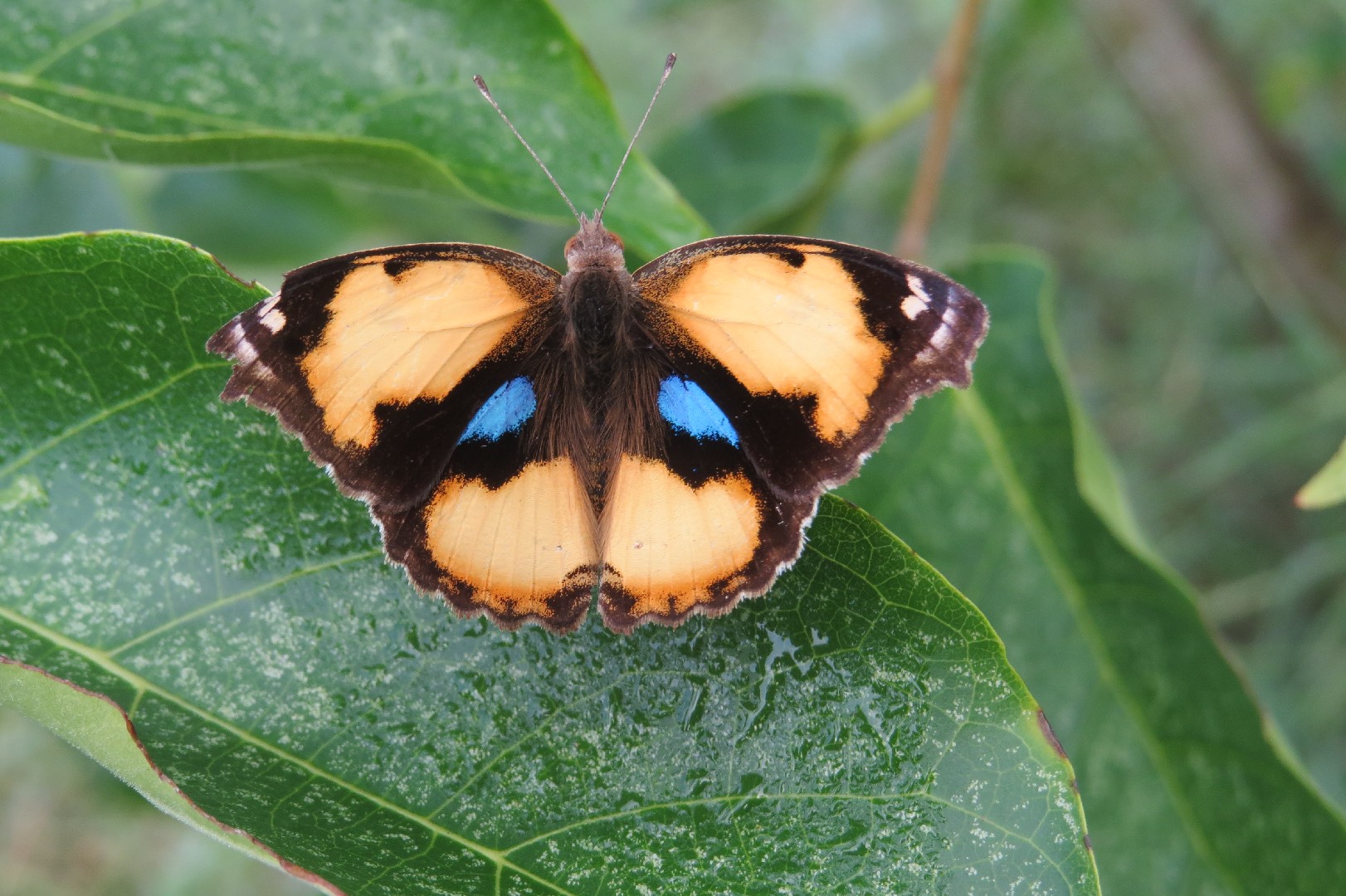
4. Yellow pansy butterfly
The male upperside is bright yellow. The costa of the forewing has a broad triangular jet-black projection downwards at the discocellulars, and the dorsum has a triangular projection upwards near the tornus; this black margin narrows near the middle of the termen and bears on the apex two short transverse preapical white streaks crossed by the black veins. Below these is an obscure ocellus that is sometimes absent. The anterior half and the terminal margin of the hindwing is black, and the dorsum is broadly shaded with brown while the anterior black area has a large brilliant blue spot. The cilia of both forewings and hindwings are white alternated with brown.The underside of the forewing is pale yellow. The cell is crossed by three laterally black-margined orange-yellow bars, beyond that is a short, broad, irregular jet-black oblique band from costa to base of vein 4. The hindwing is greyish yellow, and in the dry season its form is strongly irrorated (sprinkled) with dusky scales. With a prominent transverse brown discal fascia, its margins are highly sinuous. There is a brownish broad shade on the middle of the termen and some obscure lunular marks on the basal area. The antennae is pale, and the head, thorax and abdomen are dark brownish black; beneath that is a dull ochraceous white. The female is similar, although the colours are duller. The cell of the upperside forewing has a more or less complete transverse black fascia and another at the discocellulars. A blue-centred well-marked ocelli is in interspaces 2 and 5 on the disc of the forewing, and smaller ocelli in interspaces 2 and 5 on the disc of the hindwing. The forewings and hindwings have a fairly well-defined pale subterminal line, though the blue spot on the anterior black area on the hindwing is small and ill-defined; the rest is as the male. The underside is also as the male, but generally has heavier and more clearly defined markings.
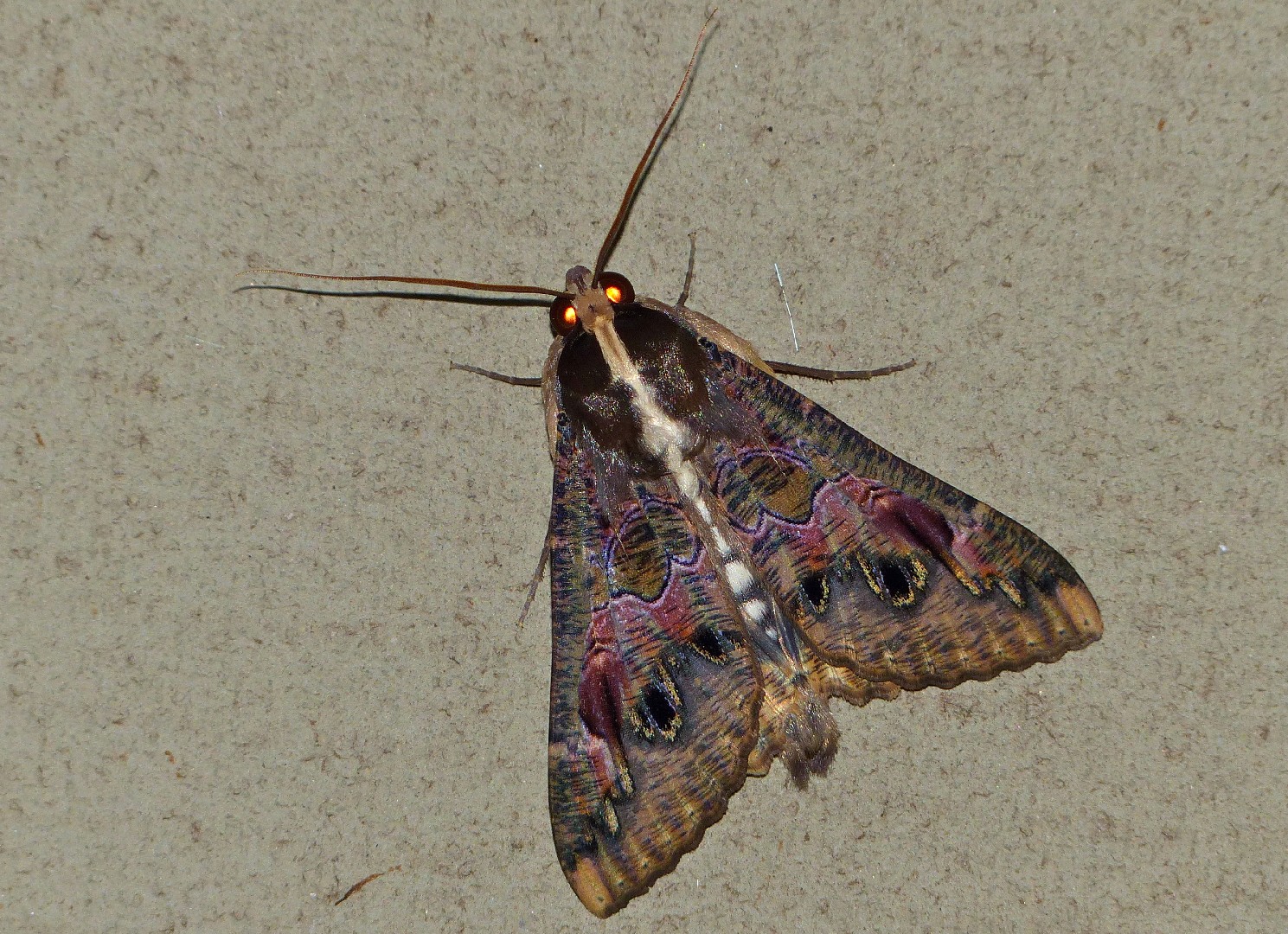
5. Sundowner moth
Its wingspan is about 60–84 mm. Head ochreous white, the basal joint of palpi dark brown. Thorax dark brown above with a broad ochreous-white stripe on vertex. Abdomen dark brown above, with a series of dorsal ochreous-white spots. Forewings reddish-brown with dark stria. There is a pale patch at base of inner margin and an indistinct antemedial angulate line. An irregularly waved medial line with pale outer edge and somewtimes tinged with purple and rufous. Some vinous patches beyond it. Reniform is a narrow lunule with a vinous dash beyond it. There is a crenulate postmedial line found with medial black lunules on it and one towards inner margin, and joined by a crenulate line from near apex. A marginal black specks series also present. Hindwings are fuscous brown where the base and a diffused medial irregular band are pale. An ochreous patch with black strai on it at center of outer margin. Cilia pale. Ventral side pale with fuscous submarginal band towards inner margin of each wing.
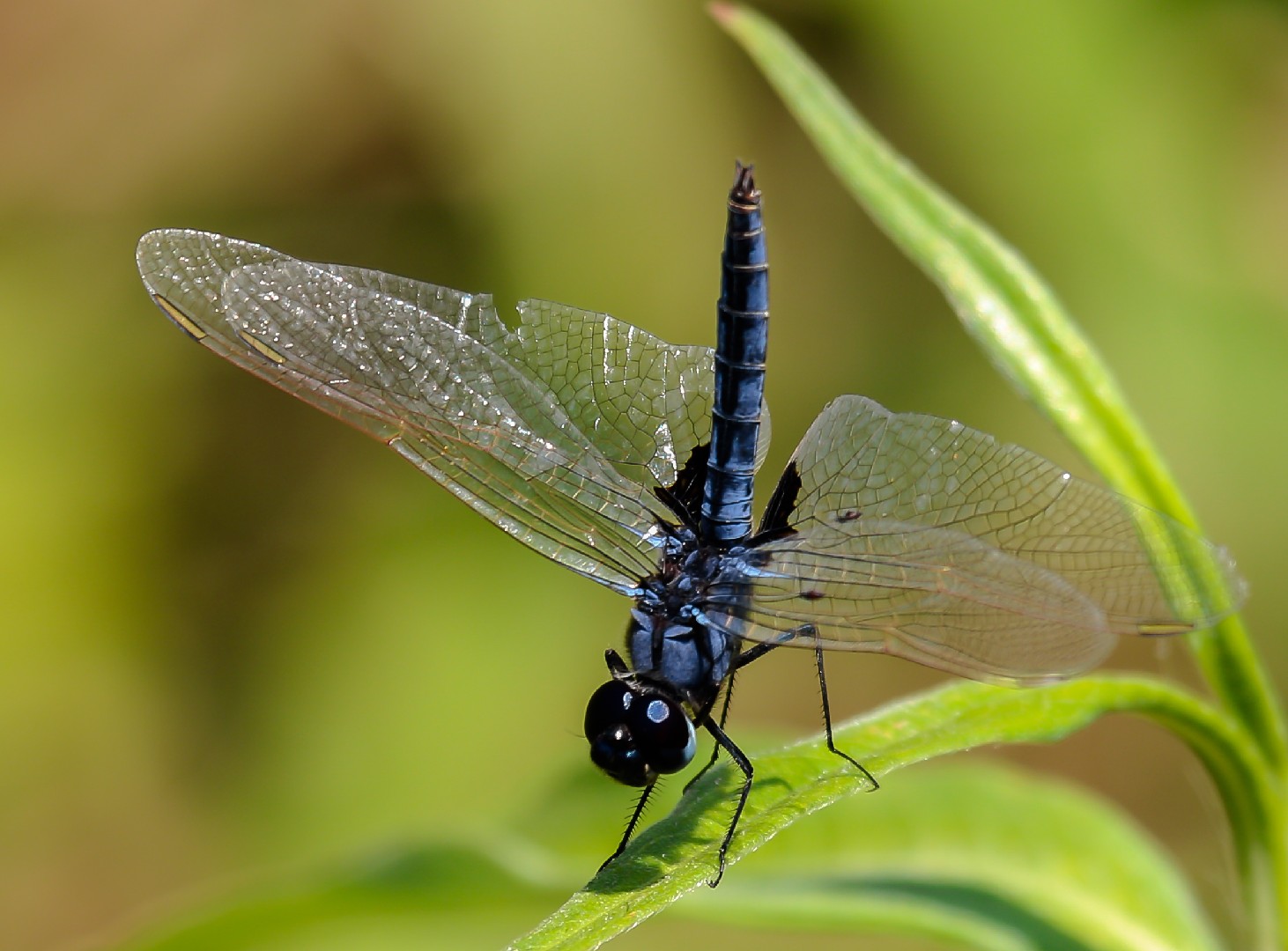
6. Blue basker
The species is on the IUCN Red List as not endangered, assessment year 2008.
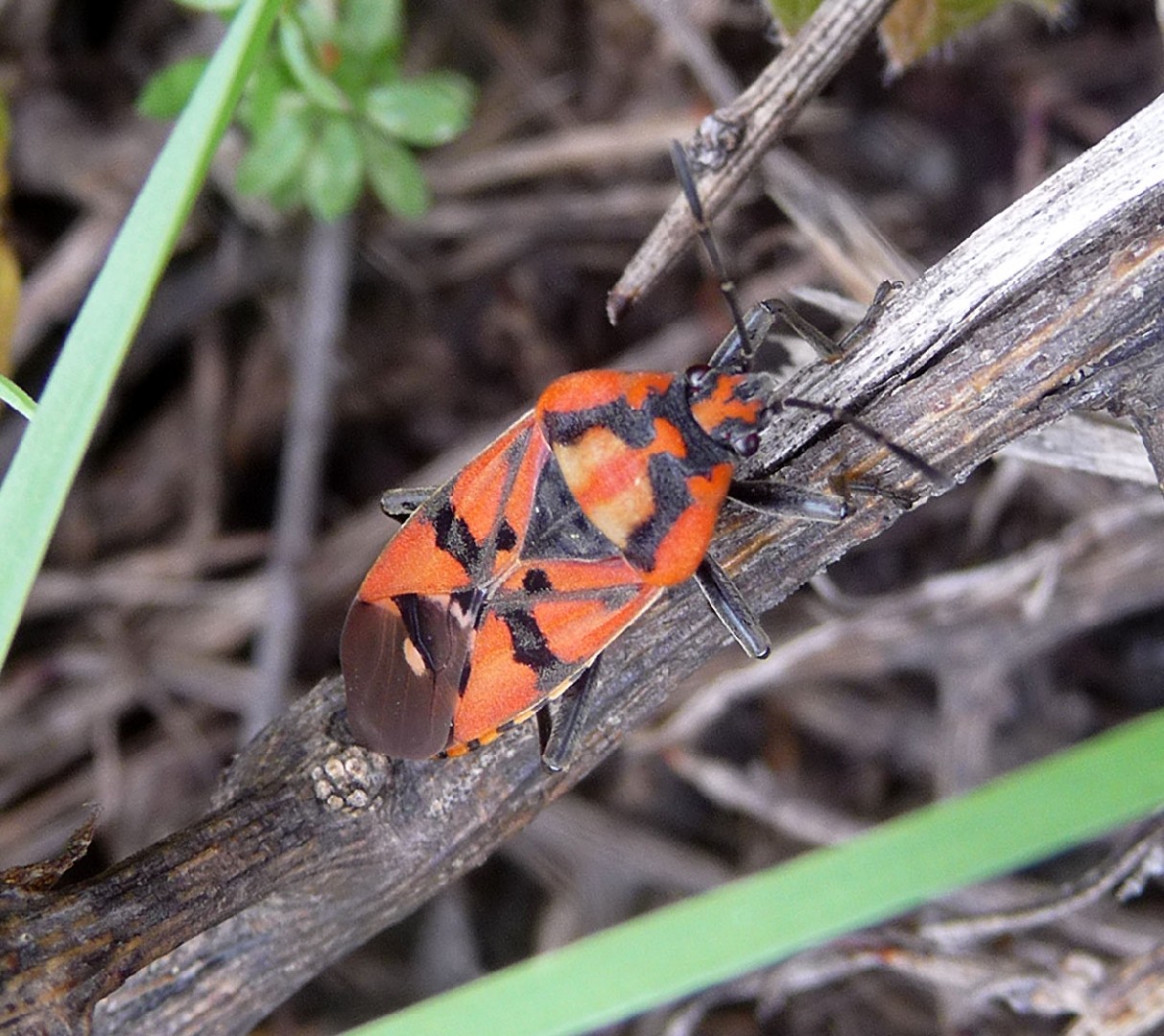
7. Soldier bug
Spilostethus pandurus is a colorful but potentially harmful beetle that feeds on the flowers and seeds of many plant species. This includes agricultural crops such as sesame, sorghum, tobacco and crown flower. Amateur entomologists can distinguish this beetle from similar species by the white spot on its back.
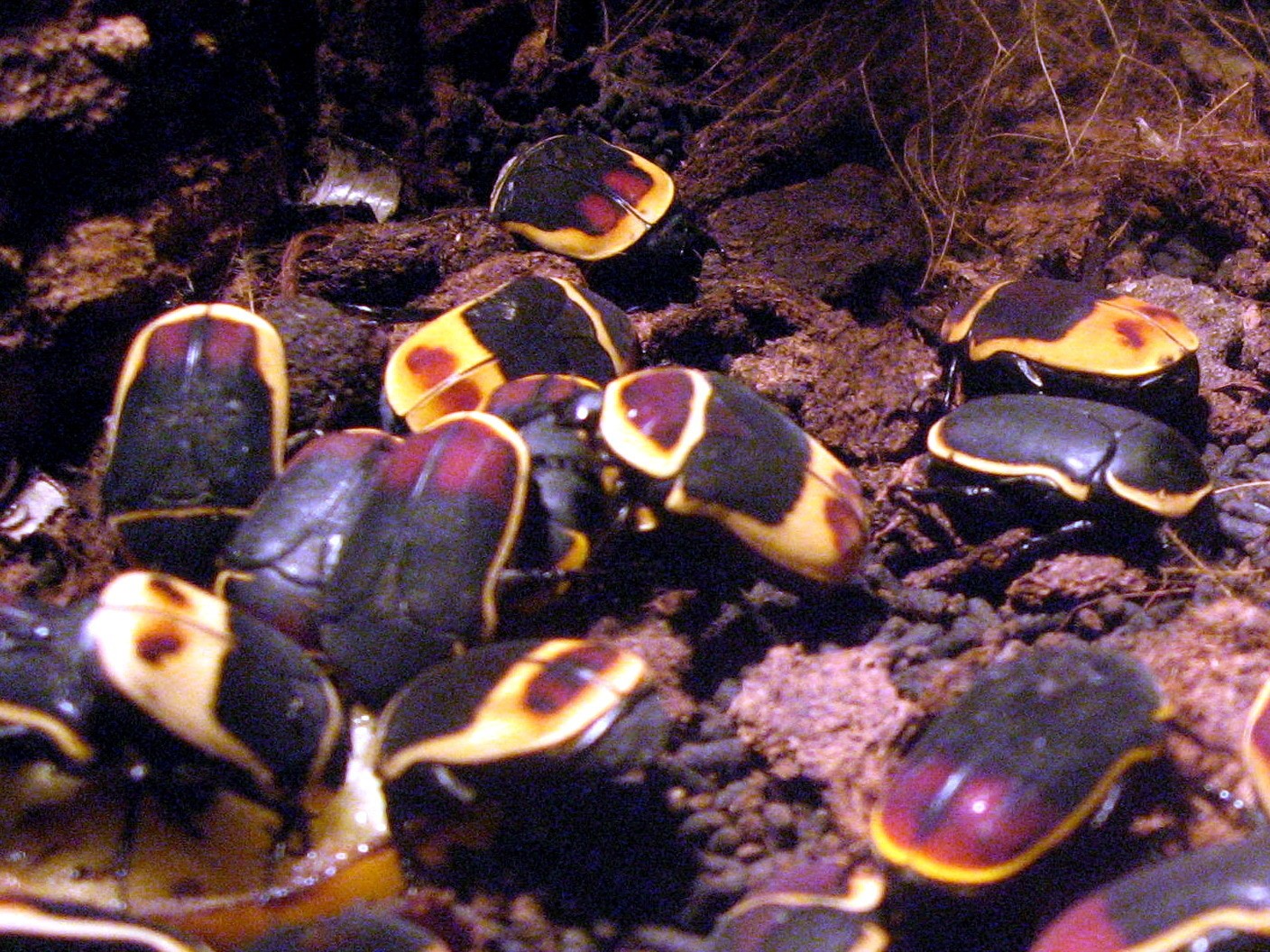
8. Sun beetle
The sun beetle comes in nine subspecies, the three common ones are: Pachnoda marginata aurantia, Pachnoda marginata marginata, Pachnoda marginata peregrina, with ranging colors. Pachnoda marginata aurantia comes from orange to a yellow-orange, some having a hue gradient towards the middle seen in diagram below. Pachnoda marginata marginata normally is red or crimson with little change between individuals. Pachnoda marginata peregrina, the more common amongst the subspecies, is a pale yellow or orange with brown spots; one spot being on the thorax and two spots on each elytra on each wing. Sometimes the spots on the elytra are almost unnoticeable, as they seem to blend in with the rest of the body, this can be seen in the picture on the bottom left of Pachnoda marginata peregrina in the terrarium under "As pets". The larvae of the pachnoda can sometimes make a low snore-like noise when making their cocoons.
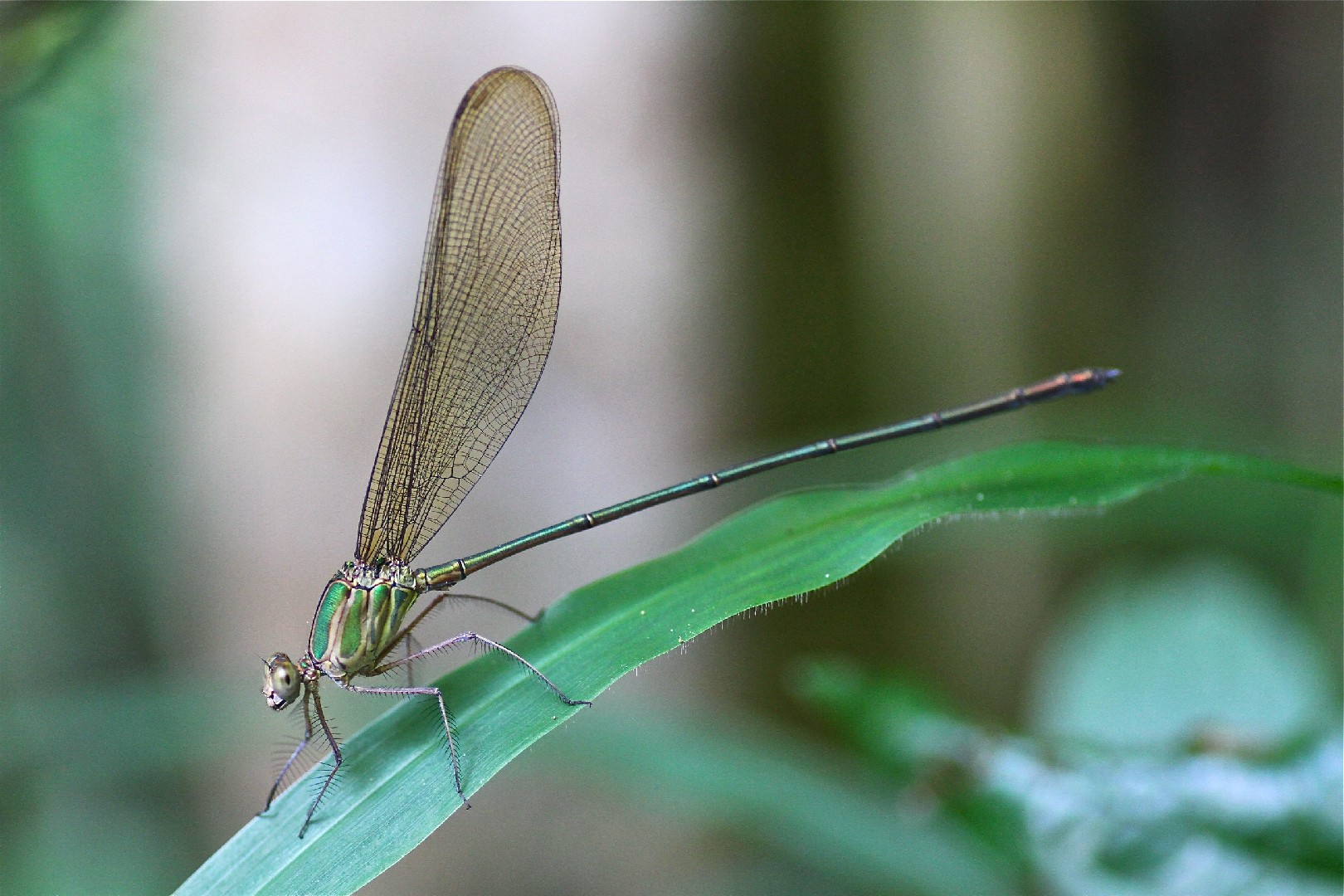
9. Glistening demoiselle
The species is on the IUCN Red List as not endangered, year of assessment 2009.
10. Black percher
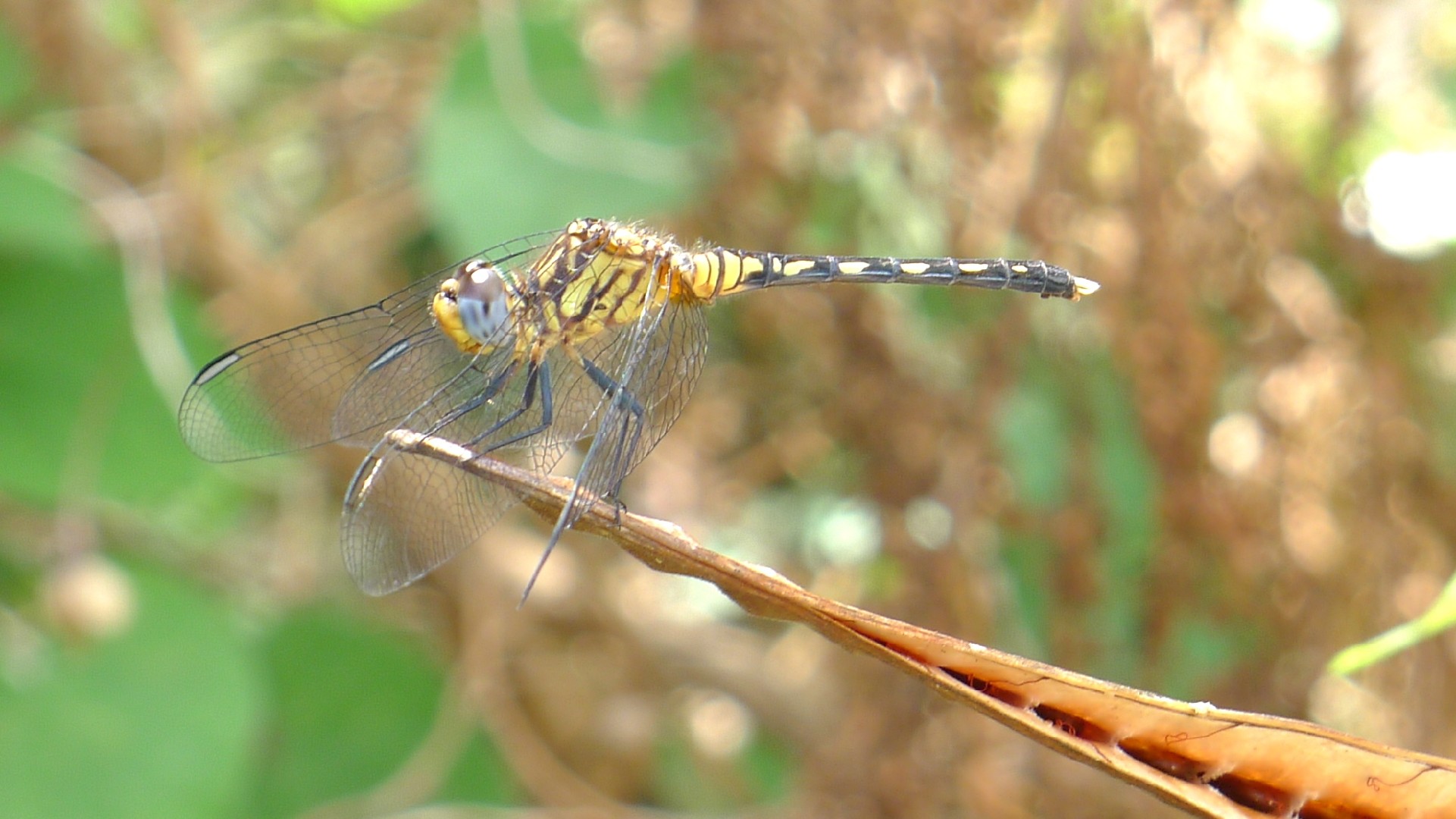
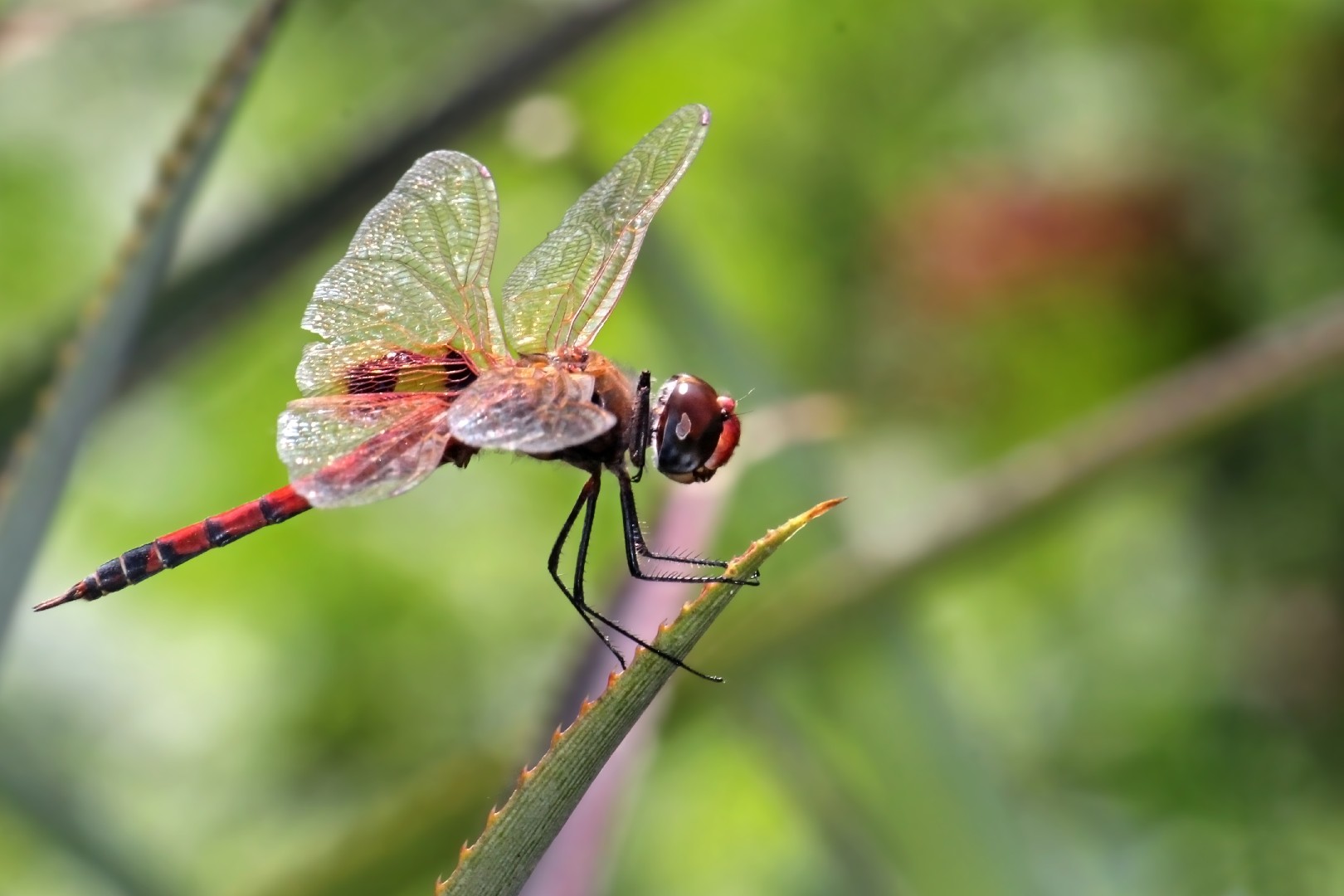
The species is on the IUCN Red List as not endangered, year of assessment 2010, the trend of the population is stable according to the IUCN. The moriaantje is found in Africa and the Mediterranean.
More







