




Top 20 Most Common Insects in Nongzhangjie
Insects, with their distinct features and diverse habitats, are the unsung heroes of our ecosystem in Nongzhangjie. The interplay between diverse geographic locales and insect populations in Nongzhangjie ensures a fascinating array of species. This list featuring the 20 most common insects in Nongzhangjie emphasizes their significant role, both as pests and allies, within our environment. Discover how Nongzhangjie's unique ecosystems nurture these creatures to understand the symbiotic relationship we share.

Most Common Insects
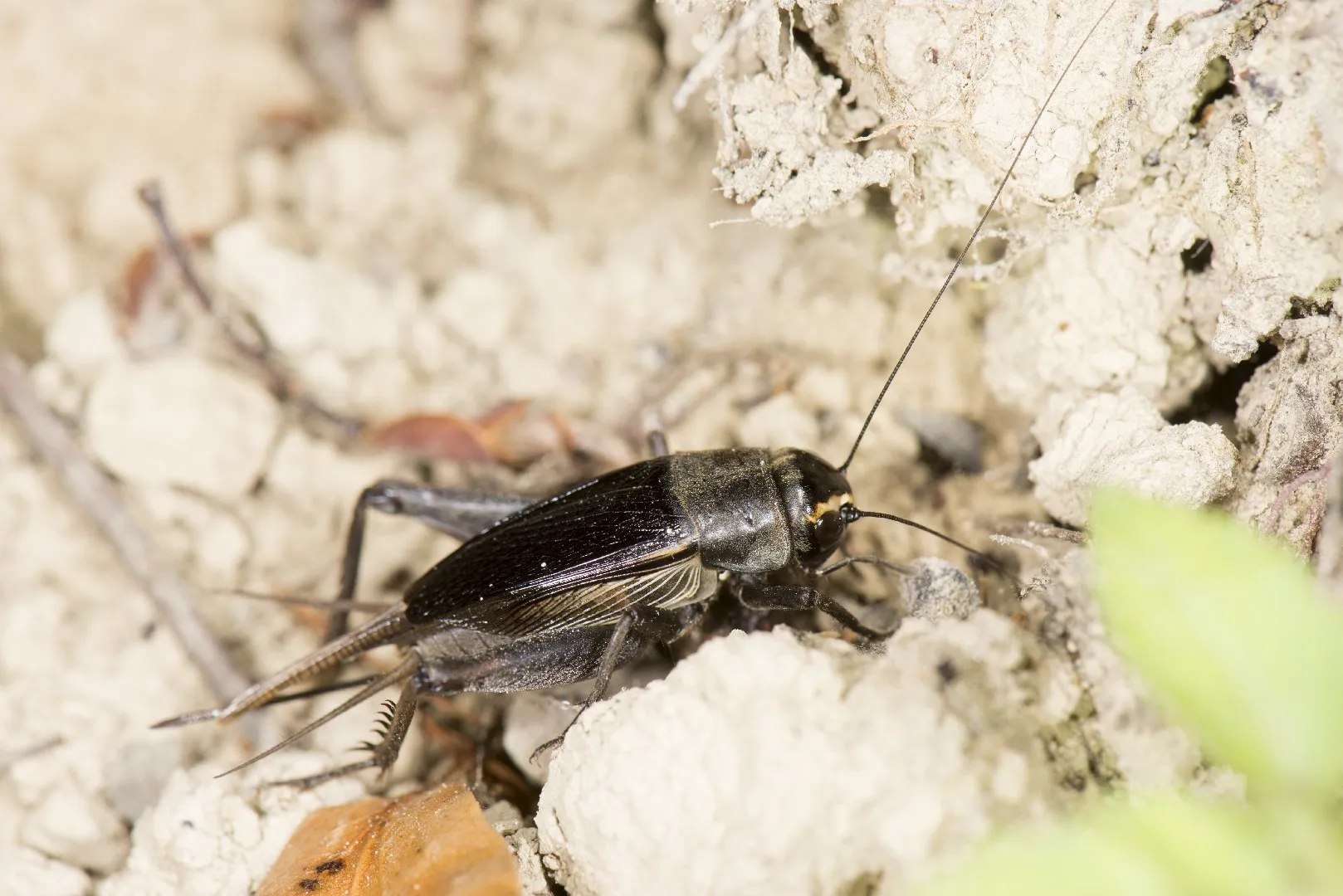
1. Teleogryllus mitratus

2. Lemon pansy
It is brown with numerous eyespots as well as black and lemon-yellow spots and lines on the upperside of the wings. The underside is a dull brown, with a number of wavy lines and spots in varying shades of brown and black. There is also an eyespot on the lower side of the forewing. The wet- and dry-season forms differ considerably in coloration and even shape. In the wet-season form the markings are distinct and vivid and the wing shape is a little more rounded. In the dry-season form the markings are obscure and pale especially on the underside and the wing margin is more angular and jagged. 
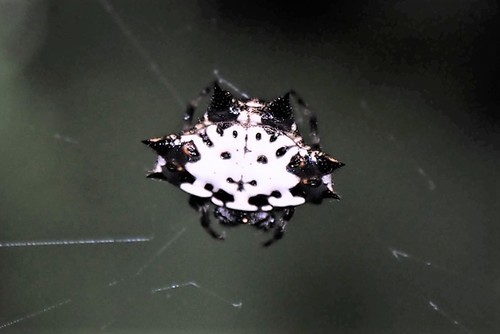
3. Black-and-white spiny spider
Female black-and-white spiny spider are 6 - 9 mm wide and possess a hard, shiny abdomen armed with six black conical spines. The upper surface of the abdomen is white to yellowish with variable black or dark brown markings and sigilla. Males are much smaller at 3 - 4 mm and in place of spines have small bumps on their abdomens.
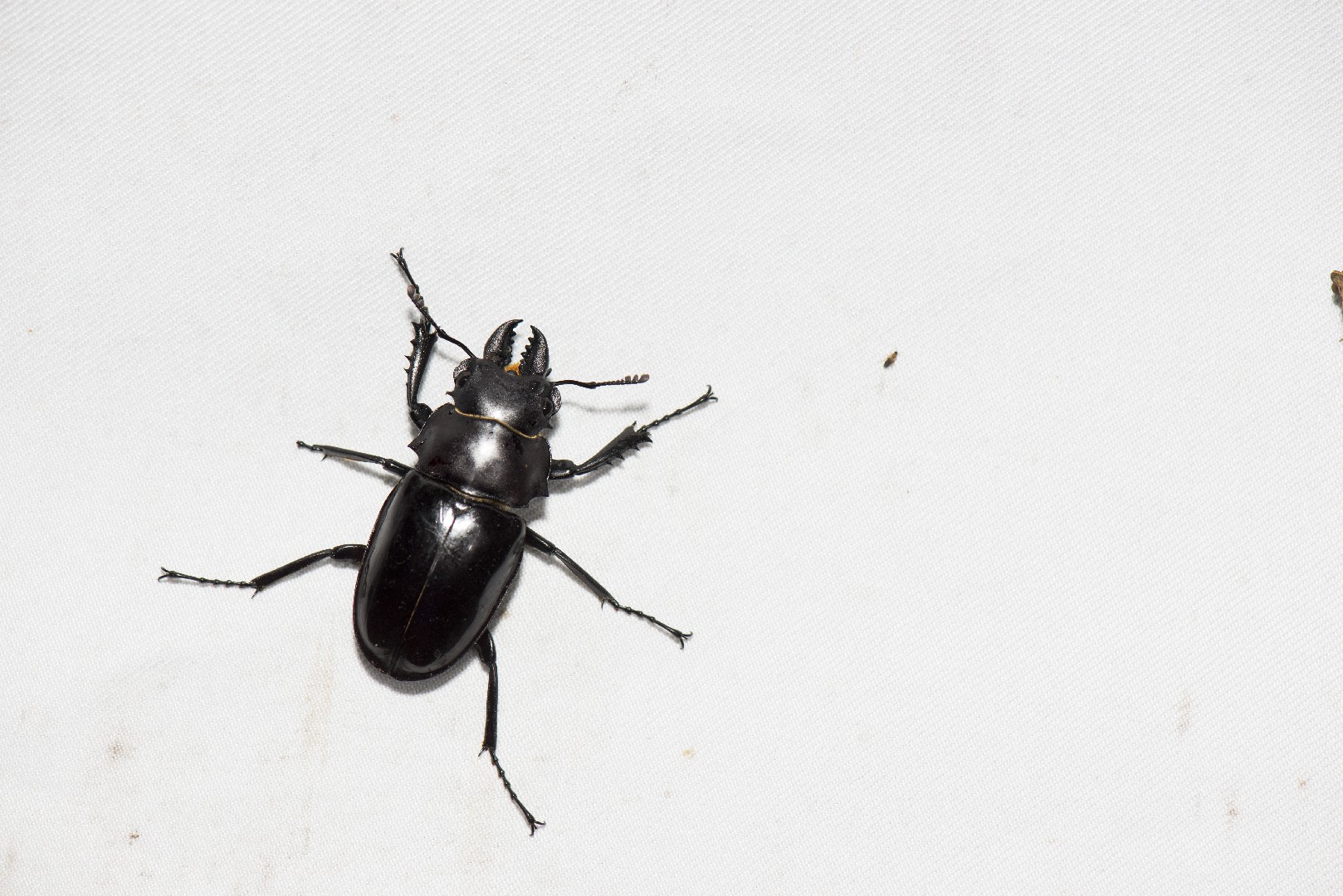
4. Odontolabis siva
Odontolabis siva is a beetle of the Family Lucanidae.
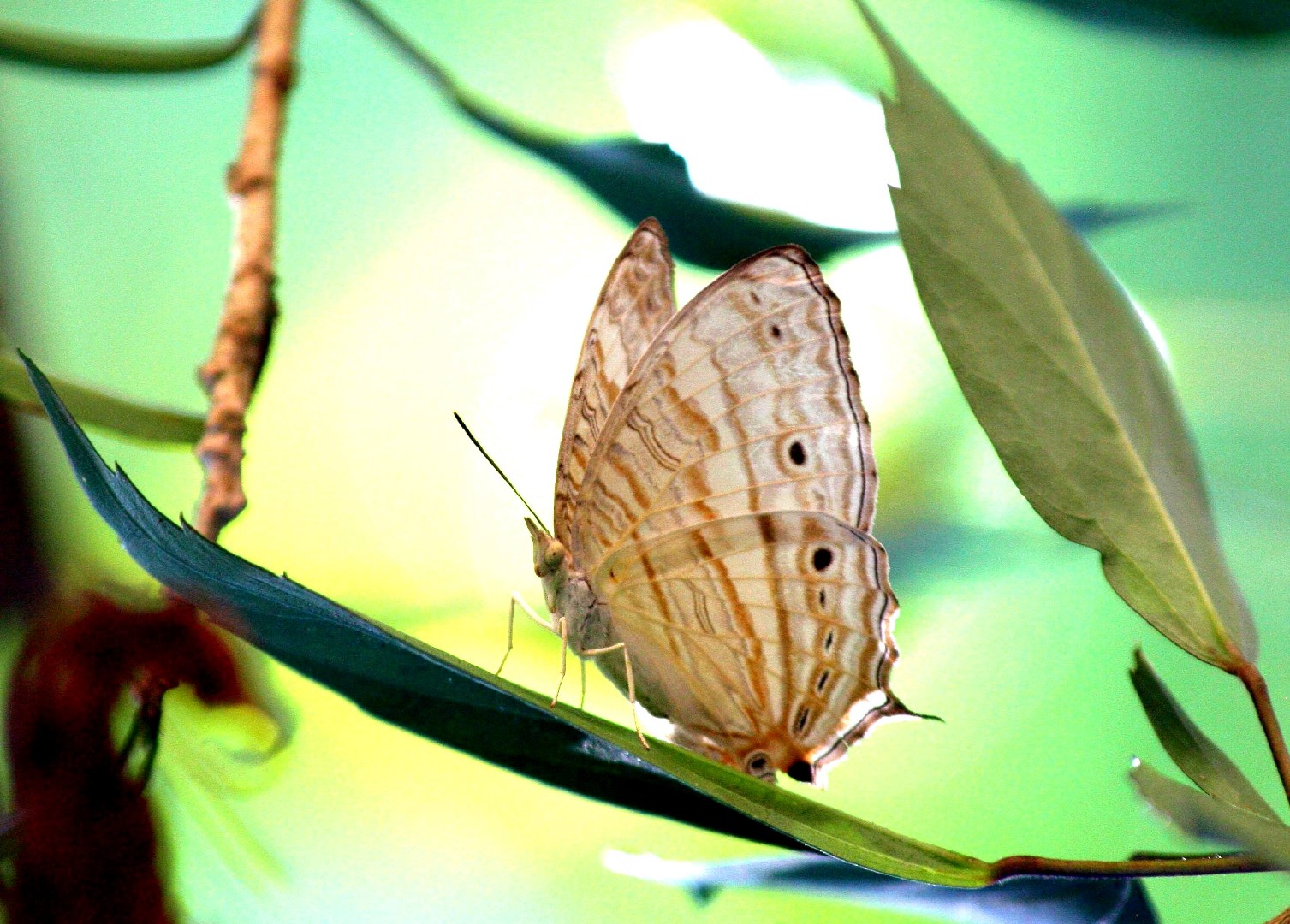
5. Marbled map
In the wet-season form both the males and females have a broad transverse median white band on the forewings and hindwings. The outer margin of the band is straight while the inner is highly sinuous. The basal and terminal portions of the wings on the inner side of the white band up to the base and on the outer side to the termen more or less greyish brown, traversed by slender sinuous black lines and broader ochraceous-brown lines, the black lines outwardly very narrowly margined with white; the sub-terminal slender black line on both fore and hindwing very conspicuous, and within it a transverse postdiscal series of obscure dusky-centred greyish irregular ocelli; the termen narrowly greyish; cilia white. Underside pearly white with a faint pinkish or pale lilac tinge, the markings of the upperside more or less faintly seen through by transparency; the transverse postdiscal line of greyish ocelli the most prominent, often centred with black. Antenna: dull brown, head, thorax and abdomen pale greyish brown, the latter two with white lateral longitudinal bands; beneath white. In the dry-season form the upperside is much paler; sometimes fading entirely to creamy white without any wavy markings, except the slender transverse black lines and the line of postdiscal ocelli, which are always more or less present. Underside white, without any pink or pale lilac tint; the markings more faint, but as on the upperside.
6. Yellow pansy butterfly
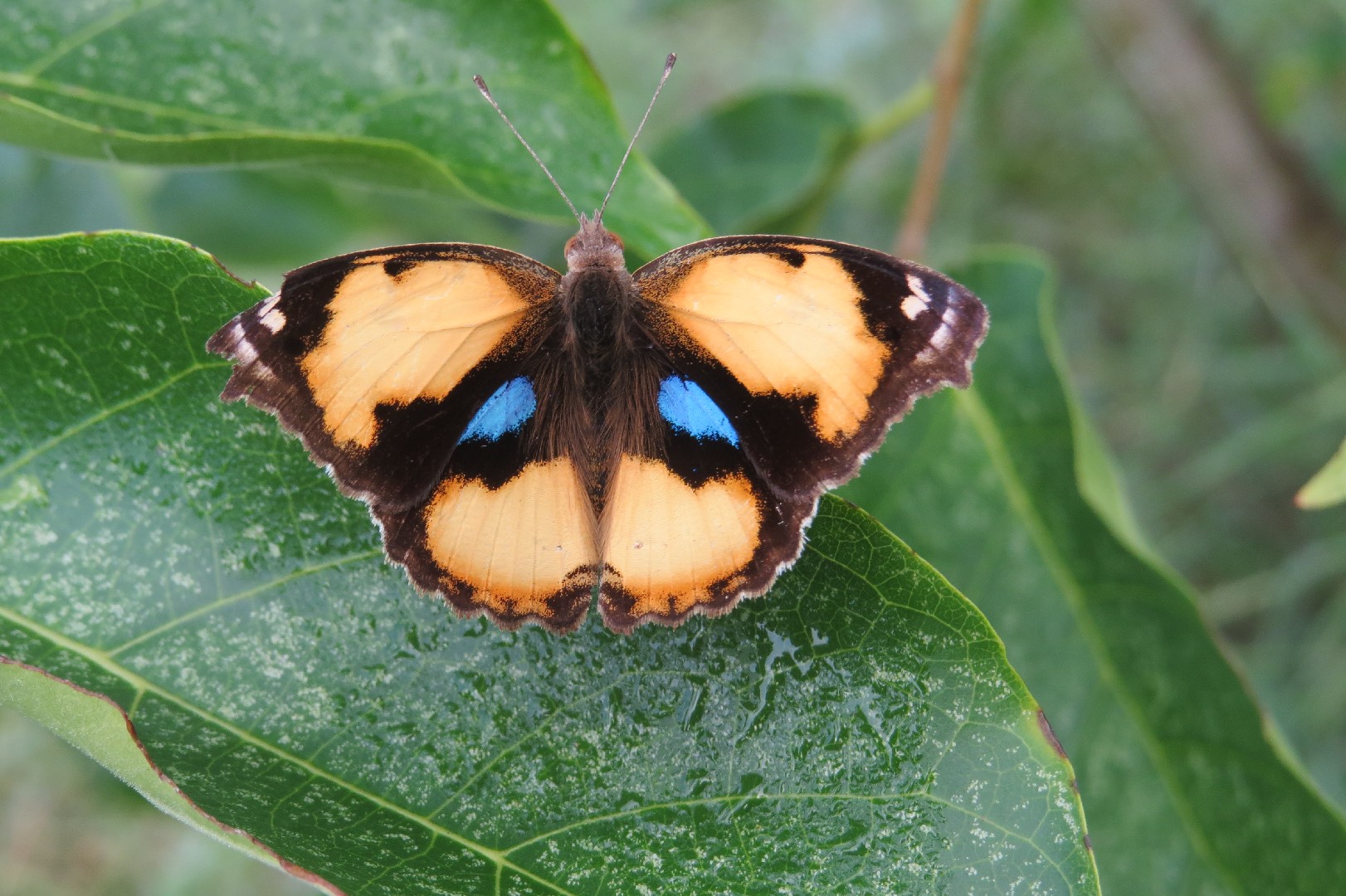
The male upperside is bright yellow. The costa of the forewing has a broad triangular jet-black projection downwards at the discocellulars, and the dorsum has a triangular projection upwards near the tornus; this black margin narrows near the middle of the termen and bears on the apex two short transverse preapical white streaks crossed by the black veins. Below these is an obscure ocellus that is sometimes absent. The anterior half and the terminal margin of the hindwing is black, and the dorsum is broadly shaded with brown while the anterior black area has a large brilliant blue spot. The cilia of both forewings and hindwings are white alternated with brown.The underside of the forewing is pale yellow. The cell is crossed by three laterally black-margined orange-yellow bars, beyond that is a short, broad, irregular jet-black oblique band from costa to base of vein 4. The hindwing is greyish yellow, and in the dry season its form is strongly irrorated (sprinkled) with dusky scales. With a prominent transverse brown discal fascia, its margins are highly sinuous. There is a brownish broad shade on the middle of the termen and some obscure lunular marks on the basal area. The antennae is pale, and the head, thorax and abdomen are dark brownish black; beneath that is a dull ochraceous white. The female is similar, although the colours are duller. The cell of the upperside forewing has a more or less complete transverse black fascia and another at the discocellulars. A blue-centred well-marked ocelli is in interspaces 2 and 5 on the disc of the forewing, and smaller ocelli in interspaces 2 and 5 on the disc of the hindwing. The forewings and hindwings have a fairly well-defined pale subterminal line, though the blue spot on the anterior black area on the hindwing is small and ill-defined; the rest is as the male. The underside is also as the male, but generally has heavier and more clearly defined markings.
7. Courtesan
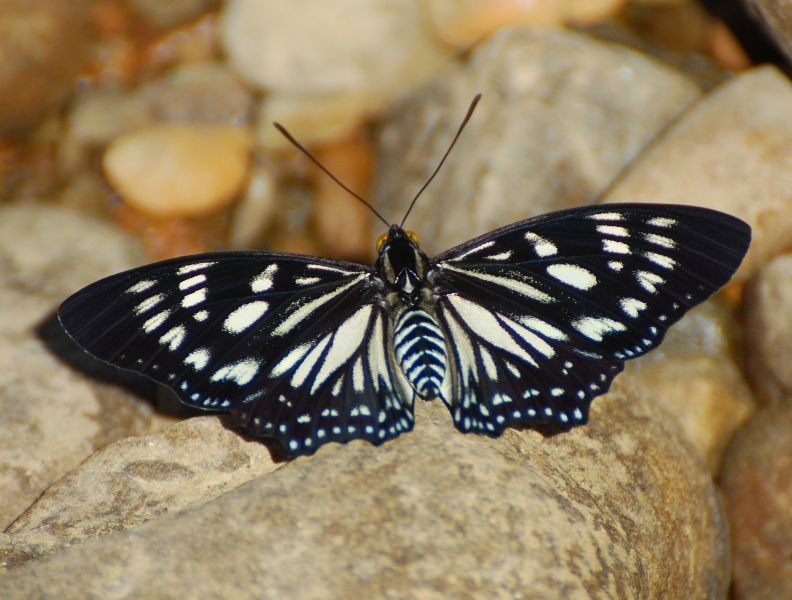
Euripus nyctelius is a butterfly from the Nymphalidae family. The scientific name of the species was first validly published in 1845 by Edward Doubleday.
8. Spotted beet webworm moth
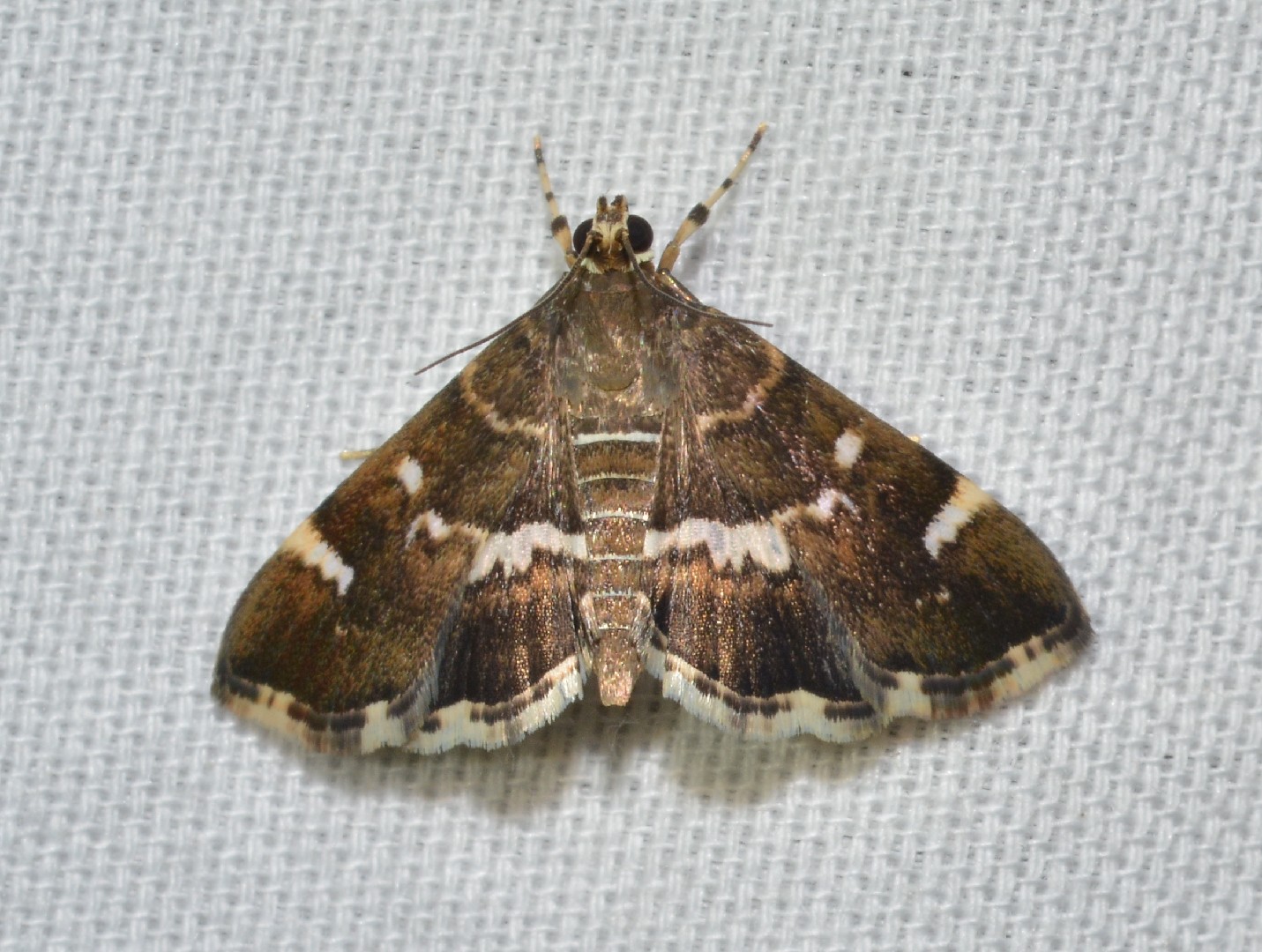
The wingspan is 1.6 - 2 cm. Adults are cinnamon brown with narrow white bands on the forewings. The hindwings with brownish or greyish-yellow wing bands in some individuals.
9. Megaloxantha bicolor
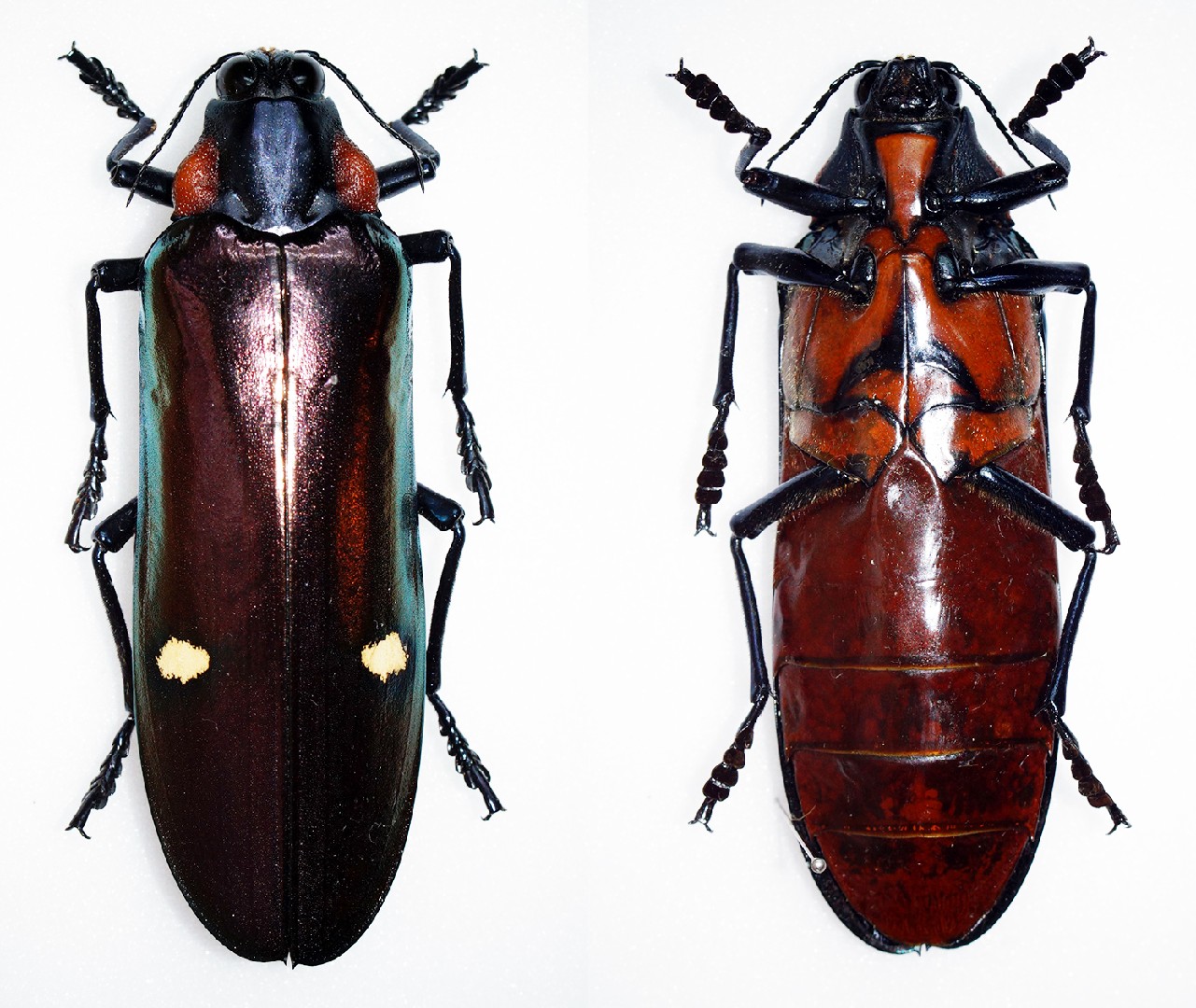
Megaloxantha bicolor is a huge Buprestid reaching a length of about 75 millimetres (3.0 in). The basic colour of these beetles is usually metallic green, but may be blue, reddish or blackish, with two basal and postmedian large yellow or whitish bands. The pronotal sides are usually bright orange-yellow.
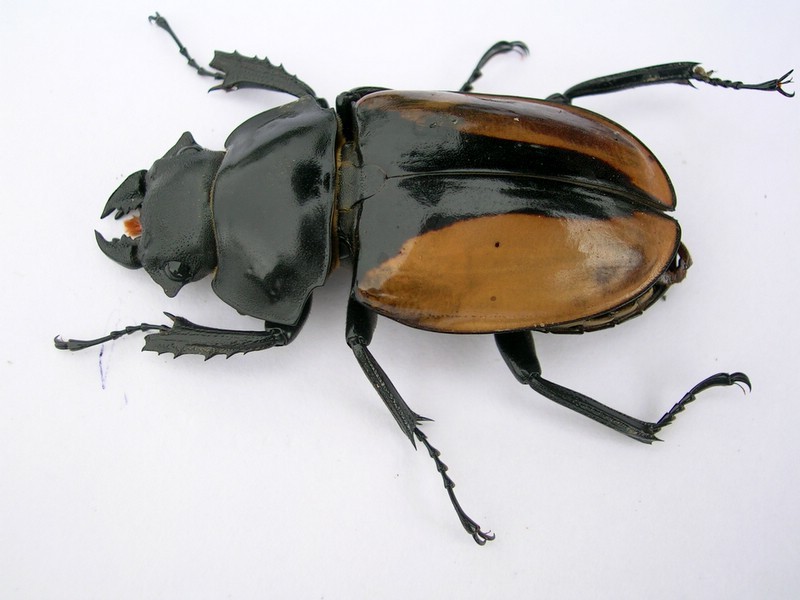
10. Golden Stag Beetle
Odontolabis cuvera can reach a length (mandibles included) of about 43–90 millimetres (1.7–3.5 in) in male, of about 41–51 millimetres (1.6–2.0 in) in females. Moreover, males have a conspicuosly elongated and large pair of mandibles. The basic color of the body is black. Elytra have broad orange margins on the outer edge. The female closely resembles the male in coloration but it lacks long mandibles. The remarkably disparity between male and females (sexual dimorphism) evolved through sexual selection for securing mating females. The males have also three morphological forms with variations in the size of their mandibles. These three alternative phenotypes (male trimorphism) in the types of male weapons are considered conditional reproductive strategies. In the subspecies Odontolabis cuvera sinensis elytra are almost completely black, with a small orange border. These beetles can reach a length of about 80 millimetres (3.1 in).

More







