




Top 7 Most Common Insects in Tulua
Insects, with their diverse characteristics and adaptive tendencies, thrive splendidly in varying landscapes. Tulua, with its array of geographical locations, fosters a stunningly broad range of insect species. From ecosystem balances to pest management, these little marvels play essential roles. Our list of 'Top 7 most common insects in Tulua' signifies the interplay between geographical variances and insect biodiversity in this vibrant region.

Most Common Insects
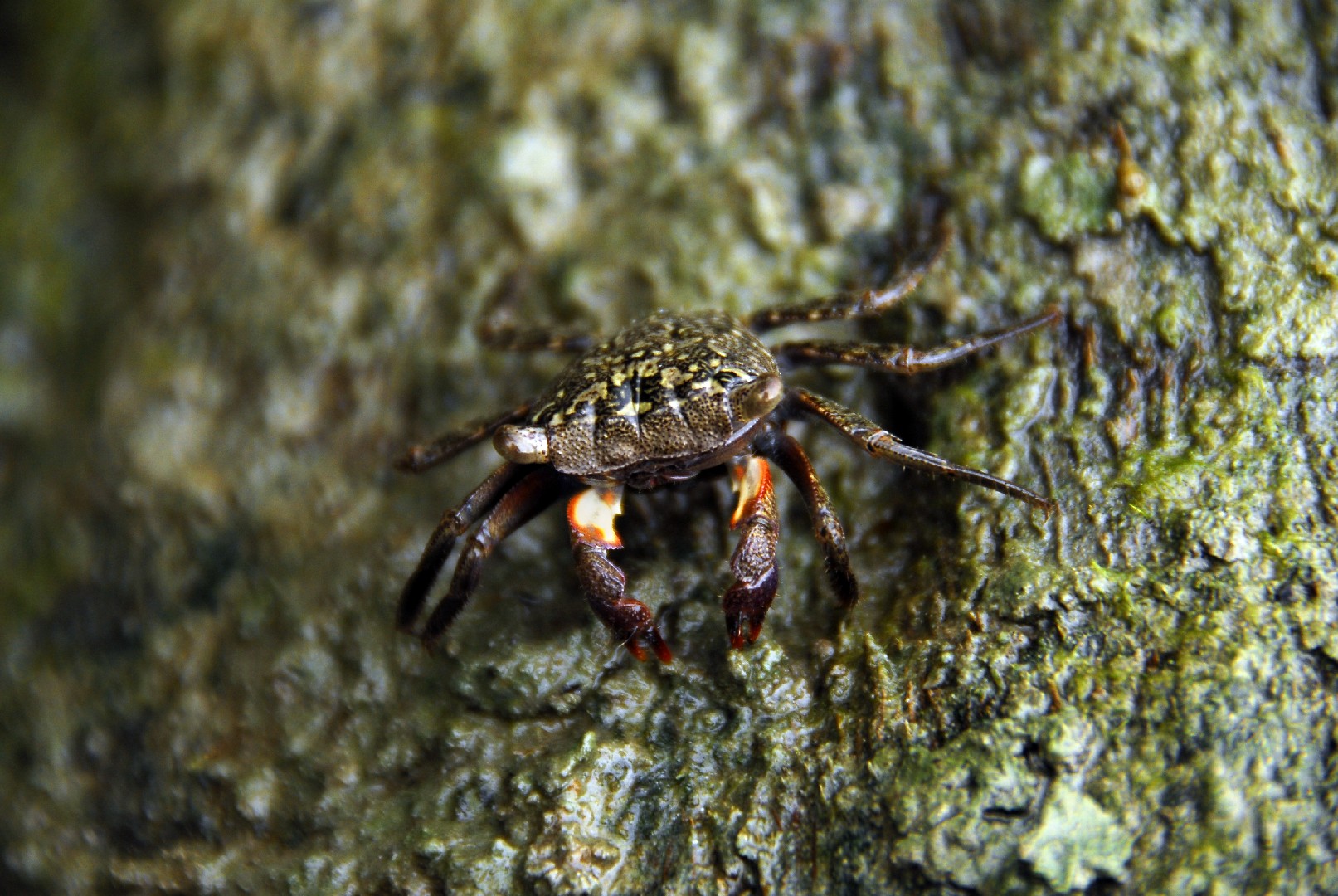
1. Mangrove tree crab
The mangrove tree crab is a small species with males averaging about 2 cm (0.8 in) long and females slightly less. The large eyes are set far apart and the carapace is wider at the front than at the back. It is a mottled brown and olive colour which helps the crab to blend in with its surroundings. The legs are either brown or mottled and there are tufts of black hairs near their tips. These are pointed which aids the crab when climbing among the mangrove foliage. 
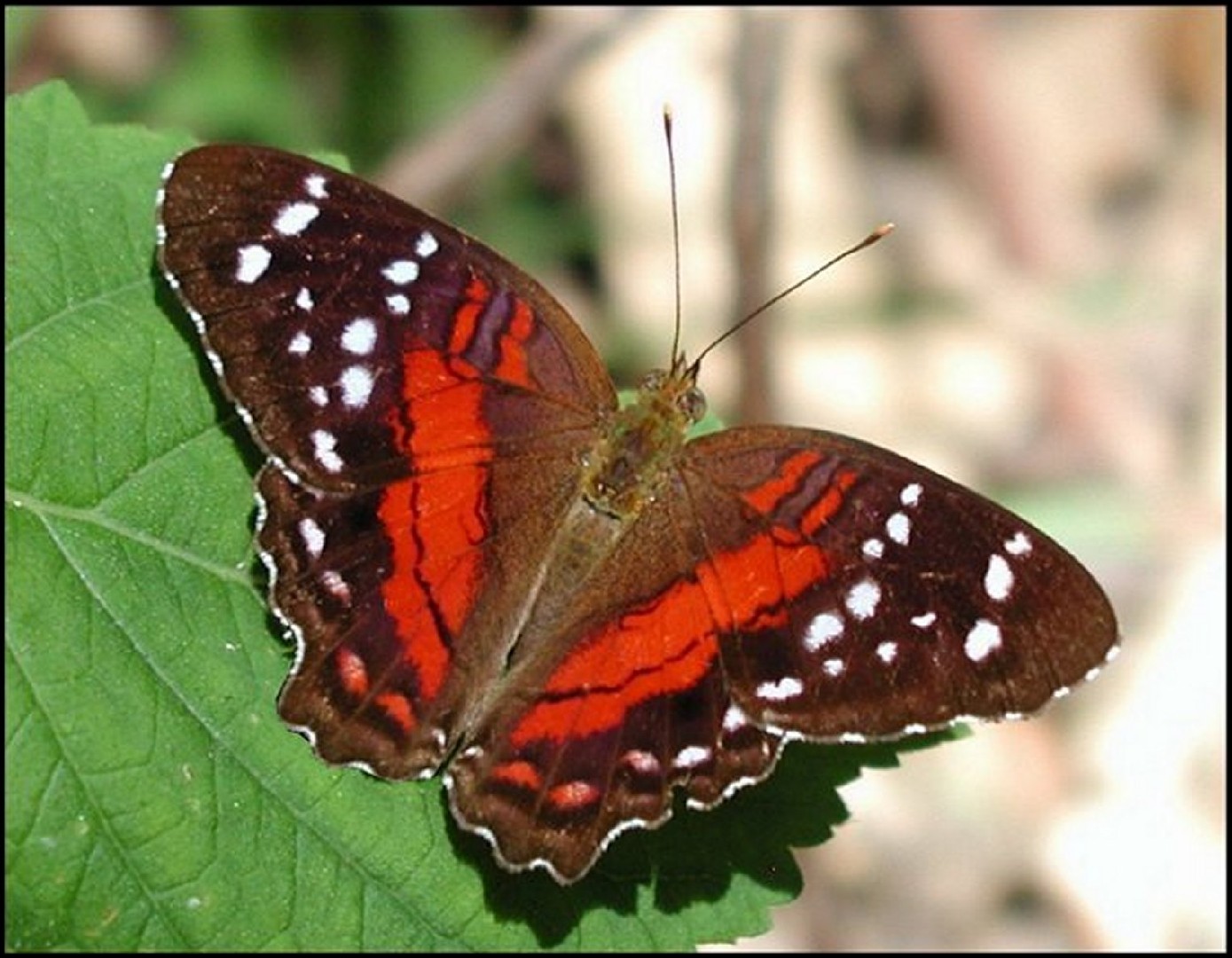
2. Scarlet peacock
Anartia amathea is a butterfly of the family Nymphalidae. In addition to A. amathea amathea there are the subspecies A. amathea thyamis and A. amathea sticheli. The species is represented in the tropical areas of Latin America and the offshore islands, such as Trinidad.
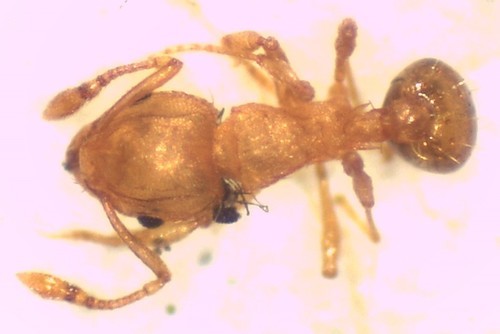
3. Little fire ant
The ants are typically small to medium-sized, with the workers ranging from 1 - 2 mm ... [It] is light to golden brown in color. The gaster is often darker. The pedicel, between the thorax and gaster, has two segments; the petiole and postpetiole. The petiole is "hatchet-like", with a node that is almost rectangular in profile and higher than the postpetiole. The antennae have 11 segments, with the last two segments greatly enlarged into a distinct club. The antennal scape (the first segment) is received into a distinct groove (scrobe) that extends almost to the posterior border of the head. The thorax has long and sharp epinotal spines. The body is sparsely covered with long, erect hairs.
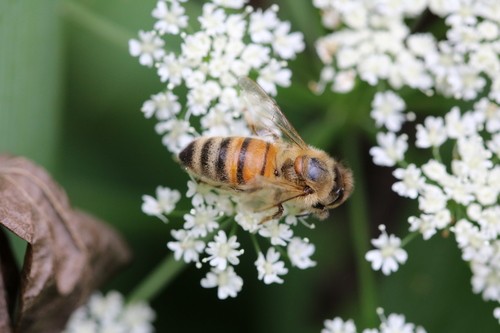
4. Western honey bee
Western honey bee(Apis mellifera) is the most common species of honeybee in the world. Among the first domesticated insects, its cultural and economic impact on humanity has been vast and far-reaching, providing honey, wax and its services as a pollinator. Western honey bee faces challenges worldwide, such as colony collapse disorder, and populations are thought to be decreasing.
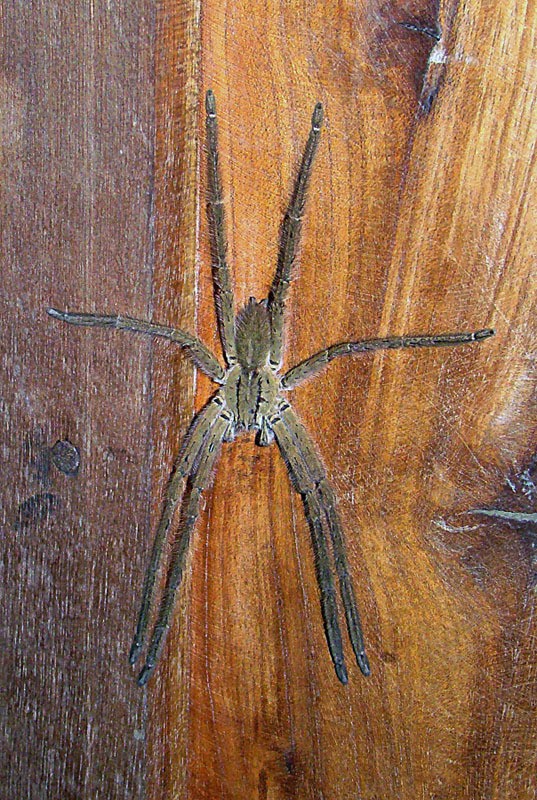
5. Araa errante
Instead of relying on a web, the araa errante relies on venom to incapacitate its prey. It is a nocturnal spider with a wide distribution throughout South and Central America. Females typically lay four egg sacks that hatch within four to five weeks. During reproduction, the male spider climbs on the female’s back.
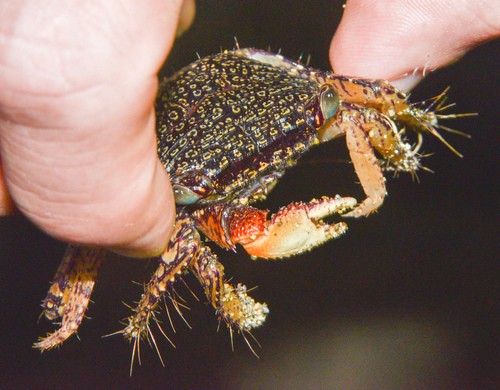
6. Racer mangrove crab
Goniopsis pulchra is a crab species from the Grapsidae family. The scientific name of the species was first validly published in 1877 by Lockington.
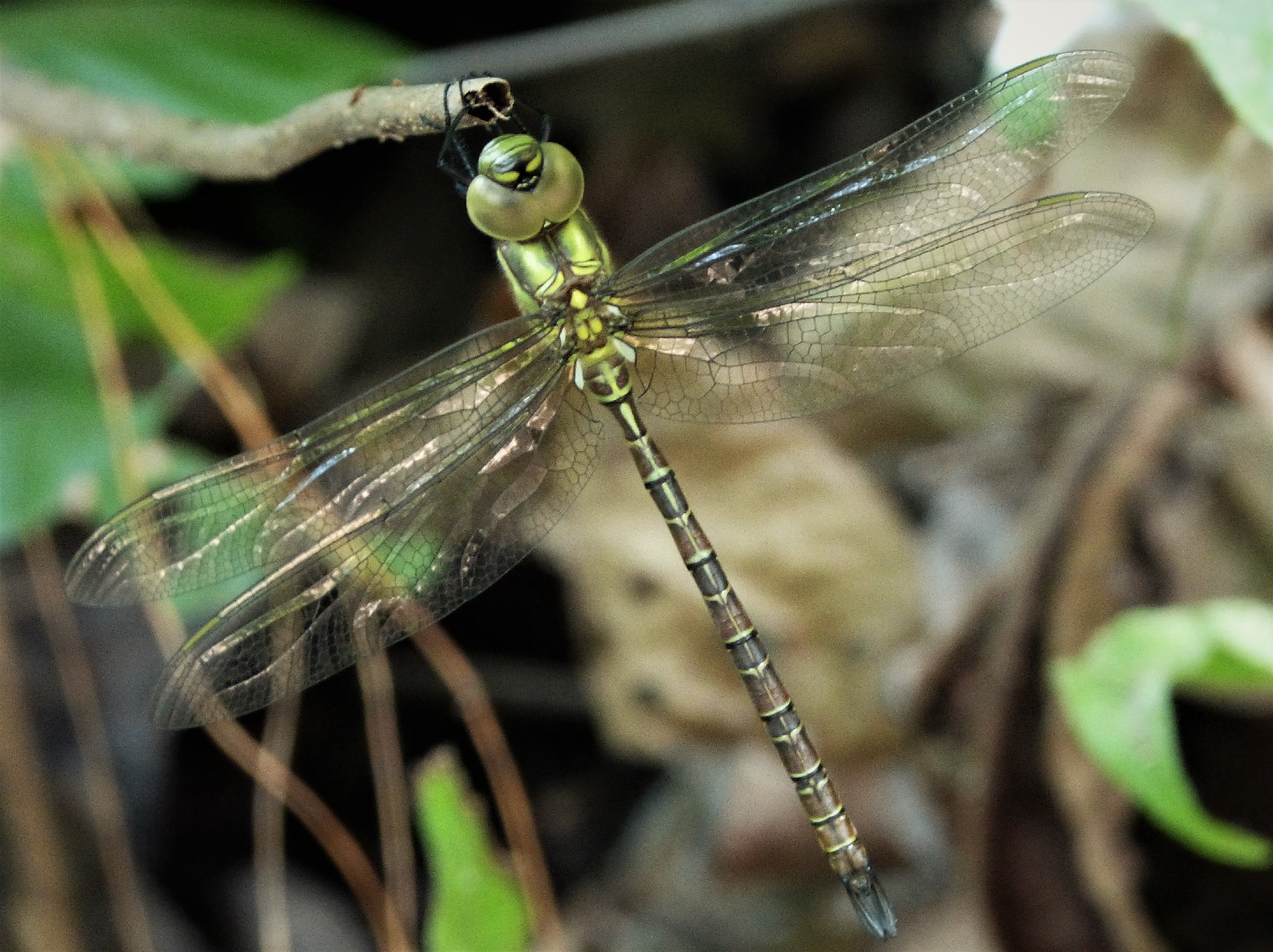
7. Blue-faced darner
The species is on the Red List of the IUCN as not endangered, year of assessment 2007, the trend of the population is stable according to the IUCN.







