




Top 7 Most Common Insects in Addis Ababa
Insects, with their unique features and varied habitats, are the buzz of Addis Ababa. From mountainous landscapes to bustling urban parks, geographical variations significantly shape Addis Ababa's insect diversity. These critters play pivotal roles in our ecosystem, from decomposers to pollinators, demonstrating a delicate balance between pest and ally. Stay tuned as we explore the top 7 most common insects that call Addis Ababa their home, revealing the intricate bond between environment and insect life.

Most Common Insects
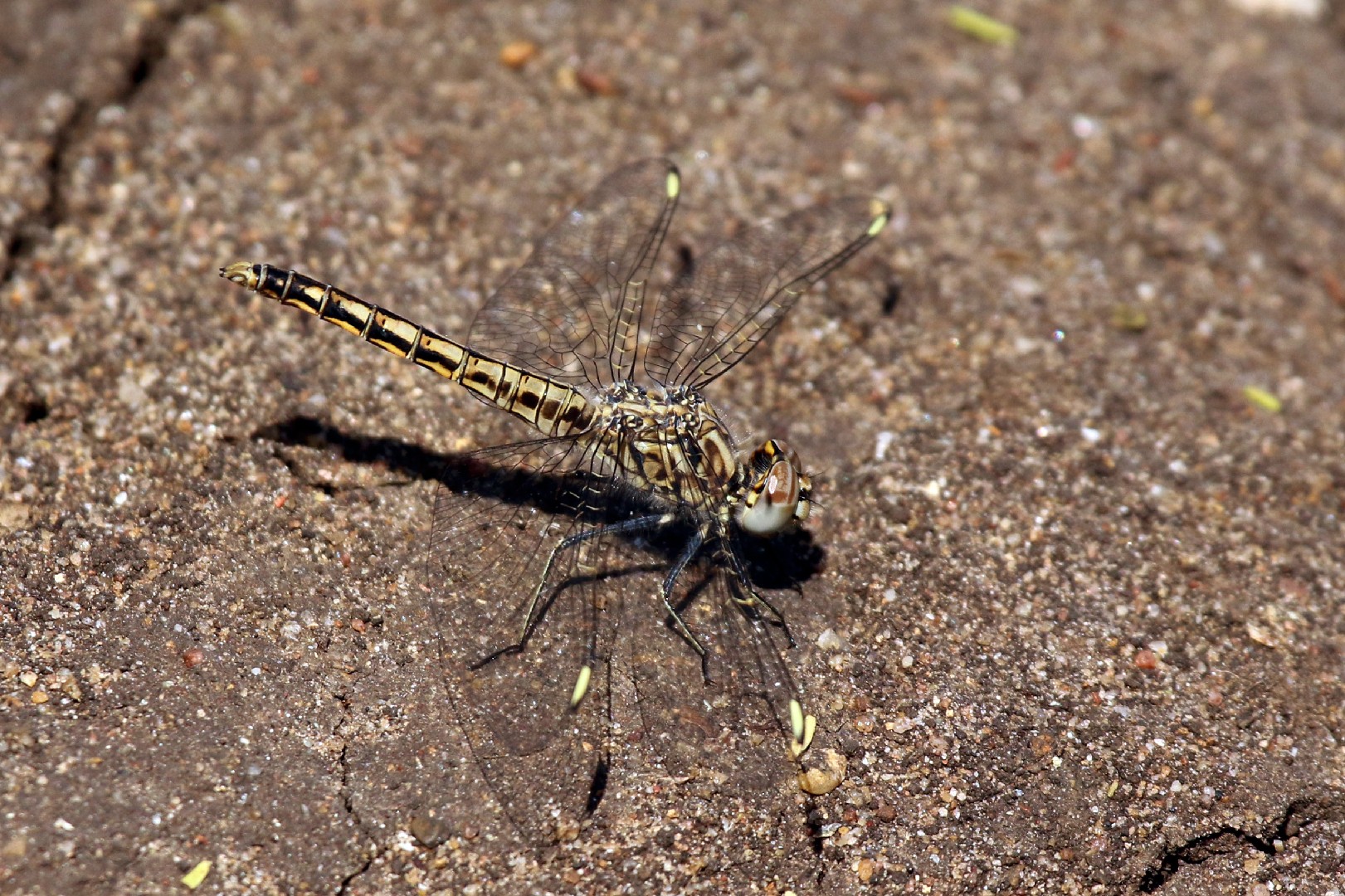
1. Banded groundling
The southern belt soil dragonfly is on the IUCN Red List as non-endangered, assessment year 2009. The species is found in Africa, the Middle East and Southern Europe, including in Zimbabwe.
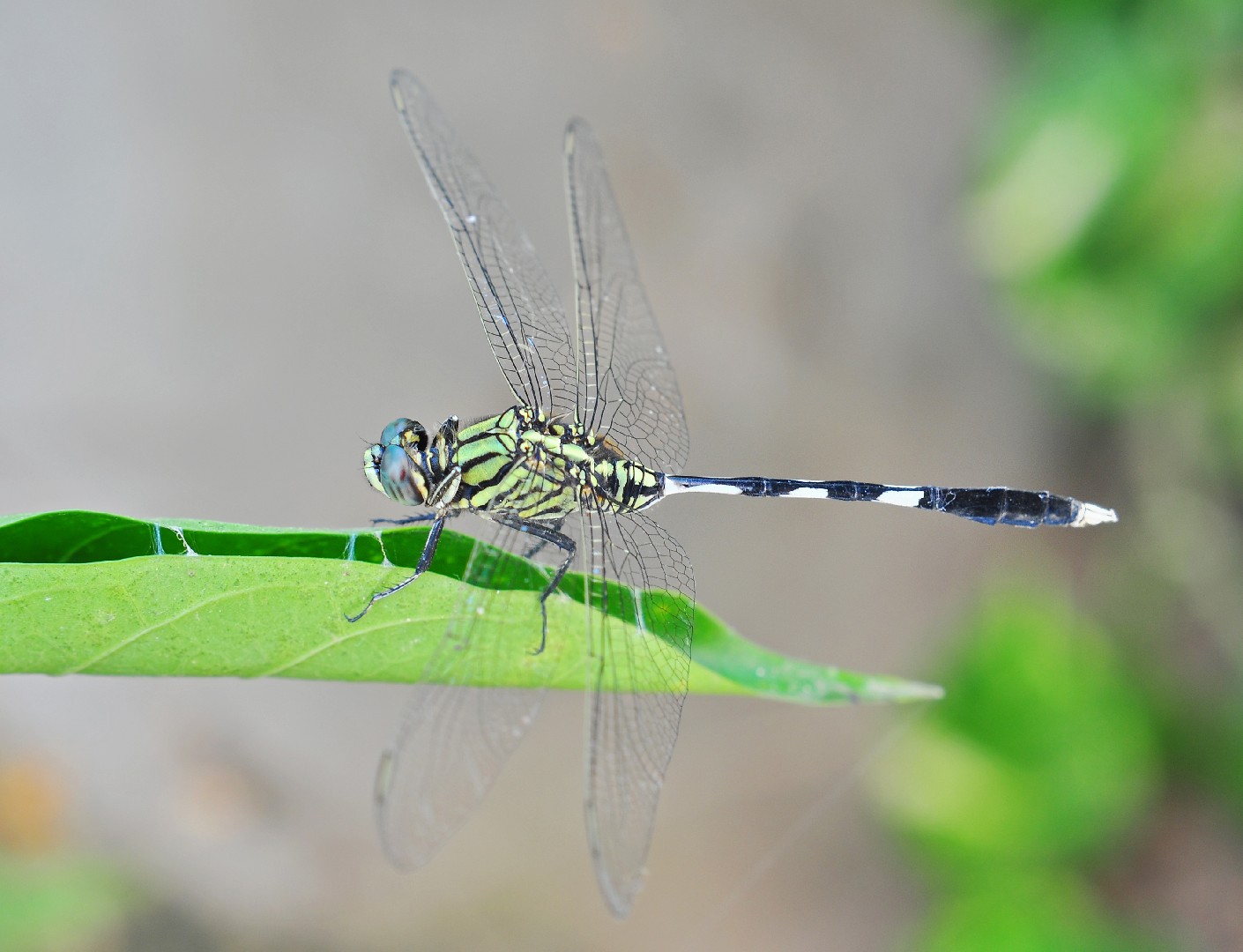
2. Slender skimmer
The species is on the IUCN Red List as not endangered, year of assessment 2009. The slender bank dragonfly occurs from Southeastern Europe and North Africa to Japan and Australia
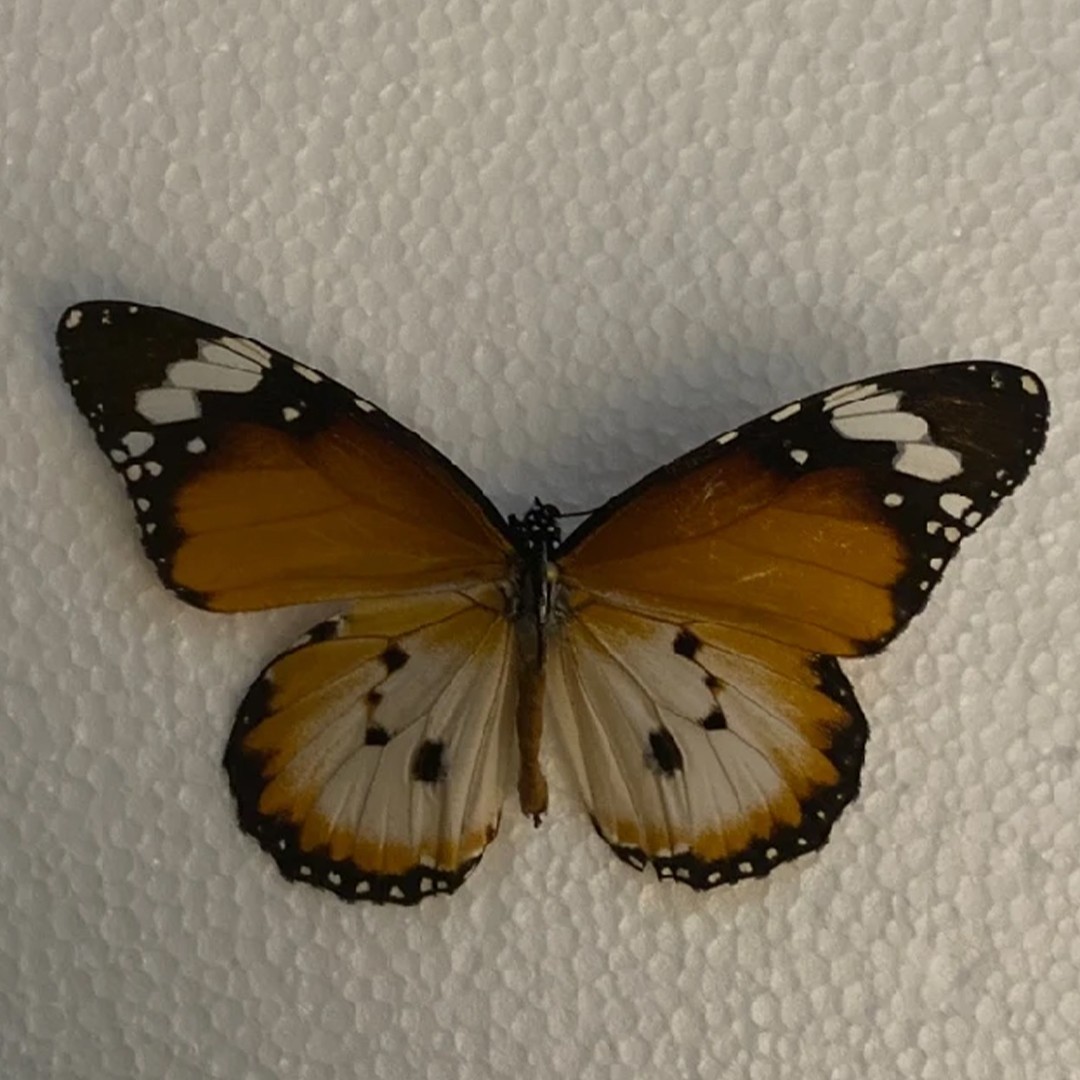
3. Plain tiger butterfly
D. chrysippus is a medium-sized butterfly with a wingspan of about 7–8 cm (2.8–3.1 in). The body is black with many white spots. The wings are orange, the upperside brighter and richer than the underside. The apical half of the forewing is black with a white band. The hindwing has three black spots in the center. The wings are bordered in black and outlined with semicircular white spots. This species exhibits slight sexual dimorphism, as the Male has large scent glands on his hindwings, which the female lacks. They appear as a large black spot with a white centre if viewed from the underside D. chrysippus is a polymorphic species, so the exact coloring and patterning vary within and between populations. It is similar in appearance to the Indian fritillary (Argynnis hyperbius), which may coexist with it. 
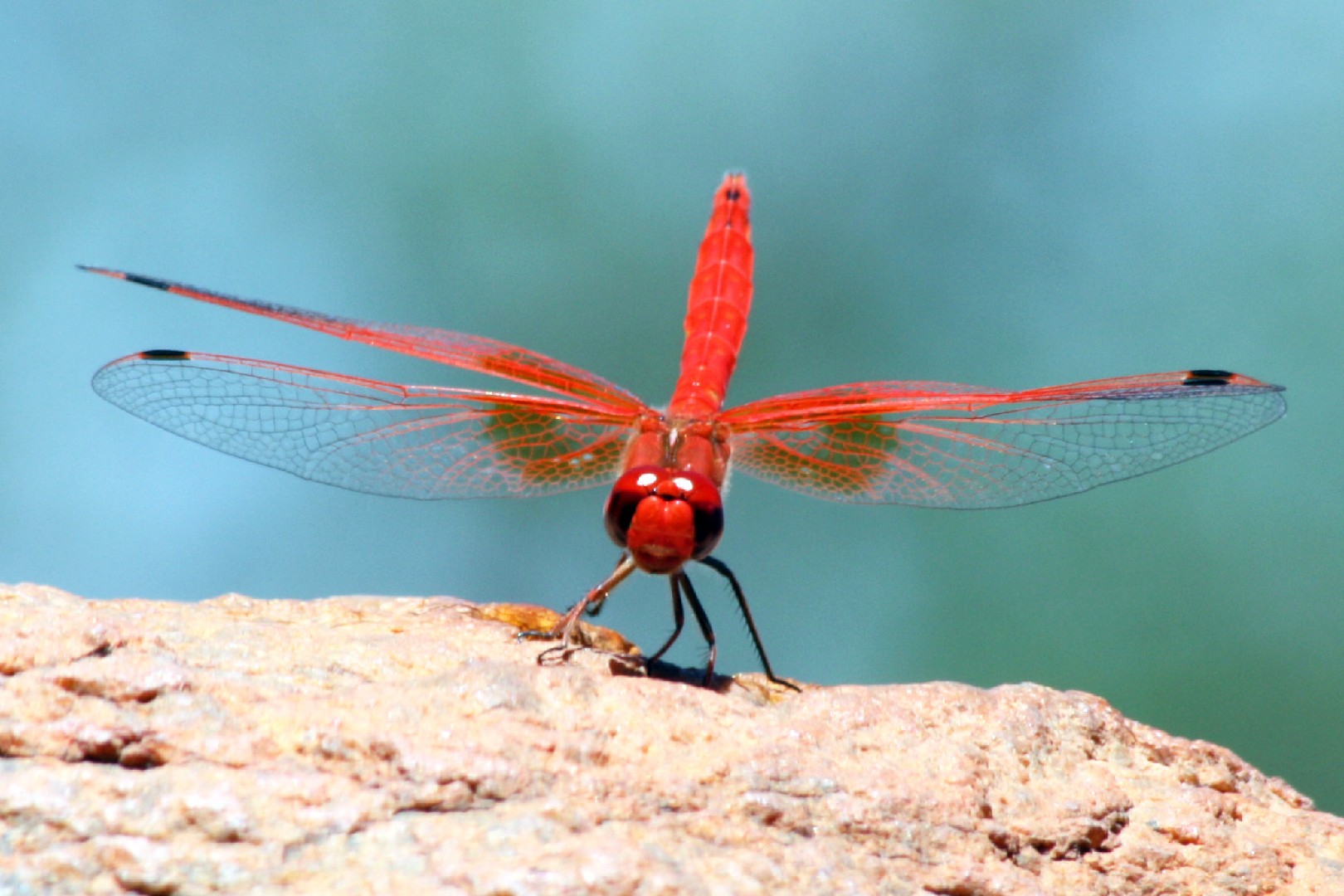
4. Kirby's dropwing
The spotted sun pointer (Trithemis kirbyi) is a dragonfly species from the family of the dragonflies (Libellulidae). Two subspecies are described. The nominate subspecies occurs in India and Sri Lanka, while the insufficiently defined taxon Trithemis kirbyi ardens occurs in the rest of the distribution area, which mainly includes Africa.
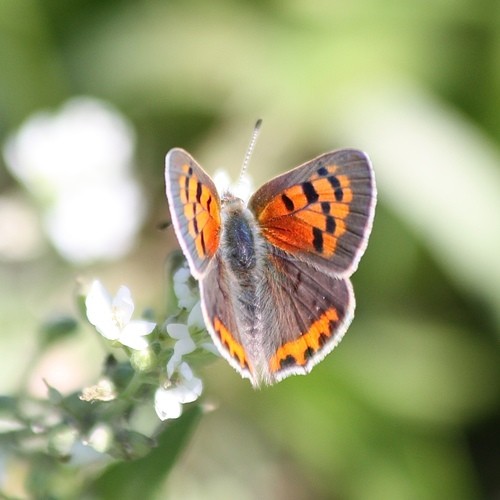
5. Small copper
The upperside forewings are a bright orange with a dark outside edge border and with eight or nine black spots. The hindwings are dark with an orange border. Some females also have a row of blue spots inside the orange border and are known as form caeruleopunctata. The undersides are patterned in a similar way but are paler. The black spots on the forewings are outlined in yellow and the dark colouring is replaced by a pale brownish grey. The hindwings are the same brown/grey colour with small black dots and a narrow orange border. The caterpillars (larvae) are usually green, but some have a purple stripe down the middle of the back and along each side.
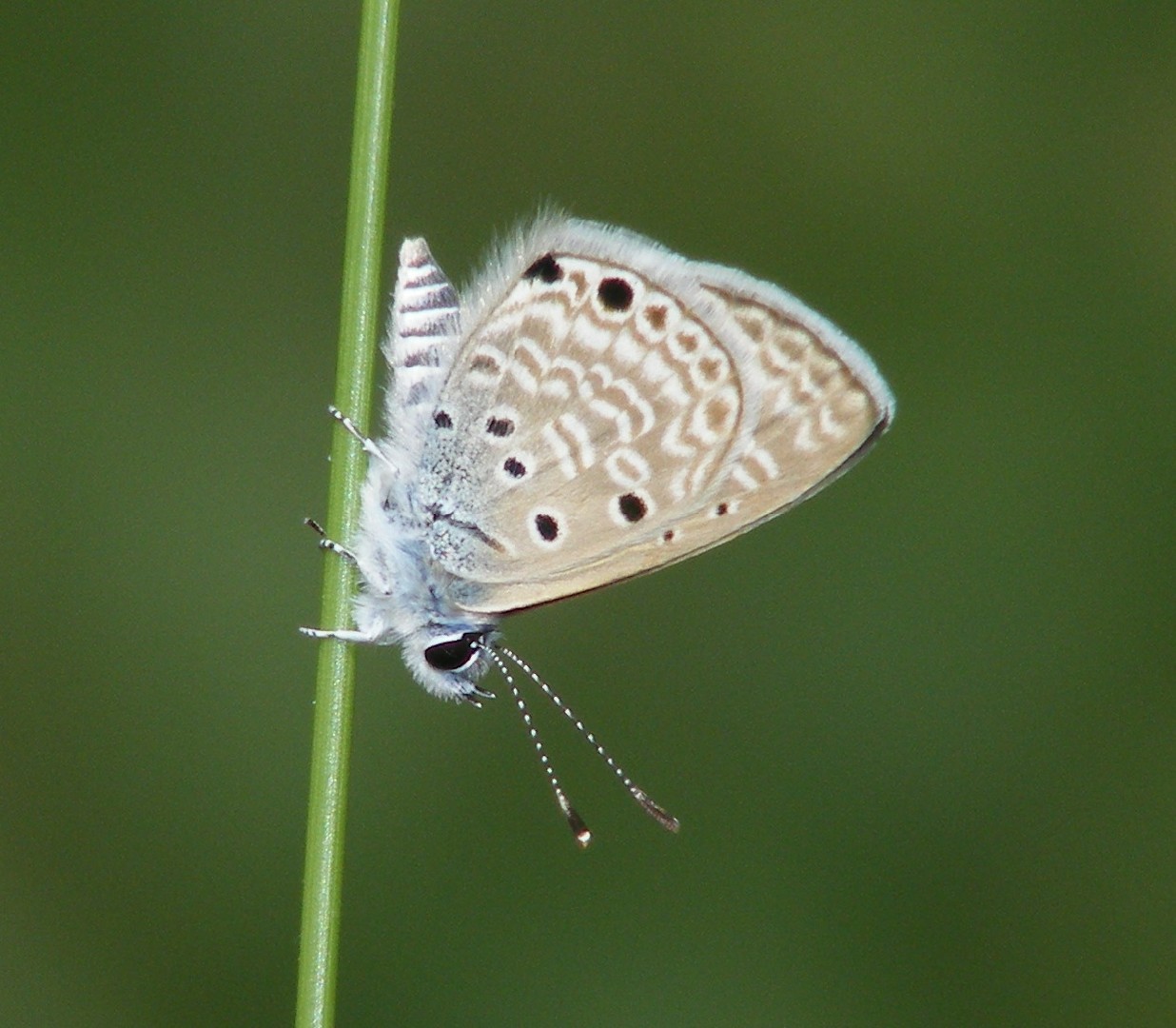
6. Desert babul blue
Male upperside brownish purple, dark blue at base of wings. Forewing: costa very narrow along its apical half, termen evenly and a little more broadly from apex to tornus, edged with brown; the area on the disc, in the cell and beyond it is covered with hair-like specialized scales and is distinctly darker. Hindwing: similar, the brown edging to the costa much broader; posteriorly in the tornal area there is a dark spot in interspace 1 and another more clearly defined similar spot in interspace 2, both spots merged more or less into the terminal brown edging. Cilia of both forewings and hindwings white, with their basal halves evenly dark brown. Underside: greyish brown. Forewing: two short white lines, one each side of the discocellulars; a minute black subcostal dot above apex of cell, another similar dot a little beyond it; two parallel, obliquely placed, transverse, upper discal white lines, followed by an inner and an outer obliquely placed, irregular, broken, subterminal line also white, the inner one somewhat lunular, and an anteciliary dark line; the posterior third from base of the wing uniform, somewhat paler than the rest. Hindwing: the following black white-encircled spots conspicuous: 4 subbasal spots in transverse order, a subcostal spot in middle of interspace 7, two minute geminate (paired) spots at the tornal angle, and a larger one in interspace 2; two transverse short white lines on either side of the discocellulars as on the forewing; a transverse, curved, catenolated, discal band of white markings, followed by a postdiscal and subterminal series of white lunules and an anteciliary dark line edged inwardly with white. Antennae dark brown, the shafts ringed with white; apex of club also white; head, thorax and abdomen dark brown, the thorax in fresh specimens with a little purplish-blue pubescence; beneath: palpi, thorax, and abdomen white. Female upperside: rich silky brown. Forewings and hindwings: suffused with purplish blue at base, and with anteciliary black lines. Hindwing: with two black spots at tornal area as in the male. Underside: as in the male but the markings more regular, more evenly and neatly defined, and the white transverse lines on the forewing carried to the dorsal margin. Cilia, antennae, head, thorax and abdomen similar to those of the male, the thorax however, devoid of any bluish pubescence (fine hairs) on the upperside.
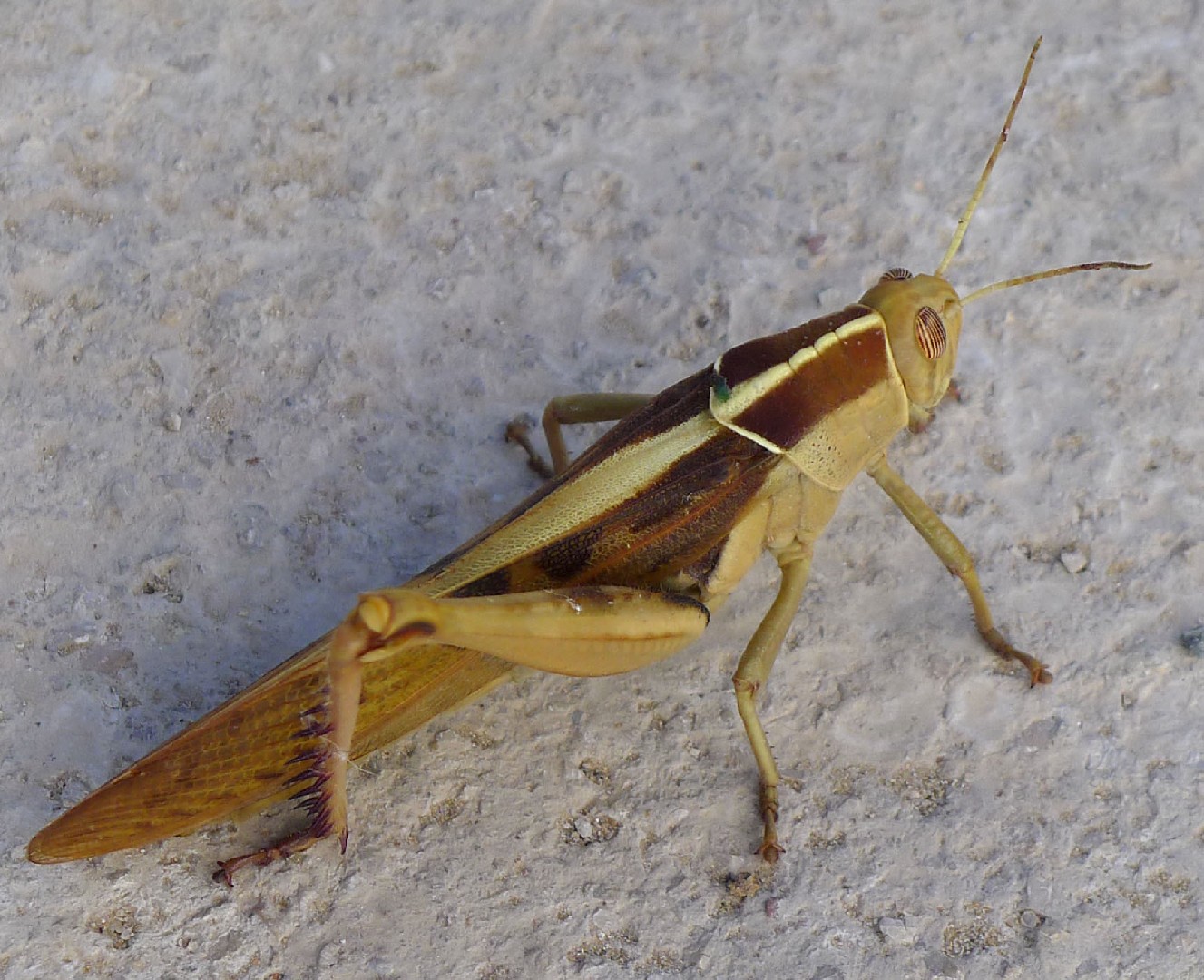
7. Weta
Acanthacris ruficornis is a right-winged insect from the field locust family (Acrididae). The scientific name of this species was first validly published in 1787 by Fabricius.







