




Top 19 Most Common Insects in Andaman and Nicobar Islands
Insects, diverse creatures with distinct traits, are incredibly prevalent in Andaman and Nicobar Islands. The diverse geographical settings in Andaman and Nicobar Islands breed a unique mix of insect populations, each benefiting its surroundings in distinct ways. Some insects can be nuisances, yet many play crucial roles in pollination and decomposition, vital for a healthy ecosystem. This list showcases the 19 most common insects in Andaman and Nicobar Islands, highlighting the rich correlation between these creatures and their environment.

Most Common Insects
1. Tree flitter
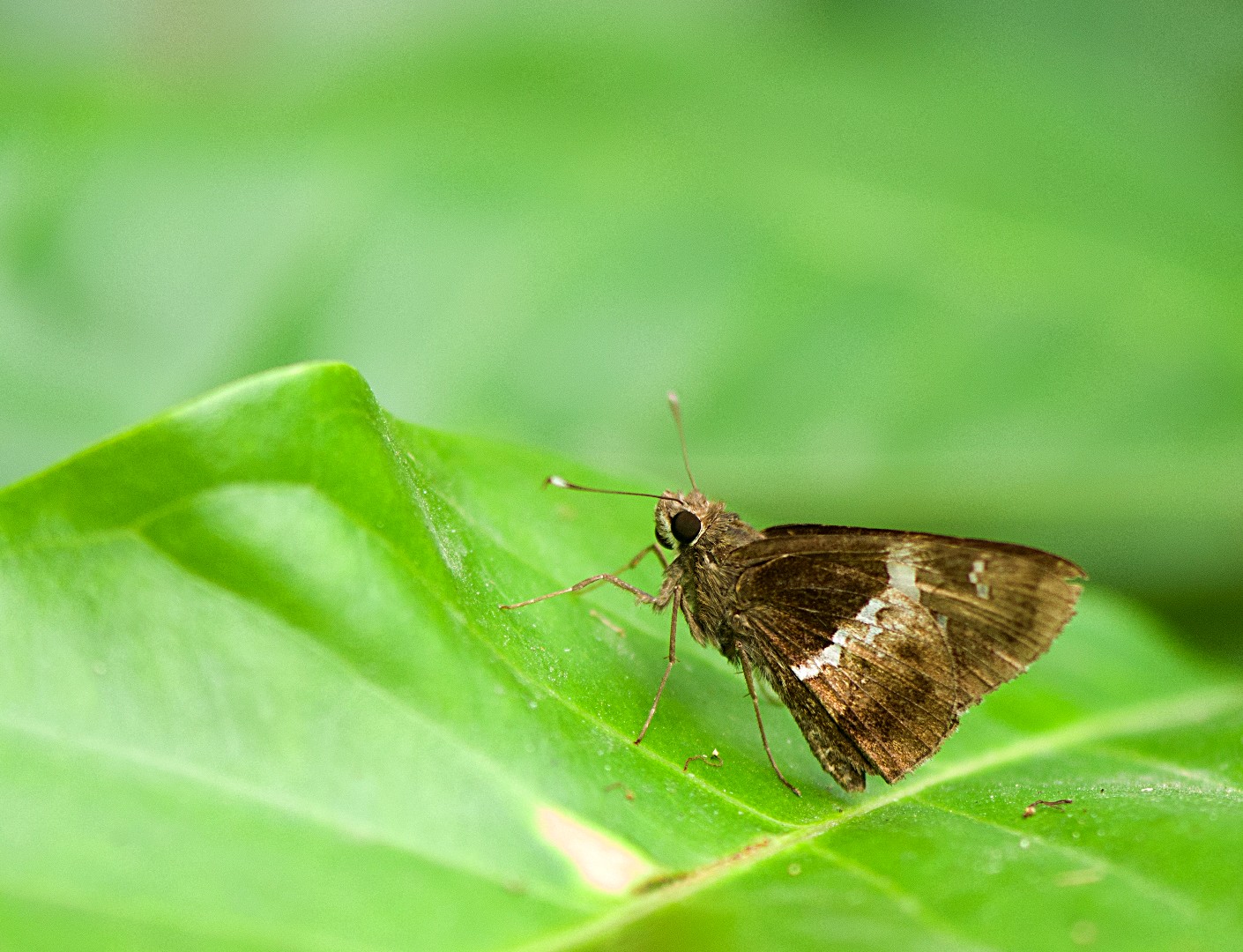
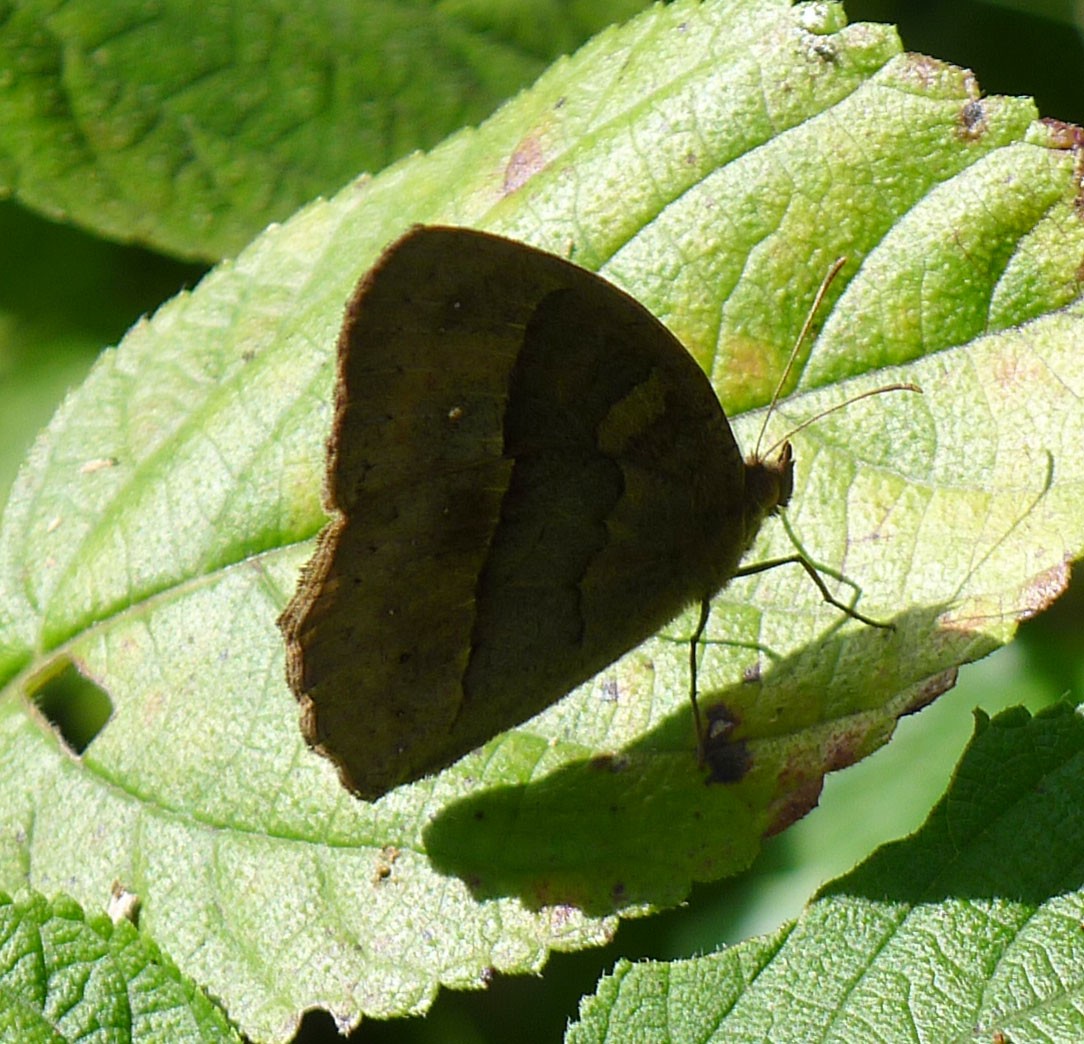
Male and female, dark chocolate-brown. Upperside, forewing with three small conjugated subapical semi-transparent white spots, three similar and larger discal spots, and a fourth above them within the cell. Underside darker brown basally, paler exteriorly; forewing with spots as above, bordered externally by a suffused dark brown streak; hindwing with a double series of white dark brown-outer-bordered lunules crossing the middle of the wing, beyond which is a submarginal series of suffused dark brown spots. Palpi, thorax, and abdomen beneath pale greyishbrown. Legs brown. Cilia yellowish- white, spotted with pale brown. 

2. Lemon pansy
It is brown with numerous eyespots as well as black and lemon-yellow spots and lines on the upperside of the wings. The underside is a dull brown, with a number of wavy lines and spots in varying shades of brown and black. There is also an eyespot on the lower side of the forewing. The wet- and dry-season forms differ considerably in coloration and even shape. In the wet-season form the markings are distinct and vivid and the wing shape is a little more rounded. In the dry-season form the markings are obscure and pale especially on the underside and the wing margin is more angular and jagged.
3. Black-and-white spiny spider
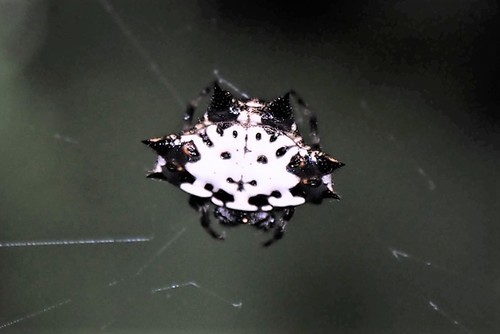
Female black-and-white spiny spider are 6 - 9 mm wide and possess a hard, shiny abdomen armed with six black conical spines. The upper surface of the abdomen is white to yellowish with variable black or dark brown markings and sigilla. Males are much smaller at 3 - 4 mm and in place of spines have small bumps on their abdomens.
4. Autumn leaf
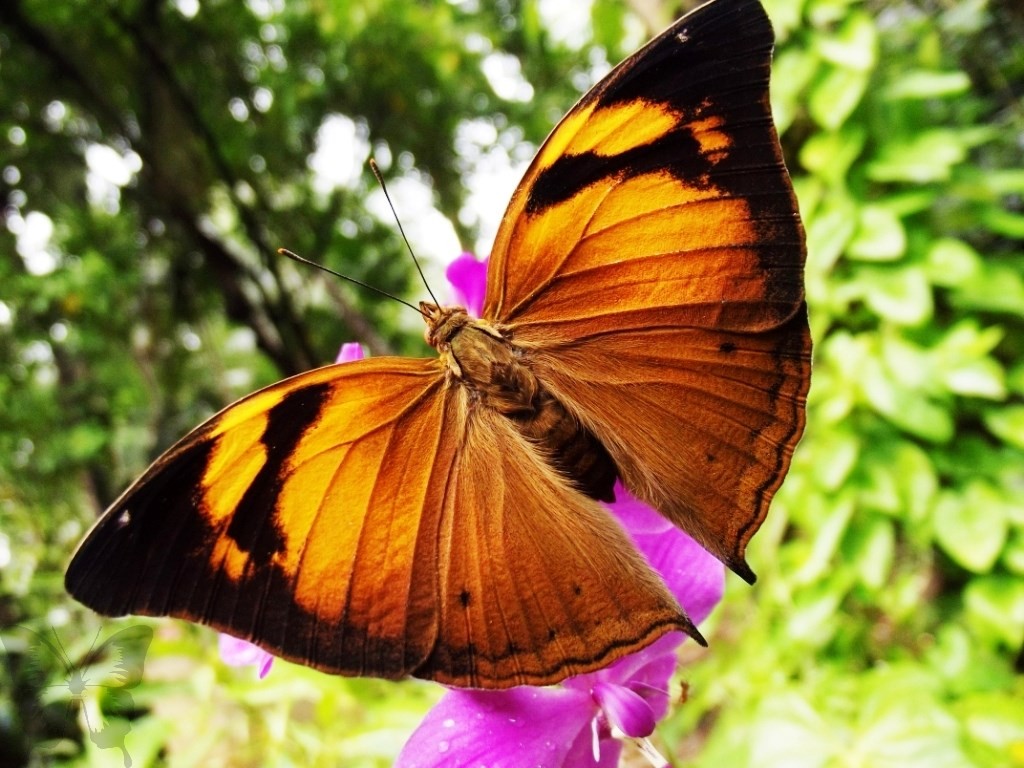
The larvae are black, with two rows of dorsal white spots. Head with a pair of branched spines; rest of the segments with a dorsal and a lateral row of blue branched spines on each side. The pupae are yellowish with numerous black spots; constricted in the middle; head produced into two points. Male's and female's underside yellowish brown, paling anteriorly to rich golden yellow on the forewing, shading anteriorly into dusky brown on the hindwing. Forewing: the apical half black, following a line from vein 12 opposite the discocellulars, passing through apex of cell, obliquely across middle of interspace 3 and curving down to tornus; a black spot near apex of cell coalescing with the inner margin of 1he black colour; a short, very oblique, broad golden-yellow band, broader in the female than in the male, from middle of costal margin to interspace 5; a spot beyond in line with it in interspace 4; two, sometimes three, minute, preapical white specks; the cilia fulvous (tawny), touched with white, anteriorly. Hindwing uniform; the costal margin broadly as noted above, a subterminal narrow band and narrower terminal line posteriorly, dusky black; a postdiscal black spot in interspaces 2 and 5 respectively; the cilia fulvous. The ground colour varies from reddish to dark greenish brown with irrorations (speckles) of greyish and black scales; apex of the forewing and the terminal margin posteriorly of the hindwing more or less lilacine; forewings and hindwings crossed by a dark narrow discal fascia, generally bordered on the inner side by a greyish line; this fascia bent inwards at right angles above vein 6 of the forewing and in most specimens, bordered internally by a diffuse pale patch and externally by an oblique whitish mark, beyond which is a subcostal white spot, followed by a transverse sinuous postdiscal series of obscure ocelli crossing both wings, each ocellus centred by a minute dot, white on the fore, black on the hindwing. In the male there are generally, but not invariably, a number of whitish spots on the basal areas of both wings. Antennae blackish brown, ochraceous at apex; head, thorax and abdomen dark fulvous brown; beneath, the palpi white, the thorax and abdomen pale brown. Wingspan is about 8 - 9 cm.
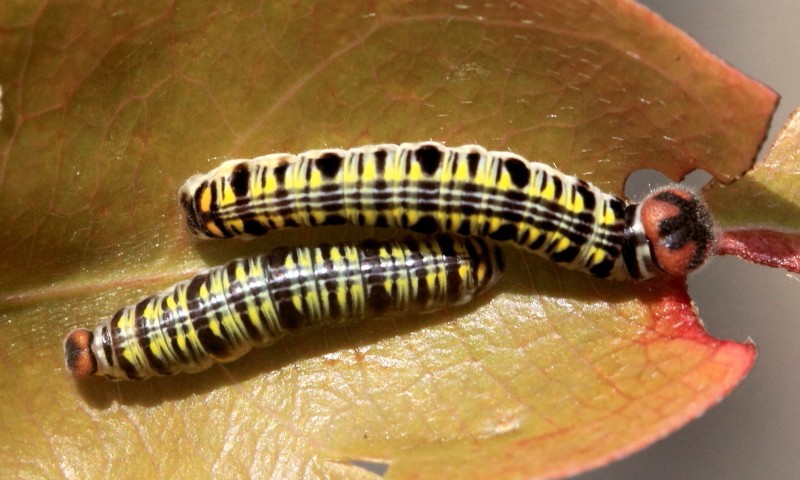
5. Large yeoman
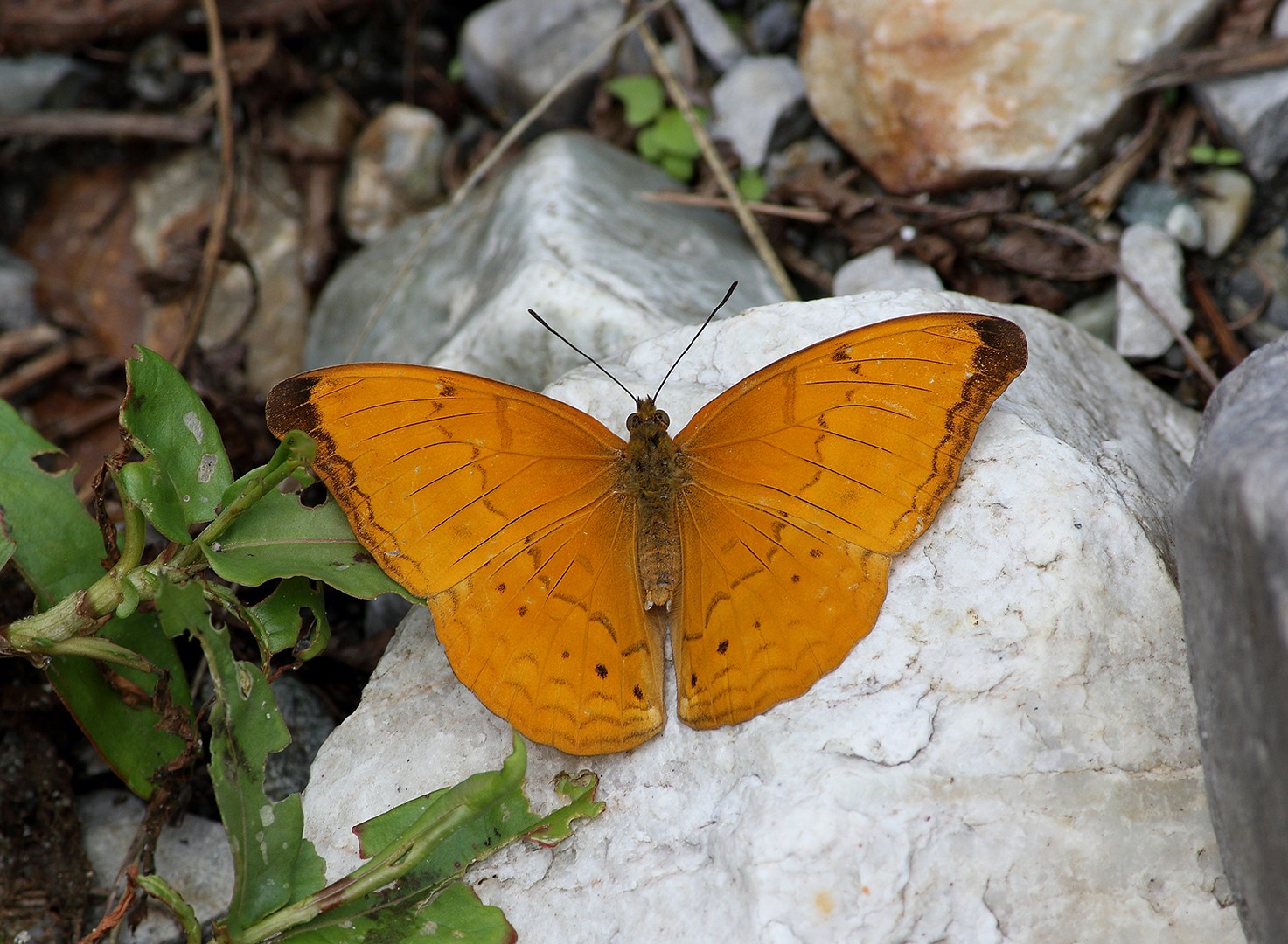
Cirrochroa aoris is a butterfly from the Nymphalidae family. The scientific name of the species was first validly published in 1847 by Edward Doubleday.
6. Orangetail awlet
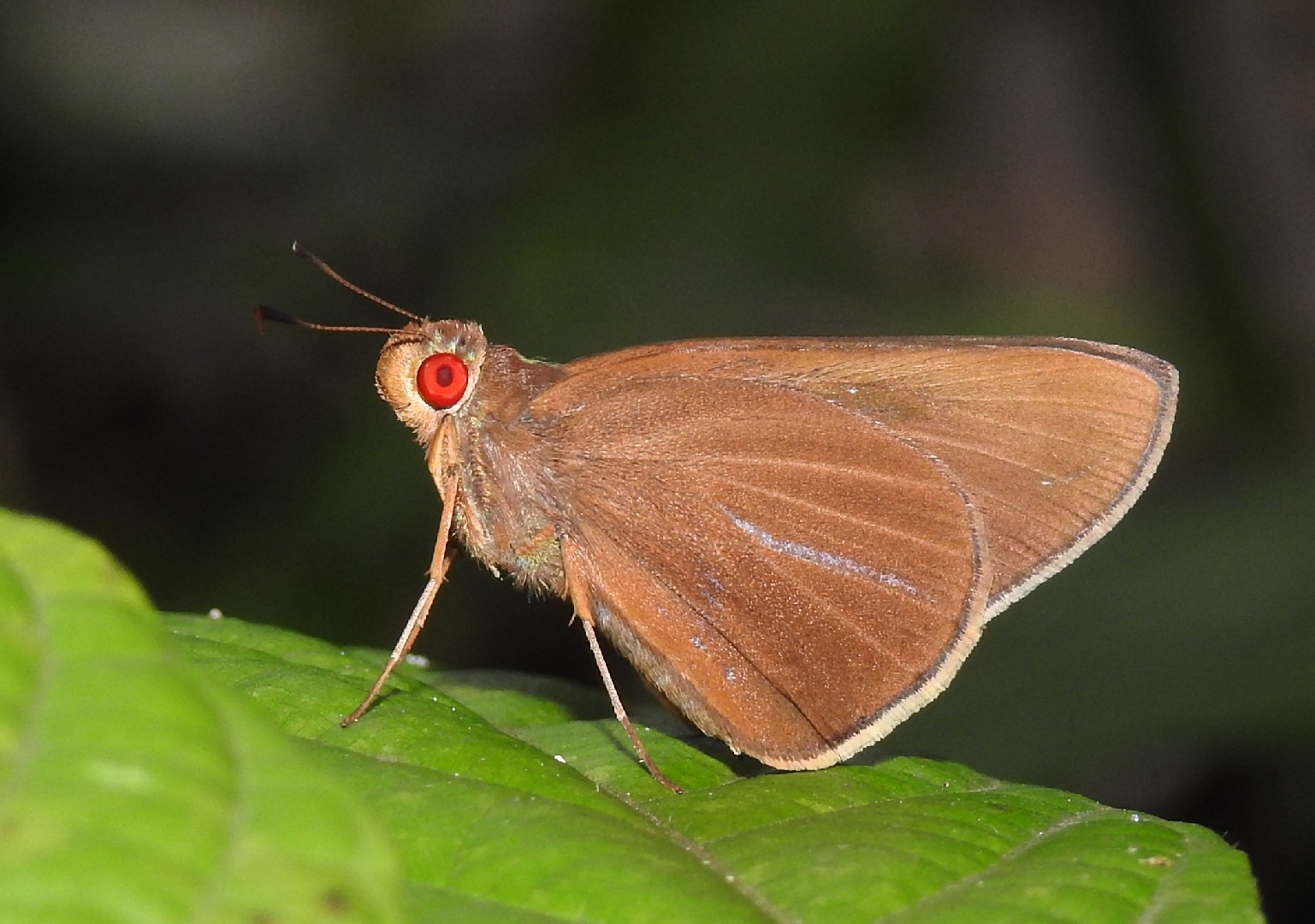
Both sexes: The butterfly has a wingspan of 45 to 50 mm. Above, both sexes are an unblemished dark brown. The hindwings have an orange fringe. The abdomen is orange towards the rear. Below, the wings have white patches; the forewings having a large white central patch, and the hindwings having a broad pure white discal band. The male has no brands.
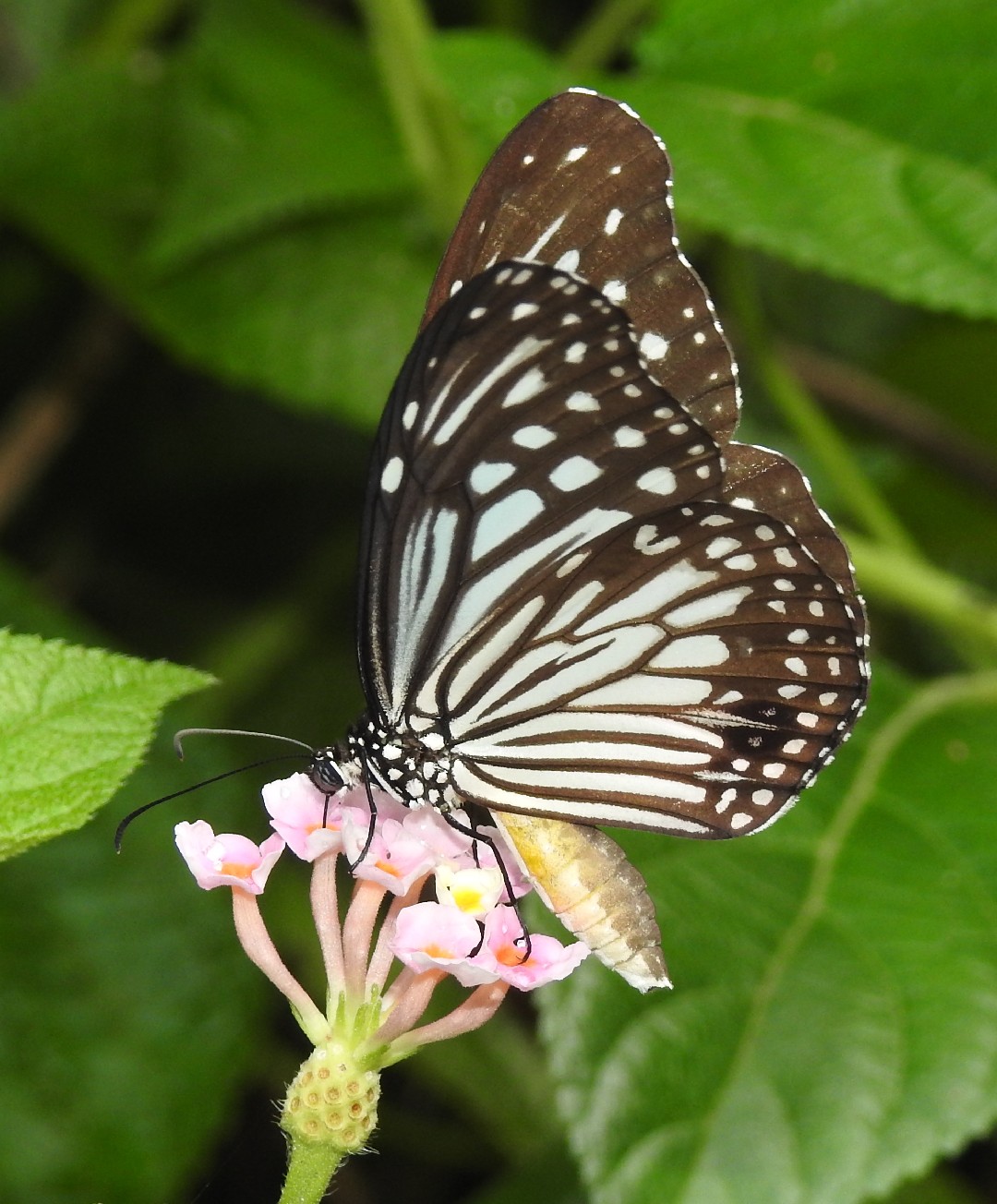
7. Glassy tiger
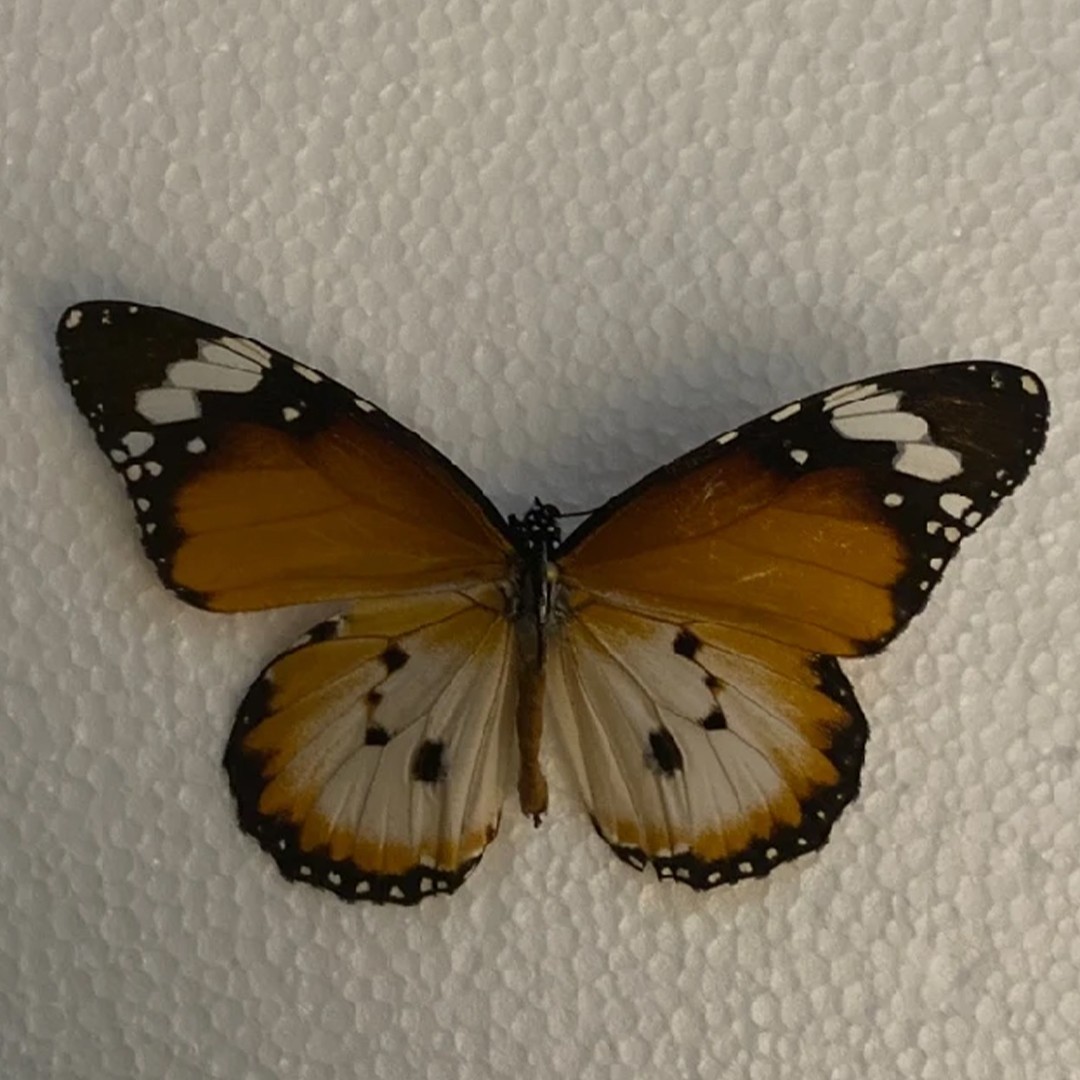
The scientific name of the species was first validly published in 1782 by Caspar Stoll.
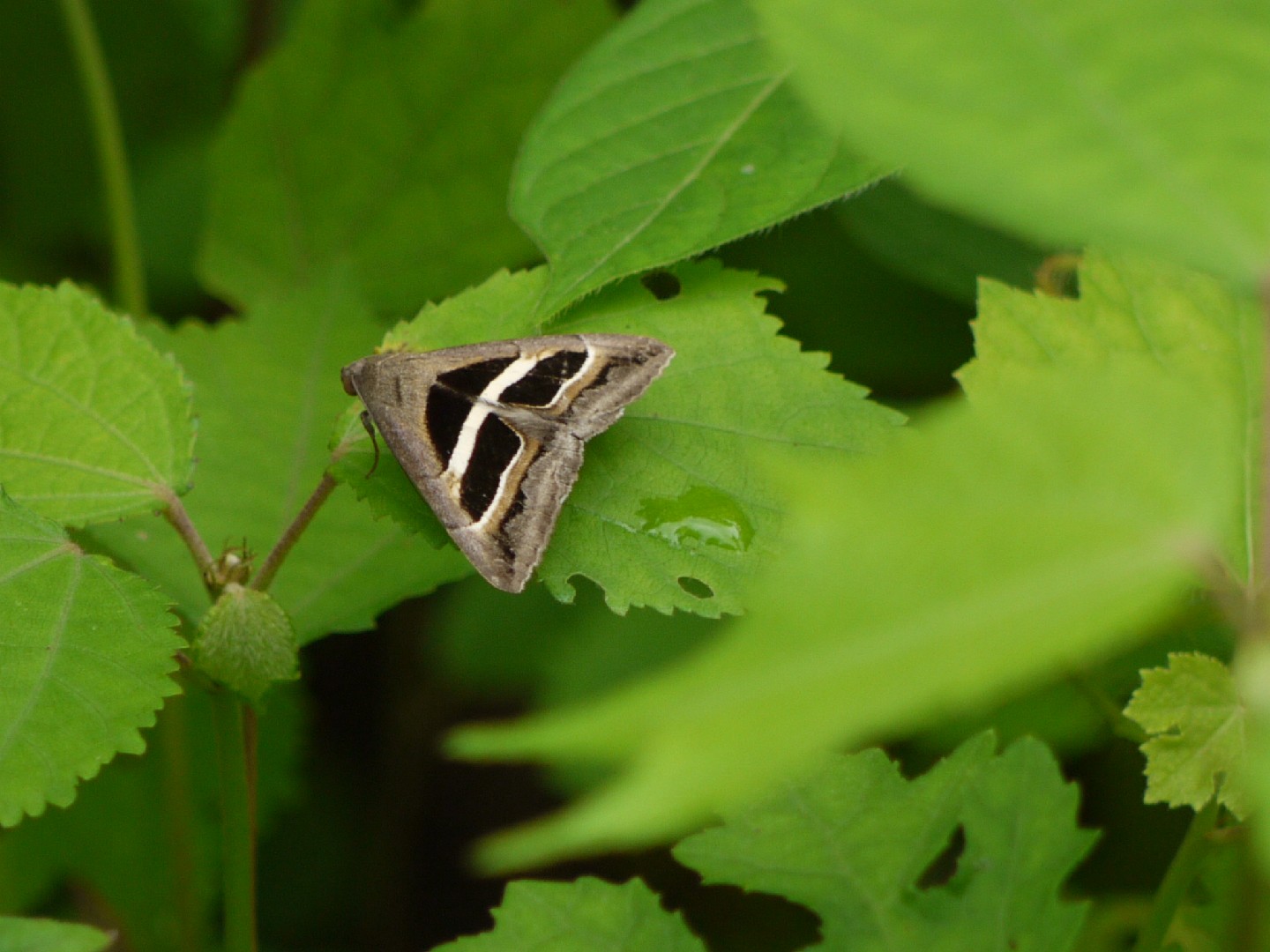
8. Grammodes geometrica
Its wingspan ranges from 26 to 45 mm. Body is greyish brown. Forewings with a large black patch occupying the whole wing except the basal, costal and outer area. Its outer edge waved ad joined by an oblique streak from the apex. Antemedial and postmedial lines curved inwards below the costa with whitish bands outside them on the black patch. The outer part of the postmedial band pale fulvous colored. Hindwings fuscous, with medial pale band. Cilia with white apex and anal angle. Larva is an elongated semi-looper. Tubercles absent. Head is pale ochreous with black spots. Body with longitudinal red lines dorsally and dorso-laterally.
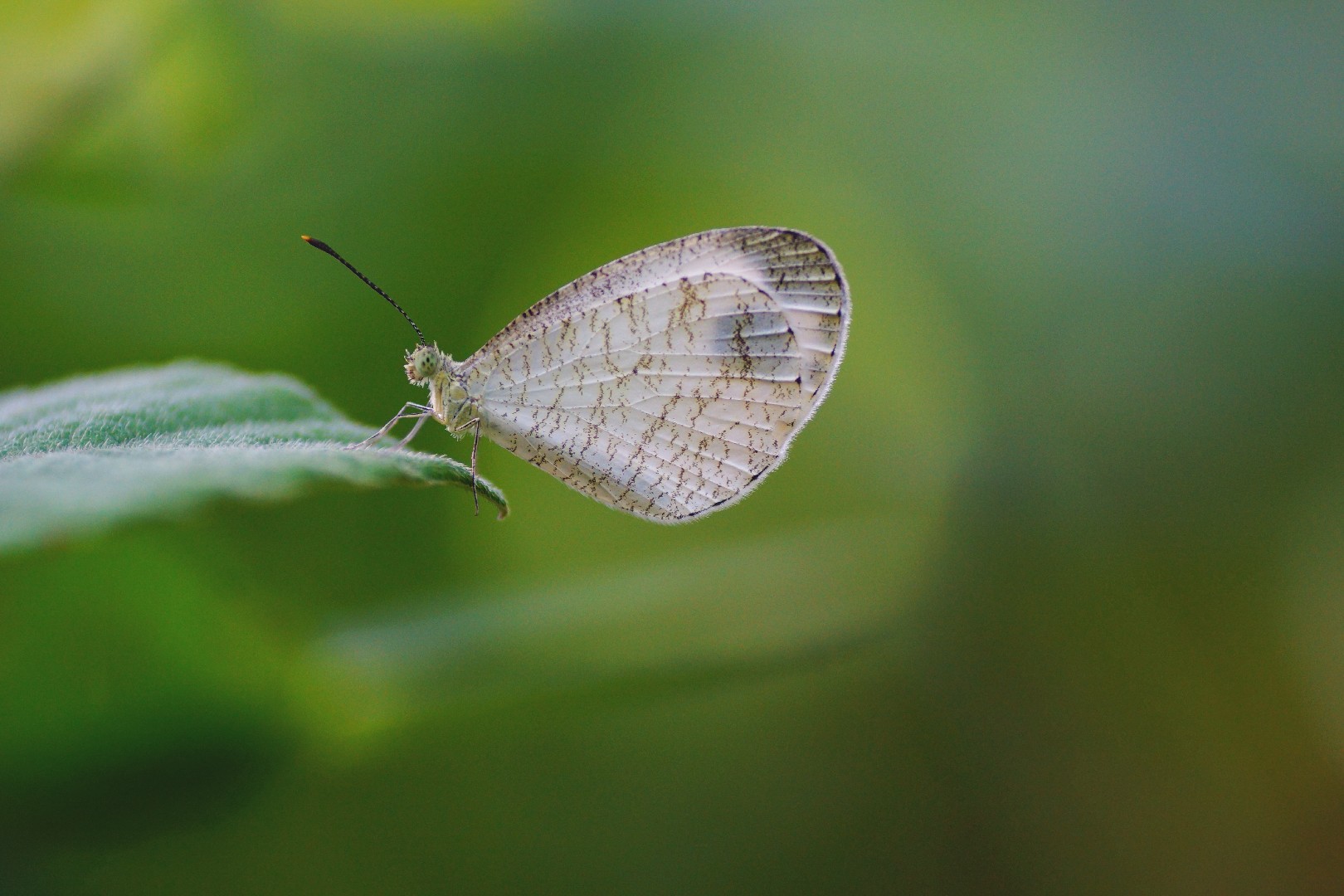
9. Psyche
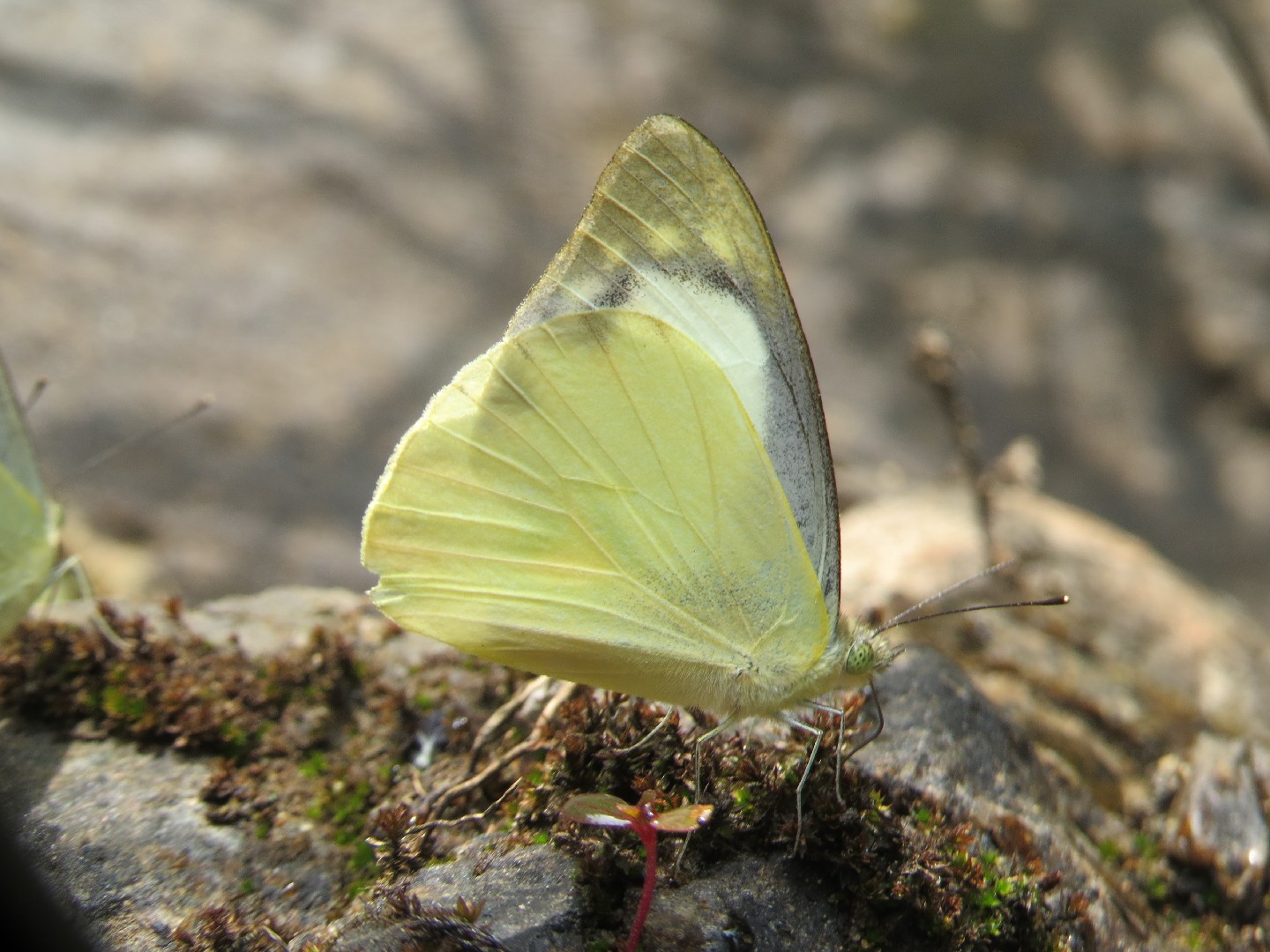
Upperside is white,base of wings are very slightly powdered with minute black scales.The costa of forewing is speckled obscurely with black; apex black, the inner margin of this inwardly angulate; a very large somewhat pear-shaped post-discal spot also black. Hindwing is white,in most specimens an obscure, extremely slender, terminal black line. Underside is white; costal margin and apex of forewing broadly, and the whole surface of the hindwing irrorated (speckled) with transverse, very slender, greenish strigae and minute dots; these on the hindwing have a tendency to form sub-basal, medial and discal obliquely transverse obscure bands; the postdiscal of forewing is black,spot as on the upperside; terminal margins of both forewings and hindwings with minute black, short, transverse slender lines at the apices of the veins, that have a tendency to coalesce and form a terminal continuous line as on the upperside. Antennae dark brown spotted with white, head slightly brownish, thorax and abdomen white. Female is similar as male, the black markings on the upperside of the forewing on the whole slightly broader, but not invariably so. Wingspan is 2.5 - 5 cm. Larva is green with a pale glaucous tinge about the bases of the legs and slightly hairy. Pupa sometimes green, but more often of a delicate pink shade.
10. Yamfly
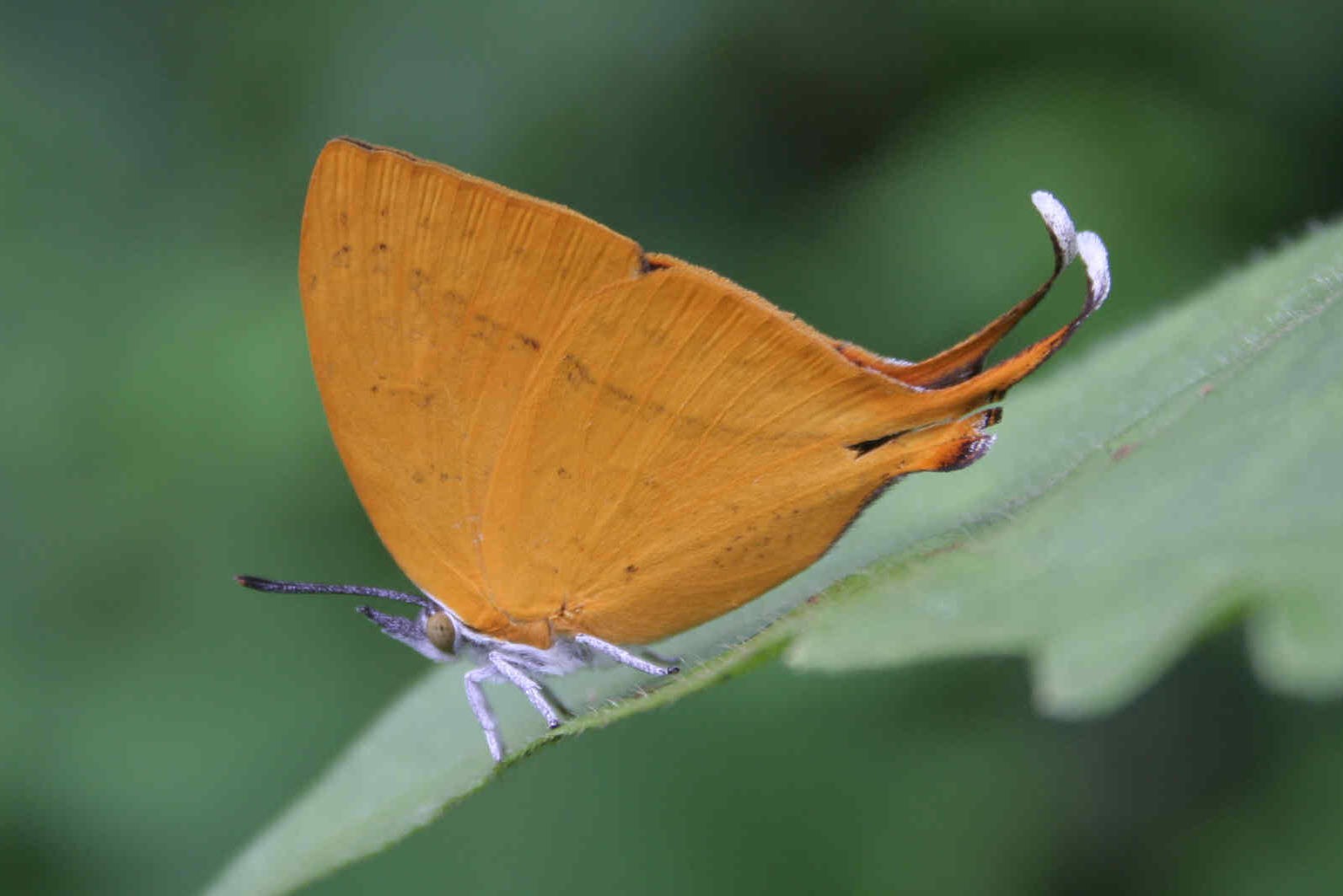
Male. Uppersicle bright fulvous. Forewing with the apical margin from the middle of the costa increasingly black, and continued down the outer margin, gradually decreasing in width, the inner margin of the black band being in an almost continuous curve. Hindwing with a very narrow, pale ochreous-brown band on the outer margin, some suffusion of this colour being at the base of both wings and continued down the hindwing (the abdominal fold being similarly coloured) and to the end of the tail. Underside dark ochreous-yellow, markings pale blackish. Forewing with two conjoined ring-spots across the middle of the cell, and two similar spots across the end, both somewhat indistinct, the latter with, sometimes, an indistinct spot alcove it, near the costa, a discal, nearly straight band of conjoined ring-spots, the middle one double, the series ending in two black marks in the interno-median interspace, a very indistinct series of sub-marginal lunules. Hindwing with two sub-basal ring-spots, two in the cell and two at the end, all very indistinct; a discal band, slightly inwardly curved, composed as in the forewing and an indistinct submarginal series of lunules, some small brown suffusion at the anal angle and the tail brown edged. Antennae black, with white dots beneath, club with an orange tip; head and body brown above, grey beneath.Female. Upperside somewhat paler than in the male, the marginal bands a little broader, the underside similar.

More







