




Top 20 Most Common Insects in Patna
Insects are a kaleidoscope of biodiversity found within the varied geographies of Patna, each with distinct roles in local ecosystems. Geographic specifics of Patna influence insect diversity, shaping the balance between helpful and harmful species. Our list of '20 Most Common Insects in Patna' highlights this delicate balance, emphasizing the significance of these often-overlooked inhabitants of our state.

Most Common Insects
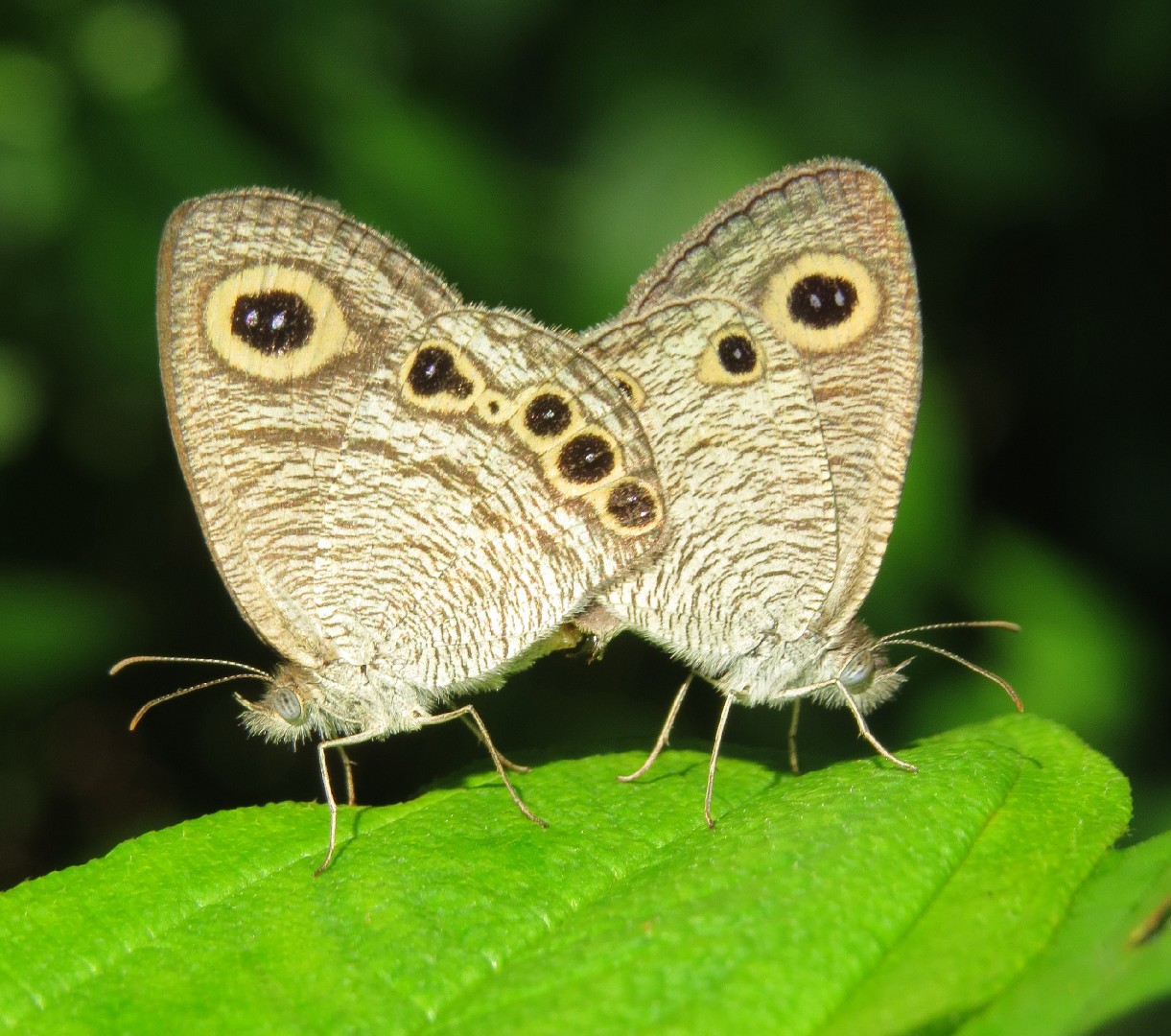
1. Common four-ring
Wet-season form: Upperside greyish brown. Forewing with the usual comparatively large, bi-pupilled, yellow-ringed, black preapical ocellus. Hindwing usually with two, sometimes with three, very rarely without any, smaller similar uni-pupilled postdiscal ocelli. Underside greyish white, not very densely covered with transverse short brown striae. Forewing with the preapical ocellus as on the upperside, obscure discal and subterminal dull brown transverse fasciae and a narrow brown ring round the ocellus diffusely produced posteriorly. Hindwing with one apical and typically three postdiscal posterior ocelli placed in a curve; traces of transverse brown discal and subterminal fasciae in most specimens. Antenna, head, thorax and abdomen greyish brown, the abdomen paler beneath. Male without secondary sex-mark. Dry-season form: Similar, somewhat paler on both upper and under sides; the discal and subterminal transverse fasciae more pronounced; the ocelli on the underside of the hindwing minute or absent. Adults have a wingspan of 4 - 4.5 cm. 
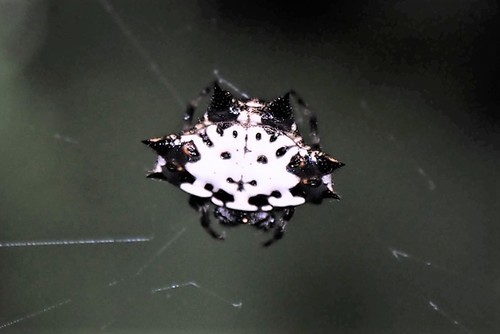
2. Black-and-white spiny spider
Female black-and-white spiny spider are 6 - 9 mm wide and possess a hard, shiny abdomen armed with six black conical spines. The upper surface of the abdomen is white to yellowish with variable black or dark brown markings and sigilla. Males are much smaller at 3 - 4 mm and in place of spines have small bumps on their abdomens.
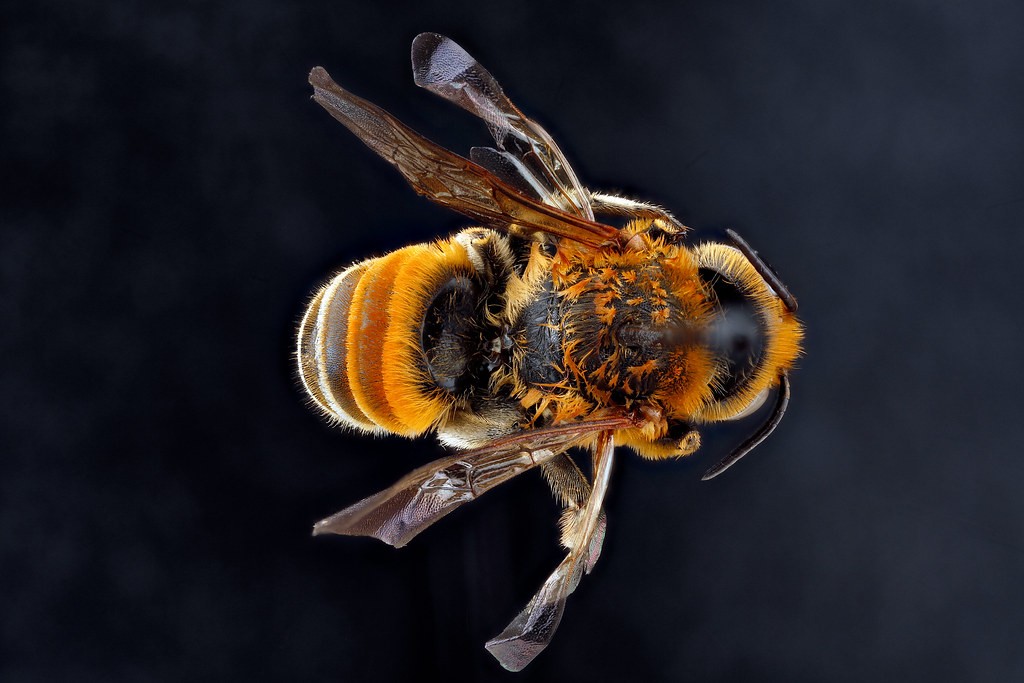
3. Woolly Wall Bee
Megachile lanata is a species of bee in the family Megachilidae. It was described by Johan Christian Fabricius in 1775.
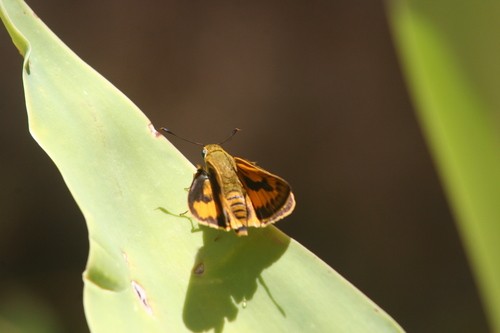
4. Yellow palm dart
The wingspan is about 4 cm.
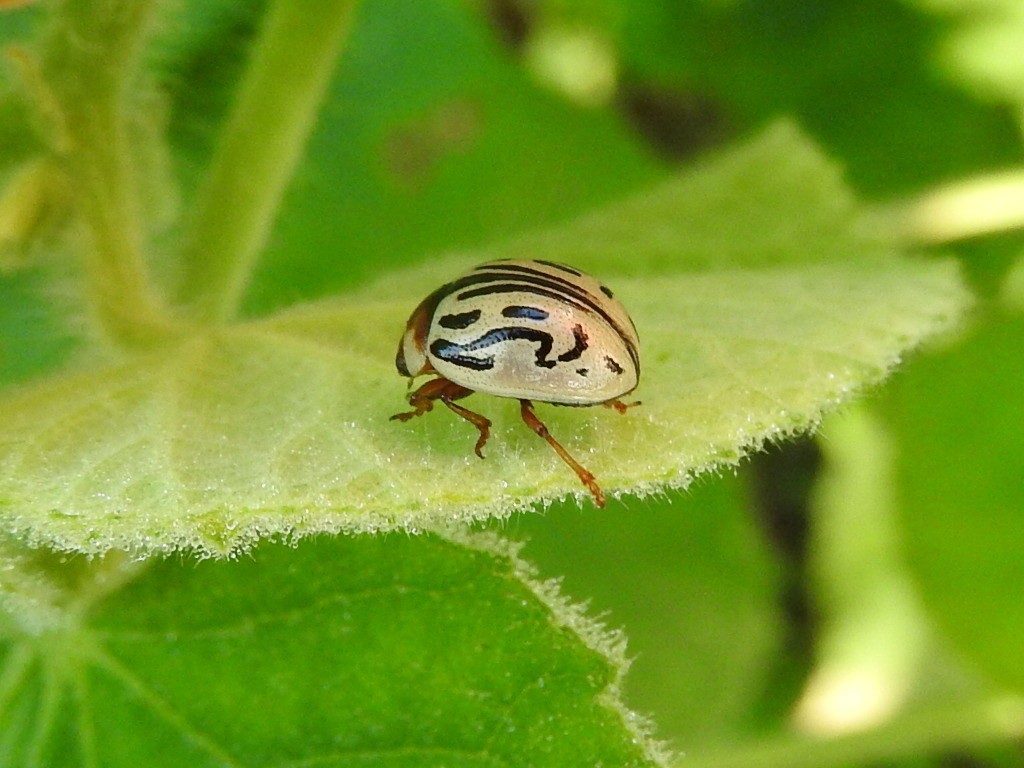
5. Mexican beetle
Z. bicolorata is a small lead beetle with a brown head, brown and yellow graduated pronotum and yellow elytra marked with characteristic elongated brown stripes. The pattern on the elytra is greatly variable - in a study of 478 beetles, 29 variations on this pattern were identified.
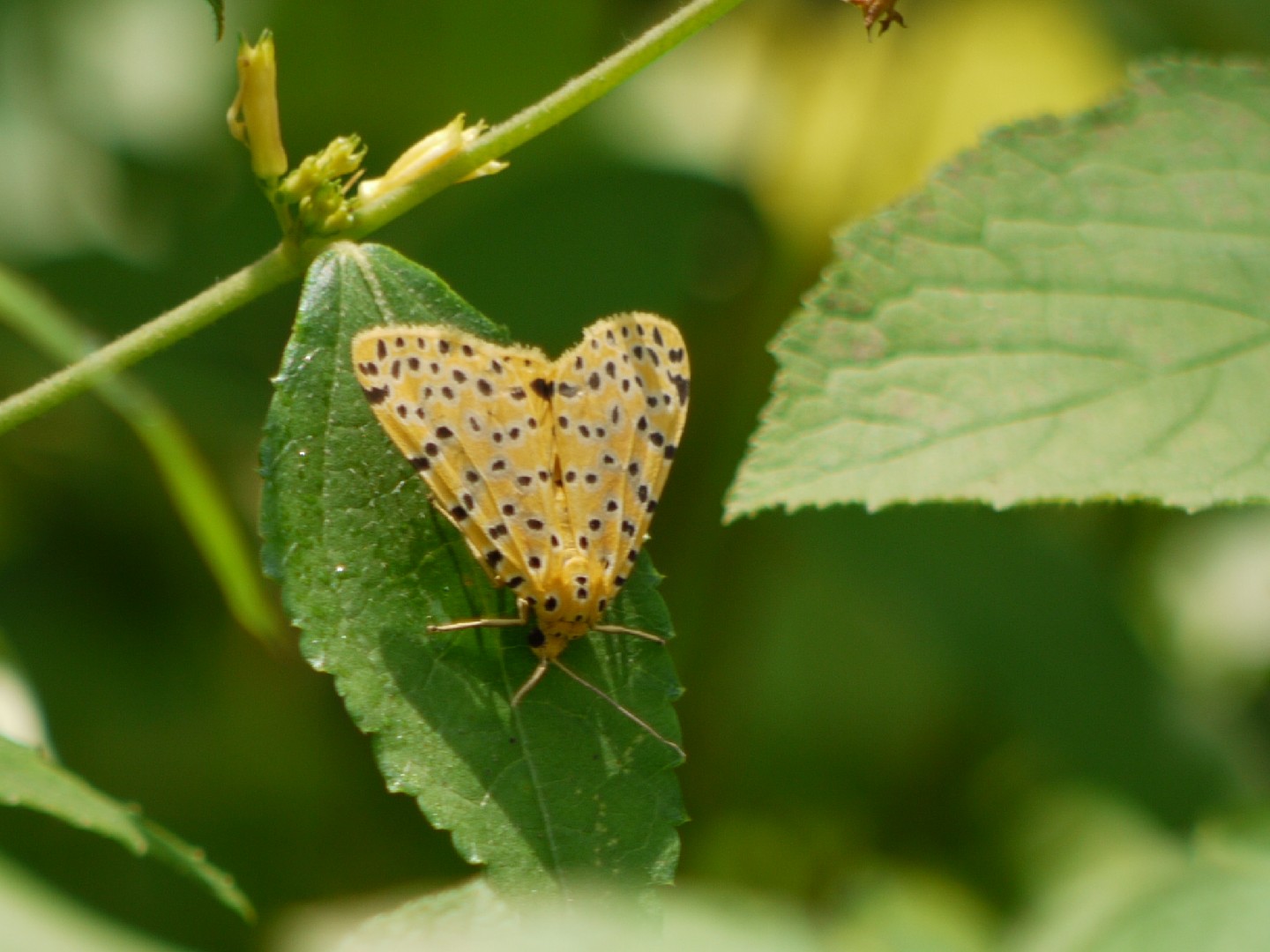
6. Crotalaria pod borer
The wingspan is about 40 mm. The species is extremely variable in wing pattern as well as ground colour. It differs from Mangina argus in the head, thorax and forewing being orange yellowish or whitish. The abdomen and hindwings are bright orange. Markings and spots are similar to its neighbor species. The head of the caterpillar is reddish brown when fully grown. Its body is black with white intersegmental rings that contain broken black transverse lines. Spiracles are in orange patches.
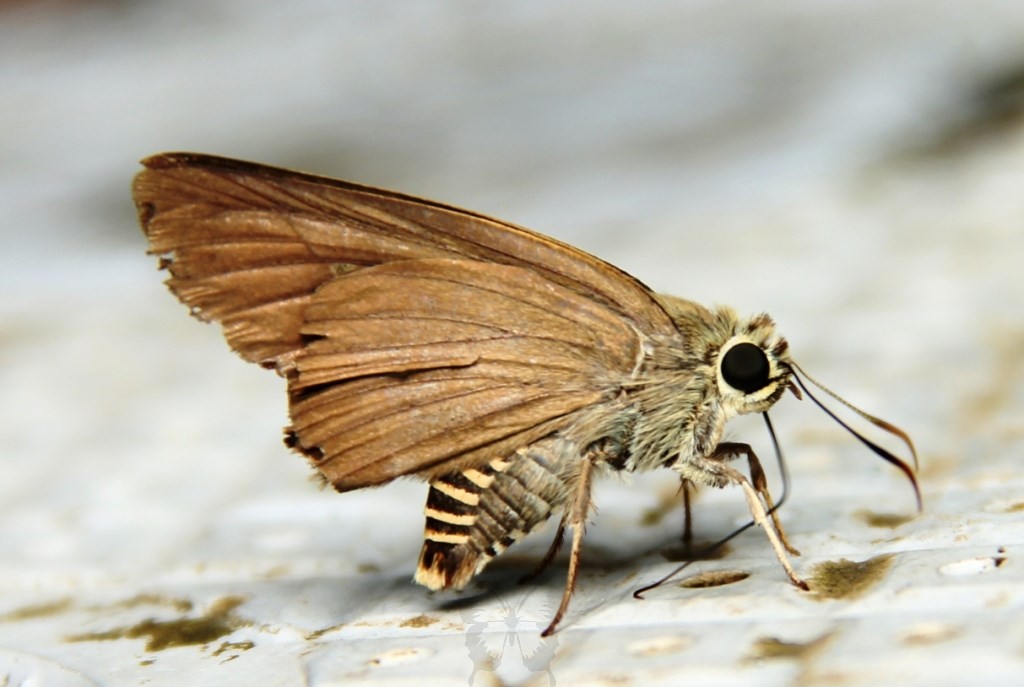
7. Brown awl
Badamia exclamationis is a butterfly from the family of Badamia exclamationis (Hesperiidae). The scientific name of the species was first validly published in 1775 by Johann Christian Fabricius.
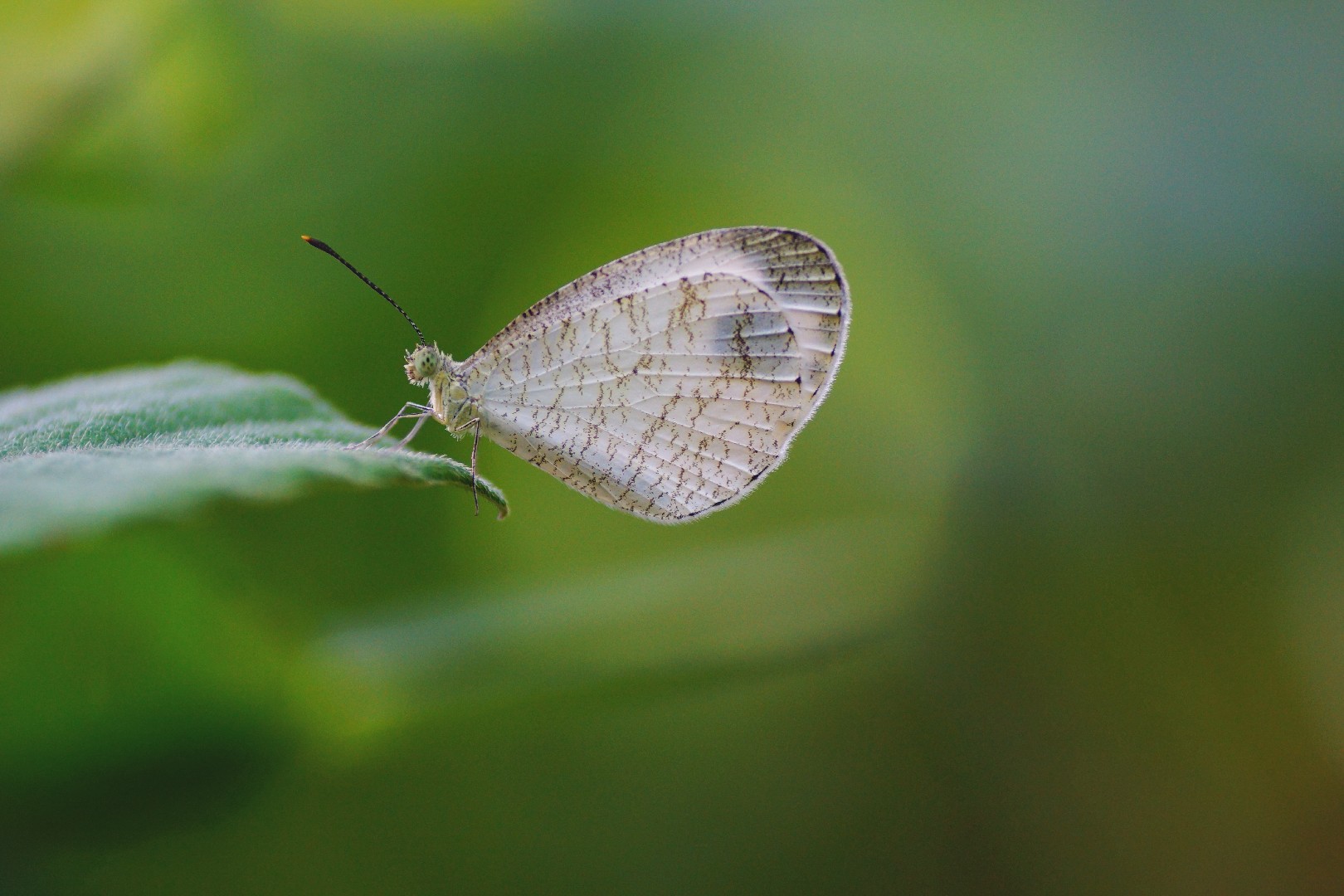
8. Psyche
Upperside is white,base of wings are very slightly powdered with minute black scales.The costa of forewing is speckled obscurely with black; apex black, the inner margin of this inwardly angulate; a very large somewhat pear-shaped post-discal spot also black. Hindwing is white,in most specimens an obscure, extremely slender, terminal black line. Underside is white; costal margin and apex of forewing broadly, and the whole surface of the hindwing irrorated (speckled) with transverse, very slender, greenish strigae and minute dots; these on the hindwing have a tendency to form sub-basal, medial and discal obliquely transverse obscure bands; the postdiscal of forewing is black,spot as on the upperside; terminal margins of both forewings and hindwings with minute black, short, transverse slender lines at the apices of the veins, that have a tendency to coalesce and form a terminal continuous line as on the upperside. Antennae dark brown spotted with white, head slightly brownish, thorax and abdomen white. Female is similar as male, the black markings on the upperside of the forewing on the whole slightly broader, but not invariably so. Wingspan is 2.5 - 5 cm. Larva is green with a pale glaucous tinge about the bases of the legs and slightly hairy. Pupa sometimes green, but more often of a delicate pink shade.
9. Large oakblue
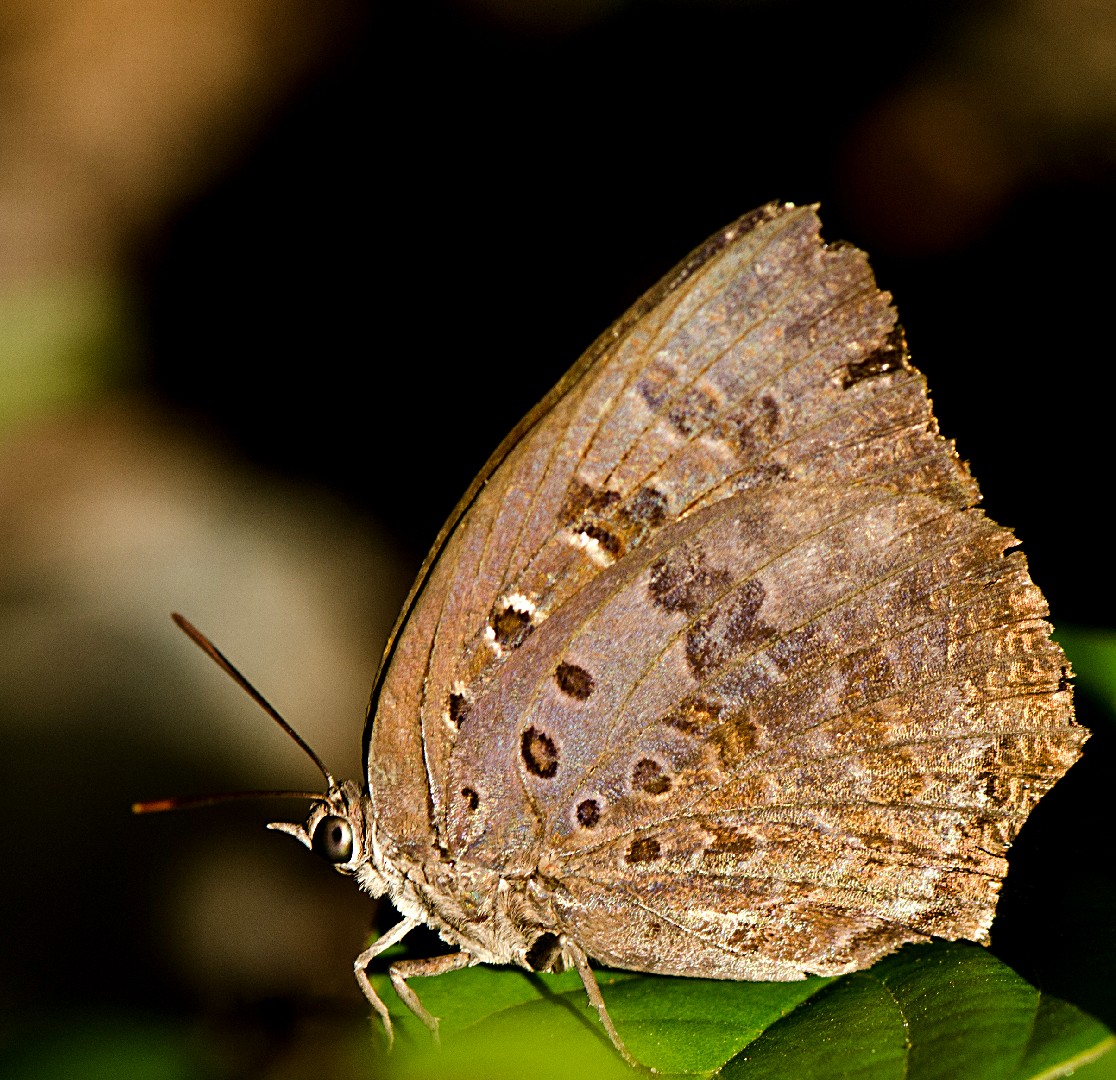
Male. Upperside dark purple-blue, shining in certain lights, coloured somewhat like Arhopala centaurus pirithous, but brighter blue, costal and outer marginal line black. Cilia black, tails black, a rather long tail at the end of vein 2, slight projections at the ends of all the other veins of the hindwing, more pronounced at the ends of veins 1 and 3 than at the ends of the others. Underside grey suffused with pinkish-brown, the lower portion of forewing pale, the hindwing darker than the forewing, but varying much in shade of colour, spots and bands chocolate-brown. Forewing with a small spot in the cell near the base, a larger one in the middle, four conjoined spots at the end, the third from the upper end minute and sometimes absent, a discal band of conjoined spots from the costa to vein 2, increasing in size hind wards, the band slightly outwardly curved, sometimes very nearly straight down, but the middle spot is always a little outside the others, all these spots and bands edged with bluish-white; a sub-terminal indistinct brown band and still more indistinct terminal band. Hindwing with four sub-basal spots, three in a row, the fourth near the abdominal margin, followed by two spots, an outwardly curved bar at the end of the cell, with dark brown edges, with two spots in an inward curve below it, a discal outwardly curved irregular band of spots and curves, commencing on the costa with a large brown patch composed of two squarish spots joined together, a sub-marginal lunular thick brown line and an anteciliary thinner line, both more or less lunular, the latter edged outwardly with bluish-white near the anal angle where there is a black spot in the lobe capped with bluish-white, the bands with indications of very indistinct similar bands between them, a black terminal line. Antennae black; palpi black above, whitish beneath; head and body blackish-brown above, grey beneath. Female. Upperside paler and brighter blue merging into black on the outer parts, forming broad costal and outer marginal bands on the Forewing, with generally a black spot at the upper end of the cell; the Hindwing with similar costal and marginal bands, narrowing much in the middle of the outer margin, then broadening hindwards with some blackish suffusion running up near the abdominal space, which is pale. Underside as in the male.
10. Garden cross spider
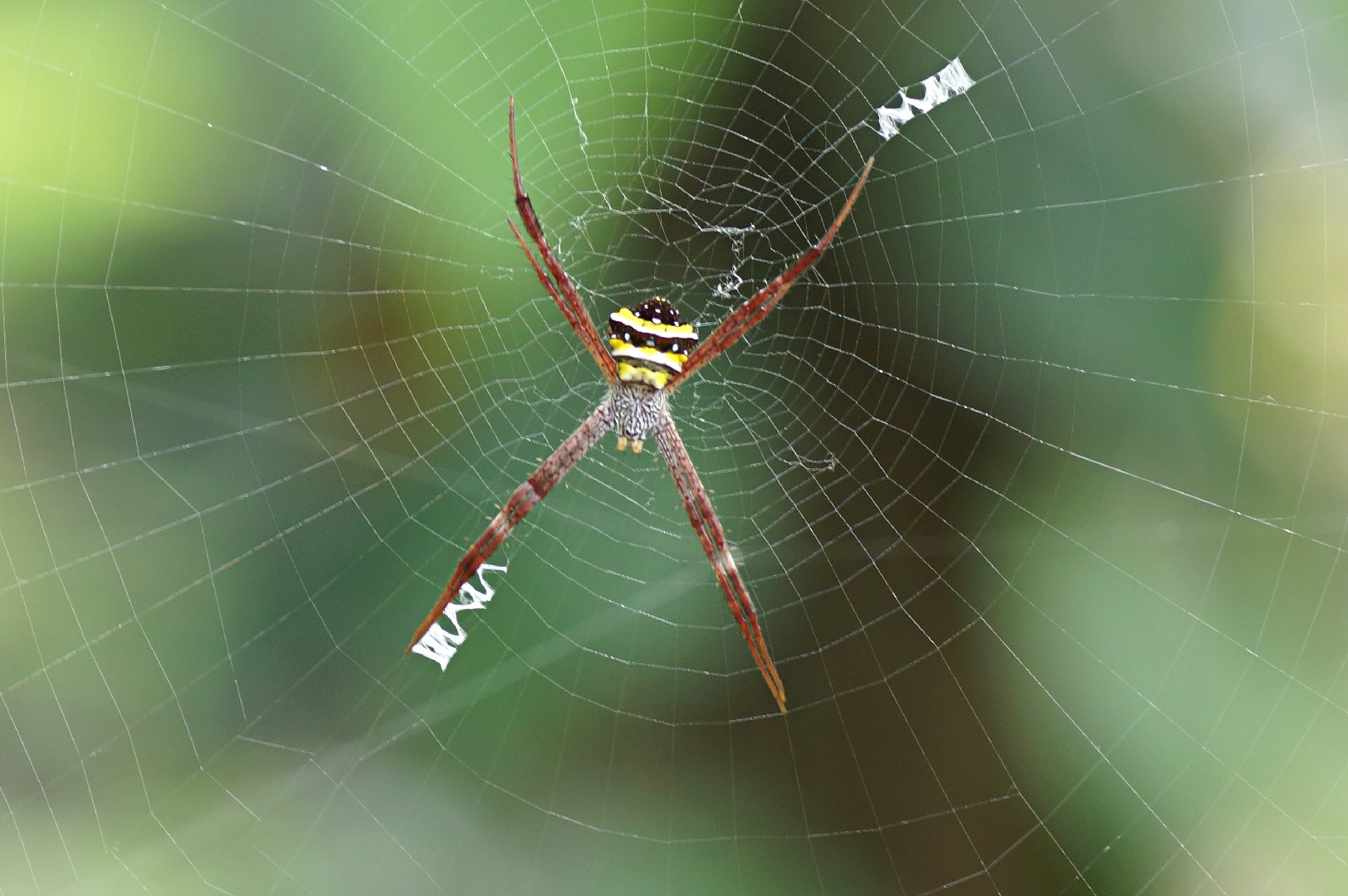
The female is larger than the male, being 8 to 10 mm (0.3 to 0.4 in) while the male is 4 to 6 mm (0.16 to 0.24 in). The female cephalothorax is slightly longer than it is wide and is clad in a white, silky pubescence. The two central eyes are surrounded by black rings and are situated on a prominent tubercle. The chelicerae are brown and rather small. The legs are long and robust, clad with spines and hairs and banded in brown and yellow. The abdomen is pentagonal, overlaps the cephalothorax a little and is slightly longer than it is wide. The dorsal surface is pubescent and is bright yellow in color with three horizontal black bands. The ventral surface is brown with two longitudinal white patches. The male has a more drab appearance, having a dark brown cephalothorax and lacking the stripes found in the female.
More







