




Top 20 Most Common Insects in Haryana
Insects, known for their distinctive segmented bodies, stout exoskeletons, and multifaceted eyes, occupy various habitats within Haryana. The state's sundry locales greatly influence insect diversity, with each region hosting unique species. These tiny creatures play a pivotal role in the ecosystem, acting as both beneficial pollinators and challenging pests. The interplay between Haryana's environments and the insects populating them is a testament to the rich biodiversity, and our 'Top 20 common insects' list sheds light on this fascinating balance.

Most Common Insects
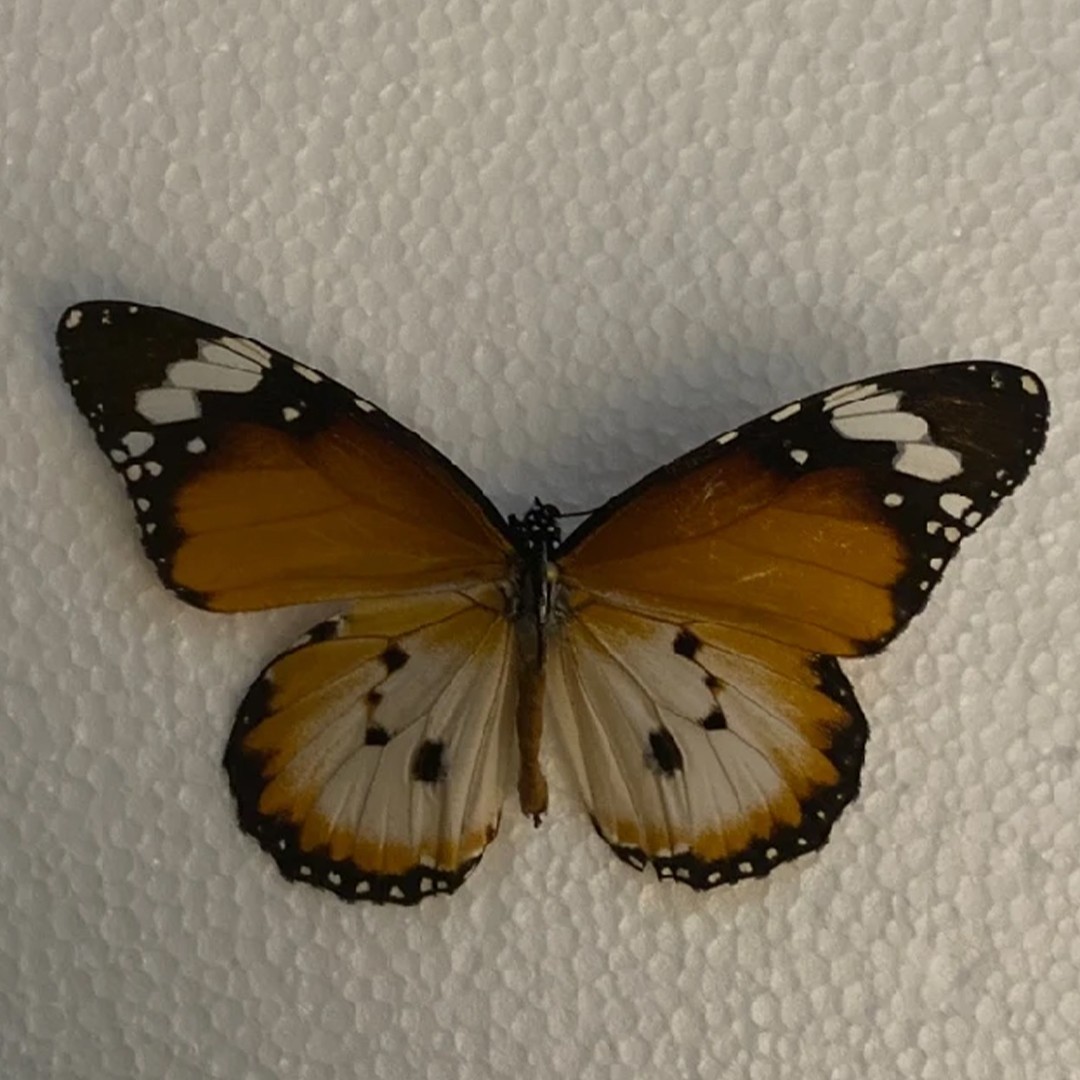
1. Plain tiger butterfly
D. chrysippus is a medium-sized butterfly with a wingspan of about 7–8 cm (2.8–3.1 in). The body is black with many white spots. The wings are orange, the upperside brighter and richer than the underside. The apical half of the forewing is black with a white band. The hindwing has three black spots in the center. The wings are bordered in black and outlined with semicircular white spots. This species exhibits slight sexual dimorphism, as the Male has large scent glands on his hindwings, which the female lacks. They appear as a large black spot with a white centre if viewed from the underside D. chrysippus is a polymorphic species, so the exact coloring and patterning vary within and between populations. It is similar in appearance to the Indian fritillary (Argynnis hyperbius), which may coexist with it. 

2. Scarlet skimmer
The species is on the IUCN Red List as not endangered, year of assessment 2009.

3. Lemon pansy
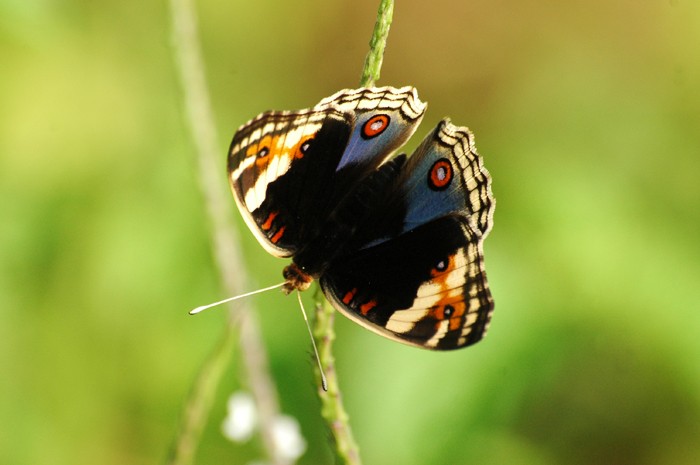
It is brown with numerous eyespots as well as black and lemon-yellow spots and lines on the upperside of the wings. The underside is a dull brown, with a number of wavy lines and spots in varying shades of brown and black. There is also an eyespot on the lower side of the forewing. The wet- and dry-season forms differ considerably in coloration and even shape. In the wet-season form the markings are distinct and vivid and the wing shape is a little more rounded. In the dry-season form the markings are obscure and pale especially on the underside and the wing margin is more angular and jagged.
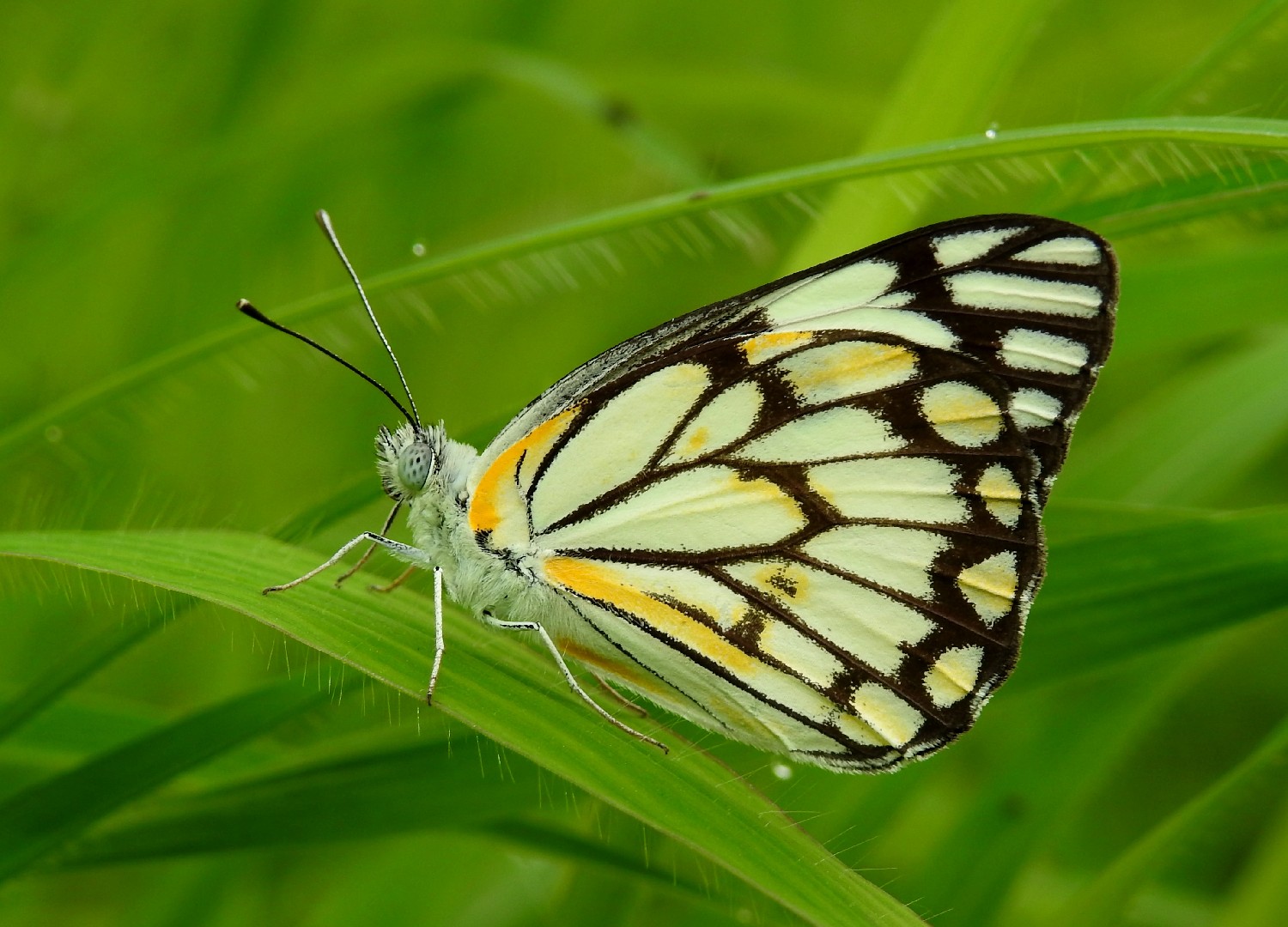
4. Pioneer white
Wet-season form. The upperside of males is white with the forewing having the costa from base to base of vein 11 dusky black and then jet black continuing into a widened and curving short streak along the discocellulars to the lower apex of the cell; apical area diagonally with the termen black, the former with six elongate outwardly pointed spots of the ground colour enclosed one in each of the interspaces 3, 4, 5, 6, 8, and 9. Hindwing: uniform, the black along the venation on the underside seen through by transparency; termen between veins 2 and 6 somewhat broadly black, with a series of four round spots of the ground colour in the interspaces; below vein 2 and above vein 6 the termen is very narrowly black. Underside: forewing white, markings similar, more clearly defined, the white spots within the black apical area larger. Hindwing: yellowish white, all the reins very broadly bordered with black; interspaces 1, 2, 6, and 7 with crossbars of black, beyond which there is a subterminal, somewhat broad, transverse band of black between veins 2 and 6. Cilia of both forewings and hindwings white alternated with black. The ground colour on both upper and undersides variable, often cream coloured above; beneath: in some specimens, the base of cell and the elongate spots in apical area of forewing, and the whole surface of the hindwing varies to rich chrome yellow. Female similar; the black markings on both upper and undersides broader, the white spots on black apical area of forewing often sub-obsolete above. Antennae in both sexes black, sparsely sprinkled with white dots; head, thorax and abdomen above and below white: thorax above often bluish grey. Dry-season form. The dry-season form is similar to the wet-season form but on the upperside the black markings are narrower, the white markings on the black apical area of forewing broader and longer, and on the hindwing the narrow inner margining to the black on the termen very narrow, somewhat obsolescent; therefore, the white subterminal spots have the appearance of opening inwards. Underside: ground colour almost pure white; on the hindwing slightly tinged with yellow. Antennae, head, thorax, and abdomen as in the wet-season form. Wingspan of 4.5 - 6 cm.
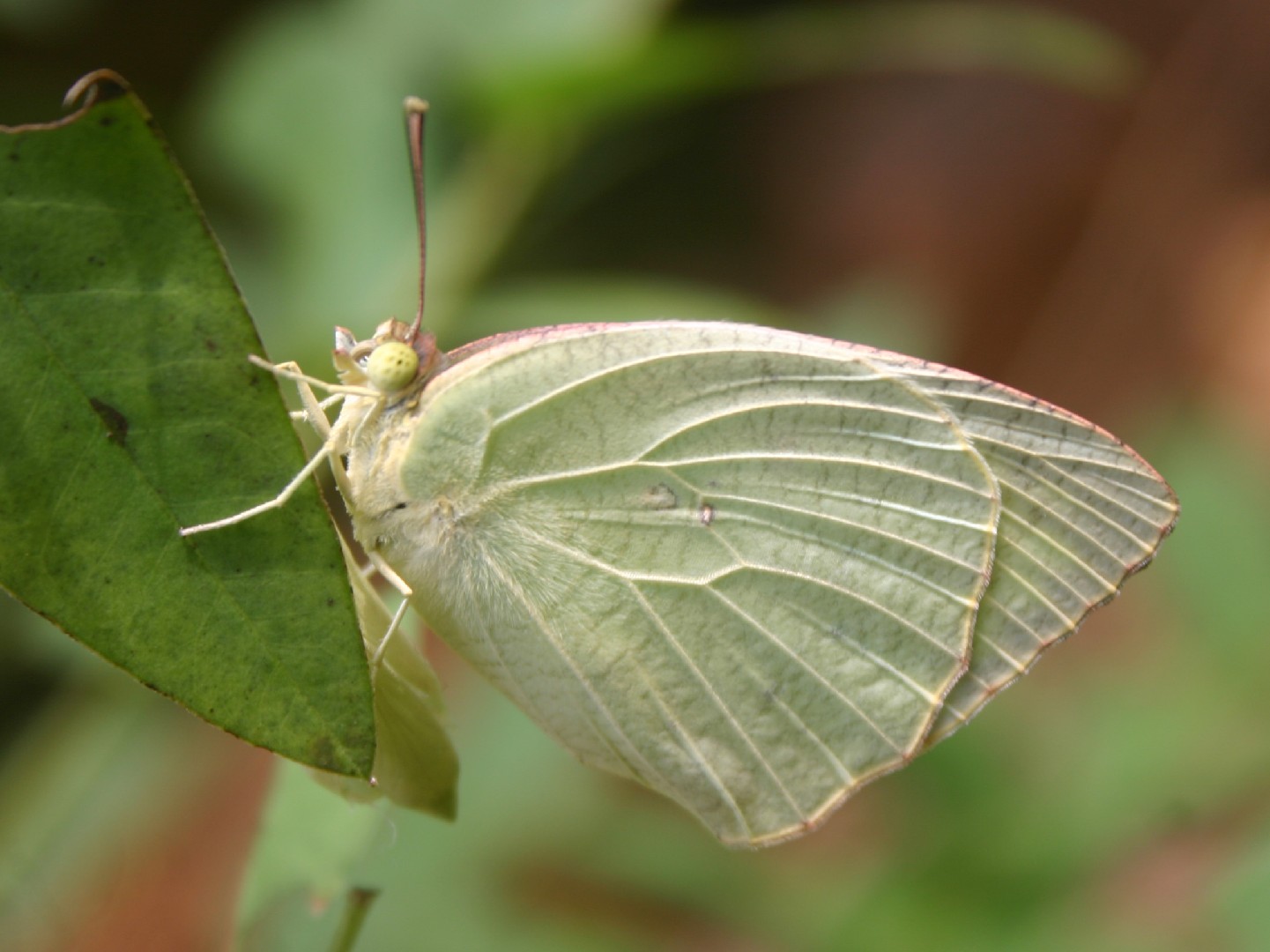
5. Mottled emigrant
Male.The upperside is chalky white, slightly tinted in some specimens with green. The forewing is with or without a discocellular black spot, that varies in size; costa and termen sometimes without a black margin; occasionally the costa has its apical third narrowly black, broadened slightly at the apex with black spots between the anterior veins; or again, the costa may be narrowly black, the apex very broadly so, and this colour continued down the termen but narrowed posteriorly. The hindwing is sometimes immaculate, but generally with narrow terminal black spots at the apices of the veins, these often reduced to mere dots, or again so broadened as to coalesce into a narrow terminal black margin. The underside's ground colour is similar, suffused on the anterior half of the forewing and over the whole surface of the hindwing with a greenish tint that varies to an ochraceous yellow, and, except in the very palest specimens, is evenly irrorated (sprinkled) over the greenish or ochraceous-tinted areas with transverse, short, reddish-brown strigae; both forewings and hindwings with generally an obscure discocellular reddish-brown spot or indication thereof. Female. The upperside is as in the male, but sometimes with a suffusion of pale greenish yellow on the terminal third or fourth only of both forewings and hindwings, rarely of that tint throughout. The forewing is always with a discocellular black spot that varies very much in size; costa sometimes narrowly black with the basal half pinkish, in other specimens narrowly black throughout, the black broadened at the apex and continued along the anterior half of the termen in a series of inwardly-pointed black spots; or again, the costa may be more broadly black, that colour widened considerably at the apex and continued broadly down the termen to vein 3, then suddenly narrowed to a slender line at the tornus. In most specimens there is an anterior postdiscal short black macular baud; in the dark forms this coalesce with the black on apex and termen. The hindwing is sometimes immaculate, sometimes with a series of terminal spots at the apices of the veins, sometimes with a narrow dusky-black terminal band broadest near the apex, narrowed posteriorly to a slender line at the tornus. In the very dark specimens there is in addition an ill-defined, short anterior postdiscal macular black band.The underside is as in the male, with similar variations, but in addition in most specimens the discocellular spots are well defined with an outer red ring that encircles a silvery spot; on the hindwing one or two similar spots on each side of the discocellulars; generally also both wings are crossed by a transverse postdiscal line of minute red spots, which on the forewing is confined to the anterior portion, on the hindwing is nearly complete. In both sexes: antennae reddish, head and thorax anteriorly brown, thorax clothed posteriorly with long white hairs, abdomen white: beneath: the palpi, thorax, and abdomen white.
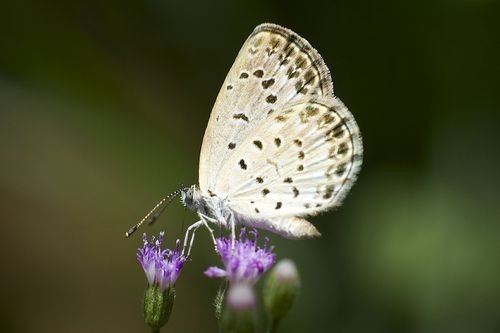
6. Pale grass blue
Male in wet-season brood. Upperside silvery light blue with a satiny sheen in certain lights. Forewing: the apical half of the costa narrowly and the terminal margin for varying widths fuscous black, bounded outwardly on the latter by an obscure anteciliary black line. Hindwing: the costa broadly, the termen somewhat more narrowly fuscous black as in the forewing, with the width of this dark edging similarly variable; in addition there is a very diffuse and ill-defined subterminal series of spots darker than the fuscous margin. Underside is brownish grey. Forewing: a spot in cell, a transverse lunule on the discocellulars, and a transverse anteriorly inwardly curved series of eight discal spots, black; the transverse lunule and each spot encircled with a narrow white edging; the posterior two spots of the discal series geminate (paired). Beyond these are a postdiscal and a subterminal series of short transverse dusky black spots followed by an anteciliary black line; the ground colour between the discal and postdiscal series and between the latter and the subterminal series of spots posteriorly paler than on the rest of the wing. Hindwing: a transverse, subbasal, slightly sinuate line of four spots, a short, slender, lunular line on the discocellulars, and a very strongly curved discal series of eight small spots, black; the lunule and each spot encircled with a narrow edging of white; the posterior two spots of the discal series geminate as on the forewing; beyond these as on the forewing there is a double line of dusky spots, only more lunular, with between them and between the discal and postdiscal series the ground colour in the same way followed by slightly paler; an anteciliary fine black line. Cilia of both forewings and hindwings whitey brown, darker anteriorly on the forewing. Antennae, head, thorax and abdomen dark brown, shafts of the antennae ringed with white; in fresh specimens the thorax and abdomen with a little light blue pubescence; beneath: palpi, thorax and abdomen white. Female in wet-season brood. Upperside is brownish black; the basal halves of the wings slightly suffused with light blue, anteciliary black lines on both forewings and hindwings, and on the latter wing an obscure subterminal series of spots as in the male. Underside, similar,only the ground colour darker, the markings larger and more clearly defined. Antennae, head, thorax and abdomen as in the male, but with no blue pubescence on the thorax and abdomen on the upperside. Male in dry-season brood. Upperside is pale bluish grey with, in some specimens, a pinkish undertone. Forewing: as in the wet-season brood, but the black terminal edging much reduced in width in some specimens to a transverse, somewhat diffuse, very narrow band that borders the anteciliary black line on the inner side, in others to a much broader similar band that coalesces with the anteciliary black line and occupies about the outer sixth of the wing. This edging along the termen is sometimes even, sometimes it widens from a slender anteciliary at and above the tornus to a broad black patch at the apex of the wing. Hindwing: the terminal black edging much narrower proportionately than in wet-season specimens, most often reduced to a slender black anteciliary line with a series of black spots on the inner side, bordering and sometimes coalescing with the line. Underside: as in the wet-season brood but the ground colour paler, in some specimens much paler, the markings on both forewings and hindwings similar, with frequently the terminal markings obsolescent, sometimes entirely absent or only indicated anteriorly on each wing. Cilia whitish. Antennae, head, thorax, and abdomen as in the wet-season specimens. Female in dry-season brood similar to the female of the wet-season brood, but more like the male, with the light silvery-blue suffusion very irregular, but generally extended much further outwards from the base. Underside: as in the male, the ground colour slightly darker. Antenna, head, thorax and abdomen similar to those of the male.
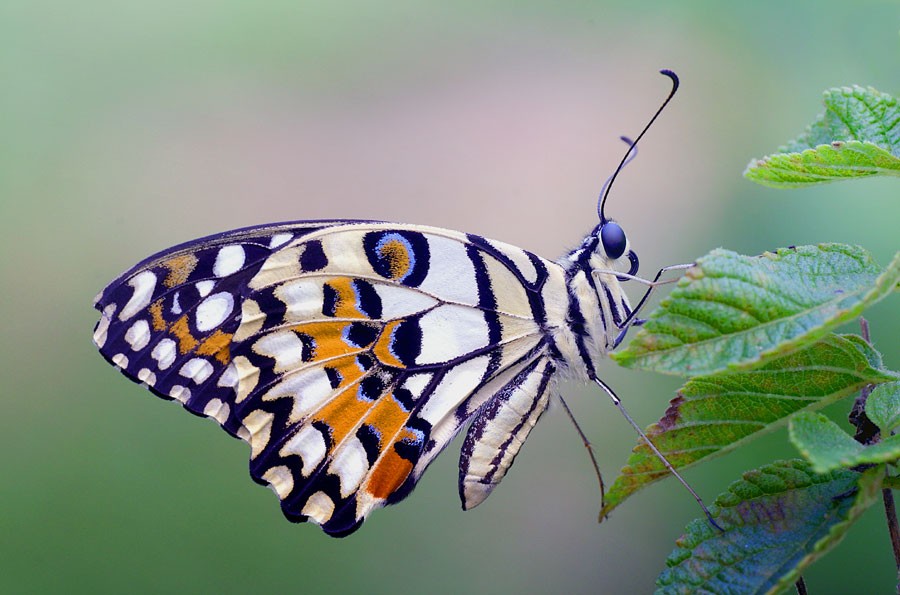
7. Lime swallowtail
The lime swallowtail (Papilio demoleus) has a beautiful black and white pattern, but it's considered a major pest to citrus trees. It feeds on nearly any type of citrus, including oranges and limes. This butterfly's small, green larvae are capable of defoliating an entire nursery grove. They are truly trouble makers in the citrus orchard.
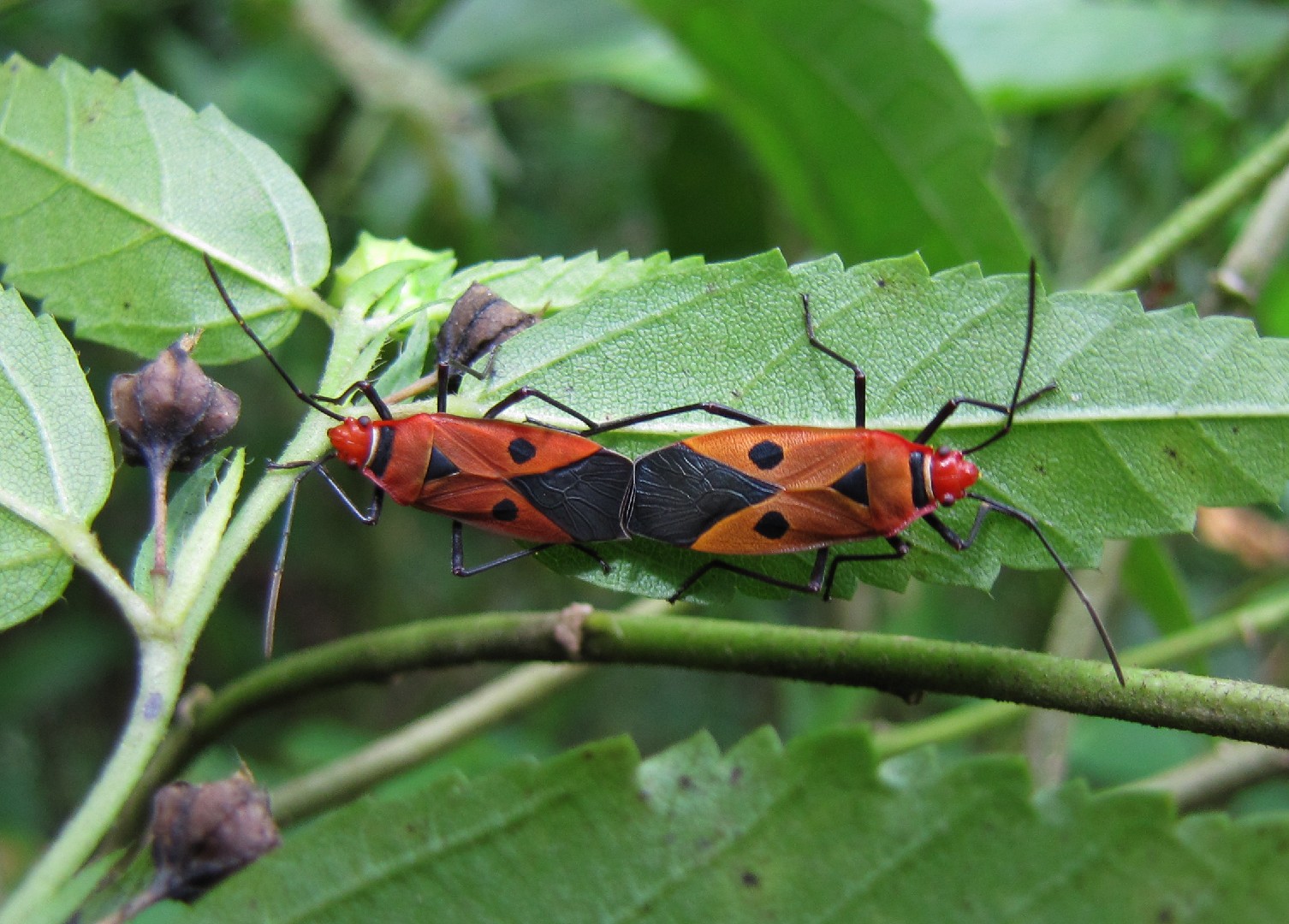
8. Indian cotton stainer bug
Dysdercus cingulatus grows to a length of 12 to 18 mm (0.47 to 0.71 in). It is mainly red but has a white collar and three black spots. It is closely related and very similar to Dysdercus koenigii but D. cingulatus is slightly larger and the femora have varying amounts of black while D. koenigii has completely red femora.
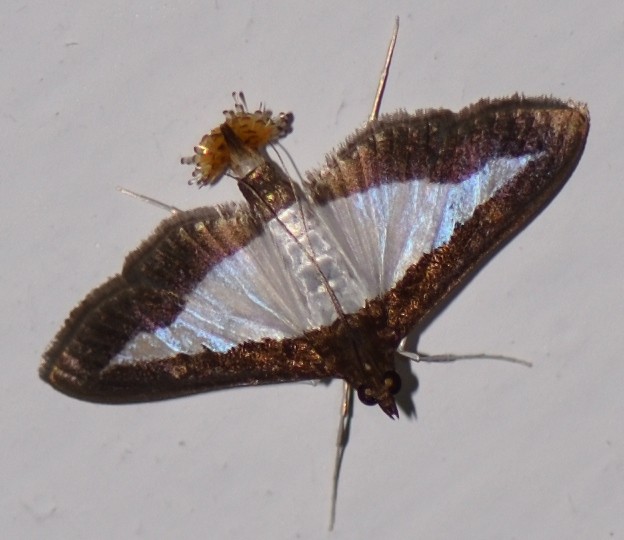
9. Cucumber Moth
The wingspan is about 30 mm. Adults have translucent whitish wings with broad dark brown borders. The body is whitish below, and brown on top of head and thorax as well as the end of the abdomen. There is a tuft of light brown "hairs" on the tip of the abdomen, vestigial in the male but well developed in the female. It is formed by long scales which are carried in a pocket on each side of the 7th abdominal segment, from where they can be everted to form the tufts. Unfertilized females are often seen sitting around with the tuft fully spread, forming two flower-like clumps of scales, which move slowly to spread their pheromones. These have been identified as consisting mainly of (E,E)-10,12-hexadecadienal and (E)-11-hexadecenal. From its closest relatives, the cucumber moth is most reliably distinguished by microscopic examination of the genitals. In the male, the clasper's harpe is twice as long as it is wide, with the costa and sacculus running almost in parallel and being strongly sclerotized, and a rounded cucullus. From the center of the harpe, which is otherwise only weakly sclerotized, a thin spine extends. The uncus is covered in bristles and ends in a small tube; it is a bit longer than the tegumen which in turn is about as wide as it is long. The vinculum is almost quadratic, and the anellus forms a small triangular plate which is more strongly sclerotized. The aedeagus is almost straight, strongly sclerotized below, and has a flattened curved process at end. In the female genitals, the ostium is transverse and oval, and the antrum broadly sclerotized. The ductus seminalis insert from above, a bit before the forward edge of the antrum. The bursa copulatrix is long and slim, with the forward third particularly narrow; its wall is covered with many short spines, and the hind end almost seamlessly merges into a short and barely distinguishable ductus bursae.
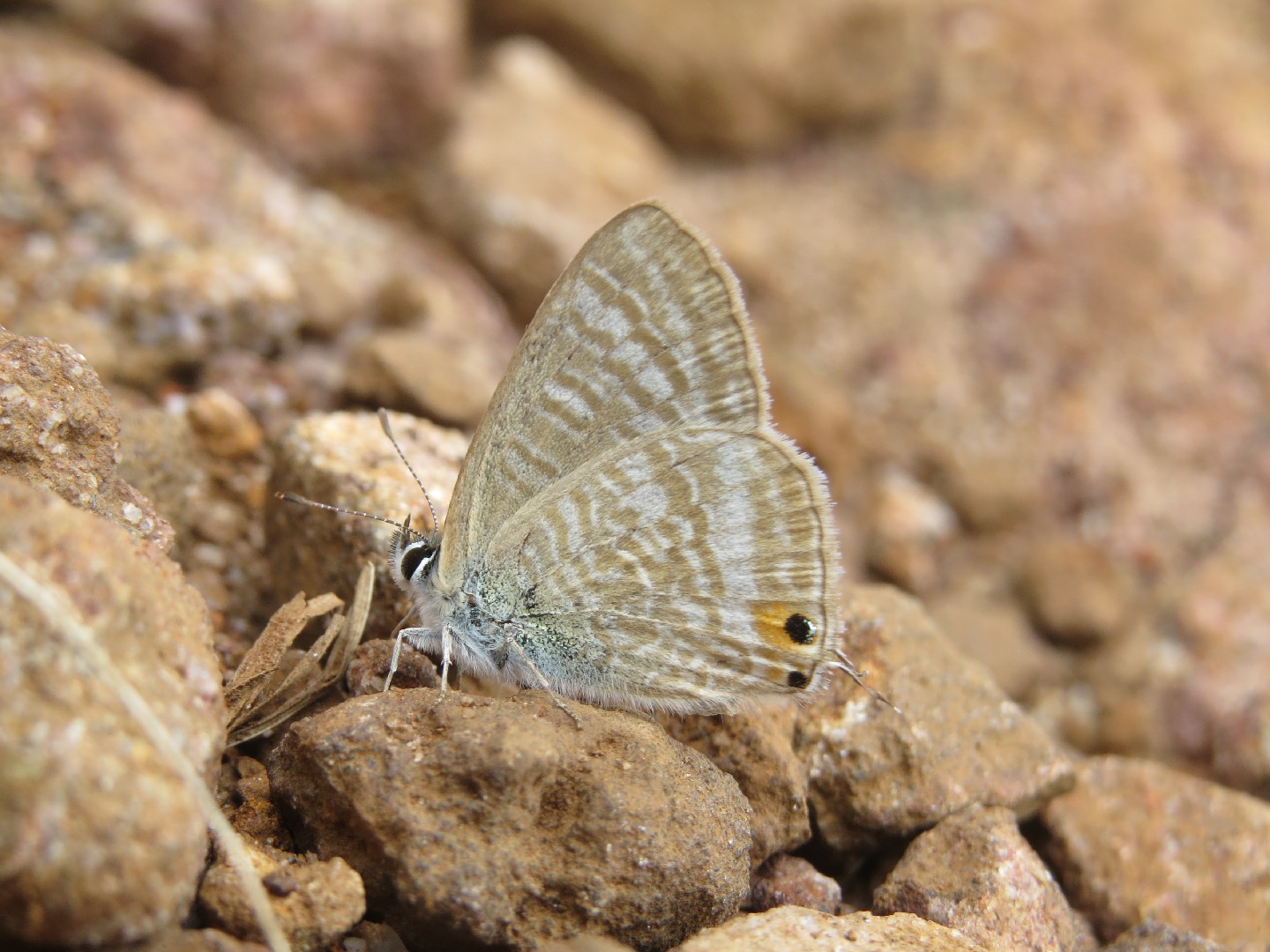
10. Pea blue
The wingspan is 24–32 mm for males and 24–34 mm for females. In these small butterflies the males have a mainly blue violet upper face of the wings with the brown edges, while the females have only a small amount of blue colour in the centre of the wings (sexual dimorphism). Both sexes have a thin, long tail in the hindwings and two black spots in the anal angle. The underface of the wings is ocher and adorned with white markings and with a larger white submarginal streak. The underface of each hindwing shows a pair of small black eye-spots beside each tail, with an orange marginal spots at the anal angle.


More







