




Top 20 Most Common Insects in Udaipur
Insects, nature's smallest warriors, have carved their niche into every corner of Udaipur, standing testament to the diversity afforded by varied geographical landscapes. These creatures, typically seen as pests or allies, play significant roles within Udaipur's ecosystem, their presence signaling the health of our environment. Prepare to discover the 20 most popular insects that call Udaipur their home.

Most Common Insects

1. Lemon pansy
It is brown with numerous eyespots as well as black and lemon-yellow spots and lines on the upperside of the wings. The underside is a dull brown, with a number of wavy lines and spots in varying shades of brown and black. There is also an eyespot on the lower side of the forewing. The wet- and dry-season forms differ considerably in coloration and even shape. In the wet-season form the markings are distinct and vivid and the wing shape is a little more rounded. In the dry-season form the markings are obscure and pale especially on the underside and the wing margin is more angular and jagged. 
2. Tasar silkmoth
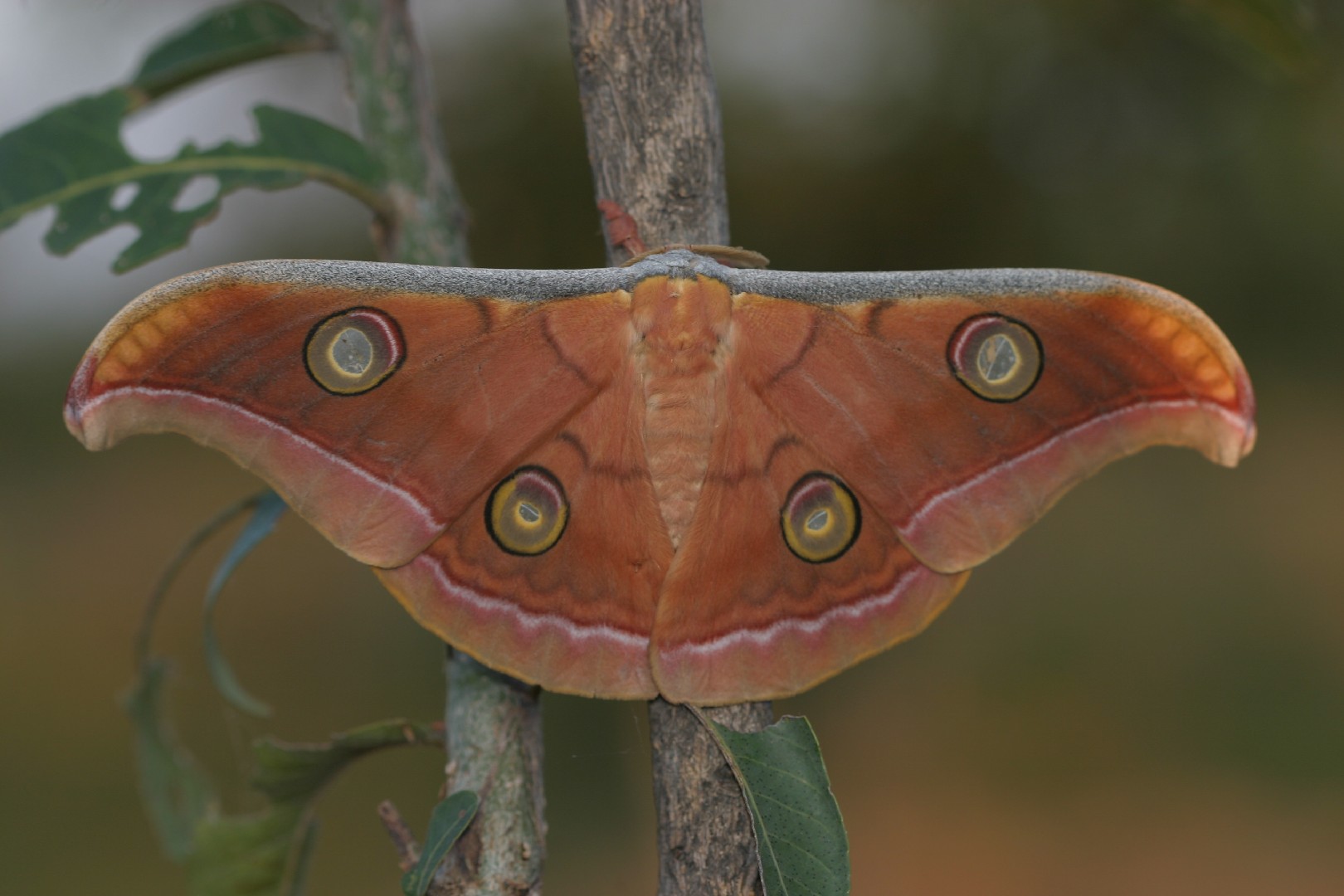
The male is reddish or yellowish. Costal brown and grey fascia of forewings reaching the apex. Hyaline and ocellated spots (eyespots) are much larger than those of A. roylei. The submarginal line of the hind wings close to the margin. No marginal yellow line is seen. Females may be pinkish-brown or bright-yellowish fawn; their hyaline and ocellated spots are larger than the males. Larvae are green colored with paired dorsal series of yellow humps. White lunulate spots on the fifth and sixth somites have purple borders, whereas a lateral yellow line from seventh somite ends in a dilated brown band on the anal somite. Spiracles are yellow. The cocoon is brownish grey, hard, and oval, attached to the host plant by a silken peduncle.
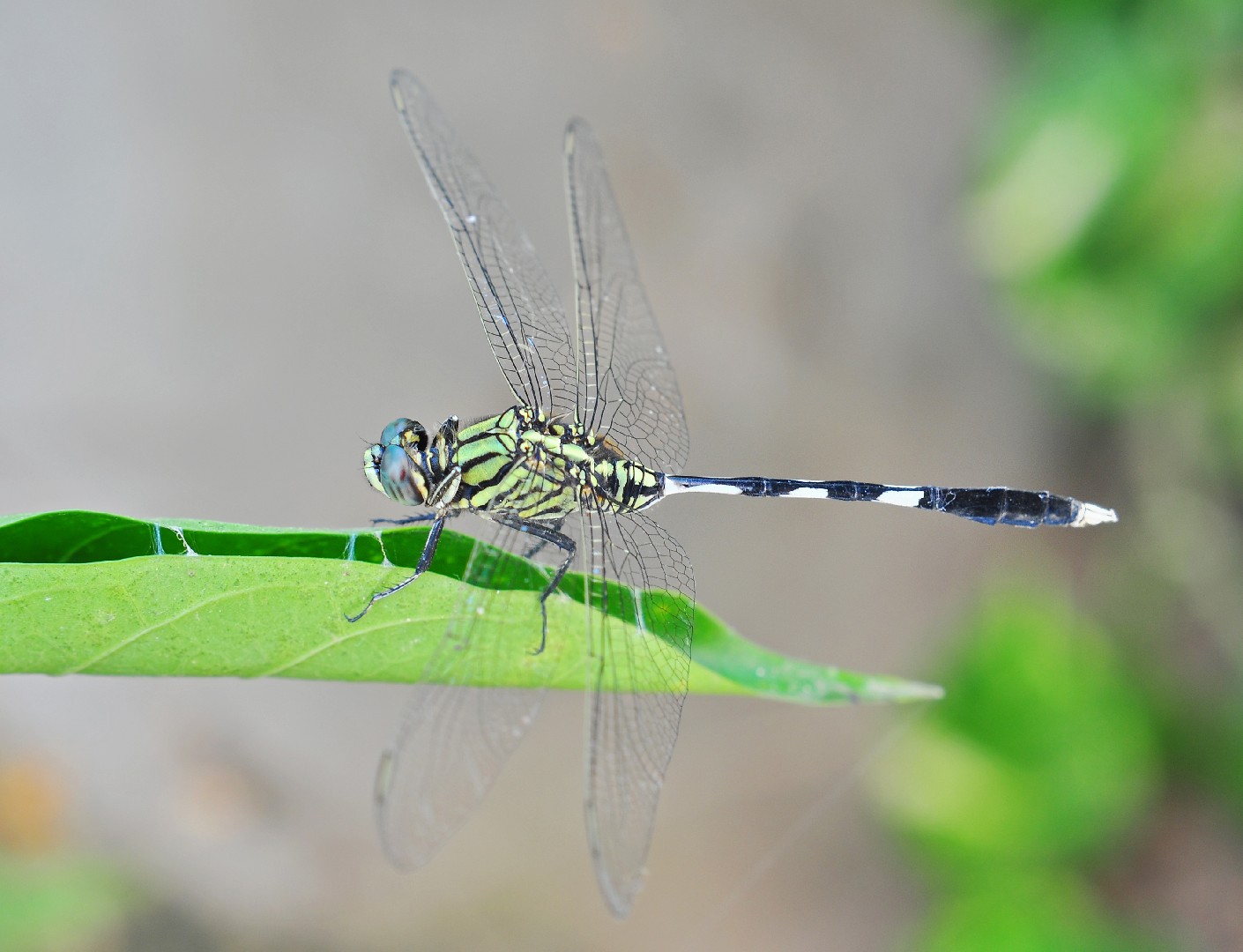
3. Pied paddy skimmer
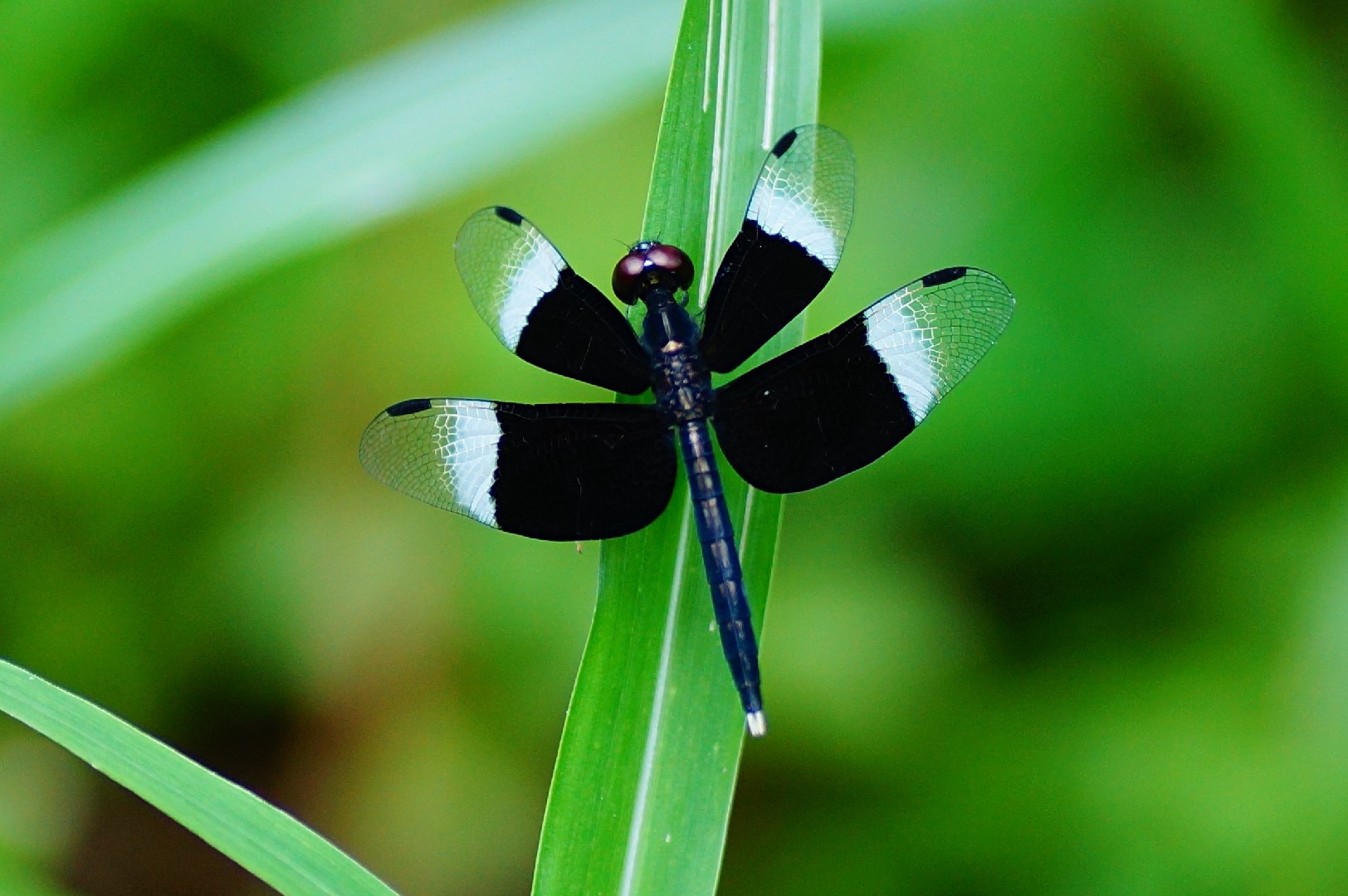
The species is on the IUCN Red List as not endangered, year of assessment 2007.
4. Banded pearl
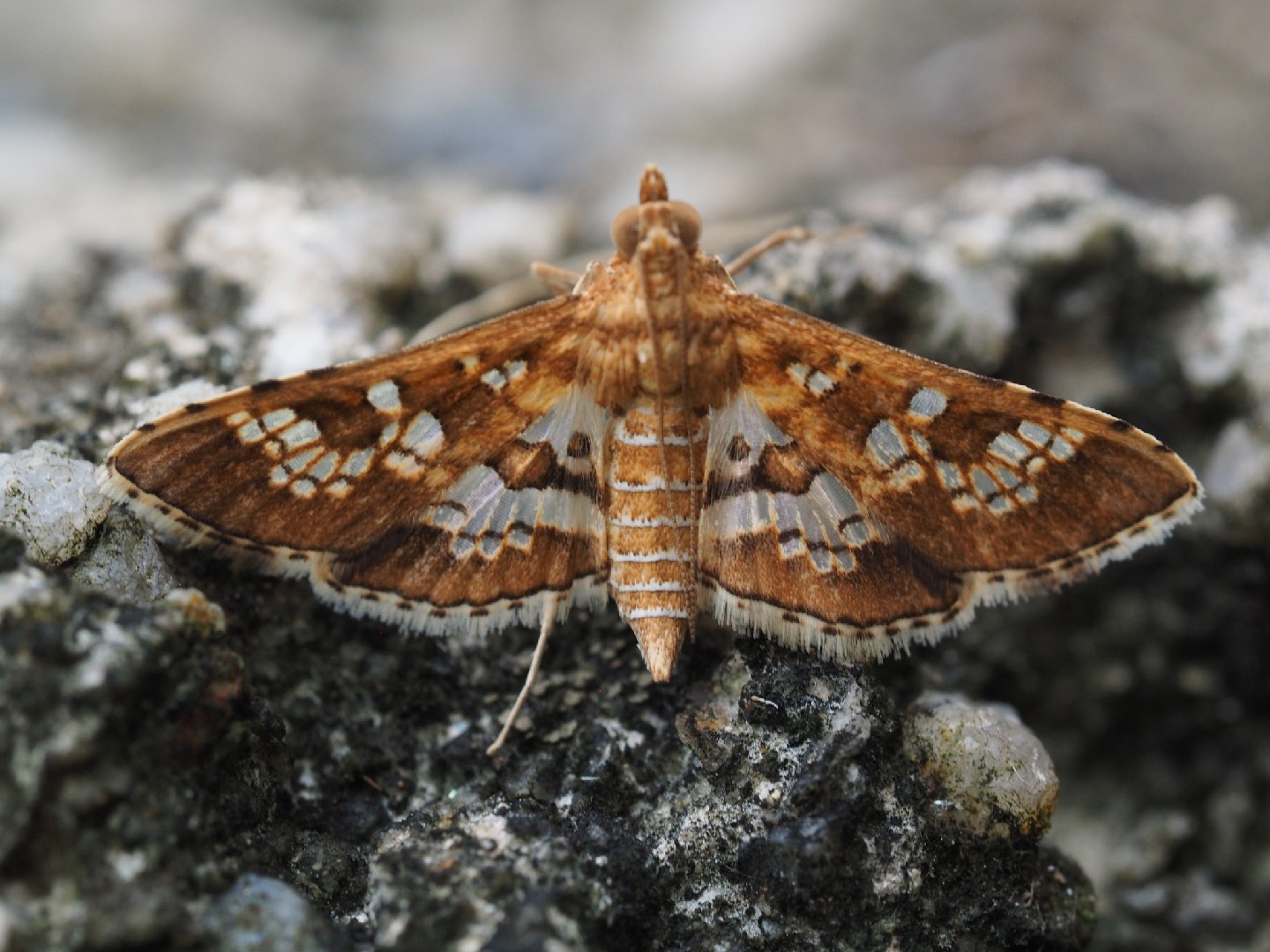
The wingspan is about 2 cm. Adults are brown, with white spots partly outlined in black on the forewings, and white bands across the hindwings.
5. Red masked noctuid moth
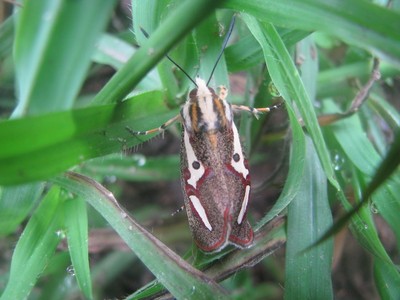
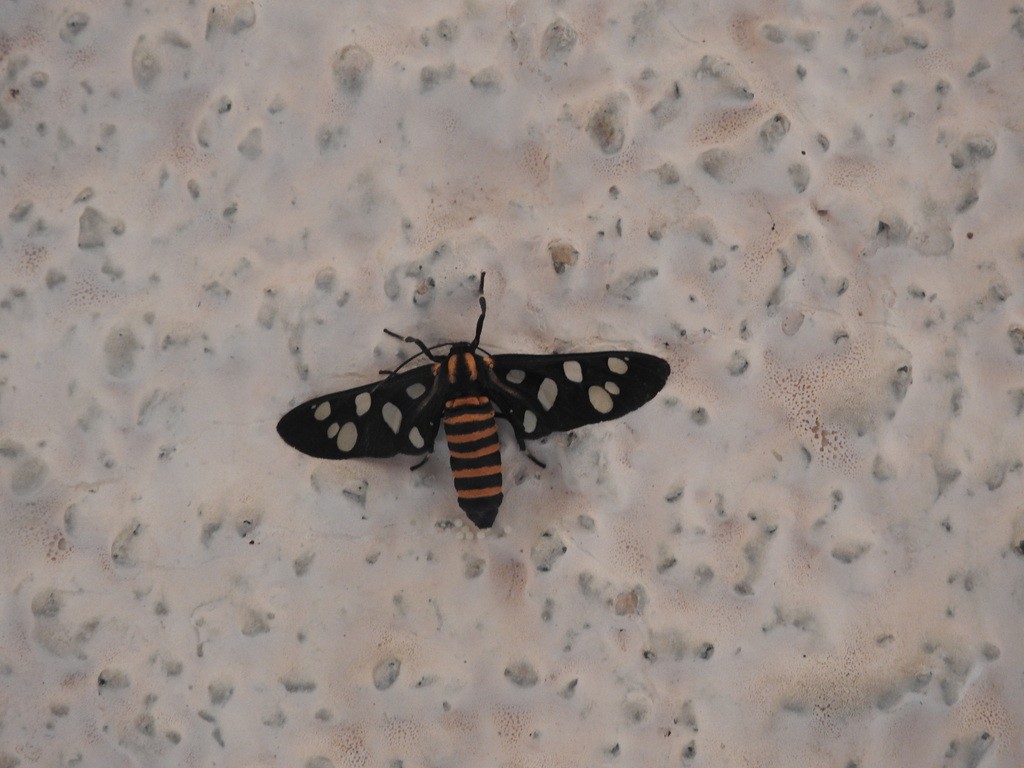
Its wingspan is about 33 mm. Forewings of male without costal vesicles. Forewings with longitudinal white streak entire, and with an indenture on its upper edge and a small black spots near its lower edge. A red marginal line is present. Cilia of both wings white.
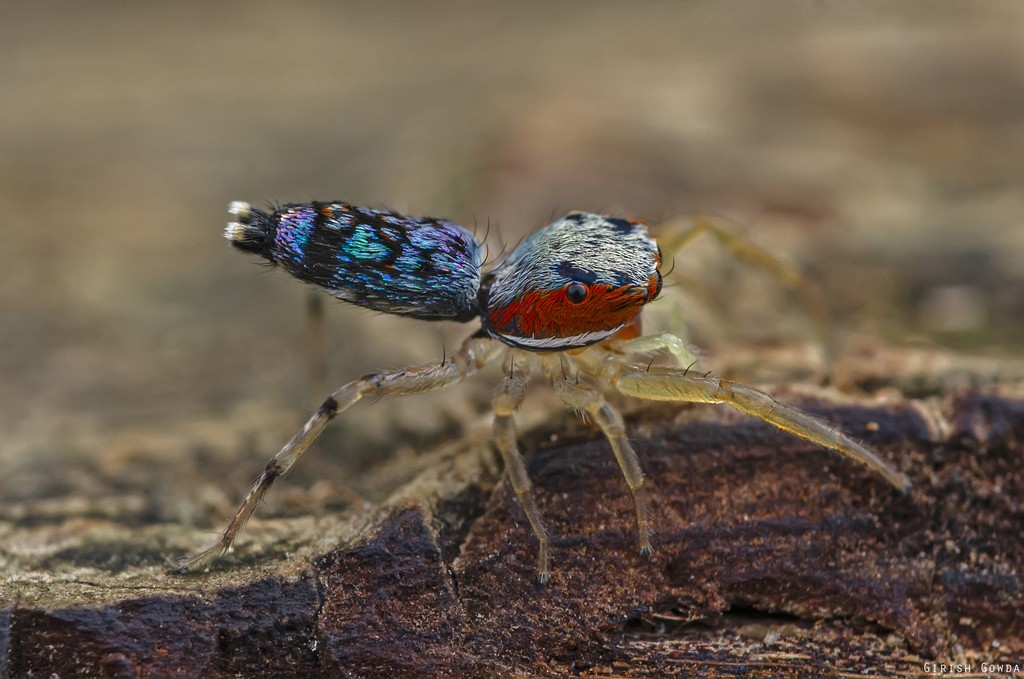
6. Chrysilla volupe
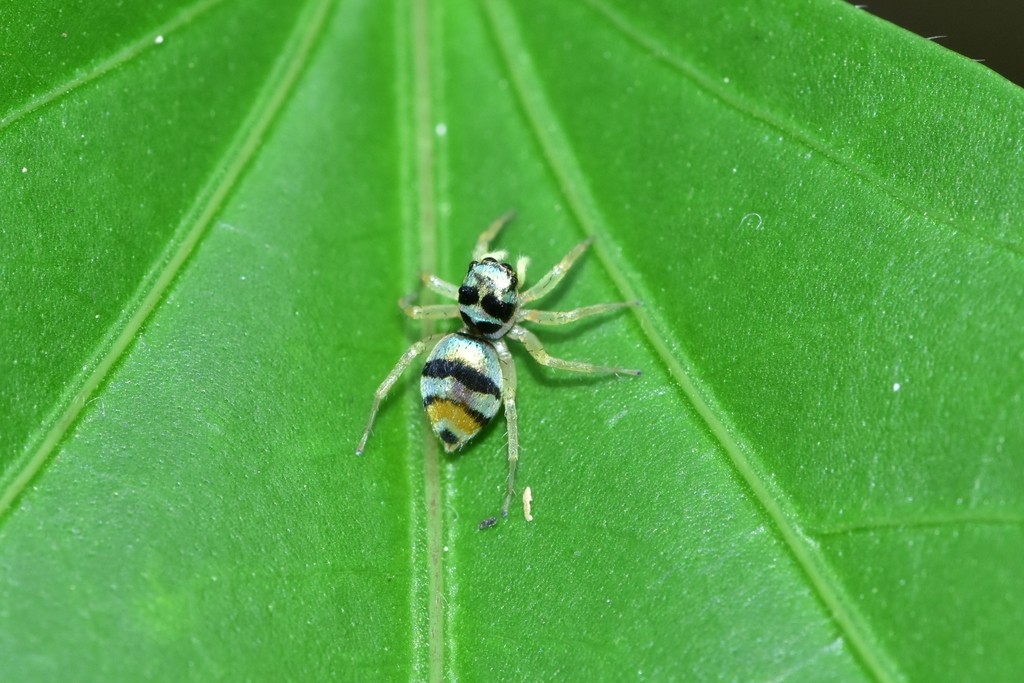
Males have a carapace in reddish orange color with two iridescent blue stripes. Legs have iridescent scales that make them appear golden and purple shades. Females have greyish carapace with grey eyebrows with all legs yellow in color. The female was described 139 years after the species was first described by Karsch in 1879. Until 2018, only males had been identified and described, based on the male type specimen described by Karsch.

7. Scarlet skimmer
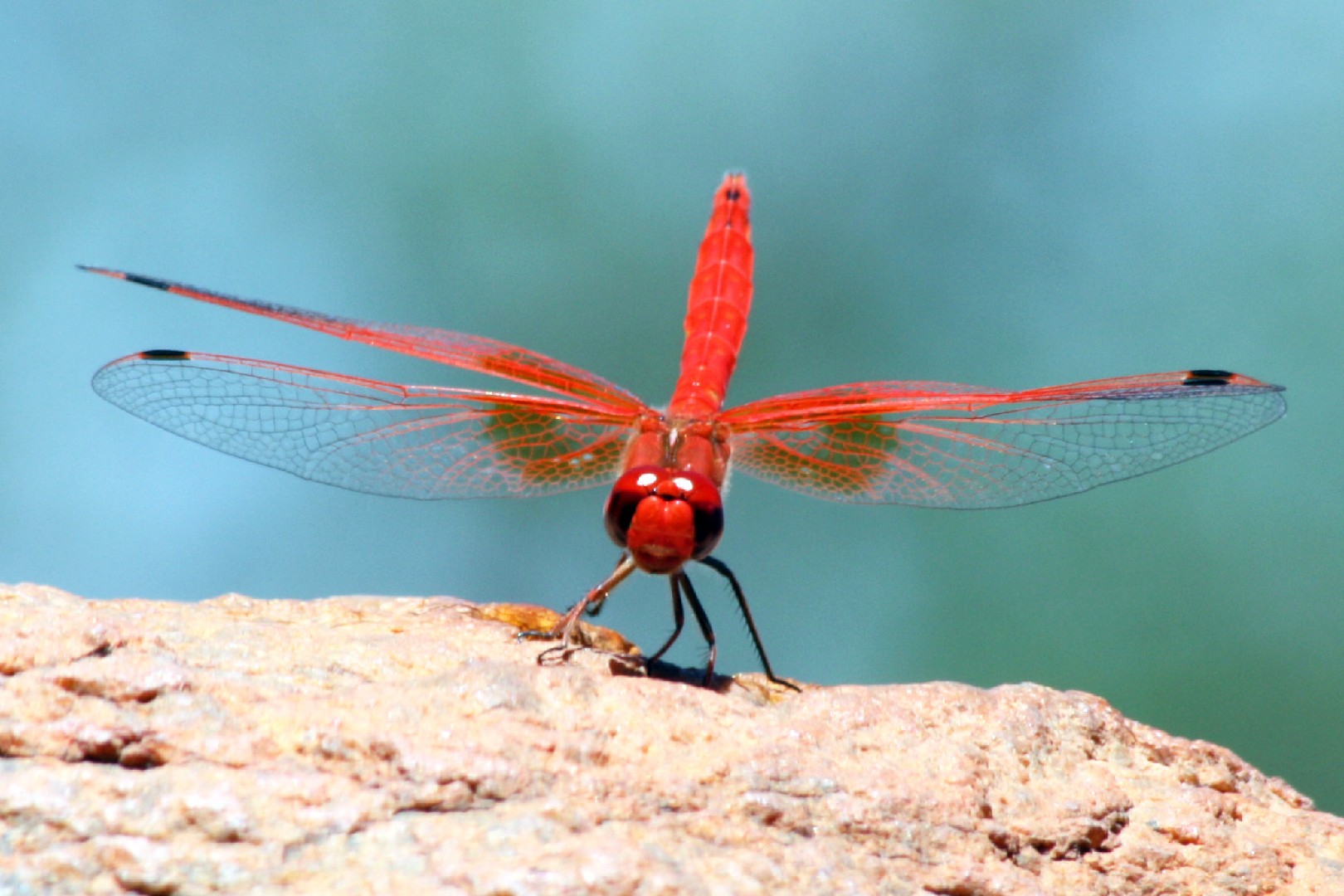
The species is on the IUCN Red List as not endangered, year of assessment 2009.
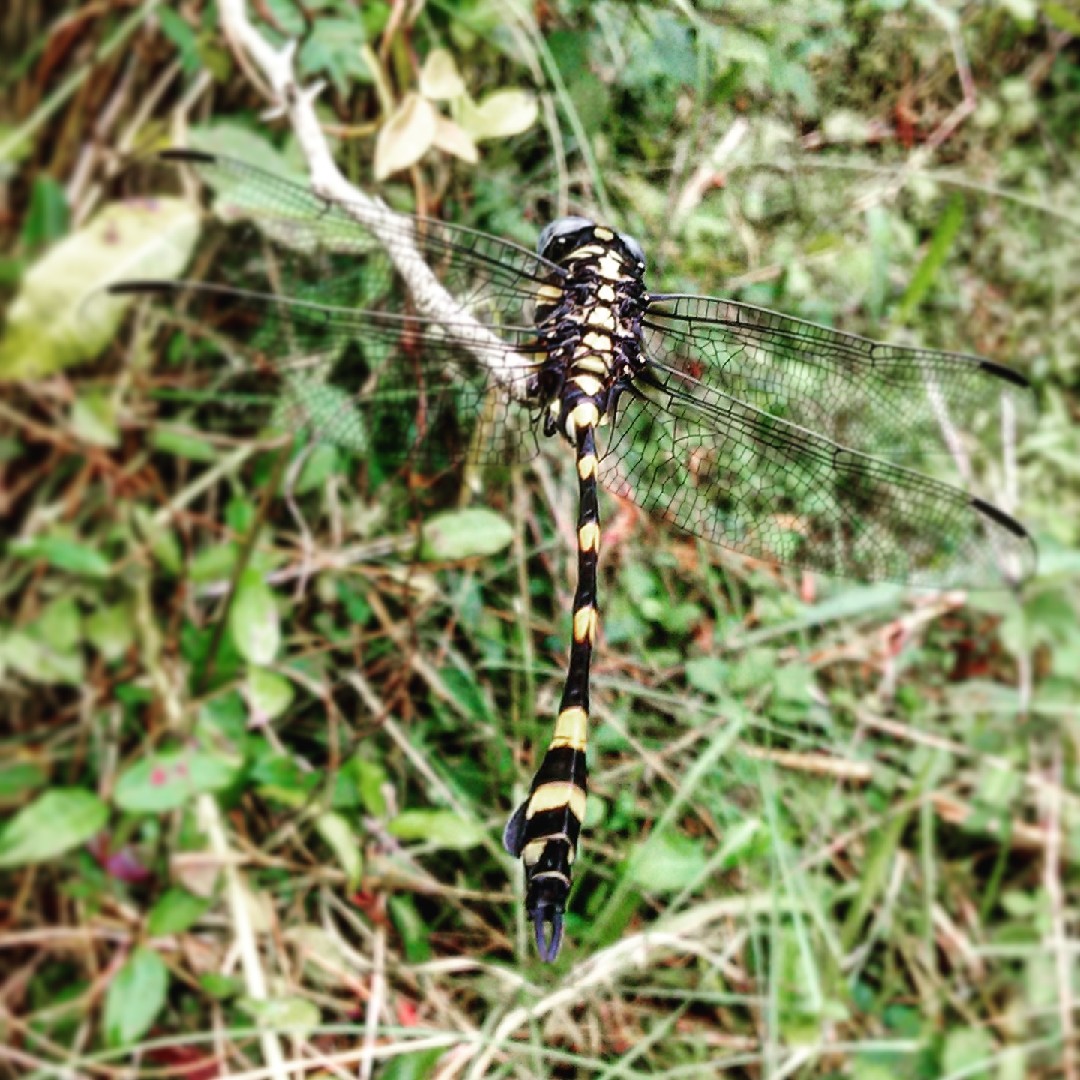
8. Indian common clubtail
It's a large yellow and black colored dragonfly with bluish-grey eyes. Its thorax is black, marked with yellow or greenish-yellow stripes. Its abdomen is also black with bright yellow marks. There is a leaf like expansion in both sides of segment 8. This species usually perches on a bare twig facing the water, commonly found in ponds, tanks and rivers. It breeds in running and still water.
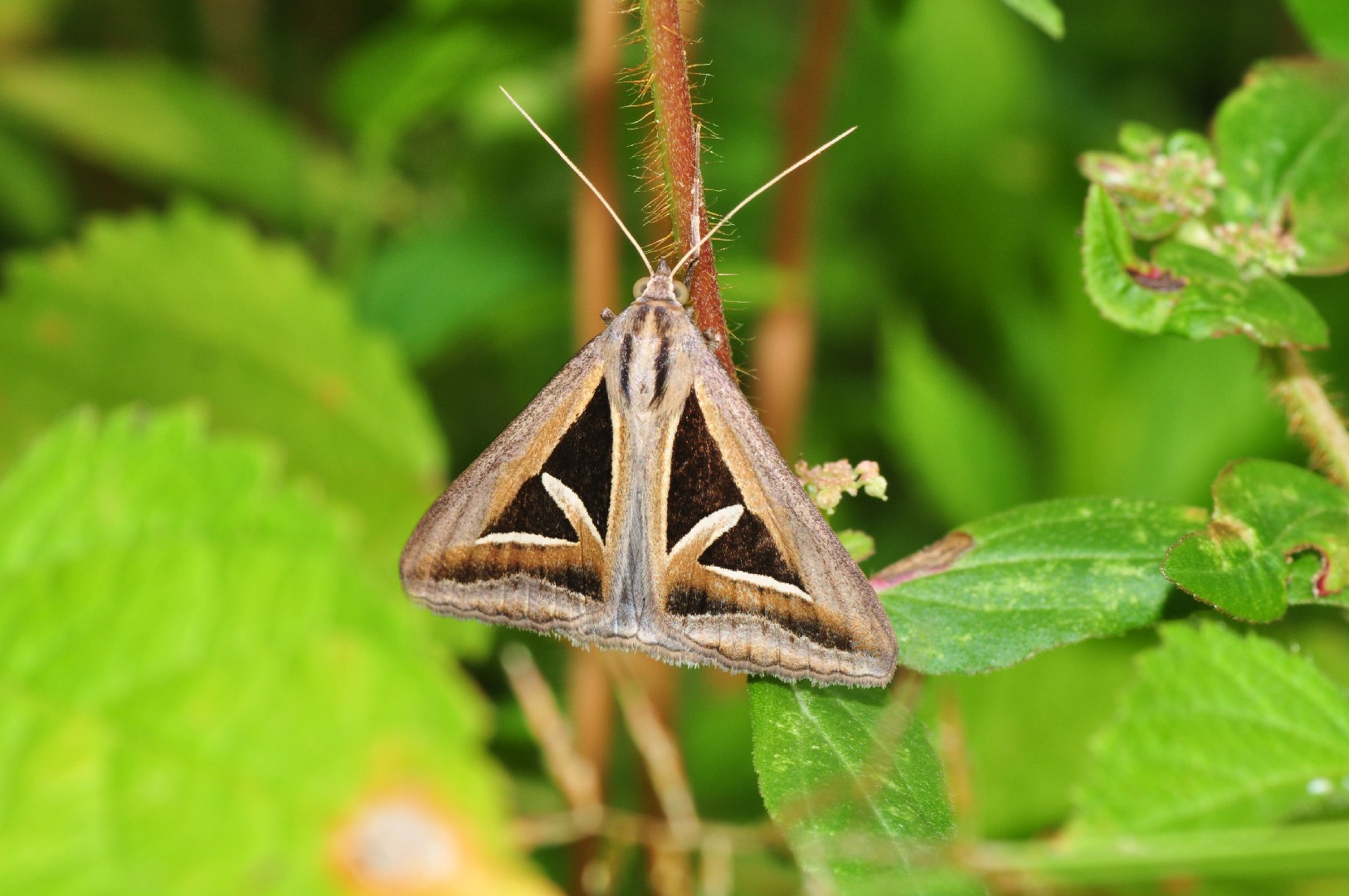
9. Triangles
The wingspan is about 3 - 4.5 cm. Antennae of male ciliated. Mid and hind tibia hairy. Body pale ochreous brown, slightly suffused with fuscous or dark grey brown. Forewings with a large black white-edged triangular patch easily distinguished below the cell from near base to towards outer angle. A similar smaller patch found beyond the cell on vein 5, with some pale fulvous behind it. A slightly sinuous submarginal pale line with patches of black suffusion found inside it and a series of black specks beyond it. A dark marginal line can be seen as well. Hindwings with indistinct medial line and fuscous suffused outer area. Larva has yellow upper half and brown ventral part. The yellow part is broken by longitudinal brown bands, which faints towards posterior and becomes intensive again in prolegs. Eggs olive green and speckled rusty red. First few instars are green with three lateral purple brown lines. Late instars are yellowish. Pupa within a slight cocoon of white silk, which spun amongst leaves.
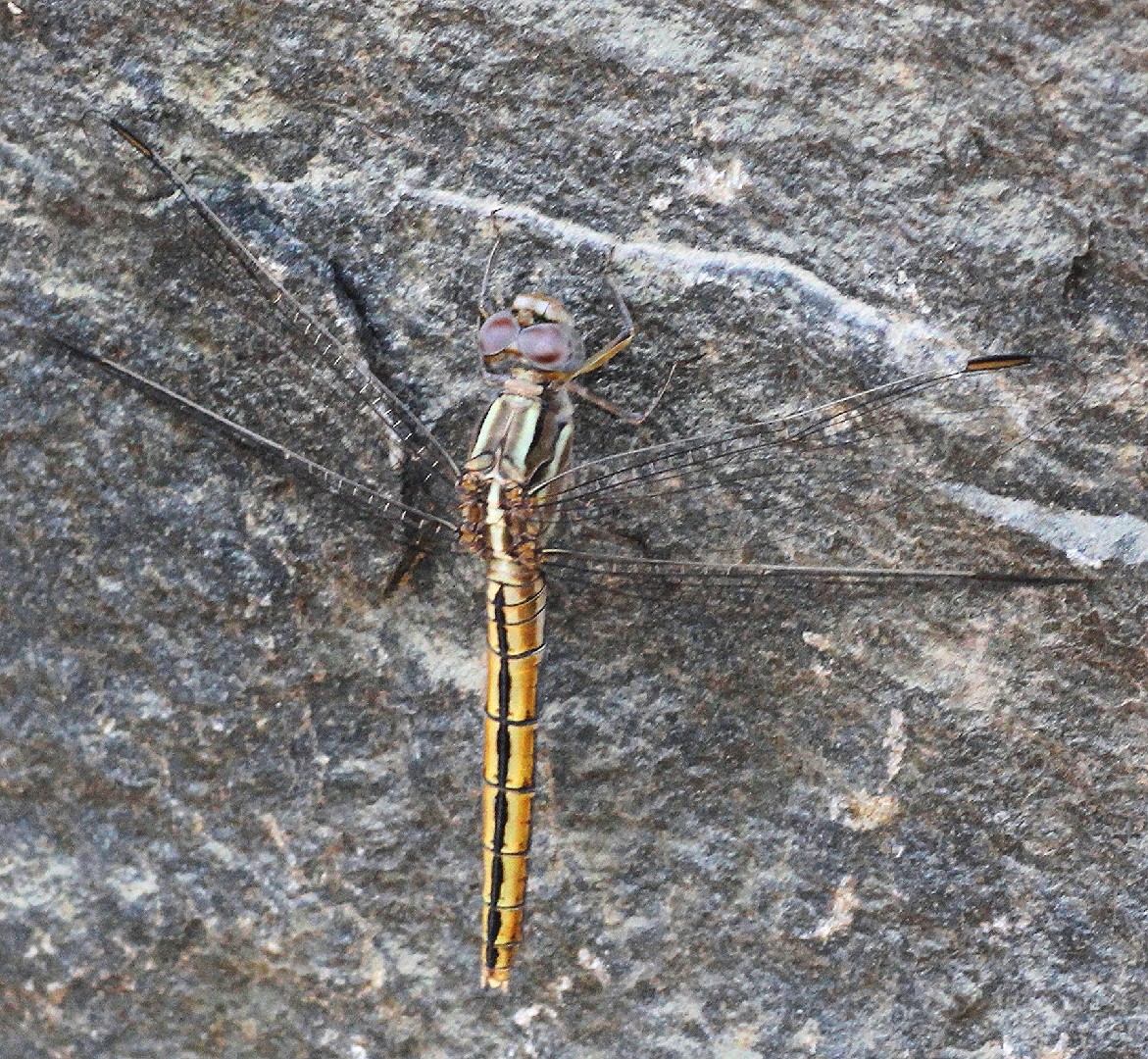
10. Small skimmer
It is a medium-sized dragonfly with brown capped eyes, greenish brown thorax and bluish abdomen. Female lacks the powder blue pruinescence. It prefers medium to slow-flowing streams in the dry zones and hot plains. Adults are common around open rocky and sandy beds of the streams.

More







