




Top 20 Most Common Insects in Tamil Nadu
Insects, unparalleled in diversity, abound in Tamil Nadu, their forms and behaviors shaped distinctly by the varying geography of the region. From urban landscapes to lush forests, each environment hosts unique insect communities that not only play pivotal roles in the ecosystem - as pollinators or pests - but also mirror the intricate relationship between a region's habitats and its biodiversity. Join us as we explore the 20 most common insects found across this vibrant state!

Most Common Insects
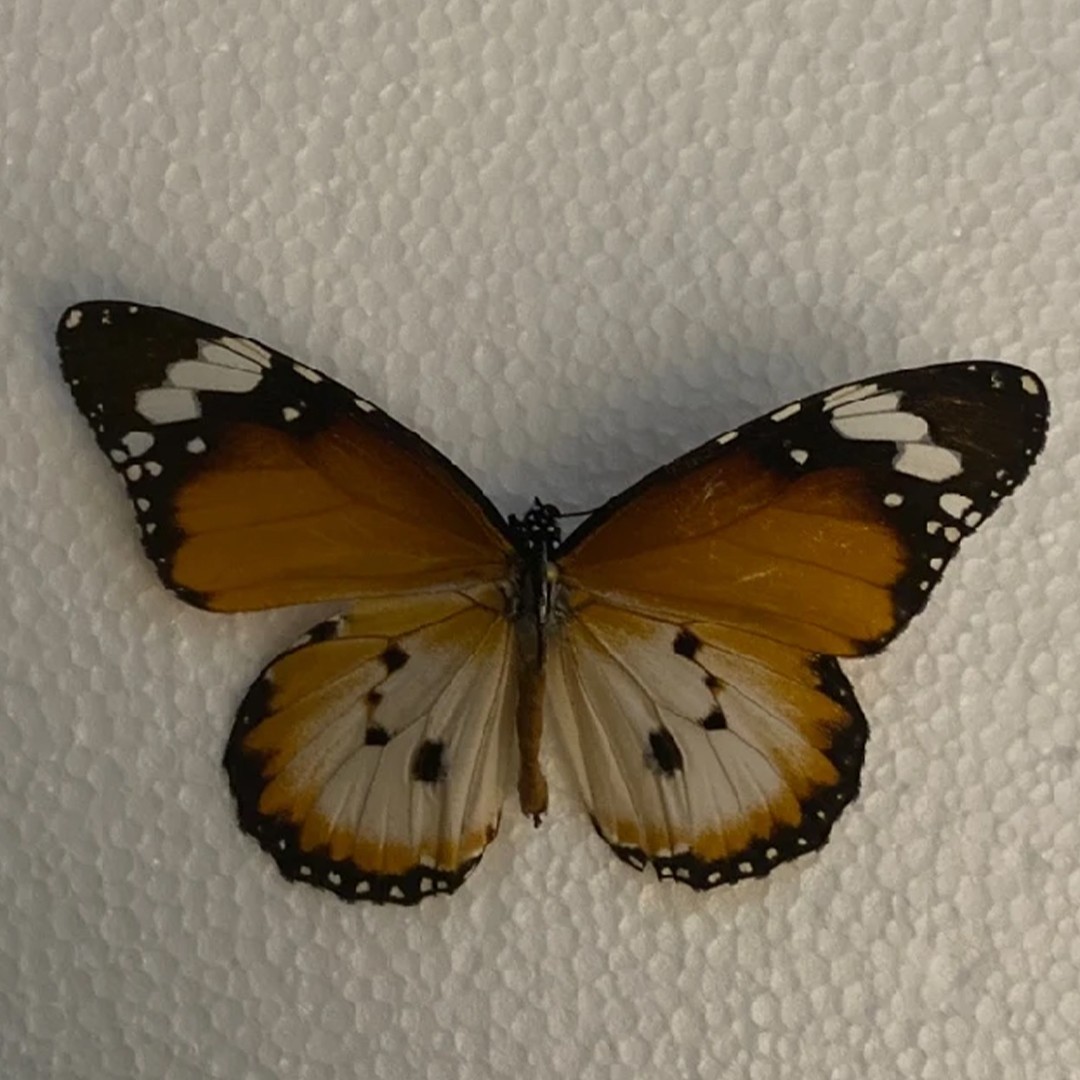
1. Plain tiger butterfly
D. chrysippus is a medium-sized butterfly with a wingspan of about 7–8 cm (2.8–3.1 in). The body is black with many white spots. The wings are orange, the upperside brighter and richer than the underside. The apical half of the forewing is black with a white band. The hindwing has three black spots in the center. The wings are bordered in black and outlined with semicircular white spots. This species exhibits slight sexual dimorphism, as the Male has large scent glands on his hindwings, which the female lacks. They appear as a large black spot with a white centre if viewed from the underside D. chrysippus is a polymorphic species, so the exact coloring and patterning vary within and between populations. It is similar in appearance to the Indian fritillary (Argynnis hyperbius), which may coexist with it. 
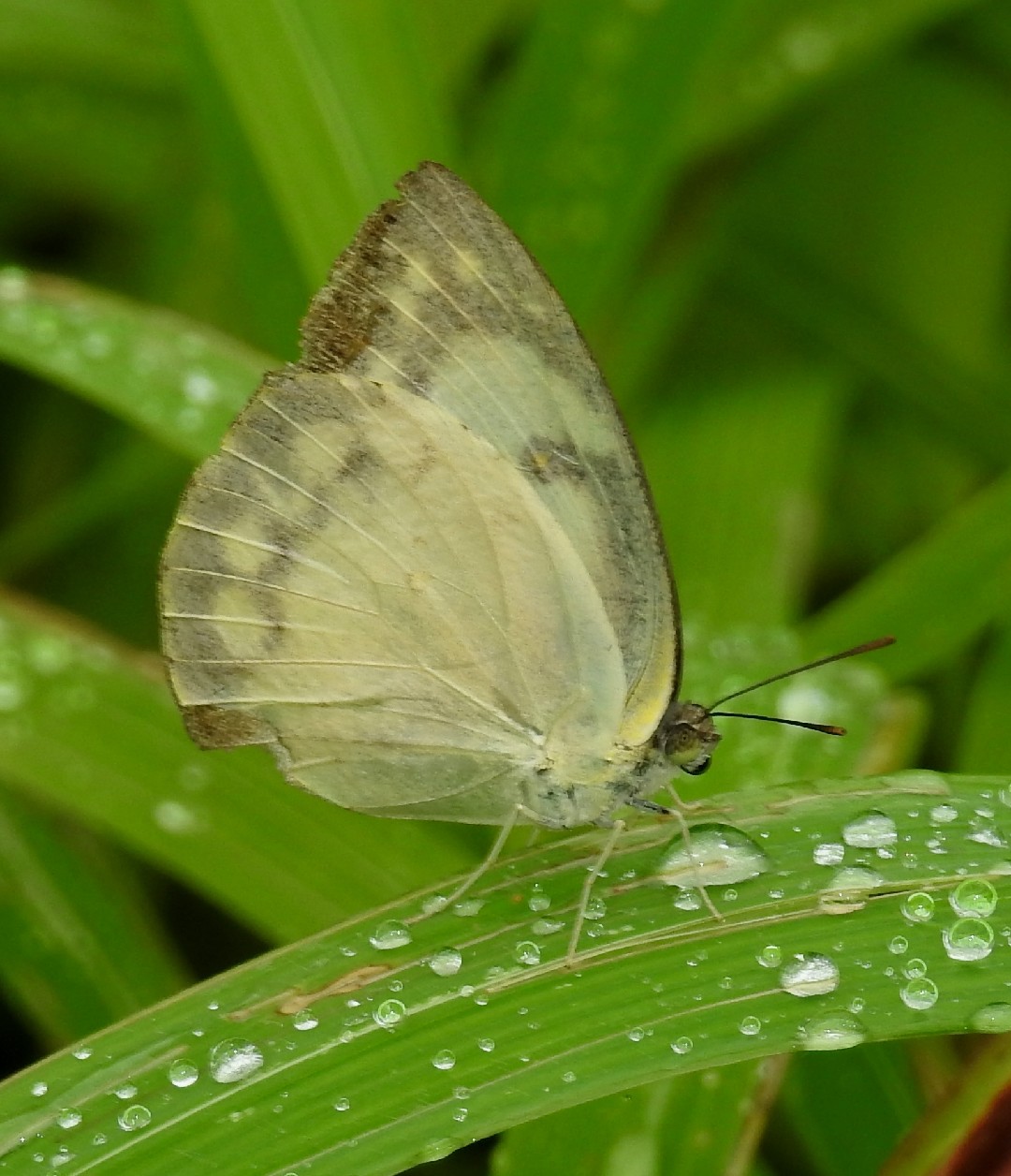
2. Common emigrant
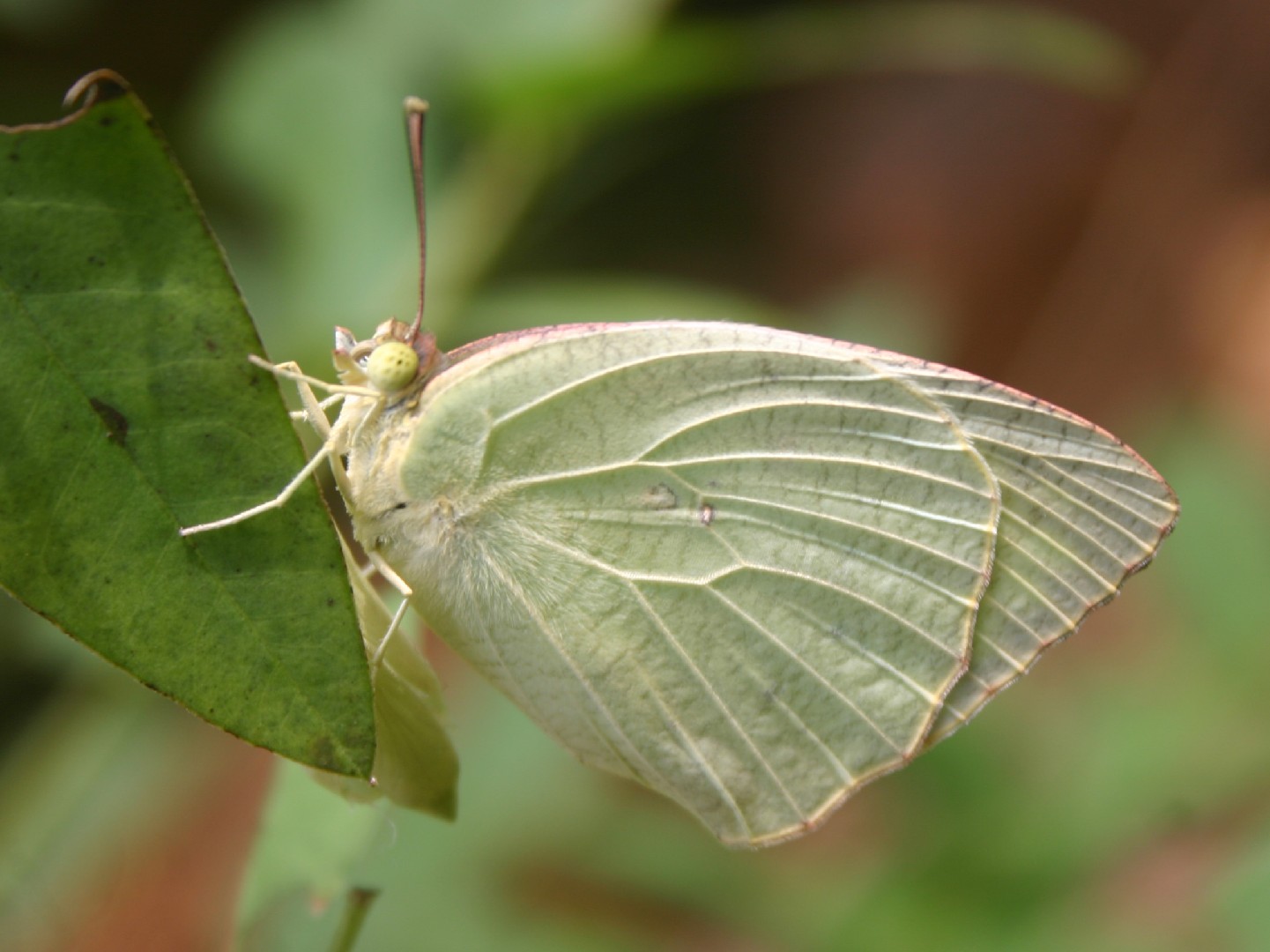
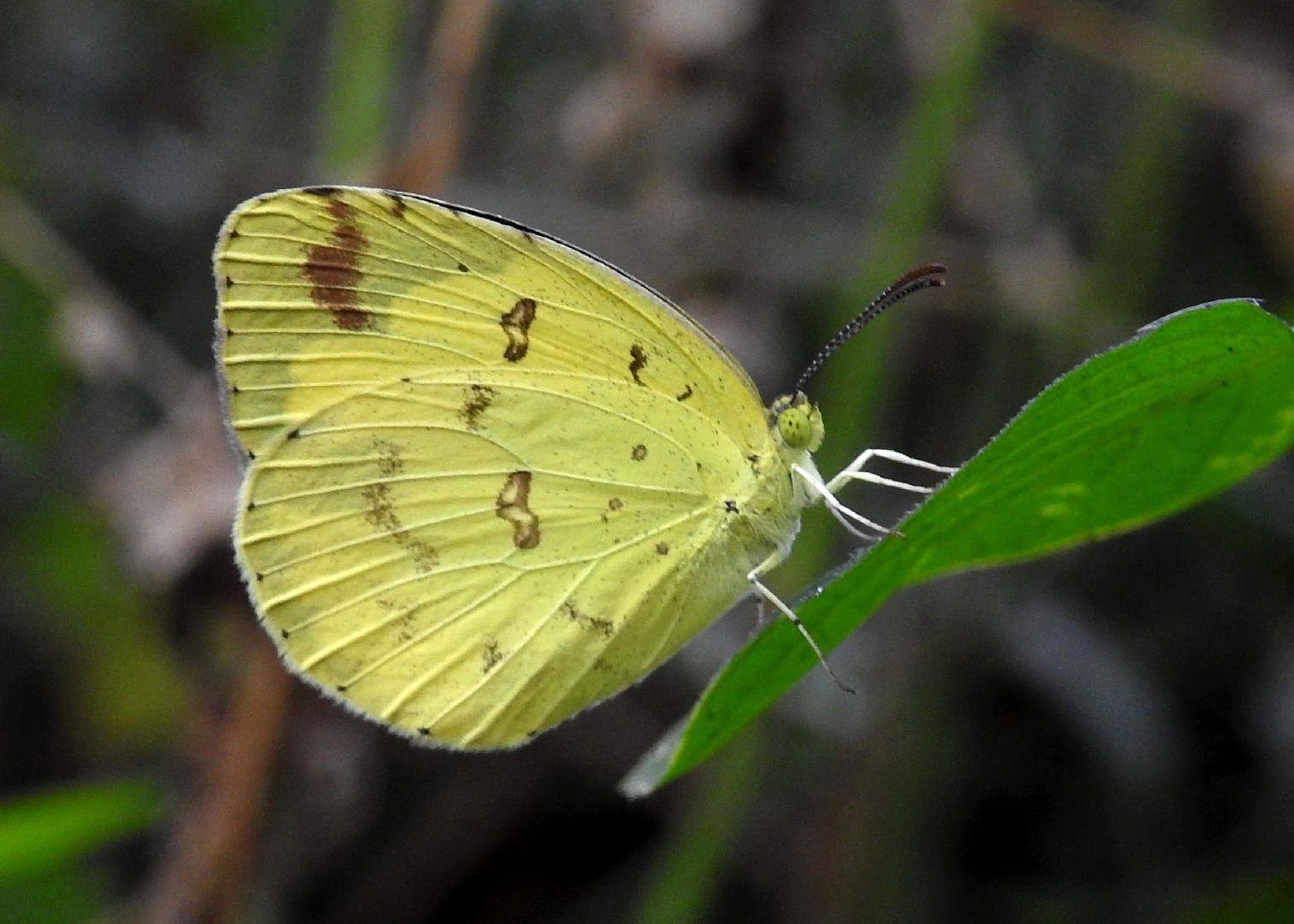
Male. "The upperside of the male is chalky-white, sometimes with a more or less broad and clearly defined basal sulphur-yellow area on both fore and hind wings; this sulphur-yellow colour is at times diffused over the whole surface of the wings, though generally it becomes paler towards the terminal margins. For the fore wing, the whole, or sometimes only the apical half, of the costa narrowly black, this color widened out irregularly at the apex; termen widely black at the apex, the colour narrowed posteriorly. This border in some specimens almost reaches the tornus, in others terminates above vein 4; occasionally it is continued posteriorly by a series of block dots at the apices of the veins. The Hind wing generally are uniform, unmarked, and some specimens bear minute black dots at the apices of the veins. "On the underside the groundcolour is very variable, with white with a slight to strong ochraceous tinge, greenish white or sulphur-yellow. The fore wing is typically without markings, in some specimens with a patch of sulphur-yellow on either side of base of median nervure, in the very yellow examples the tornal area is often widely greenish white, in others (Catopsilia catilla, Cramer) it bears a spot variable in size on the discocellulars. This spot has a pearly centre and an outer reddish line. Many specimens have an irregular angulated narrow discal reddish line (the colour varies in intensity) that runs from the costa obliquely outwards to vein 7, and then obliquely inwards to vein 2, though this line is often absent in specimens that bear the discocellular spot; apex and termen sometimes very narrowly reddish. The hind wing is typically uniform, without markings." Female. "On the female upperside the ground-color varies as in the male, but sometimes it is chalky white at the bases of the wings, with the terminal margins more or less broadly sulphur-yellow. Fore wings always with a round, occasionally quadrate, black discocellular spot variable in size; in some specimens the costa is black only towards the apex of the wing, in others broadly black throughout and opposite the apex of cell so widened out as to touch the discocellular spot. In lightly marked specimens in addition to the discocellular spot, there is only an irregular terminal black band dentate inwardly and widest at the apex of the wing; in others there is in addition a more or less diffuse highly curved macular postdiscal band that extends from the costa obliquely outwards down to vein 7, where it often touches the terminal black band, and thence is continued downward and slightly inclined inwards to interspace 1, getting gradually paler and fainter posteriorly. Hind wing are a series of terminal inter-spacial black spots that vary in size, and in the dark forms coalesce into a terminal black band."

3. Lemon pansy
It is brown with numerous eyespots as well as black and lemon-yellow spots and lines on the upperside of the wings. The underside is a dull brown, with a number of wavy lines and spots in varying shades of brown and black. There is also an eyespot on the lower side of the forewing. The wet- and dry-season forms differ considerably in coloration and even shape. In the wet-season form the markings are distinct and vivid and the wing shape is a little more rounded. In the dry-season form the markings are obscure and pale especially on the underside and the wing margin is more angular and jagged.
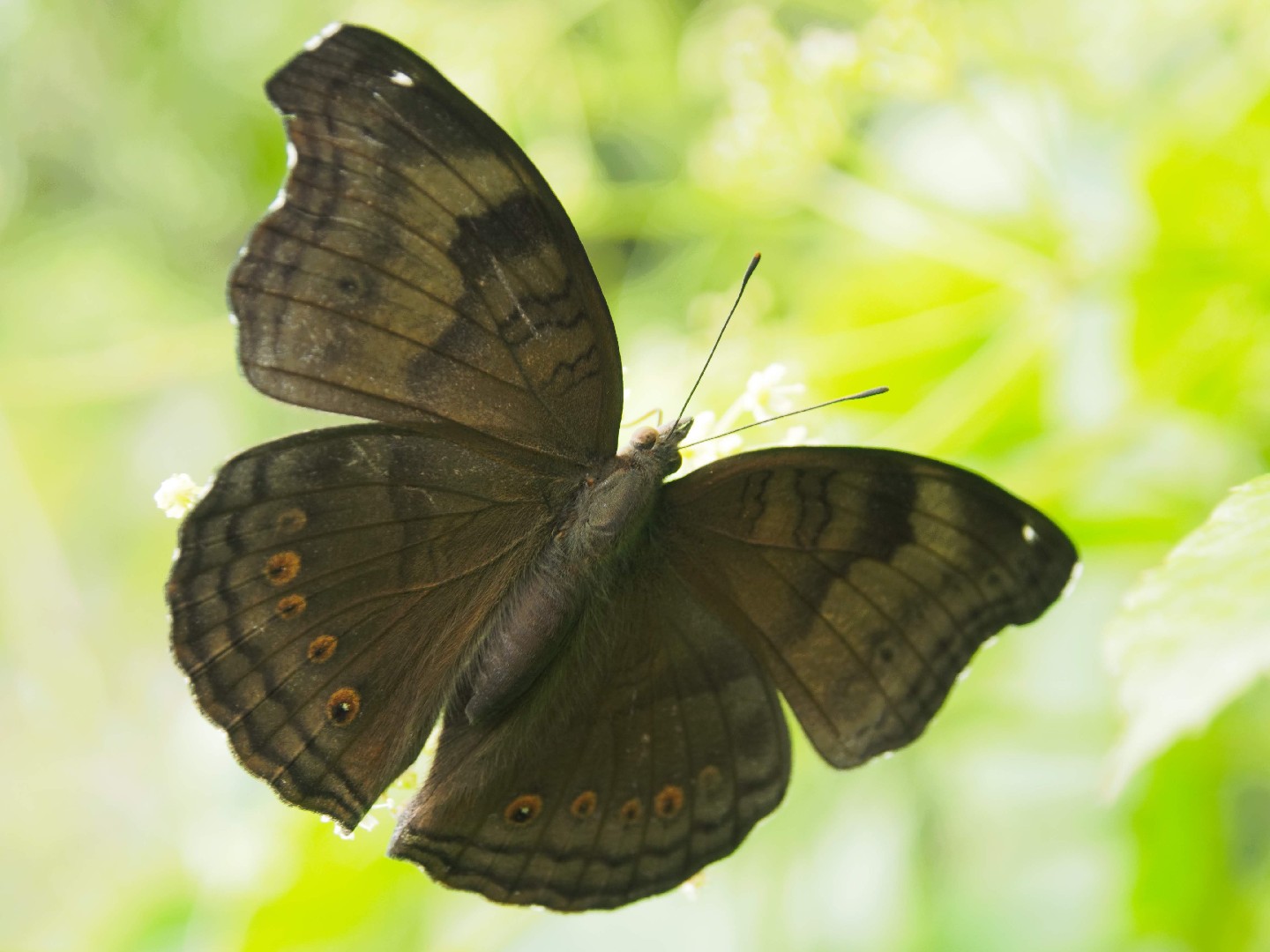
4. Chocolate soldier
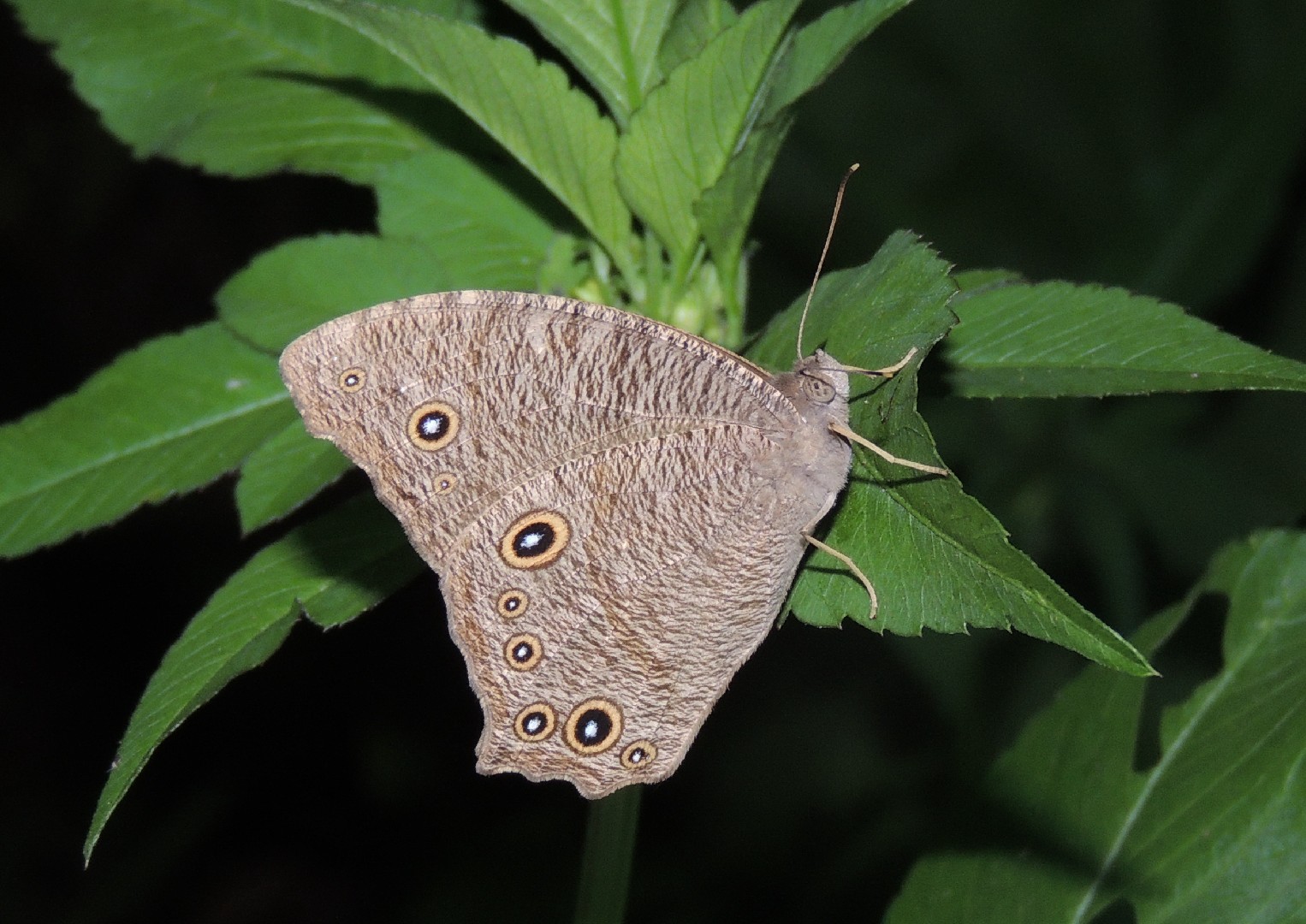
Upperside of both sexes brown of varying depths of colour. Forewing: cell with one pair of subbasal and one pair of apical transverse sinuous fasciae, the outermost defining the discocellulars; a short, broad, dark, oblique fascia beyond to vein 4, its inner margin diffuse, its outer sinuous but sharply defined; below vein 4 a sinuous, transverse, more faint fascia, followed by a discal blackish fascia, very broad and diffuse, below costa, bordered by a row of faint ocelli, and a postdiscal and a subterminal similar fascia following the outline of the termen. Hindwing with a slender blackish loop near apex of cellular area; a broad inwardly diffuse, outwardly well-defined short discal fascia in continuation of the one on the forewing; a series of postdiscal somewhat ochraceous ocelli with black pupils minutely centred with white; postdiscal and subterminal broad lines as on the forewing. Underside brown, with very broad darker brown transverse fasciae, the interspaces between the markings irrorated (sprinkled) with purplish silvery scales. Forewing with two sinuous fasciae on basal half succeeded by a discal fascia, very broad at the costal margin and decreasing in width to the dorsum, bearing on its outer border a row of obscure ocelli. This is succeeded by a zigzag dark line, and sinuous subterminal and terminal lines; apex and tornal area suffused with purplish silvery. Hindwing: two irregular, very broad, dark brown, curved short fasciae near base; a straight, transverse, prominent, narrow ochreous-brown discal band defined outwardly by a black line; a transverse postdiscal dark brown fascia, widest in the middle and bearing outwardly a curved row of ochreous-brown white-centred ocelli, followed by a zigzag dark line in continuation of the one on the forewing; a subterminal somewhat diffuse dark fascia and a terminal dark line. Antennae, head, thorax and abdomen dark brown.
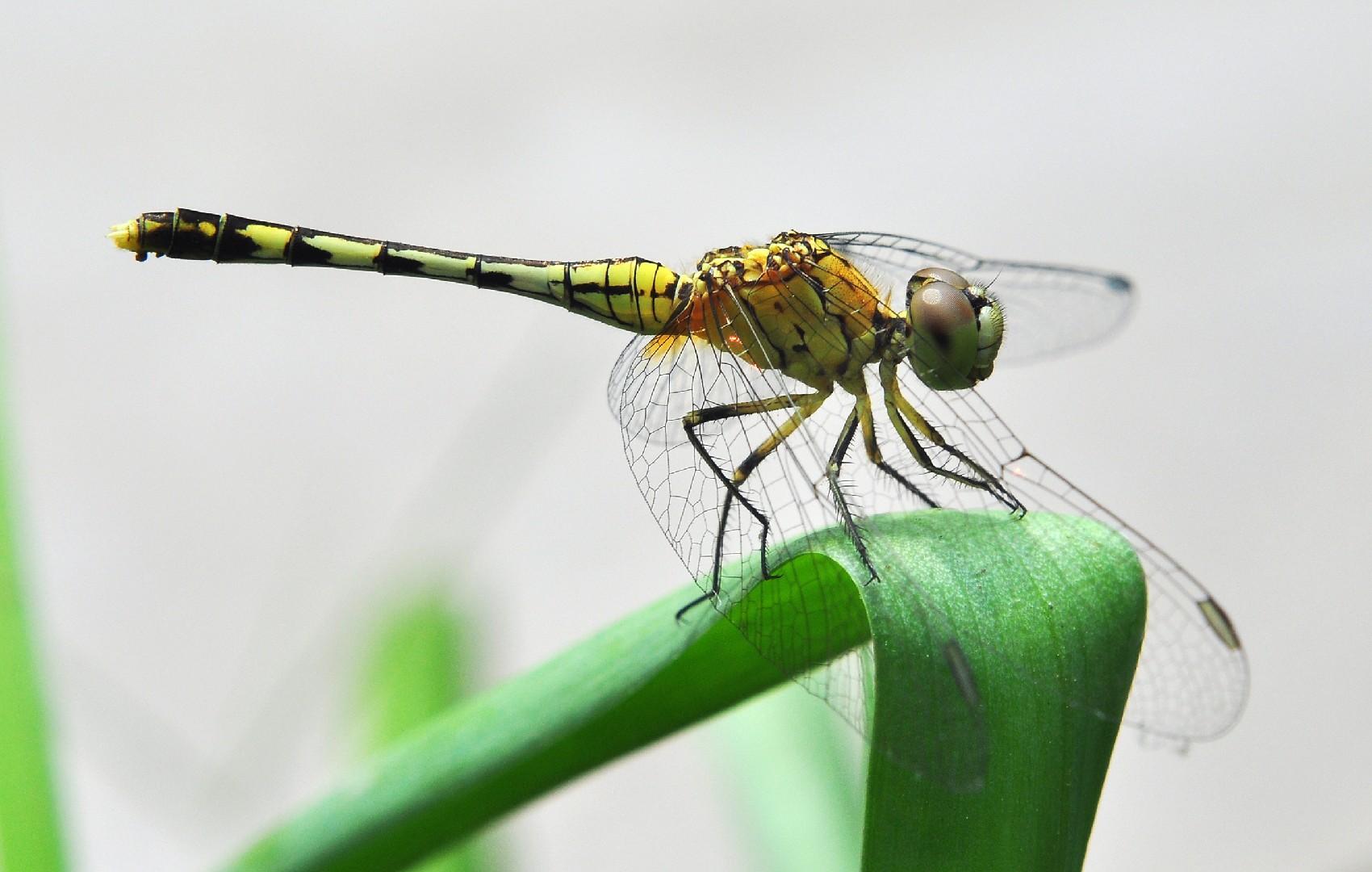
5. Chalky percher
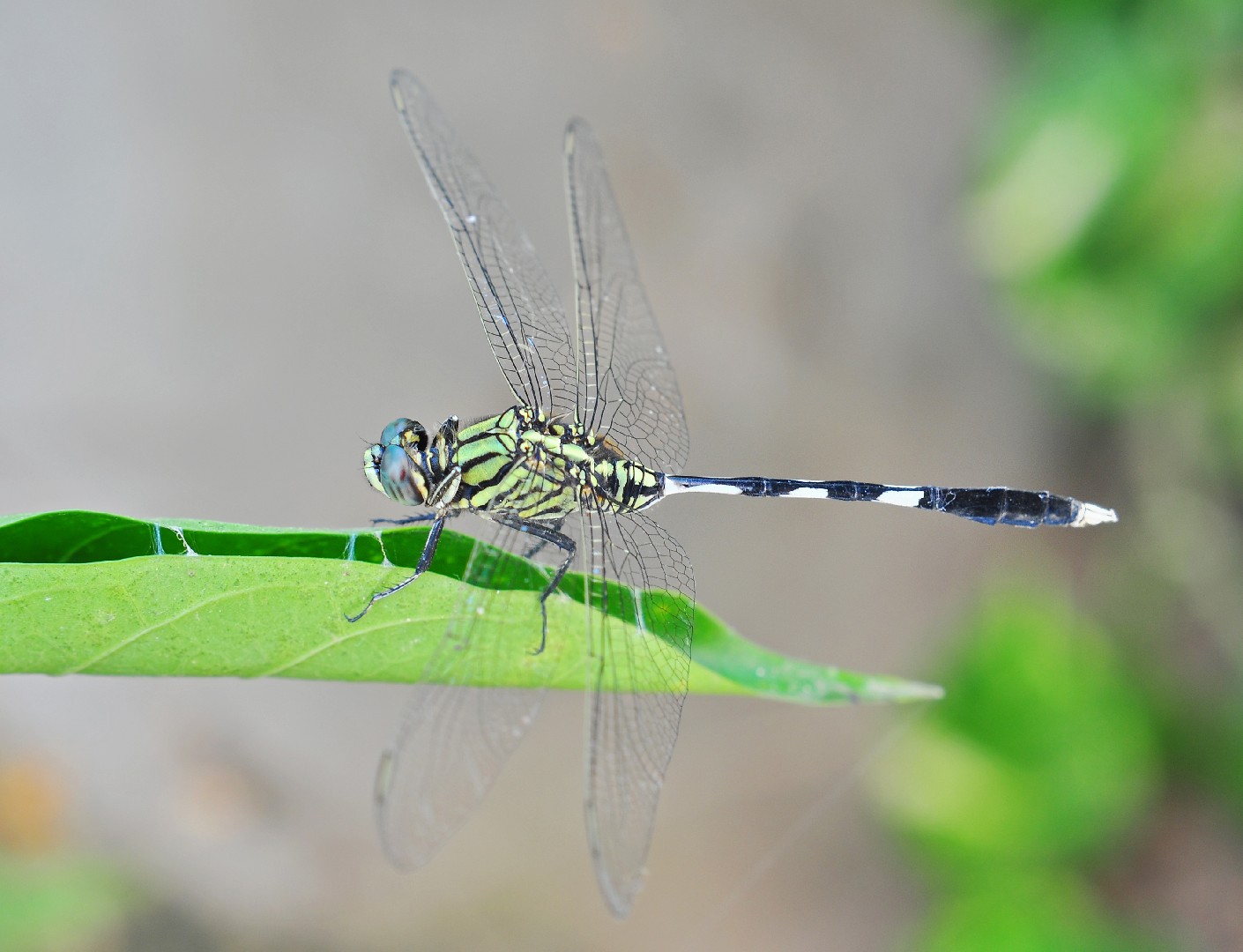
Diplacodes trivialis is small dragonfly with bluish eyes and greenish-yellow or olivaceous thorax and abdomen with black marks. In very old adults, the whole thorax and abdomen become uniform pruinosed blue. Clear wings, without apical or basal markings, and the creamy white anal appendages and deep pruinescence in adults help to distinguish this species from others in its genus.
6. Common crow
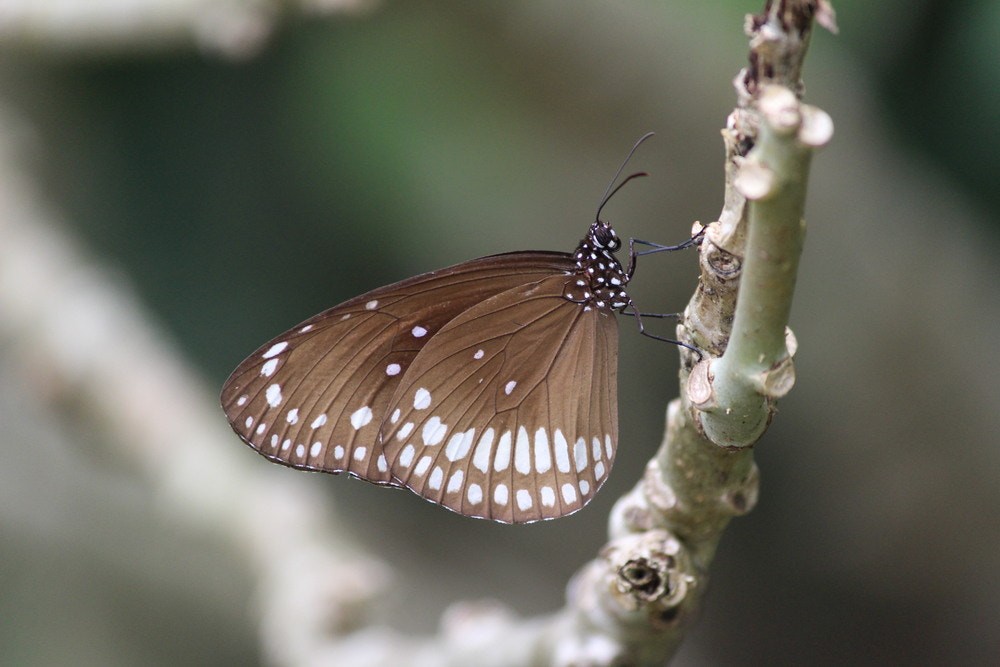
The common crow is a glossy-black butterfly with brown undersides with white markings along the outer margins of both wings. The wingspan is about 8–9 cm and the body has prominent white spots. The male has a velvety black brand located near the rear edge on the upperside of the forewing. On the underside there is a white streak in the same location. This white streak is present in both male and female. Upperside dark brown, broadly paler along terminal margins; Fore and hind wing with subterminal and terminal series of white spots; on fore wing the former more or less oval, curved inwards opposite apex, the latter series often incomplete, not reaching apex, the spots smaller; often there is a small costal spot, and very rarely a spot in apex of cell and one or more discal spots; on the hind wing the inner series of spots are elongate, the outer conical.Underside similar, but ground-colour more uniform; cell, costal and discal spots on both fore and hind wing nearly always present.

7. Common mormon
The common mormon (Papilio polytes) is a beautiful, black butterfly with unique hindwings that have orange and white colorings and two spots jutting out. They are named after the Mormon religion, as the butterflies participate in polygamy, which is a common practice for Mormons. They are also known to mimic red-bodied swallowtail, who are inedible.
8. Ditch jewel
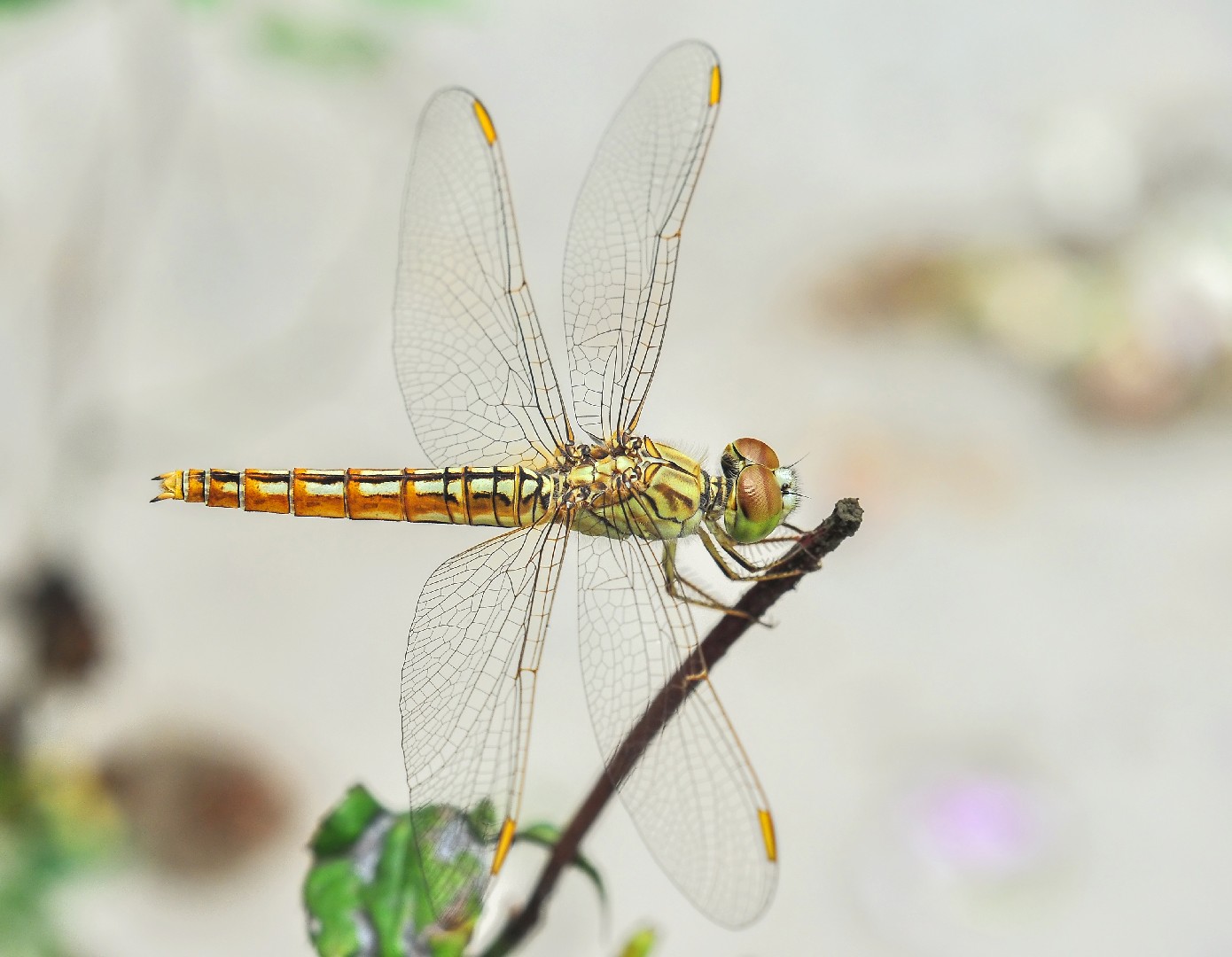
The species is on the IUCN Red List as not endangered, year of assessment 2010.
9. Common pierrot
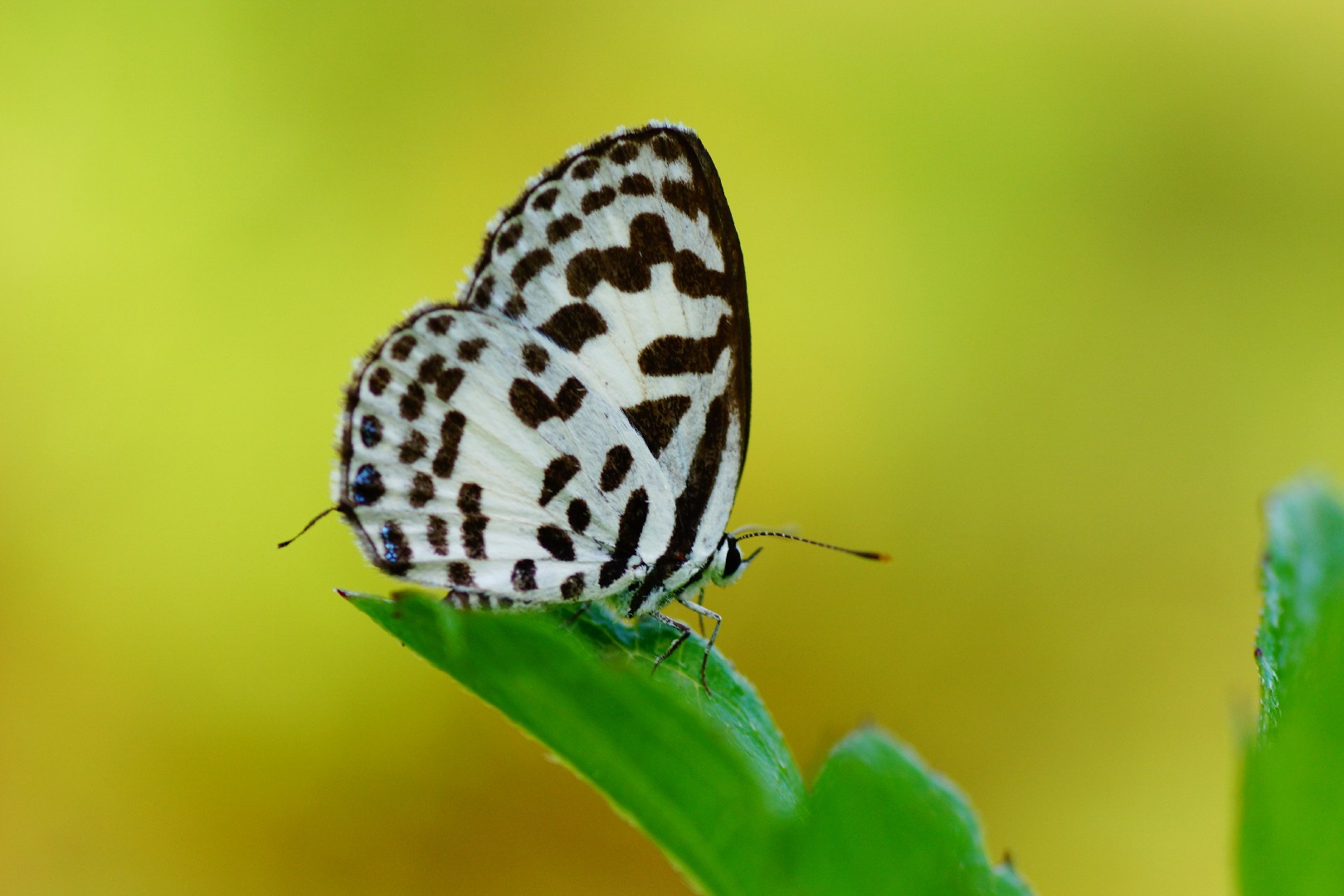
Male. The upperside of its wings is mainly white. Forewing has the costa, apex and termen edged with black, the edging much broader on apex and termen; base outwards for a short distance more or less densely overlaid. with metallic blue scales which cover and make indistinct a large basal outwardly clavate (club-shaped) black spot; a transverse black oval spot on the discocellulars touching the black edging on the costa; an oblique irregular line of four quadrate black spots beyond, the upper spot coalesced with the black on the costal border, the next spot below shifted outwards out of line, touching, as does also the lowest spot, the terminal black edging; posterior to this is a quadrate black spot in the apical half of interspace 2, and placed obliquely outwards from 1b coalescent with the terminal black border, another similar spot in interspace 1. Hindwing: three basal black somewhat coalescent spots overlaid with metallic blue scaling; the costal margin above the subcostal vein and vein 7 black; this colour filling also the base of interspace 6, where in some specimens it is divided into a basal portion with a spot beyond; a postdiscal curved transverse black band followed by a subterminal transverse series of black spots, each spot edged inwardly and outwardly by very slender lunules of the white ground colour; on the inner side of the postdiscal band posteriorly is a broken line of four black generally coalescent spots two and two, the two upper often touching the postdiscal band. Underside primarily white. Forewing has a long oblique black band from base outwards to the costa; below it and obliquely placed an irregular black somewhat conical mark; following these are two outwardly oblique, medially interrupted, black macular bands; the inner of the two extended from costa along the discocellulars, is then widely interrupted below its posterior portion that is formed of two elongate coalescent spots and touches the inner subterminal transverse line of elongate spots just above the tornus; the outer, obliquely placed line is subapical and medially broken, the middle portion consisting of a quadrate spot is shifted outwards; finally, two parallel subterminal transverse series of black elongate spots, the inner series of broad, more or less rectangular spots, the outer series of more linear spots, the latter coalescent anteriorly with a slender anteciliary black line. Hindwing: a transverse basal black band, with an elongate black spot below it on the dorsum; a transverse subbasal line of four well-separated black spots; a transverse, oval, discocellular black spot and obliquely above it three subcostal similar spots, the inner two coalescent; postdiscal and terminal markings consist, the former of four black posterior spots two and two, each pair coalescent and placed en echelon, the latter of a transverse double series of subterminal black spots and an anteciliary black line; the upper portion of the postdiscal markings touches the inner subterminal line. Cilia of both forewings and hindwings white alternated with black at the apices of the veins; filamentous short tail to the hindwing black tipped with white. Antennae, head, thorax and abdomen black, the shafts of the antennae ringed with white, the head between the eyes and behind them white; beneath: the palpi, thorax and abdomen white, the last barred broadly with white on the sides.Female. Similar to the male but with the black markings on the upper and undersides broader. The larva is of the usual woodlouse form, much flattened towards the anal segment which is very broad; head concealed; colour bright green with a double, dorsal, yellow line and the sides powdered with small yellow spots. Pupa is intensely glossy as if covered with gum. It varies in colour, being sometimes black, at others green with inconstant black markings.

10. Common cerulean
Like many tropical butterflies, this species shows seasonal polyphenism, with the appearance differing between adults according to the season. Male upperside has the ground colour pale bluish white. The forewing has the terminal margin narrowly edged with black that broadens very slightly towards the apex of the wing; the cilia are brownish black. The hindwing is uniformly coloured, except for an anteciliary black line faintly edged on the inner side by a white line within which and touching it is a row of black spots, the anterior spots very faint, the spot in interspace 2 large and well-defined, two geminate (paired) spots in interspace 1 and a very small black lunular dot in interspace 1a; cilia brown, white at the base in the interspaces. In specimens obtained in the height of the dry season the black edging to the termen of the forewing is much reduced and the subterminal series of black spots in the hindwing is altogether missing. The underside is greyish brown. The forewing has seven transverse white bands as follows: two short bands one each side of the discocellulars, the inner one continued downwards to vein 1 and both represented at the costa by two detached spots; two parallel discal bands, the inner one broken at and the outer one terminating on vein 3; two parallel subterminal bands, the outer one slightly lunular; lastly, a more slender terminal band followed by an anteciliary slender black line; the dorsal margin narrowly white; cilia brownish black, their bases white in the interspaces. Hindwing: crossed by nine white bands or lines as follows: three between base of wing and apex of cell, those posteriorly in interspace 1 or on vein 1 abruptly turn upwards and terminate on the dorsum; the first band beyond the cell extends from vein 6 to vein 2, then curves upwards in interspace 1; the next extends straight from just below the costa to vein 4, thus overlapping the previous band for a short distance; the next or postdiscal band runs between the costa and vein 3, the subterminal two also between the costa and vein 3 but the inner one of the two bands is extended down to interspace 1 and there curves upwards towards the dorsum; both the subterminal bands are more or less lunular; in the interspace below vein 2 is a large subterminal black spot speckled with metallic blue scales and bordered inwardly by ochraceous orange; there are also in interspaces la and 1 two black dots inwardly edged by a short white streak set in an ochraceous background; lastly, there is a complete terminal white line followed by a black anteciliary line and a filamentous short black white-tipped tail at apex of vein 2; cilia as on the upperside. Antennae brownish black, the shafts as usual tinged with white; head, thorax and abdomen pale brown, bluish on thorax and base of abdomen; beneath: the palpi, thorax and abdomen white, the third joint of the palpi and the second joint anteriorly black. The female has the upperside ground colour paler than in the male, often quite white; terminal black edging to forewing very much broader, broadest at apex, its margin there diffuse. Hindwing: differs from that of the male as follows: costal margin broadly dusky black; a postdiscal transverse series of dusky-black connected lunules often more or less obsolescent; this is followed by a series of black spots each set in a background of the white ground colour; an anteciliary slender black line as in the male. The underside ground colour is paler than in the male, the markings however are identical. Antenna, head, thorax and abdomen as in the male. Closely resembles the males and females of the dry-season brood; the markings are similar but the ground colour is generally darker both on the upper and undersides, while the black edging to the forewing and the black postdiscal and terminal markings to the hindwing on the upperside are broader and more clearly defined. Antennae, head, thorax and abdomen as in the dry-season brood.


More







