




Top 19 Most Common Insects in Hyderabad
Welcome to a world teeming with life in ways we oftentimes overlook! Insects, nature's most numerous beings, inhabit every conceivable nook of Hyderabad - from arid desert to lush vegetation. Varying geographical characteristics begot an ecosystem of unimaginable insect diversity. Among them are admirable allies, crucial to our food production and pests that cause large-scale destruction. Join us as we explore the 'Top 19 Most Common Insects' in Hyderabad and celebrate the symbiotic relationship in this wild dance of survival.

Most Common Insects
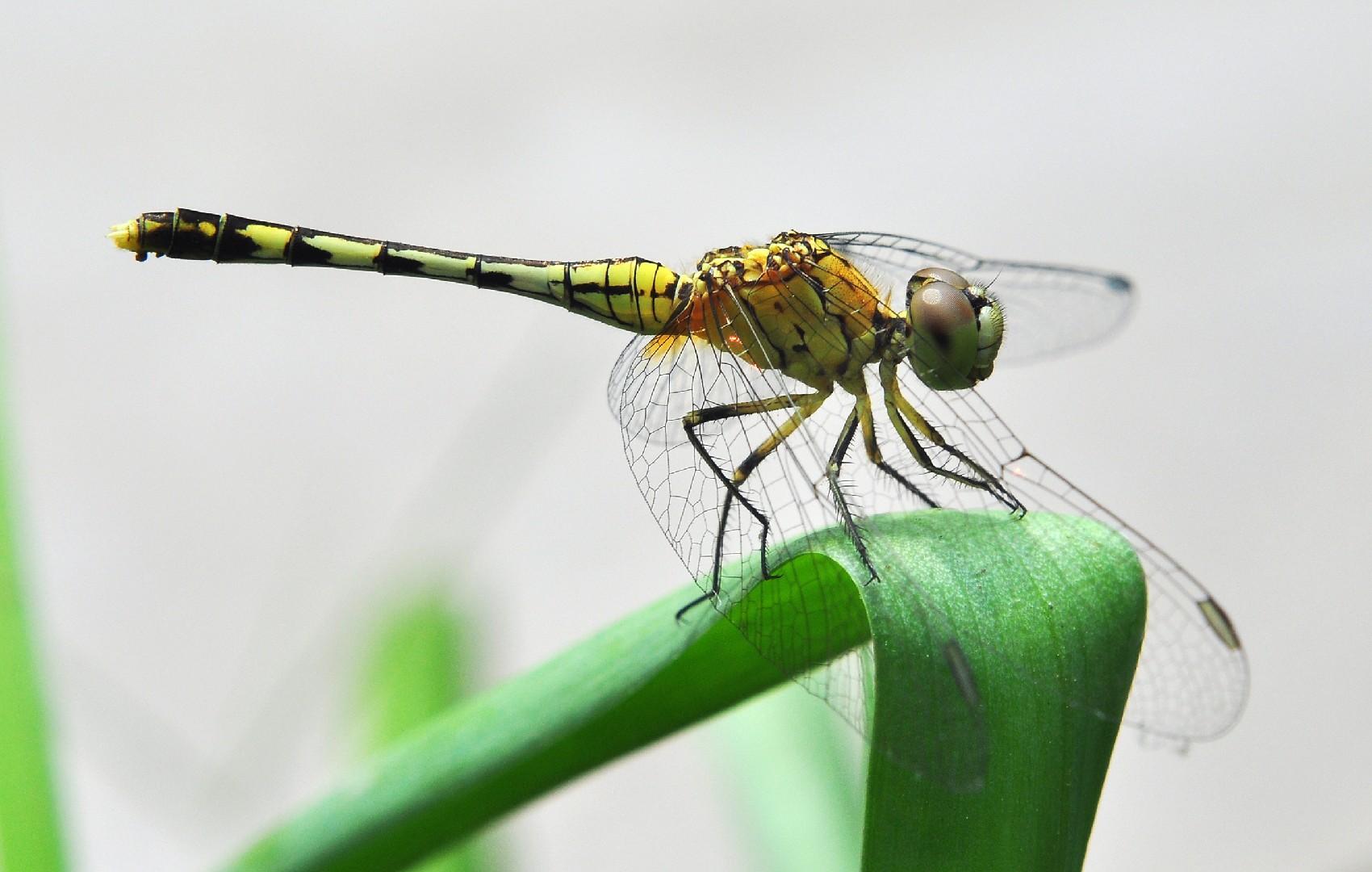
1. Chalky percher
Diplacodes trivialis is small dragonfly with bluish eyes and greenish-yellow or olivaceous thorax and abdomen with black marks. In very old adults, the whole thorax and abdomen become uniform pruinosed blue. Clear wings, without apical or basal markings, and the creamy white anal appendages and deep pruinescence in adults help to distinguish this species from others in its genus. 
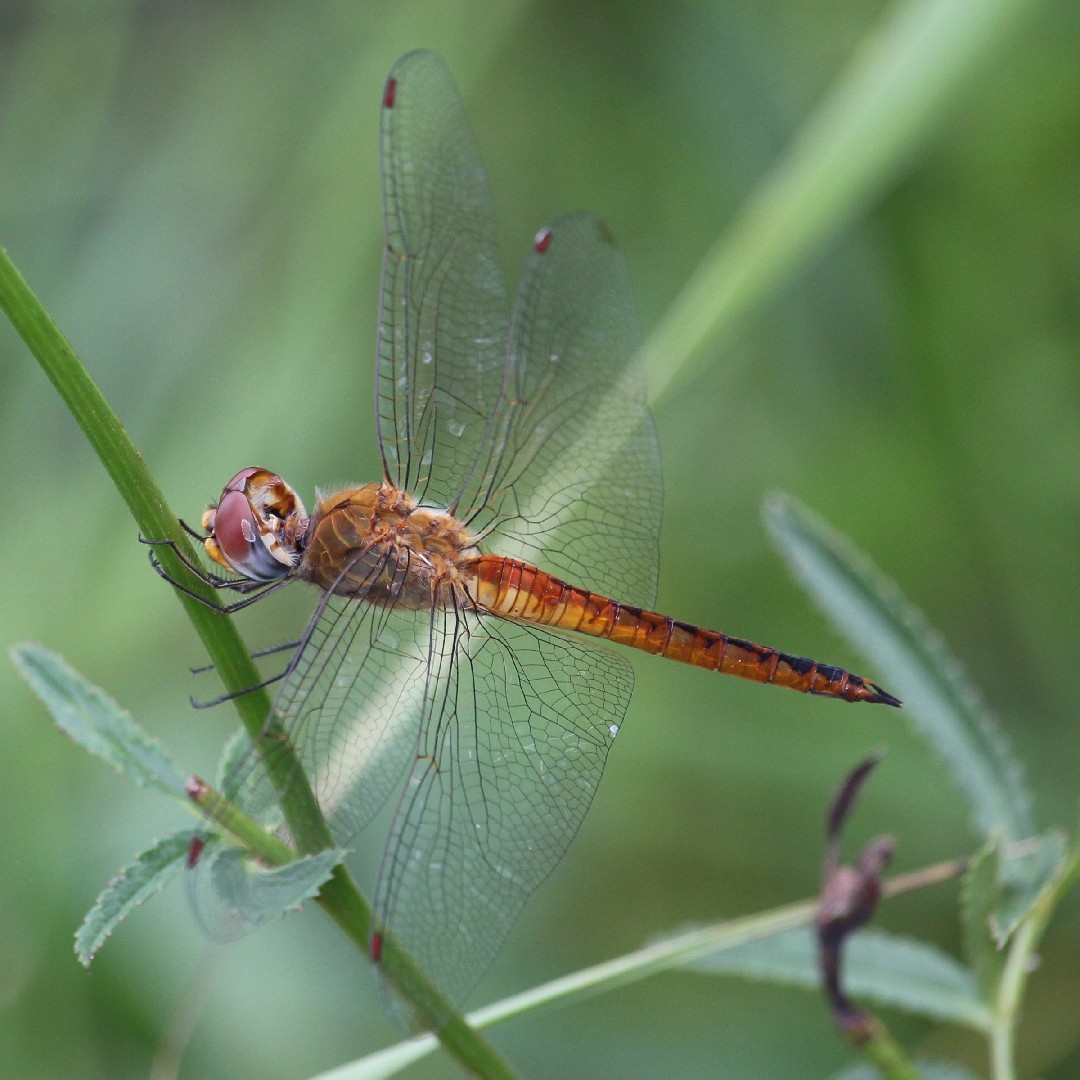
2. Wandering glider
The wandering glider (Pantala flavescens) is a yellow dragonfly that migrates long distances. It's easily recognized by its elegant flight pattern, where it seems to glide across the sky effortlessly, even when it's windy outside. It often lands near still water, which includes ponds and puddles.
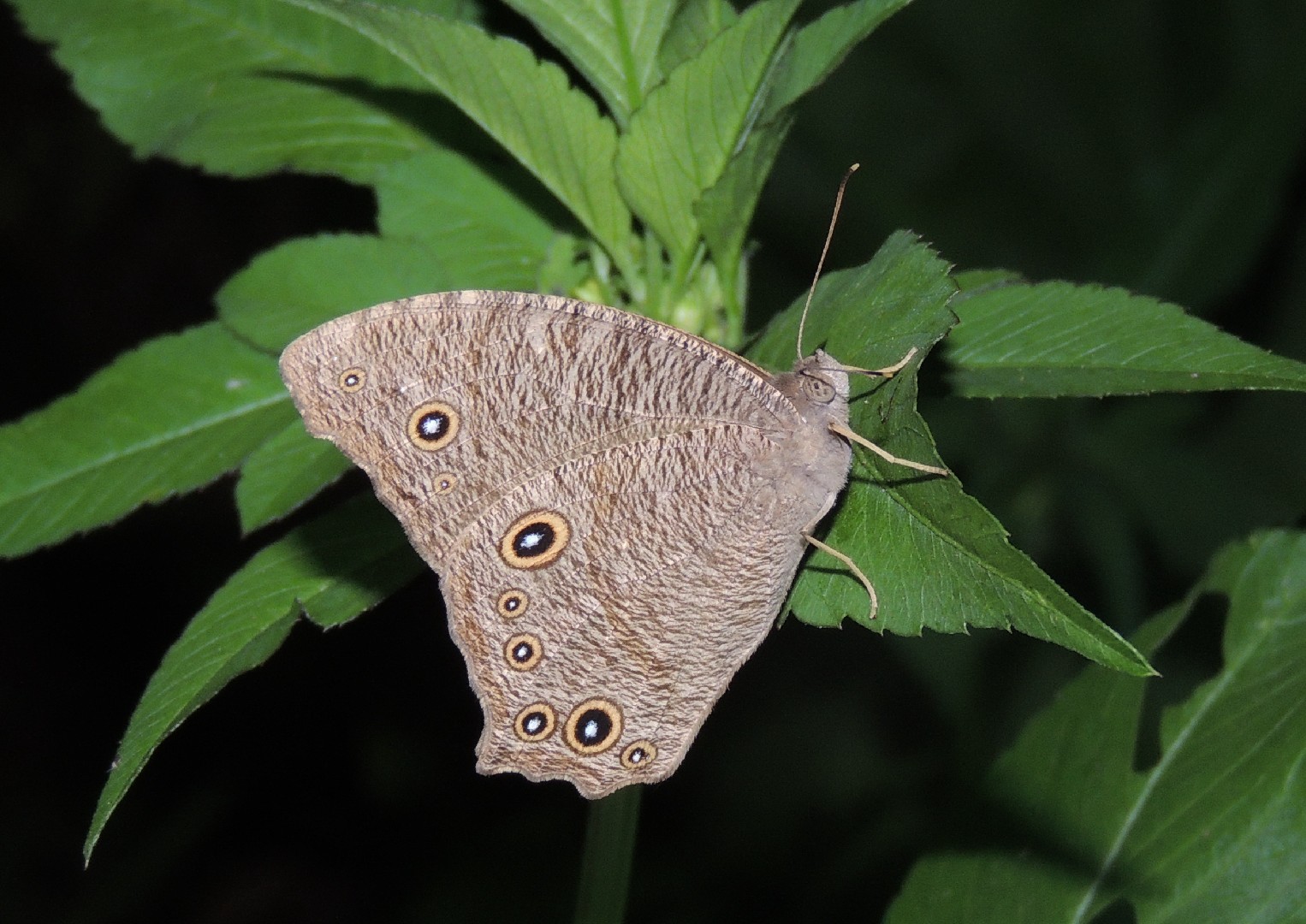
3. Common evening brown
The common evening brown (Melanitis leda) changes its appearance based on the season. During wet seasons, it has a pale brown underside and a dark brown top. Then, during dry seasons, it often has more distinguished bands or spots. It uses these neutral colors to help it blend into leaves and trees. It usually only flies during the evening, resting during daylight.
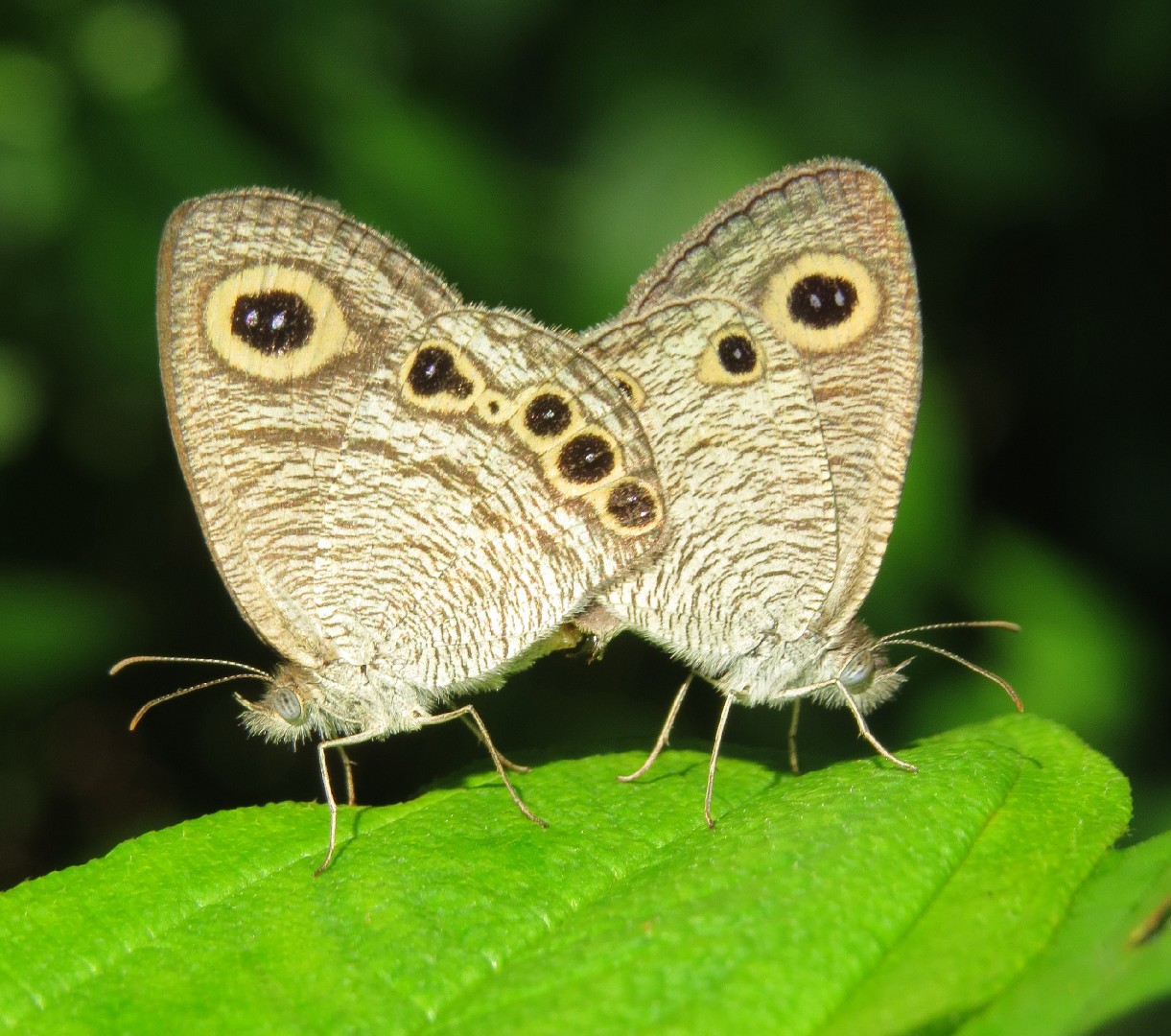
4. Common four-ring
Wet-season form: Upperside greyish brown. Forewing with the usual comparatively large, bi-pupilled, yellow-ringed, black preapical ocellus. Hindwing usually with two, sometimes with three, very rarely without any, smaller similar uni-pupilled postdiscal ocelli. Underside greyish white, not very densely covered with transverse short brown striae. Forewing with the preapical ocellus as on the upperside, obscure discal and subterminal dull brown transverse fasciae and a narrow brown ring round the ocellus diffusely produced posteriorly. Hindwing with one apical and typically three postdiscal posterior ocelli placed in a curve; traces of transverse brown discal and subterminal fasciae in most specimens. Antenna, head, thorax and abdomen greyish brown, the abdomen paler beneath. Male without secondary sex-mark. Dry-season form: Similar, somewhat paler on both upper and under sides; the discal and subterminal transverse fasciae more pronounced; the ocelli on the underside of the hindwing minute or absent. Adults have a wingspan of 4 - 4.5 cm.
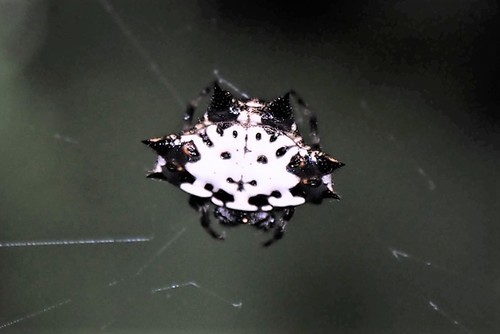
5. Black-and-white spiny spider
Female black-and-white spiny spider are 6 - 9 mm wide and possess a hard, shiny abdomen armed with six black conical spines. The upper surface of the abdomen is white to yellowish with variable black or dark brown markings and sigilla. Males are much smaller at 3 - 4 mm and in place of spines have small bumps on their abdomens.
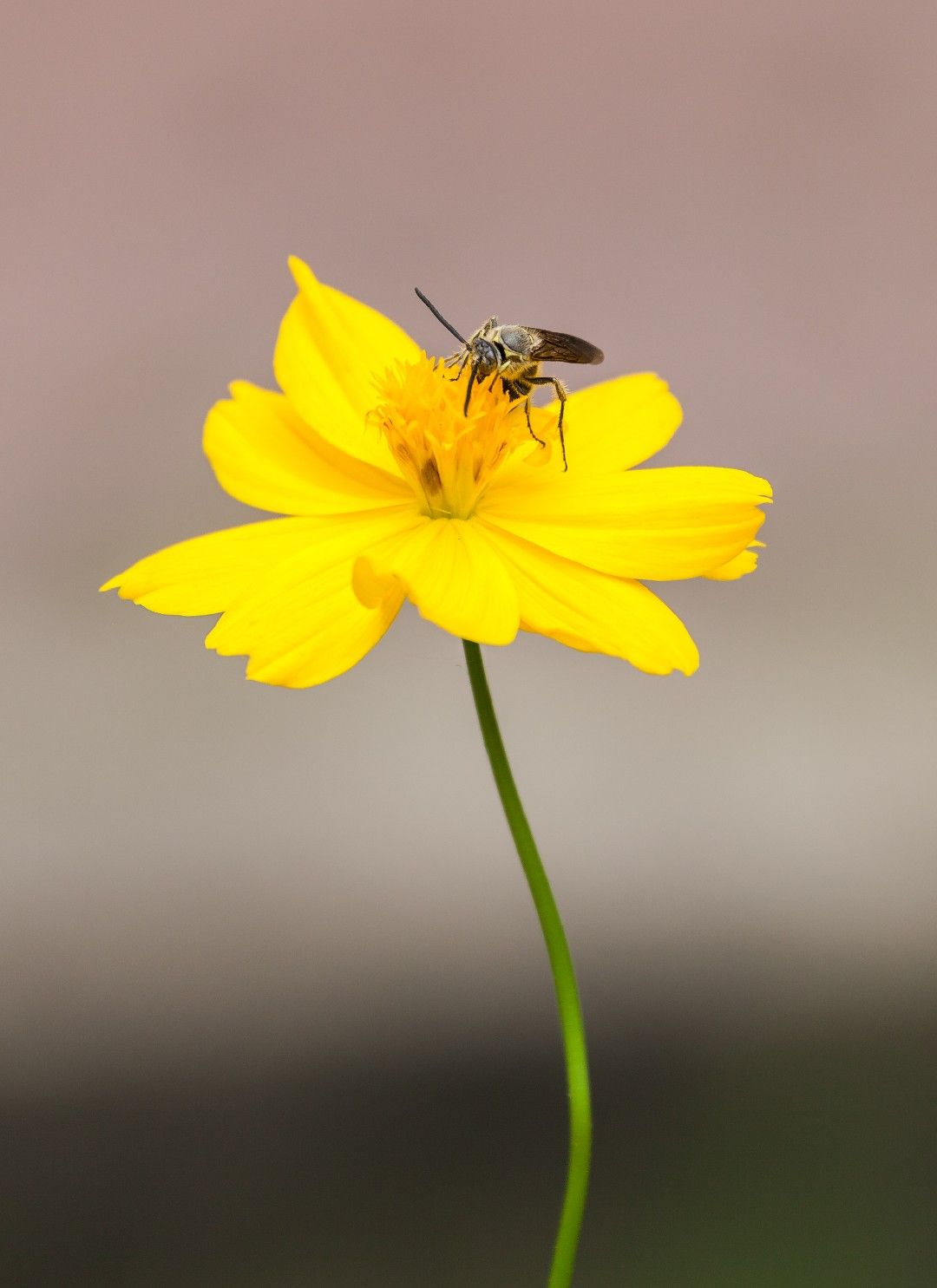
6. Chlorion lobatum
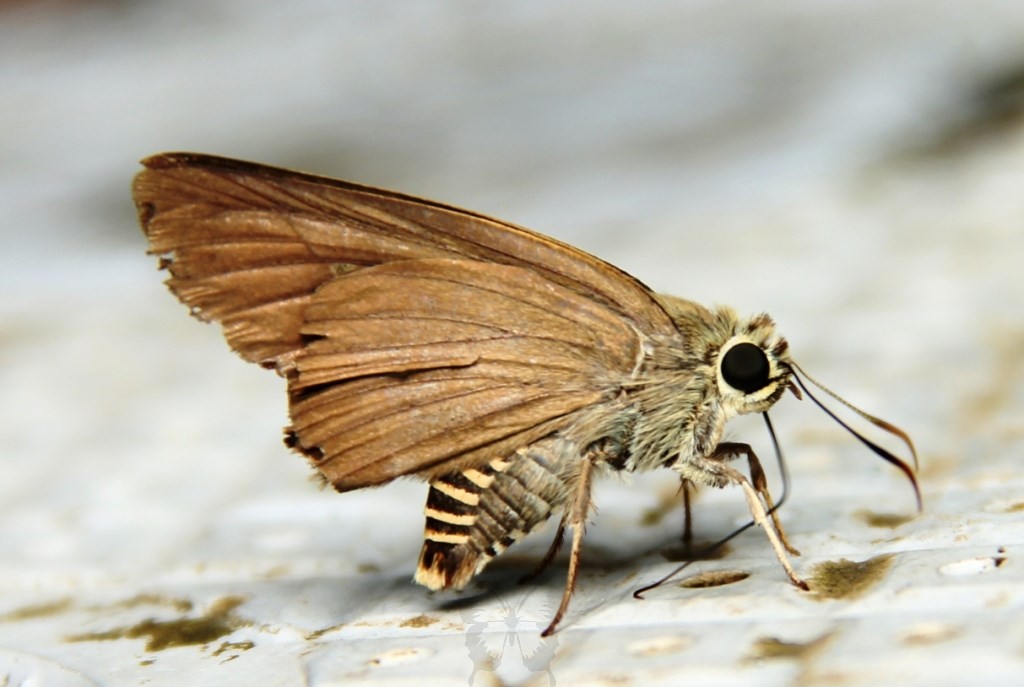
7. Brown awl
Badamia exclamationis is a butterfly from the family of Badamia exclamationis (Hesperiidae). The scientific name of the species was first validly published in 1775 by Johann Christian Fabricius.
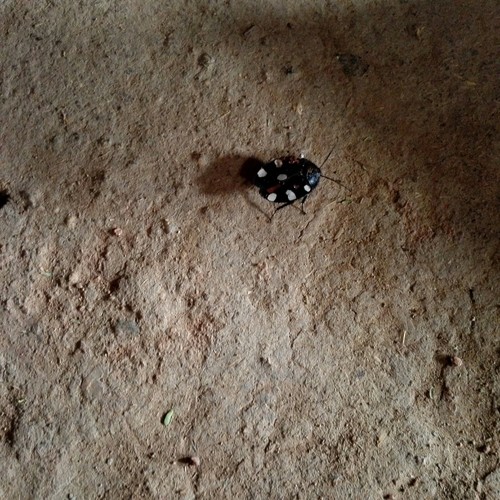
8. Indian domino cockroach
The black and white pattern of adults is believed to have evolved to mimic the pattern of the aggressive ground beetle Anthia sexguttata that has strong defenses, including the ability to spray chemical irritants. The upperside of the abdomen is orange-yellow, but is hidden by the tegmina. The spots on the asymmetrical tegmina are placed so that when closed, the spots appear symmetrical. The right tegmen lobe is bright orange-yellow. The species has been said to be one of the few cockroaches with "grace and beauty". The head is bent back underneath the pronotal shield (hypognathous) and the ocelli (simple eyes) face forward, helping sense light and thereby time foraging activity during early morning and late evening.
9. Red masked noctuid moth
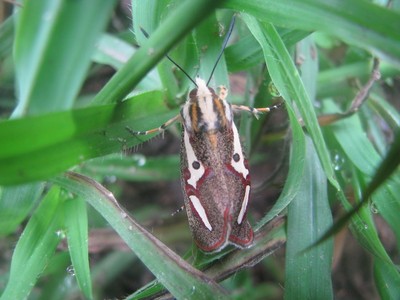
Its wingspan is about 33 mm. Forewings of male without costal vesicles. Forewings with longitudinal white streak entire, and with an indenture on its upper edge and a small black spots near its lower edge. A red marginal line is present. Cilia of both wings white.
10. Triangles
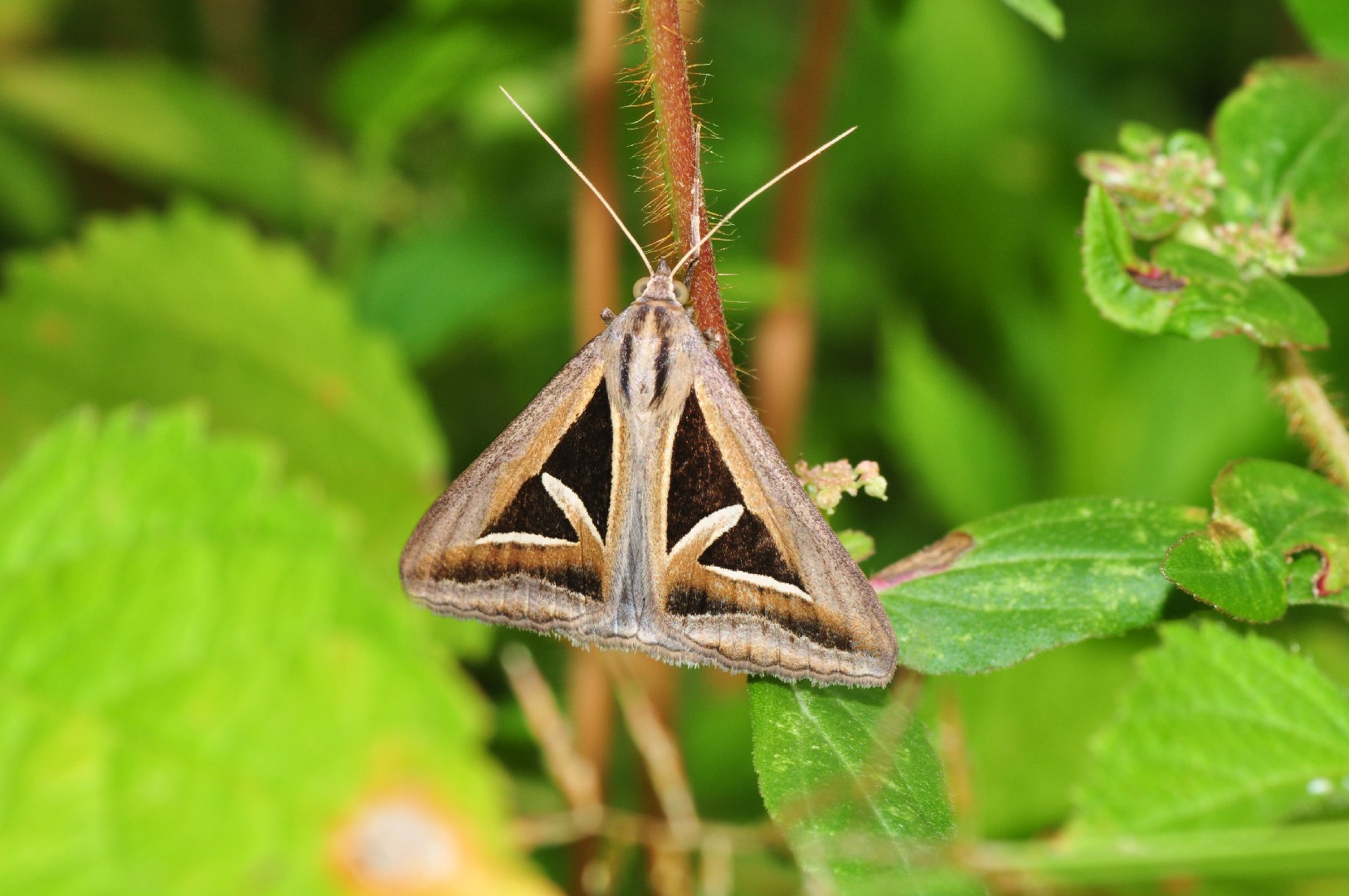
The wingspan is about 3 - 4.5 cm. Antennae of male ciliated. Mid and hind tibia hairy. Body pale ochreous brown, slightly suffused with fuscous or dark grey brown. Forewings with a large black white-edged triangular patch easily distinguished below the cell from near base to towards outer angle. A similar smaller patch found beyond the cell on vein 5, with some pale fulvous behind it. A slightly sinuous submarginal pale line with patches of black suffusion found inside it and a series of black specks beyond it. A dark marginal line can be seen as well. Hindwings with indistinct medial line and fuscous suffused outer area. Larva has yellow upper half and brown ventral part. The yellow part is broken by longitudinal brown bands, which faints towards posterior and becomes intensive again in prolegs. Eggs olive green and speckled rusty red. First few instars are green with three lateral purple brown lines. Late instars are yellowish. Pupa within a slight cocoon of white silk, which spun amongst leaves.

More







