




Top 18 Most Common Insects in Ganga Sagar
Insects, with their diverse forms and fascinating behaviors, pervade every corner of Ganga Sagar, each uniquely adapted to their specific niches. The diverse geography of Ganga Sagar, from mountain forests to coastal plains, creates a mosaic of habitats, affecting insect diversity. These tiny creatures, both fascinating and dreaded, play vital roles in our ecosystems, acting as pollinators, decomposers, or pests. Unearthing the relationship between Ganga Sagar's environments and its insect inhabitants reveals the intricate dance of life happening under our noses. Come join us as we explore the 18 most common insects of Ganga Sagar.

Most Common Insects
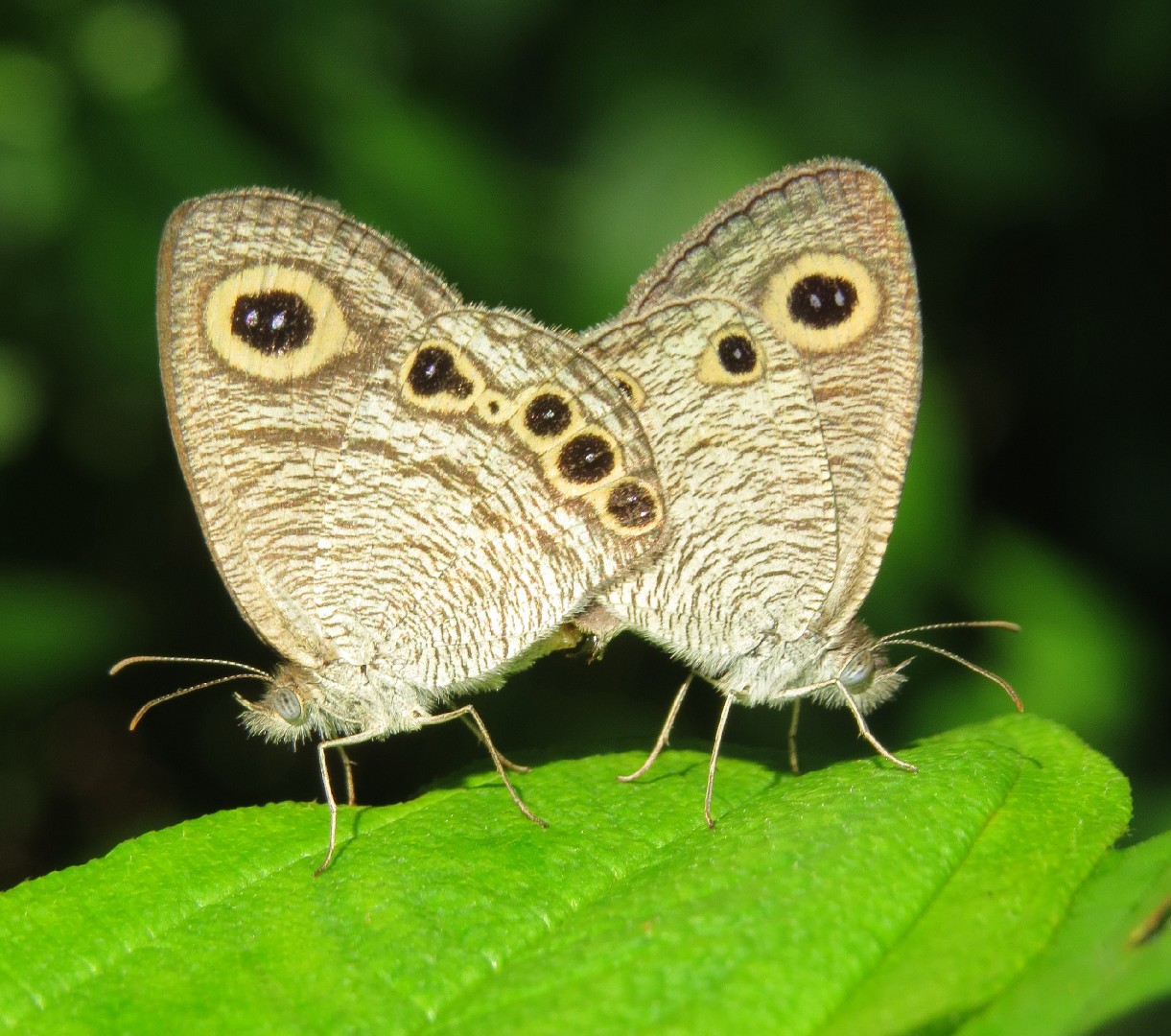
1. Common four-ring
Wet-season form: Upperside greyish brown. Forewing with the usual comparatively large, bi-pupilled, yellow-ringed, black preapical ocellus. Hindwing usually with two, sometimes with three, very rarely without any, smaller similar uni-pupilled postdiscal ocelli. Underside greyish white, not very densely covered with transverse short brown striae. Forewing with the preapical ocellus as on the upperside, obscure discal and subterminal dull brown transverse fasciae and a narrow brown ring round the ocellus diffusely produced posteriorly. Hindwing with one apical and typically three postdiscal posterior ocelli placed in a curve; traces of transverse brown discal and subterminal fasciae in most specimens. Antenna, head, thorax and abdomen greyish brown, the abdomen paler beneath. Male without secondary sex-mark. Dry-season form: Similar, somewhat paler on both upper and under sides; the discal and subterminal transverse fasciae more pronounced; the ocelli on the underside of the hindwing minute or absent. Adults have a wingspan of 4 - 4.5 cm. 
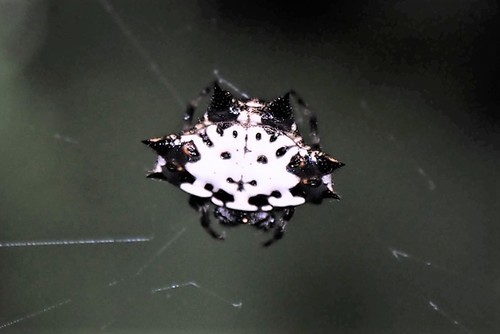
2. Black-and-white spiny spider
Female black-and-white spiny spider are 6 - 9 mm wide and possess a hard, shiny abdomen armed with six black conical spines. The upper surface of the abdomen is white to yellowish with variable black or dark brown markings and sigilla. Males are much smaller at 3 - 4 mm and in place of spines have small bumps on their abdomens.
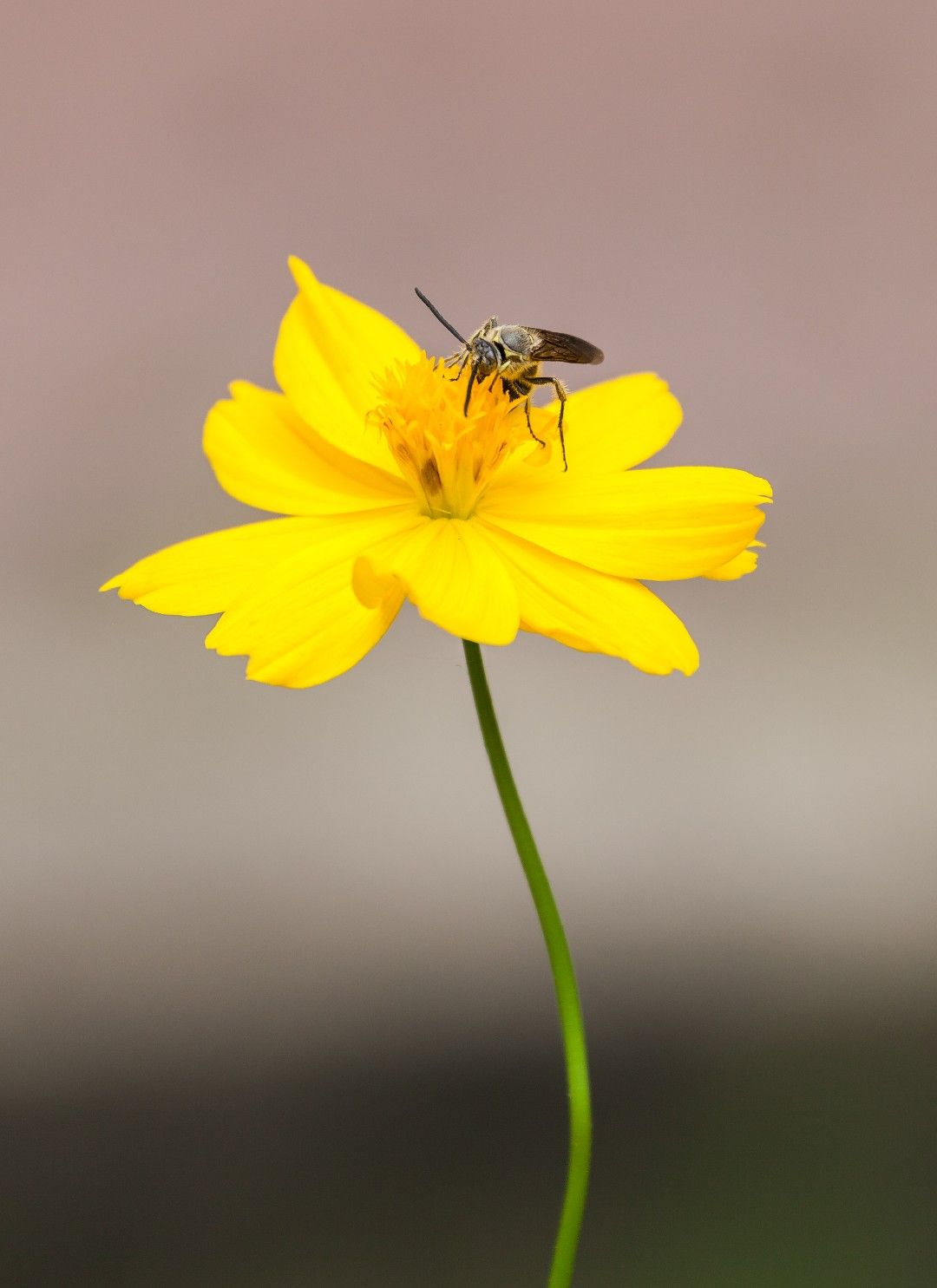
3. Chlorion lobatum
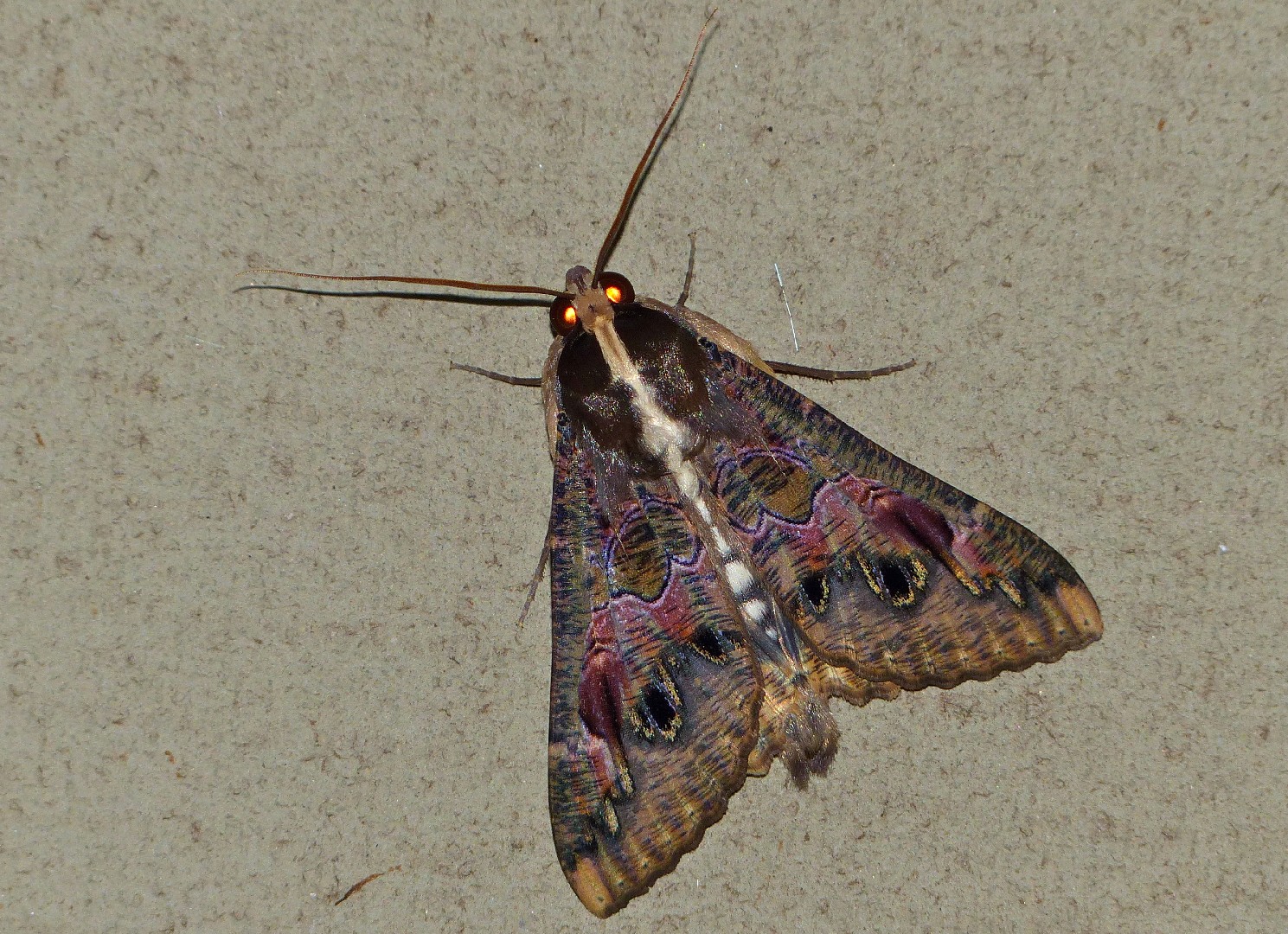
4. Sundowner moth
Its wingspan is about 60–84 mm. Head ochreous white, the basal joint of palpi dark brown. Thorax dark brown above with a broad ochreous-white stripe on vertex. Abdomen dark brown above, with a series of dorsal ochreous-white spots. Forewings reddish-brown with dark stria. There is a pale patch at base of inner margin and an indistinct antemedial angulate line. An irregularly waved medial line with pale outer edge and somewtimes tinged with purple and rufous. Some vinous patches beyond it. Reniform is a narrow lunule with a vinous dash beyond it. There is a crenulate postmedial line found with medial black lunules on it and one towards inner margin, and joined by a crenulate line from near apex. A marginal black specks series also present. Hindwings are fuscous brown where the base and a diffused medial irregular band are pale. An ochreous patch with black strai on it at center of outer margin. Cilia pale. Ventral side pale with fuscous submarginal band towards inner margin of each wing.
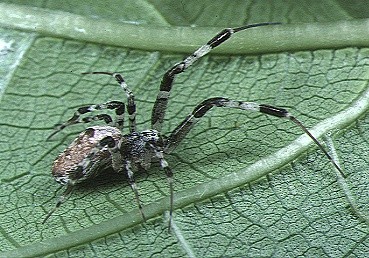
5. Banded-knees house spider
Zosis geniculata sometimes referred to as the humped spider or grey house spider, is a cosmopolitan species with a pantropical distribution. In Australia, it is often seen in buildings near human habitation.
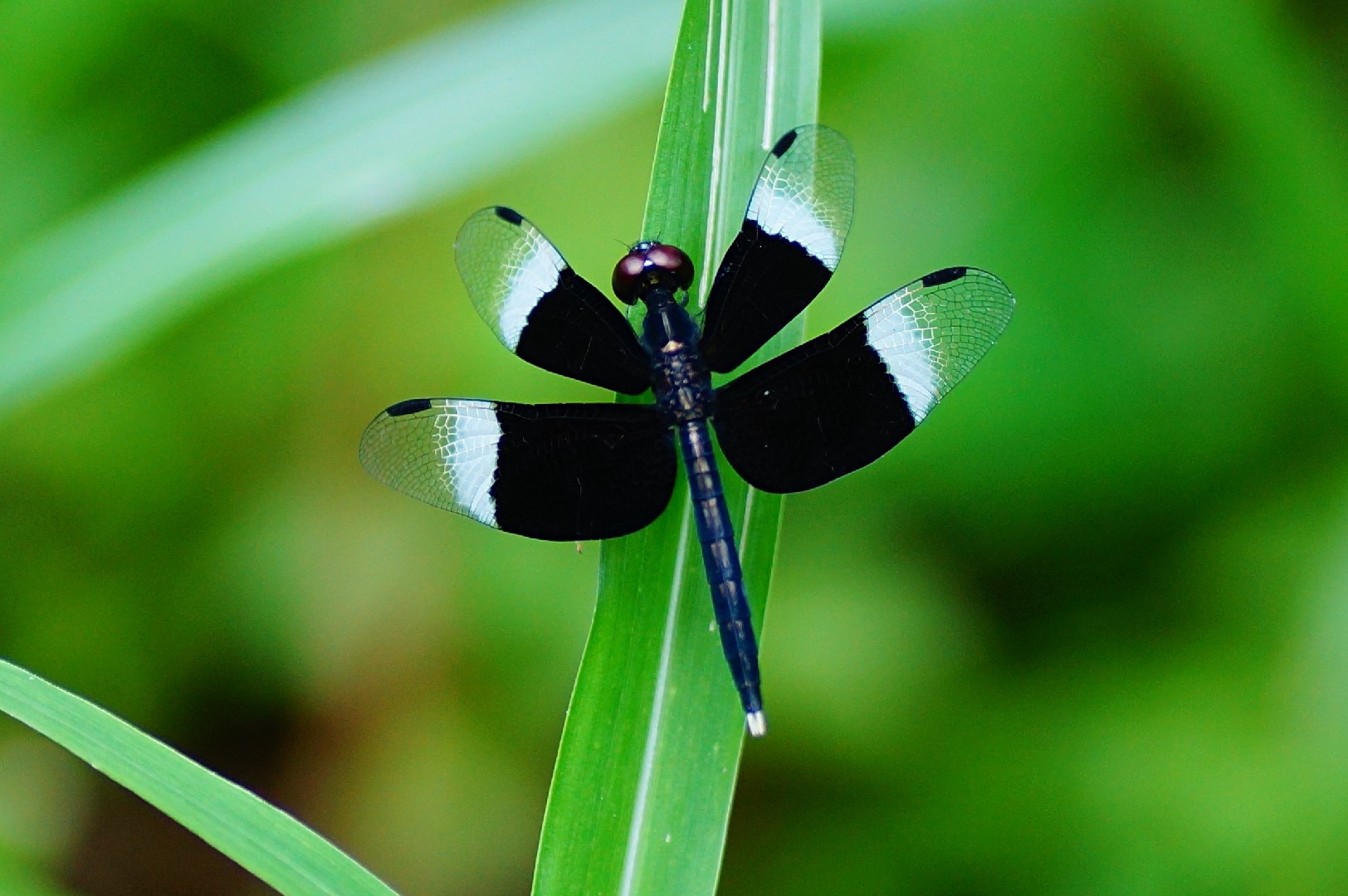
6. Pied paddy skimmer
The species is on the IUCN Red List as not endangered, year of assessment 2007.
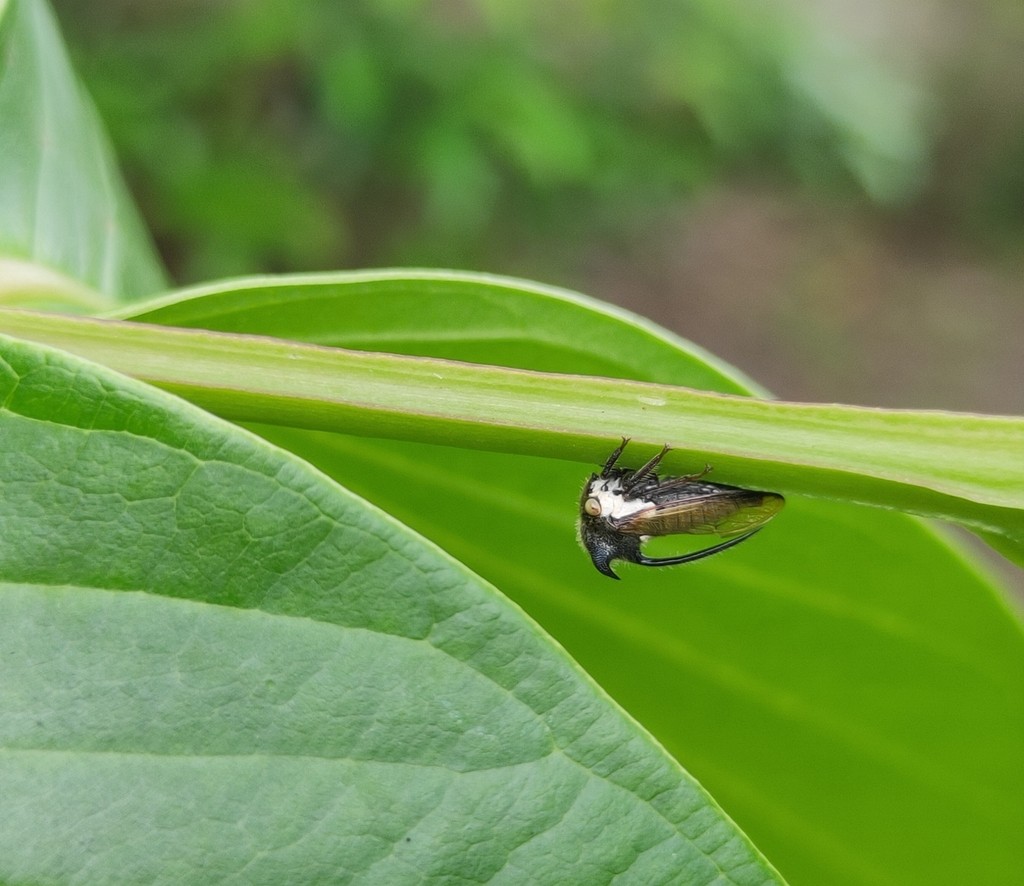
7. Eggplant horned planthopper
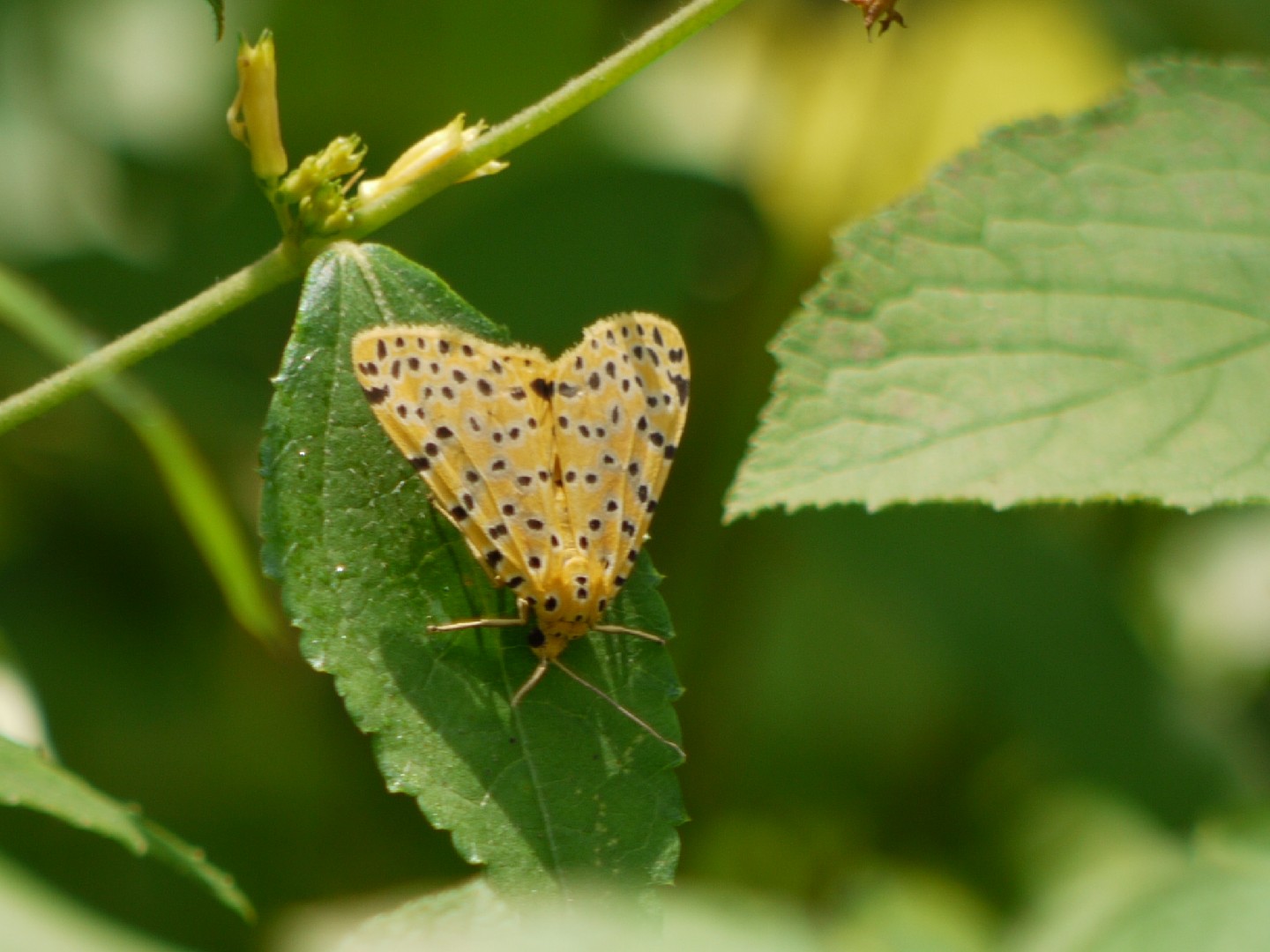
8. Crotalaria pod borer
The wingspan is about 40 mm. The species is extremely variable in wing pattern as well as ground colour. It differs from Mangina argus in the head, thorax and forewing being orange yellowish or whitish. The abdomen and hindwings are bright orange. Markings and spots are similar to its neighbor species. The head of the caterpillar is reddish brown when fully grown. Its body is black with white intersegmental rings that contain broken black transverse lines. Spiracles are in orange patches.
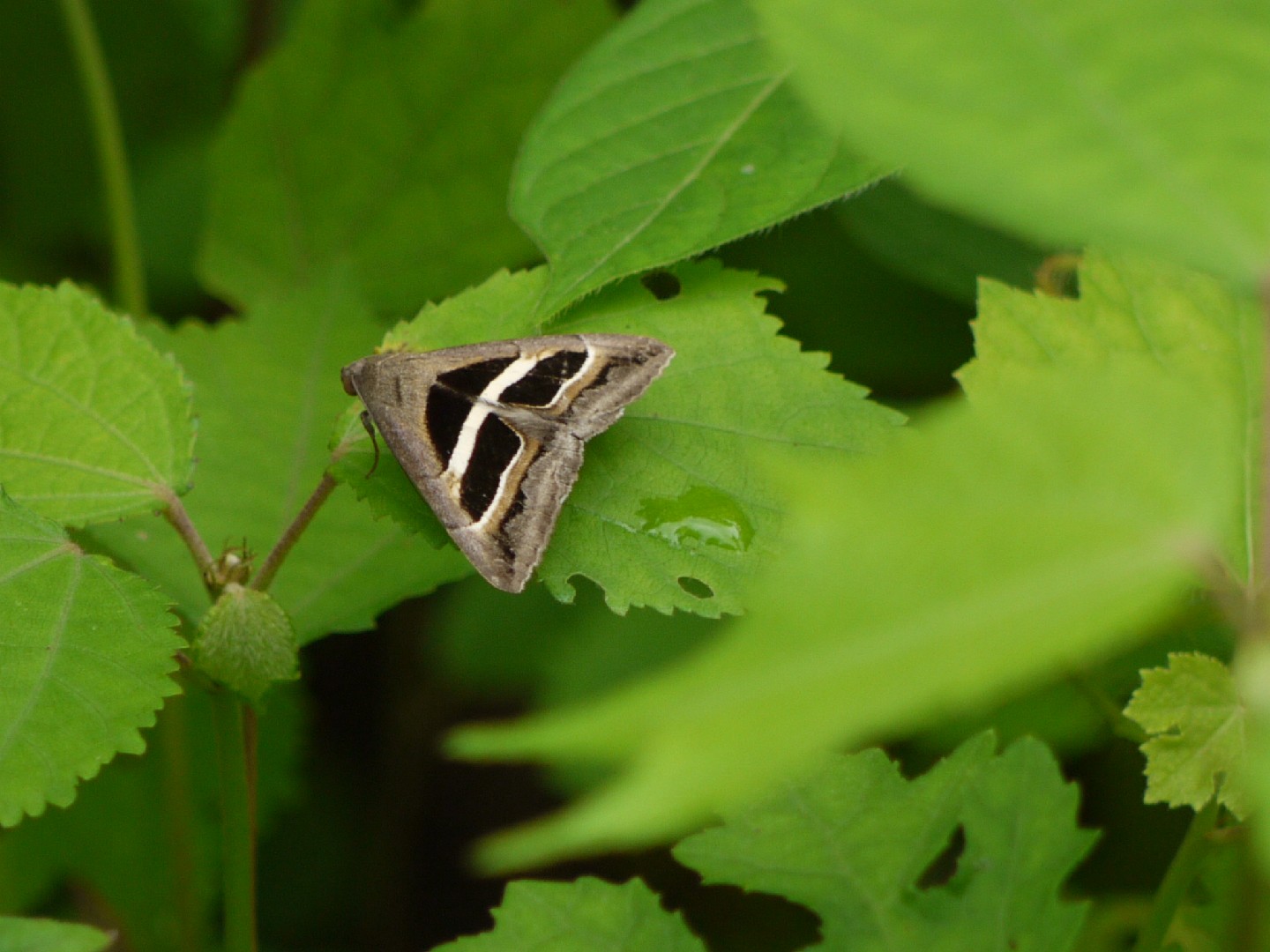
9. Grammodes geometrica
Its wingspan ranges from 26 to 45 mm. Body is greyish brown. Forewings with a large black patch occupying the whole wing except the basal, costal and outer area. Its outer edge waved ad joined by an oblique streak from the apex. Antemedial and postmedial lines curved inwards below the costa with whitish bands outside them on the black patch. The outer part of the postmedial band pale fulvous colored. Hindwings fuscous, with medial pale band. Cilia with white apex and anal angle. Larva is an elongated semi-looper. Tubercles absent. Head is pale ochreous with black spots. Body with longitudinal red lines dorsally and dorso-laterally.
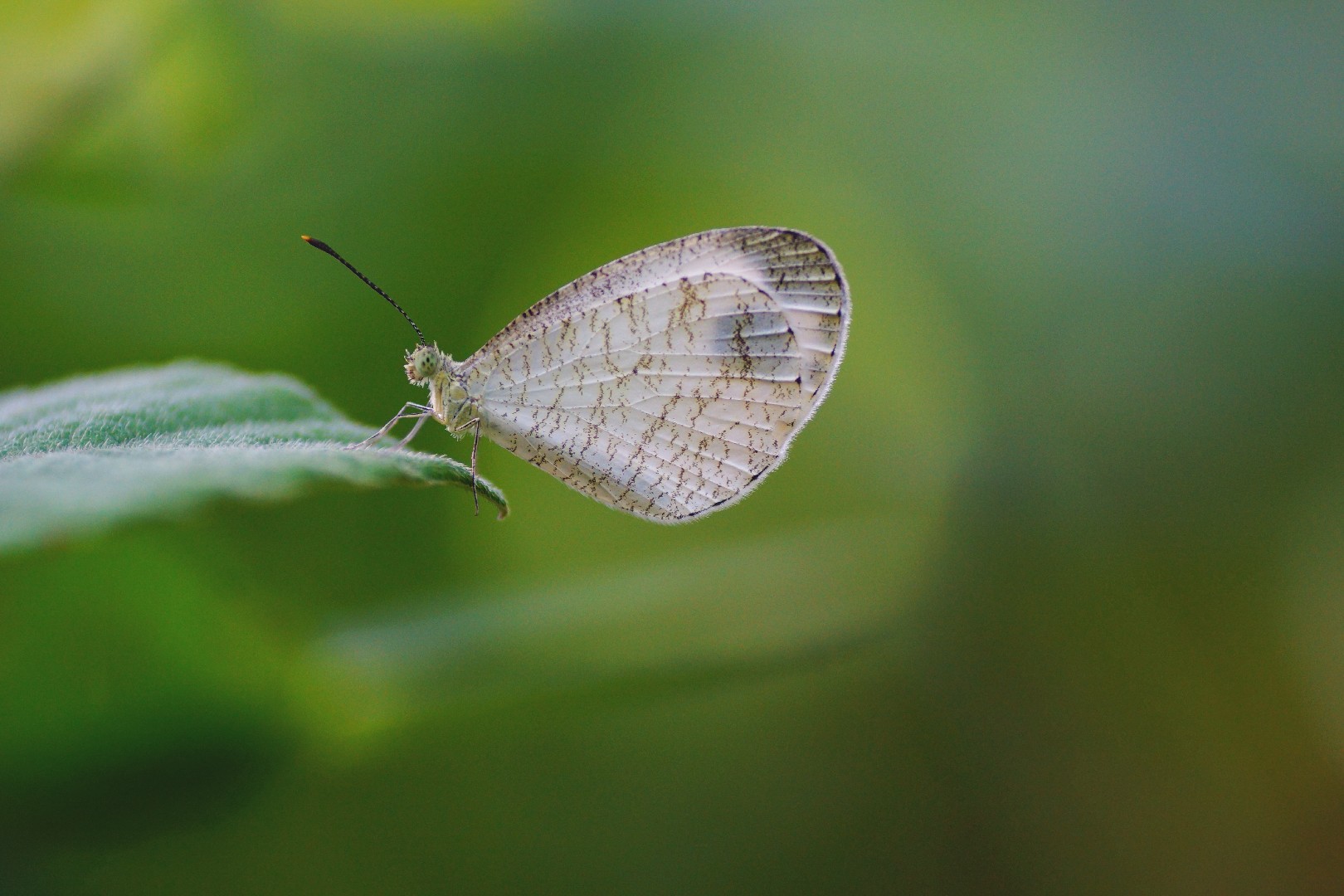
10. Psyche
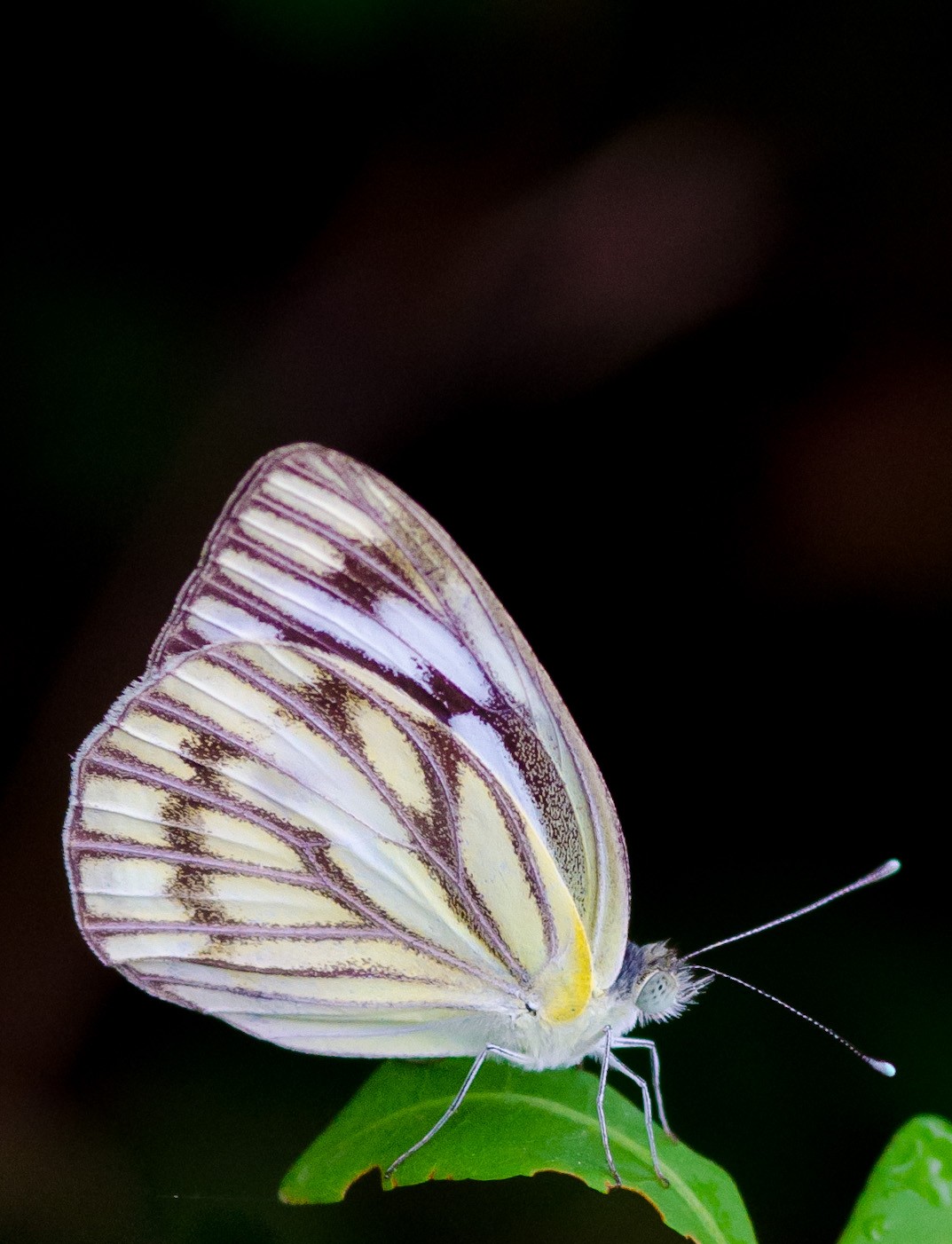
Upperside is white,base of wings are very slightly powdered with minute black scales.The costa of forewing is speckled obscurely with black; apex black, the inner margin of this inwardly angulate; a very large somewhat pear-shaped post-discal spot also black. Hindwing is white,in most specimens an obscure, extremely slender, terminal black line. Underside is white; costal margin and apex of forewing broadly, and the whole surface of the hindwing irrorated (speckled) with transverse, very slender, greenish strigae and minute dots; these on the hindwing have a tendency to form sub-basal, medial and discal obliquely transverse obscure bands; the postdiscal of forewing is black,spot as on the upperside; terminal margins of both forewings and hindwings with minute black, short, transverse slender lines at the apices of the veins, that have a tendency to coalesce and form a terminal continuous line as on the upperside. Antennae dark brown spotted with white, head slightly brownish, thorax and abdomen white. Female is similar as male, the black markings on the upperside of the forewing on the whole slightly broader, but not invariably so. Wingspan is 2.5 - 5 cm. Larva is green with a pale glaucous tinge about the bases of the legs and slightly hairy. Pupa sometimes green, but more often of a delicate pink shade.

More







