




Top 20 Most Common Insects in Jaffna
Insects, with their unique features and vital ecosystem roles, are an intrinsic part of Jaffna's diverse wildlife. Their species diversity can vary greatly, influenced by Jaffna's changing landscapes. Insects, both pests and beneficial alike, shape the ecosystems they inhabit, underpinning Jaffna's varied environments. Here, we'll explore the top 20 most common insects found across Jaffna, revealing their fascinating lives and significance.

Most Common Insects
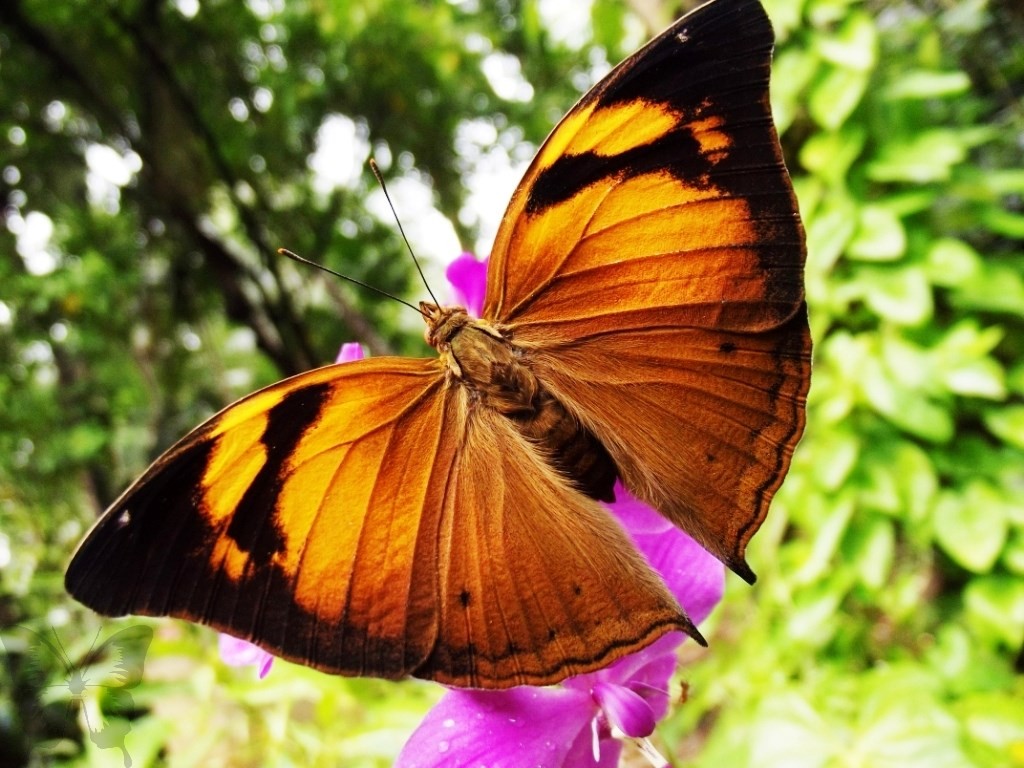
1. Autumn leaf
The larvae are black, with two rows of dorsal white spots. Head with a pair of branched spines; rest of the segments with a dorsal and a lateral row of blue branched spines on each side. The pupae are yellowish with numerous black spots; constricted in the middle; head produced into two points. Male's and female's underside yellowish brown, paling anteriorly to rich golden yellow on the forewing, shading anteriorly into dusky brown on the hindwing. Forewing: the apical half black, following a line from vein 12 opposite the discocellulars, passing through apex of cell, obliquely across middle of interspace 3 and curving down to tornus; a black spot near apex of cell coalescing with the inner margin of 1he black colour; a short, very oblique, broad golden-yellow band, broader in the female than in the male, from middle of costal margin to interspace 5; a spot beyond in line with it in interspace 4; two, sometimes three, minute, preapical white specks; the cilia fulvous (tawny), touched with white, anteriorly. Hindwing uniform; the costal margin broadly as noted above, a subterminal narrow band and narrower terminal line posteriorly, dusky black; a postdiscal black spot in interspaces 2 and 5 respectively; the cilia fulvous. The ground colour varies from reddish to dark greenish brown with irrorations (speckles) of greyish and black scales; apex of the forewing and the terminal margin posteriorly of the hindwing more or less lilacine; forewings and hindwings crossed by a dark narrow discal fascia, generally bordered on the inner side by a greyish line; this fascia bent inwards at right angles above vein 6 of the forewing and in most specimens, bordered internally by a diffuse pale patch and externally by an oblique whitish mark, beyond which is a subcostal white spot, followed by a transverse sinuous postdiscal series of obscure ocelli crossing both wings, each ocellus centred by a minute dot, white on the fore, black on the hindwing. In the male there are generally, but not invariably, a number of whitish spots on the basal areas of both wings. Antennae blackish brown, ochraceous at apex; head, thorax and abdomen dark fulvous brown; beneath, the palpi white, the thorax and abdomen pale brown. Wingspan is about 8 - 9 cm. 
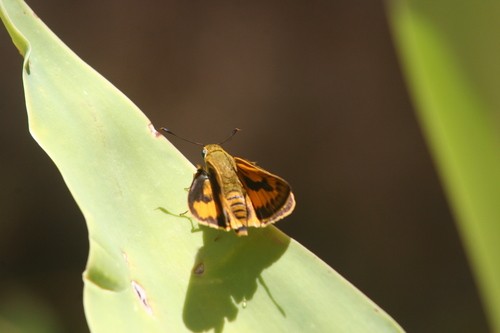
2. Yellow palm dart
The wingspan is about 4 cm.
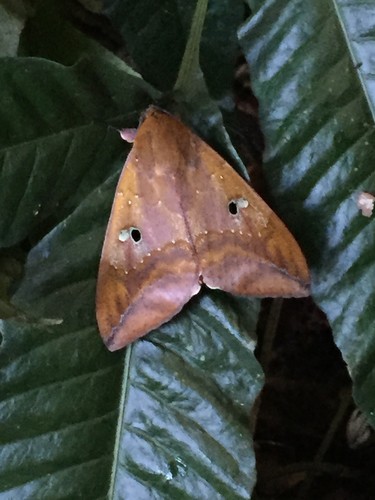
3. Thyas honesta
Its wingspan is about 84–104 mm. Head and thorax reddish chestnut in colour, where the third joint of palpi black. Abdomen crimson. Forewings reddish chestnut, slightly irrorated with dark scales. There are traces of a sinuous antemedial line with three specks on it. Reniform greyish, where the lower part more or less completely filled in with black. A curved postmedial series of white specks with an indistinct band beyond it angled at vein 6 and met by a dark streak from the apex. A marginal series of specks present. Hindwings crimson with black sub-marginal medial patch. Larva ophiusine-shaped with an apple-greenish body and finely lined longitudinally with purple-centered double white lines. The dorsolateral pair of conical tubercles are yellowish patched with red. The larvae feed on Careya, Barringtonia and Planchonia species.
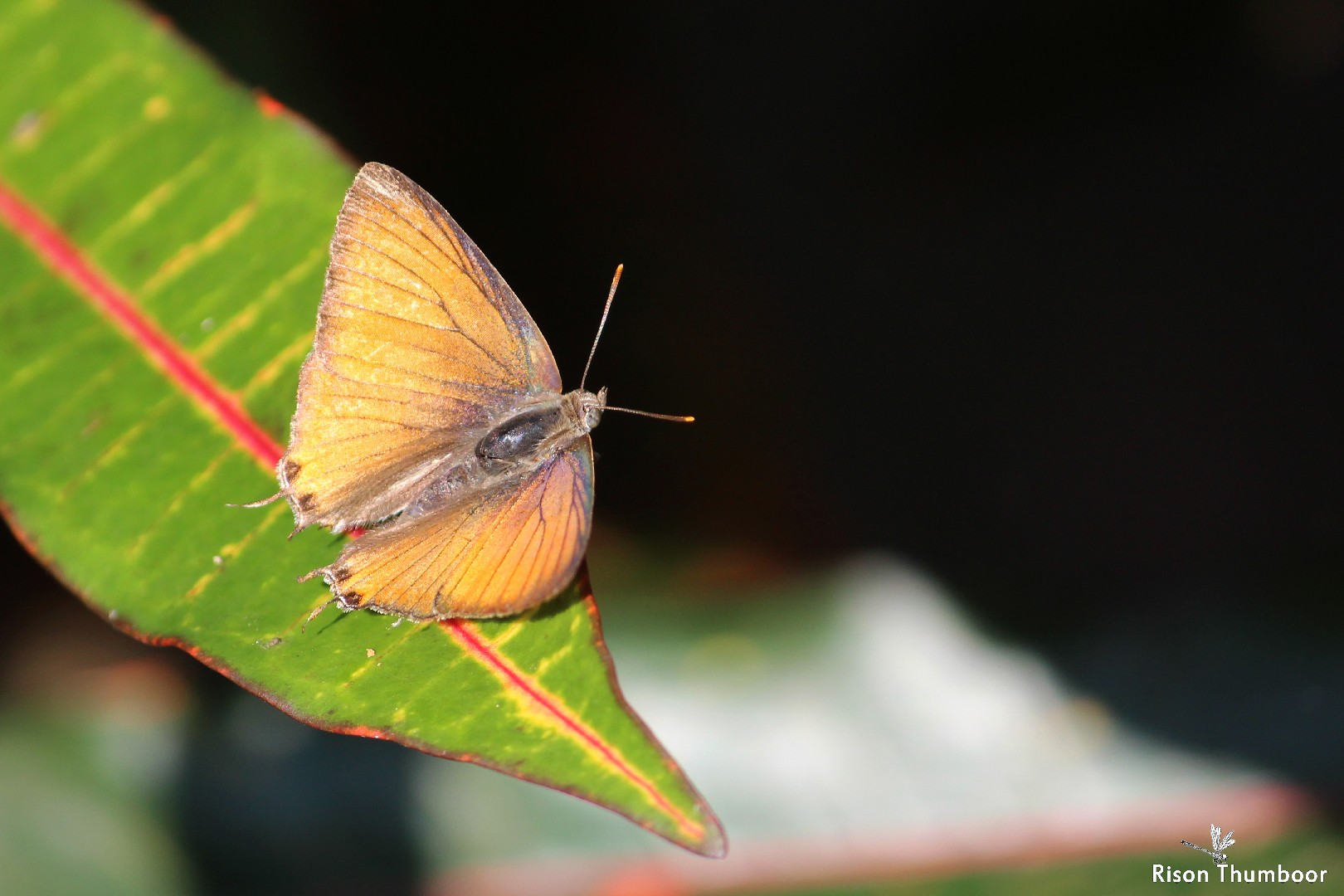
4. Redspot
Male. Upperside pale cupreous-red, veins finely blackish-brown. Forewing with the costa and outer margin with a narrow brown band of fairly even width throughout. Hindwing with the costal space and abdominal fold pale brown; outer margin more narrowly brown, narrowing hindwards, the abdominal space outside the fold suffused narrowly with brown; a sub-terminal brown spot in each of the three anal interspaces, margined by a slender greyish-blue line, often obsolescent; tails brown, tipped with white. Underside pale grey, markings pale reddish-brown, edged with dark brown and white lines. Forewing with three somewhat linear spots in the cell, increasing in size outwards, sub-basal, medial and terminal; a similar spot below the medial spot; a discal band of six conjoined spots, with a seventh disconnected, the series slightly outwardly curved and somewhat irregular, the fourth and sixth from the costa being a little outwards, some dark suffusion in the middle of the hinder marginal space. Hindwing with a sub-basal small round spot in the cell, one on the costa above it and another below it, a larger spot in the middle, with a still larger spot on the costa above it and a smaller one below it, a bar at the end of the cell, composed of two conjoined spots, the lower shifted half outwards; a discal outwardly curved series of nine spots, the first six from the costa conjoined, the second the largest, its outer lower end touching the inner upper end of the third; the fifth inwards, the sixth and seventh outwardly oblique, the latter somewhat linear and detached, the ninth represented by a short line running in on the abdominal margin and well separated from the seventh, with the eighth, a minute spot between them, a small black spot at the anal angle, another in the first interspace, both capped with orange, some blue and white scaling in the interspace between them, a white anteciliary thread from the anal angle to vein 2; cilia brown, with a white line in its middle; both wings with a sub-marginal series of small lunular marks, only faintly indicated in the forewing. Antennae black, whitish beneath, club with an orange-red tip; frons black; head and body blackish-brown above, grey beneath. Female. Upperside. Foreicing pale blue, the outer borders blackish-brown with a violet tint, narrow on the costa to the end of the cell, and also narrow on the hinder margin, the apex broadly blackish-brown, the band running down the outer margin about twice as broadly as it is on the costa; the width of all these blackish marginal bands varies somewhat in different examples. Hindwing with the blue ground colour of the wing suffused more or less over its whole extent with blackish-brown, the suffusion being darkest on the costal part; a very small anal black spot, sometimes absent, a large sub-terminal black spot in each of the next two interspaces and some smaller sub-terminal spots becoming obsolete upwards, the spot in the first interspace crowned with orange, the other with whitish; a white line inside the black terminal line; tails blackish, tipped with white; the extra tail at the end of vein 3 about half the length of the others. Underside as in the male, the ground colour paler. The host plants of the larvae include Terminalia catappa and Smilax zeylanica.
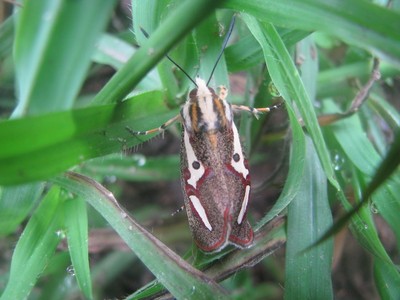
5. Red masked noctuid moth
Its wingspan is about 33 mm. Forewings of male without costal vesicles. Forewings with longitudinal white streak entire, and with an indenture on its upper edge and a small black spots near its lower edge. A red marginal line is present. Cilia of both wings white.
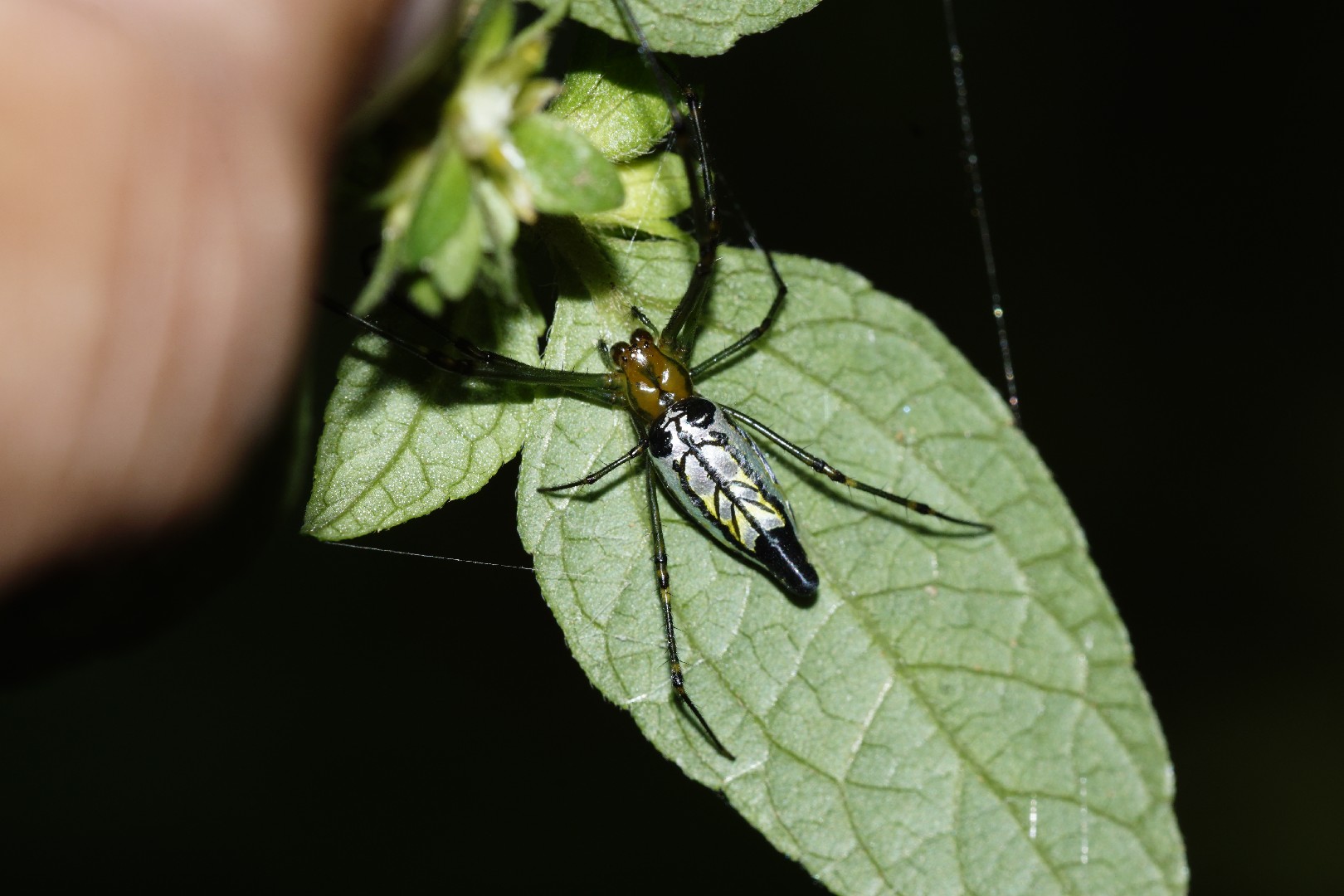
6. Decorative silver orb spider
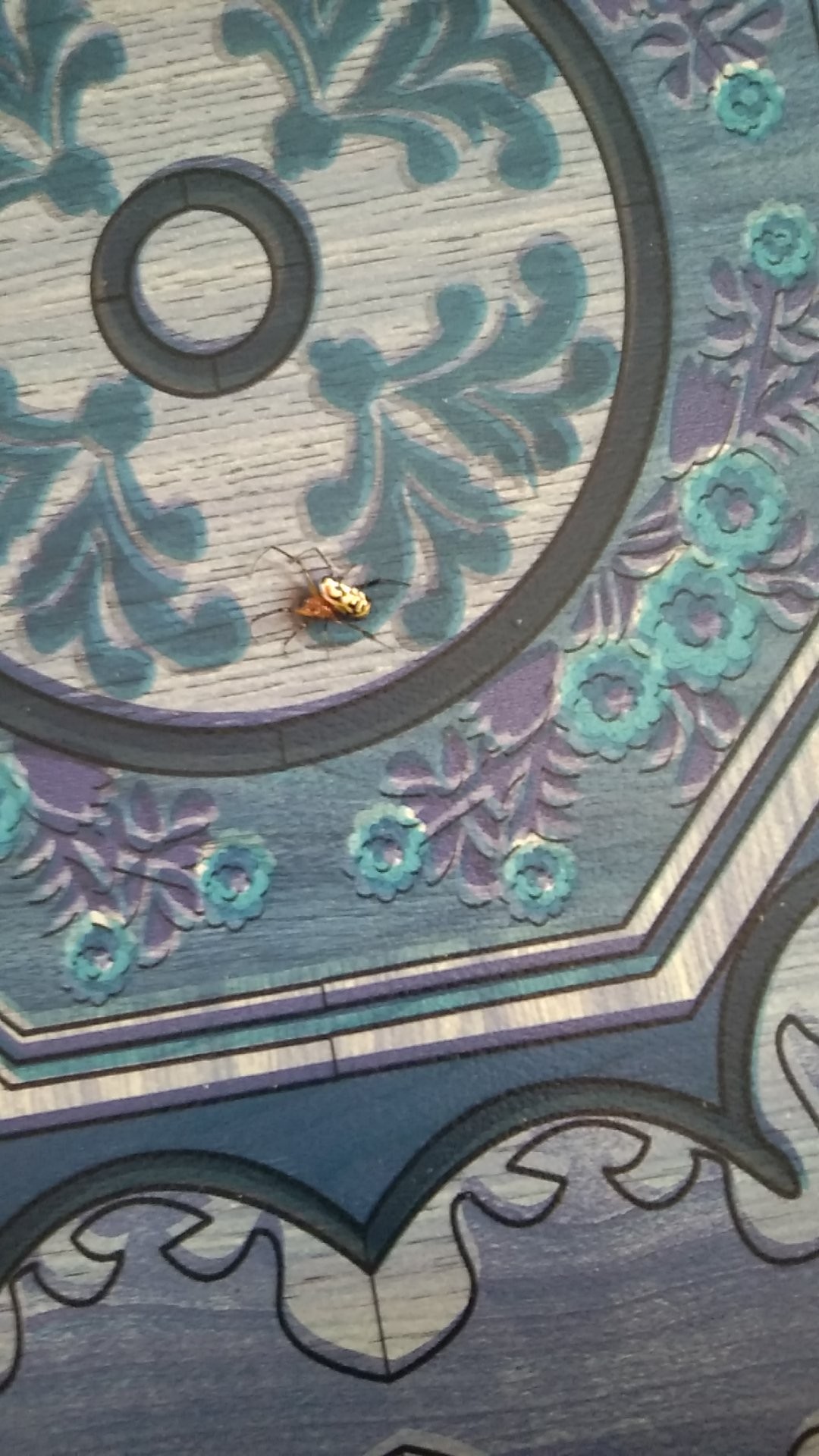
Leucauge decorata, the decorative silver orb spider, is one of the long-jawed orb weaver spiders. A medium to large sized orb weaving spider, with a body length up to 12 mm long (female). Male to 6 mm. This species has a "point" to the end of the abdomen. Found in Africa, India, south east Asia, also to Australia.
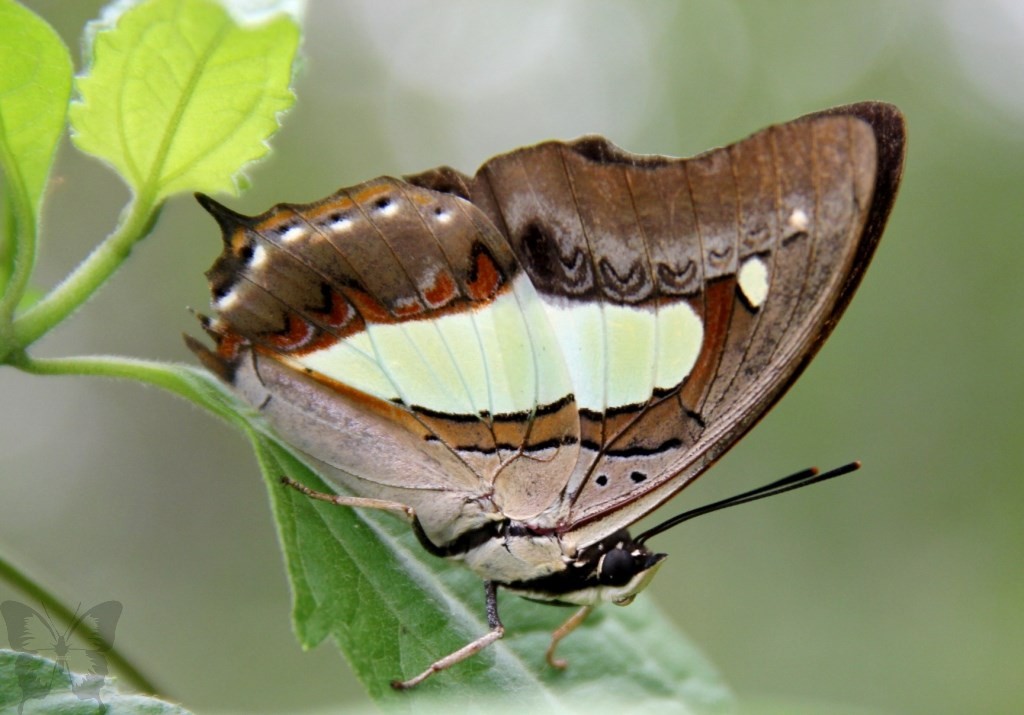
7. Common nawab
Upperside of male and female is black. Forewings and hindwings with a discal broad transverse area from below vein 4 in forewing to vein 2 on hindwing, a moderately large spot in interspace 5, a minute preapical dot beyond in interspace 6 on forewing, and a subterminal row of spots with two or three spots beyond them on the tornal angle of the hindwing, pale yellow, sometimes with an ochraceous, sometimes with a greenish tinge. The discal area on the forewing nearly as broad in interspace 3 as on the dorsum, on the hindwing narrowing to an acute point on vein 2 at two-thirds of its length from base of wing. Tails touched with bluish grey. Underside with the discal transverse area and spot in interspace 5 as on the upperside; base and costal margin of the forewing to apex, and base and dorsal margin of the hindwing broadly lilacine brown, on forewing with two small black spots near base. Bordering the transverse discal area on the inner side, where it is margined with black lines, and above, is a broad chocolate carved band, continued more narrowly along the outer side of the discal area; beyond this on the forewing is a concave series of dusky black lunules, on the hindwing the band itself is traversed by a line of obscure pale lunules; finally on the hindwing there is a subterminal series of internally white-bordered black spots followed by an obscure ochraceous terminal line, and above the tornal angle a slender transverse black line from vein 1 to the dorsal margin. Wingspan 6 - 9 cm. Caterpillar is elongated, slug-shaped, dark green; head large, wide and surmounted by four divergent curved fleshy spinous processes; anal segment with two short naked terminal points; the segments with an oblique yellowish-white lateral stripe, most prominent on the 7th, 9th and 11th segments, and beneath these a lower series of small white spots. Pupa is thick, cylindrically oval; green streaked with white; dorsum and thorax convex; head broad, truncated, obtusely pointed in front.
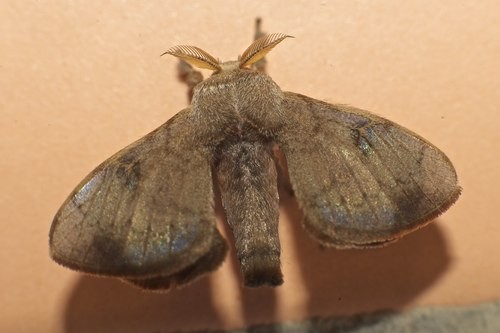
8. Greenish Silk-Moth
The Trilocha varians is an insect that spends a lot of time in the oriental region. Their color varieties can be anywhere from dark brown to dark red. You may see them feasting on a ficus, which is one of the larva's favorite meals.
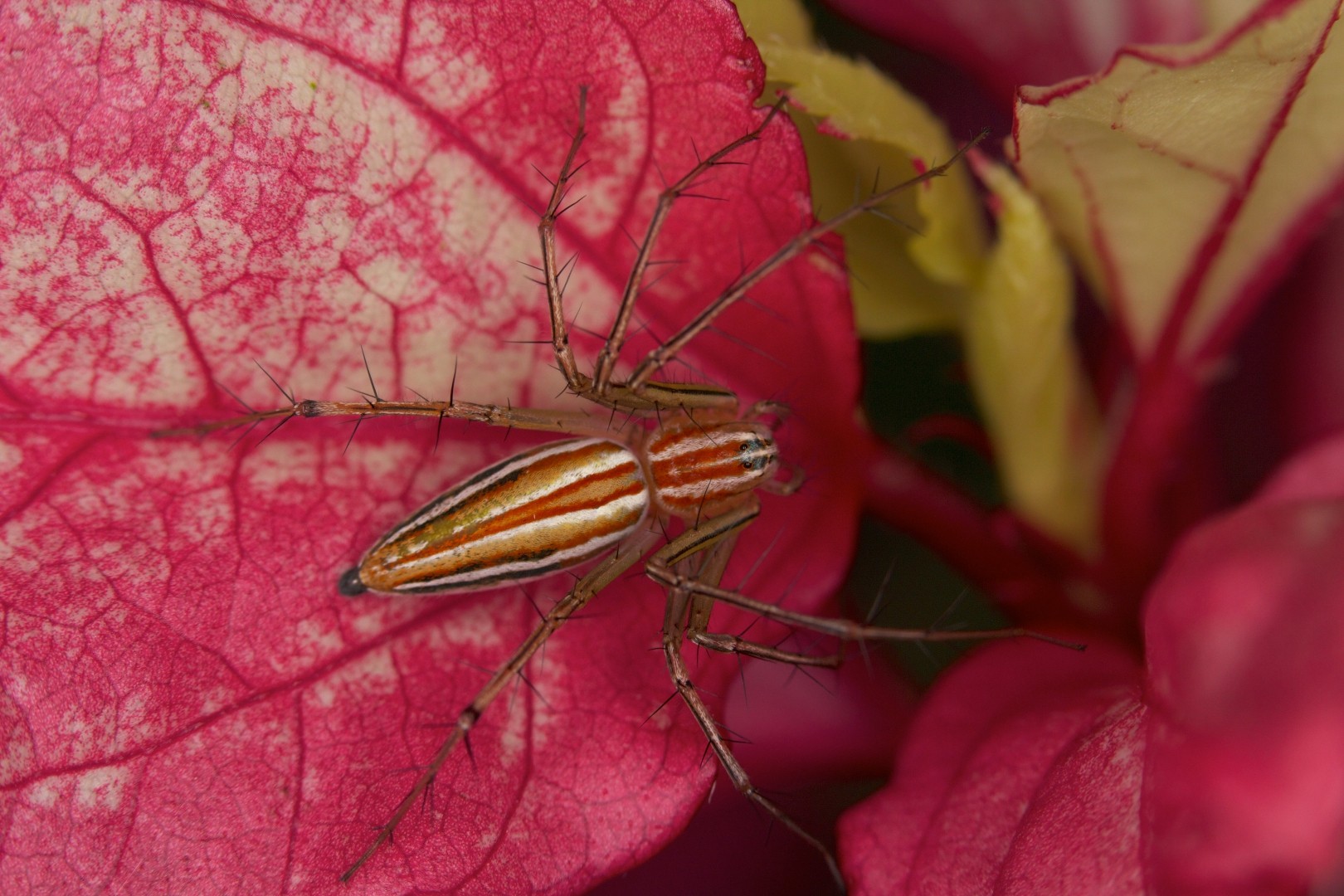
9. Lean lynx spider
Oxyopes macilentus, sometimes known as the lean lynx spider, is a species of lynx spiders from East Asia, South Asia, Southeast Asia, and northern Australia. They are active predators, hunting invertebrates (including other spiders) among vegetation. They are especially common in grassy areas and rice fields. Their bodies are characteristically long and thin, about four times as long as it is wide. Their body color ranges from pale white to yellow, orange, or green; with a pattern of black, orange, and white longitudinal lines. Females have a maximum body length of 10 mm (0.39 in), while males grow to 9 mm (0.35 in). The species was first described in 1878 by the German arachnologist Ludwig Carl Christian Koch. The specific name is from Latin macilentus ("lean" or "thin"), in reference to the spider's body. It is classified under the genus Oxyopes.
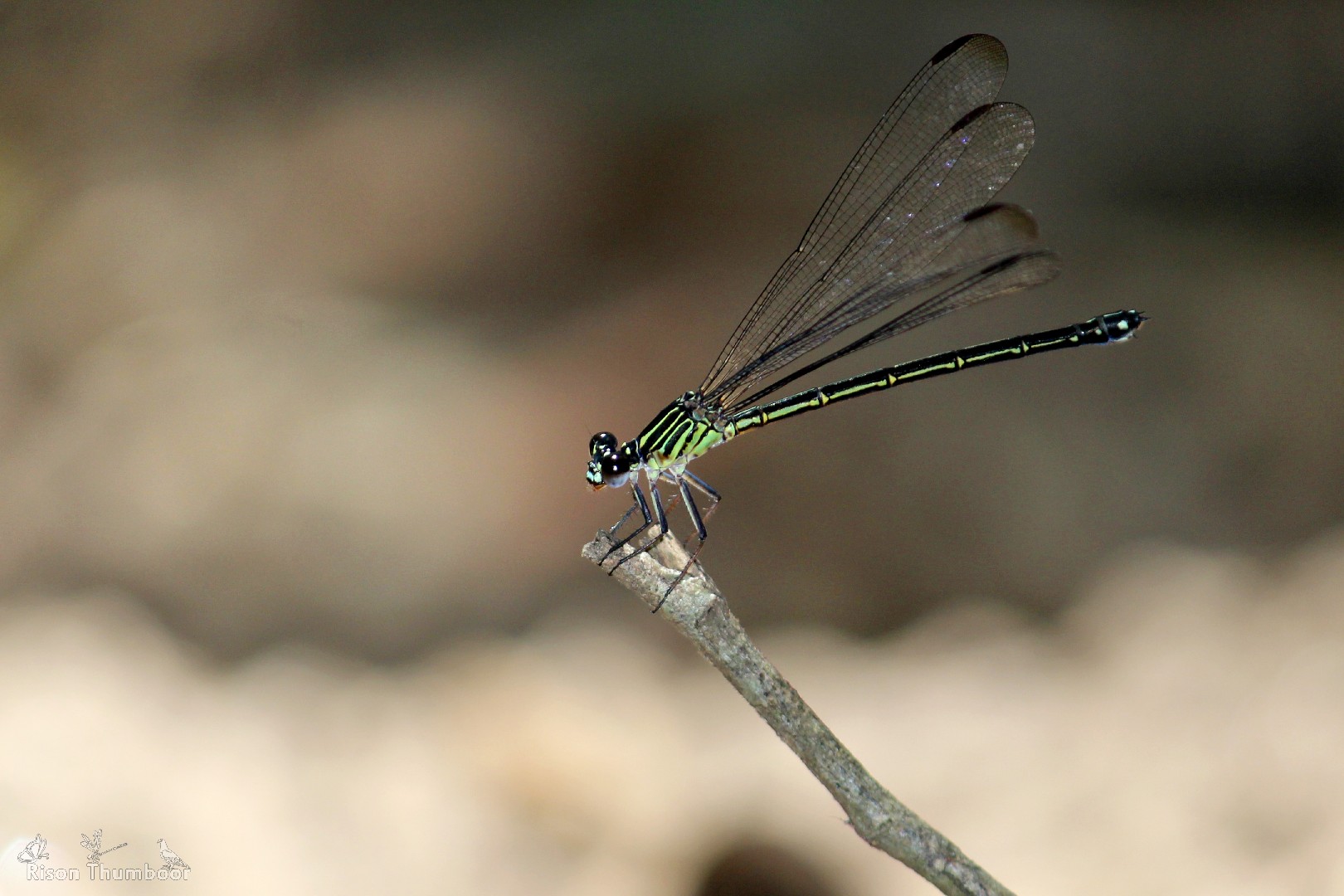
10. Malabar Torrent Dart
It is a medium sized damselfly with black head and brown-capped pale grey eyes. Its thorax is black, marked with sky-blue antehumeral and reddish-yellow humeral stripes. Lateral sides of the thorax in the base is red. Legs are red as in Euphaea cardinalis; but first pair is dark. Wings are narrower than Euphaea cardinalis; hind-wings are shorter than fore-wings. Fore-wings are transparent, merely enfumed with brown on the apices. Hind-wings are transparent; but one third of the wings from the apices are broadly black. Abdomen is bright red up to the segment 7; apical third of segment 7 to the end segment are black. Anal appendages are black. Female is short and robust; the ochreous-red of male is replaced with yellow colors. All wings are transparent, enfumed with black in adults. Abdomen is black with yellow lateral stripes up to segment 6. The yellow lateral stripes continued to segment 7. Segment 8 has a narrow and 9 has a broad yellow apical annule, covering dorsal half. They breed in hill streams but at a lower elevation. Males usually found on low herbage along the banks or middle of the streams.

More







