




Top 20 Most Common Insects in Abruzzo
Insects, known for their astounding diversity, play a crucial role within Abruzzo ecosystems. From distinctive habitats in different geographic locations, Abruzzo harbors a rich insect diversity, each contributing to food continuity, nutrient recycling, and predator control. Our list of '20 Most Common Insects in Abruzzo' reveals the unique relationship between the environment and these fascinating creatures, emphasizing their roles as pests and beneficial allies alike, in terms both accessible and engaging for everyone.

Most Common Insects
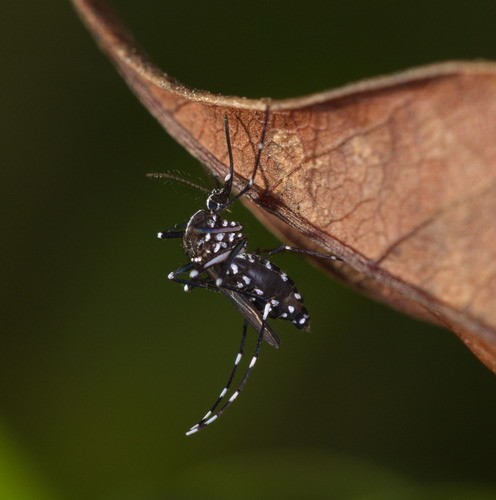
1. Asian Tiger Mosquito
The asian Tiger Mosquito (Aedes albopictus) has recently (the 1970s) infested every corner of the world through the shipment of used tired, lucky bamboo (Dracaena sanderiana), and other similar products. The asian Tiger Mosquito is known to transmit many deadly diseases that include West Nile Virus.
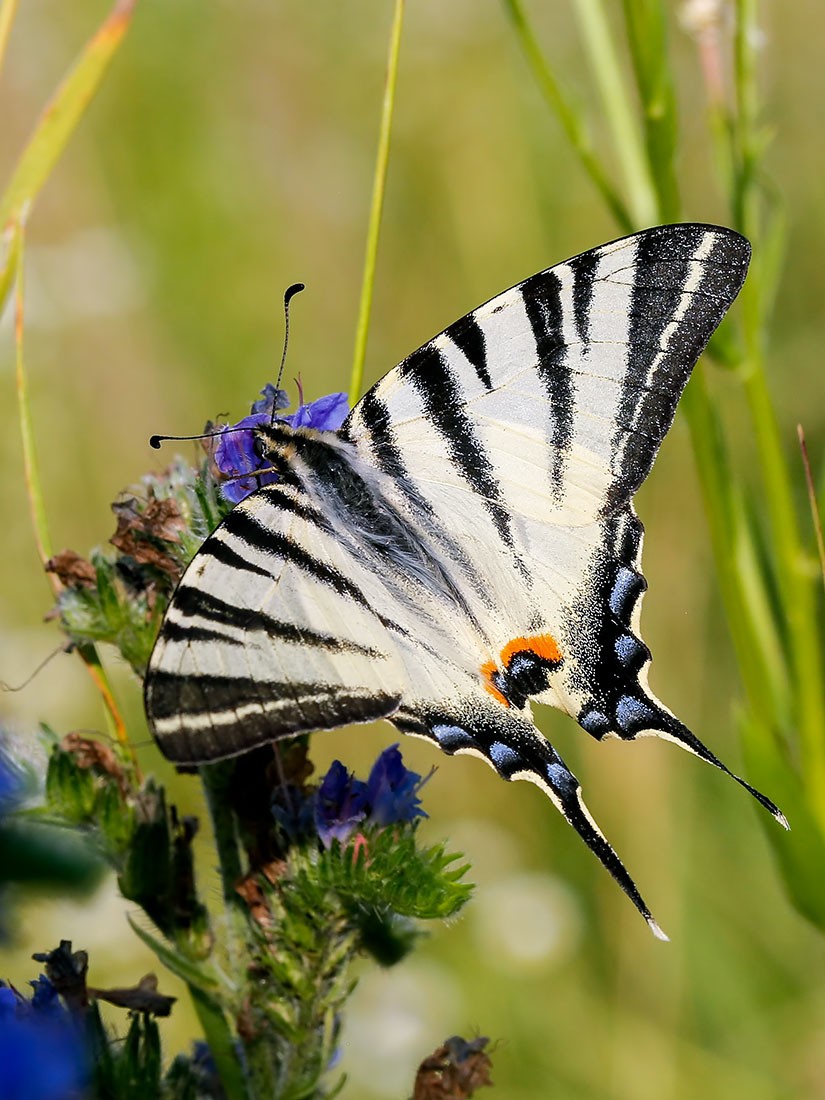
2. Scarce swallowtail
Its slow and floating flight pattern makes it easy to identify the scarce swallowtail as it soars over gardens, orchards, and scrublands. The butterfly has a large presence across Europe, the Middle East, and Asia. The adult lifespan is brief, only two or three weeks. Planting flowers like blackthorn can encourage the butterfly to visit a garden.
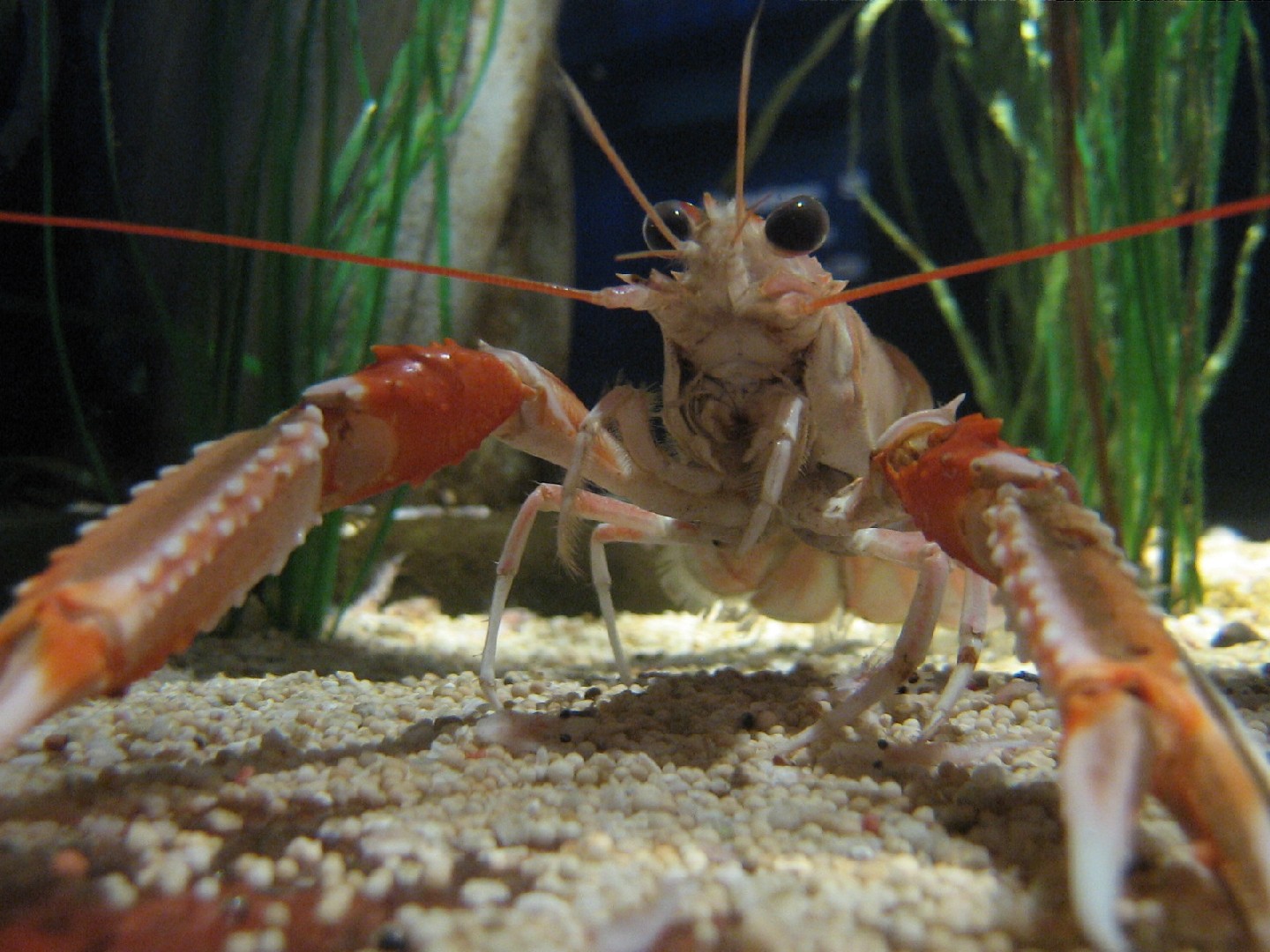
3. Dublin bay prawn
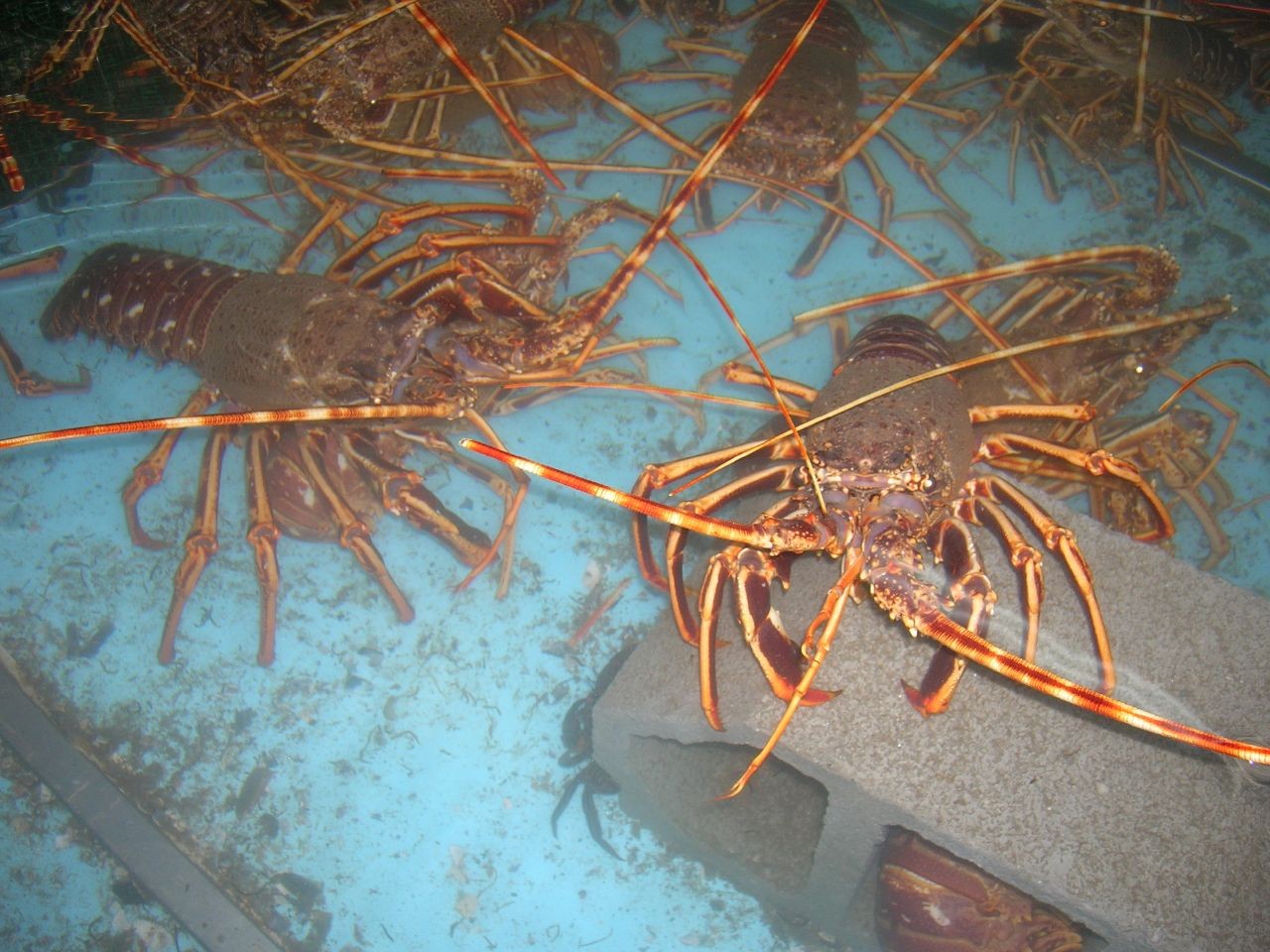
Nephrops norvegicus has the typical body shape of a lobster, albeit narrower than the large genus Homarus. It is pale orange in colour, and grows to a typical length of 18–20 centimetres (7–8 in), or exceptionally 25 cm (10 in) long, including the tail and claws. A carapace covers the animal's cephalothorax, while the abdomen is long and segmented, ending in a broad tail fan. The first three pairs of legs bear claws, of which the first are greatly elongated and bear ridges of spines. Of the two pairs of antennae, the second is the longer and thinner. There is a long, spinous rostrum, and the compound eyes are kidney-shaped, providing the name of the genus, from the Greek roots νεφρός (nephros, "kidney") and ops ("eye"). 
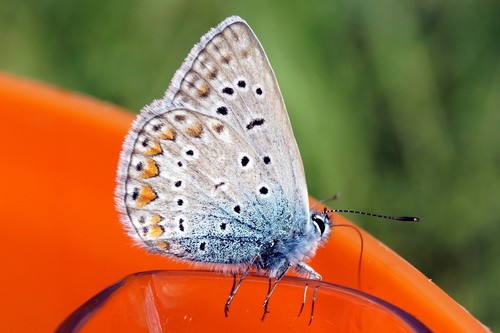
4. Common blue butterfly
Despite its common name, only male specimens of common blue butterfly (Polyommatus icarus) can accurately be described as blue; the females are predominately gray-brown, with only a dusting of blue and a scattering of orange spots. The adults live for only three weeks before dying.
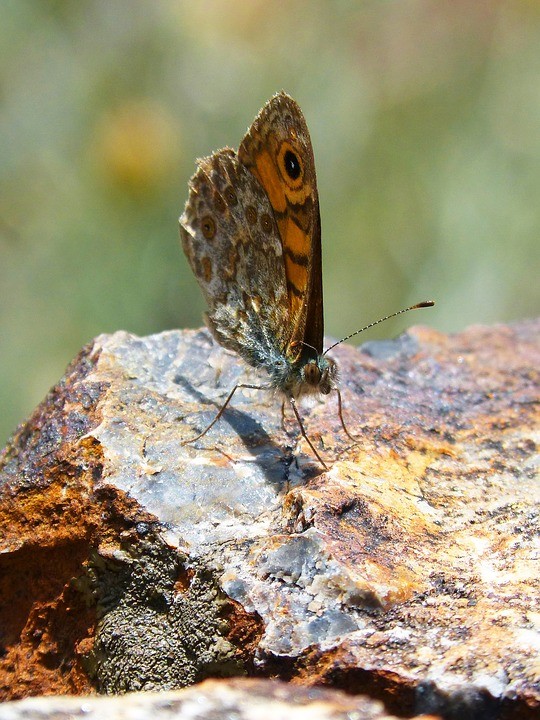
5. Wall brown
P. megera L. [— xiphie Boisd. pt (45d). Above reddish yellow, with a black mark which traverses the distal band from the cell of the forewing to the abdominal margin of the hindwing, short black stripes crossing the disc and the cell of the forewing.
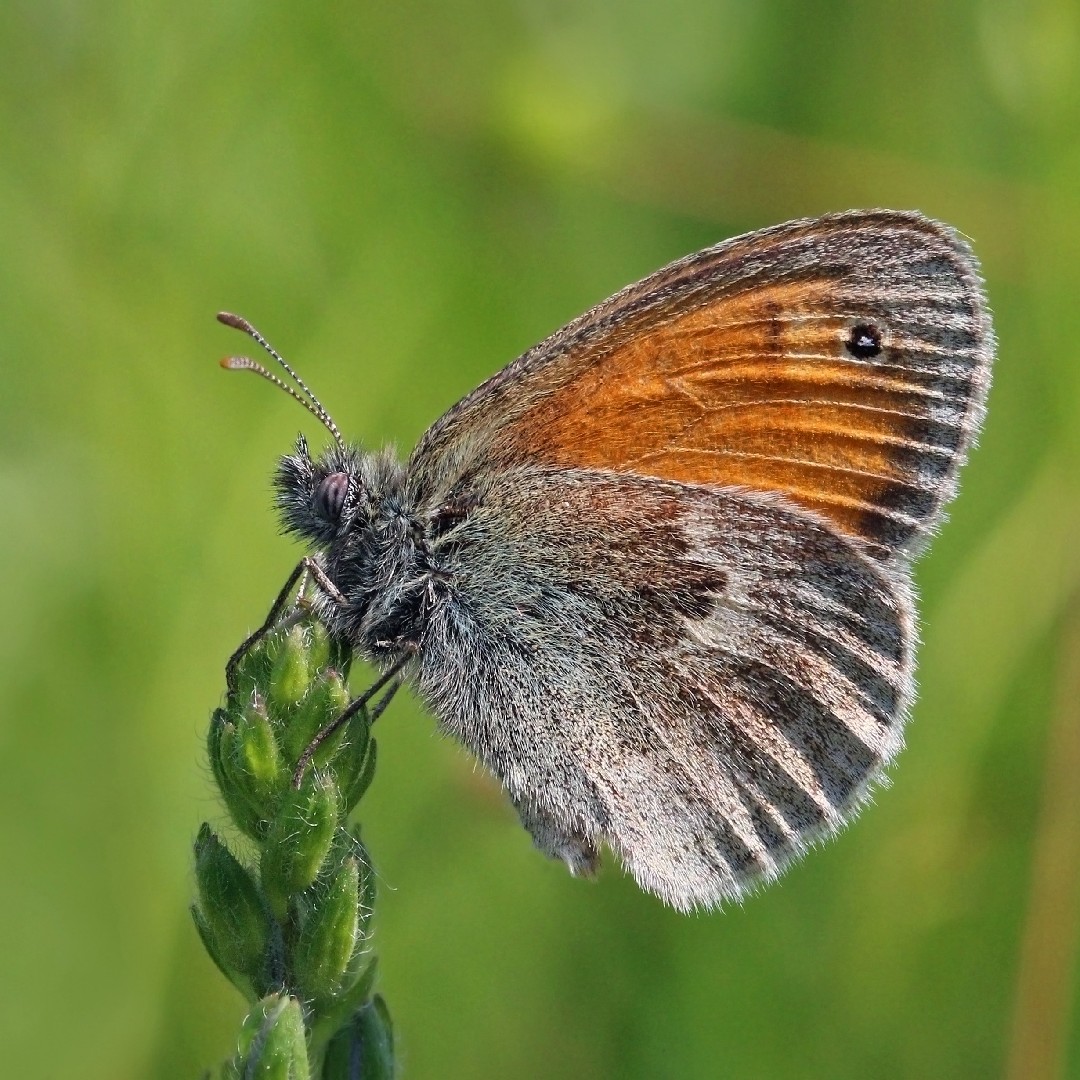
6. Small heath
It rests with closed wings when not in flight.
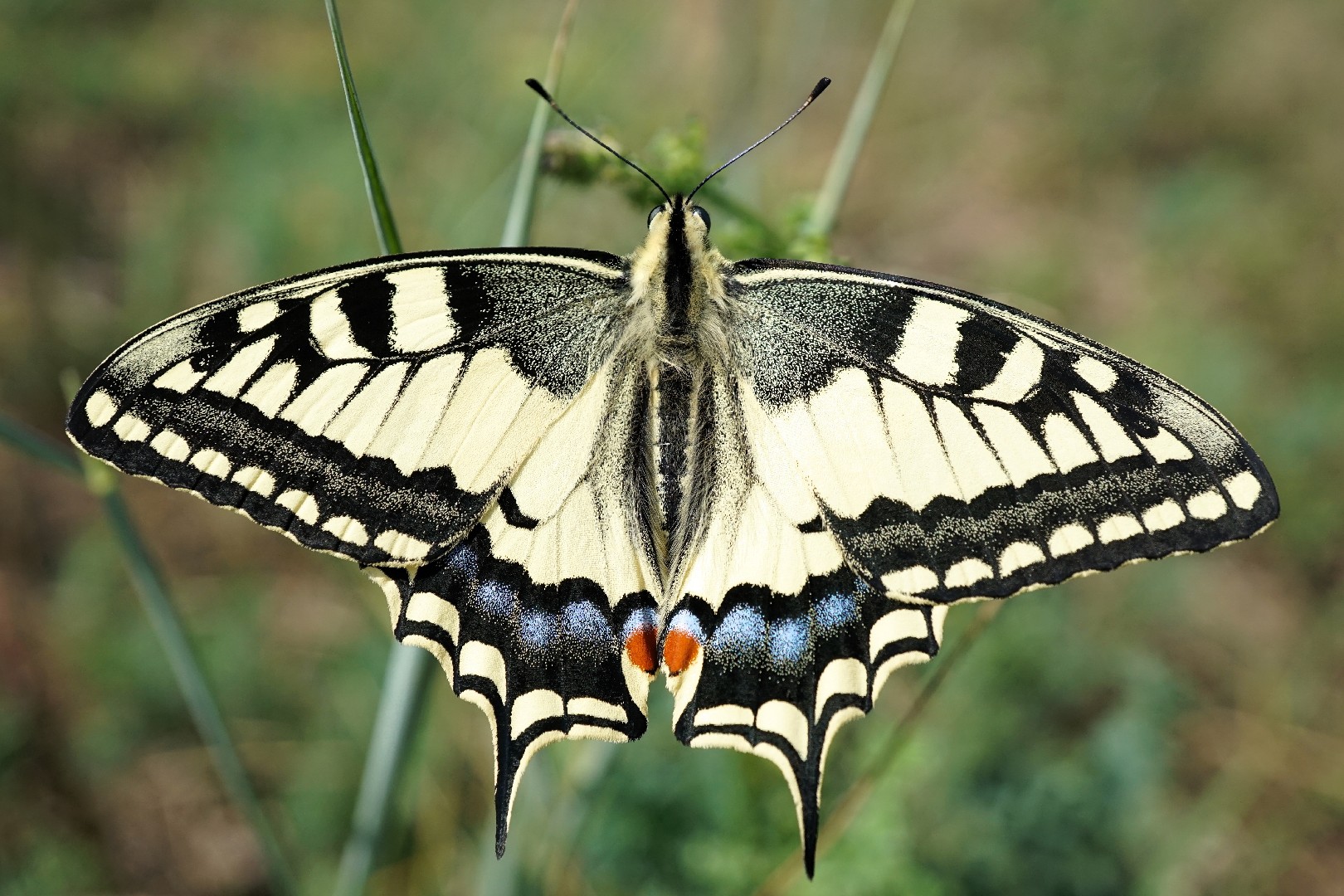
7. Old World swallowtail
The old World swallowtail (Papilio machaon) is commonly just called the "swallowtail," giving it the added title of "old world" to distinguish it and remind us that it comes from the "old world" (Asia, Africa, Europe). The upper side of them is a beautiful combination of pure white with black striping, the underside being a brownish version of the same thing. There is blue and two red dots on its back side.
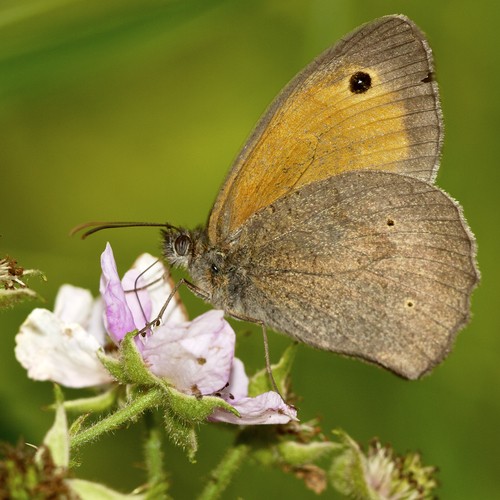
8. Meadow brown
The meadow brown (Maniola jurtina) is similar to the Gatekeeper in the way that it rests with its wings open due to the "eye spots" on either end of its wings that ward off predators. While the color is a deep brown, the caterpillar form is a beautiful bright green with little, white hairs and a dark line leading down its back.
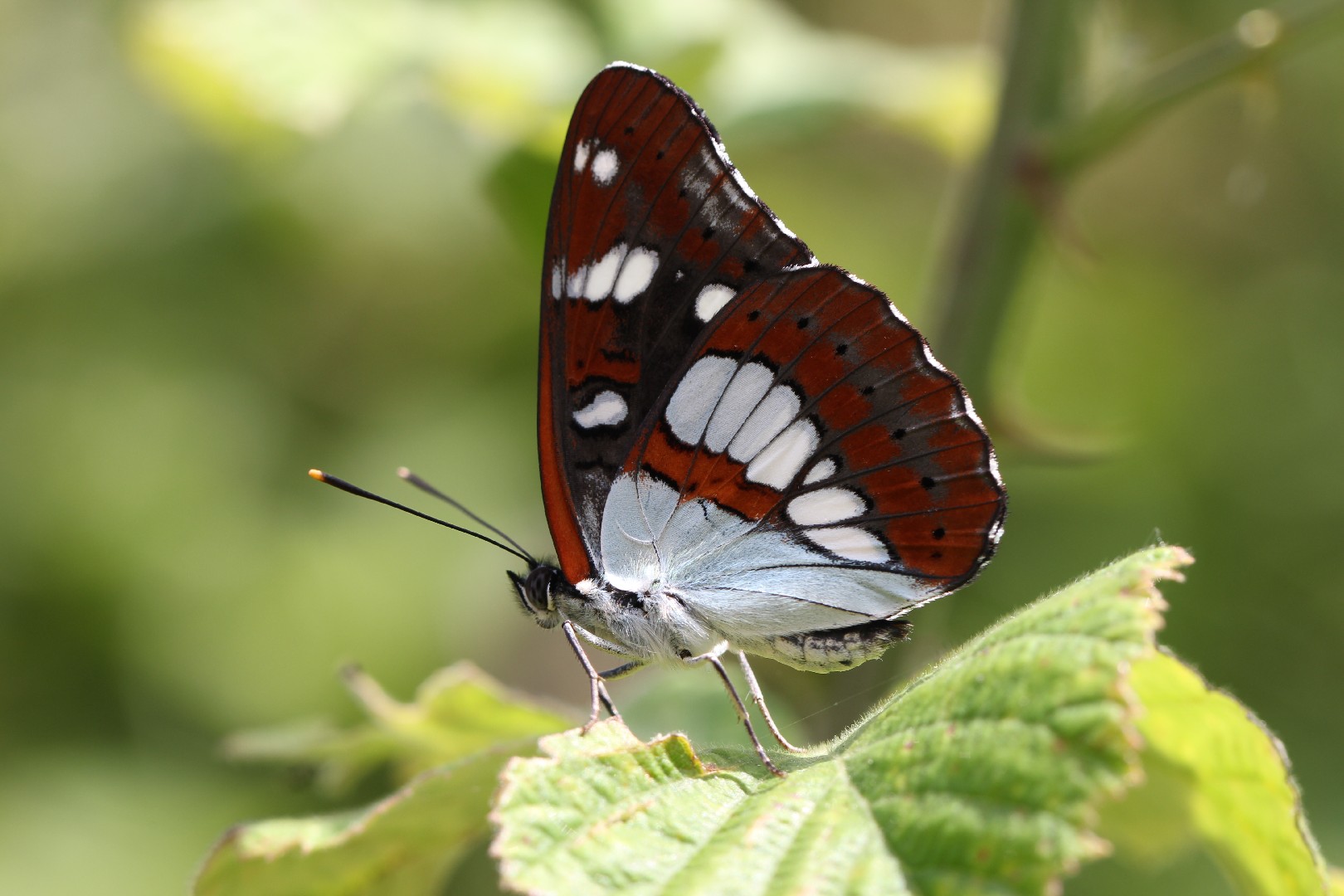
9. Southern white admiral
Limenitis reducta has a wingspan of 46–54 mm. The upperside of the wings is brown black with metallic blue shine, large transversal band of white markings and a submarginal line of small blue dots. The blue sheen varies with the angle of light. The ground colour of underside of the hindwings is red, with a silvery basal area, a row of white markings and a row of black spots. A few white cell spots are also present on the underside of the forewings. The caterpillars can reach a length of 1.1 in. They are light green to dull green on the back, red brown on the underside. On the back there are numerous brown thorns.
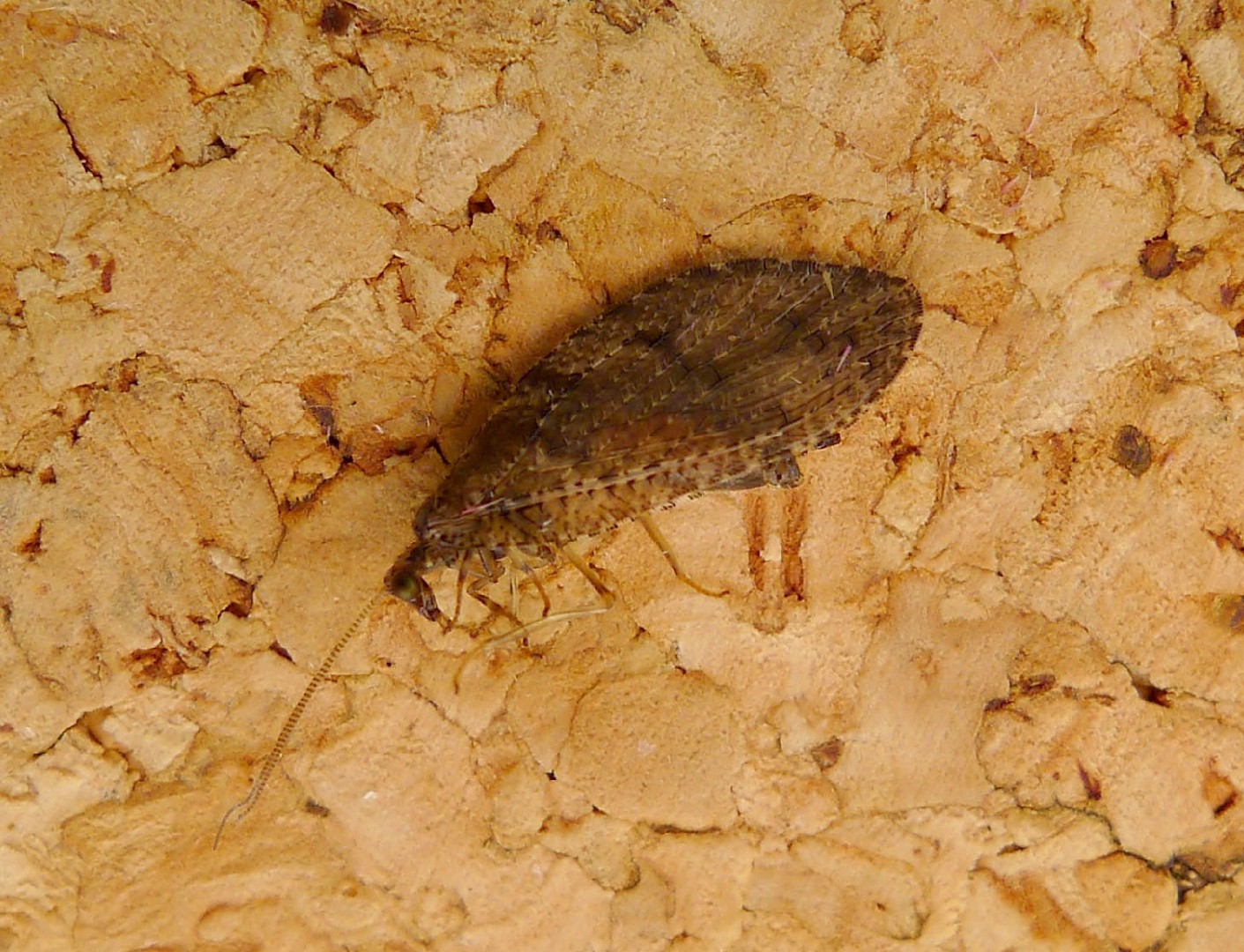
10. Hydropsyche pellucidula
More







