




Top 20 Most Common Insects in Milan
Insects, characterized by their segmented bodies and jointed limbs, populate diverse habitats across Milan, their diversity directly influenced by the geographical variations in the region. Their role as both pollinators and pests contributes significantly to our ecosystem. Our list of '20 most common insects in Milan' explores the intricate relationship these creatures share with their surroundings, and their unique roles that influence our daily lives.

Most Common Insects

1. Multicolored asian ladybeetle
Often confused for the ladybug, multicolored asian ladybeetle (Harmonia axyridis) is a separate species that, unlike the ladybug, is a household pest. It is considered particularly annoying for its habit of returning to places from which it is removed. One of the most variable species in the world, there are many different colors and patterns multicolored asian ladybeetle may display, making identification potentially difficult.
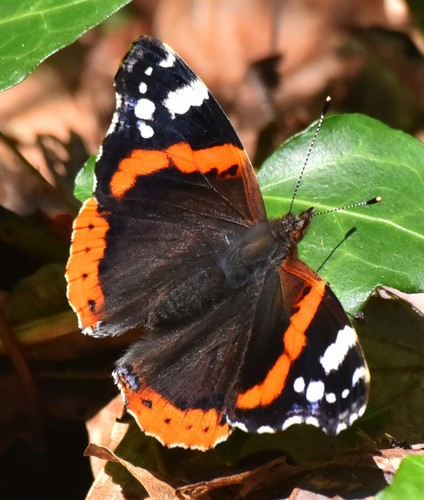
2. Red admiral
Red admiral (Vanessa atalanta) is a visually striking species of butterfly. Unusually territorial, males will compete for choice areas, and females will only mate with males that maintain their own territories. This butterfly is known for being particularly patient with human interactions, even to the point of perching on clothing or flesh.
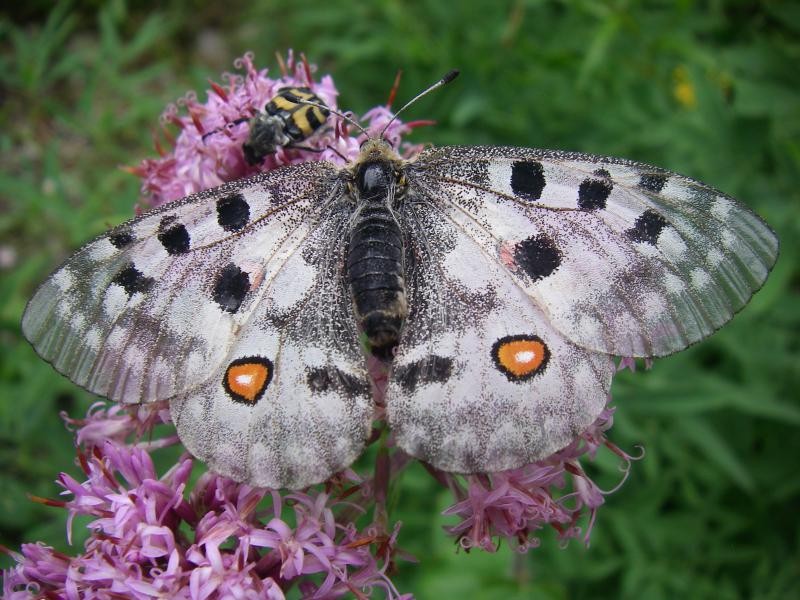
3. Apollo
Parnassius apollo has a wingspan of 6 - 9 cm in males, of 7 - 9 cm in females. The apollo butterfly shows a great deal of individual variation in the appearance, with an evident colour polymorphism. These very very large, beautiful and conspicuous white butterflies are decorated with five large black eyespots on the forewing and two bright red or sometimes orange eyespots on the hindwing. These striking red eyespots can vary in size and form depending on the location of the apollo butterfly, and the bright red colour often fades in the sun, causing the eyespots of older individuals to appear more orange. The wings are shiny, with slightly transparent edges, and some individuals are darker (sphragismelanistic); a general phenomenon common in many butterflies. The caterpillars of this species are velvety black with orange-red spots along the sides. 
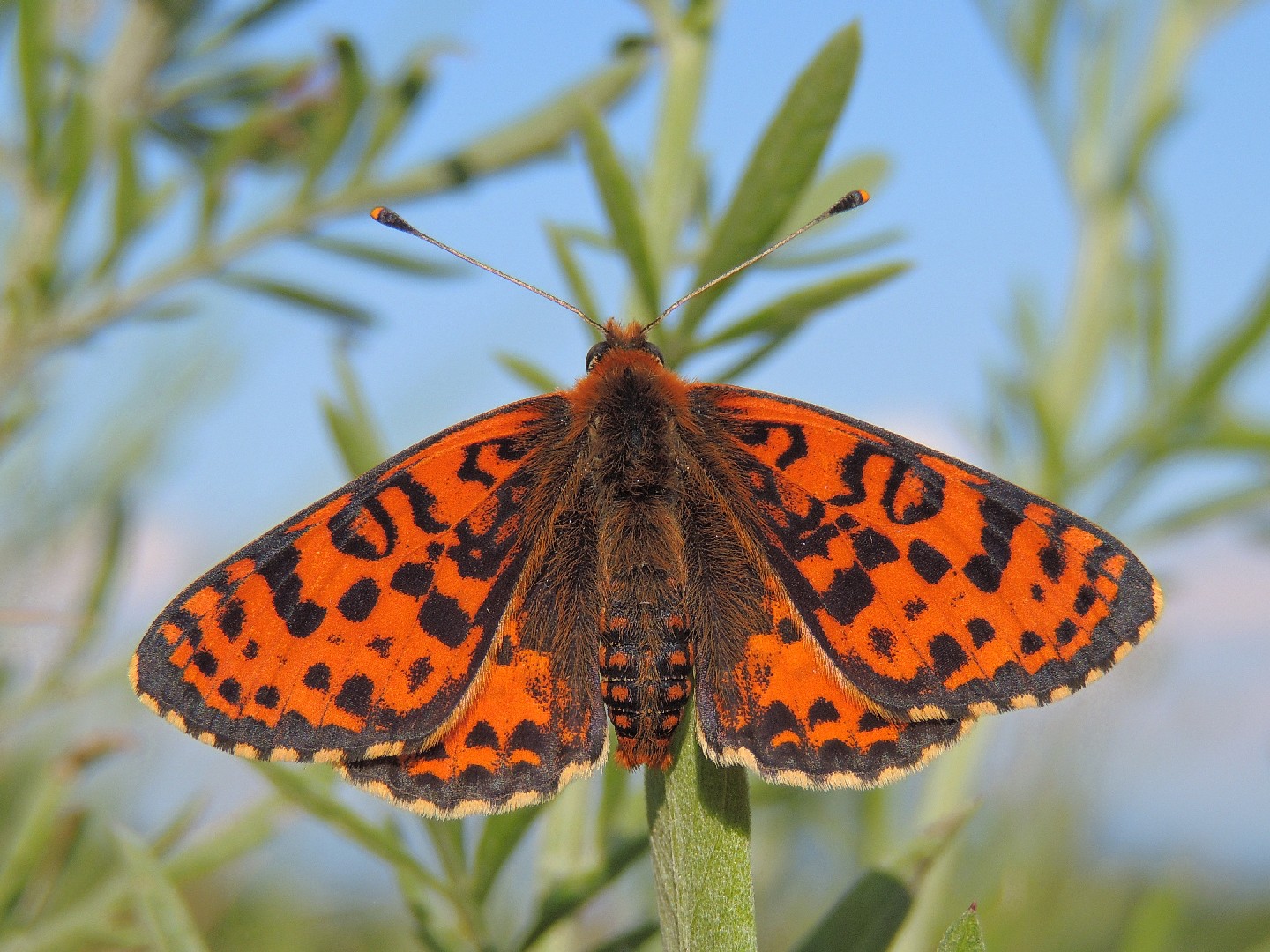
4. Spotted fritillary
Melitaea didyma is a medium-sized butterfly with a wingspan reaching 3.5 - 5 cm. The overside of the wings is a bright orange-brown with dark brown markings arranged in rows, which are quite variable in quantity and size. Sometimes the colour of the females is a duller orange, shaded with grey-green. The underside of the wings is chequered pale yellow and pale orange. Melitaea didyma has seasonal forms and sexual dimorphism.
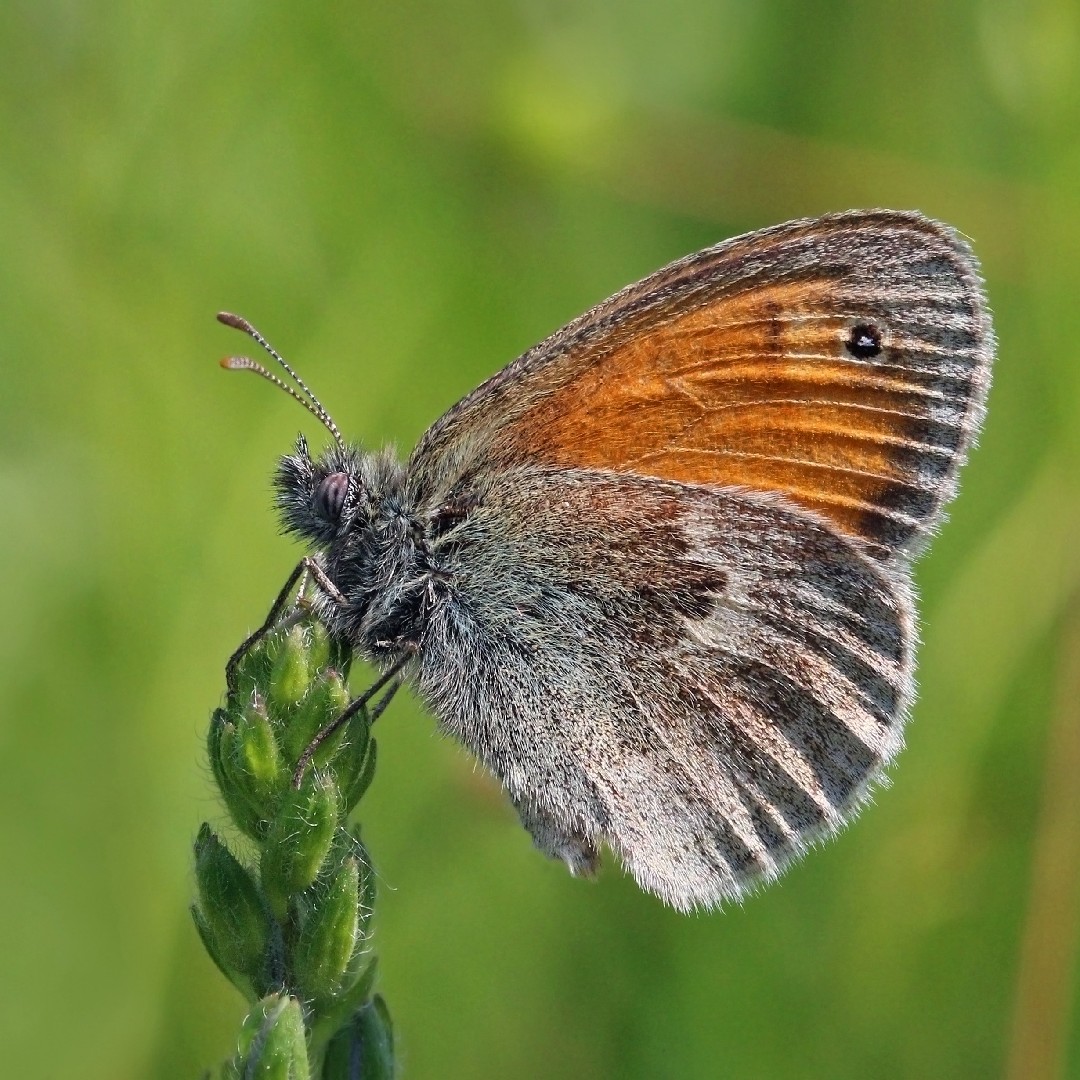
5. Small heath
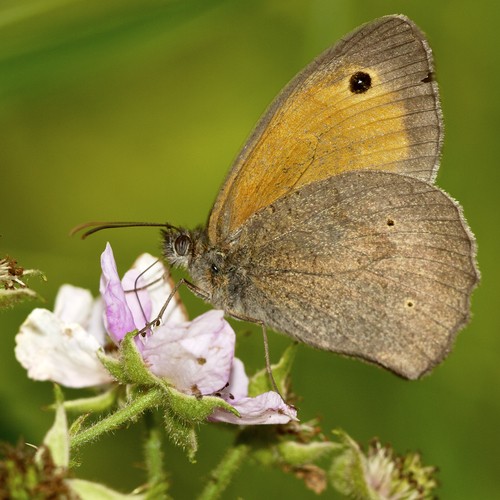
It rests with closed wings when not in flight.
6. Common blue butterfly
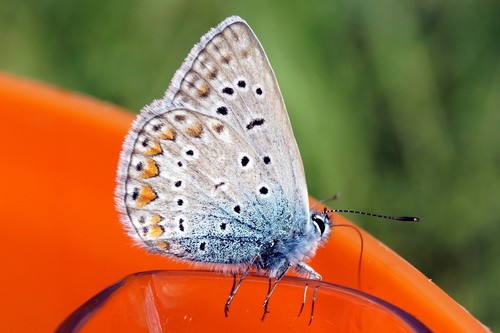
Despite its common name, only male specimens of common blue butterfly (Polyommatus icarus) can accurately be described as blue; the females are predominately gray-brown, with only a dusting of blue and a scattering of orange spots. The adults live for only three weeks before dying.
7. Black-tailed skimmer
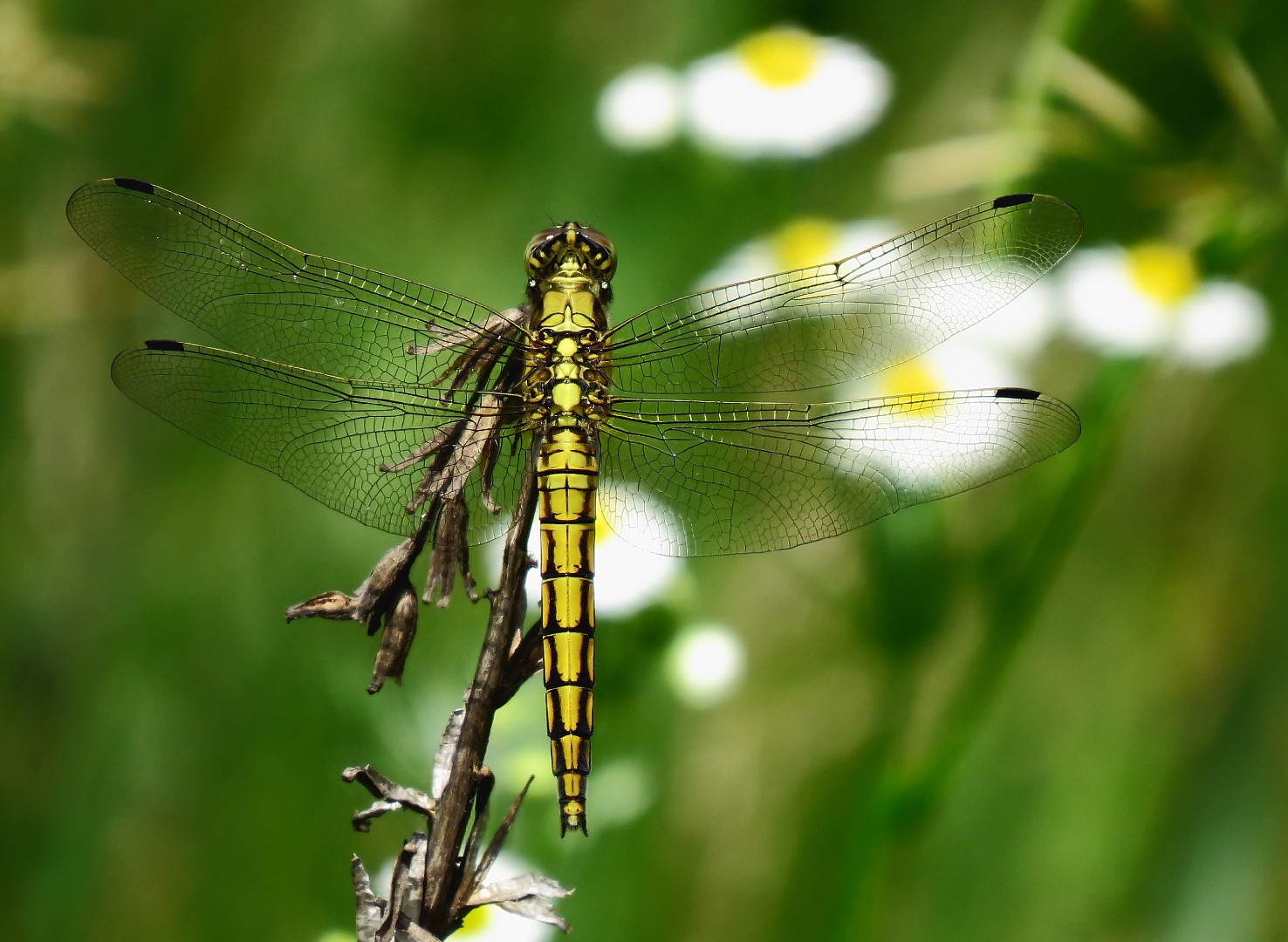
It is a fairly large dragonfly (the length of 4.5 - 5 cm, 3 - 3.5 cm abdomen, rear wing 3.5 - 4 cm.) with relatively broad, flattened abdomen, but not as broad as to chaser species. With age, adult males develop extensive blue pruinescence on their abdomen, offset by yellow lateral patches. The middle lobe of the pronotum is large and notched in the middle. The chest is yellow or yellowish-brown. The base of the hind wings do not show a dark opaque spots. The pterostigma is dark brown or black. On the front wings pterostigma 2 - 3 mm long. Anal appendages are black. The females and immature males are a deep yellow color, with wavy black lines dorsally on their abdomen. Males and females have the costal vein (the leading edge of the wing) yellow or black.
8. Blue-tailed damselfly
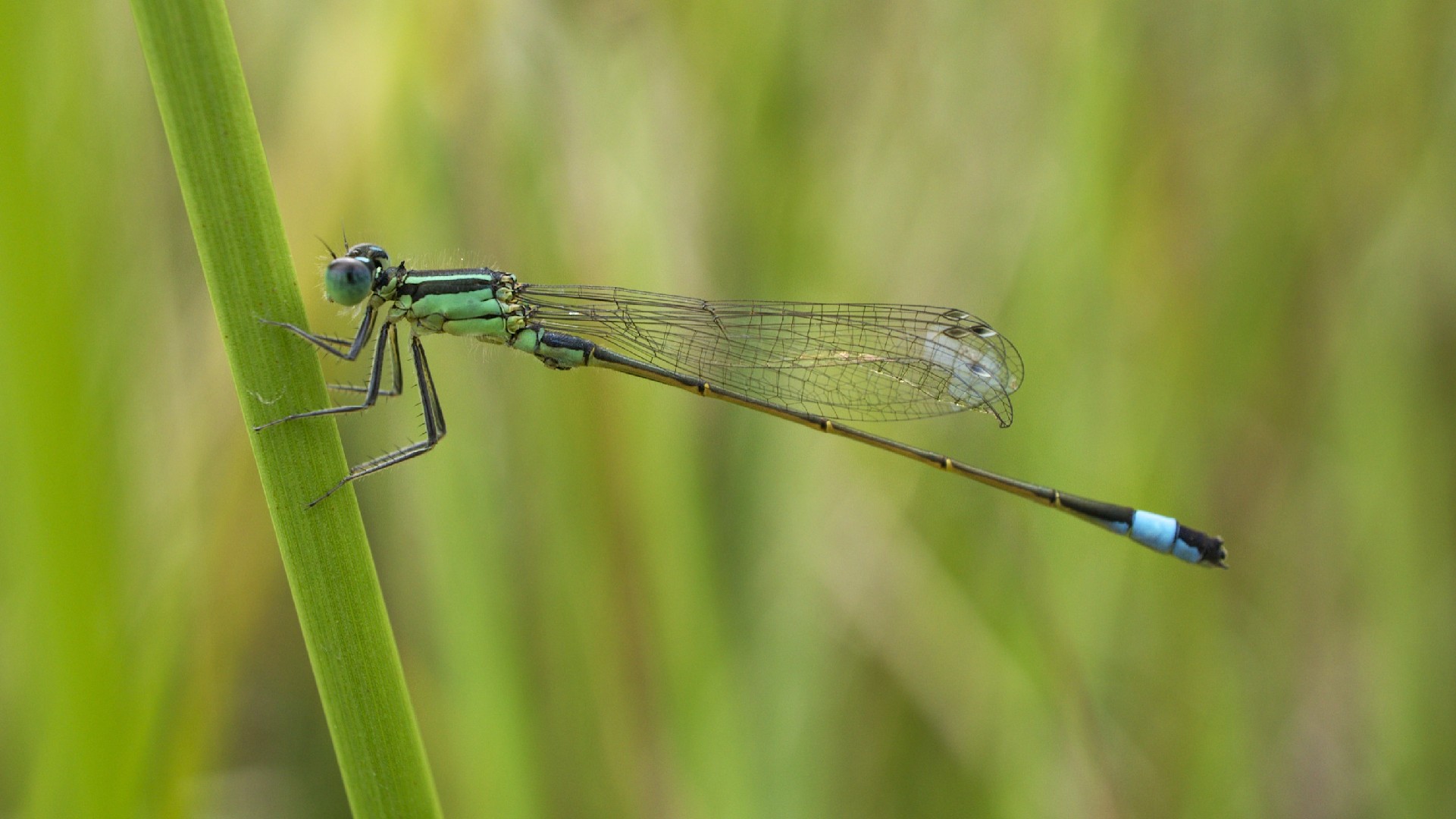
Ischnura elegans can reach a body length of 2.5 - 3.5 cm and a wingspan of about 3.5 cm. Hindwings reach alength of 1.4 - 2 cm. Adult male blue-tailed damselflies have a head and thorax patterned with blue and black. There is a bi-coloured pterostigma on the front wings. Eyes are blue. They have a largely black abdomen with very narrow pale markings where each segment joins the next. Segment eight, however, is entirely pale blue. At rest, the wings of most damselfly species are held back together, unlike dragonflies, which rest with their wings out flat. The thorax of juvenile males has a green tinge. Female blue-tailed Damselflies come in a variety of colour forms.Juveniles may be salmon pink, form rufescens; violet, form violacea and a pale green form. The colour darkens as the damselfly ages. Mature females may be blue like the male, form typica; olive green thorax and brown spot, form infuscans or pale brown thorax and brown spot, form infusca-obseleta.
9. White-legged damselfly
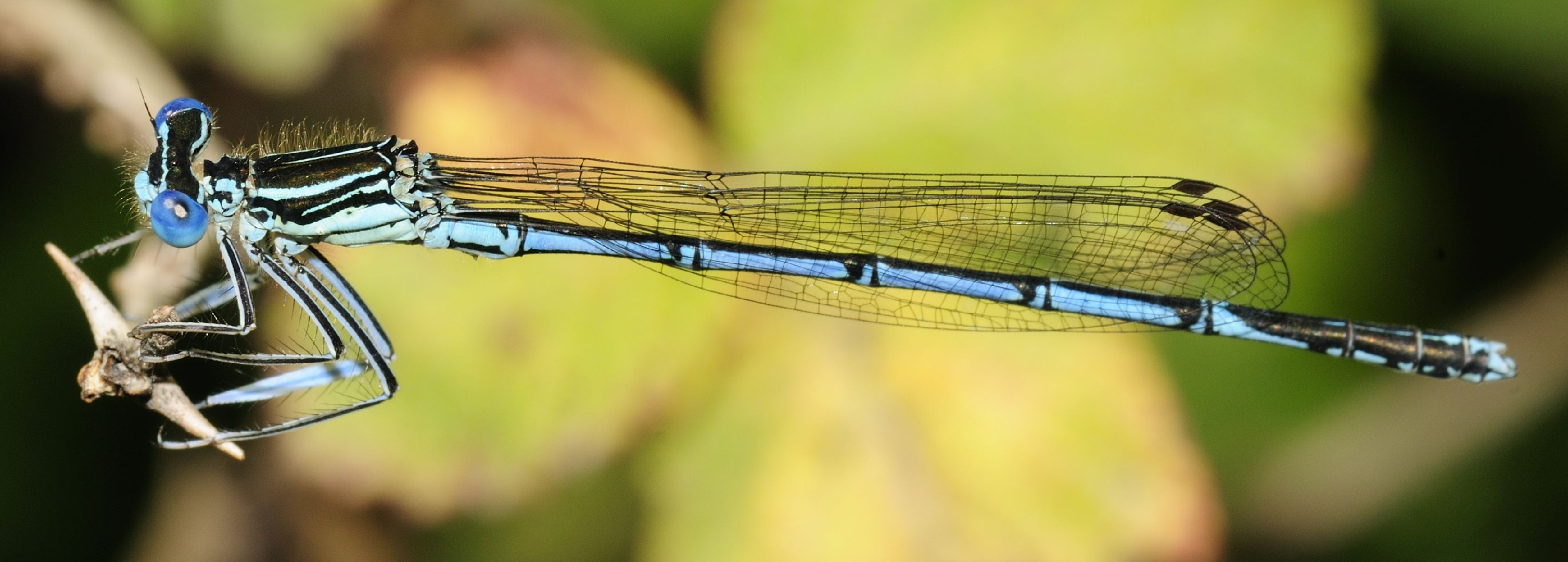
The white-legged damselfly or blue featherleg (Platycnemis pennipes) is a damselfly of slow-flowing, muddy waters. It occurs from the Atlantic to Siberia and is often abundant throughout its range.
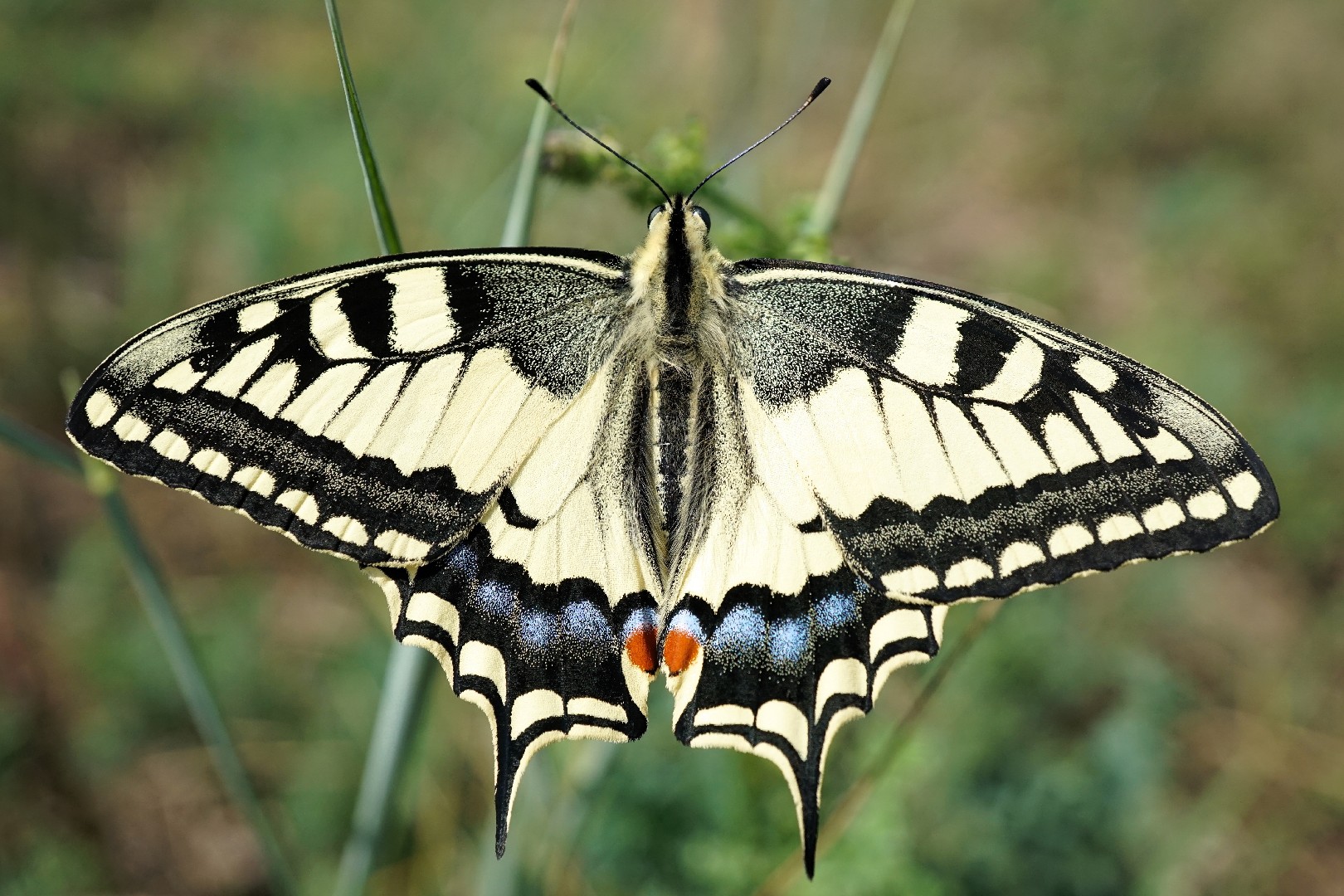
10. Old World swallowtail
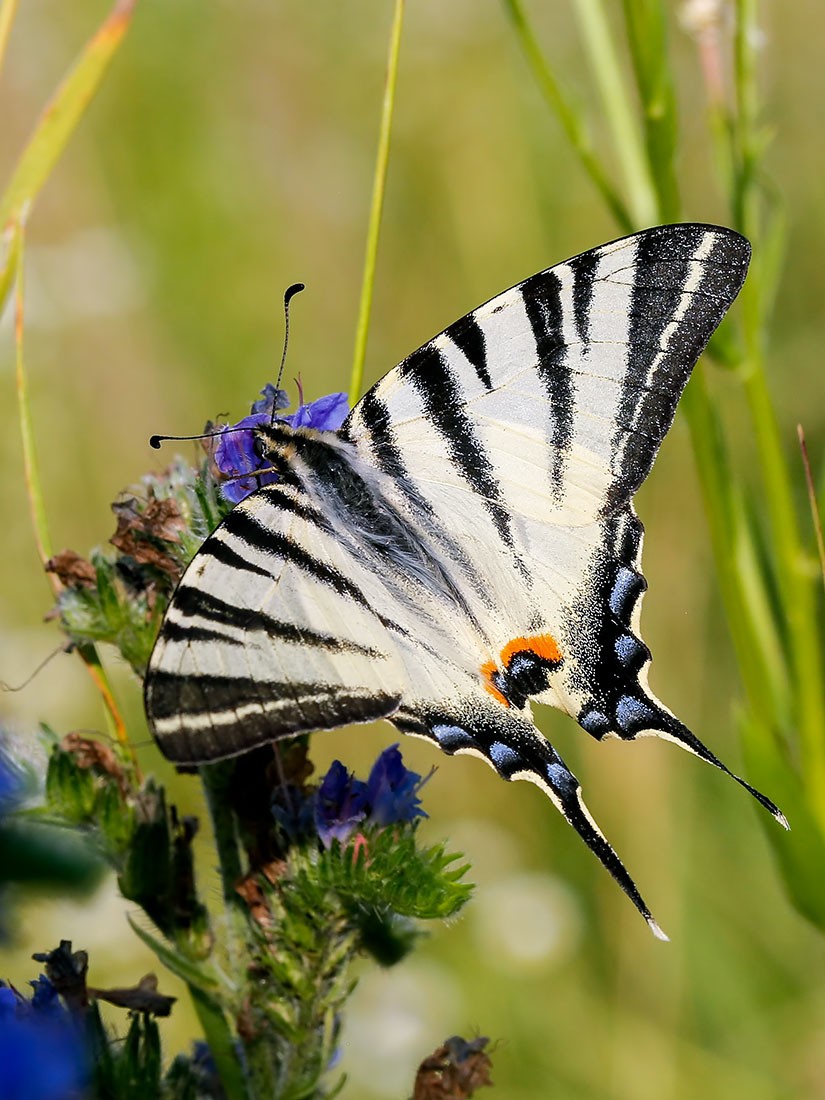
The old World swallowtail (Papilio machaon) is commonly just called the "swallowtail," giving it the added title of "old world" to distinguish it and remind us that it comes from the "old world" (Asia, Africa, Europe). The upper side of them is a beautiful combination of pure white with black striping, the underside being a brownish version of the same thing. There is blue and two red dots on its back side.

More







