




Top 20 Most Common Insects in Veles
Insects, renowned for their varied shapes, sizes and habitats, inhabit every corner of Veles, thanks to the geographical diversity which influences insect variety. Their vital role in the ecosystem, from pollination to pest control, underscores their importance. Explore this symbiotic relationship between Veles's environments and these intriguing creatures in our list of '20 most common insects in Veles'.

Most Common Insects
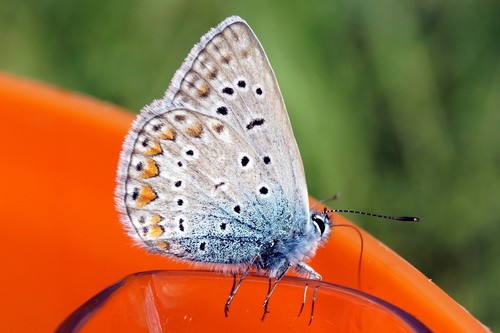
1. Common blue butterfly
Despite its common name, only male specimens of common blue butterfly (Polyommatus icarus) can accurately be described as blue; the females are predominately gray-brown, with only a dusting of blue and a scattering of orange spots. The adults live for only three weeks before dying.
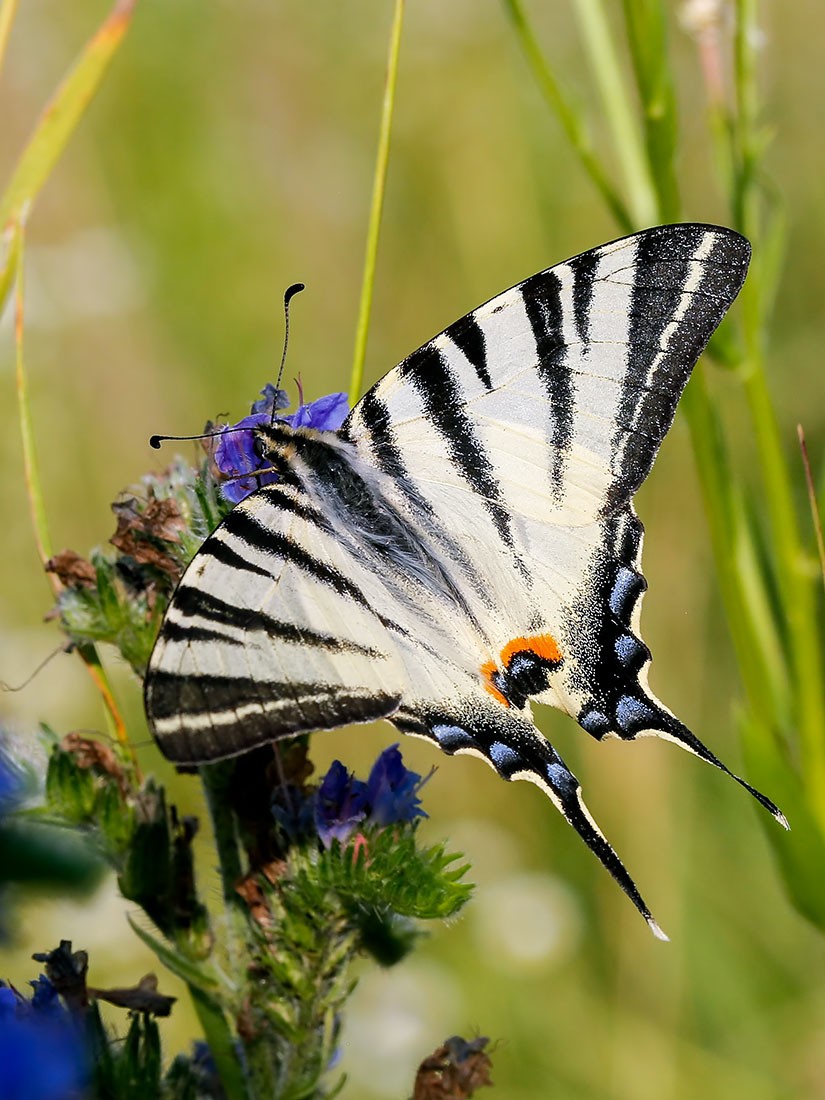
2. Scarce swallowtail
Its slow and floating flight pattern makes it easy to identify the scarce swallowtail as it soars over gardens, orchards, and scrublands. The butterfly has a large presence across Europe, the Middle East, and Asia. The adult lifespan is brief, only two or three weeks. Planting flowers like blackthorn can encourage the butterfly to visit a garden.
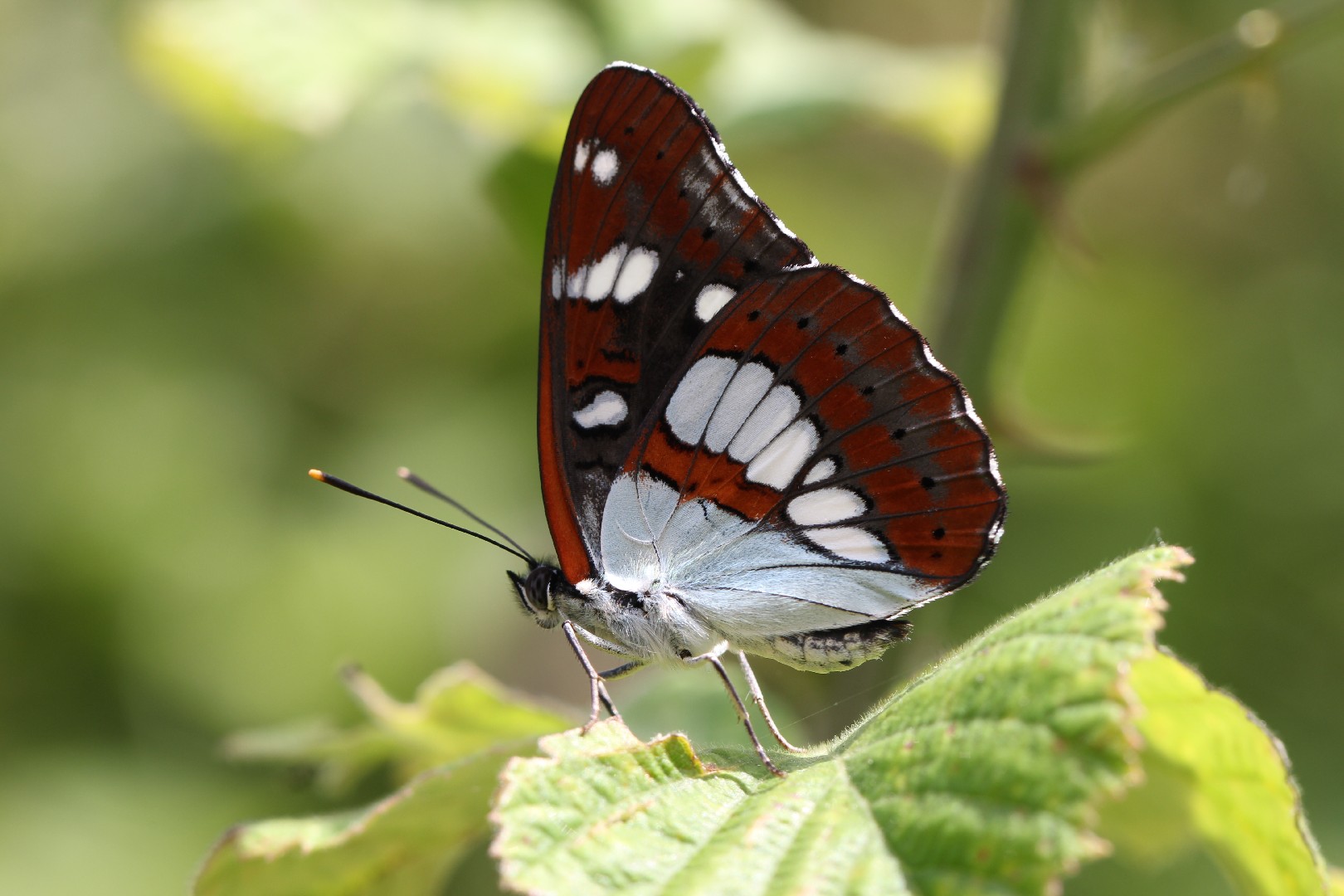
3. Southern white admiral
Limenitis reducta has a wingspan of 46–54 mm. The upperside of the wings is brown black with metallic blue shine, large transversal band of white markings and a submarginal line of small blue dots. The blue sheen varies with the angle of light. The ground colour of underside of the hindwings is red, with a silvery basal area, a row of white markings and a row of black spots. A few white cell spots are also present on the underside of the forewings. The caterpillars can reach a length of 1.1 in. They are light green to dull green on the back, red brown on the underside. On the back there are numerous brown thorns. 
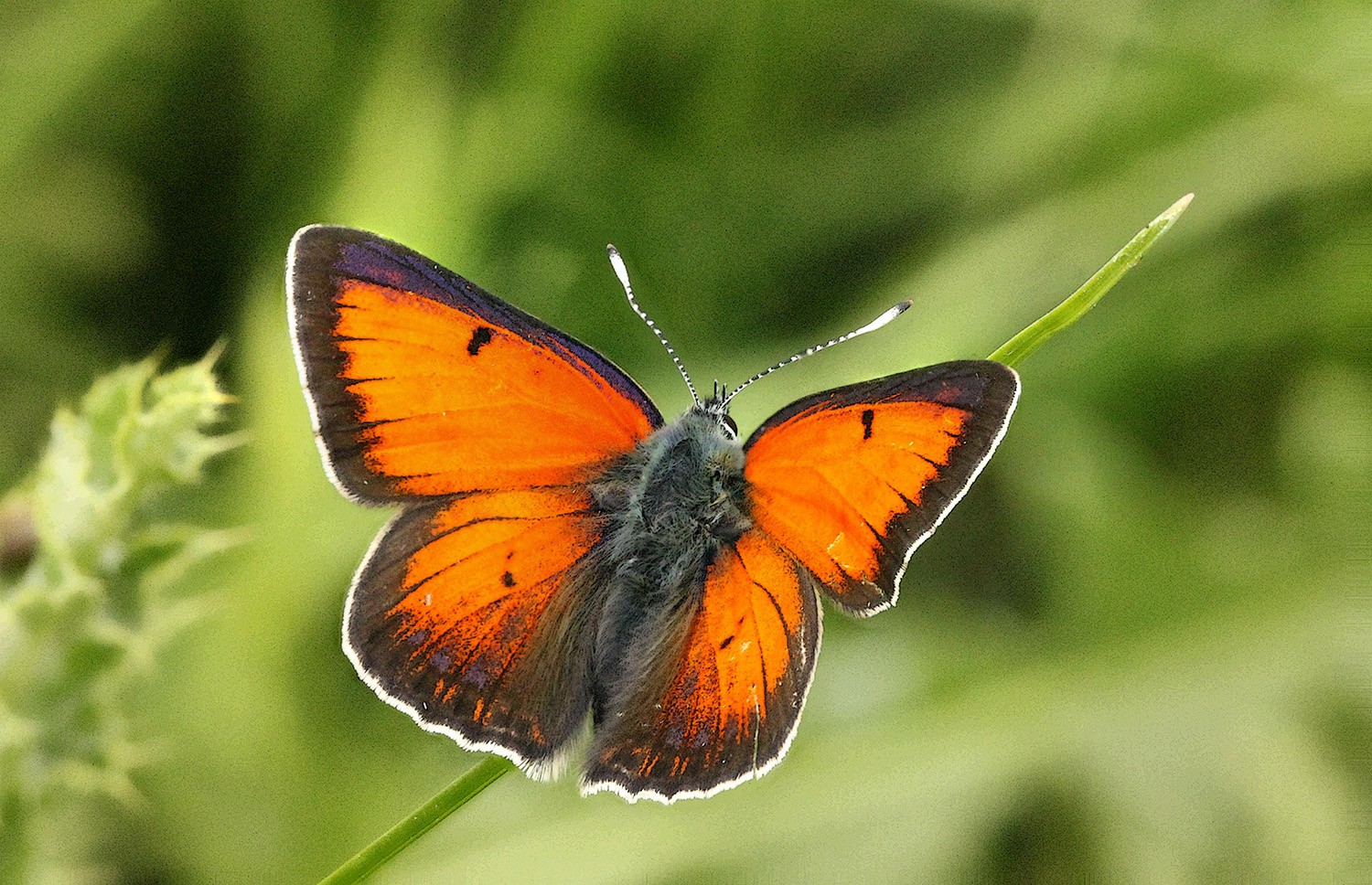
4. Lycaena candens
The males have no blue sheen and the forewing above is entirely golden brown in the females; the black margin of the upperside is narrower in both sexes.
5. Small pincertail
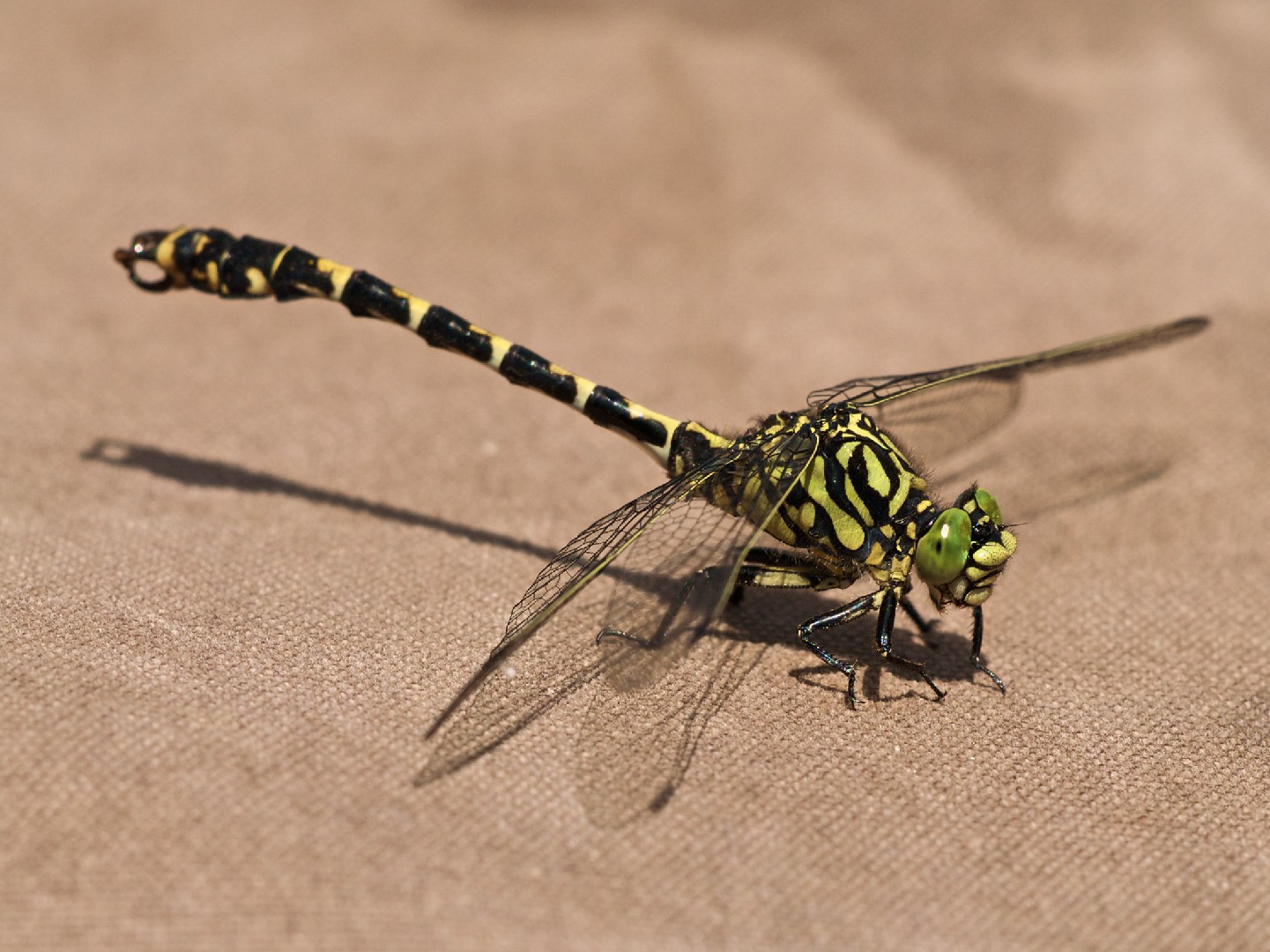
The adults of Onychogomphus forcipatus grow up to 6 cm long, with a wingspan of 6 - 8 cm. The eyes of these medium sized dragonflies are widely separated and grey-to-green. The two black lines on the side of the thorax are relatively narrow and touch the midline. It has a yellow line on the vertex and two cells above the anal triangle. The abdomen in males is fitted with three hooks of large size (anal appendages). Cercoids may be dark and have a subterminal tooth. The base of the hindwing is angled in males and rounded in females.
6. Sooty Copper
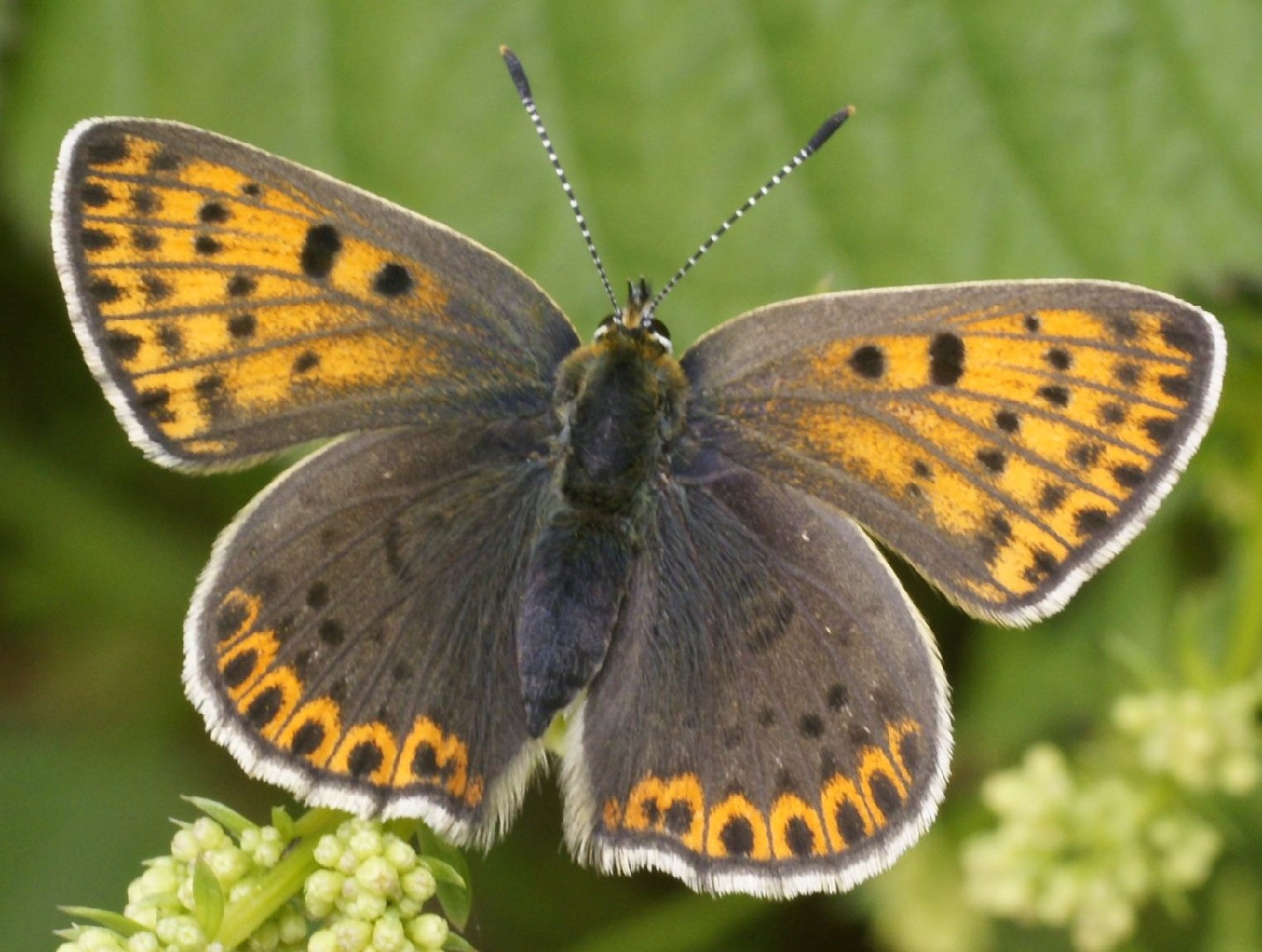
C. dorilis Hufn. (= circe Schiff., garbas F., phocas Rott., dorylas Kirby) (77 c) Male above black- brown, with a magnificent metallic green gloss when alive, with black spots corresponding to those of the underside and with a very thin reddish lunate line before the margin of the hindwing. Female above similar to phlaeas, but paler yellow, and with a very thin black edge instead of a broad black marginal band. Beneath yellowish grey, with very numerous black ocelli and small russet-red spots before the margin. Throughout Europe, from the North Sea to the Mediterranean, with the exception of Great Britain; also in Asia Minor. — In the much larger subalpina Spr. (= xanthe F., montana M.-Durr) (77 d)[now subspecies] the underside is more plumbeous grey than yellowish grey, and the red submarginal spots are reduced; from the Alps. — On the other hand, the underside of orientalis Stgr. (77 d) is more yellowish and the upperside of the female entirely blackish; from Anterior Asia to the Altai. — bleusei Oberth. (77d) [now full species Lycaena bleusei ] is much brighter above, with stronger yellow variegation, and the hindwing has a short triangular tail; from Castilia. — Also in this species specimens with abnormally dark upperside have been found: males which are devoid of the red submarginal band to the hindwing above — ab. obscurior S. L. (= fusca Gillm.) — and whose females are dark like the males, also specimens with more extended light yellow area on the forewing — ab. albicans Fuchs (= nyeni Ter Haar) —, both forms being quite inconstant. Other occasionally observed pale forms are a yellow one (ab. fulvior Stef.) and a white one (ab. upoleuca Verity). In ab. strandi Schultz the submarginal dots of the underside are modified to stripes, ab. brunnea Wheel, is an aberration of subalpina in which the dark upperside is devoid of the coppery sheen found in fresh subalpina. The ab. caeruleopunctata of phlaeas is represented among dorilis by ab. brantsi Ter Haar (= purpureopunctata Wheel.), in which the hindwing above bears a row of whitish dots before the outer third, ab. nana Wheel, is only a dwarfed form. In ab. fulvomarginalis Schultz the narrow red-yellow band of the hindwing above is continued on to the forewing also in the male— Egg semiglobular, dull green, somewhat darker at the top, coarsely punctured. Larva light green, minutely dotted with whitish, on the back occasionally with violet sheen, some specimens bear minute red markings. It hibernates and feeds until April and again in the summer, on Rumex. Pupa greenish or brown, with dark dorsal line and lighter sides, with minute dark dots. The butterflies occur all through the summer, in the south in three overlapping broods, on roads among fields and on broad sunny forest-roads; they visit according to season particularly Potentilla, Ranunculus, Chrysanthemum, Thymus and Leontodon, and, though not confined to certain flight-places, occur sometimes in large numbers together. In the Alps subalpina ascends to a considerable height (Seiser Alp). In some localities dorilis flies together with alciphron so that Mackee considers certain intermediate specimens to be hybrids (ab. xanthoides).
7. Scarce copper
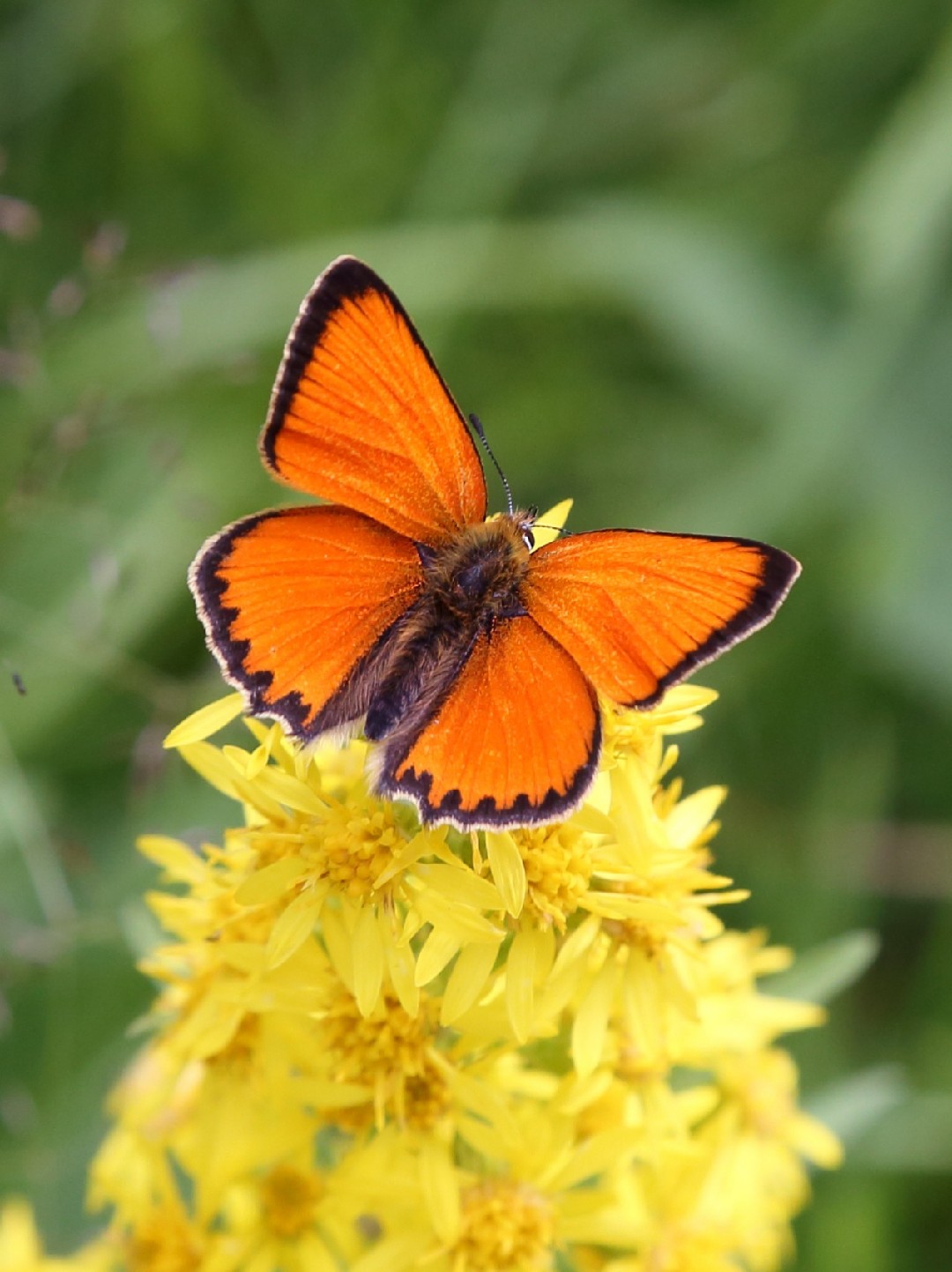
Male above red-golden, with a narrow black margin, at the proximal side of which there are dark dots on the hindwing: female cinnabar-red, spotted with black, the hindwing partly dusted with black. Underside leather-yellow, more sparsely spotted with black, before the outer third of the hind- wing pale dots, which are occasionally united in a white chain. The anal area dusted with red. The species occurs from the Atlantic coasts throughout Europe to East- Siberia and from the coast of the North Sea to the Mediterranean, but is absent from Great Britain and Japan. — In Lapland flies a small form, oranula Frr. (76 b), which is otherwise very similar to the name-typical form. — estonica Huene (76 b), from the Baltic provinces and eastern Russia, exactly resembles the preceding in size and shape, but has a broader black margin. — virgaureola Stgr. (76 b) is in size like virgaureae, but the upperside of the male is as in estonica; beneath the more reddish disc of the forewing contrasts with the more yellow hindwing and the white discal stripe of the latter is absent or reduced; from northern Central Asia, Dauria, Mongolia, and as similar aberration in the Swiss Alps. — males from the Apennines, in which the upperside is deeper red-golden and the base of the hindwing more densely dusted with dark, are apennina Calb. The females the contrary have the ground-colour paler and are less dusted with dark than many Central European specimens, the underside being hghter. According to Fallou the males from the Pyrenees are also deeper red. - On the other hand, the specimens from Mersina and the neighbouring Taurus Mts. have a bright light golden-red upperside in both sexes, the black margin being narrowed in the male. This is aureomicans Heyne. — Specimens with the underside of the hindwing strongly dusted with grey, the upperside of the female more-over having a brown-grey tint on account of the dark dusting on the golden ground, occur in many alpine districts with the ordinary form, being especially plentiful and well marked in the Alps of Valais; all such individuals are united as ab. zermattensis Fall. (76 a). It is hardly possible to decide from Fallou's very long description of this form which are the real characteristics of his aberration, so that strictly speaking not all the specimens standing in collections under this name belong here, particularly not all the specimens from the Valais; in fact only those individuals are true ab. zermattensis which, like phlaeas caeruleopunctata, have a chain of white dots before the outer third of the hindwing, as shown in the figure given in Ann. Soc. Ent. Fr. vol. V. pl. 2. Besides the modification of the colour of the upperside into sepia-brown, both sexes differ on the underside in the forewing bearing a broad dark margin and the hindwing being washed with fuscous, ab. seriata Fruhst. are zermattensis females which have a discal row of white dots on the hindwing proximally to the row of black spots, ab. fredegunda Fruhst. bears, besides those dots, a row of submarginal spots on the forewing beneath. [more vars described]The egg is semiglobular, grey-green, with a network of polygons, laid singly or several together on the stalk of the foot-plant. Larva green with a yellow stripe on back and at the sides, brownish head and brownish legs; at first glassy, transparent, later yellow on the back. Emerges in April and feeds until June on Rumex and Solidago. Pupa rounded, smooth, similar to a small bean, brownish, with dark markings; on the thorax a dark dorsal longitudinal stripe, which is continued on the abdomen by a row of impressed dots. The butterflies are on the wing from the end of June into August on meadows, clearings in woods, mountain-sides and flowery slopes; they are abundant almost everywhere in the area aru:! ascend in the high mountains above 10,000 ft.
8. Mazarine blue
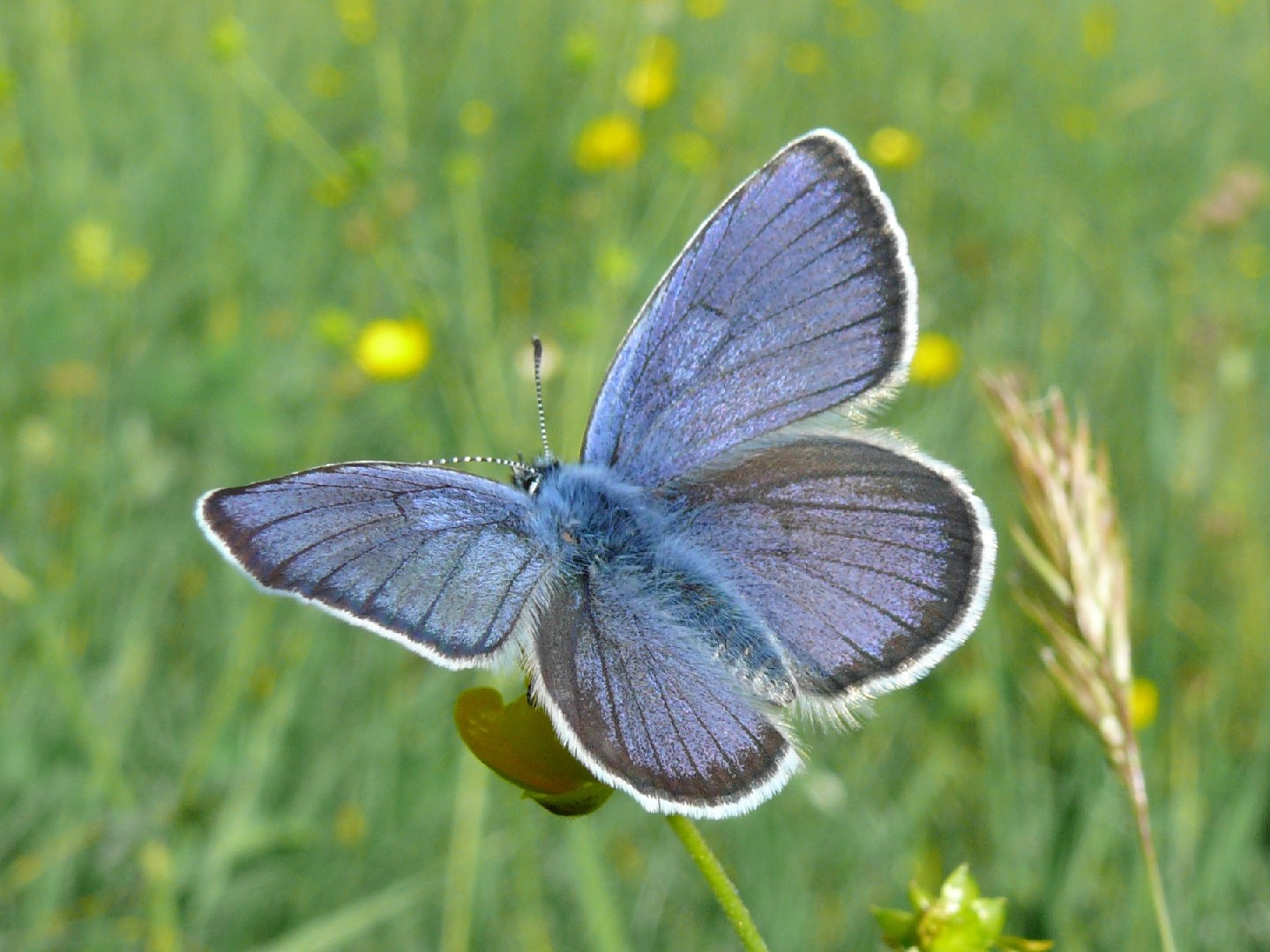
The wingspan of the male and female are similar, at 3 - 4 cm. The male mazarine blue's wings are a deep blue with a heavy venation and are slightly larger in diameter than the female's. The upperside of the wings shows black borders and white fringes. The female mazarine blue is brown. The underside of the wings is greyish or ocher, with a series of black spots surrounded by white and a blue scaling in the basal area. Both sexes lack orange markings and have a dark violet or brown body colour. This species is rather similar to Cupido minimus, but in the underside hindwings of the mazarine blue the black spot in space 6 and the two spots next to it form an obtuse angle, while in C. minimus they create an acute angle. The larva is yellow green with darker lines and has fine hairs and dark brown spiracles. The pupa is olive green and attached to the food plant with a silk girdle.
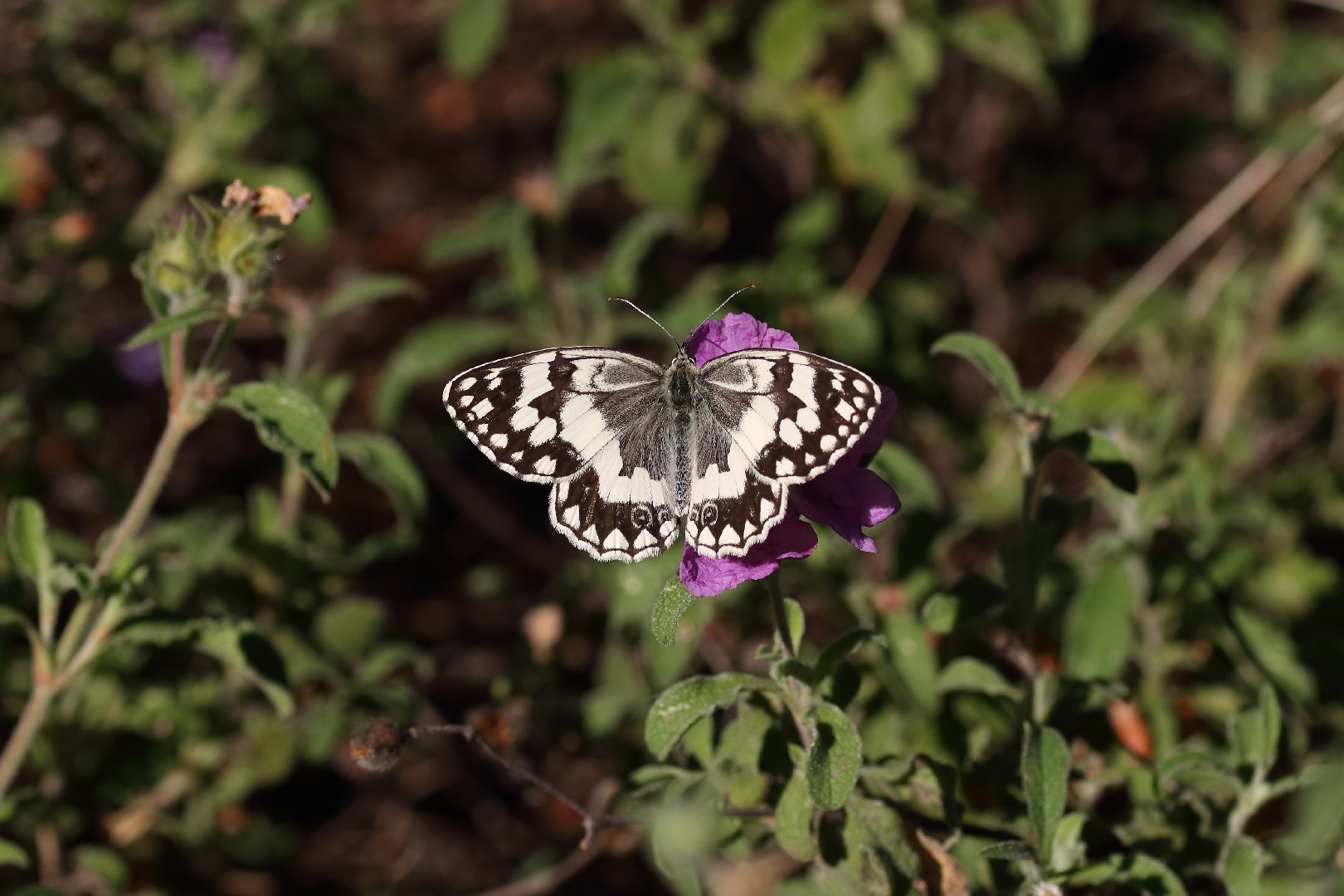
9. Balkan marbled white
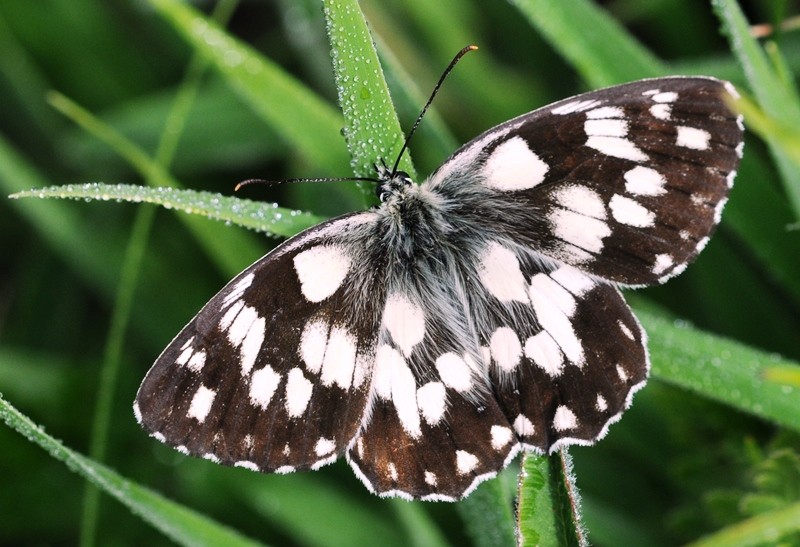
Melanargia larissa, the Balkan marbled white, is a butterfly in the family Nymphalidae. It is found from south-eastern Europe (Croatia, Serbia, Albania, Bulgaria, Greece) and Asia Minor to Transcaucasia and north-western Iran. The habitat consists of dry grasslands, scrubby hillsides and grassy woodland glades. Adults are on wing from mid-May to July in one generation per year. The wingspan is about 52 mm. The nymotypical form larissa Hbn. (38f) is easily recognized by the strongly sooty blackening of the bases of the wings, only the cell having some light places left...the forms allied to larissa can be separated from the japygia- forms only withdifficulty and some arbitrariness. The transverse cell-bar of the forewing is not so close to the centre of the cell, being apparently a little shifted towards the apex of the same, and the median band of the hindwing has a somewhat different position, but also varies rather considerably.The countries inhabited by the forms of larissa are more or less grouped around the Black Sea, while the distribution area of the japygia -forms encircles that of larissa in a wide arch. The larvae feed on Brachypodium species.
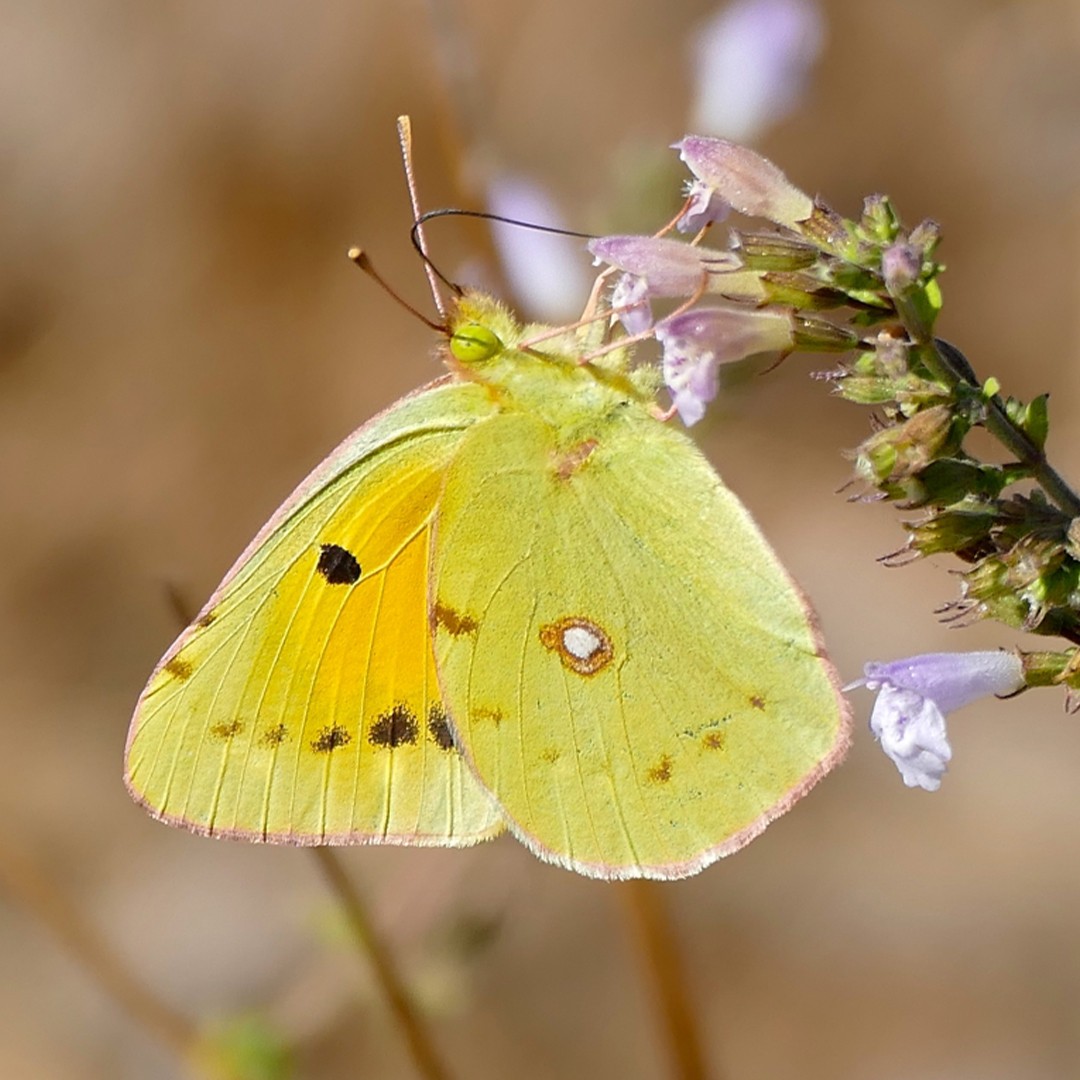
10. Clouded yellow
Colias croceus has a wingspan of 46–54 millimetres (1.8–2.1 in). The upperside of the wings is golden to orange yellow with a broad black margin on all four wings and a black spot near the centre forewing. Usually these butterflies settles with its wings closed, consequently the black margin of the uppersides of the wings is difficultly visible. The underside lacks the black borders and is lighter, with a more greenish tint, particularly on the forewings. In the forewing underside is the same dark spot as on the upperside, but often with a light centre; the hindwing underside has a white centre spot, often with a smaller white or dark dot immediately above it. Sometimes, a row of black dots occurs on the underwings' outer margins, corresponding to where the black border ends on the upperside. Females differ from the males in having yellow spots along the black borders on the upperside. In flight, Colias croceus is easily identifiable by the intense yellow colouring, much brighter than that of the lemon-yellow male common brimstone which also lacks black markings. Like all Colias species they never open their wings at rest. In a small proportion of females (about 5%) the golden upperside colouration is replaced by a pale cream colour. These females have been distinguished as form helice. The pale form helice does not seem to be that distinct as intermediates exist and the variation is to some extent related to humidity during development, with dryer conditions producing paler colouration. These pale forms helice can be confused with Berger's clouded yellow (Colias alfacariensis) and the rarer Pale clouded yellow (Colias hyale). Even the palest C. croceus tends to have more black on the upperside however, in particular on the hindwings. Young caterpillars are yellow-green, with a black head. Later they become completely dark green, with a white red spotted lateral line after the third moult. The pupae are green and have a yellow side stripe. This species is rather similar to Colias myrmidone, Colias chrysotheme, Colias erate, Colias hyale, Colias alfacariensis, Colias caucasica, Colias aurorina.
More







