




Top 14 Most Common Insects in Taiping
Welcome to the fascinating world of insects in Taiping, a land of immense biodiversity. These tiny creatures, defined by their six-legged bodies and hard exoskeletons, thrive here in diverse habitats. The local geography shapes the insect variations, from the coastal areas to the lush highlands - with each region teeming with its unique fecundity. Insects play crucial roles in our ecosystem, existing as pests that challenge us to beneficial species that aid in pollination and natural pest control. Explore our top 14 most common insects and discover how Taiping's diverse environments foster such rich insect life.

Most Common Insects

1. Spotted zebra butterfly
Male upperside black with the following white streaks and spots. Forewing cell with a small spot at base followed by three obliquely transverse streaks in middle, none extended to either the subcostal or median veins, and two spots near apex; single slender narrow streaks in interspaces la and 2, and two streaks in interspace 1; above these a spot at base followed by a streak in each of the interspaces 3, 4, 6 and 8, an outer spot only in interspace 5, and a basal spot in interspace 7; finally, a complete series of small subterminal spots. Hindwing: a streak in cell with a spot above its outer apex; a streak followed by a spot in each of the interspaces 1, 6 and 7; three elongate spots in interspaces 2 and 3 and two in interspaces 4 and 5; finally, a series of four slender subterminal lunules in interspaces 2 to 5. Underside similar, with similar but slightly broader markings. Female similar, ground colour duller, more fuliginous black; markings similar, on the forewing slightly broader, on the hindwing slightly narrower, than in the male. 
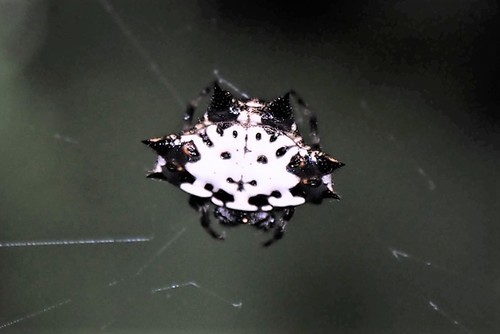
2. Black-and-white spiny spider
Female black-and-white spiny spider are 6 - 9 mm wide and possess a hard, shiny abdomen armed with six black conical spines. The upper surface of the abdomen is white to yellowish with variable black or dark brown markings and sigilla. Males are much smaller at 3 - 4 mm and in place of spines have small bumps on their abdomens.
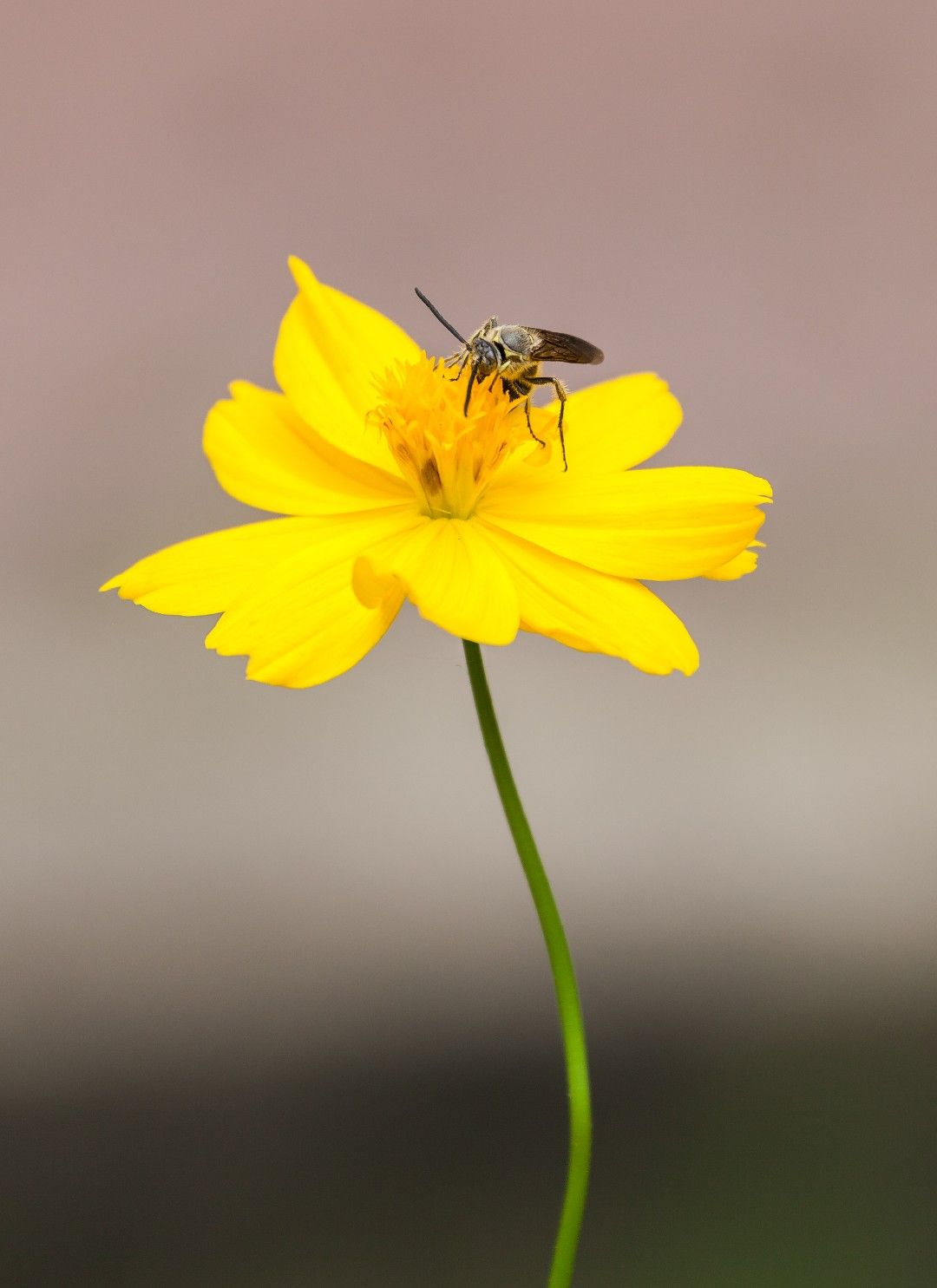
3. Chlorion lobatum
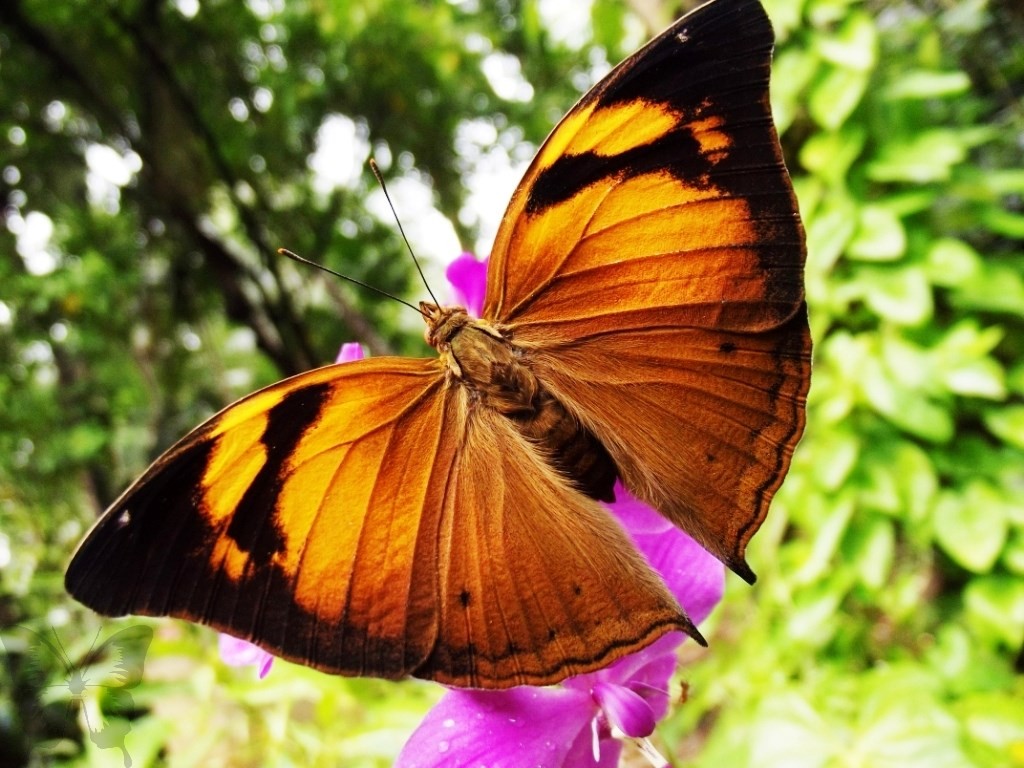
4. Autumn leaf
The larvae are black, with two rows of dorsal white spots. Head with a pair of branched spines; rest of the segments with a dorsal and a lateral row of blue branched spines on each side. The pupae are yellowish with numerous black spots; constricted in the middle; head produced into two points. Male's and female's underside yellowish brown, paling anteriorly to rich golden yellow on the forewing, shading anteriorly into dusky brown on the hindwing. Forewing: the apical half black, following a line from vein 12 opposite the discocellulars, passing through apex of cell, obliquely across middle of interspace 3 and curving down to tornus; a black spot near apex of cell coalescing with the inner margin of 1he black colour; a short, very oblique, broad golden-yellow band, broader in the female than in the male, from middle of costal margin to interspace 5; a spot beyond in line with it in interspace 4; two, sometimes three, minute, preapical white specks; the cilia fulvous (tawny), touched with white, anteriorly. Hindwing uniform; the costal margin broadly as noted above, a subterminal narrow band and narrower terminal line posteriorly, dusky black; a postdiscal black spot in interspaces 2 and 5 respectively; the cilia fulvous. The ground colour varies from reddish to dark greenish brown with irrorations (speckles) of greyish and black scales; apex of the forewing and the terminal margin posteriorly of the hindwing more or less lilacine; forewings and hindwings crossed by a dark narrow discal fascia, generally bordered on the inner side by a greyish line; this fascia bent inwards at right angles above vein 6 of the forewing and in most specimens, bordered internally by a diffuse pale patch and externally by an oblique whitish mark, beyond which is a subcostal white spot, followed by a transverse sinuous postdiscal series of obscure ocelli crossing both wings, each ocellus centred by a minute dot, white on the fore, black on the hindwing. In the male there are generally, but not invariably, a number of whitish spots on the basal areas of both wings. Antennae blackish brown, ochraceous at apex; head, thorax and abdomen dark fulvous brown; beneath, the palpi white, the thorax and abdomen pale brown. Wingspan is about 8 - 9 cm.
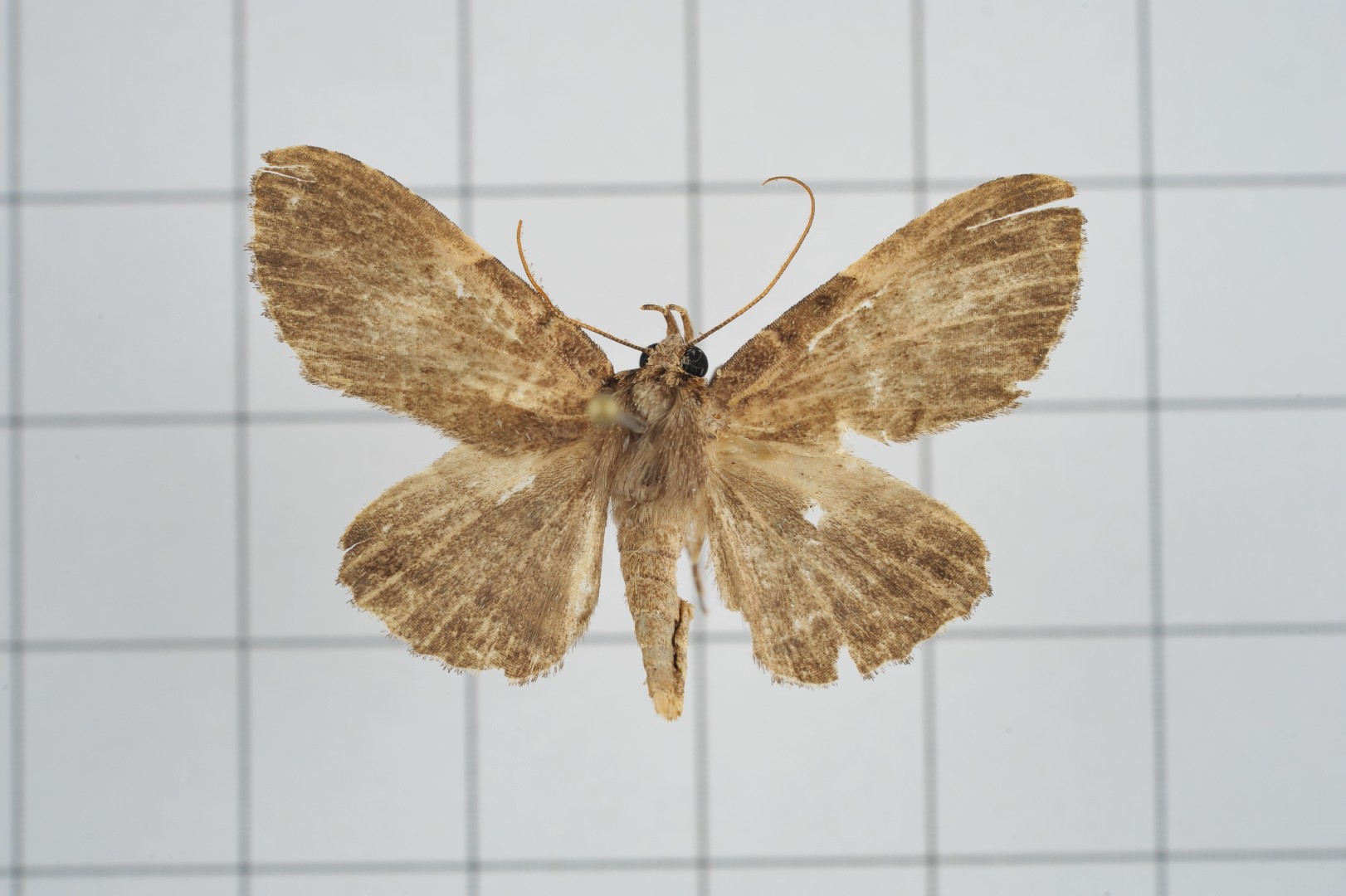
5. Hyposemansis singha
Hyposemansis singha is a species of moth in the family Erebidae first described by Achille Guenée in 1852. It is found in the Himalayas, Taiwan, Myanmar and on Borneo and Sumatra. The habitat consists of forests, ranging from the lowlands to elevations of about 1,760 meters, but is mostly found in lowland dipterocarp forests.
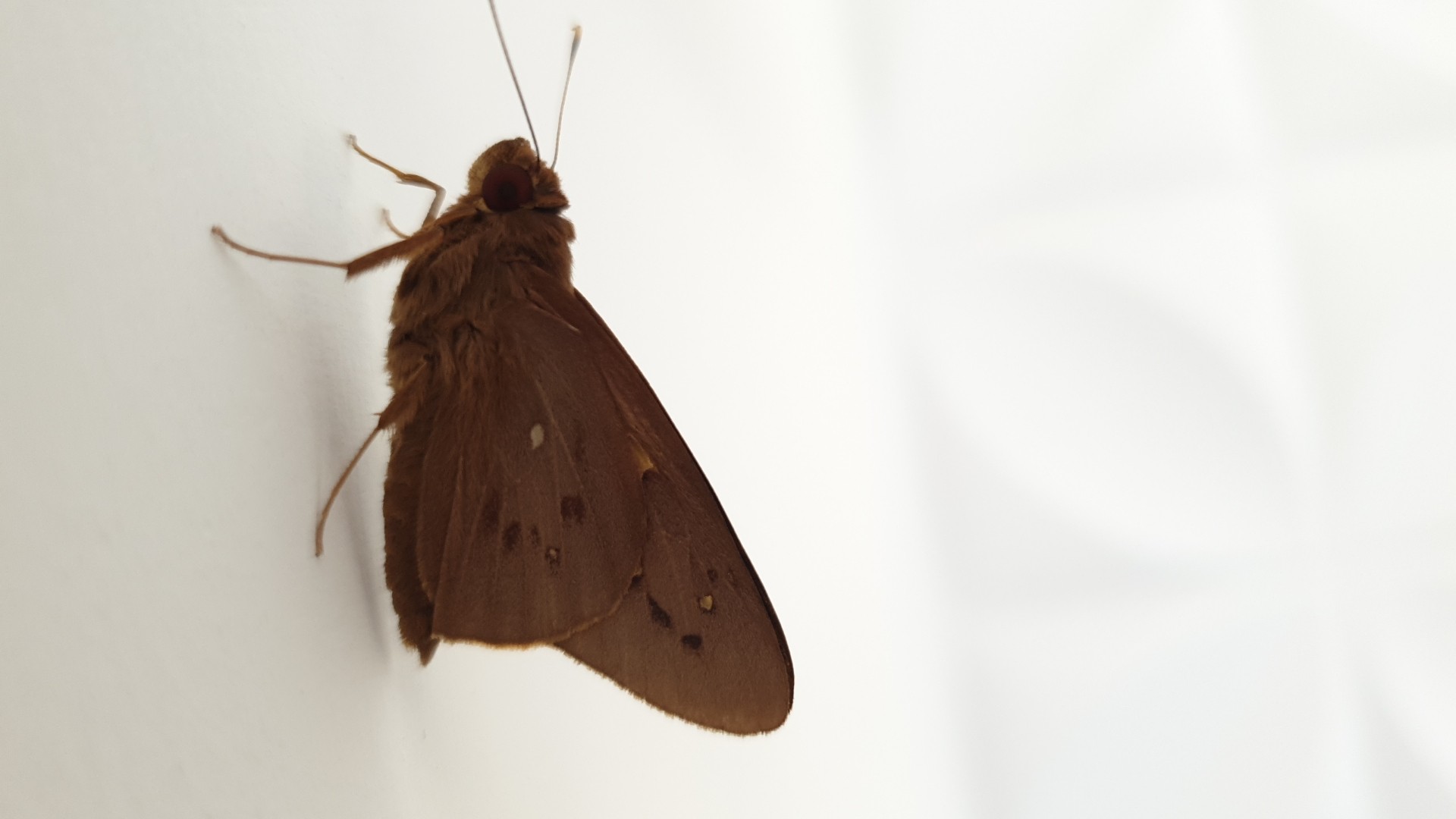
6. Coconut skipper
Hidari irava, the coconut skipper, is a butterfly of the family Hesperiidae. It is found in southern Myanmar, Thailand, western Malaysia, as well as on Sumatra, Java, Borneo and the Sula Islands. The wingspan is 45–55 mm. The larvae feed on Bambusa species and Cocos nucifera.
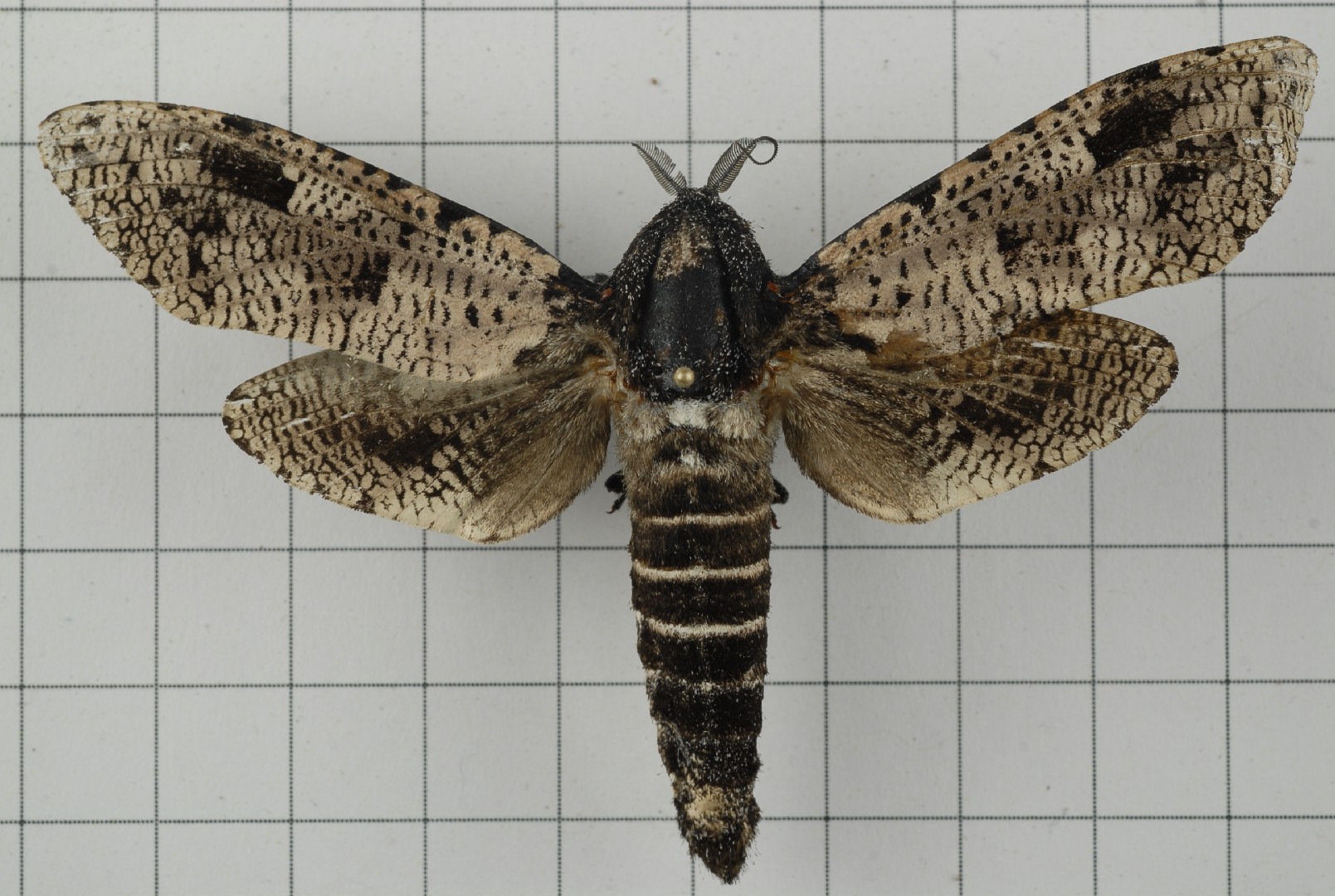
7. Xyleutes strix
Xyleutes strix is a moth of the family Cossidae. It is found in India, south-eastern Asia, Sundaland, the Philippines, Sulawesi, the Moluccas and New Guinea.
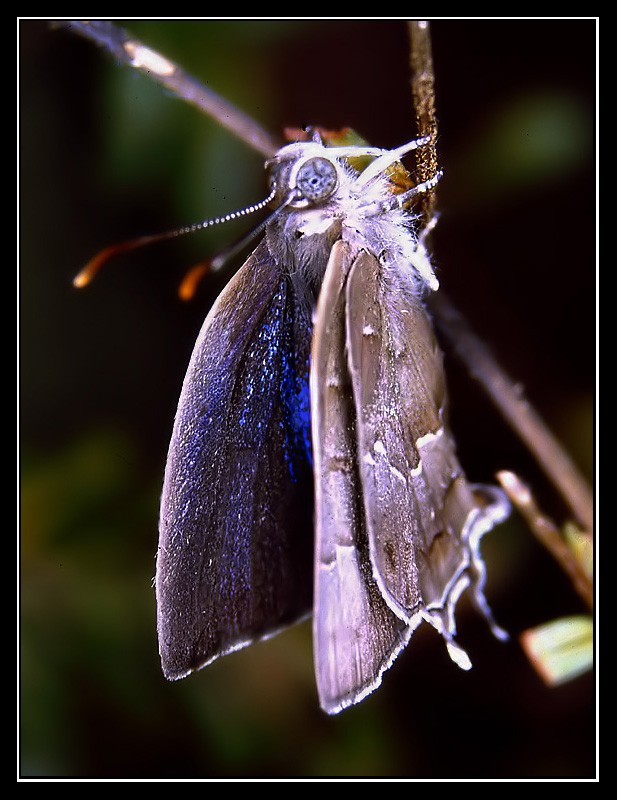
8. Acacia blue
Upperside: both wings rather intense deep blue: primaries with the costa broadly, posterior margin more broadly, apex still more broadly black ; secondaries with the blue limited to just over the median area, the rest of the wings black. Tails two, black, the longer one white-tipped. Underside : both wings very dark greyish brown: primaries with an obscure dark dot near the centre of the cell and a small dash closing it, costa with three dark dots; transverse blackish line curved irregularly and scalloped from the costa to the submedian nervure, a submarginal row of blackish dots, margin obscurely dark, internal area quite pale: secondaries with a small white spot about one-third along the costal nervure, below which is an obscure dark short dash in the cell; from two-thirds along the costa to the middle of the abdominal margin is a narrow, indefinite, obscure band of dark shading edged externally and sharply with white, a submarginal row of dark spots forming an almost lunular line; on each side of the long tail is a slight grey scaling. Upperside: both wings entirely dark brown. Underside as in the male, but decidedly paler.
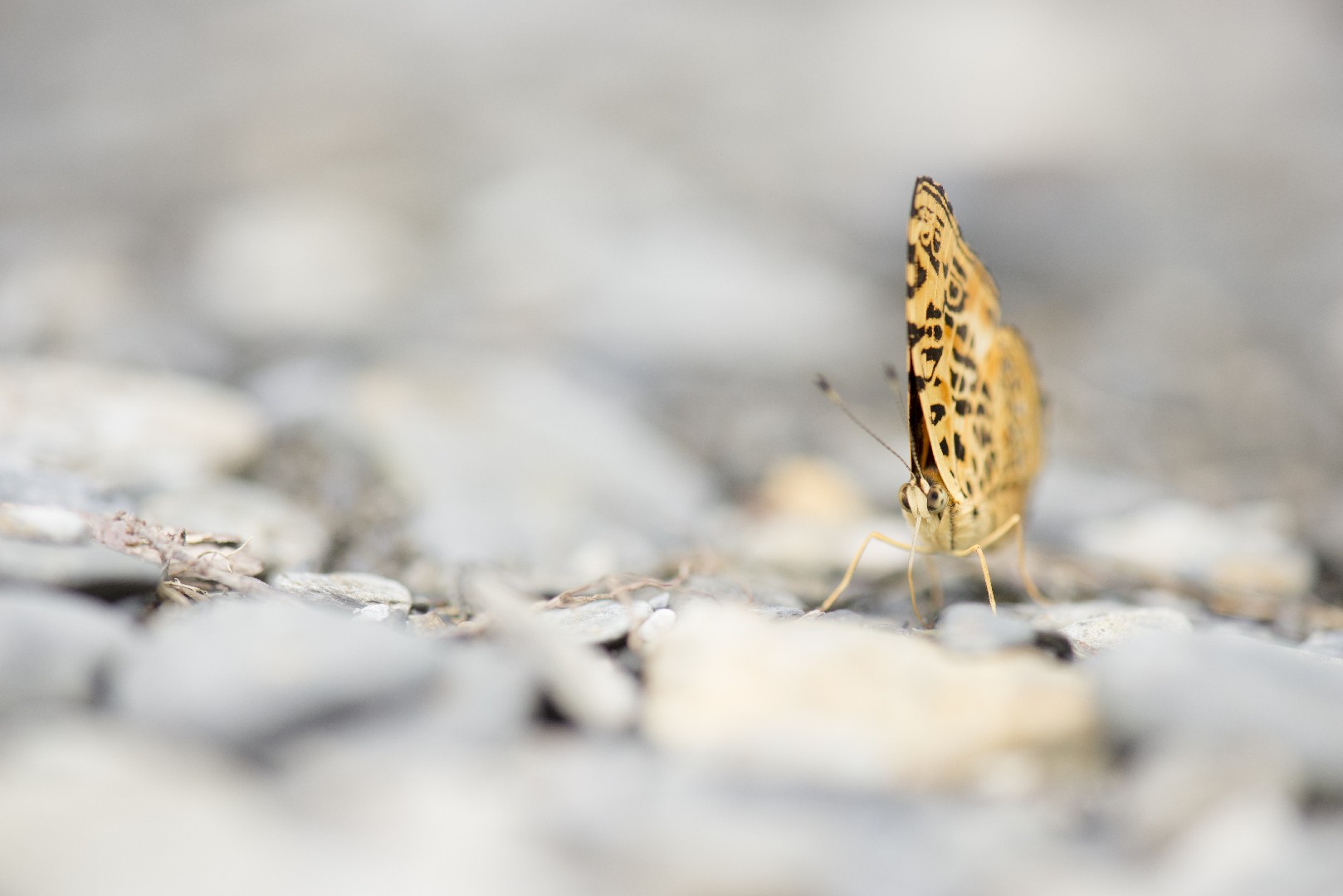
9. Himalayan jester
Symbrenthia hypselis, the Himalayan jester, is a species of nymphalid butterfly found in South Asia, and some islands in South East Asia (Sumatra, Java)
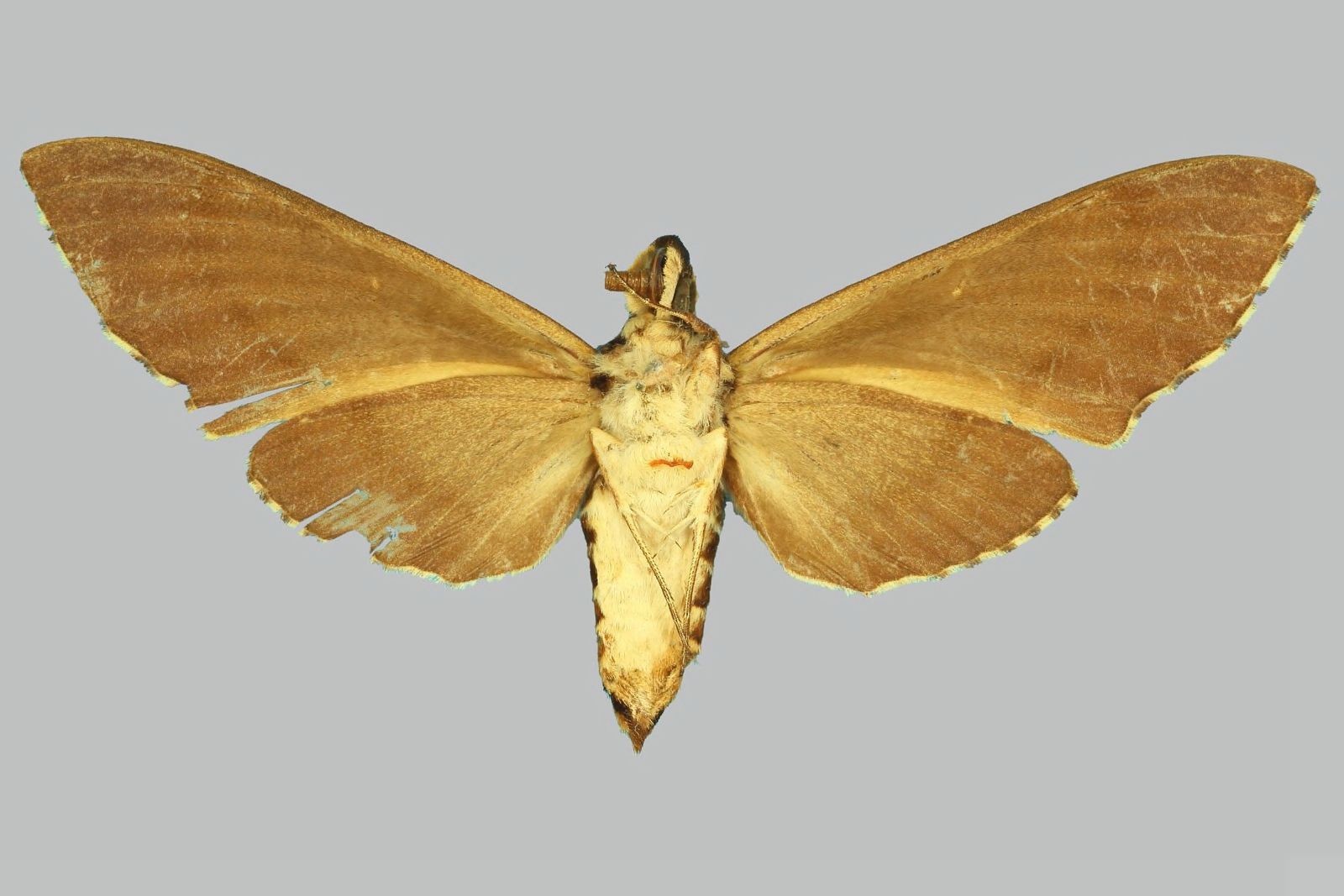
10. Cerberonoton rubescens
More







