




Top 20 Most Common Insects in Monterrey
Welcome to the vibrant world of insects within Monterrey! These fascinating creatures, with their distinctive features and varied habitats, offer a compelling peek into the region's biodiversity. Geographical variations within Monterrey greatly influence insect diversity and their roles as pests or allies, reflecting the intricate relationship between their environment and survival. Stay tuned as we unveil the 20 most common insects that inhabit this remarkable region!

Most Common Insects
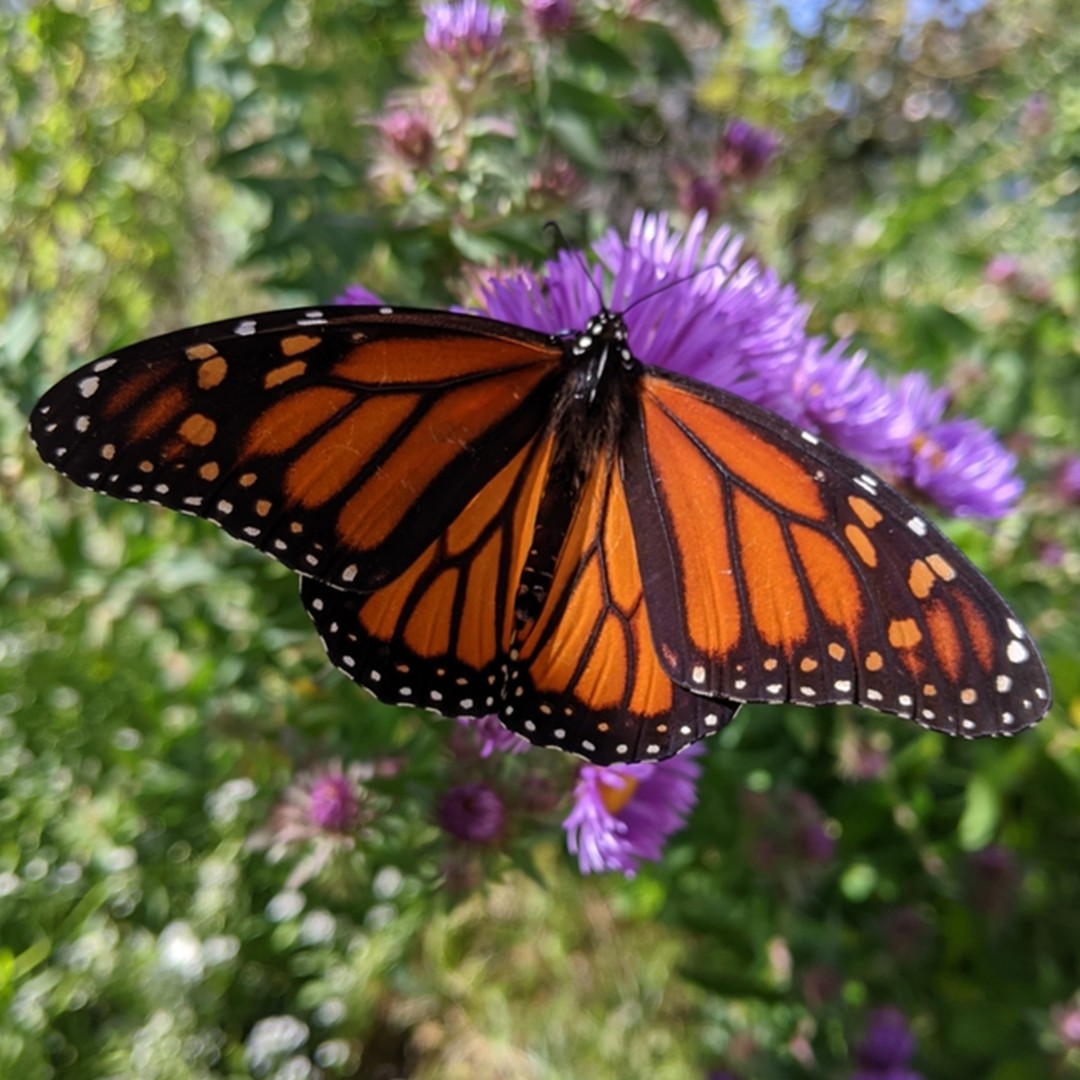
1. Monarch butterfly
The monarch butterfly (Danaus plexippus) is the most recognizable butterfly in North America. It is best known for its appearance, but should be better known for the fact that it has a 3000-mile migration that takes the butterfly 4 generations to complete. Their diet is also a natural deterrent for predators, as they eat milkweed, a poison that induces vomiting.
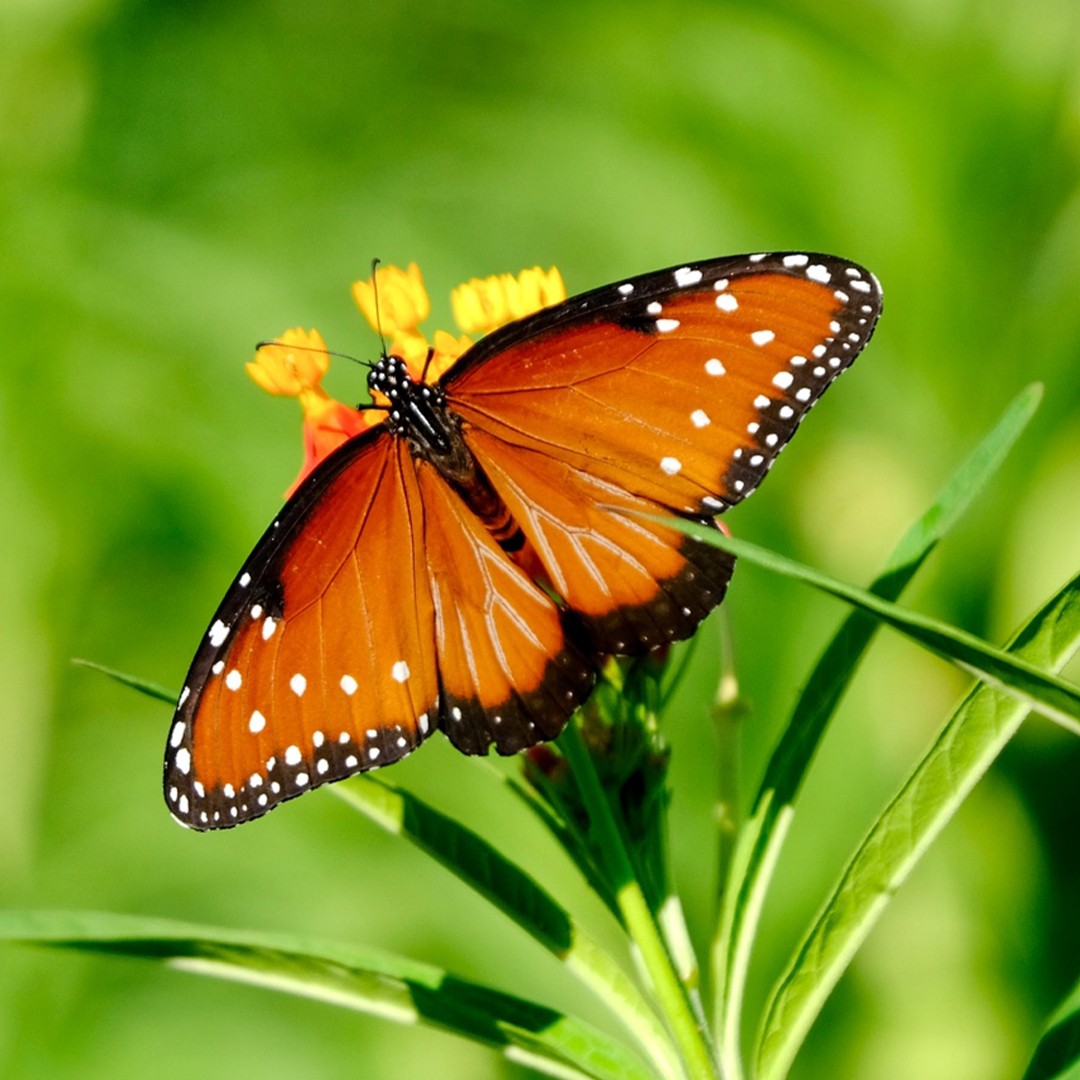
2. Queen
The queen butterfly (Danaus gilippus) is a North and South American butterfly in the family Nymphalidae with a wingspan of 70–88 mm (2.8–3.5 in). It is orange or brown with black wing borders and small white forewing spots on its dorsal wing surface, and reddish ventral wing surface fairly similar to the dorsal surface. The ventral hindwings have black veins and small white spots in a black border. The male has a black androconial scent patch on its dorsal hindwings. It is found throughout the tropics and into the temperate regions of the Americas, Asia and Africa. It can be found in meadows, fields, marshes, deserts, and at the edges of forests. This species is possibly a close relative to the similarly colored soldier butterfly (or tropic queen; Danaus eresimus); in any case, it is not close to the plain tiger (Danaus chrysippus) as was long believed. There are seven subspecies. Females lay one egg at a time on larval host plants. Larvae use these plants as a food source, whereas adult butterflies feed mainly on nectar from flowers. Unpalatability to avian predators is a feature of the butterfly; however, its level is highly variable. Unpalatability is correlated with the level of cardenolides obtained via the larval diet, but other compounds like alkaloids also play a part in promoting distastefulness. Males patrol to search for females, who may mate up to 15 times a day. Male organs called hair-pencils play an important role in courtship, with males with lower hair-pencil levels being selected against. These hair-pencils may be involved in releasing pheromones during courtship that could attract female mates. 

3. American snout
American snout have prominent elongated mouthparts (labial palpi) which, in concert with the antennae, give the appearance of the petiole (stem) of a dead leaf. Wings are patterned black-brown with white and orange markings. The forewings have a distinctive squared off, hook-like (falcate) tip. The caterpillars appear humpbacked, having a small head, swollen first and second abdominal segments, and a last abdominal segment which is tapered and rounded. They are dark green with yellow stripes along the top and sides of the body, and have two black tubercles on the top of the thorax.
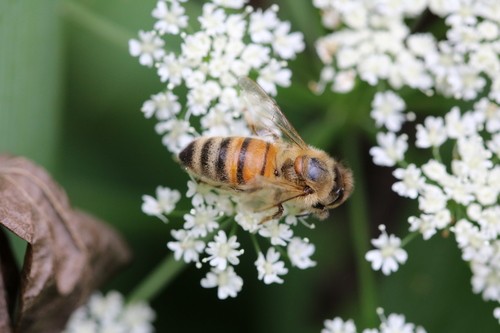
4. Western honey bee
Western honey bee(Apis mellifera) is the most common species of honeybee in the world. Among the first domesticated insects, its cultural and economic impact on humanity has been vast and far-reaching, providing honey, wax and its services as a pollinator. Western honey bee faces challenges worldwide, such as colony collapse disorder, and populations are thought to be decreasing.
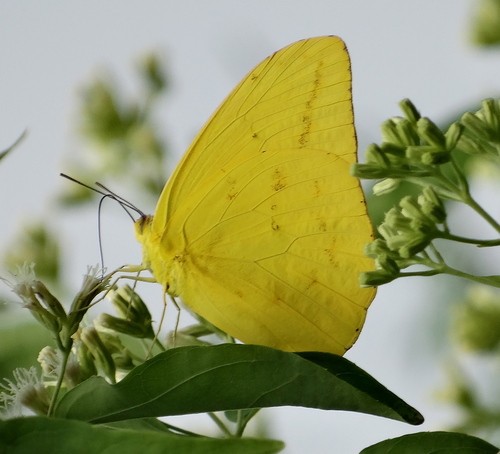
5. Large orange sulphur
The wingspan is 6 - 9 cm. The upper surface of the males is bright orange without markings. There are two female forms, a pink-white and yellow-orange form. The underside of the forewings of both sexes has a straight submarginal line. There are two seasonal forms: the winter form has heavier underside markings.
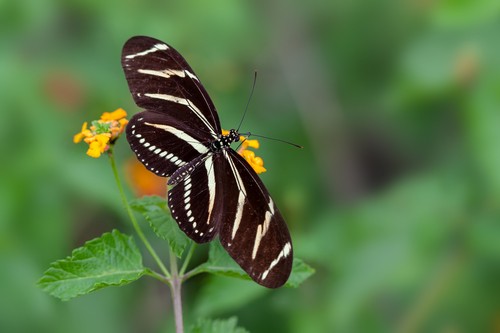
6. Zebra longwing
The zebra longwing (Heliconius charithonia) is a beautiful butterfly that has a texture resembling a zebra. They feast and pollen and nectar, using the pollen to produce chemicals that poison predators if they are eaten, deterring most predators from attack. Unfortunately, their populations have been decimated after being caught in the crossfire of sprays meant to control mosquitos.
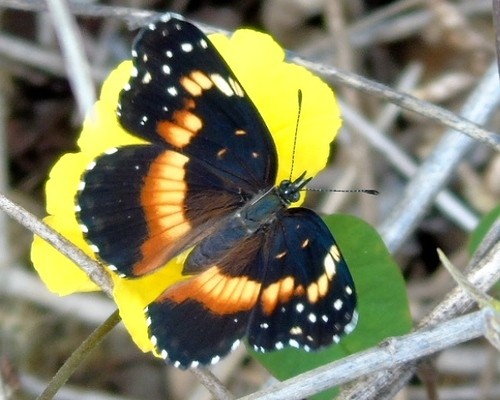
7. Bordered patch
The upperside of the wings is mainly black with the forewing having rows of white and/or yellow-orange spots of varying sizes. There is usually one whitish spot in the forewing cell. The hindwing has many color variations. Those variations can be: almost completely black to having some red postmedian spots to having a few rows of white postmedian spots to having an all red-orange discal area to having a yellow-orange postmedian band of varying width. The underside of the wings is just as variable as the upperside. It varies from having a few rows of white and red spots to having a yellow-white hindwing median band of varying width to the underside being mostly golden yellow with large yellow-orange spots and a thick golden-yellow median band. All of these variations have a red spot near the hindwing tornus. Its wingspan ranges from 3 - 4.5 cm.

8. Western Giant Swallowtail
Usually found in the hotter parts of the Americas, the western Giant Swallowtail has lovely-colored orange and black wings that stand out against the field and garden flowers on which it tends to perch and drink. It somewhat resembles the famous Giant Swallowtail but is much smaller in size.
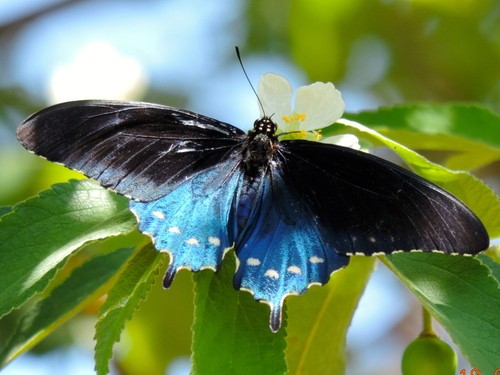
9. Pipevine Swallowtail
The pipevine Swallowtail (Battus philenor) is an insect that is protected globally but is considered a species of special concern in the northern part of their range in Michigan. The name pipevine Swallowtail comes from the common plants that they are hosts of. They are also known as the blue swallowtail due to their brilliant, blue color.
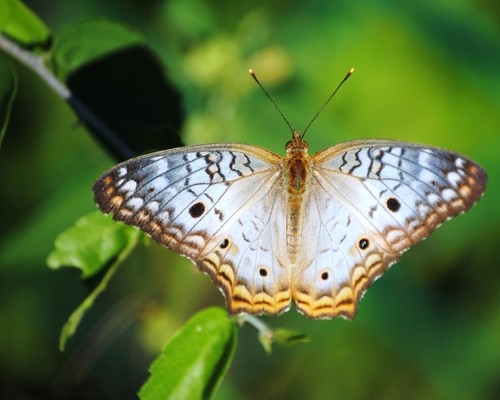
10. White peacock
The wingspan of the moths is 51 to 70 millimeters. The basic color is whitish. On the forewings there is a black, circular spot near the inner angle. At the front edge, two to three oblong, yellow-brown spots stand out. The Submarginalregion is also yellow-brown colored and crossed by dark lines. On the hind wings are two more small, black, circular spots near the tawny and dark-colored submarginal region. A short tail is more or less strong. The wing underside shows similar drawing elements as the top, but these are paler and weaker pronounced.

More







