




Top 20 Most Common Insects in Montenegro
Welcome, bug enthusiasts! Insects, known for their iconic six-leg body design and adaptable nature, find a diverse home amidst Montenegro's varied geography. The insect populations here are shaped by multiple factors such as Montenegro's unique climates, ecosystems, and human interactions. Significant to the balance of any environment, these creatures, while sometimes perceived as pests, often play crucial beneficial roles. Stay tuned as we reveal the 'Top 20 Most Common Insects in Montenegro'. Prepare to buzz with excitement!

Most Common Insects
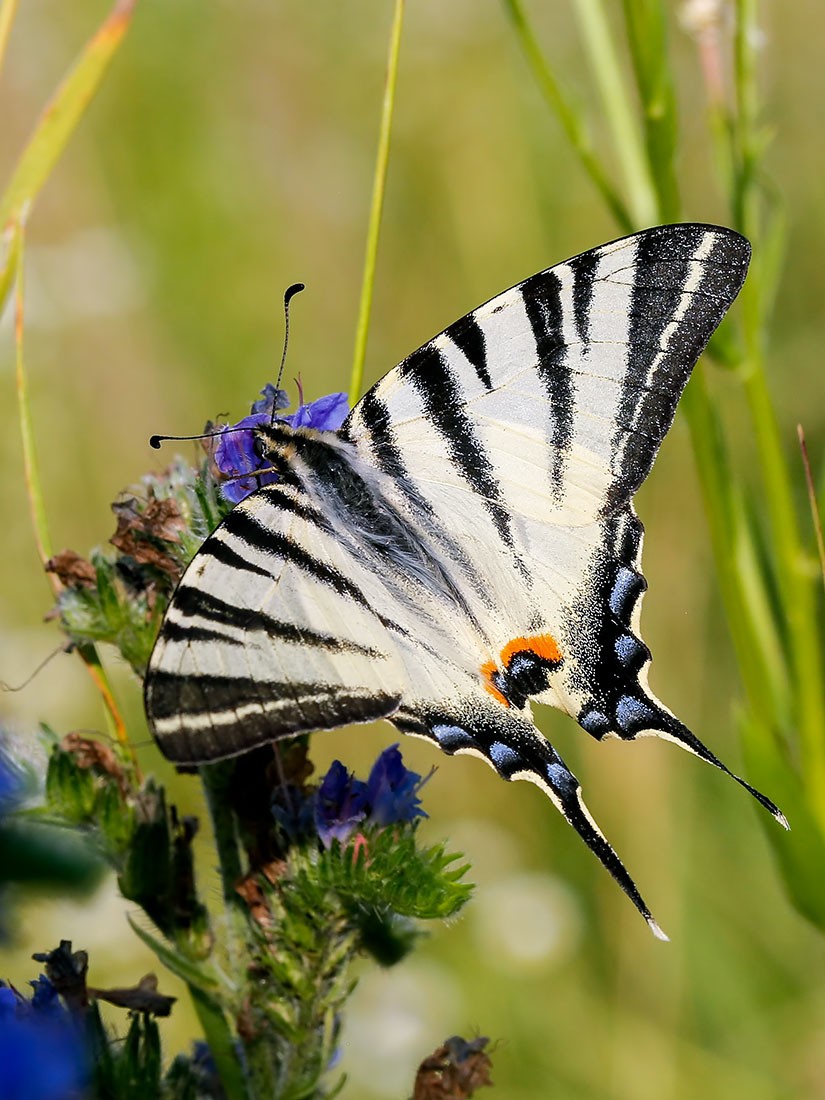
1. Scarce swallowtail
Its slow and floating flight pattern makes it easy to identify the scarce swallowtail as it soars over gardens, orchards, and scrublands. The butterfly has a large presence across Europe, the Middle East, and Asia. The adult lifespan is brief, only two or three weeks. Planting flowers like blackthorn can encourage the butterfly to visit a garden.
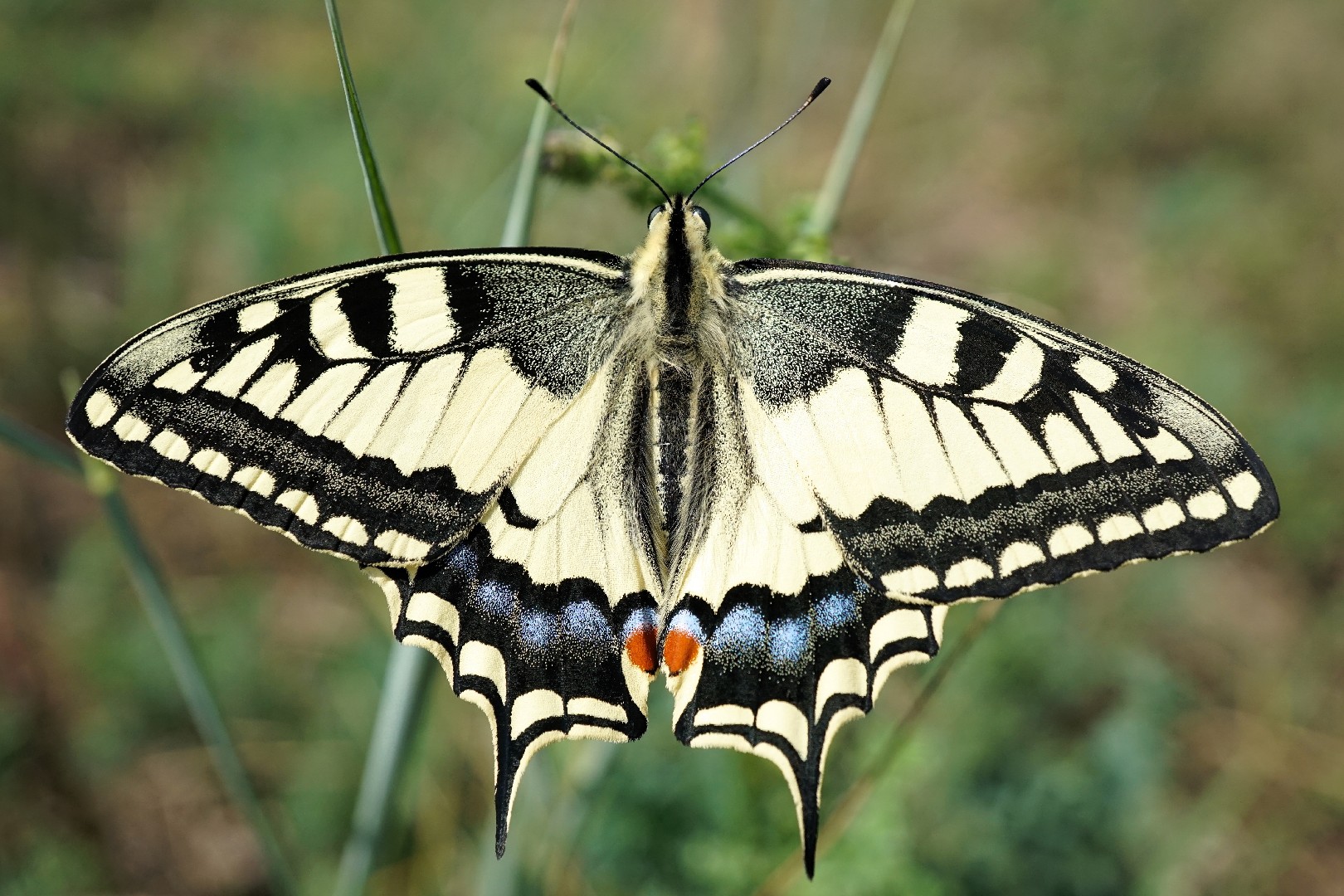
2. Old World swallowtail
The old World swallowtail (Papilio machaon) is commonly just called the "swallowtail," giving it the added title of "old world" to distinguish it and remind us that it comes from the "old world" (Asia, Africa, Europe). The upper side of them is a beautiful combination of pure white with black striping, the underside being a brownish version of the same thing. There is blue and two red dots on its back side.
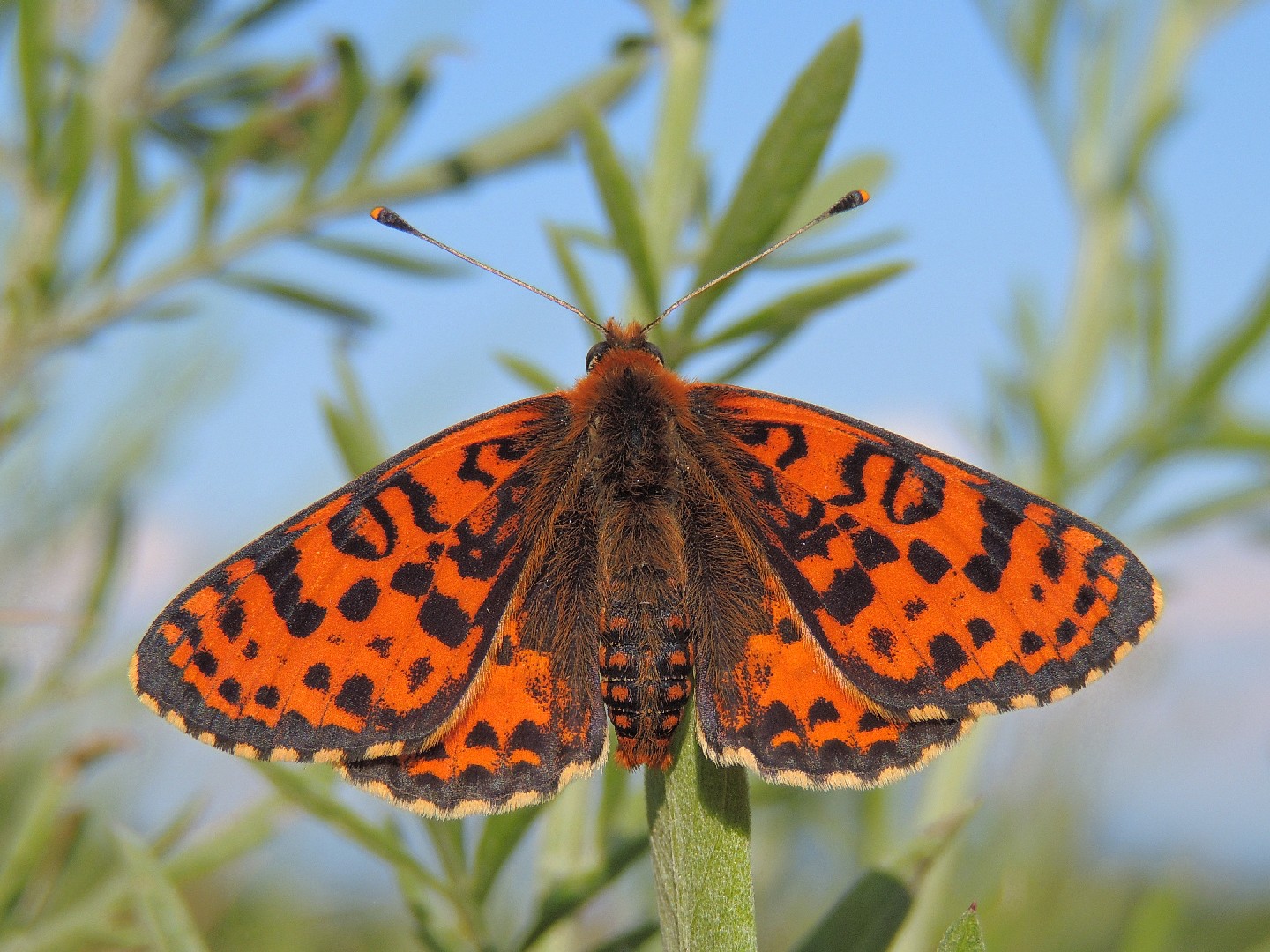
3. Spotted fritillary
Melitaea didyma is a medium-sized butterfly with a wingspan reaching 3.5 - 5 cm. The overside of the wings is a bright orange-brown with dark brown markings arranged in rows, which are quite variable in quantity and size. Sometimes the colour of the females is a duller orange, shaded with grey-green. The underside of the wings is chequered pale yellow and pale orange. Melitaea didyma has seasonal forms and sexual dimorphism. 
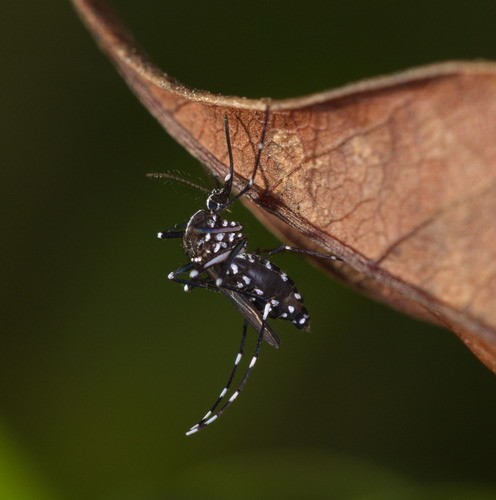
4. Asian Tiger Mosquito
The asian Tiger Mosquito (Aedes albopictus) has recently (the 1970s) infested every corner of the world through the shipment of used tired, lucky bamboo (Dracaena sanderiana), and other similar products. The asian Tiger Mosquito is known to transmit many deadly diseases that include West Nile Virus.
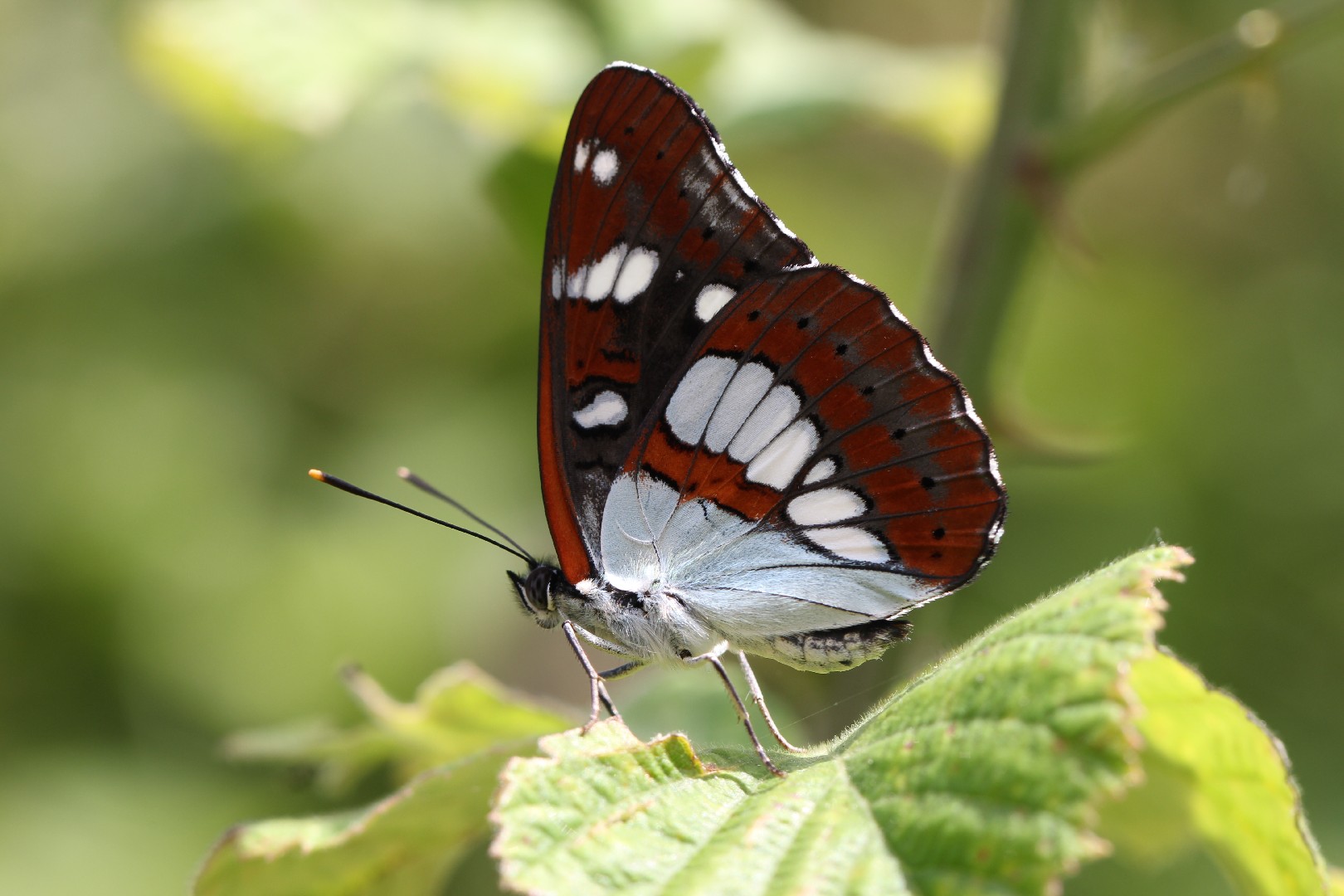
5. Southern white admiral
Limenitis reducta has a wingspan of 46–54 mm. The upperside of the wings is brown black with metallic blue shine, large transversal band of white markings and a submarginal line of small blue dots. The blue sheen varies with the angle of light. The ground colour of underside of the hindwings is red, with a silvery basal area, a row of white markings and a row of black spots. A few white cell spots are also present on the underside of the forewings. The caterpillars can reach a length of 1.1 in. They are light green to dull green on the back, red brown on the underside. On the back there are numerous brown thorns.
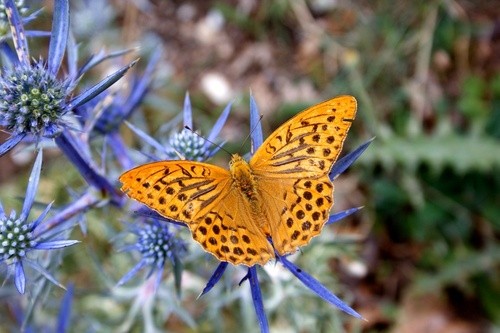
6. Silver-washed fritillary
The silver-washed fritillary (Argynnis paphia) is a beautiful, orange butterfly that is covered in black spots. It earns the "silver-washed" portion of its name through silver streaks you can find running along with it. It produces a scent using "scales" that allows it to distinguish itself when females are trying to locate it.
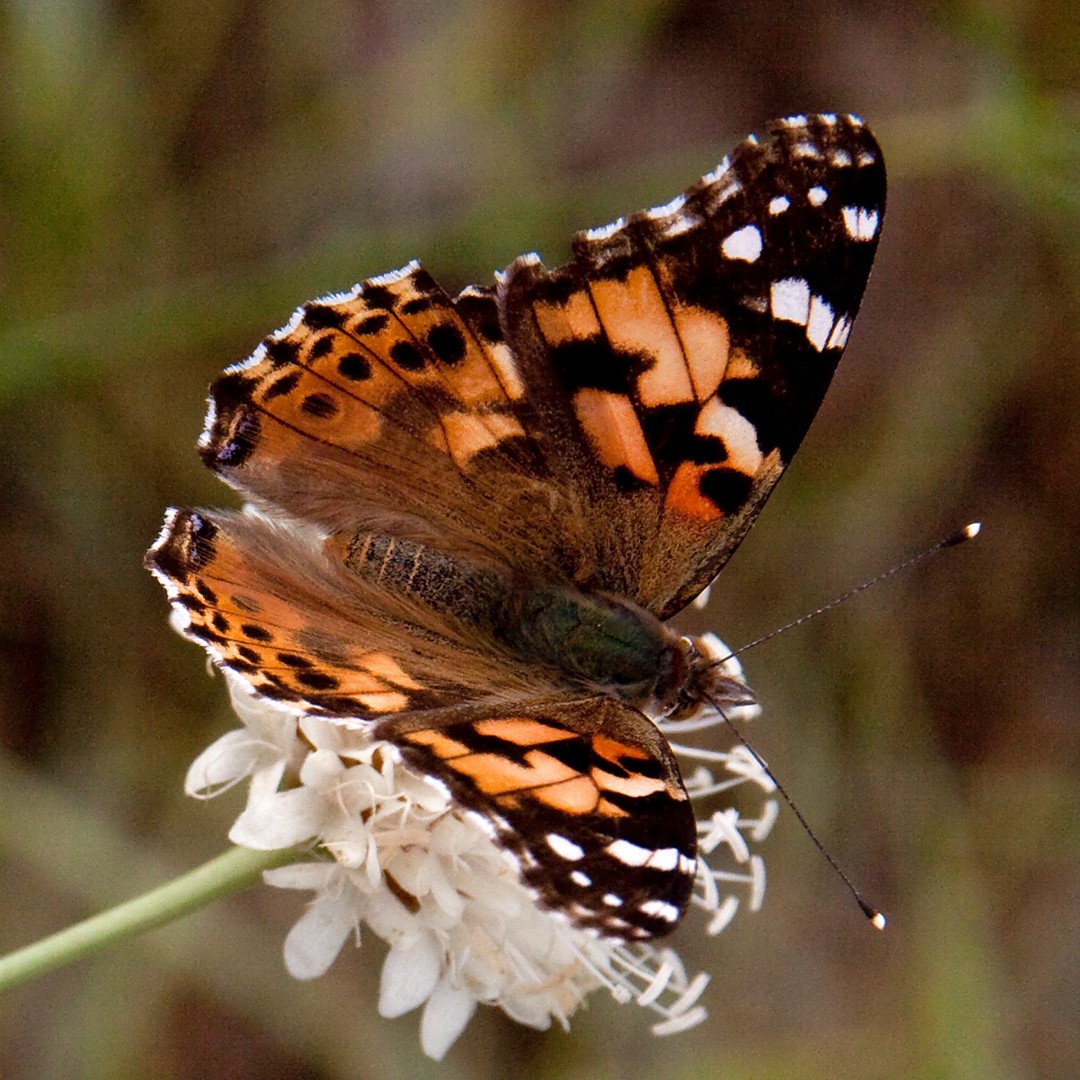
7. Painted lady
The painted lady is a migratory butterfly that spends part of the year in Northern Africa and then migrates to Europe during the warmer months. Although the adults feed on nectar from flowers, the larvae feed on the leaves of nettles and thistles.
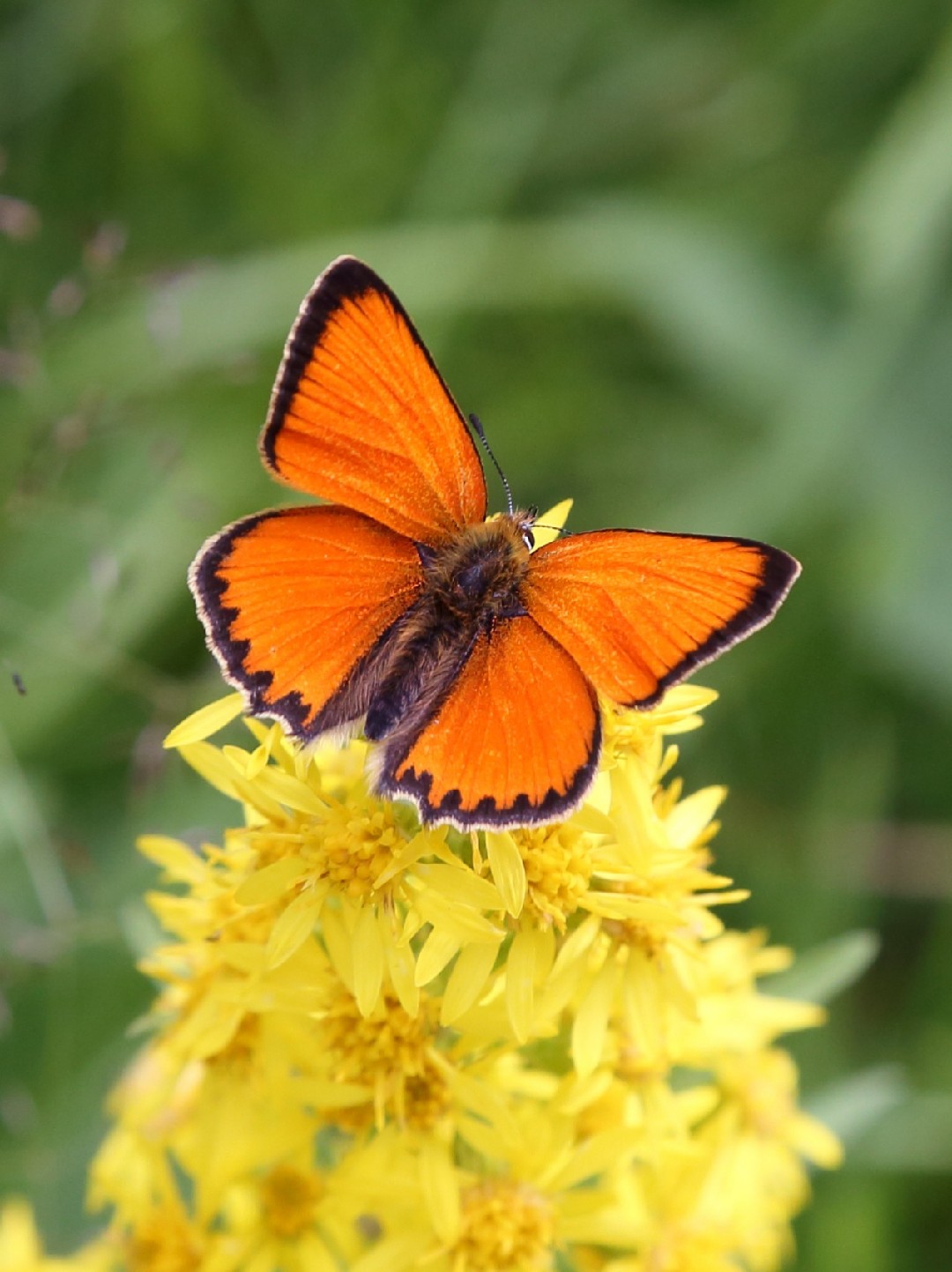
8. Scarce copper
Male above red-golden, with a narrow black margin, at the proximal side of which there are dark dots on the hindwing: female cinnabar-red, spotted with black, the hindwing partly dusted with black. Underside leather-yellow, more sparsely spotted with black, before the outer third of the hind- wing pale dots, which are occasionally united in a white chain. The anal area dusted with red. The species occurs from the Atlantic coasts throughout Europe to East- Siberia and from the coast of the North Sea to the Mediterranean, but is absent from Great Britain and Japan. — In Lapland flies a small form, oranula Frr. (76 b), which is otherwise very similar to the name-typical form. — estonica Huene (76 b), from the Baltic provinces and eastern Russia, exactly resembles the preceding in size and shape, but has a broader black margin. — virgaureola Stgr. (76 b) is in size like virgaureae, but the upperside of the male is as in estonica; beneath the more reddish disc of the forewing contrasts with the more yellow hindwing and the white discal stripe of the latter is absent or reduced; from northern Central Asia, Dauria, Mongolia, and as similar aberration in the Swiss Alps. — males from the Apennines, in which the upperside is deeper red-golden and the base of the hindwing more densely dusted with dark, are apennina Calb. The females the contrary have the ground-colour paler and are less dusted with dark than many Central European specimens, the underside being hghter. According to Fallou the males from the Pyrenees are also deeper red. - On the other hand, the specimens from Mersina and the neighbouring Taurus Mts. have a bright light golden-red upperside in both sexes, the black margin being narrowed in the male. This is aureomicans Heyne. — Specimens with the underside of the hindwing strongly dusted with grey, the upperside of the female more-over having a brown-grey tint on account of the dark dusting on the golden ground, occur in many alpine districts with the ordinary form, being especially plentiful and well marked in the Alps of Valais; all such individuals are united as ab. zermattensis Fall. (76 a). It is hardly possible to decide from Fallou's very long description of this form which are the real characteristics of his aberration, so that strictly speaking not all the specimens standing in collections under this name belong here, particularly not all the specimens from the Valais; in fact only those individuals are true ab. zermattensis which, like phlaeas caeruleopunctata, have a chain of white dots before the outer third of the hindwing, as shown in the figure given in Ann. Soc. Ent. Fr. vol. V. pl. 2. Besides the modification of the colour of the upperside into sepia-brown, both sexes differ on the underside in the forewing bearing a broad dark margin and the hindwing being washed with fuscous, ab. seriata Fruhst. are zermattensis females which have a discal row of white dots on the hindwing proximally to the row of black spots, ab. fredegunda Fruhst. bears, besides those dots, a row of submarginal spots on the forewing beneath. [more vars described]The egg is semiglobular, grey-green, with a network of polygons, laid singly or several together on the stalk of the foot-plant. Larva green with a yellow stripe on back and at the sides, brownish head and brownish legs; at first glassy, transparent, later yellow on the back. Emerges in April and feeds until June on Rumex and Solidago. Pupa rounded, smooth, similar to a small bean, brownish, with dark markings; on the thorax a dark dorsal longitudinal stripe, which is continued on the abdomen by a row of impressed dots. The butterflies are on the wing from the end of June into August on meadows, clearings in woods, mountain-sides and flowery slopes; they are abundant almost everywhere in the area aru:! ascend in the high mountains above 10,000 ft.
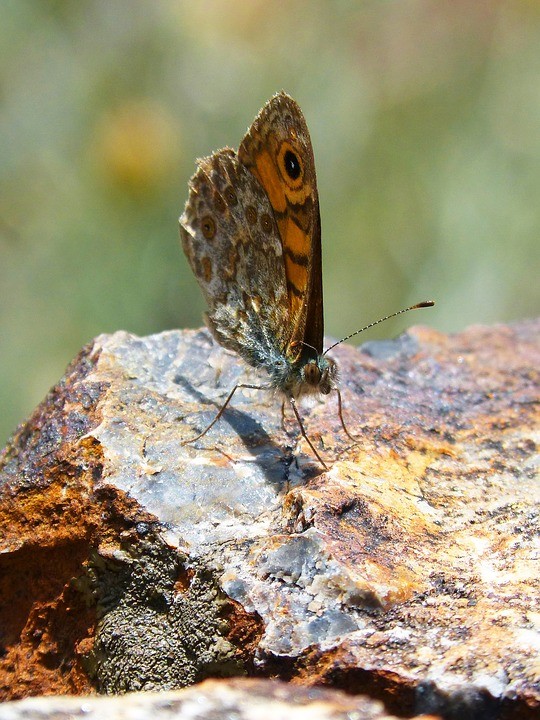
9. Wall brown
P. megera L. [— xiphie Boisd. pt (45d). Above reddish yellow, with a black mark which traverses the distal band from the cell of the forewing to the abdominal margin of the hindwing, short black stripes crossing the disc and the cell of the forewing.
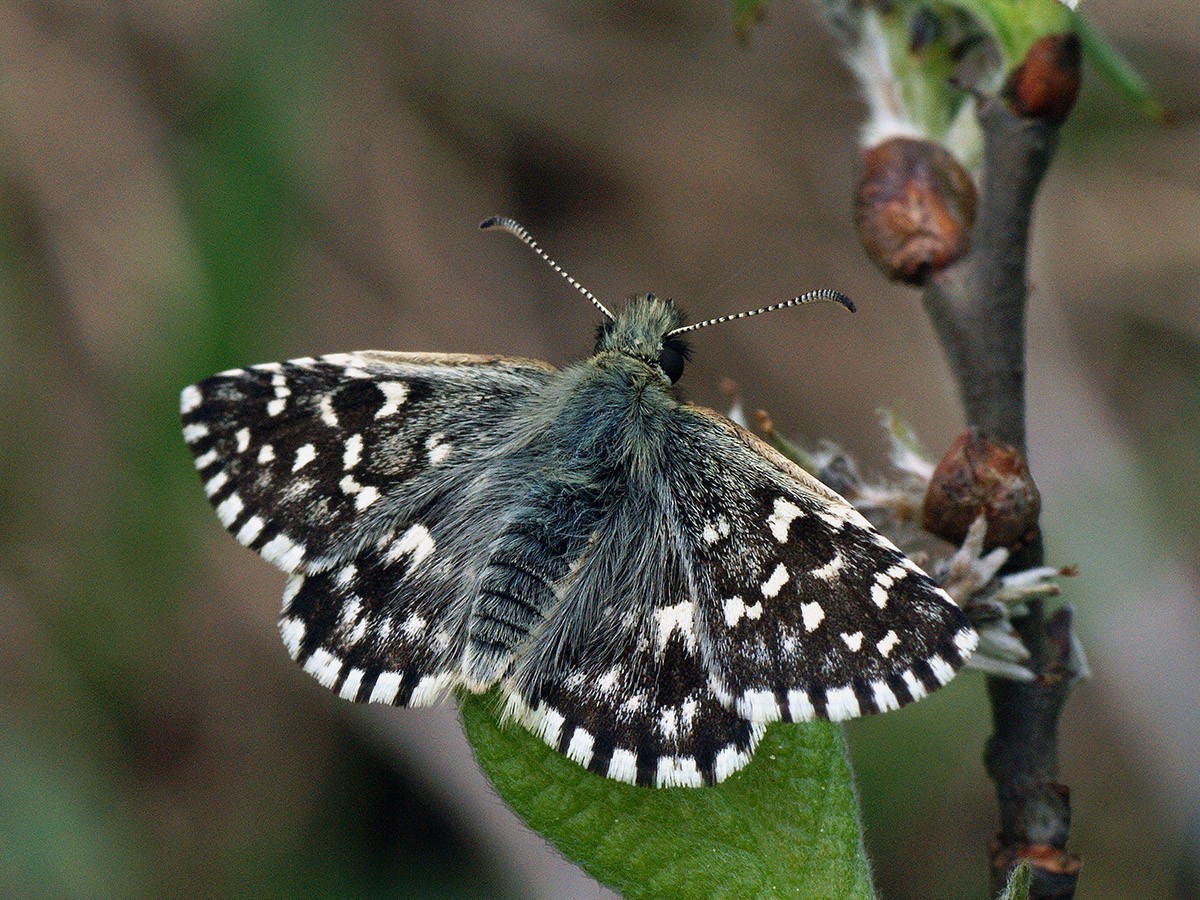
10. Grizzled skipper
With its characteristic chequered black-and-white pattern, the grizzled skipper is quite distinctive. It is small, with an average forewing diameter of 1.2 cm, and closely resembles moths in appearance. Males and females can be differentiated by the shape of their wings: males have slightly more angular wings, while females have a more rounded wing shape. Larvae are coloured green and light brown with darker brown stripes.
More







