




Top 13 Most Common Insects in Essaouira
Welcome insect enthusiasts! Earth's buzzing biodiversity is on full display in the area of Essaouira. This region's diverse landscapes, from arid deserts to fertile valleys, offer a home to a wide range of insects, acting as a driving force behind 13 of the most widespread species. These essential creatures, both as helpful pollinators and pesky invaders, form fascinating relationships with their environments. Uncover the crucial role they play in sustaining ecosystems in our comprehensive guide!

Most Common Insects
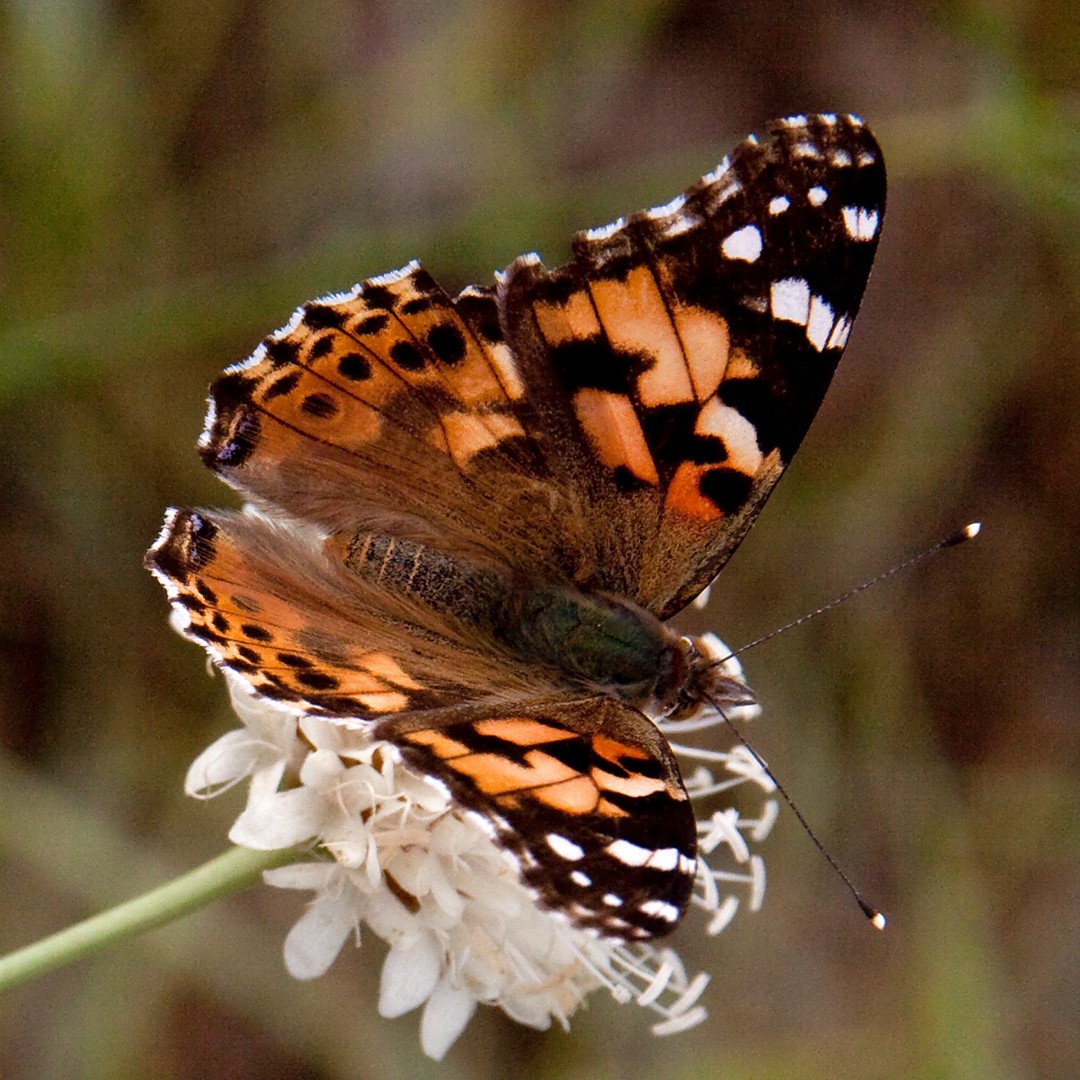
1. Painted lady
The painted lady is a migratory butterfly that spends part of the year in Northern Africa and then migrates to Europe during the warmer months. Although the adults feed on nectar from flowers, the larvae feed on the leaves of nettles and thistles.
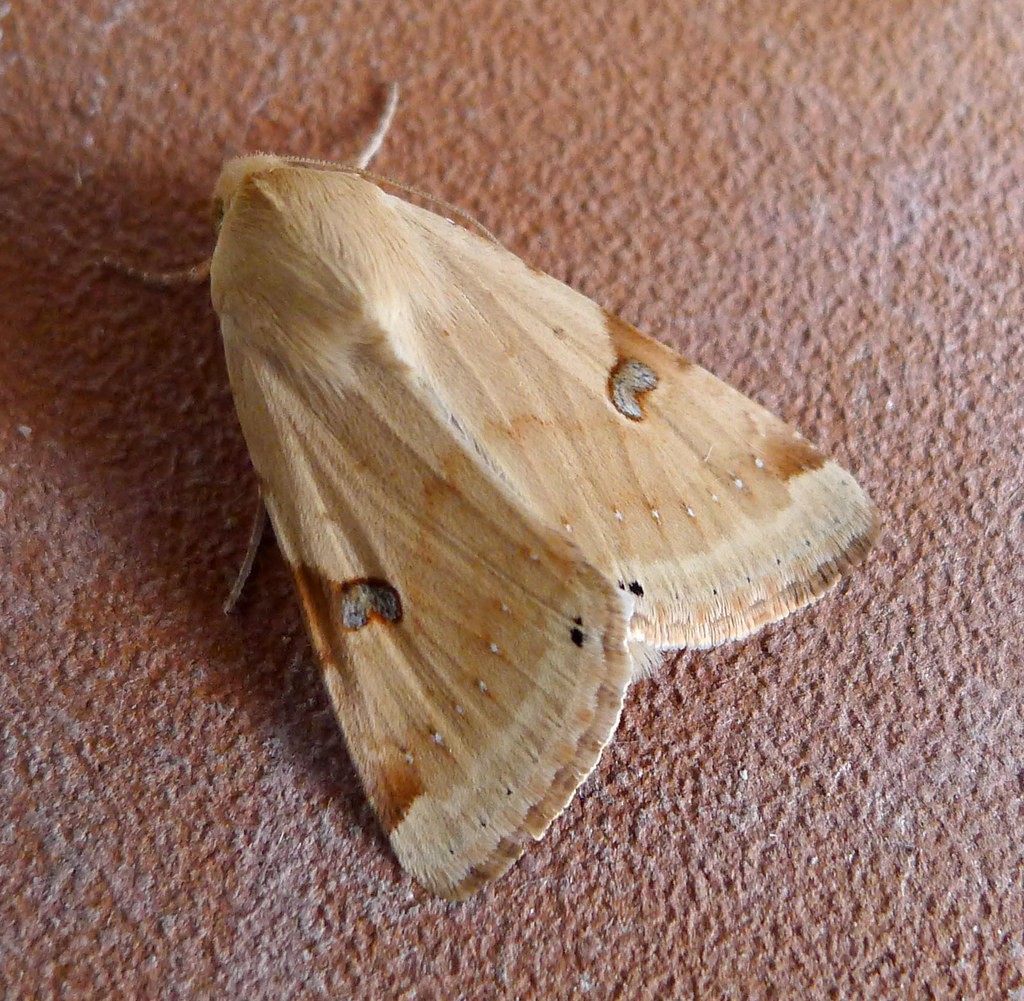
2. Bordered Straw
Heliothis peltigera has a wingspan of 29–40 mm and forewings reaching a length of 16–19 mm. These moths are rather variable in pattern and colour. Forewings are usually greyish ochreous, flushed with pale brown, except the narrow marginal area; lines are brown, indistinct; orbicular stigma is a dark dot. On middle of costa there is a reniform grey dot, with dark brown edge and centre, joined to a brown mark. A brown band appears between outer and submarginal lines. A black dot is present below vein 2 before margin. Hindwings show a broad brown-black marginal border, containing a pale blotch between 2 and 4. Cellspot is dark and fringes are white. Larvae are reddish grey or ochreous, dotted with white. Dorsal and subdorsal lines are dark, while spiracular line is white. This species is quite similar to Heliothis nubigera, that shows less evident kidney markings, and to Helicoverpa armigera, that has lighter colored hindwings. 
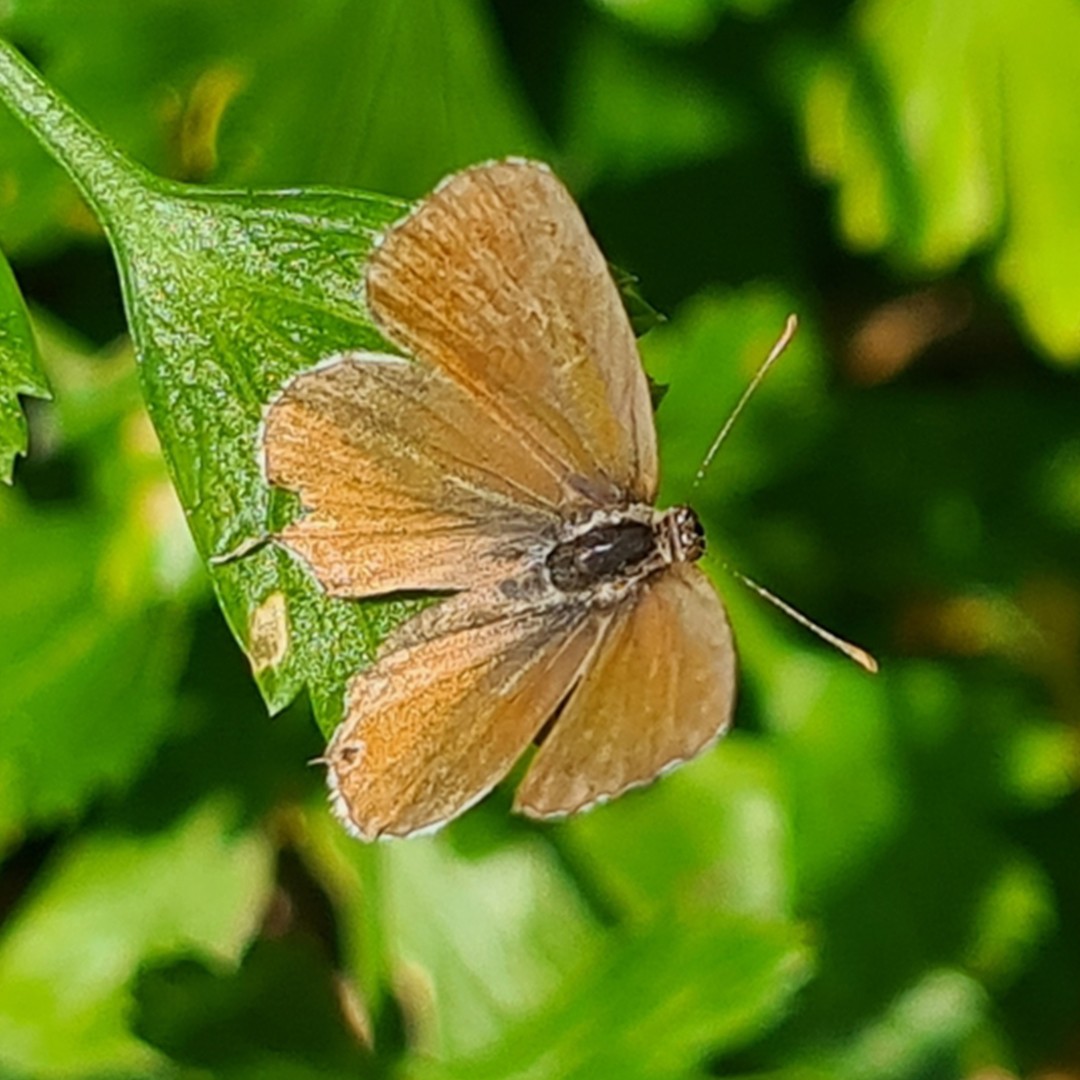
3. Geranium bronze
The adult geranium bronze butterfly's wingspan ranges from 15–23 mm in males and 18–23 mm in females. The wings are brown/bronze with a white border outlining the wings. The underside is a grey-brown with darker bands interlaced with white, creating an intricate pattern. The hindwings contain an eye spot in order to divert predators from attacking. The male and female are similar in appearance.
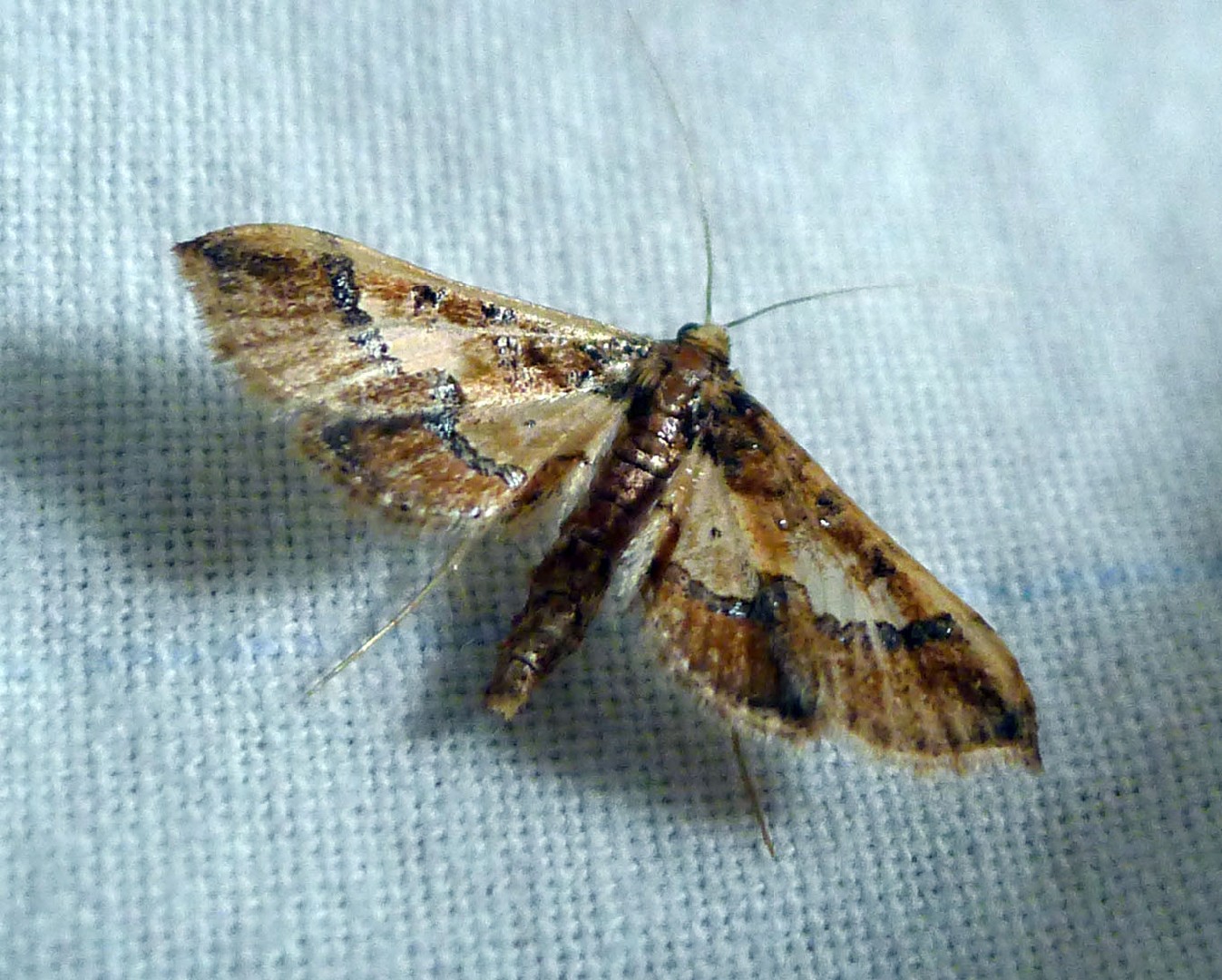
4. Ornate hydriris
The wingspan is about 1.6 cm.
5. Queen of spain fritillary
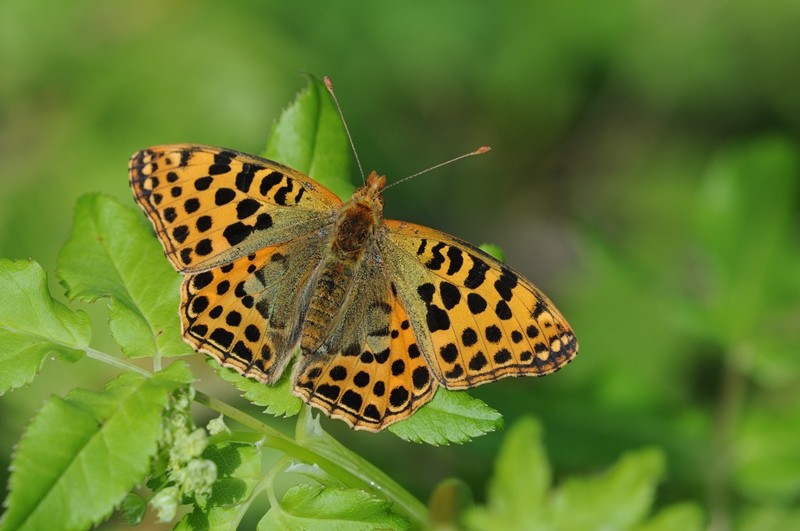
Issoria lathonia is a medium-sized butterfly with a wingspan of 4 - 4.5 cm. The wings show a deep orange-violet background, with rounded black spots arranged in regular rows and suffused with greenish gray in the females. The underside of the hindwings is decorated with large pearly nacreous spots and it is crossed by a postdiscal row of black eyespots with pearly pupils. Some pearly spots also appear at the apex of the forewings. The caterpillar can reach a length of 3.5 cm. It is grayish brown, with black spots, and relatively short brown spines with white tip, and a double row of dorsal white streaks. The suspended chrysalis is dark brown, with a large white saddle-shaped stain and some smaller ones of the same color, resembling a bird's dropping. The imago is rather similar to Argynnis aglaja, Argynnis adippe and Brenthis daphne, which have the same orange color on the upperside of the wings, but show different markings and spots. Moreover, the underside of the hindwings does not have the large pearly spots characteristic of the queen of spain fritillary.
6. Polyommatus celina
7. Old World swallowtail
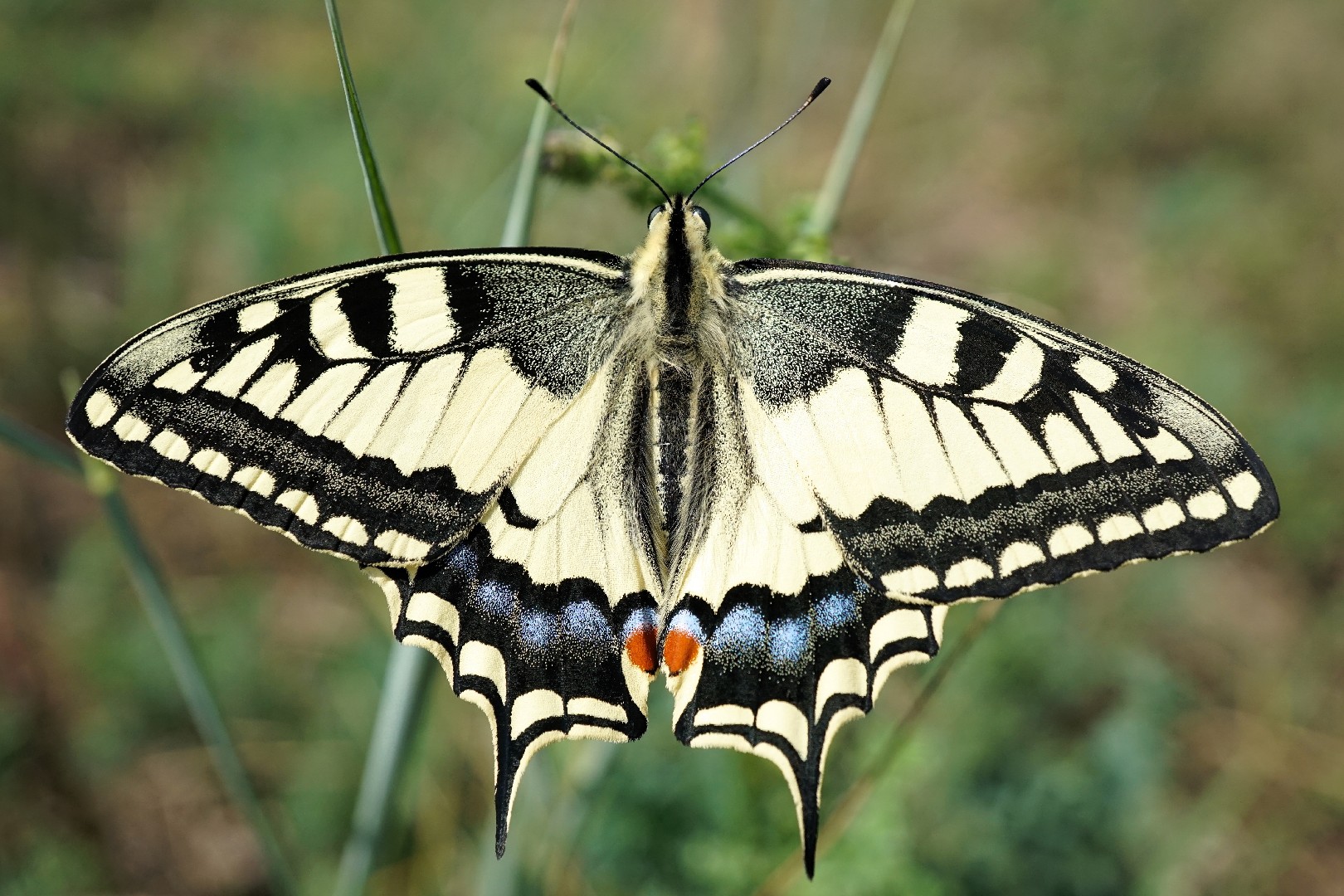
The old World swallowtail (Papilio machaon) is commonly just called the "swallowtail," giving it the added title of "old world" to distinguish it and remind us that it comes from the "old world" (Asia, Africa, Europe). The upper side of them is a beautiful combination of pure white with black striping, the underside being a brownish version of the same thing. There is blue and two red dots on its back side.
8. Four-spotted chaser
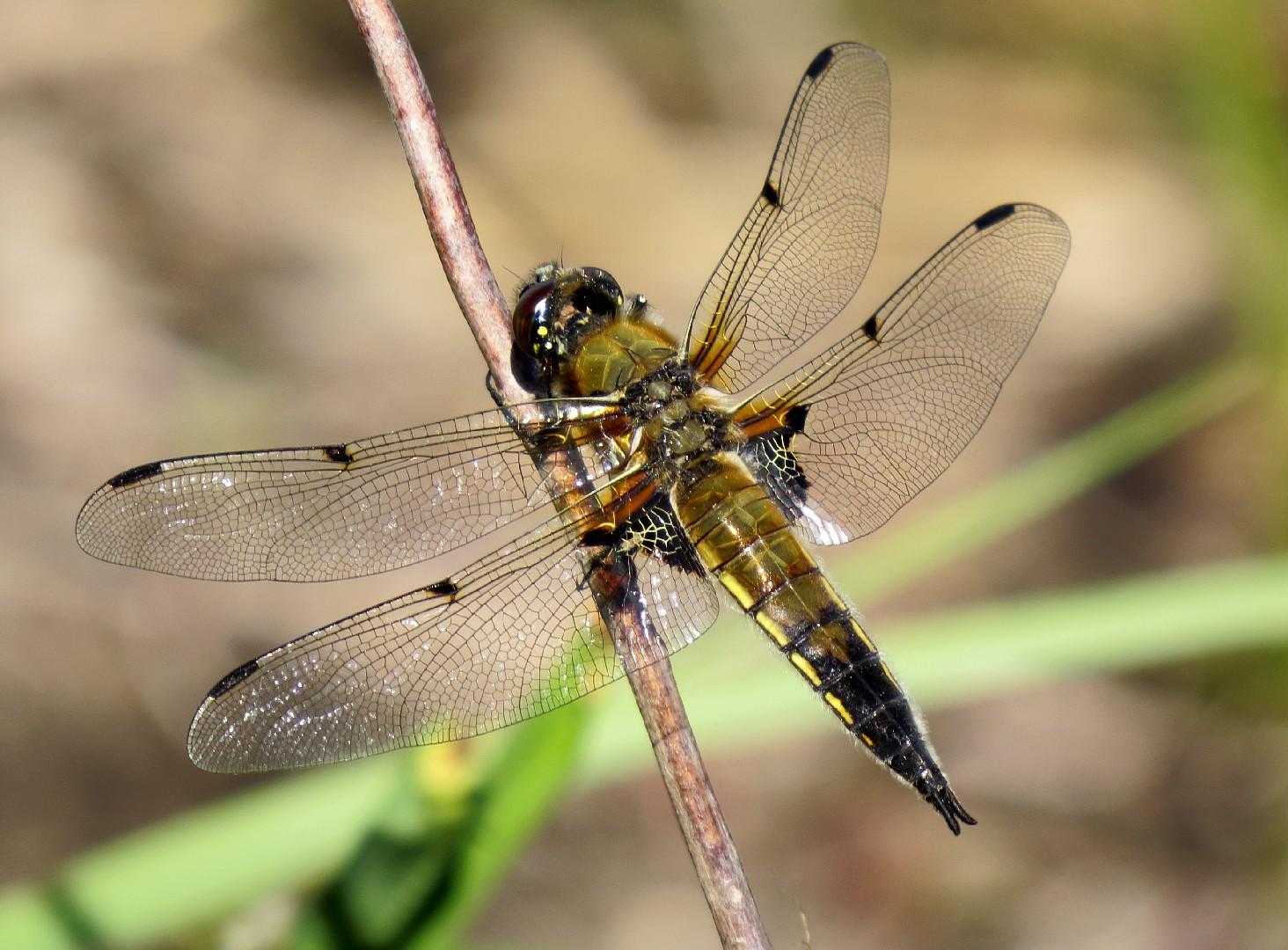
The four-spot (Libellula quadrimaculata) is one of the large dragonflies and reaches a body length of 4 to 4.5 centimeters with wingspan between 7 and 8.5 centimeters. Each of the four wings has a striking dark spot in the area of the distinctive transverse vein (nodus), after which the species received both its scientific and its trivial name. This dragonfly is also known for its mass migrations in swarms of impressive dimensions. The entire stock is not considered to be threatened.
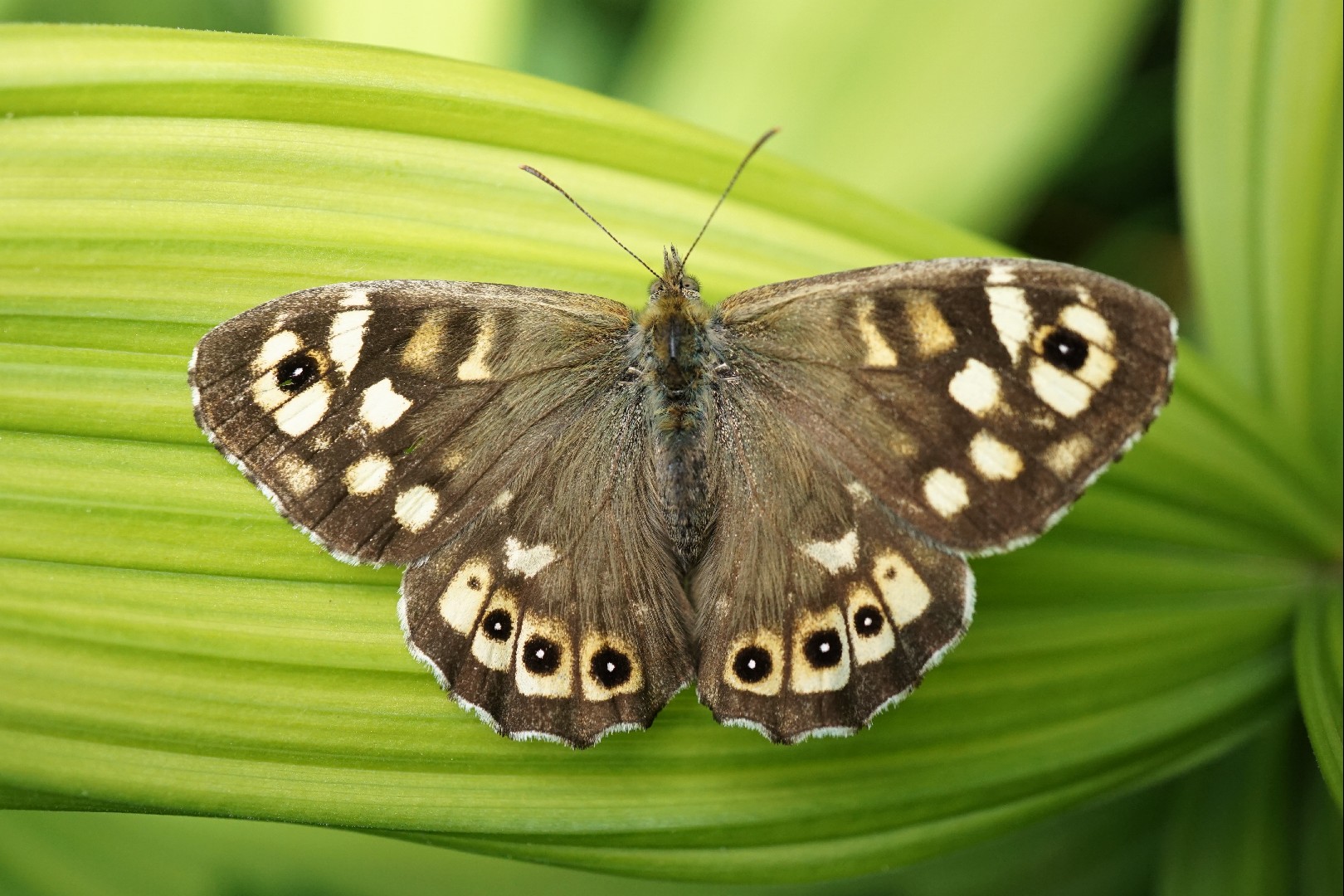
9. Speckled wood
The speckled wood (Pararge aegeria) prefers to live in damp, dark woodlands. Unlike other butterflies, it's more active in shadier habitats rather than sunny ones. Males often fight over a perch, spiraling up to the treetops until they determine a winner. These perches are where the males find passing females.
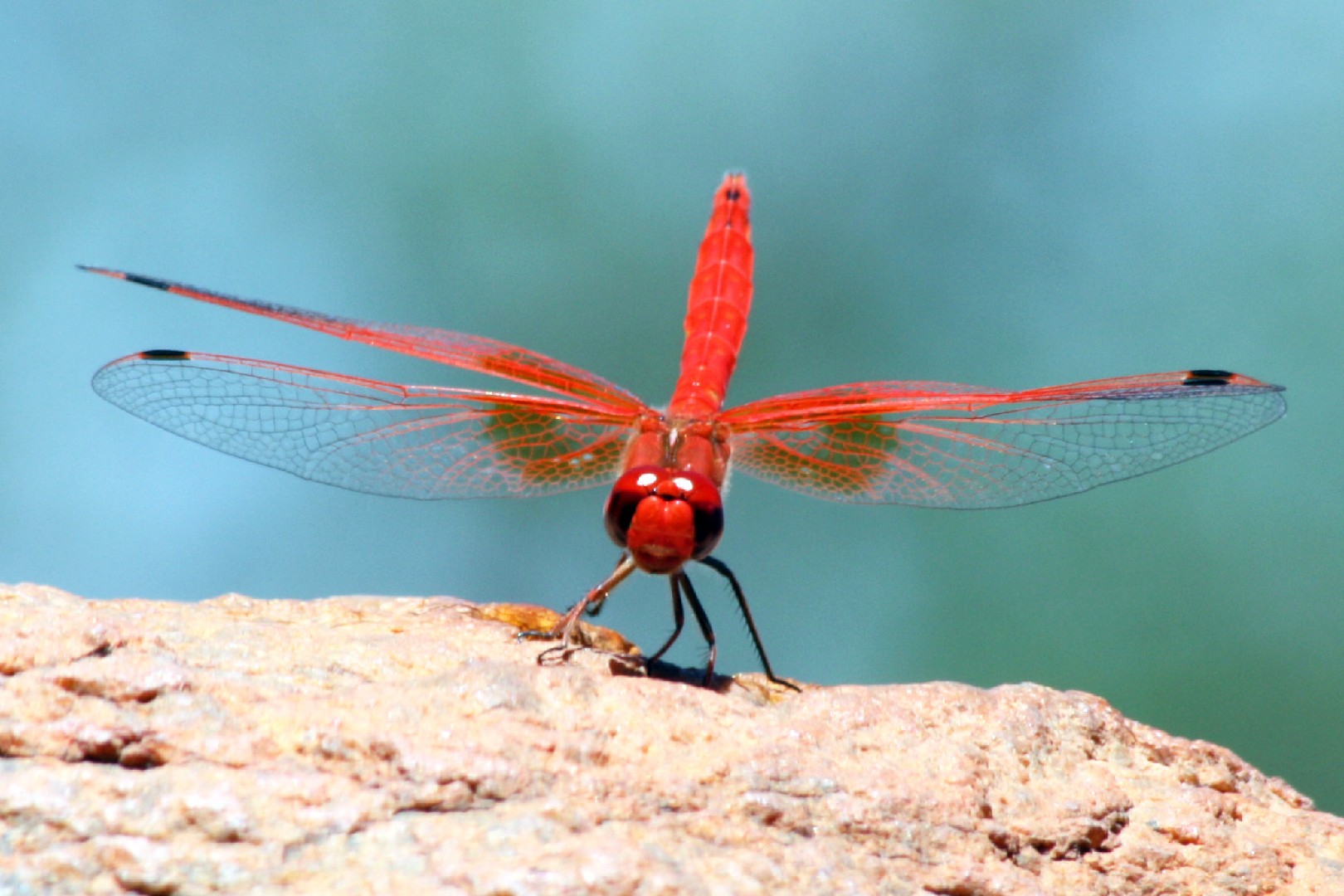
10. Kirby's dropwing
The spotted sun pointer (Trithemis kirbyi) is a dragonfly species from the family of the dragonflies (Libellulidae). Two subspecies are described. The nominate subspecies occurs in India and Sri Lanka, while the insufficiently defined taxon Trithemis kirbyi ardens occurs in the rest of the distribution area, which mainly includes Africa.
More







