




Top 11 Most Common Insects in Sidi Yahia
Insects, those fascinating creatures celebrated for their vast diversity and key roles in ecosystems, are in abundance in Sidi Yahia. With varied geography- from deserts to coastal areas, Sidi Yahia teems with insect life, each species uniquely adapted to its locale. These bugs play a critical role from pollination to pest control. Our list of top 11 common insects, underscores the symbiotic relationship between Sidi Yahia's diverse ecosystems and its thriving insect population.

Most Common Insects
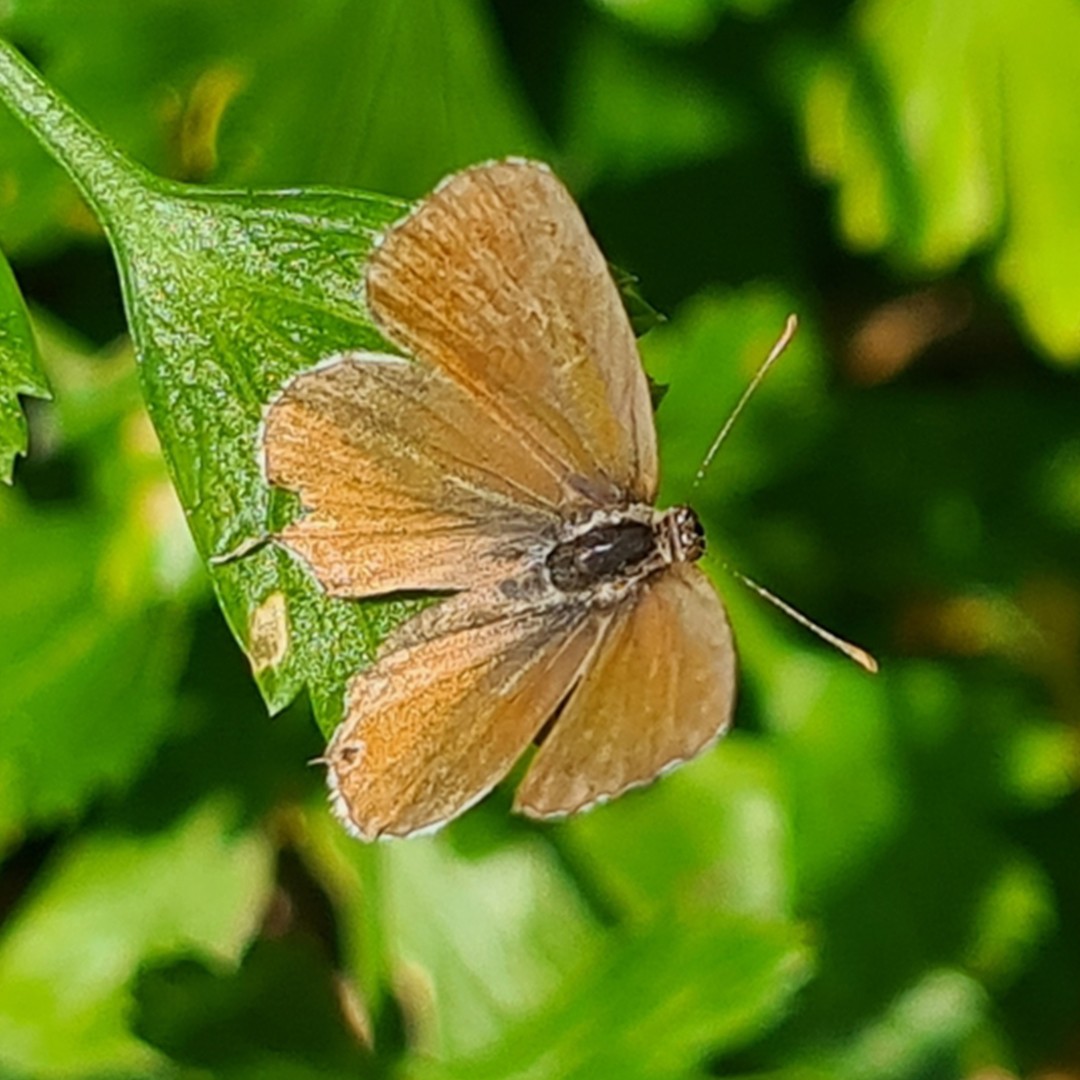
1. Geranium bronze
The adult geranium bronze butterfly's wingspan ranges from 15–23 mm in males and 18–23 mm in females. The wings are brown/bronze with a white border outlining the wings. The underside is a grey-brown with darker bands interlaced with white, creating an intricate pattern. The hindwings contain an eye spot in order to divert predators from attacking. The male and female are similar in appearance. 
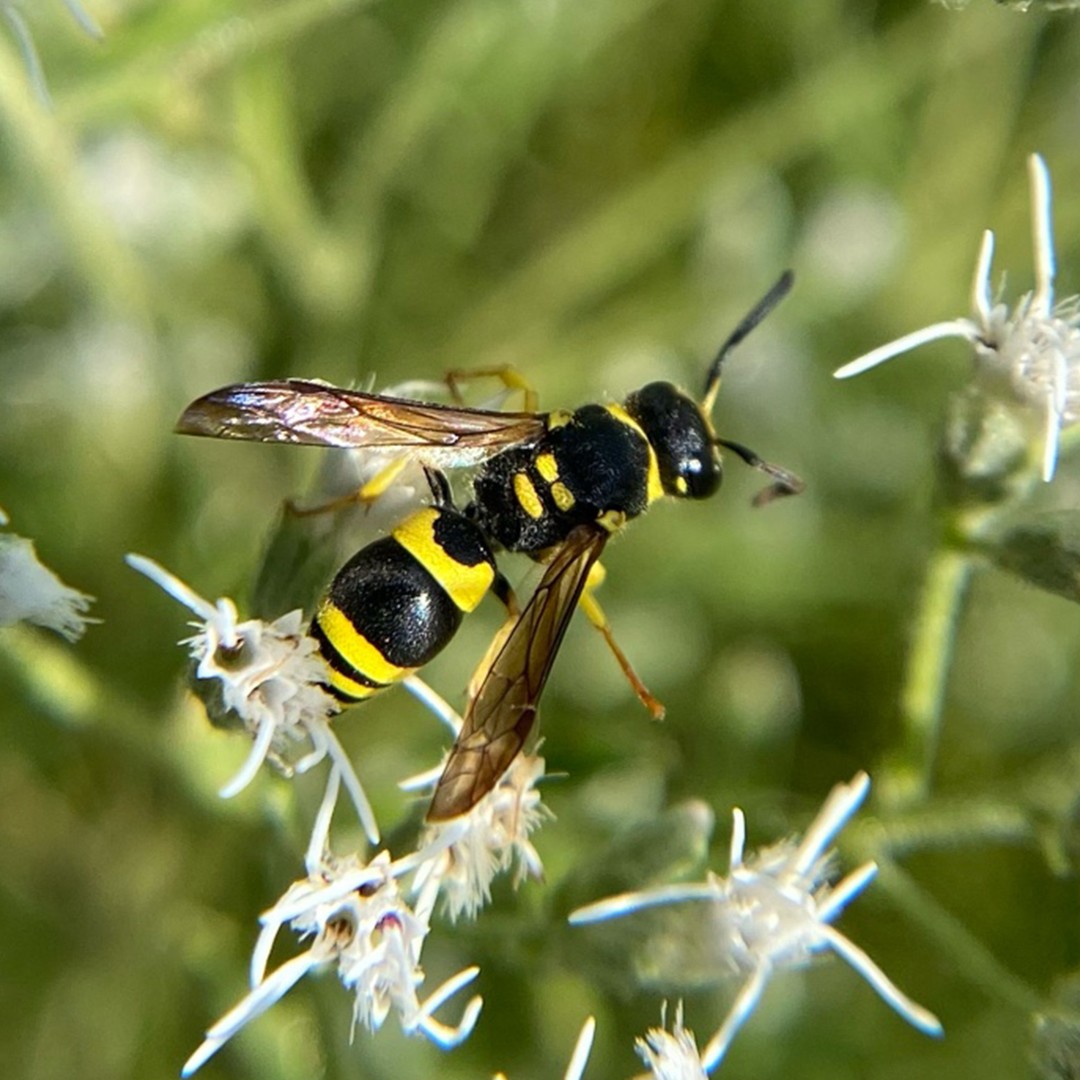
2. European potter wasp
The European potter wasp or European tube wasp (Ancistrocerus gazella) is a species of potter wasp. As an imago (adult), the female collects as many as 20 caterpillars for each nest, which consists of a single cell. Her larval offspring then feed on these inside the nest, which is sealed with mud arranged by her. As adults, they eat nectar and aphid honeydew. Males cannot sting, and the sting of a female is not painful. They can be found on windows, foraging for nectar on flowers, or searching out small cracks or holes in which to nest.
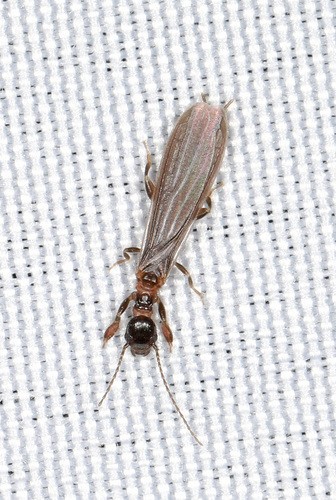
3. Black Webspinner
The black Webspinner (Oligotoma nigra) closely resembles a termite species, but it's not at all related. Instead, it behaves more like a moth or fly, flying toward lights. However, the females are wingless, so they spend their time in tunnels underground, which is where they mate and lay eggs.
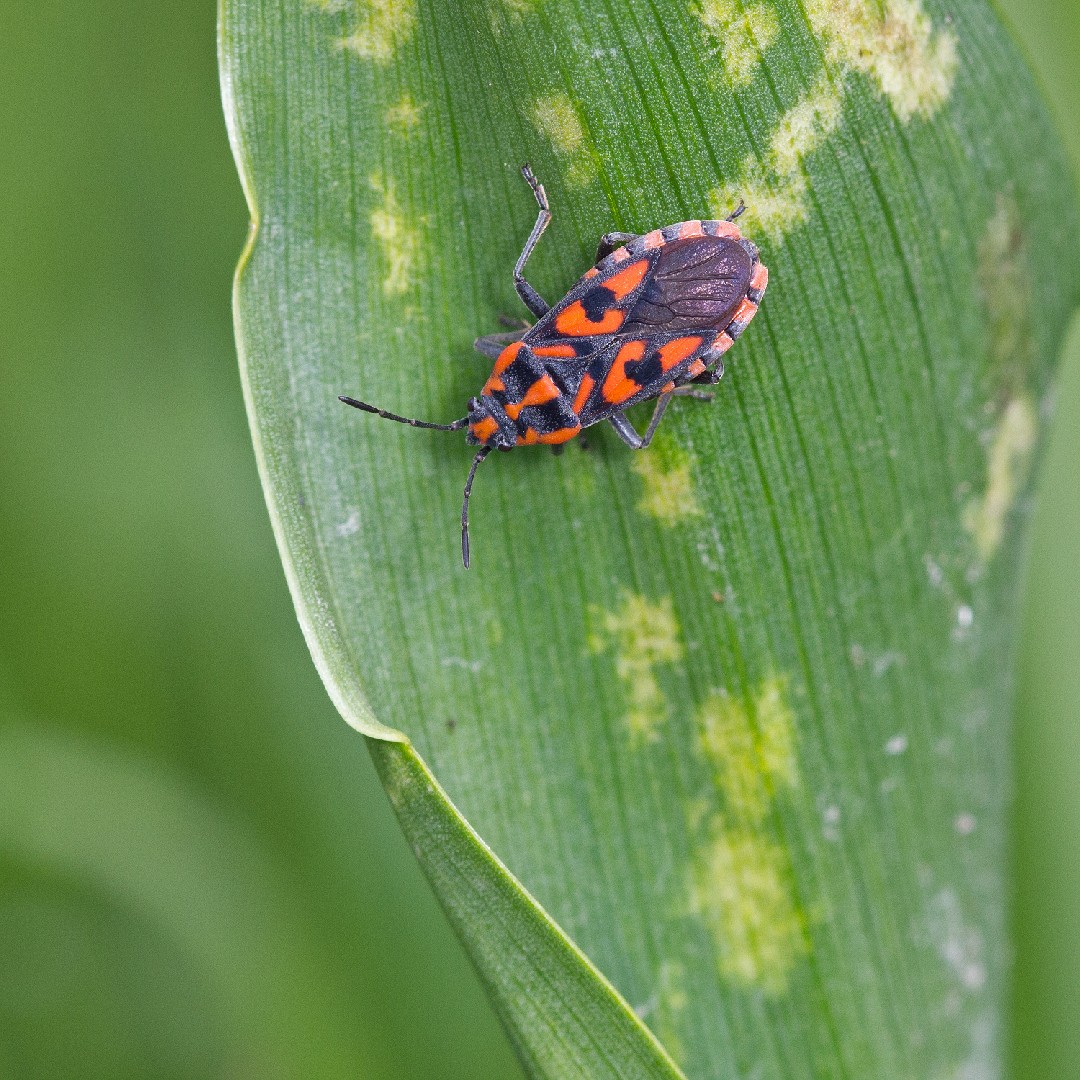
4. Spilostethus saxatilis
Spilostethus saxatilis can reach a length of 0.33–0.49 in. Bodies of these bugs are characterized by black and red markings of different shapes. Pronotum is red, with two broad, irregularly shaped longitudinal black stripes. The hemilytra have black and red markings, while the membrane is black, without white spot. The outer edge of the corium is black. The connexivum is alternately red and black colored. Antennae and legs are black.
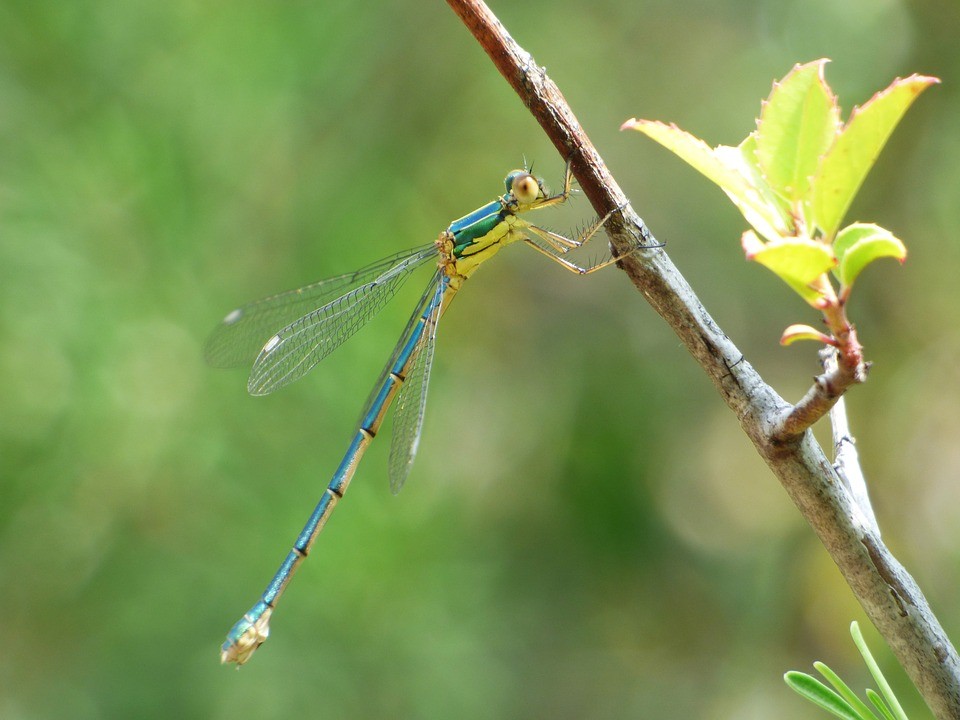
5. Western willow spreadwing
Chalcolestes viridis, formerly Lestes viridis, is a damselfly of the family Lestidae. It has a metallic green body and at rest it holds its wings away from its body. Its common name is the willow emerald damselfly or the western willow spreadwing.
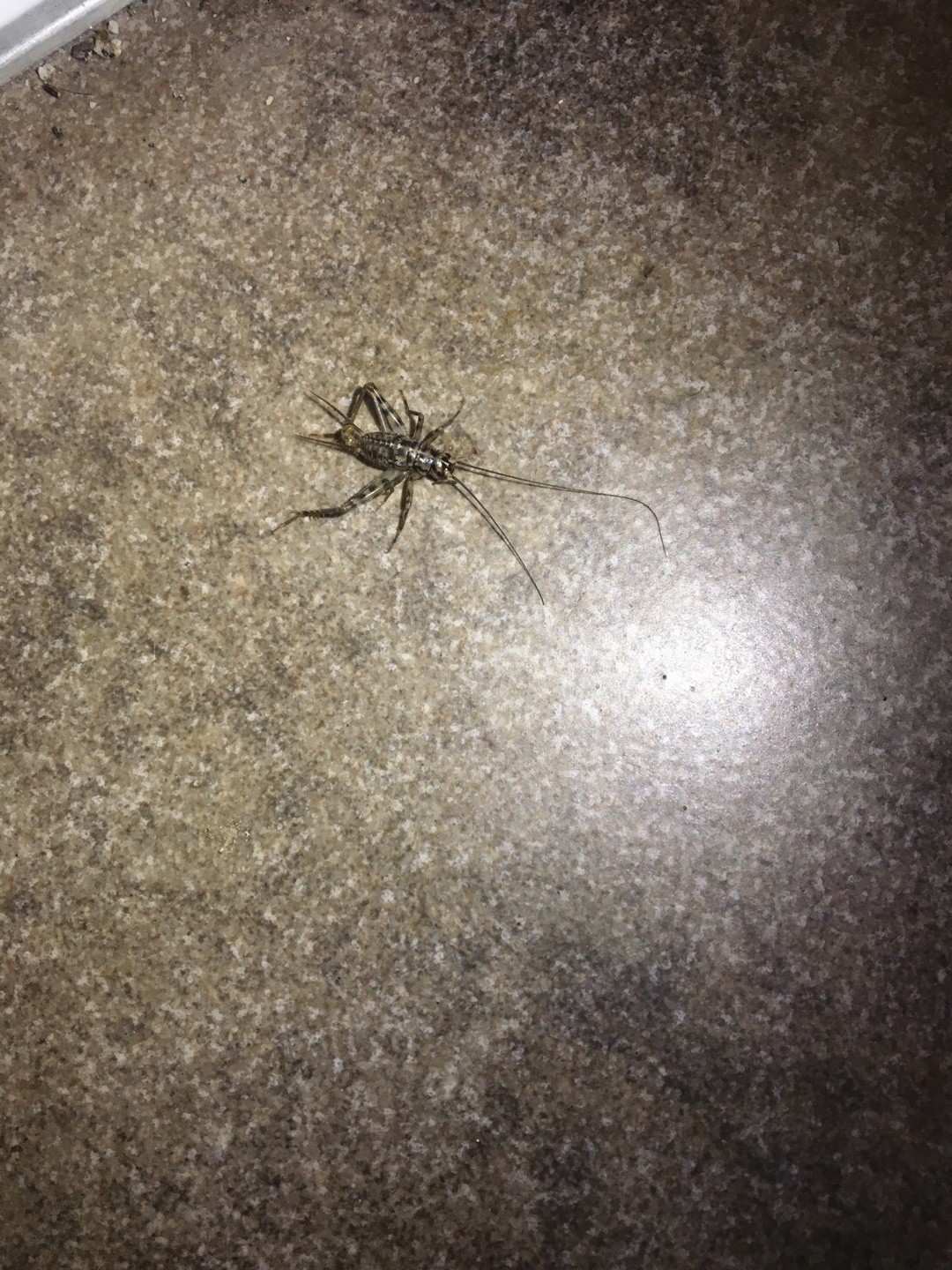
6. Bordeaux cricket
The Eumodicogryllus bordigalensis primarily lives in Europe. However, it has been known to visit various tourist spots and has a fondness for old railyards, such as those spotted in the Czech Republic. They are primarily brownish, but they can be darker as well. They have a sharply defined bright line between their eyes. They are often hiding under stones and gravel.
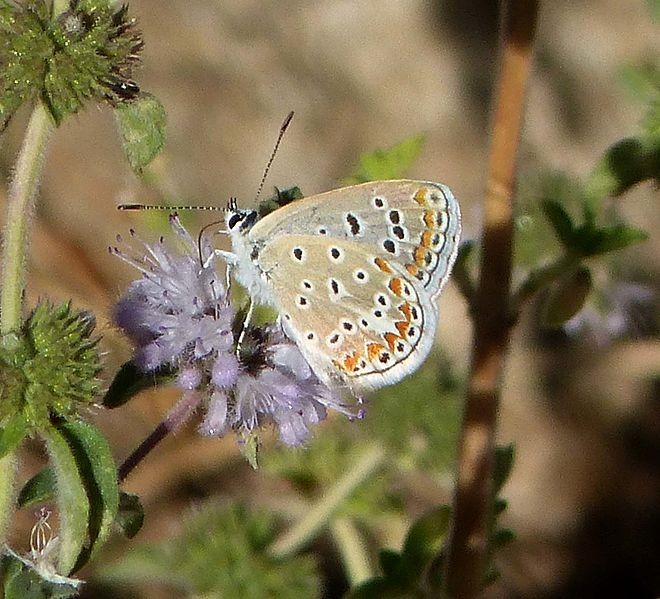
7. Polyommatus celina
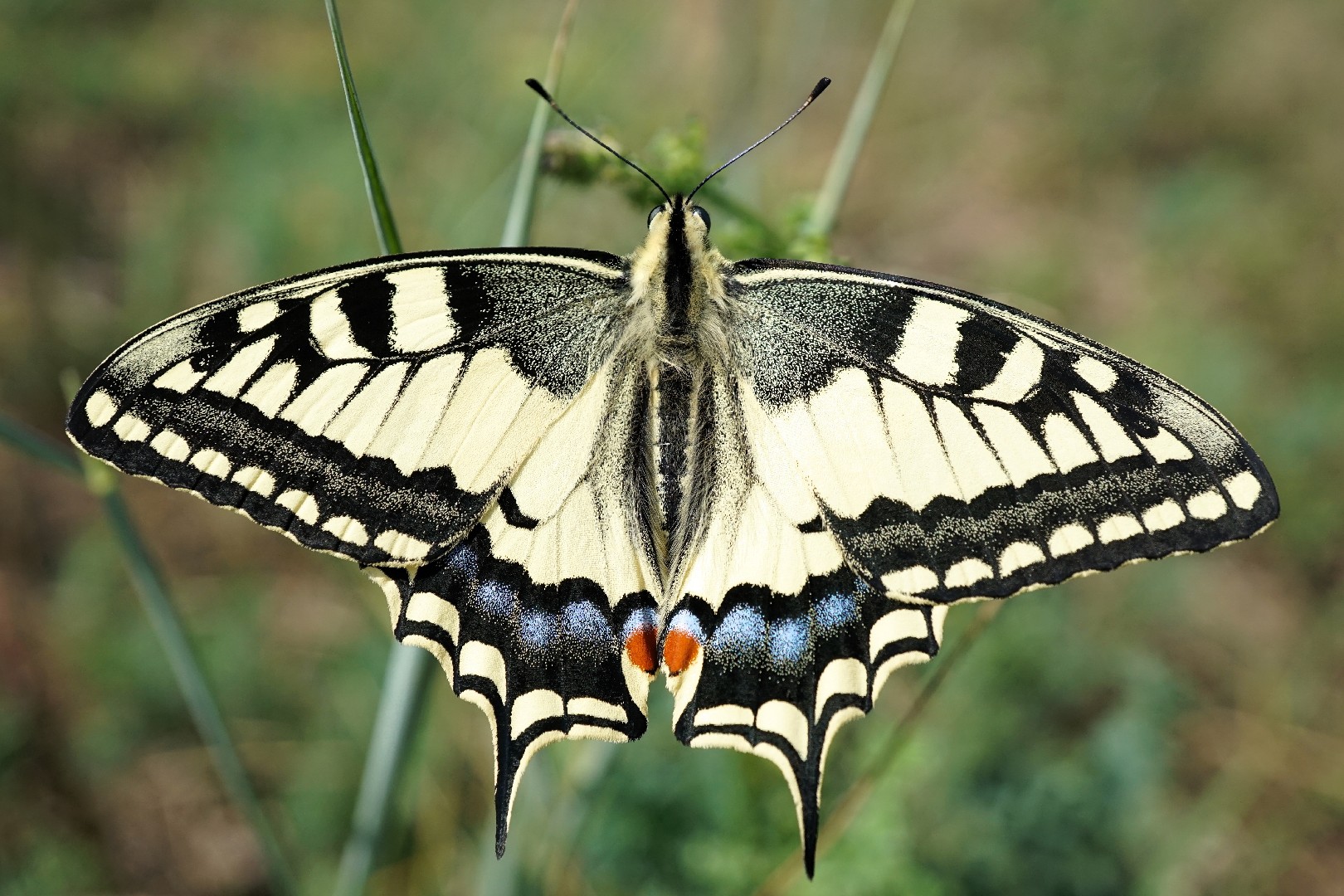
8. Old World swallowtail
The old World swallowtail (Papilio machaon) is commonly just called the "swallowtail," giving it the added title of "old world" to distinguish it and remind us that it comes from the "old world" (Asia, Africa, Europe). The upper side of them is a beautiful combination of pure white with black striping, the underside being a brownish version of the same thing. There is blue and two red dots on its back side.
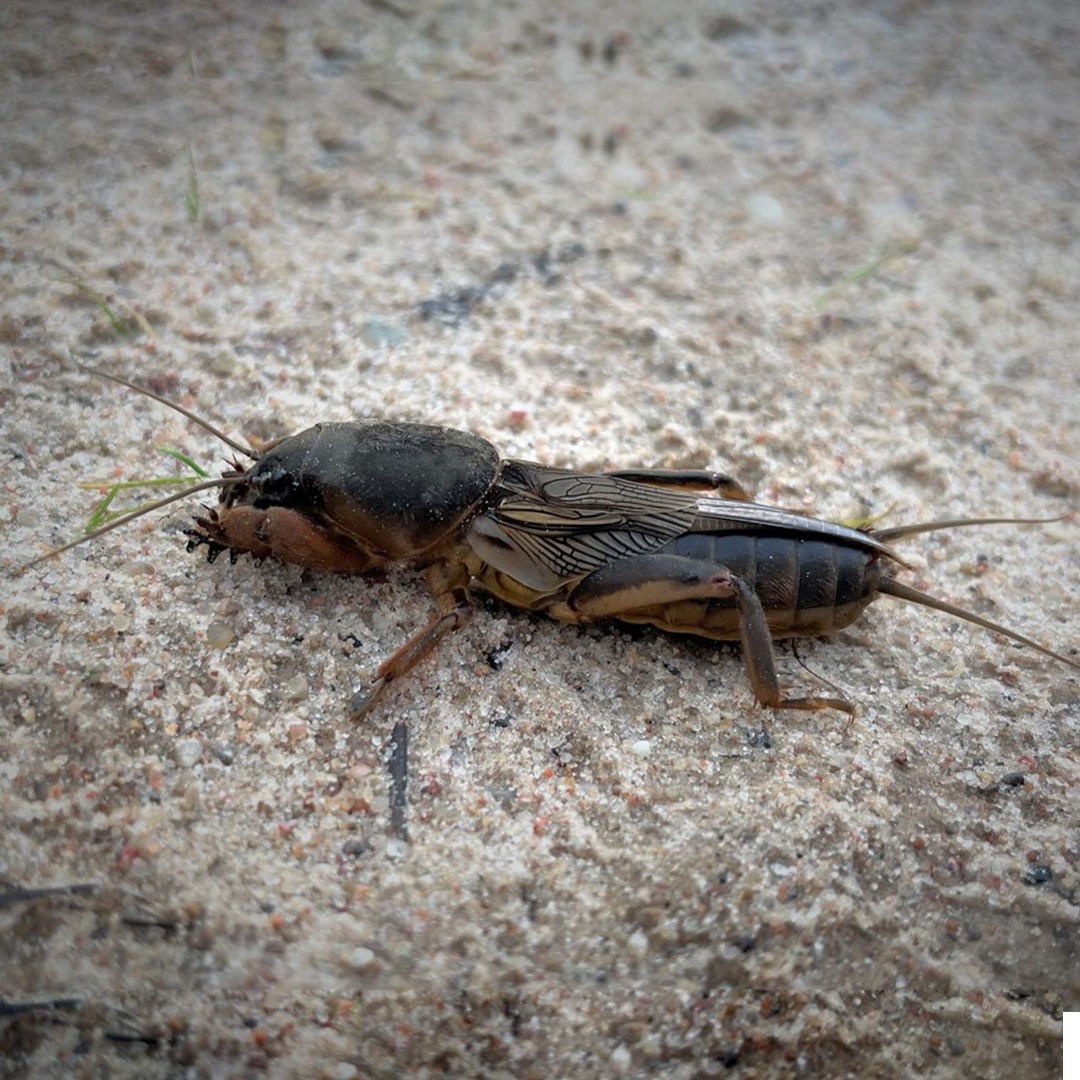
9. European mole cricket
The body length is about 50 millimetres in males and 70 millimetres in females. The cricket is dark brown with a silky shimmer and yellowish underside and is covered with fine velvety hairs. The forelegs are powerful and modified for digging. The elytra are half the length of the abdomen and the wings are transparent and netted with veins. They are folded into pleats and seldom used as the cricket normally remains below the ground. The males can be distinguished from the females by the open vein area in the forewing known as the 'harp' while the females lack the external ovipositor that is possessed by other crickets.
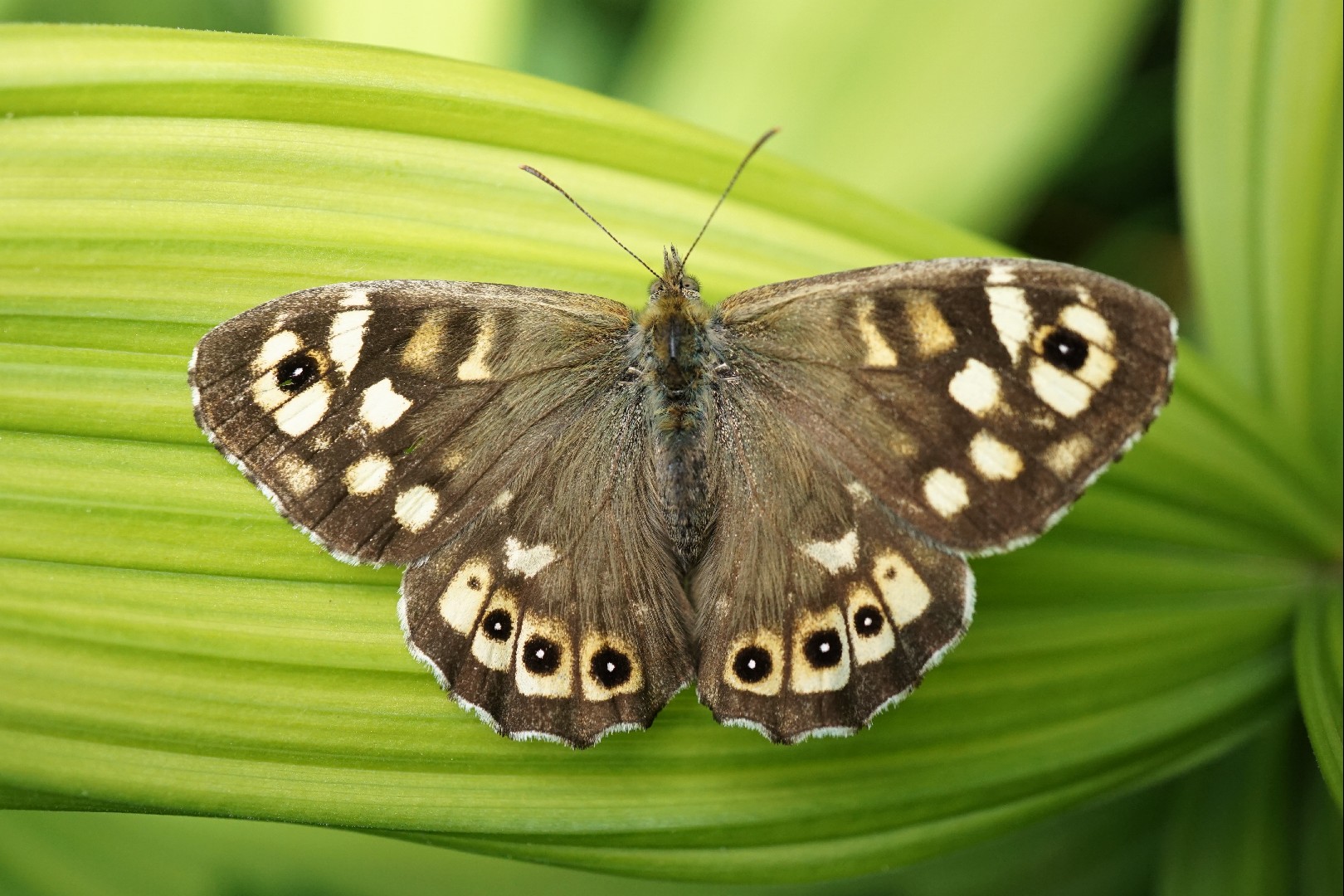
10. Speckled wood
The speckled wood (Pararge aegeria) prefers to live in damp, dark woodlands. Unlike other butterflies, it's more active in shadier habitats rather than sunny ones. Males often fight over a perch, spiraling up to the treetops until they determine a winner. These perches are where the males find passing females.
More







