




Top 13 Most Common Insects in Tetouan
Insects, with their vibrant colors and diverse habitats, are intriguing subjects in Tetouan. Various geographical locations heavily influence the area's insect diversity, resulting in a myriad of species in this region. Insects, both pests, and beneficial kinds, have a significant role in maintaining the region's ecological balance. Let's explore '13' of these common insects found in Tetouan and understand their impact on our environment.

Most Common Insects
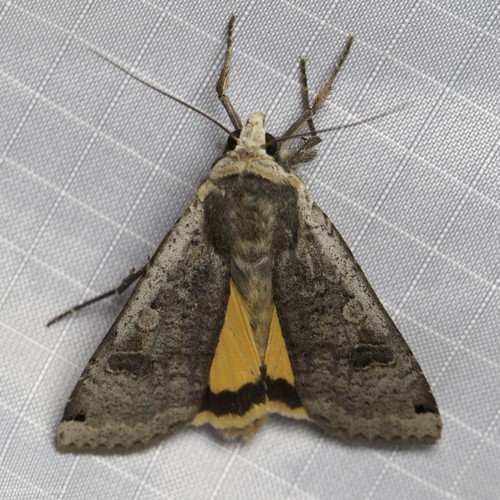
1. Large yellow underwing
An unusually large and heavy species of moth, large yellow underwing (Noctua pronuba) is dreaded by gardeners for the larvae's habit of causing fatal damage to the base of virtually any herbaceous plant. Large migrations occur some years, but how those years are determined is not yet known. Its contrasting colors (yellow-orange and brown) are thought to confuse would-be predators.
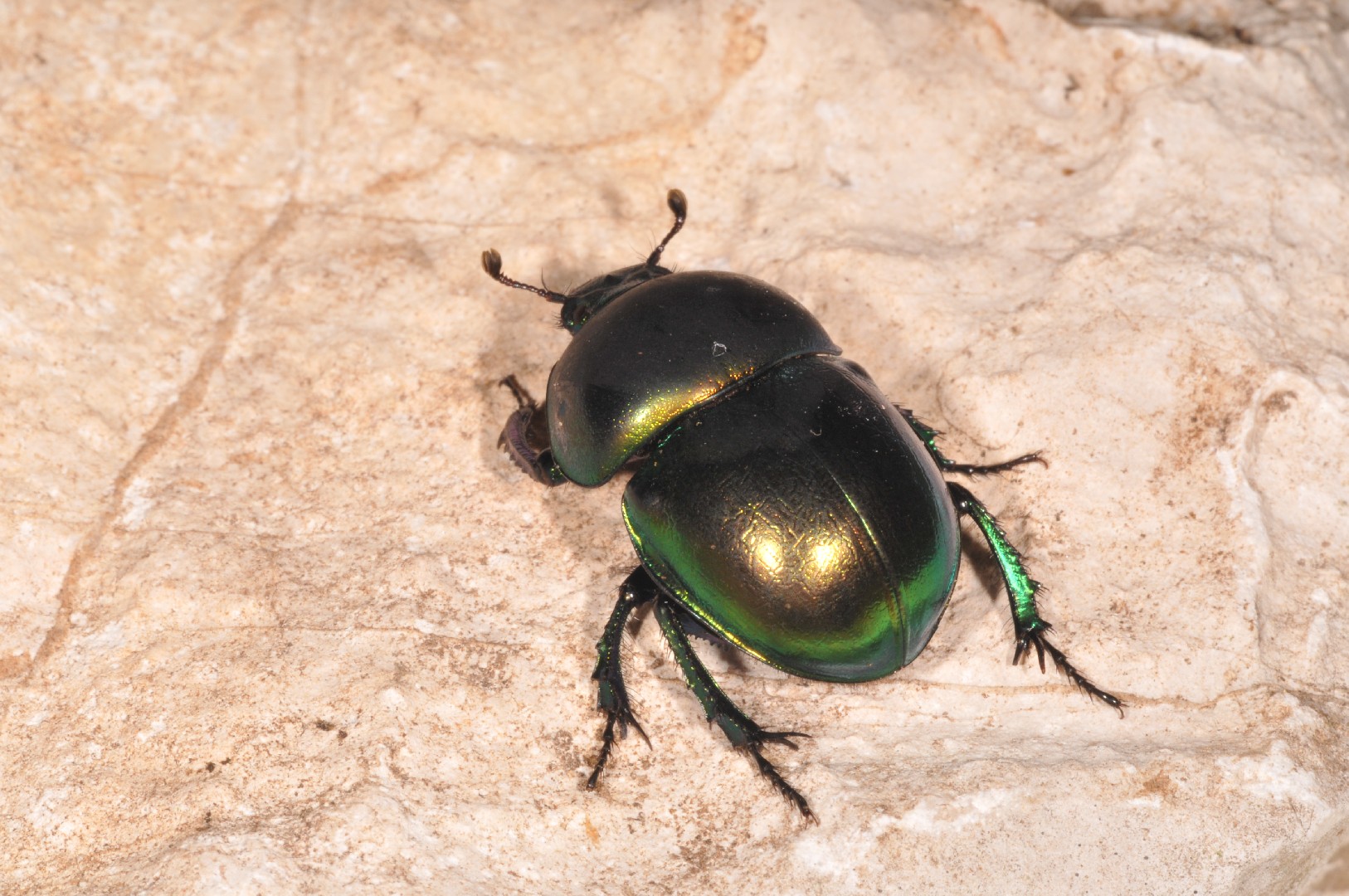
2. Spring dor beetle
The spring dor beetle (Trypocopris vernalis) is a beetle with a beautiful, metallic appearance. Despite their beautiful appearance, these insects are not in beautiful places. They are commonly found feasting upon the dung of various creatures, especially sheep and foxes.
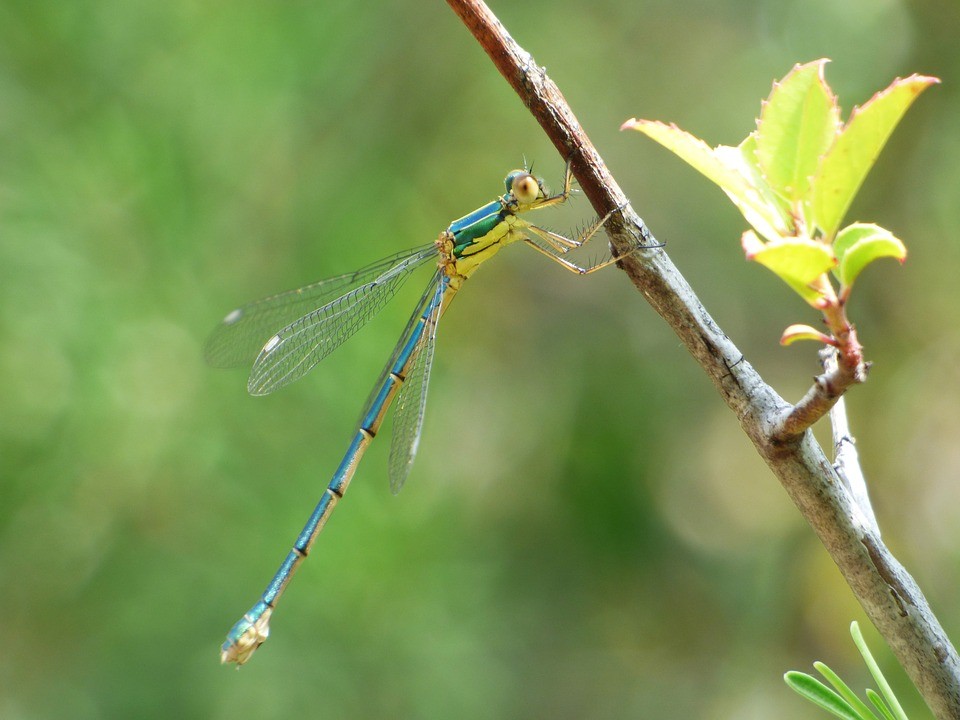
3. Western willow spreadwing
Chalcolestes viridis, formerly Lestes viridis, is a damselfly of the family Lestidae. It has a metallic green body and at rest it holds its wings away from its body. Its common name is the willow emerald damselfly or the western willow spreadwing. 
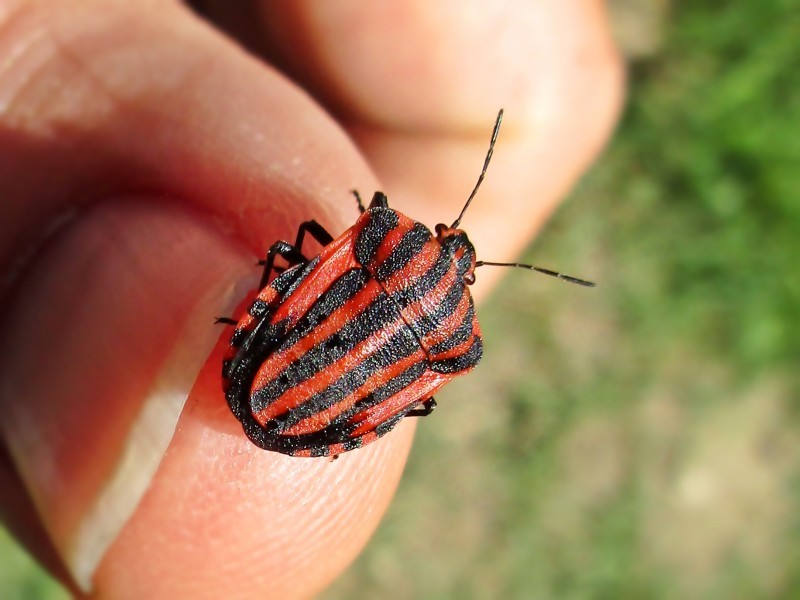
4. North african and sicilian striped shield bug
G. lineatum can reach a length of 8–12 mm (0.31–0.47 in). The body is almost round, with a large shield. The basic color of the upperside of the body is orange yellow, with wide black longitudinal stripes. The pronotum has six black bands. The antennae are black. Also the sides of the abdominal segments (connexivum) are yellow with many small black spots. The legs are mostly orange, which distinguishes it from its relative, G. italicum.
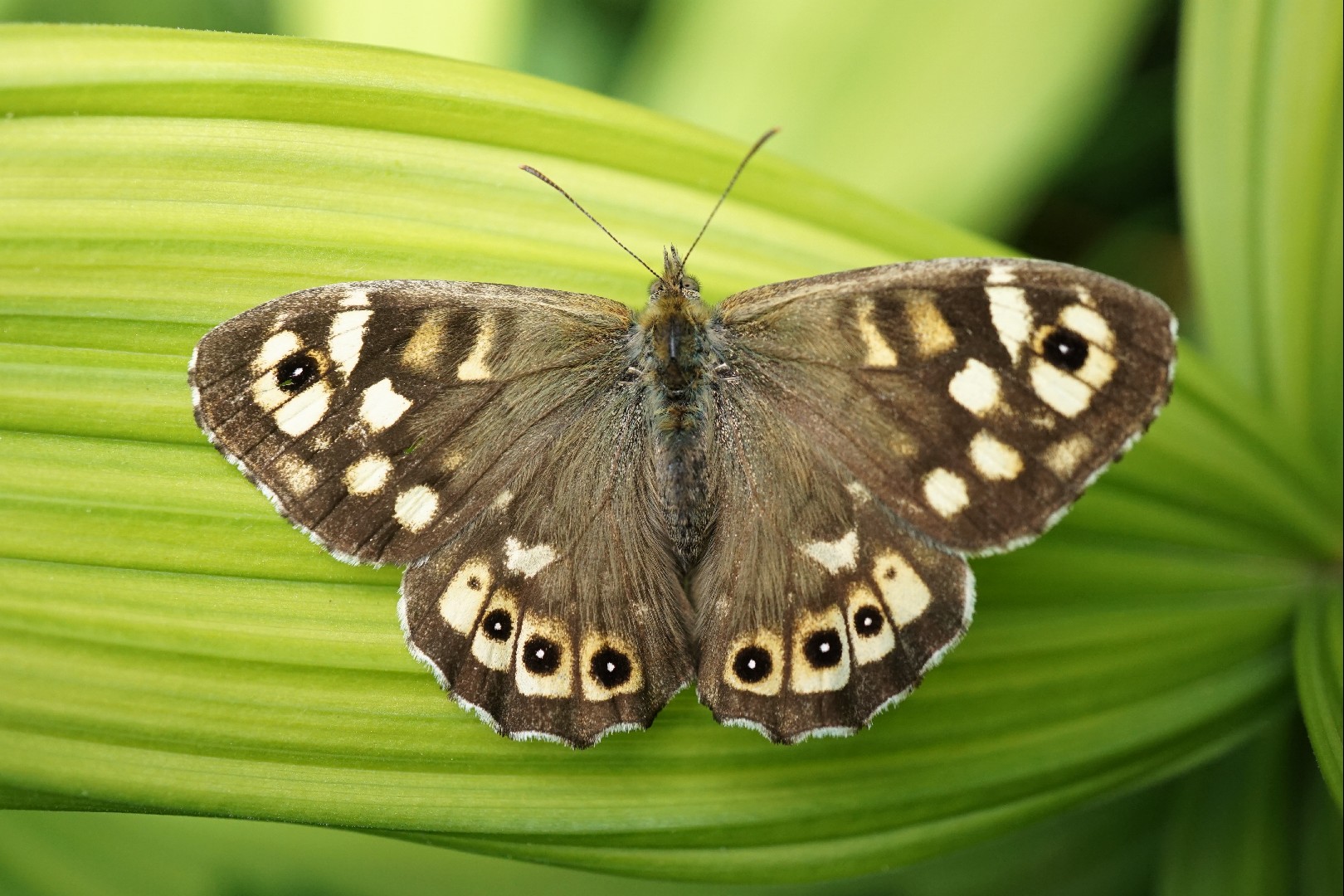
5. Speckled wood
The speckled wood (Pararge aegeria) prefers to live in damp, dark woodlands. Unlike other butterflies, it's more active in shadier habitats rather than sunny ones. Males often fight over a perch, spiraling up to the treetops until they determine a winner. These perches are where the males find passing females.
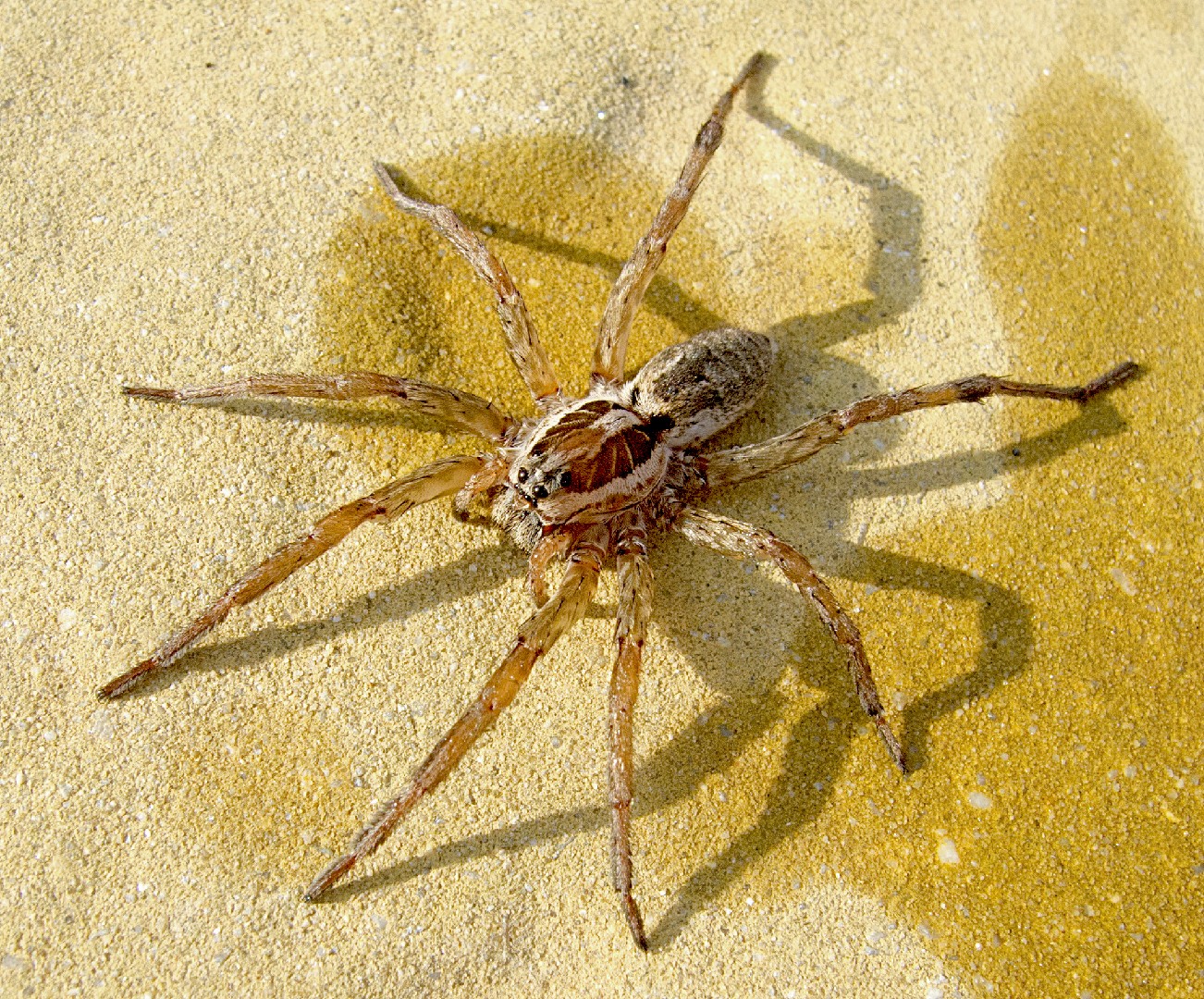
6. European wolf spider
The european wolf spider (Hogna radiata) is a dark brown spider that lives among dry grass or open woods. During mating season, females will dig shallow burrows in the ground to lay their eggs in. Like other wolf spiders (Lycosidae), this species is generally harmless to humans, but it can cause a painful bite if provoked.
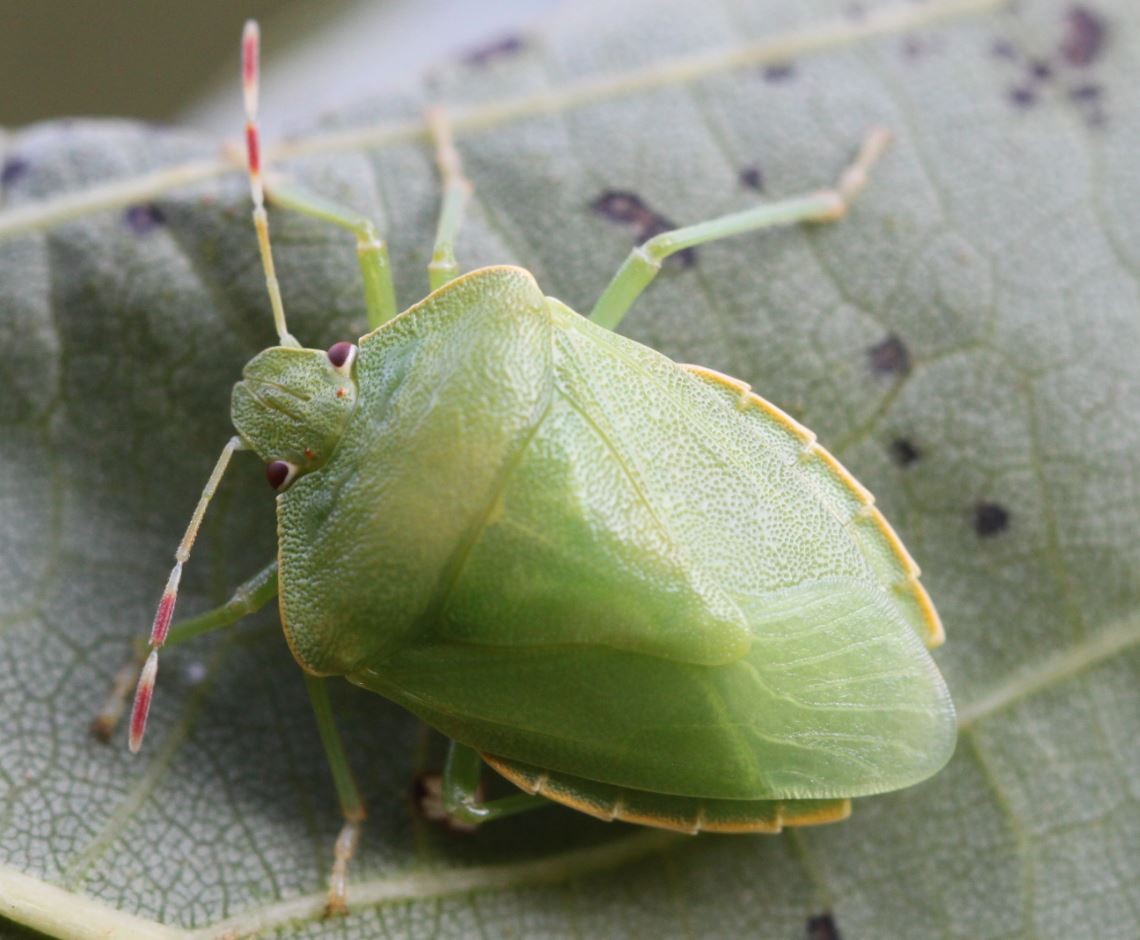
7. Southern green shield bug
The southern green shield bug larvae molt five times before they reach their mature size. They are named for their unpleasant scent and are considered pests due to their preference for feeding on leguminous plants such as soybeans. Wasps and flies that parasitize the southern green shield bug are sometimes used as biological controls for its population.
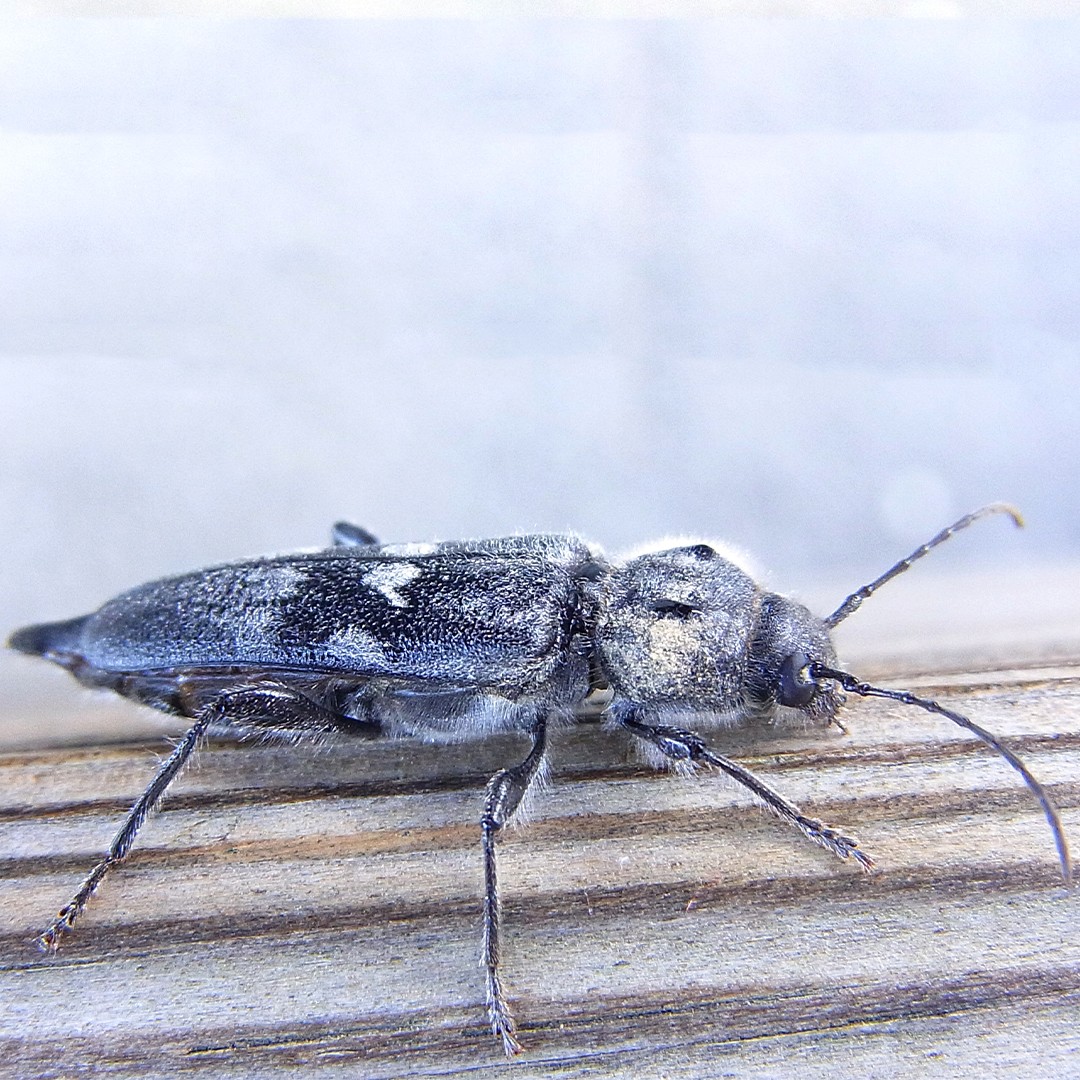
8. Old house borer
Hylotrupes bajulus can reach a body length of about 8–20 mm (0.31–0.79 in), while mature larva can reach 30 mm (1.2 in). These beetles are brown to black, appearing grey because of a fine grey furriness on most of the upper surface. On the pronotum two conspicuously hairless tubercles are characteristic of the species. On the elytra usually there are two whitish pubescent spots. Females do not have a real ovipositor, only a little more elongated telson. The species can be defined polymorphic, having an extreme variability, both in the dimensions and in the aspect. In small specimens the pubescent spots on the elytra disappear almost completely and the legs and antennae turn to a reddish color.
9. Two-tailed pasha
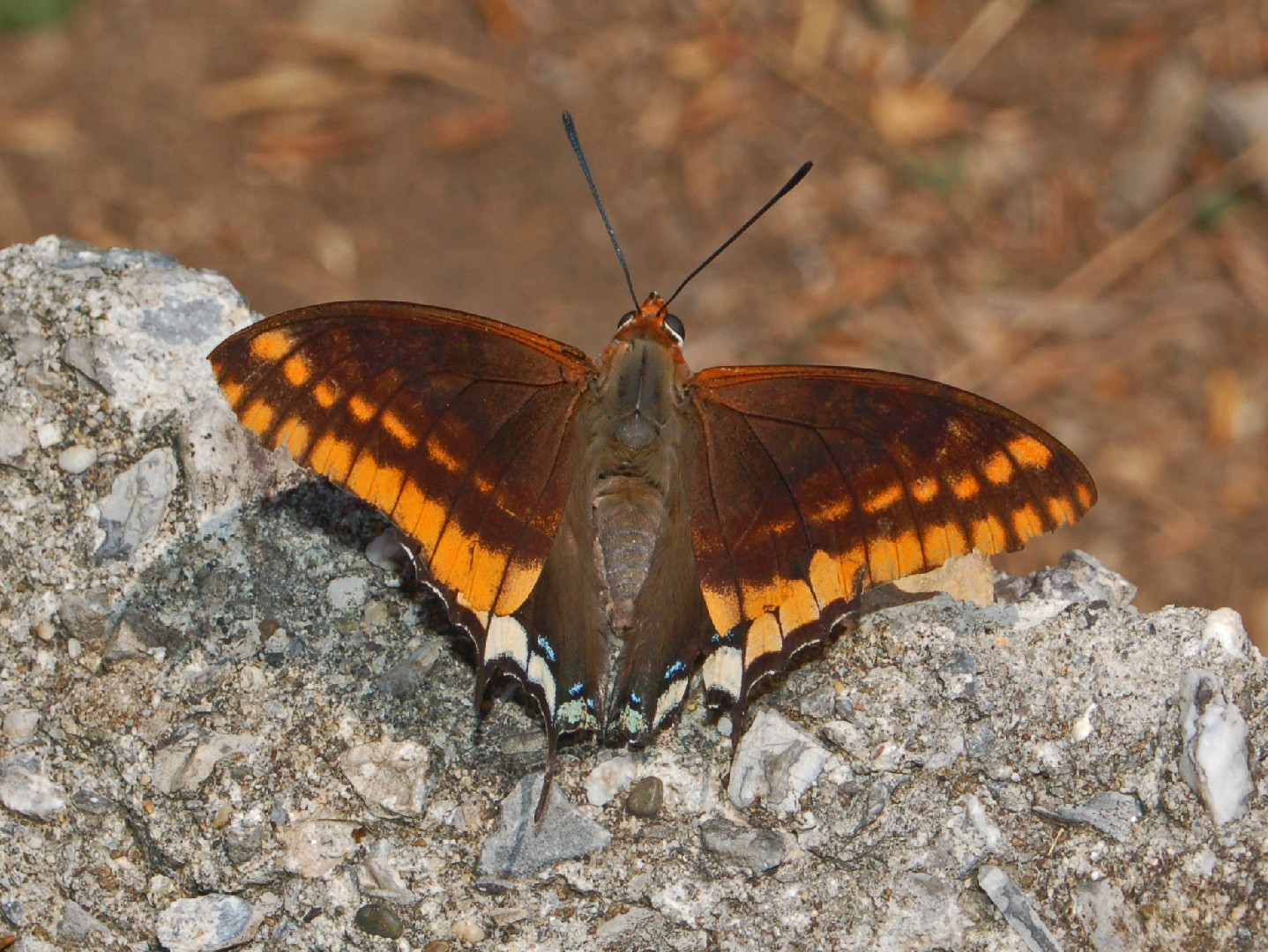
Charaxes jasius is a medium to large butterfly with a wingspan reaching 7 - 8 cm in males and 8 - 9 cm in females. The uppersides of the wings are dark brown with orange margins. The hindwings bring two short tails, characteristic of most species of the genus. Close to these tails there are a few blue markings. The underside of the wings is reddish brown with numerous darker bands edged with white or gray. The orange marginal band is also present on the undersides of the wings and it is preceded by a white transversal band. The caterpillar is green, cylindrical and has two yellow ocelli on the back. The head bears four horns facing backwards.
10. Lime Seed Bug
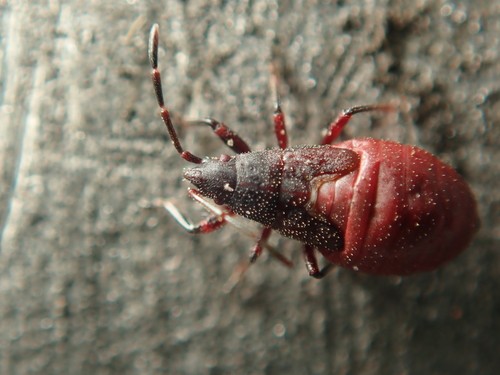
Oxycarenus lavaterae can reach a length of 4.5–5.4 millimetres (0.18–0.21 in) in adult females, and 4.2–5 millimetres (0.17–0.20 in) in males. Adult bugs are mostly red, white and black colored. The head, the entire prothorax, the scutellum and the antennae are black. The upper part of the abdomen is brick-red, while the connexivum is blackish. The front wings are colorless and transparent and reach the top of the abdomen or are a little longer. The nymphs can be easily recognized by their black head and the red-colored abdomen. The wing pads of the nymphs are completely black.
More







