




Top 20 Most Common Insects in Nicaragua
Welcome, bug enthusiasts! Insects, with their breath-taking variety of shapes, sizes and colors, call every nook of Nicaragua home - from humid rainforests to sun-baked plains. Different terrains within Nicaragua create unique insect habitats, breeding an astounding diversity. The 20 most common species we're documenting here not only reflect Nicaragua's diverse geographies and climates, but also its ecosystems and human impacts. They scale from pests to beneficial companions, each playing a role in Nicaragua's unique environmental tapestry. Let's delve into this buzzing world together!

Most Common Insects
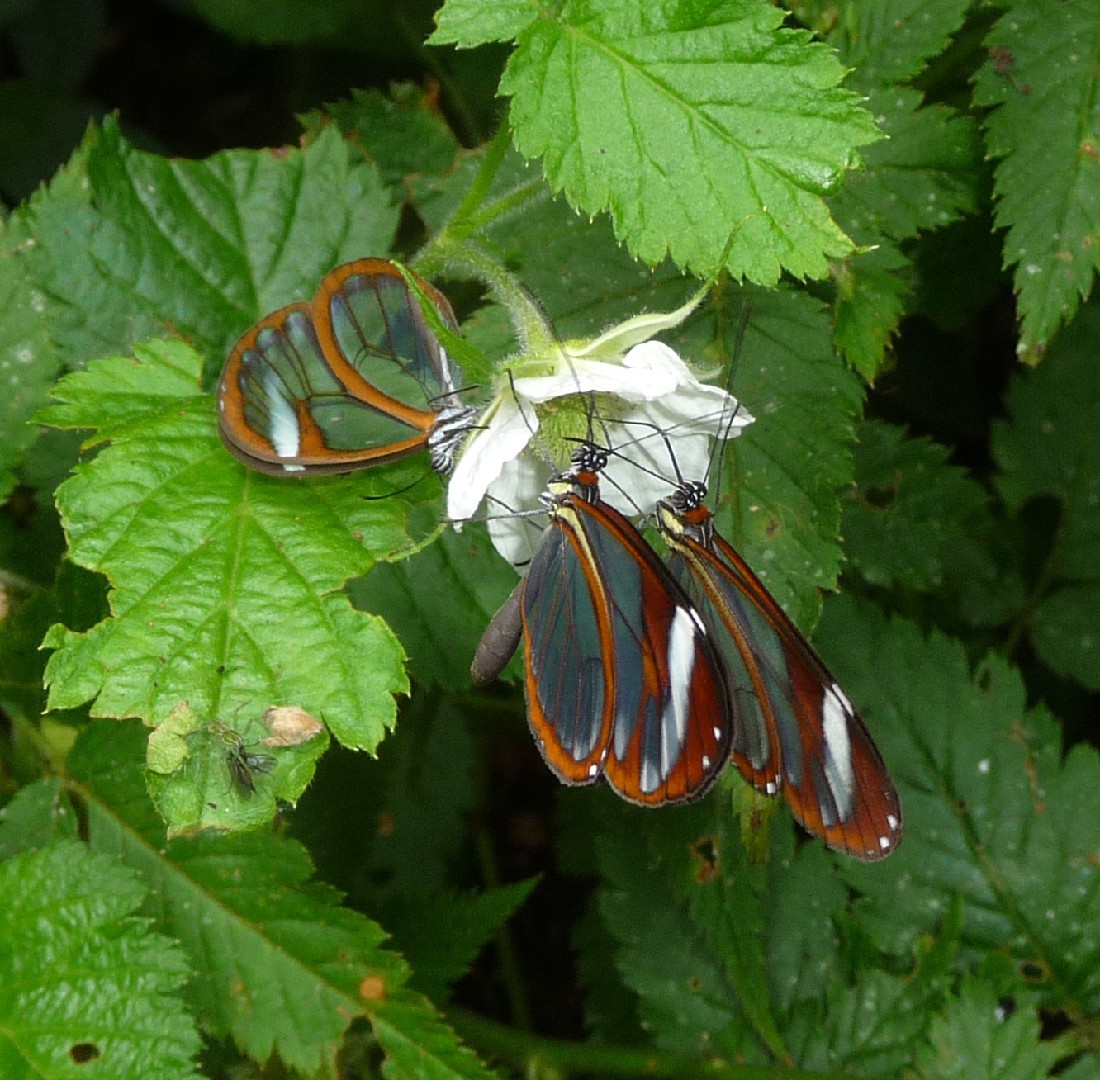
1. Patilla clearwing
Ithomia patilla is a butterfly from the Nymphalidae family. The scientific name of the species was first validly published in 1852 by William Chapman Hewitson.
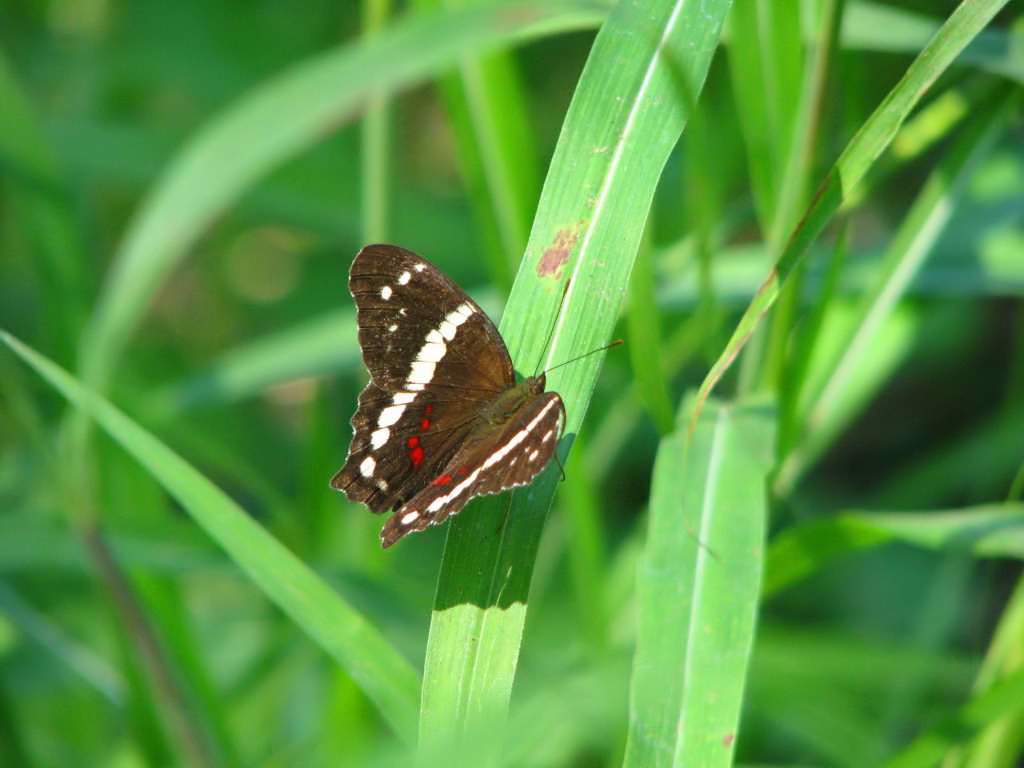
2. Banded peacock
The wingspan of the moths is 60 to 70 millimeters. The basic color of the wings is black-brown to black. On the front wing top, a white, sometimes yellowish bandage extends through the Diskalregion, which continues on the hind wings. Near the apex, some small whitish spots are highlighted. The hind wings show some striking red, sometimes orange spots. The tail at the Analwinkel are very short. All wing bottoms show similar drawing elements as the tops, but these are paler and weaker.
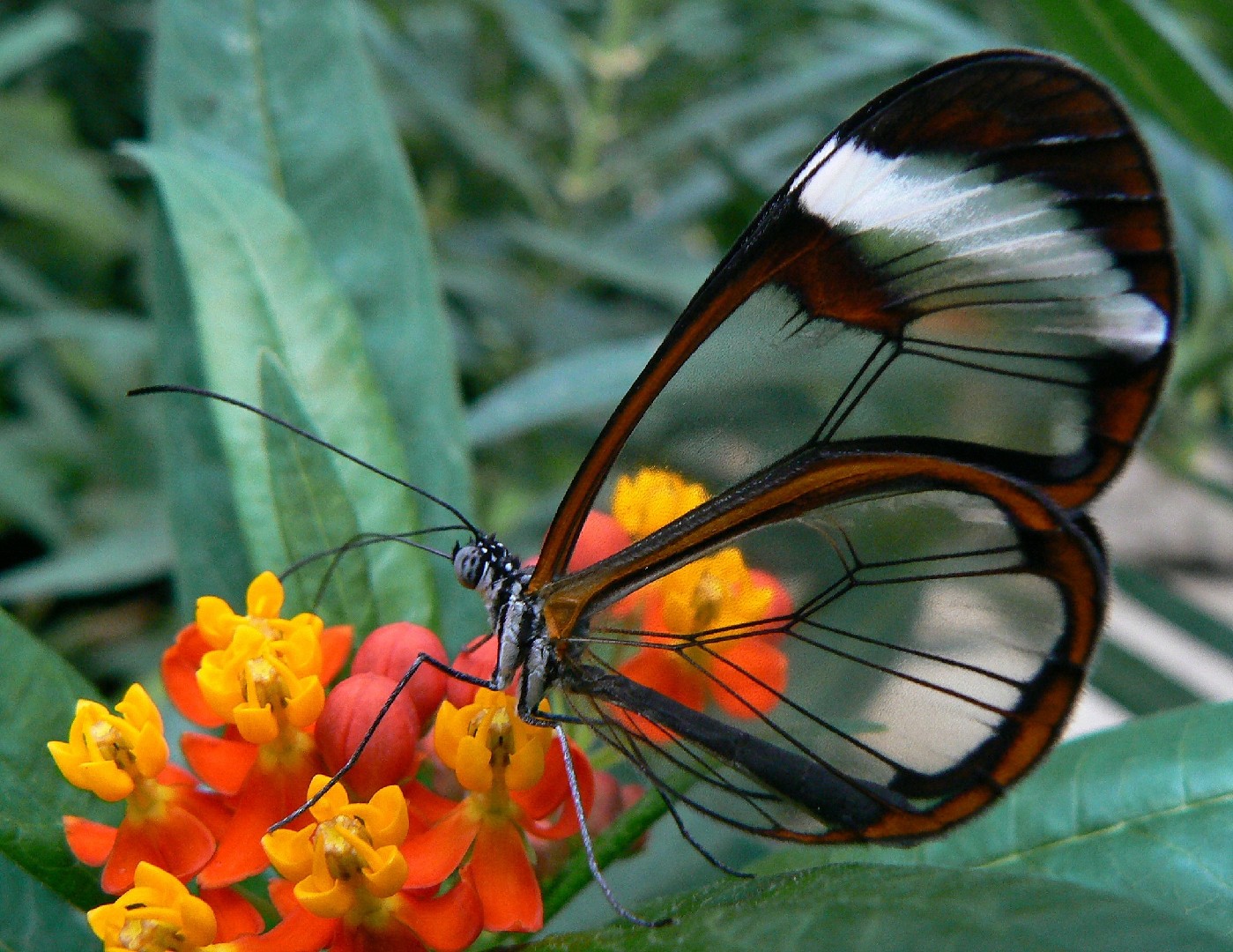
3. Thick-tipped greta
The length of the wings of this clearwing butterfly range from 6 - 6 cm. 
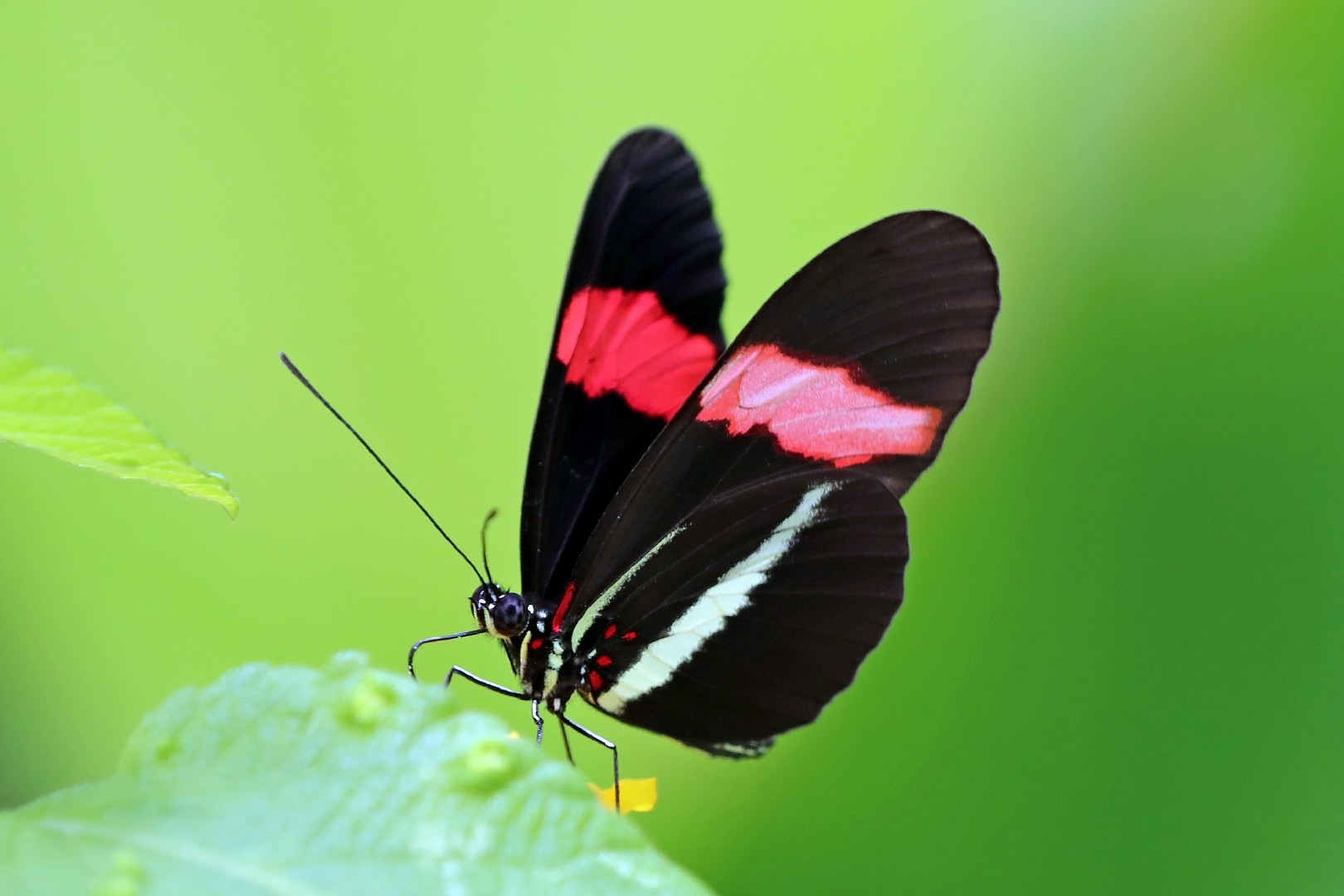
4. Red postman butterfly
The red postman butterfly (Heliconius erato) is a beautiful black and white butterfly that is a skilled actor. It exhibits mimicry to resemble a butterfly similar to the Common postman to deter predators. Also, its favorite host plants are passion flowers. But it has been known to be picky about the quality of the flower.
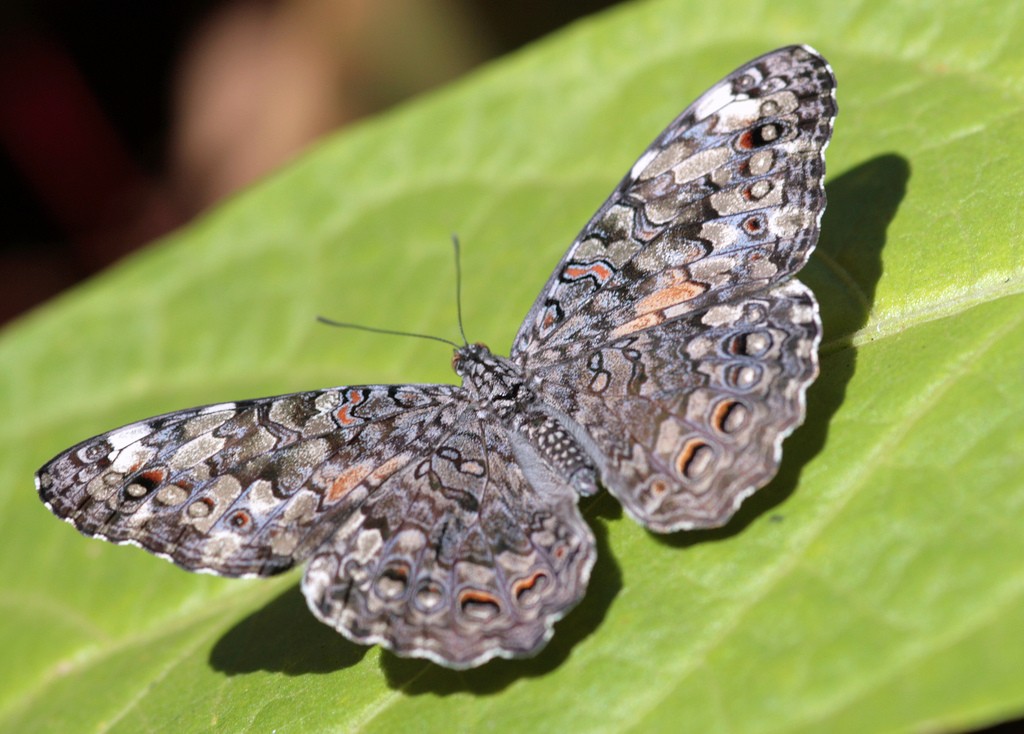
5. Gray cracker
The wingspan is 7 - 9 cm. The upperside is mottled brown and white although there is some red in the forewing cell bar. The hindwing eyespots have orange scales preceding black crescents. The underside of the hindwings is white and the submarginal eyespots are composed of a brown ring around a black crescent in a white center.
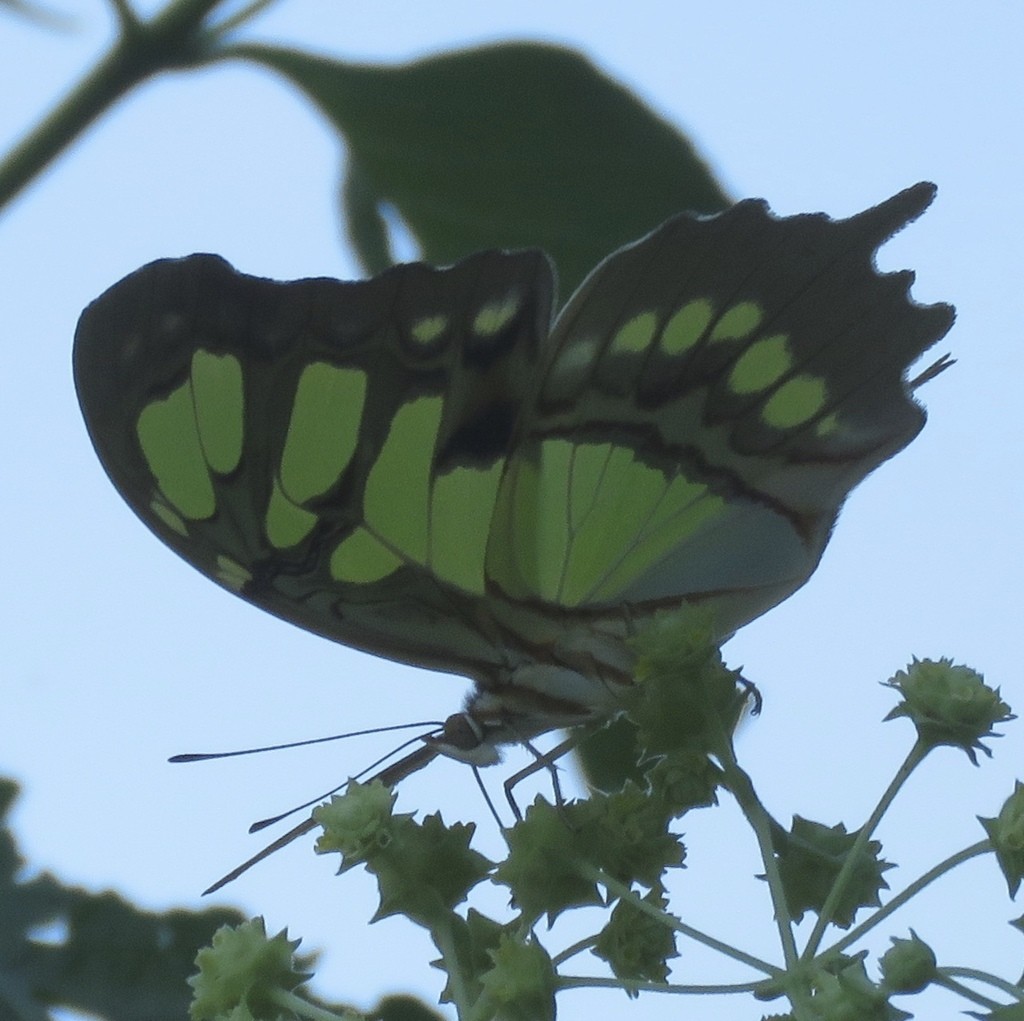
6. Malachite
Siproeta stelenes (malachite) is a Neotropical brush-footed butterfly (family Nymphalidae). The malachite has large wings that are black and brilliant green or yellow-green on the upperside and light brown and olive green on the underside. It is named for the mineral malachite, which is similar in color to the bright green on the butterfly's wings. Typically, the wingspread is between 8.5 and 10 cm (3.3 and 3.9 in). The malachite is found throughout Central and northern South America, where it is one of the most common butterfly species. Its distribution extends as far north as southern Texas and the tip of Florida, to Cuba as subspecies S. s. insularis (Holland, 1916), and S. s. biplagiata, and south to Brazil. Adults feed on flower nectar, rotting fruit, dead animals, and bat dung. Females lay eggs on the new leaves of plants in the family Acanthaceae, especially ruellia. The larvae are horned, spiny, black caterpillars with red markings, The pupa stage is green and have sharp, gold spines that can puncture predators. Malachites often are confused with Philaethria dido. They have similar coloration, but their wing shapes are different.
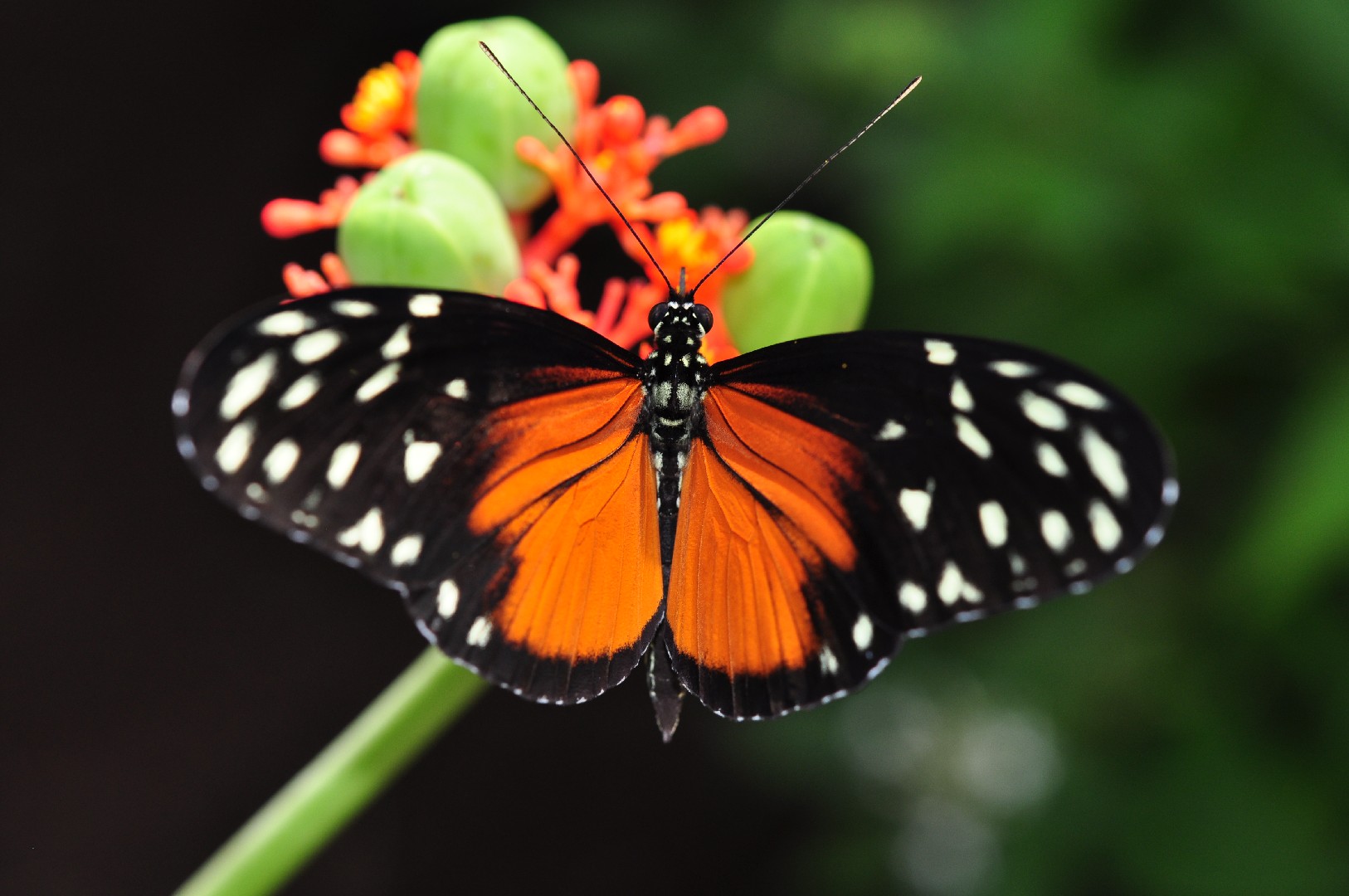
7. Tiger longwing
Heliconius hecale (synonym: Philaethria hecale) is a species of butterfly that occurs from Mexico to Peru. The butterfly is found both in open meadows and in tropical rain forests.
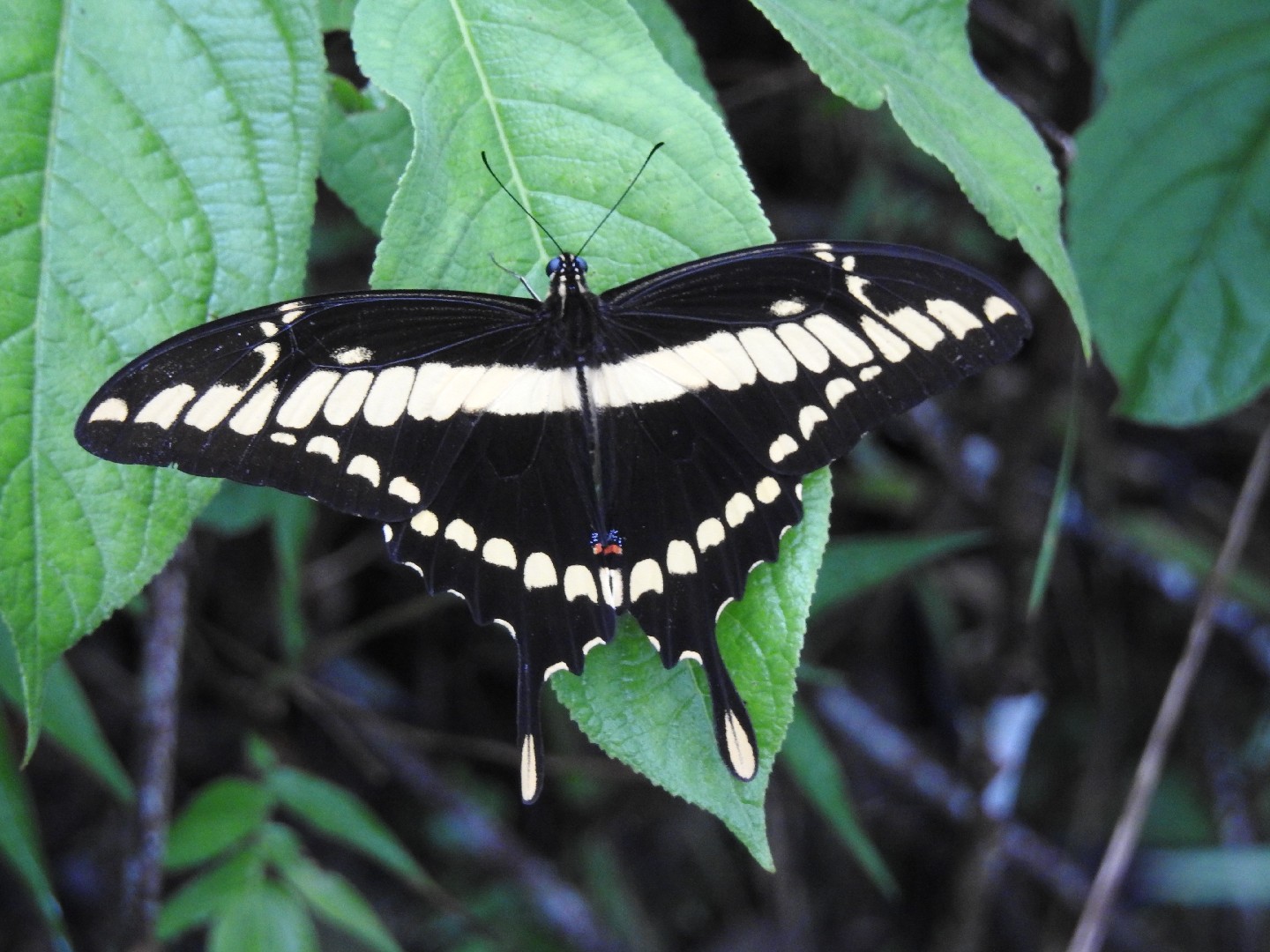
8. King swallowtail
The wingspan is 10 - 13 cm.
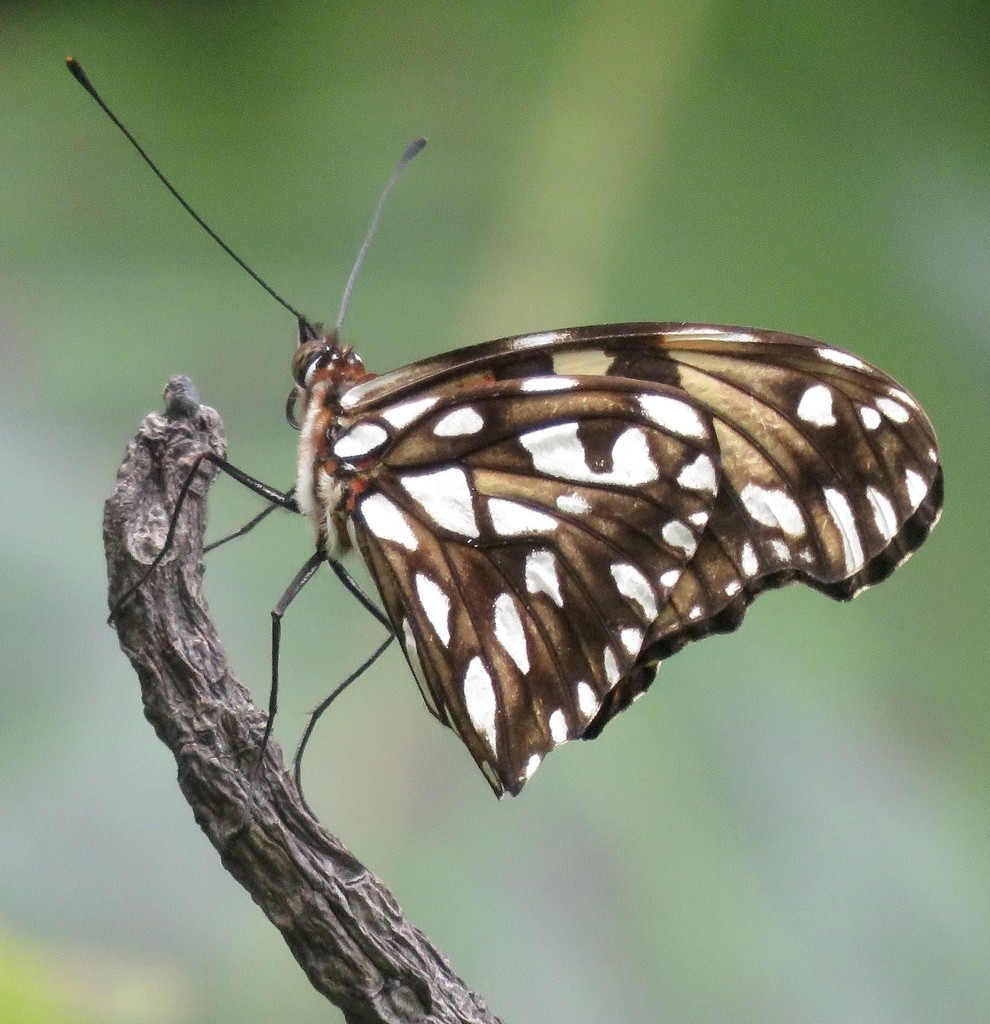
9. Juno longwing
Dione juno, the Juno silverspot, juno longwing, or Juno heliconian, is a species of butterfly of the subfamily Heliconiinae in the family Nymphalidae found from southern United States to South America.
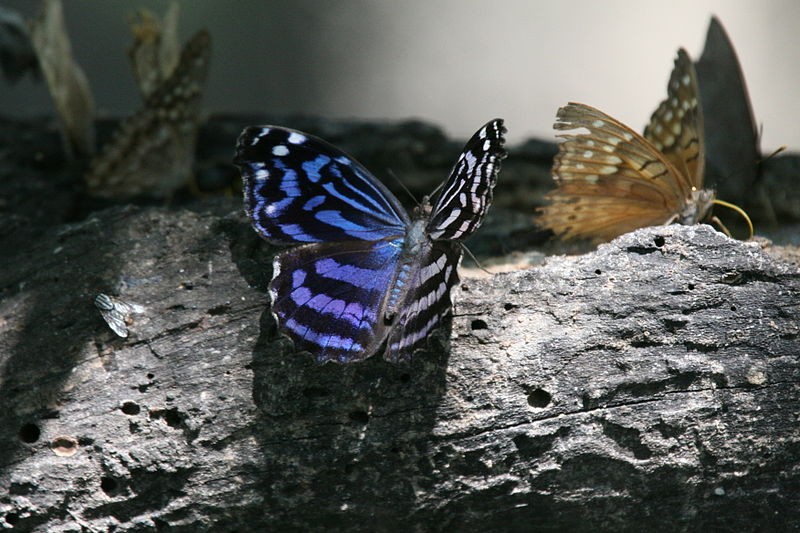
10. Mexican bluewing
Myscelia ethusa, the Mexican bluewing or blue wing, is a butterfly of the family Nymphalidae. The species was first described by Louis Michel François Doyère in 1840. It is found from Colombia north through Central America to Mexico. Strays can be found up to the lower Rio Grande Valley of Texas in the United States. The wingspan is 64–76 mm (2.5–3.0 in). Many generations occur per year. The larvae feed on the Dalechampia species. Adults feed on rotting fruit.
More







