




Top 10 Most Common Insects in Jos
Insects, distinguished by their segmented bodies and jointed limbs, find unique homes across diverse landscapes of Jos. Various geographic locations within Jos, especially its plateaus, contribute to the diverse insect fauna. The significance of these bugs, both as pests and allies, is central to Jos's ecosystem. Discover in our list, the 'Top 10 most common insects in Jos's Plateau', reflecting the symbiotic relationship insects share with their environment.

Most Common Insects

1. Citrus swallowtail
Papilio demodocus , also known under the English name Citrus Swallowtail ("Citrus Swallowtail"), is a butterfly from the family of the knight butterflies (Papilionidae).
2. Sundowner moth
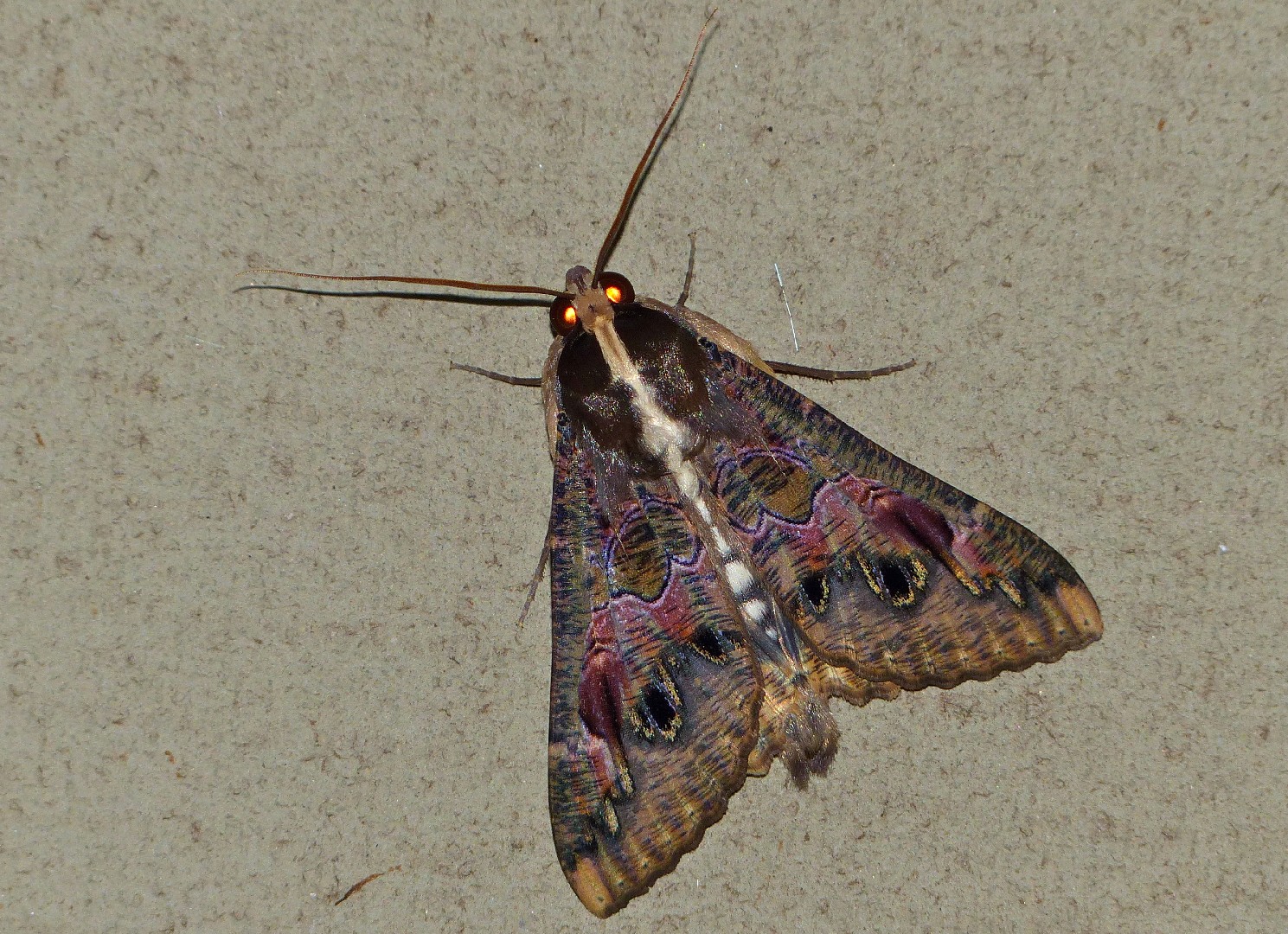
Its wingspan is about 60–84 mm. Head ochreous white, the basal joint of palpi dark brown. Thorax dark brown above with a broad ochreous-white stripe on vertex. Abdomen dark brown above, with a series of dorsal ochreous-white spots. Forewings reddish-brown with dark stria. There is a pale patch at base of inner margin and an indistinct antemedial angulate line. An irregularly waved medial line with pale outer edge and somewtimes tinged with purple and rufous. Some vinous patches beyond it. Reniform is a narrow lunule with a vinous dash beyond it. There is a crenulate postmedial line found with medial black lunules on it and one towards inner margin, and joined by a crenulate line from near apex. A marginal black specks series also present. Hindwings are fuscous brown where the base and a diffused medial irregular band are pale. An ochreous patch with black strai on it at center of outer margin. Cilia pale. Ventral side pale with fuscous submarginal band towards inner margin of each wing. 
3. Red admiral
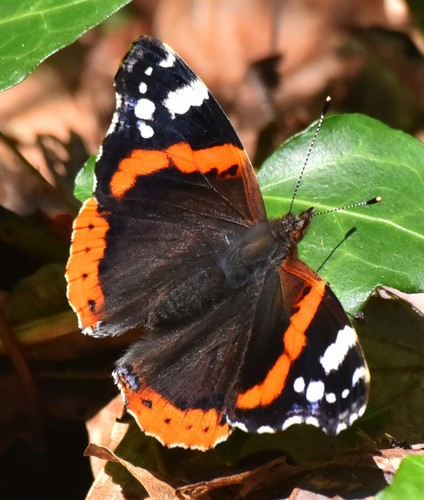
Red admiral (Vanessa atalanta) is a visually striking species of butterfly. Unusually territorial, males will compete for choice areas, and females will only mate with males that maintain their own territories. This butterfly is known for being particularly patient with human interactions, even to the point of perching on clothing or flesh.
4. Lucia widow
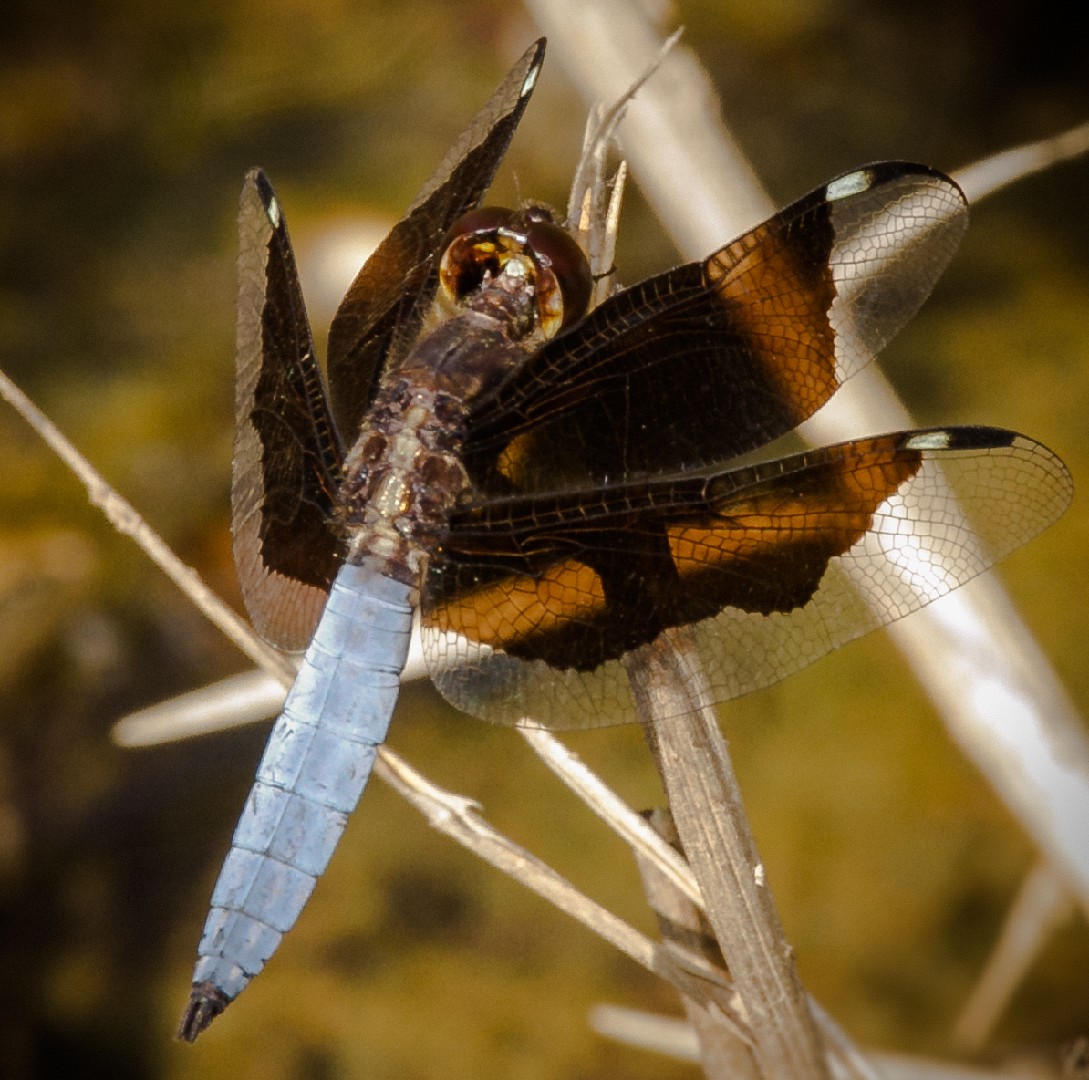
The species is on the IUCN Red List as not endangered, year of assessment 2009.
5. Plain tiger butterfly
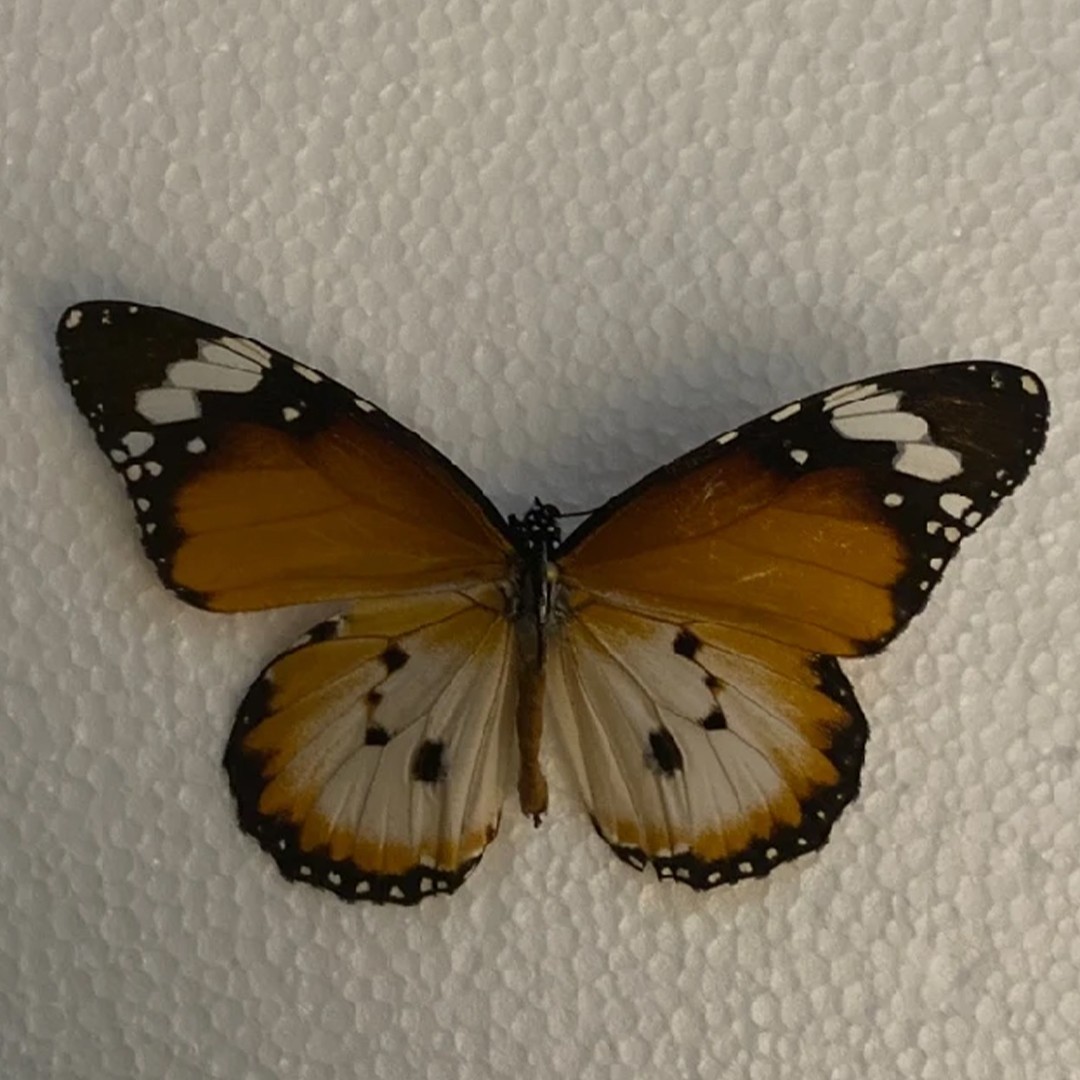
D. chrysippus is a medium-sized butterfly with a wingspan of about 7–8 cm (2.8–3.1 in). The body is black with many white spots. The wings are orange, the upperside brighter and richer than the underside. The apical half of the forewing is black with a white band. The hindwing has three black spots in the center. The wings are bordered in black and outlined with semicircular white spots. This species exhibits slight sexual dimorphism, as the Male has large scent glands on his hindwings, which the female lacks. They appear as a large black spot with a white centre if viewed from the underside D. chrysippus is a polymorphic species, so the exact coloring and patterning vary within and between populations. It is similar in appearance to the Indian fritillary (Argynnis hyperbius), which may coexist with it.
6. Kirby's dropwing
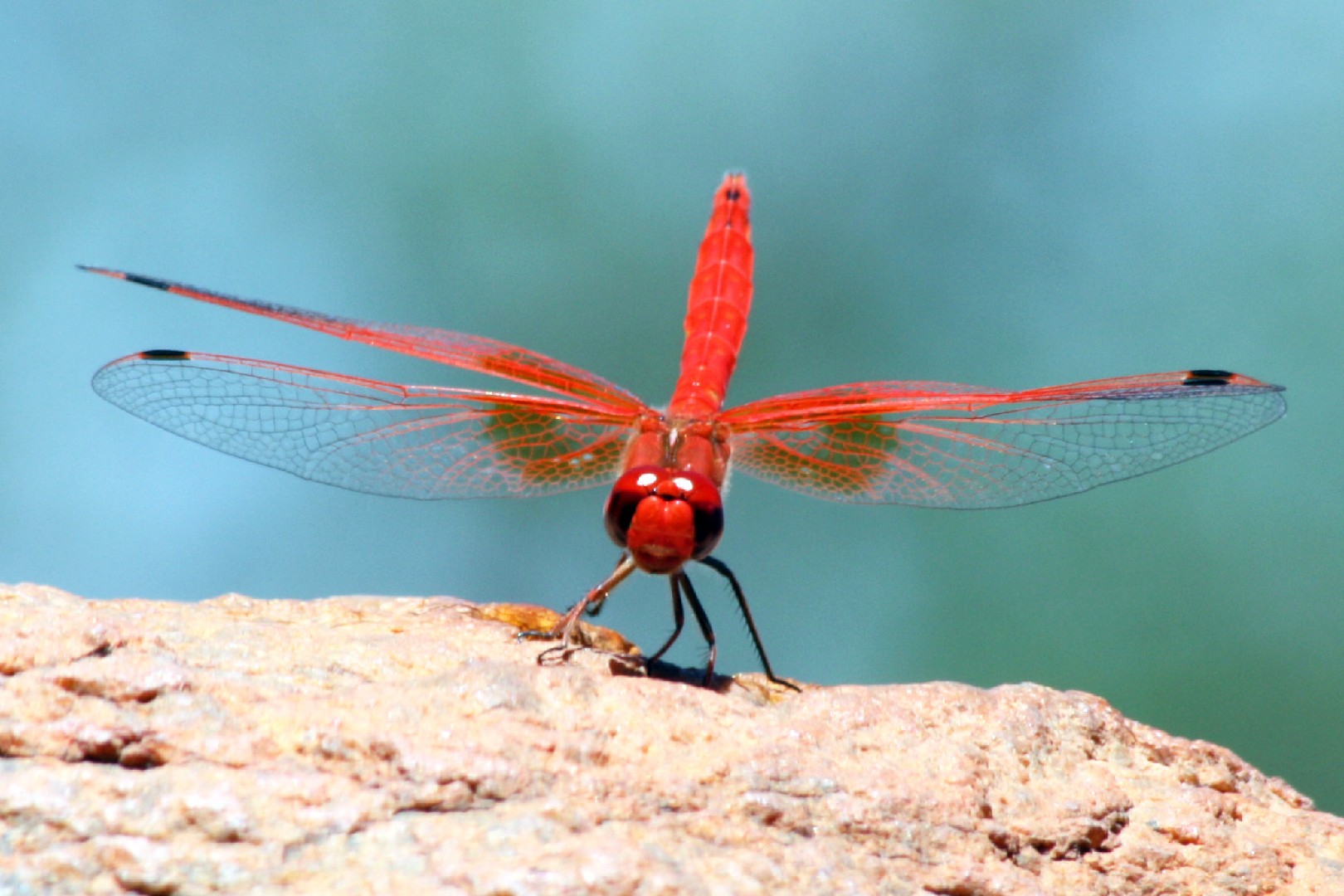
The spotted sun pointer (Trithemis kirbyi) is a dragonfly species from the family of the dragonflies (Libellulidae). Two subspecies are described. The nominate subspecies occurs in India and Sri Lanka, while the insufficiently defined taxon Trithemis kirbyi ardens occurs in the rest of the distribution area, which mainly includes Africa.
7. Common grass yellow
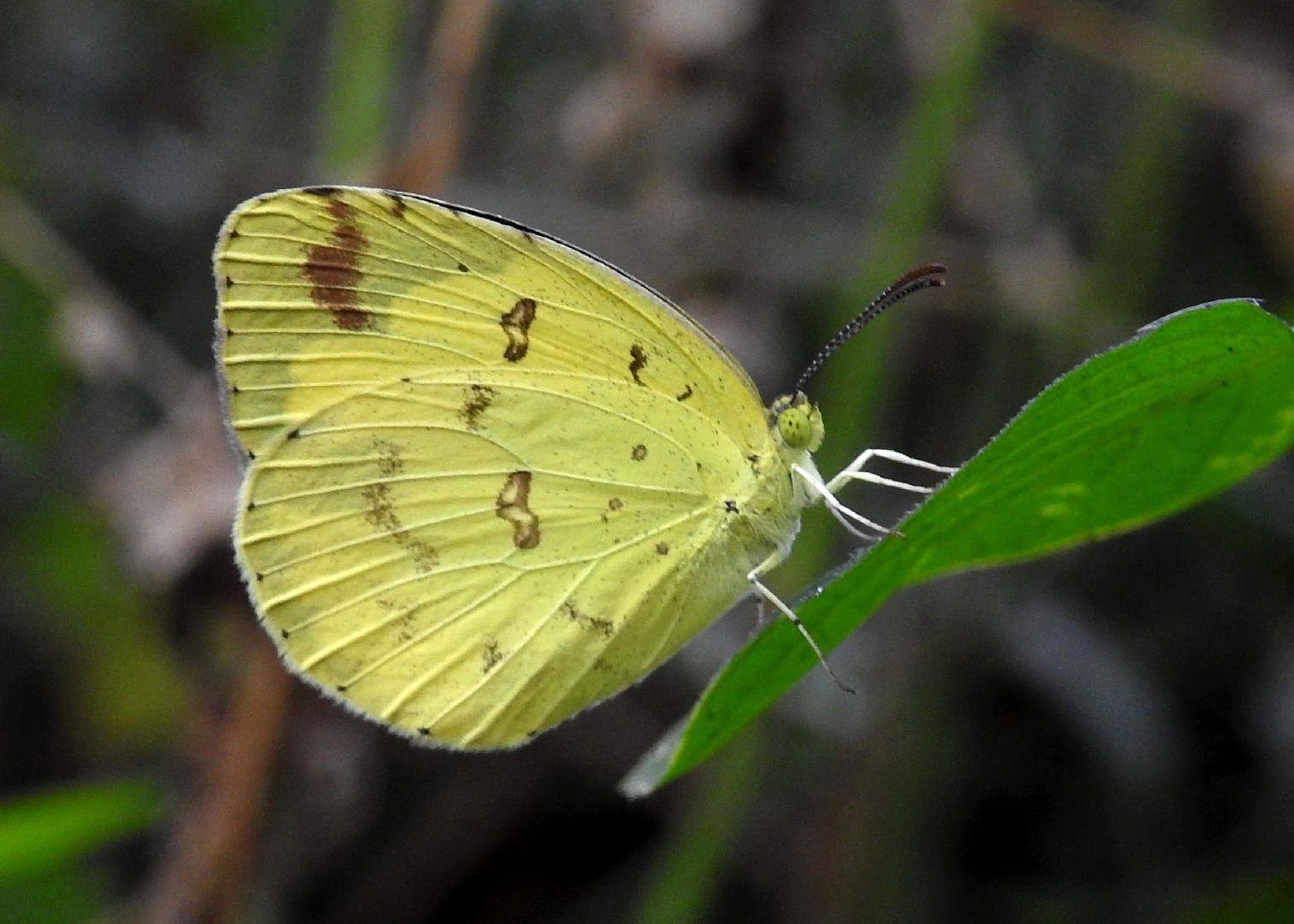
The common grass yellow (Eurema hecabe) can be found in groups around damp soil. Despite their name, they do not feed on grass, instead, they are known to frequently visit grasslands. It can change its form depending upon the season, as it is far more rough-looking if it comes during the dry season.
8. Pigmy skipper
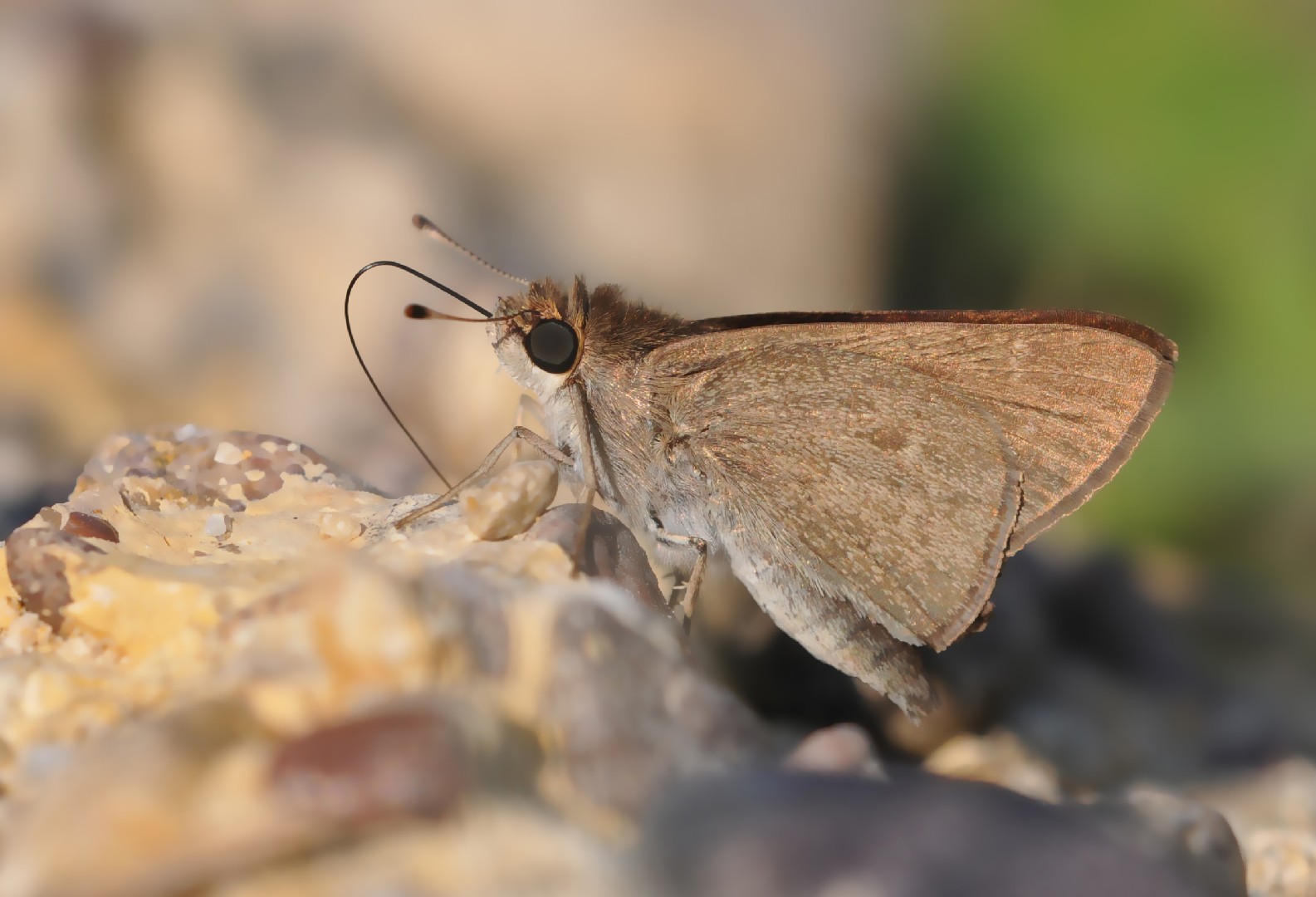
Gegenes pumilio, the pigmy skipper or dark Hottentot, is a butterfly of the family Hesperiidae. It is found from the coasts of the Mediterranean Sea through Anatolia to the Himalaya and south in the whole of Africa. The length of the forewings is about 14 mm. Adults are on wing from April to October in multiple generations. The larvae feed on various grasses, including Gramineae species as well as Pennisetum clandestinum, Ehrharta (including Ehrharta erecta) and Cynodon species.
9. Death's-head hawkmoth
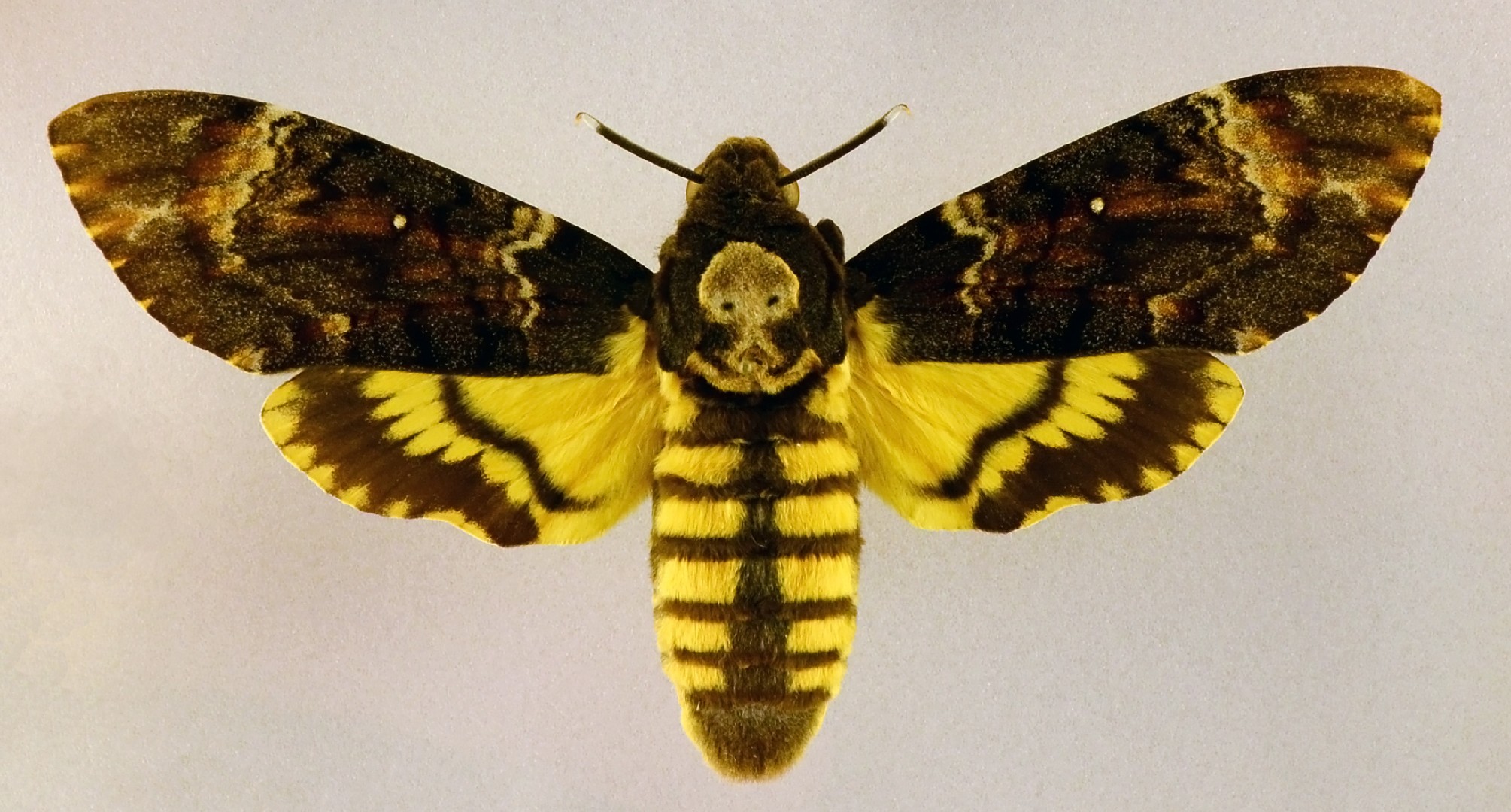
The death's-head hawkmoth (Acherontia atropos) is an ominous-looking black and yellow moth with a skull pattern on the thorax. It is best known for being in the 1991 movie: "Silence of the Lambs." and 1952's "Dracula." Despite the threatening appearance, the squeak it can produce while agitated is not as intimidating. Regardless, it is still startling enough to be considered a deterrent against predators.
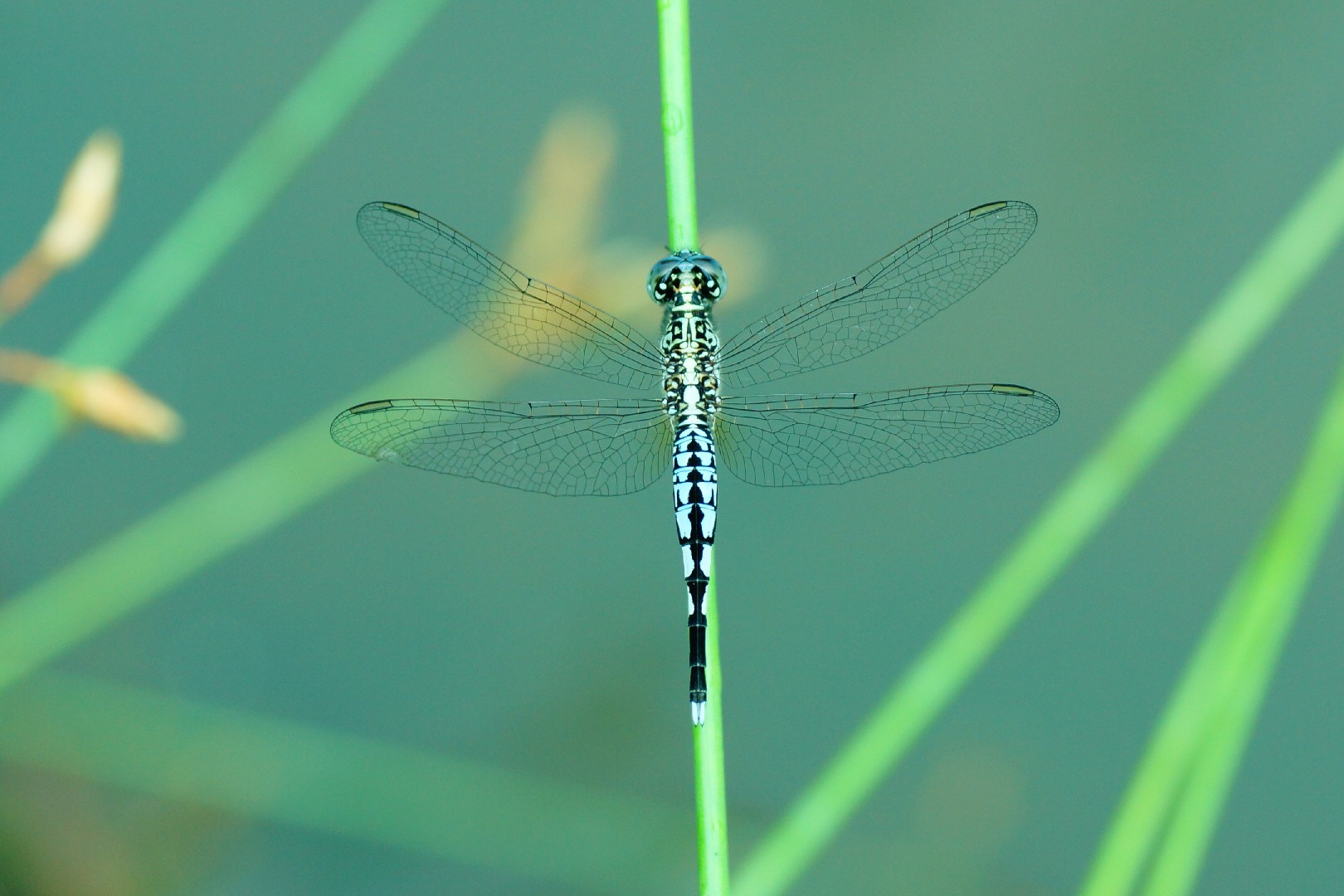
10. Trumpet tail
It is a small dragonfly with blue eyes. Its thorax is azure-blue marbled with black to form a beautiful pattern on the dorsum and the sides. Abdomen is azure-blue, marked with black. Segments 1 to 5 have sutures finely and ventral borders more broadly black. There is a dorsal stripe which broadens at the jugal sutures and apical borders of segments. There is a speckled stripe on sub-dorsum of segments 1 to 4. There is a large ventro-lateral spot on each of segments 3 to 5. Segments 6 and 7 are black with a large spot of blue on each side. Segments 8 to 10 are entirely black. Anal appendages are bluish-white. Female is similar to the male; but with greenish-yellow eyes, thorax and abdominal segments up to 5.