




Top 20 Most Common Insects in Azad Kashmir
Insects, marvels of nature with distinctive features and diverse lifestyles, populate a vast range of habitats within Azad Kashmir. The rich geographical tapestry of Azad Kashmir creates a fertile playground for insect diversity. These tiny creatures play pivotal roles in our ecosystem, from annoying pests interrupting our daily life to beneficial insects that facilitate a healthy environment. Dive in as we explore 20 of the most common insects in Azad Kashmir, stepping into a world shaped by both their environment and their intricate relationships with it.

Most Common Insects
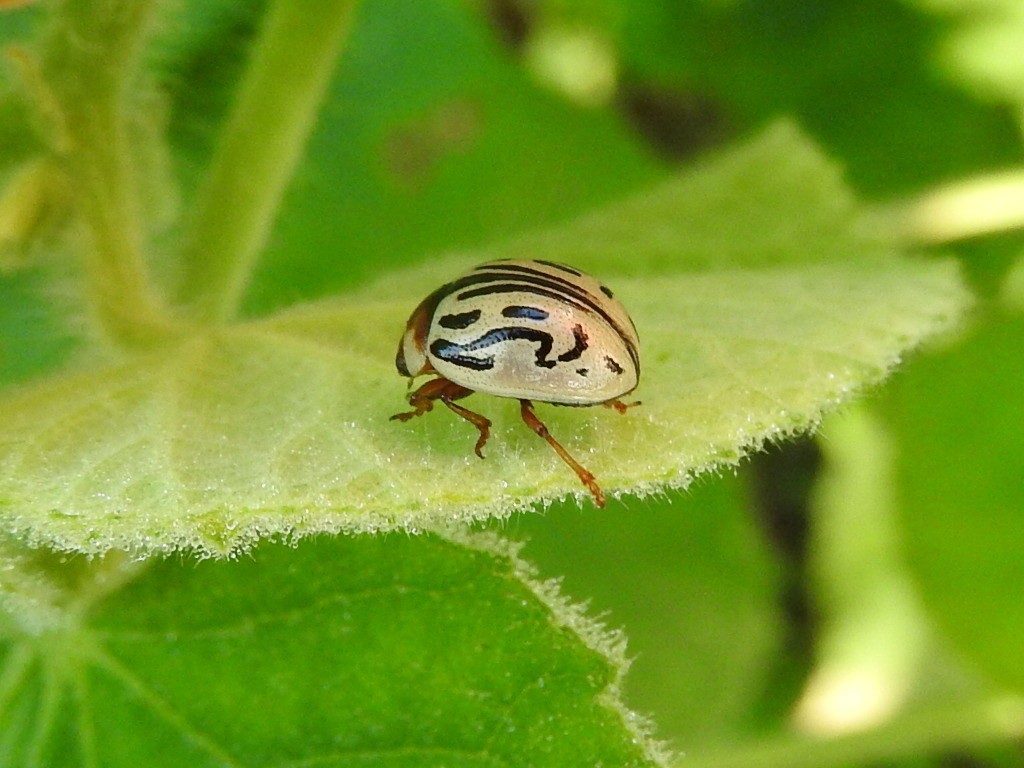
1. Mexican beetle
Z. bicolorata is a small lead beetle with a brown head, brown and yellow graduated pronotum and yellow elytra marked with characteristic elongated brown stripes. The pattern on the elytra is greatly variable - in a study of 478 beetles, 29 variations on this pattern were identified. 
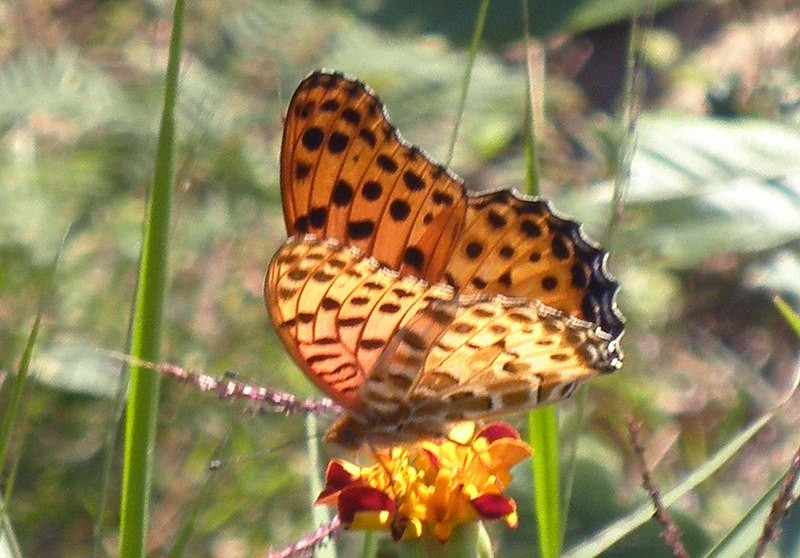
2. Indian fritillary
Male: Upperside: forewing rich orange yellow, hindwing paler yellow, with the following black markings: Forewing: cell with a basal short transverse streak, a medial broad oval loop, its outer margin sinuous; a broad transverse streak beyond cell not reaching the median nervure; a broad streak along the discocellulars; a zigzag discal series of large spots, angulated outwardly in interspace 4, inwardly in interspace 2, a minute spot at base of interspace 1; a somewhat diffuse large postdiscal spot below the costa in interspace 6; a postdiscal sinuous series of round spots, those in interspaces 1 and 4 very small; an inner complete subterminal sinuous series of round spots; an outer subterminal line, widening on the veins, and a terminal slender line. Hindwing: a basal, transverse, obscure narrow mark in cell, another above it in interspace 7, a transverse lunule across the middle of the cell; a small spot outwardly bordering the lower discocellular; a discal series of transverse spots from interspaces 1 to 7, sinuous posteriorly; a postdiscal series of five spots in interspaces 2 to 6; a subterminal series of somewhat lunular spots; finally, a narrow band on term en traversed posteriorly by a series of blue, anteriorly by a series of ochraceous lunules. Underside forewing pale terracotta red, shading into ochraceous towards the apex, the apex broadly suffused with that colour; markings as on the upperside, with the following exceptions: subcostal spot in interspace 6, upper two spots of postdiscal series, upper four spots of the inner subterminal series, and the anterior portions of the outer subterminal and of the terminal line olivaceous brown; the upper two postdiscal spots centred with white, with a white spot on each side; the upper four spots of the sub terminal series connate (united), forming a short curved band. Hindwing variegated with ochraceous, olivaceous-brown and silvery-white markings, the last for the most part narrowly margined on the outer side by short black lines; the veins prominently pale ochraceous; the medial silvery markings form a well-marked sinuous discal series, followed by a curved postdiscal series of five olivaceous round spots; each spot and the olivaceous-brown quadrate patch near base of cell with a minute white central spot; a slender black subterminal line widening at the veins, as on the forewing, followed by an ochraceous narrow lunular band and an outer slender black anteciliary line; the subterminal black line margined on the inner side by a series of: slender white lunules, bordered inwardly by a series of broad olivaceous-brown markings in the interspaces. Antennae brown above, ochraceous red beneath; head, thorax and abdomen olivascent tawny; beneath, palpi, thorax and abdomen pale ochraceous. Female similar. Differs from the male as follows: Upperside: apical half of forewing from about the middle of the costa obliquely to just above the tornus black, inwardly suffused with purple, crossed by a broad white band from costa to the subterminal series of black spots; four preapical white spots, the upper three bordering on each side and above a very obscure ocellus scarcely visible on the black background, an inner and an outer subterminal transverse series of slender white lunules. Underside: forewing markings similar to those on the upperside, but the apex of the wing beyond the white oblique band ochraceous green. Hindwing as in the male, but the markings slightly broader. Antennae, head, thorax and abdomen as in the male, the abdomen paler beneath. Wingspan: 80–98 mm (3.1–3.9 in). Var. taprobana, Moore, is a slightly darker race from Ceylon, with markings similar in both sexes to those of hyperbius. Moore, however, states that taprobana is an intermediate between the south Indian form (castetsi) and typical hyperbius specimens from Ceylon that do not differ from upper India, Assam, and Burmese specimens, except in the very slightly darker ground colour on the upperside. Race castetsi, Oberthur: The females of this remarkable form seem to be locally dimorphic. Male closely resembles the male of hyperbius but differs as follows: Upperside: ground colour a richer brighter shade of orange yellow; black markings similar but distinctly smaller, of a deeper black: subterminal transverse series of slender lunules traversing the terminal black margin on the hindwing of the same shade of orange yellow as the ground colour, not blue on the posterior half of the wing. Underside: the olivaceous brown at apex of forewing and variegating the hindwing more of a greenish golden tint. A sex-mark of specialized raised scales along middle of vein 1 on the upperside of the forewing very prominent. Female Nilgiri form: resembles the female of typical hyperbius differs as follows: Upperside: ground colour pale golden yellow; basal half of both forewings and hindwings shaded with metallic green in the forewing; in some specimens this tint is slightly olivaceous; black markings and the white oblique band on the apical area of the forewing as in hyperbius, but proportionately smaller, the purplish-blue shading along inner margin of the white band much less conspicuous, as is also the bluish tint; on the white preapical spots and subterminal markings on the forewing and on the posterior half of the subterminal line of limules on the hindwing. Underside as in hyperbius but the ground colour on the forewing a paler shade of terracotta red; the olivaceous brown variegating the hindwing of a distinctly greener tint. Female typical form as described from Trichinopoly. Similar to the male differs as follows: Upperside: ground colour pale golden yellow; basal half of the wings suffused with dark olivaceous green; black markings as in the male but larger; on the forewing the spots of the subterminal series very large, coalescent or nearly coalescent with one another and with the dentate spots on the veins in the inner terminal line; the upper two spots also of the postdiscal series very large and coalescent, the upper of the two joining on above and below to the inner postdiscal lunate spot in interspace 6, thus enclosing a prominent lunule of the ground colour. Underside as in the male but paler.
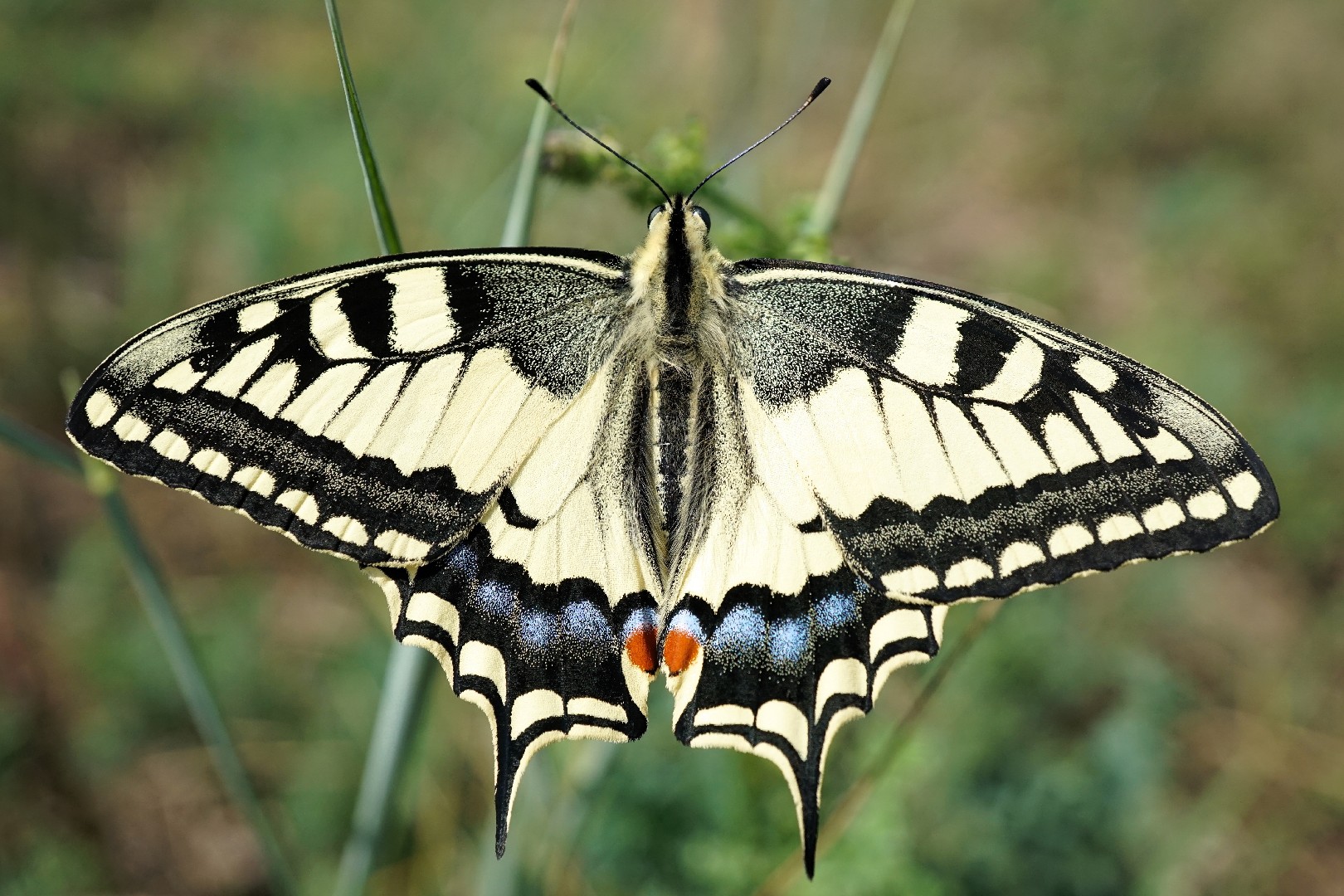
3. Old World swallowtail
The old World swallowtail (Papilio machaon) is commonly just called the "swallowtail," giving it the added title of "old world" to distinguish it and remind us that it comes from the "old world" (Asia, Africa, Europe). The upper side of them is a beautiful combination of pure white with black striping, the underside being a brownish version of the same thing. There is blue and two red dots on its back side.
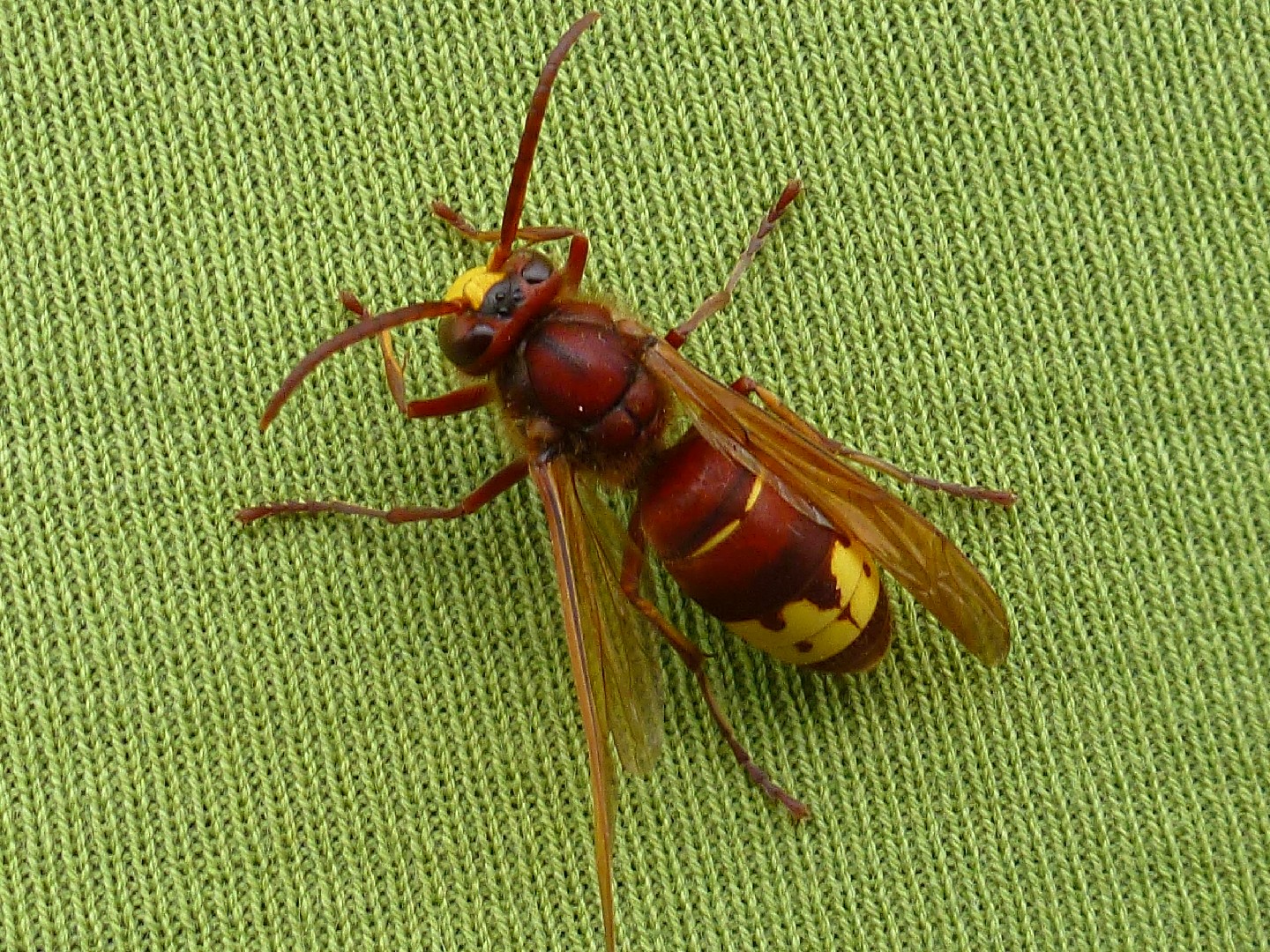
4. Oriental hornet
The oriental hornet (Vespa orientalis) is a polyphagous insect (the adults are vegetarian and the larvae eat animal protein) that communicates with sound vibrations underground. Otherwise, they are considered a pest to honey bees, as they attack them in order to steal honey and other proteins. While they are jerks to others, their internal community has everyone working for the good of the colony.
5. Indian Tortoiseshell
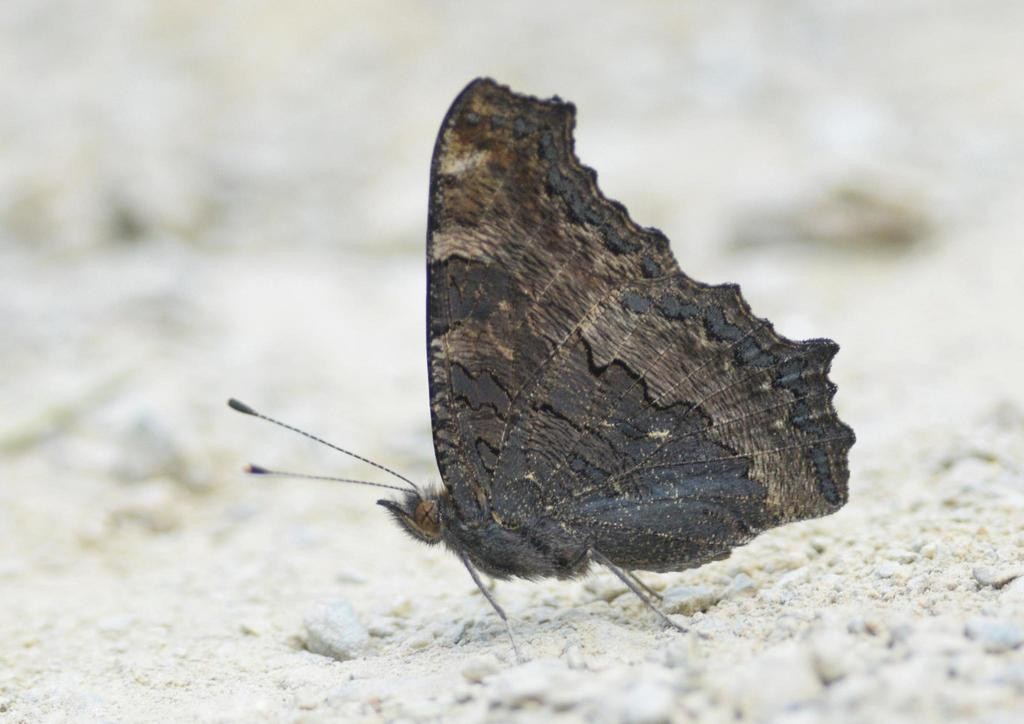
Upperside of forewings with the basal half of costa and termen pale brown, the former flecked with pale yellow, the latter bordered inwardly by a narrow darker brown band bearing a series of black lunules; outwardly traversed by sinuous slender subterminal and more slender terminal black lines: base of wing and the greater part of interspace 1a and of 1 posteriorly brown, irrorated with golden scales, the rest of the wing anteriorly yellow, posteriorly and at base of cell red, with the following black markings: a broad band across the cell, another broader short band beyond, touching the discocellulars, not extending below vein 4, and a third not extending below vein 5, with a white patch beyond before apex, all three short bands rounded posteriorly; on the disc there is a large oval black spot, followed by a yellow patch in interspace 1, and above it smaller black spots in interspaces 2 and 3. Hindwing has the basal half dusky brown, covered posteriorly with long brown hairs; anteriorly beyond the bases of veins 5, 6 and 7 black, followed by a broad red band anteriorly turning to yellow; a broad terminal brown band, traversed by a series of black-bordered blue lunules, and beyond them by very slender inner and outer black sinuous lines. Underside brown, with closely set transverse short black striae; basal half of wings clouded with dark purplish brown, the outer margin of the dark portion defined by a highly sinuous jet-black transverse line, most distinct on the hindwing, and also crossed, nearer the base of the wings, by two or three similar, much interrupted lines; terminal half of the wings paler, with two dark irregular patches below costa of forewing; finally a sinuous transverse subterminal narrow dark blue band across both forewings and hindwings, bordered on both sides by slender black lines, widening into spots on the veins of the forewing. This band is more distinct in the female than in the male. Antennae dark brown, minutely ringed with white; head, thorax and abdomen dark brown above and below. Has a wingspan of 52–63 mm.

6. Crimson marsh glider
The male has a reddish-brown face, with eyes that are crimson above and brown on the sides. The thorax is red with a fine, purple pruinescence. The abdomen, the base of which is swollen, is crimson with a violet tinge. The wings are transparent with crimson venation and the base has a broad amber patch. The wing spots are a dark reddish-brown and the legs are black. The female has an olivaceous or bright reddish-brown face with eyes that are purplish-brown above and grey below. The thorax is olivaceous with brown median and black lateral stripes. The abdomen is reddish-brown with median and lateral black markings. The black markings are confluent at the end of each segment and enclose a reddish-brown spot. The wings are transparent with brown tips. The venation is bright yellow to brown and basal amber markings are pale. The wing spots are a dark brown and the lags are dark grey with narrow yellow stripes.
7. Eastern honey bee
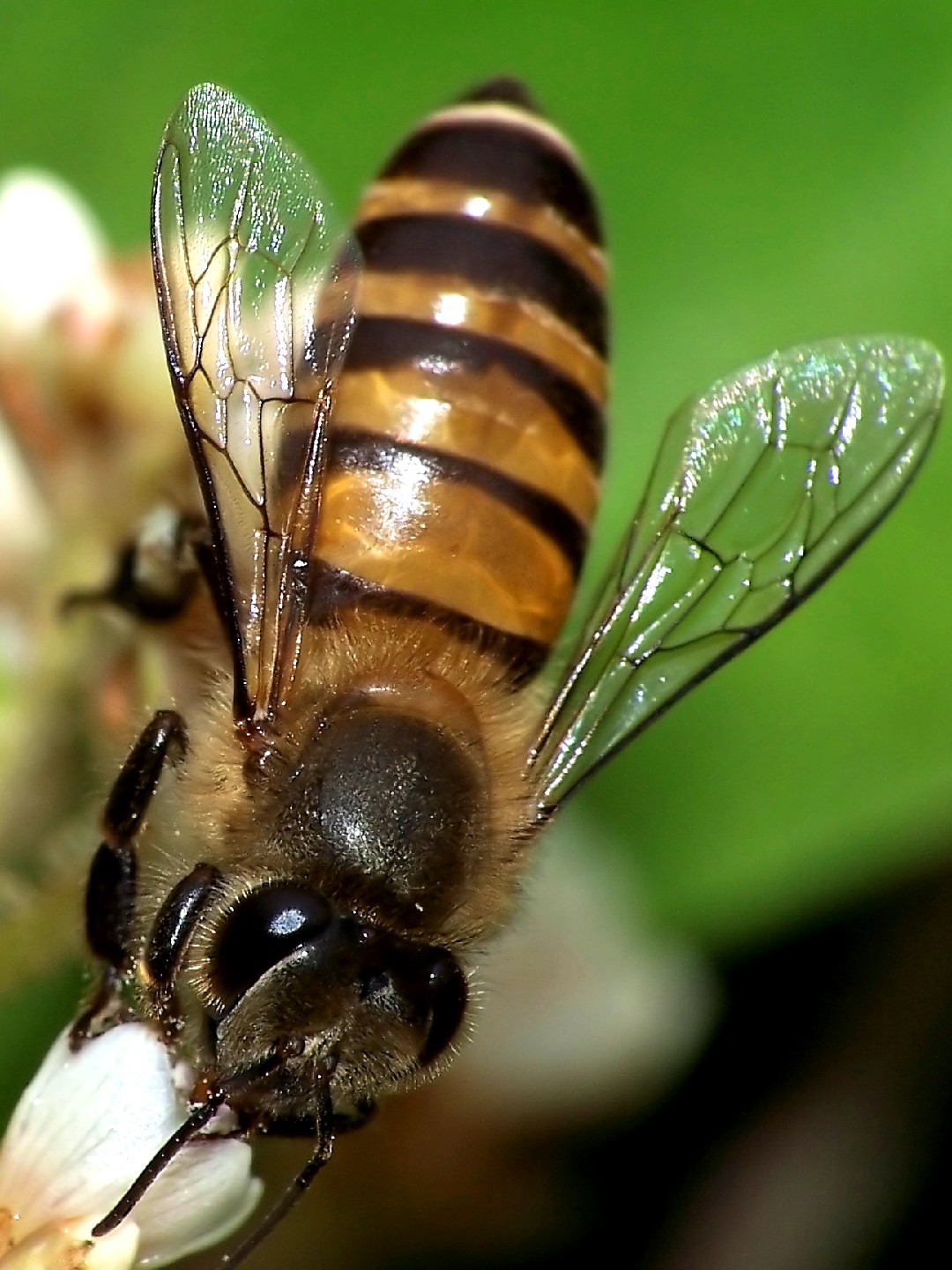
Eastern honey bees communicate to one another about good sources of nectar and pollen through the "waggle dance". A bee will perform this descriptive dance to other bees, after which they can interpret the dance and find their way to the food source. When they need to defend their nest from a wasp, they will surround the wasp and vibrate their muscles to generate heat, eventually killing the wasp via "heat balling".
8. Lime swallowtail
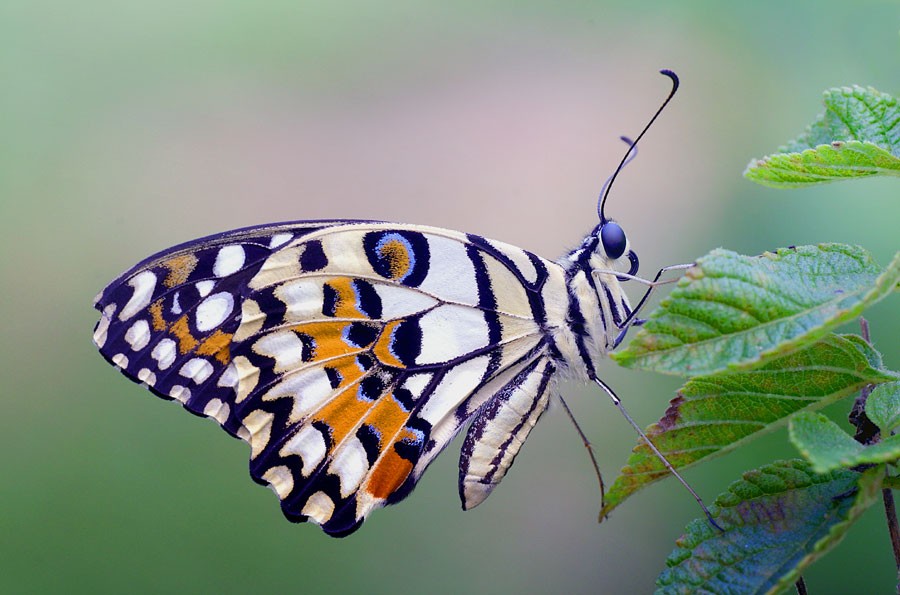
The lime swallowtail (Papilio demoleus) has a beautiful black and white pattern, but it's considered a major pest to citrus trees. It feeds on nearly any type of citrus, including oranges and limes. This butterfly's small, green larvae are capable of defoliating an entire nursery grove. They are truly trouble makers in the citrus orchard.
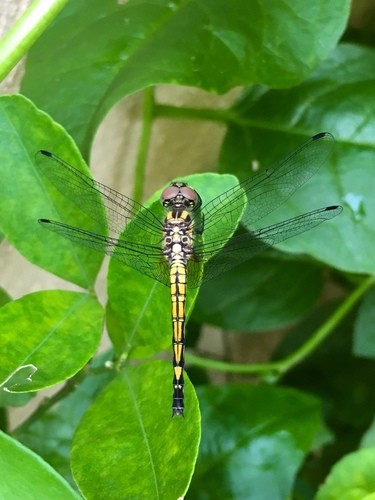
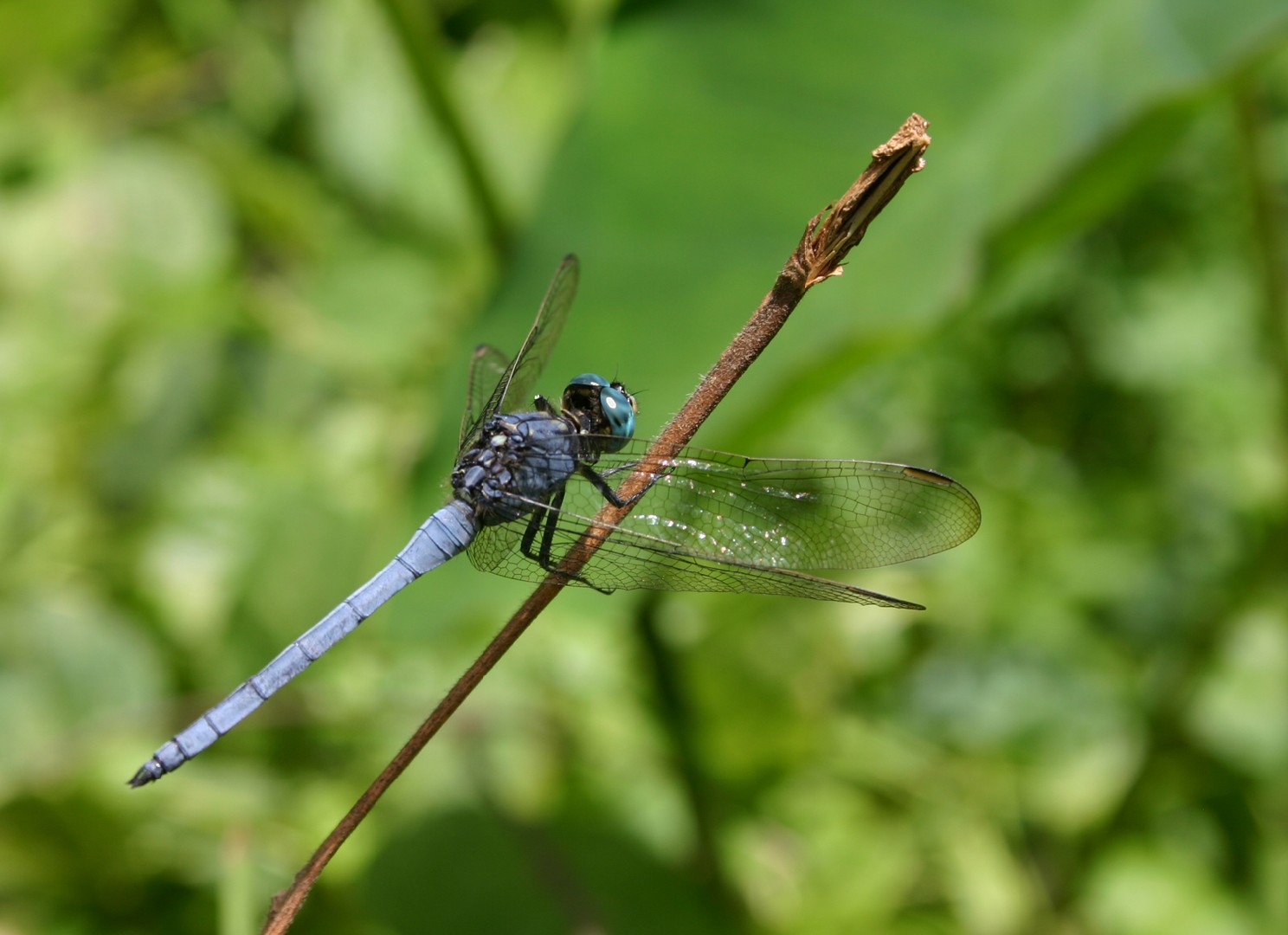
9. Blue-tailed forest hawk
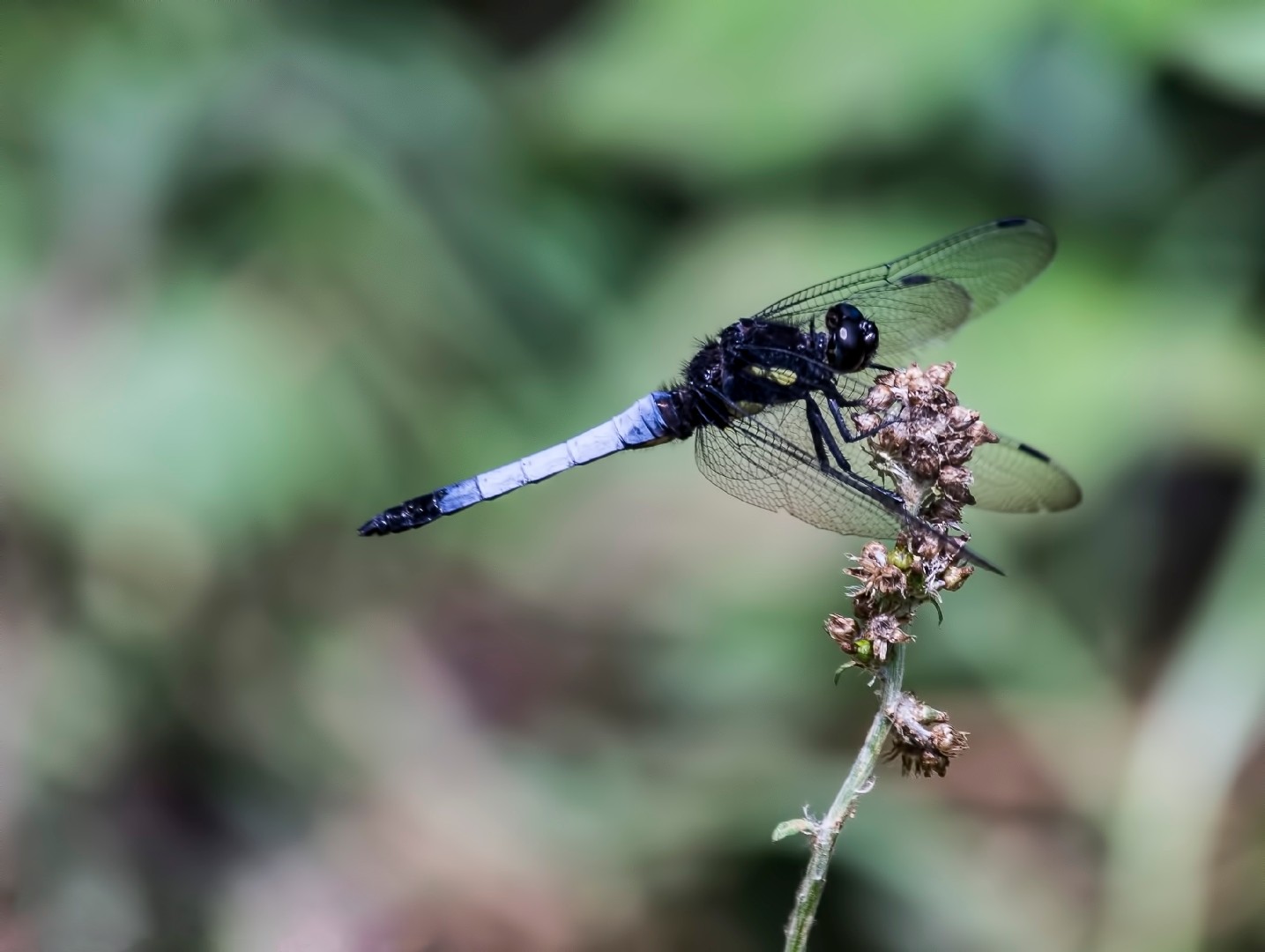
The species is on the IUCN Red List as not endangered, year of assessment 2010.
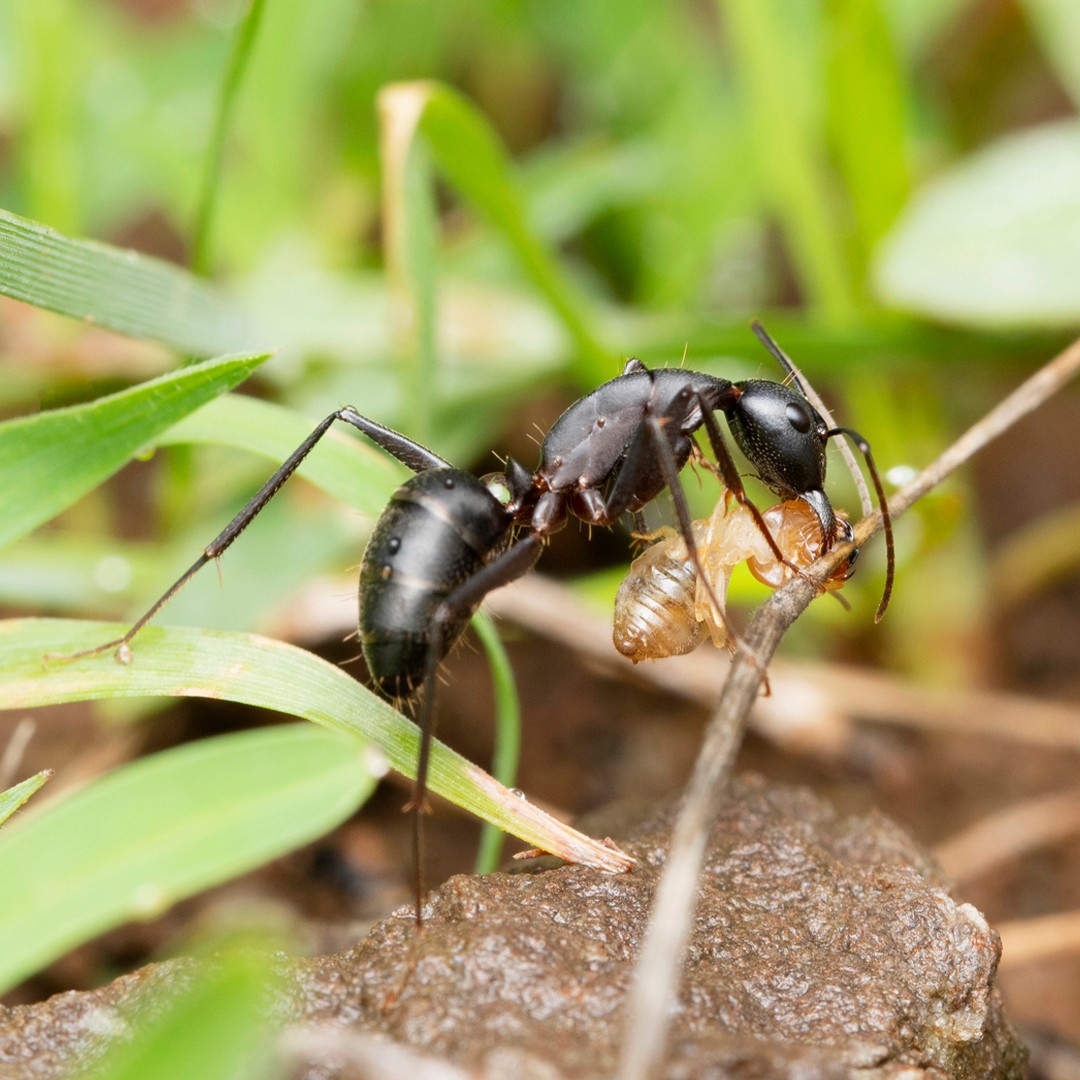
10. Indian black ant
Camponotus compressus is a type of ground-nesting species of ant found in India and Southeast Asia. It is a frequent visitor to toilets as it consumes urea. It is one of the many species which tends plant-sap-sucking insects like aphids and tree hoppers. They add nutrients into the soil through their discarded waste piles These ants stroke their antenna on the hind parts of these insects stimulating them to excrete a sugar rich liquid, called honeydew, which the ants consume. In return, they are known to protect the insects from predators like ladybugs.
More