




Top 10 Most Common Insects in Eastern Highlands
Insects, nature's remarkable creatures armed with surreal features for adaptation, densely inhabit every nook of Eastern Highlands. The geographical diversity within the Eastern Highlands significantly influences the abundance and variation of insects here. However, insects are not just residents, they play pivotal roles in the ecosystem, from being pesky intruders to essential pollinators. Discover our 'Top 10 most common insects' segment, highlighting the intriguing connection between Eastern Highlands's environs and its many-legged inhabitants.

Most Common Insects
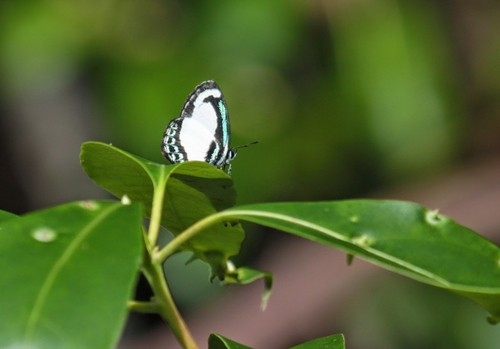
1. Small green banded blue
The wingspan is about 30 mm. Adult males are blue with a large white patch on the hindwings. Females are black with a large white patch on the wings. 
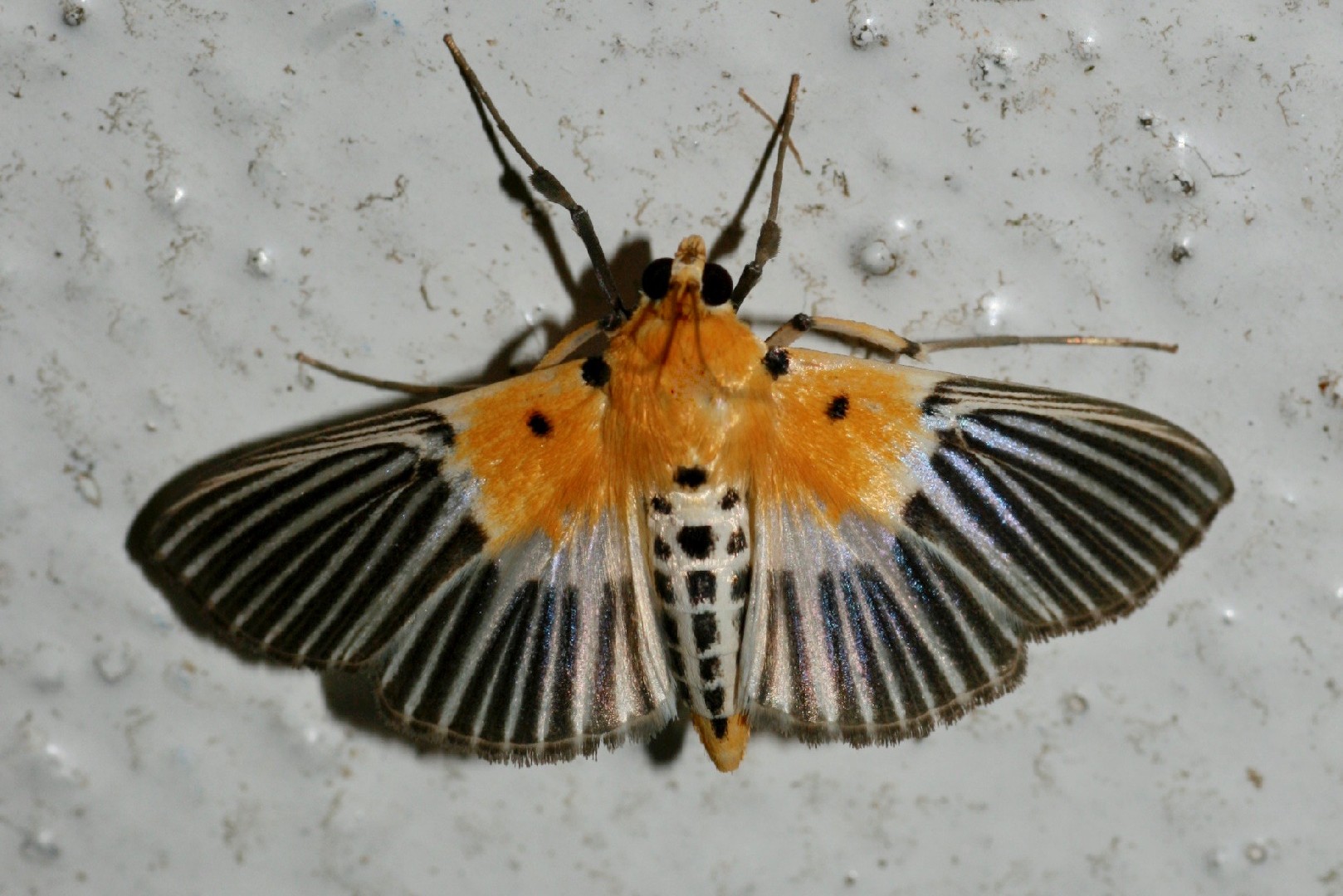
2. Nevrina procopia
The species is found in tropical Africa.

3. Meadow argus
Meadow argus has two brownish wings, each covered with two distinctive black and blue eyespots as well as white and orange marks that appear on the edge of the wings. The underside of the wings are mainly unmarked, except the lower part of the forewing has similar markings as the upperside.The wingspan measures 4 cm in males and 4.5 cm in females.
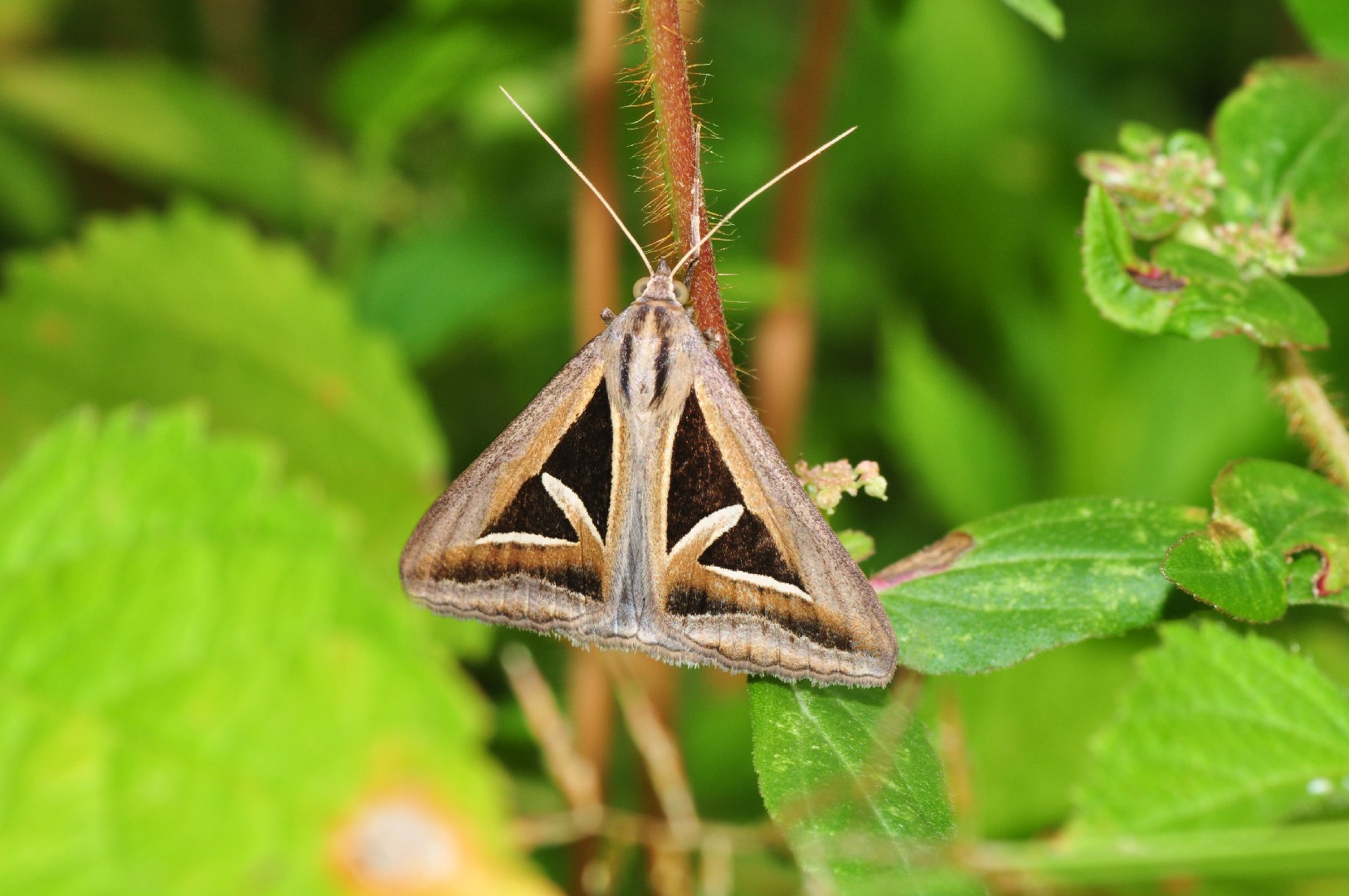
4. Triangles
The wingspan is about 3 - 4.5 cm. Antennae of male ciliated. Mid and hind tibia hairy. Body pale ochreous brown, slightly suffused with fuscous or dark grey brown. Forewings with a large black white-edged triangular patch easily distinguished below the cell from near base to towards outer angle. A similar smaller patch found beyond the cell on vein 5, with some pale fulvous behind it. A slightly sinuous submarginal pale line with patches of black suffusion found inside it and a series of black specks beyond it. A dark marginal line can be seen as well. Hindwings with indistinct medial line and fuscous suffused outer area. Larva has yellow upper half and brown ventral part. The yellow part is broken by longitudinal brown bands, which faints towards posterior and becomes intensive again in prolegs. Eggs olive green and speckled rusty red. First few instars are green with three lateral purple brown lines. Late instars are yellowish. Pupa within a slight cocoon of white silk, which spun amongst leaves.
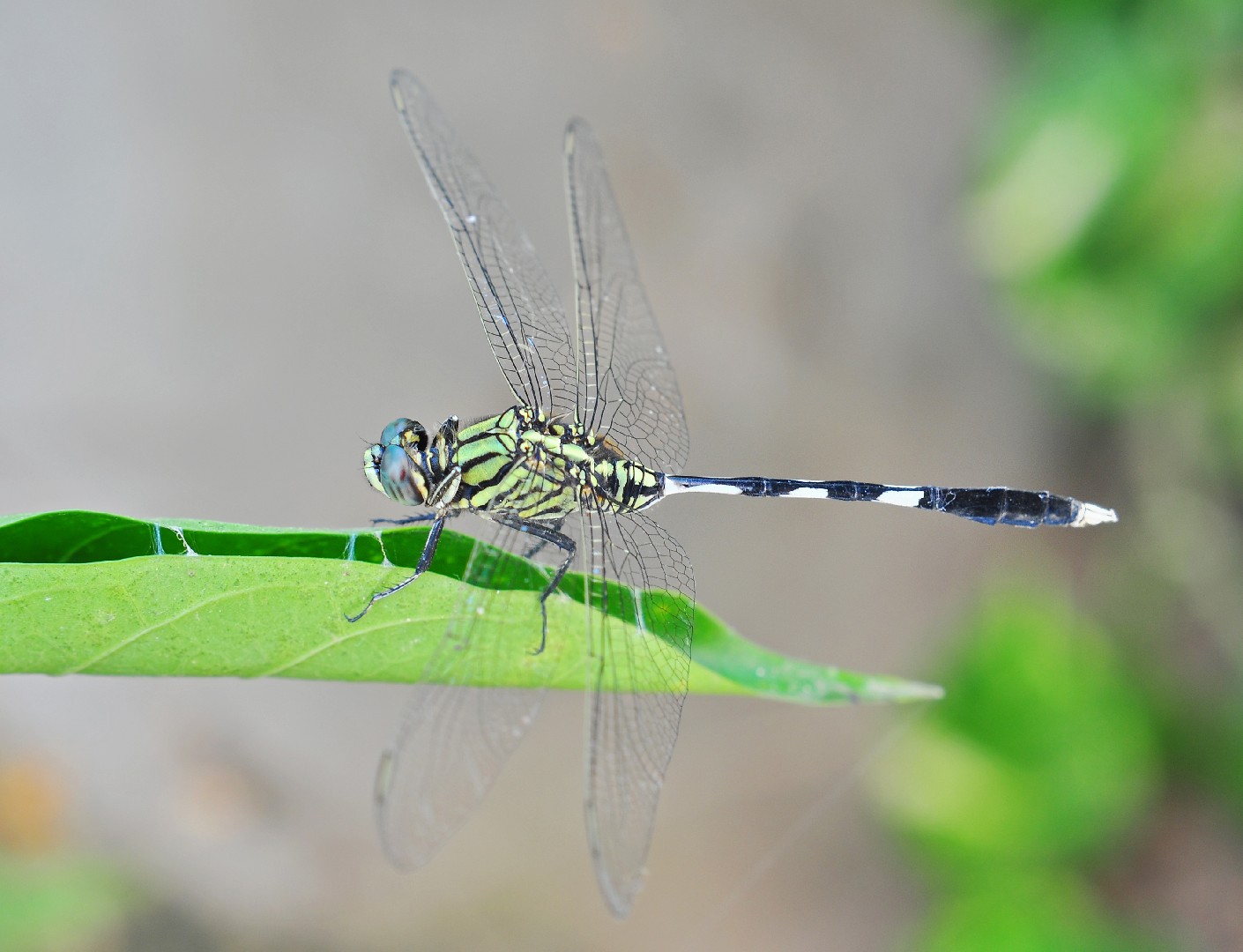
5. Slender skimmer
The species is on the IUCN Red List as not endangered, year of assessment 2009. The slender bank dragonfly occurs from Southeastern Europe and North Africa to Japan and Australia
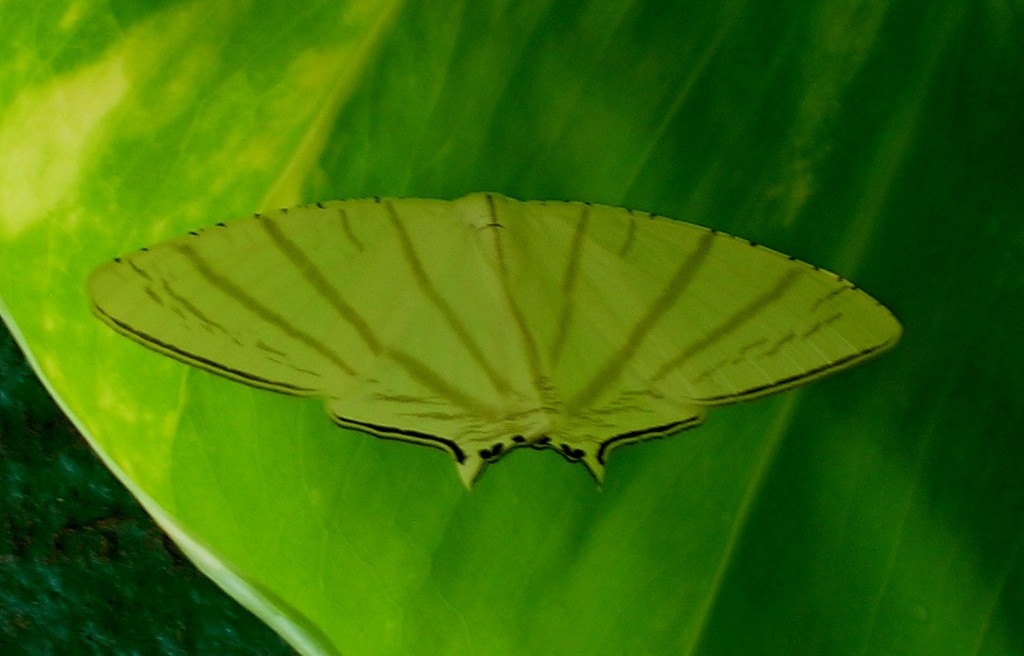
6. Urapteroides astheniata
The wingspan is about 60–76 mm. Body white. Palpi with a black line on the upperside. A black frontal line and spot found on vertex of head. Forewings with some black strigae from the costa. Six oblique fuscous bands, one sub-basal, another on discocellulars, the others medial, postmedial, sub-marginal and marginal. Some fuscous striae found on each side of the sub-marginal band. Hindwings with a fuscous band on inner margin joined at anal angle by a band from the upper angle of cell and almost met by one from the costa beyond the middle. Some submarginal striae can be seen. A black marginal line runs from the apex to the tail, and a very narrow line with three spots inside it from the tail to anal angle. Cilia black tipped. Larva pale reddish yellow, tinged green, with reddish transverse stripes dorsally. Three comma-like greenish markings found centrally on each segment. Last instars are more greenish with variable markings. Head and prothorax glossy greenish. Spiracles dark. The larvae feed on Endospermum species.
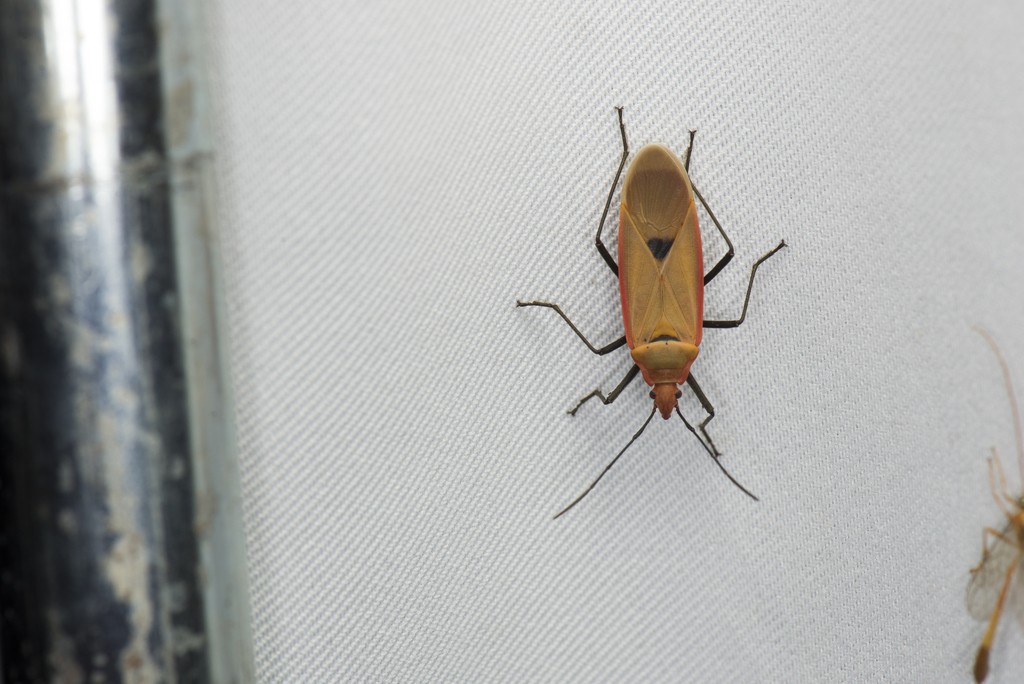
7. Dysdercus fuscomaculatus
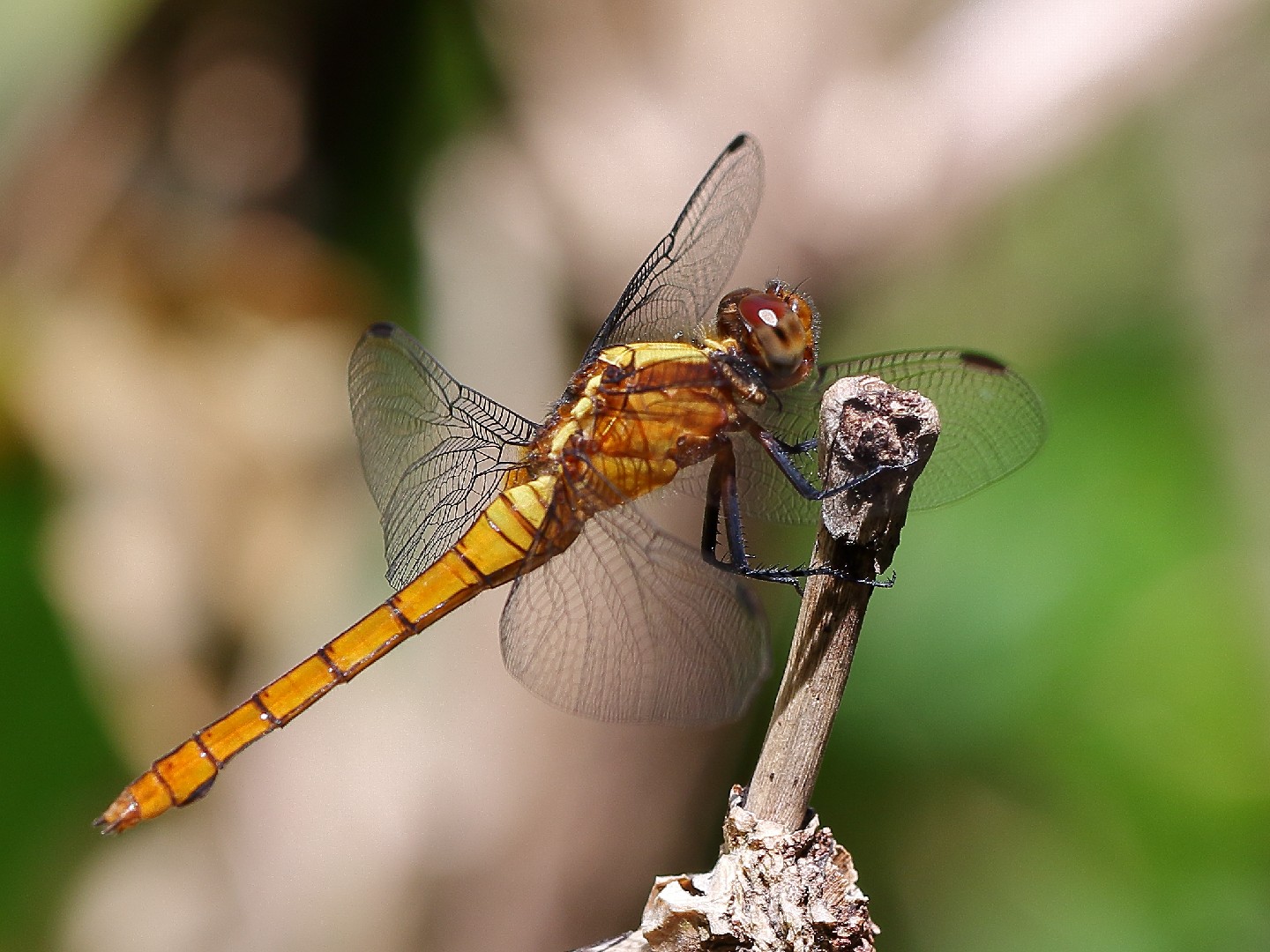
8. Fiery skimmer
Orthetrum villosovittatum is a medium-sized dragonfly with a wingspan of 6 - 9 cm. Mature males have dark greyish to greenish-brown thoraxes and red abdomens, with the abdomen constricted at segment four. Young males have an amber and black colouring. Females are ochre-coloured.
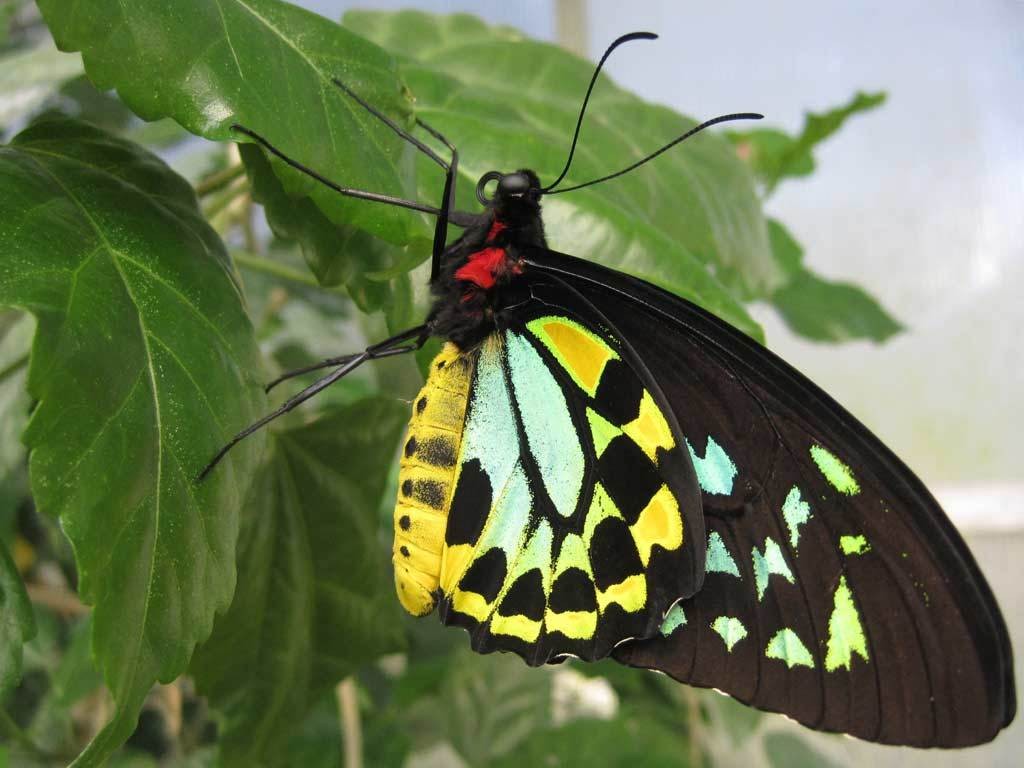
9. Common birdwing
Male: The upperside forewings are velvety black. There is a green (most races) subcostal stripe and a green (most subspecies) marginal stripe bordering the termen, tormen and dorsum of the wing. The sex brand is black and longish. The underside of the forewing is black. There is a chain of bluish or green postdiscal spots. The hindwings are green. At the wing's leading edge (costa) there are basal yellow-gold spots. There is also a postdiscal chain of black spots. The edge of the hindwing is black. The underside is dark green or bluish. The yellow-golden spots are transparent. The veins are partly black and the marginal edge of the wing is black. At the outer edge there is a postdiscal chain of black spots. The body (abdomen) is yellow. Head and thorax are black. The underside of thorax has a red hair coat. Female: The female is larger than the male and in the upper range of the wingspan. The basic colour of the female is dark brown. There is a chain of white postdiscal spots on the forewings. There is a chain of larger white postdiscal spots with dark centres on the hindwing. The underside is very similar to the upper. Larva: First instar larvae are wine red on hatching. They soon turn black or dark brown. All segments have soft tubercles with stiff ends bearing black spines. On the 4th segment tubercles are red. The tubercles are dark brown on the other segments. In the second instar, the tubercles lack spines, the 4th tubercles are light red and on the other segments they are the same colour as the body. In the third instar, there is a white to pink saddlemark on the 4th segment. In the fourth and fifth instars, the ground colour is ashy grey to brown, the saddlemark on the 4th segment is white and the tubercles on the 4th segment are white. There may be saddlemarks on the 5th segment and the 6th segment. The tips of the tubercle are black and the osmeterium is dark red.
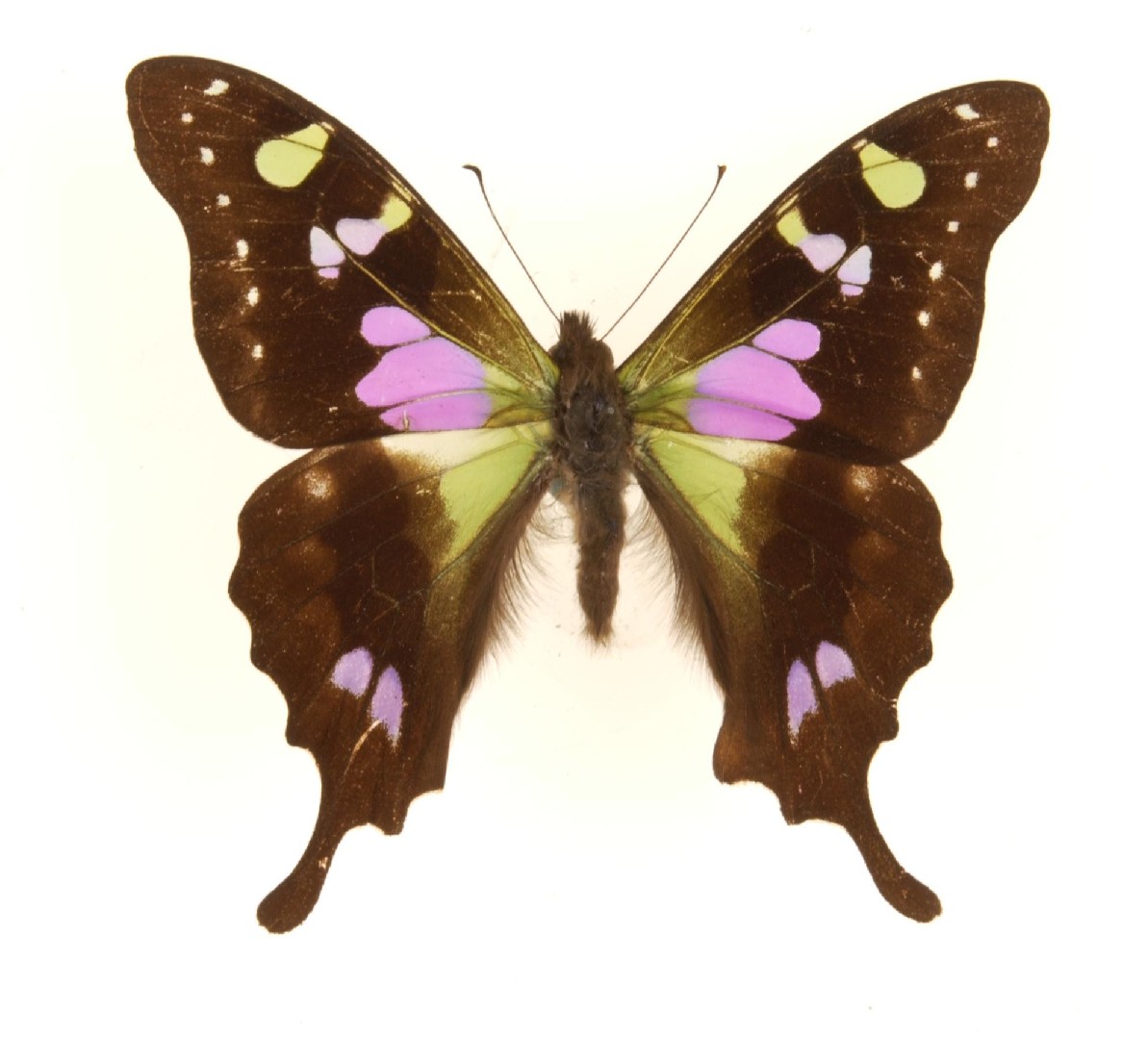
10. Purple spotted swallowtail
Graphium weiskei, the purple spotted swallowtail, is a species of butterfly in the swallowtail family; Papilionidae. It is found only in the highlands of New Guinea. These swallowtails live in elevations of 4,500 to 8,000 feet (1,400 to 2,400 m). The name honours the collector Emil Weiske.







