




Top 9 Most Common Insects in Kimbe
Insects, with their diverse structures and behavior, grace every corner of our earth, including the unique ecosystems of Kimbe. Factors like climate and vegetation in different parts of Kimbe contribute deeply to the kinds of insects that call it home. These tiny creatures, despite their size, play pivotal roles in our ecosystem as pollinators, decomposers, and food sources. Our list, 'Top 9 Most Common Insects in Kimbe' underscores this intricate interplay between environment and insect life, revealing both beneficial species and pests.

Most Common Insects
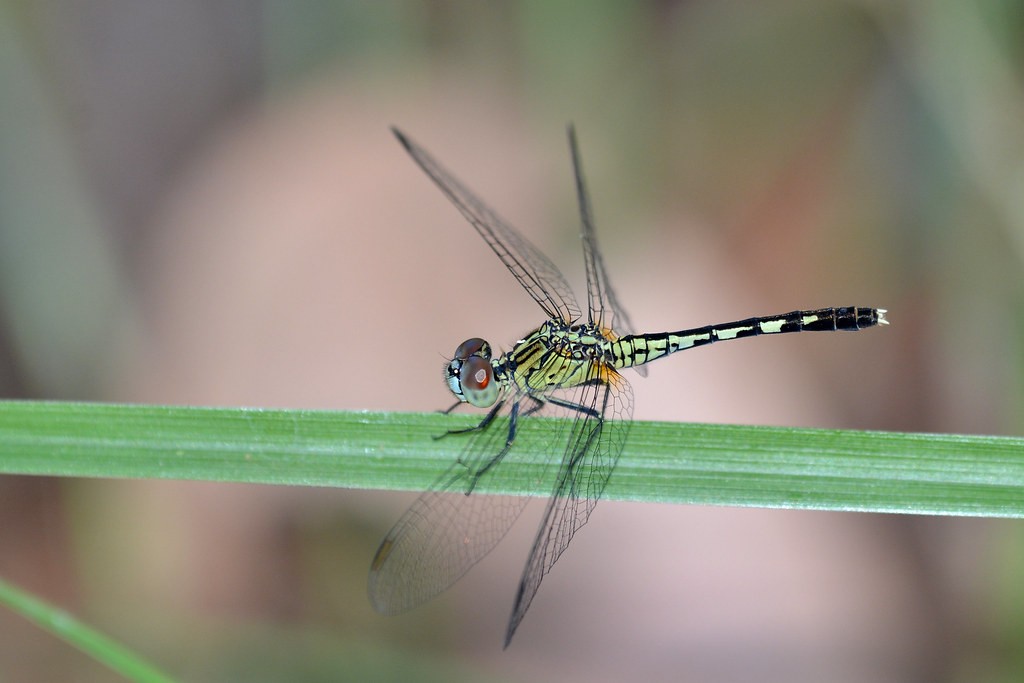
1. Green skimmer
Orthetrum serapia is a medium-sized dragonfly with a wingspan of 60-85mm. Its wings are clear except for a small dark spot at the base of the hindwing. The thorax is greenish to greyish yellow with black markings. The abdomen is black with pale yellow or pale green markings. Orthetrum serapia appears very similar to Orthetrum sabina and can be confused where the range of the two overlap in north-eastern Australia. 
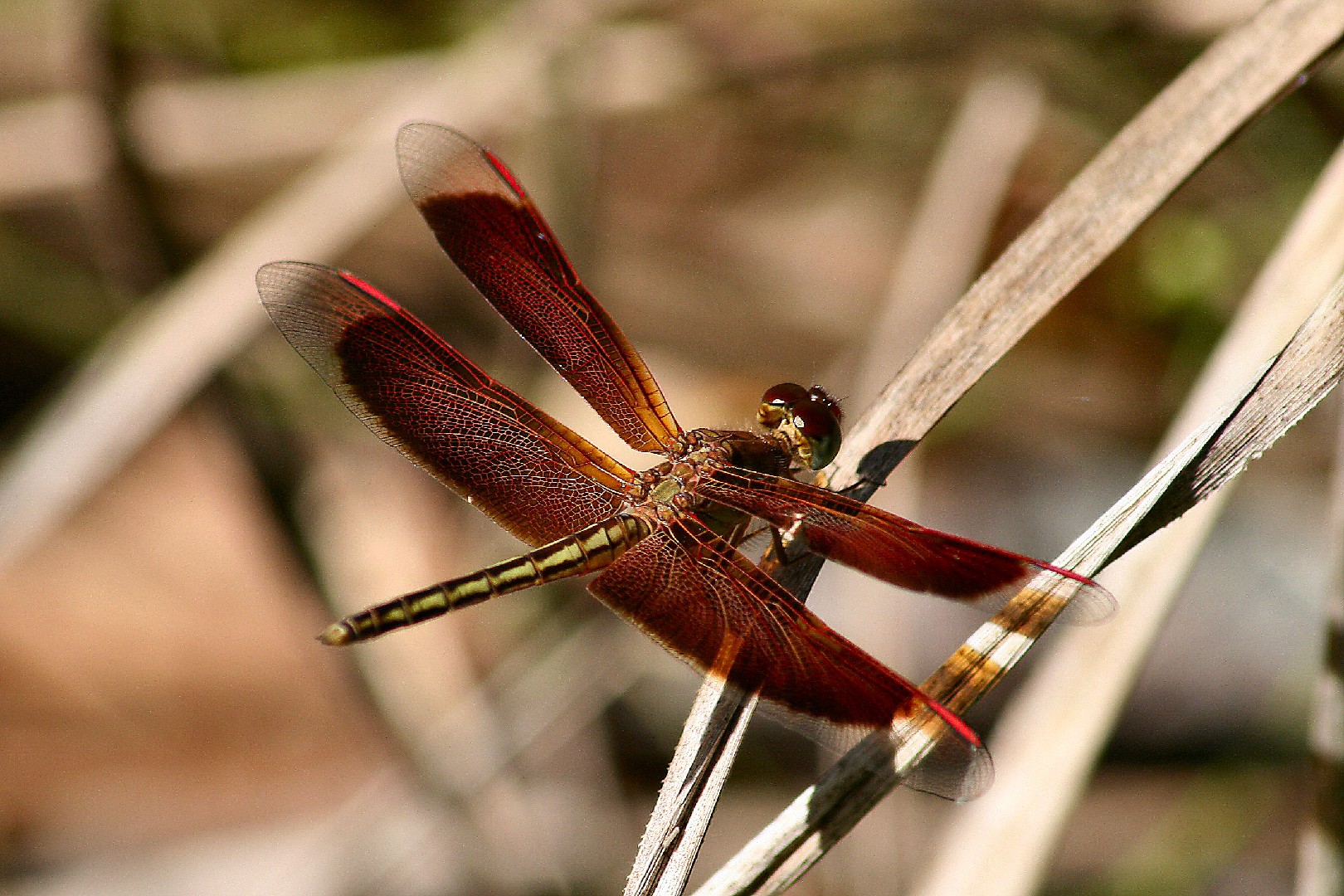
2. Painted grasshawk
Neurothemis stigmatizans, known as the painted grasshawk, is an Australian species of dragonfly in the family Libellulidae. The genus Neurothemis is distributed from India to the western Pacific. This species is found in northern Australia in an arc from the southern Queensland border to Broome, Western Australia. Neurothemis stigmatizans is a medium sized dragonfly (wingspan 60-85mm) which inhabits still waters in the vicinity of grassy areas. The male abdomen is reddish-brown with a lighter dorsal stripe, his wings have deep reddish-brown markings that extend past the nodus, with paler contrasting veins. The female is pale greenish-yellow with a dark dorsal stripe and side stripe; her wings are mostly hyaline with a dark smudge beyond the nodus and dark wingtips. The pterostigma of both sexes is pink or pale coloured.

3. Blue moon butterfly
Hypolimnas bolina, the great eggfly, common eggfly or in New Zealand the blue moon butterfly is a species of nymphalid butterfly found from Madagascar to Asia and Australia.
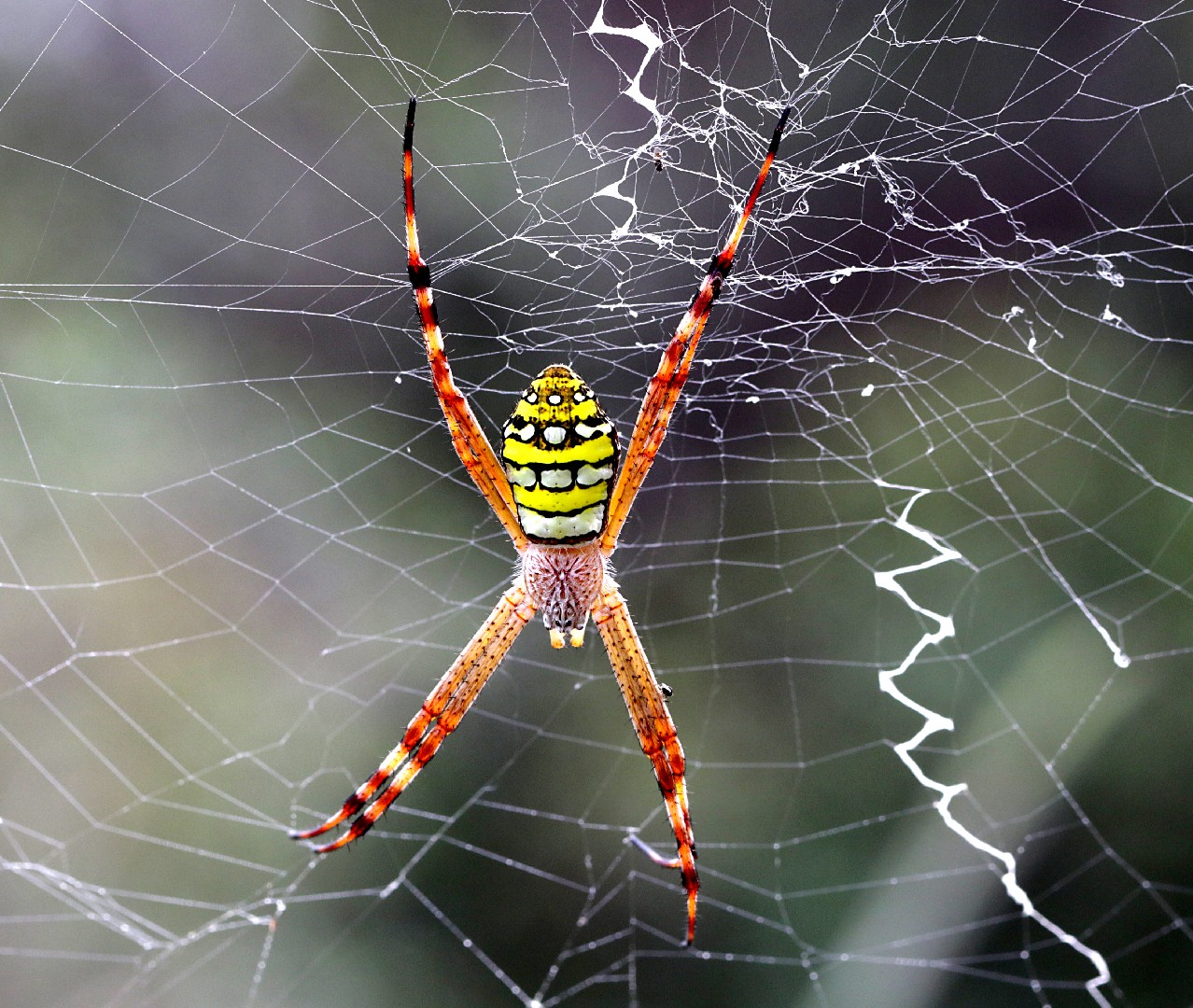
4. Painted cross spider
Argiope picta is a species of orb web spider found in tropical areas of Queensland, Australia and Papua New Guinea up to the Moluccas. This species is similar in size to the sympatric Argiope aetherea; females can be distinguished from those of A. aetherea via extensive differences in abdominal colouration and patterns. The males of these two species are almost indistinguishable.
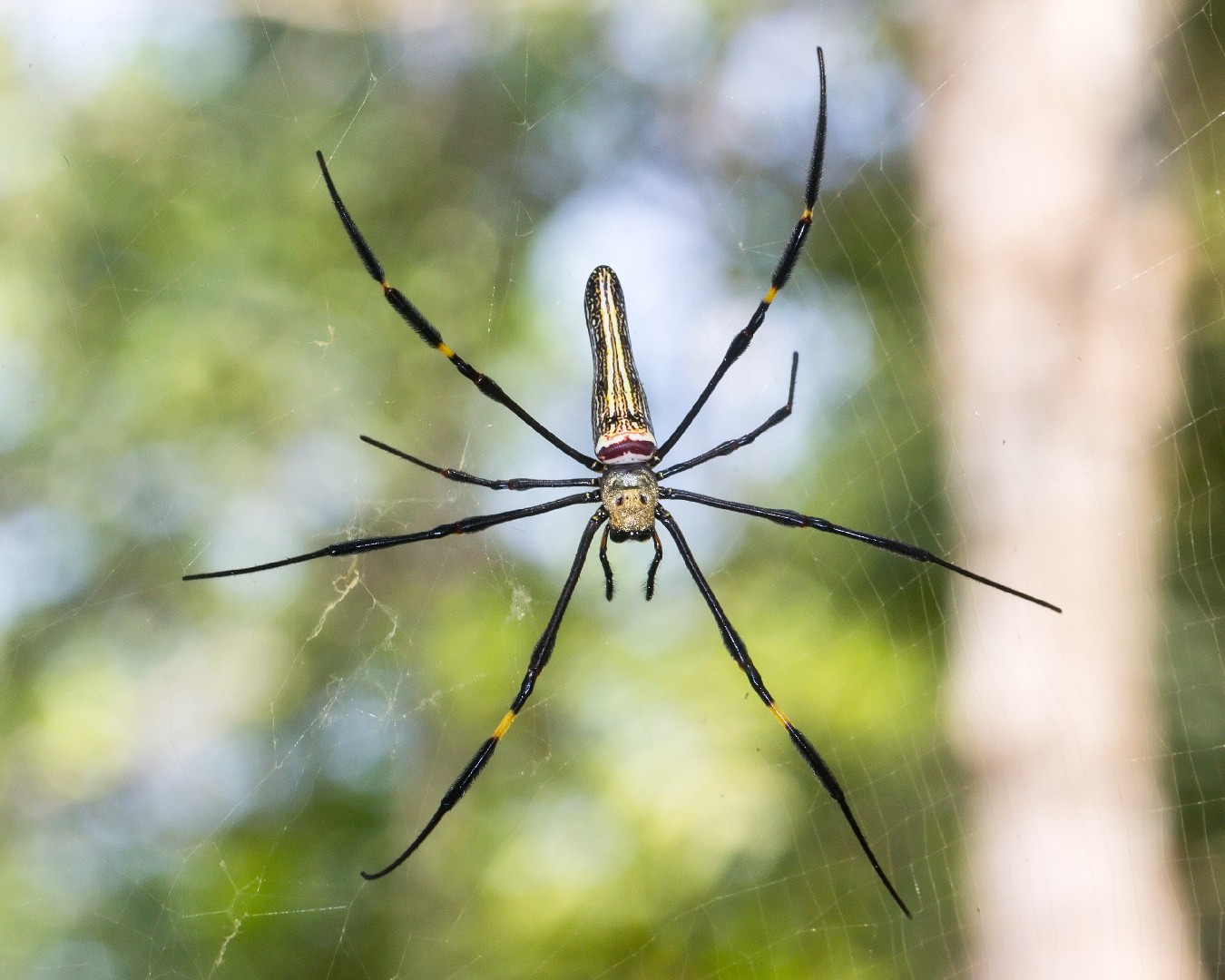
5. Giant golden orb weaver
The giant golden orb weaver (Nephila pilipes) is known for spinning a golden web. Despite that being neat, that isn't the weirdest part about them. Females are known to favor gigantism, causing males to be much smaller than average females. Males are known to have mating plugs which attempt to prevent other males from mating, but the size difference can make this tricky.
6. Lean lynx spider
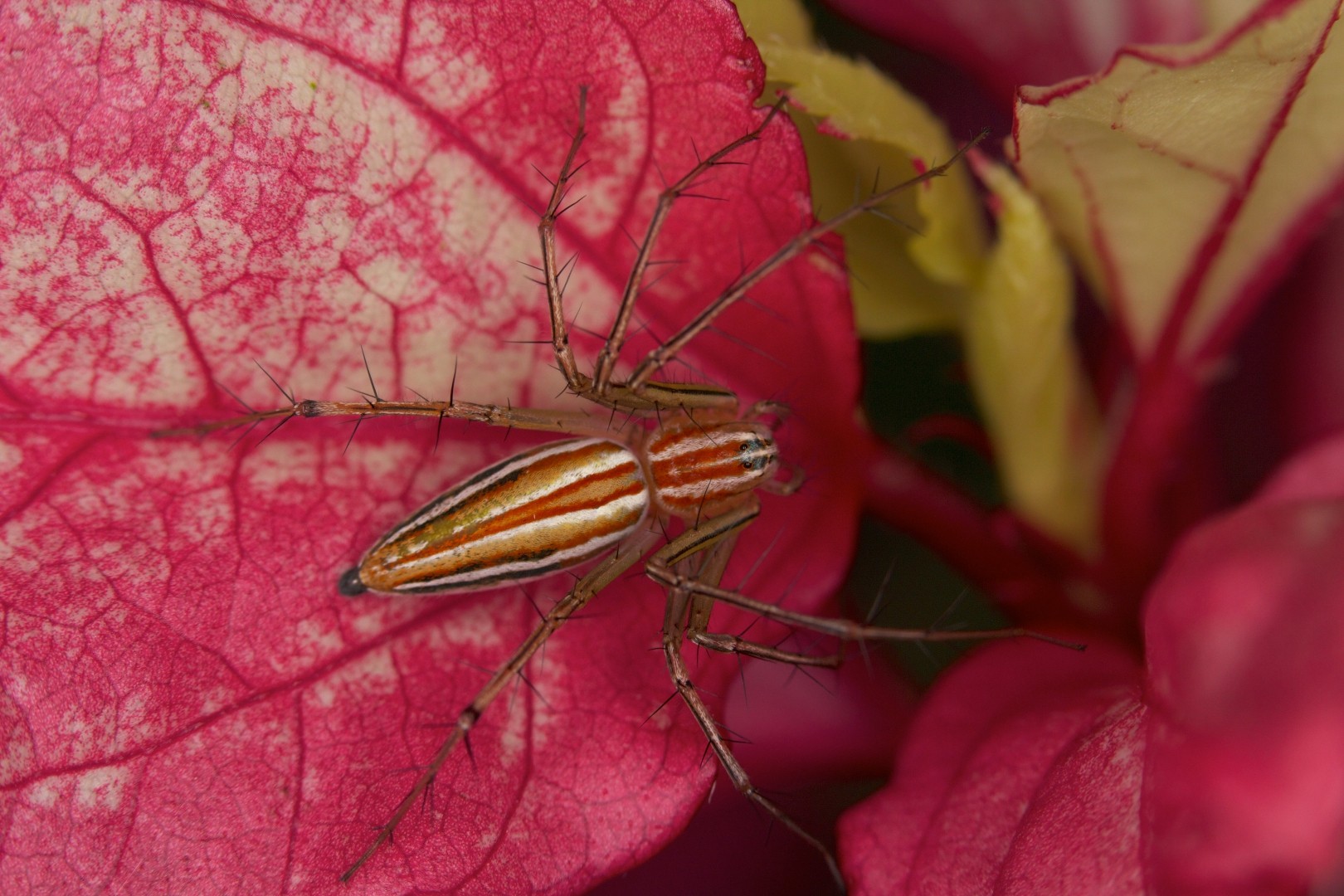
Oxyopes macilentus, sometimes known as the lean lynx spider, is a species of lynx spiders from East Asia, South Asia, Southeast Asia, and northern Australia. They are active predators, hunting invertebrates (including other spiders) among vegetation. They are especially common in grassy areas and rice fields. Their bodies are characteristically long and thin, about four times as long as it is wide. Their body color ranges from pale white to yellow, orange, or green; with a pattern of black, orange, and white longitudinal lines. Females have a maximum body length of 10 mm (0.39 in), while males grow to 9 mm (0.35 in). The species was first described in 1878 by the German arachnologist Ludwig Carl Christian Koch. The specific name is from Latin macilentus ("lean" or "thin"), in reference to the spider's body. It is classified under the genus Oxyopes.
7. Land crab
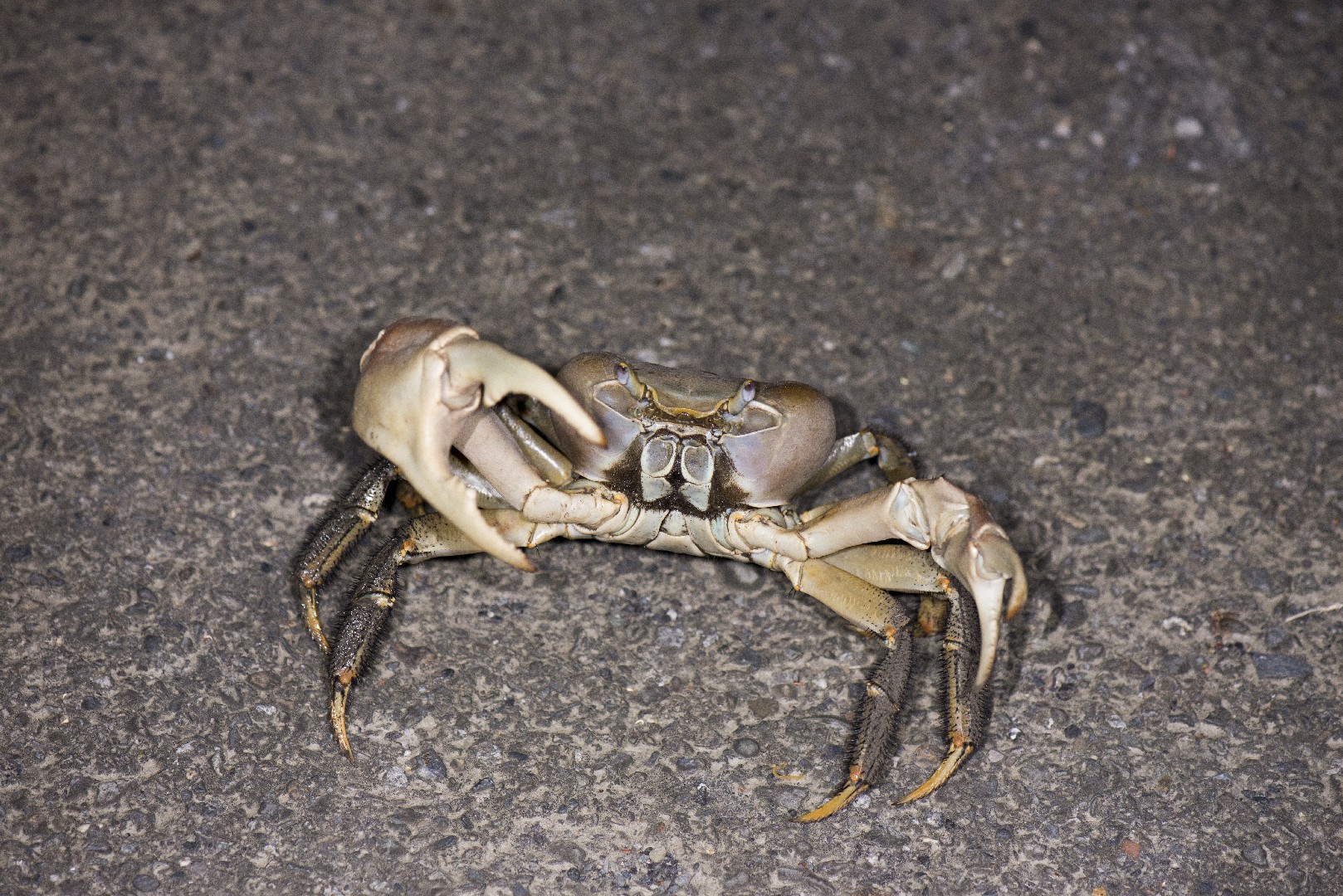
The largest of the crabs to inhabit the African mangroves, the land crab can often be seen scurrying across roadways and making their way into residents' gardens. They form burrows about 1.8 m deep where the larvae complete six stages of growth.
8. Common birdwing
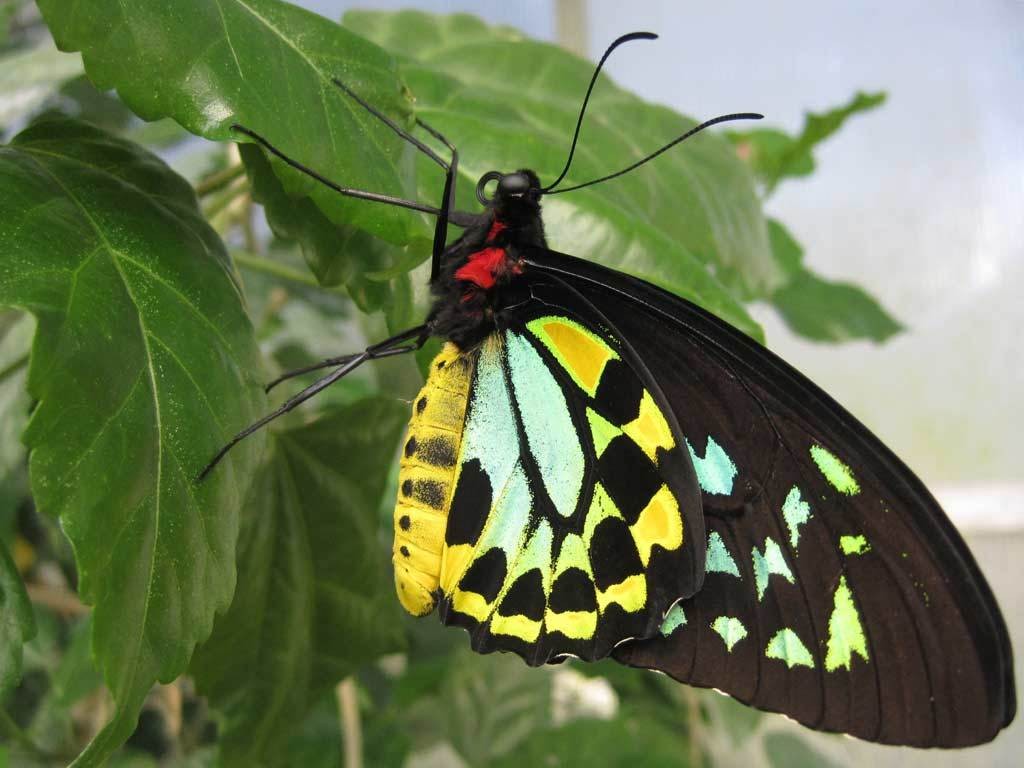
Male: The upperside forewings are velvety black. There is a green (most races) subcostal stripe and a green (most subspecies) marginal stripe bordering the termen, tormen and dorsum of the wing. The sex brand is black and longish. The underside of the forewing is black. There is a chain of bluish or green postdiscal spots. The hindwings are green. At the wing's leading edge (costa) there are basal yellow-gold spots. There is also a postdiscal chain of black spots. The edge of the hindwing is black. The underside is dark green or bluish. The yellow-golden spots are transparent. The veins are partly black and the marginal edge of the wing is black. At the outer edge there is a postdiscal chain of black spots. The body (abdomen) is yellow. Head and thorax are black. The underside of thorax has a red hair coat. Female: The female is larger than the male and in the upper range of the wingspan. The basic colour of the female is dark brown. There is a chain of white postdiscal spots on the forewings. There is a chain of larger white postdiscal spots with dark centres on the hindwing. The underside is very similar to the upper. Larva: First instar larvae are wine red on hatching. They soon turn black or dark brown. All segments have soft tubercles with stiff ends bearing black spines. On the 4th segment tubercles are red. The tubercles are dark brown on the other segments. In the second instar, the tubercles lack spines, the 4th tubercles are light red and on the other segments they are the same colour as the body. In the third instar, there is a white to pink saddlemark on the 4th segment. In the fourth and fifth instars, the ground colour is ashy grey to brown, the saddlemark on the 4th segment is white and the tubercles on the 4th segment are white. There may be saddlemarks on the 5th segment and the 6th segment. The tips of the tubercle are black and the osmeterium is dark red.
9. Common emigrant
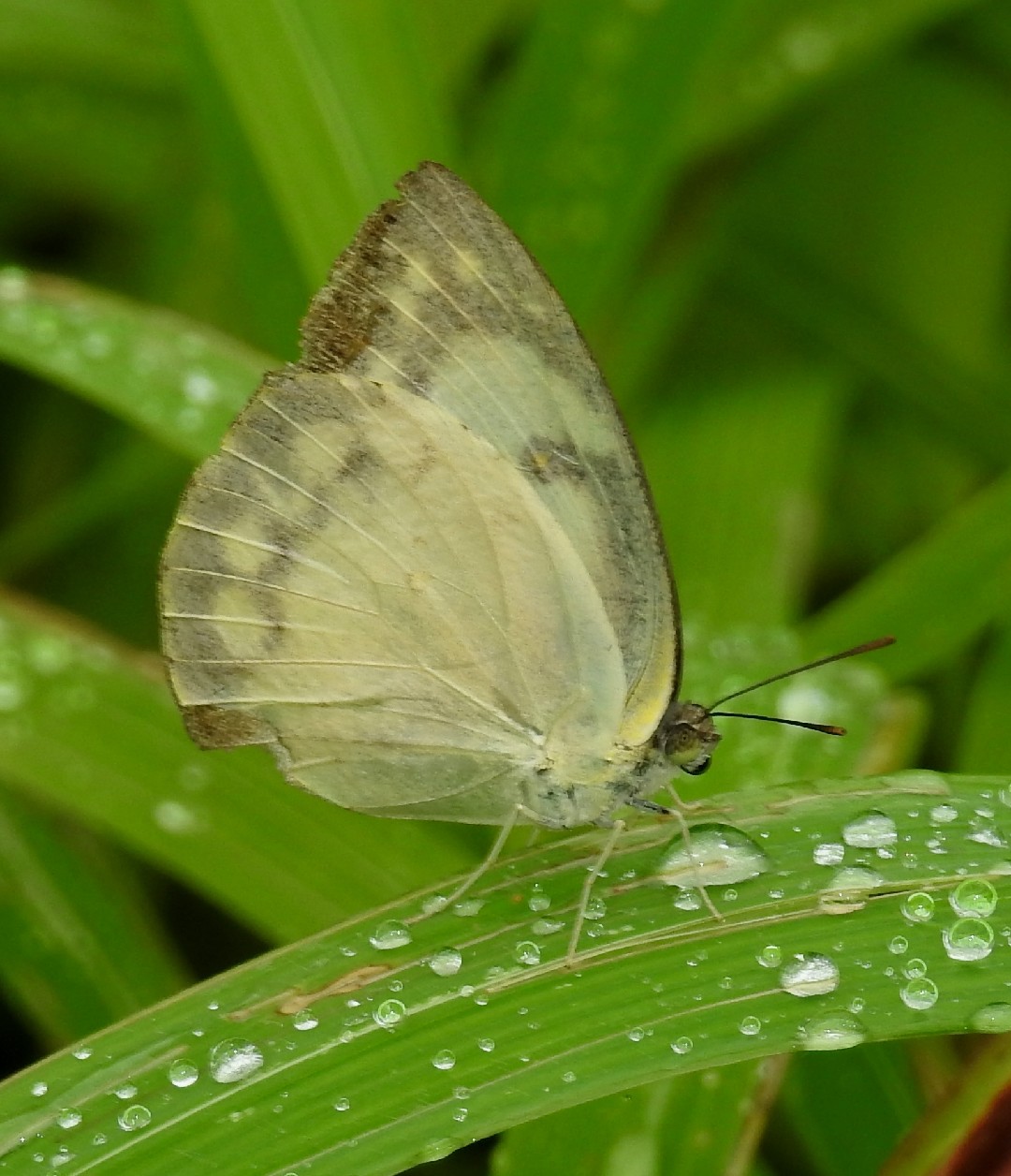
Male. "The upperside of the male is chalky-white, sometimes with a more or less broad and clearly defined basal sulphur-yellow area on both fore and hind wings; this sulphur-yellow colour is at times diffused over the whole surface of the wings, though generally it becomes paler towards the terminal margins. For the fore wing, the whole, or sometimes only the apical half, of the costa narrowly black, this color widened out irregularly at the apex; termen widely black at the apex, the colour narrowed posteriorly. This border in some specimens almost reaches the tornus, in others terminates above vein 4; occasionally it is continued posteriorly by a series of block dots at the apices of the veins. The Hind wing generally are uniform, unmarked, and some specimens bear minute black dots at the apices of the veins. "On the underside the groundcolour is very variable, with white with a slight to strong ochraceous tinge, greenish white or sulphur-yellow. The fore wing is typically without markings, in some specimens with a patch of sulphur-yellow on either side of base of median nervure, in the very yellow examples the tornal area is often widely greenish white, in others (Catopsilia catilla, Cramer) it bears a spot variable in size on the discocellulars. This spot has a pearly centre and an outer reddish line. Many specimens have an irregular angulated narrow discal reddish line (the colour varies in intensity) that runs from the costa obliquely outwards to vein 7, and then obliquely inwards to vein 2, though this line is often absent in specimens that bear the discocellular spot; apex and termen sometimes very narrowly reddish. The hind wing is typically uniform, without markings." Female. "On the female upperside the ground-color varies as in the male, but sometimes it is chalky white at the bases of the wings, with the terminal margins more or less broadly sulphur-yellow. Fore wings always with a round, occasionally quadrate, black discocellular spot variable in size; in some specimens the costa is black only towards the apex of the wing, in others broadly black throughout and opposite the apex of cell so widened out as to touch the discocellular spot. In lightly marked specimens in addition to the discocellular spot, there is only an irregular terminal black band dentate inwardly and widest at the apex of the wing; in others there is in addition a more or less diffuse highly curved macular postdiscal band that extends from the costa obliquely outwards down to vein 7, where it often touches the terminal black band, and thence is continued downward and slightly inclined inwards to interspace 1, getting gradually paler and fainter posteriorly. Hind wing are a series of terminal inter-spacial black spots that vary in size, and in the dark forms coalesce into a terminal black band."







