




Top 20 Most Common Insects in Gora
Insects, with their unique features and diverse habitats, are a fascinating area of study in the natural world. Within the region of Gora, geographic distinctions foster an incredible richness of insect life. This top 20 list illustrates how insects, essential components of ecosystems, assume roles ranging from beneficial pollinators to destructive pests. Their presence and the diverse environments of Gora are wonderfully interconnected, underlining the vitality of these tiny but significant creatures.

Most Common Insects
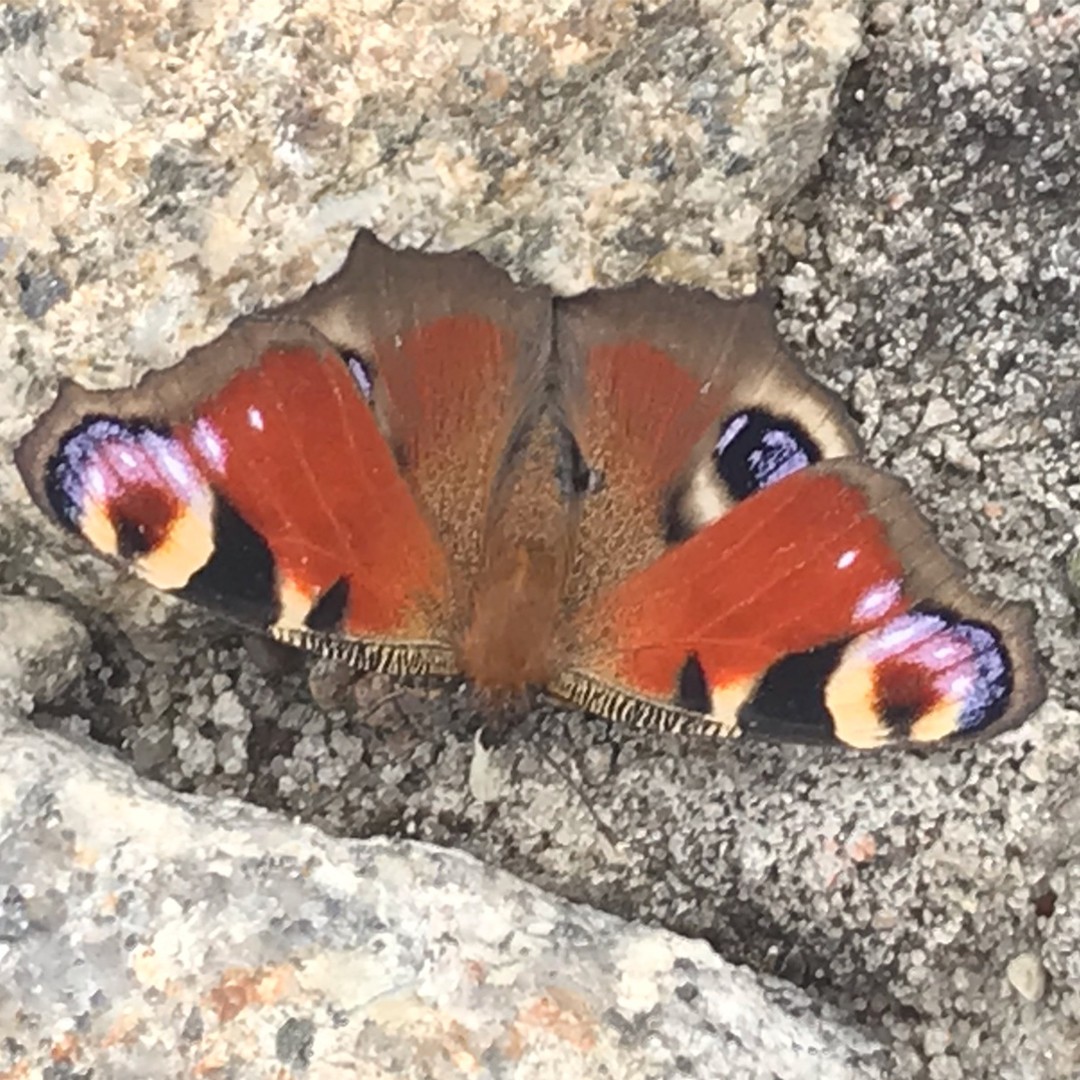
1. European peacock
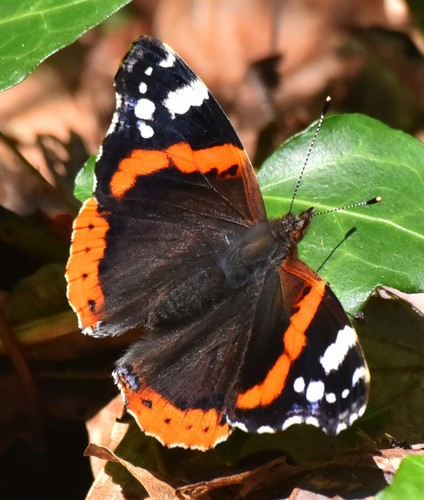
European peacock (Aglais io) is a colorful butterfly that resides in temperate Asia and Europe – hence its common name. Its prominent eyespots deter would-be predators, who mistake them for the eyes of a bigger, more dangerous species. In recent years, this species appears to be expanding its range into previously uncolonized territory.
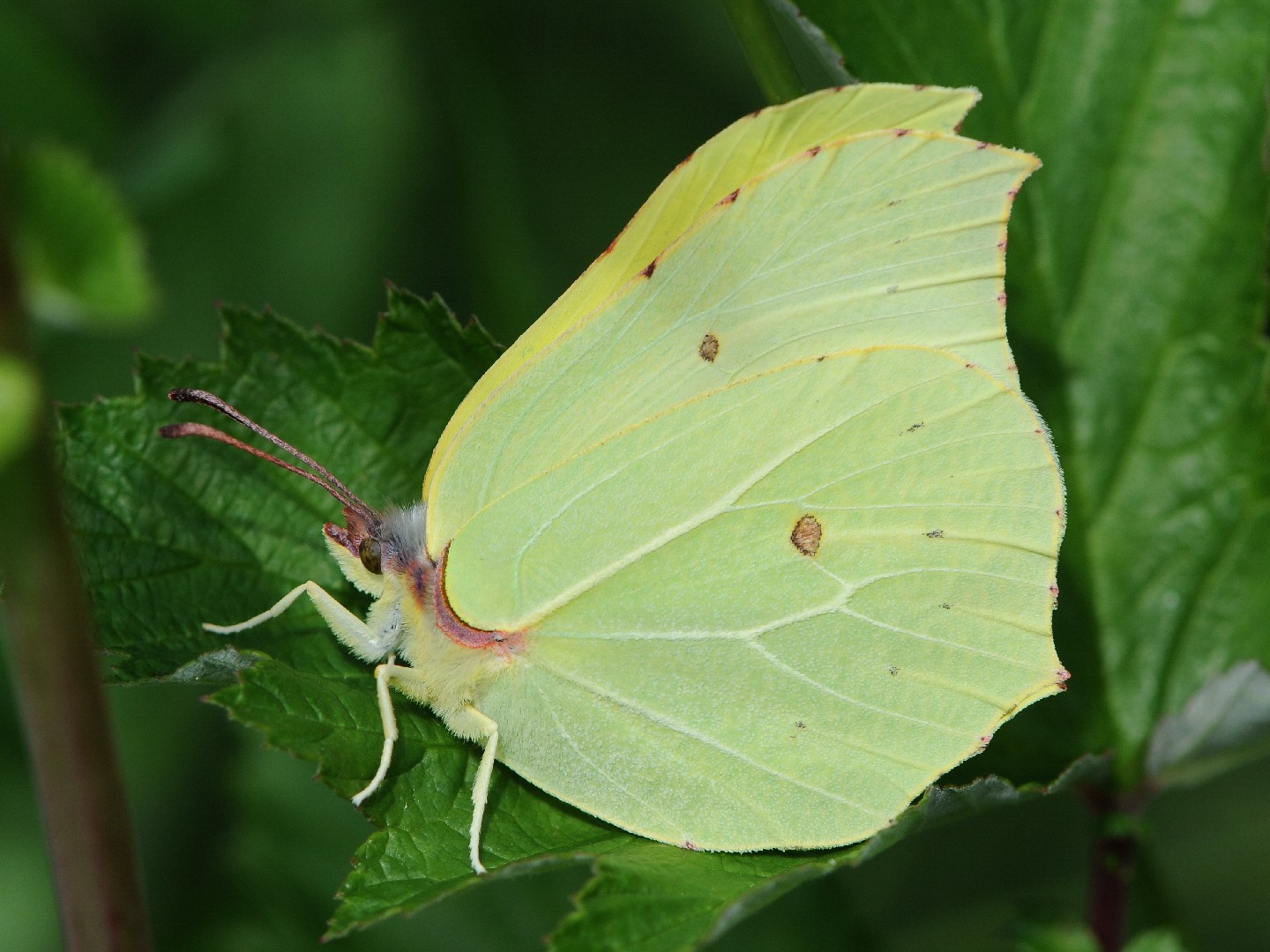
2. Common brimstone
Common brimstone (Gonepteryx rhamni) is an attractive species of butterfly; males display iridescence and have yellow wings, whereas females have white-green, non-iridescent wings. This species is wholly reliant on two species of buckthorn plant to lay its eggs. Consequently, the larvae consume large amounts of buckthorn.
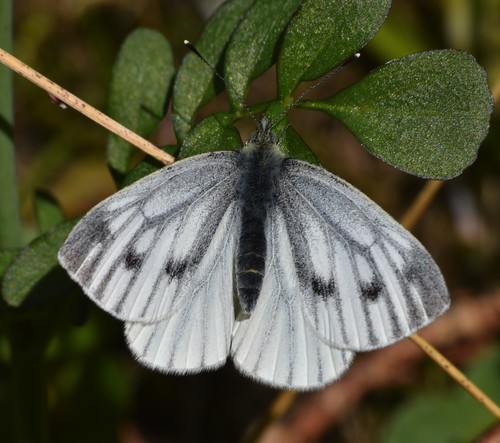
3. Green-veined white
Green-veined white (Pieris napi) is a distinctively white-winged butterfly that lays its eggs in a variety of food plants. This species displays observable differences dependent on sex: males possess only one dark spot on each forewing, whereas females display two. Unlike several of its cousin species, green-veined white prefers not to lay eggs in garden cabbages, rendering it less of a pest to farmers.
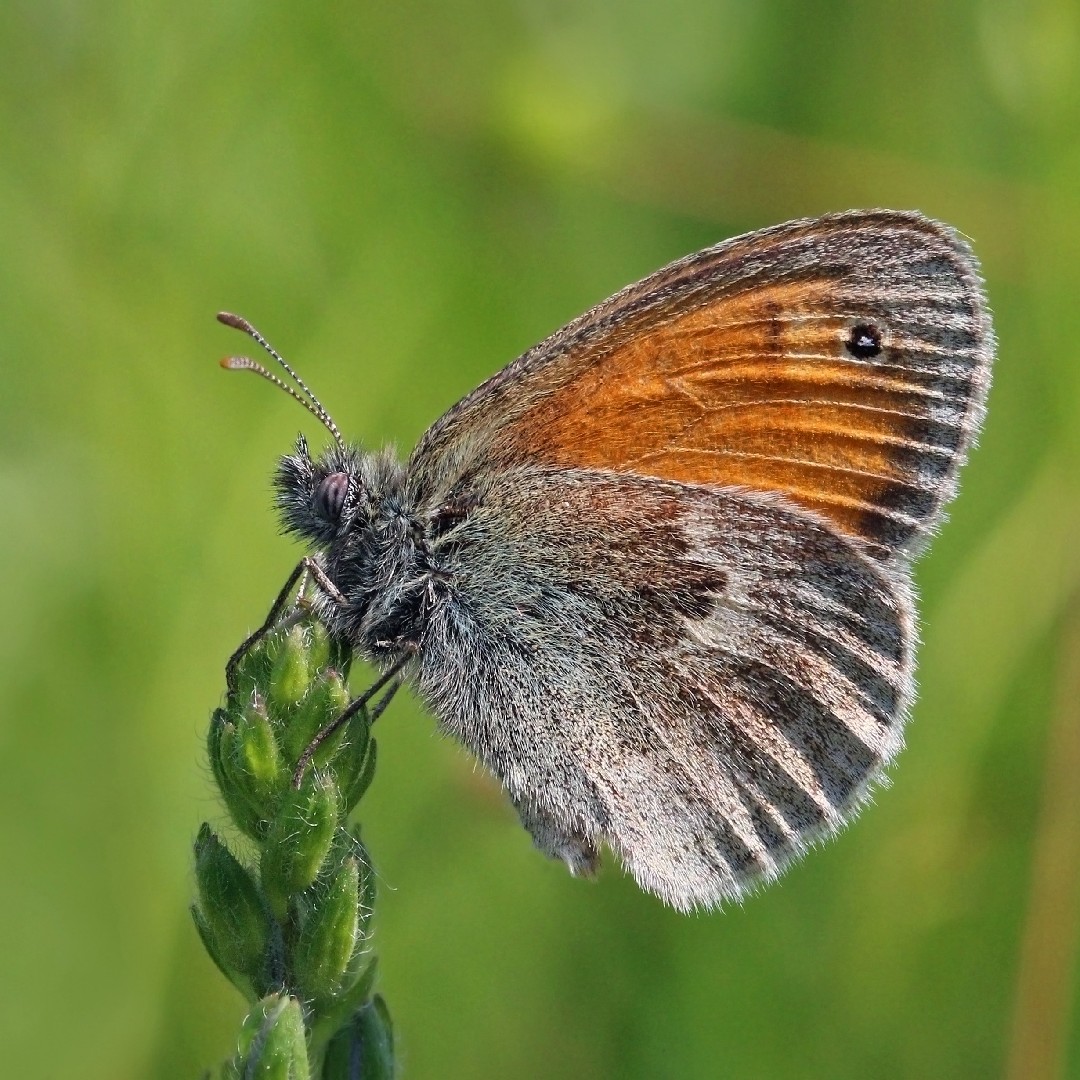
4. Small heath
It rests with closed wings when not in flight. 
5. Large white
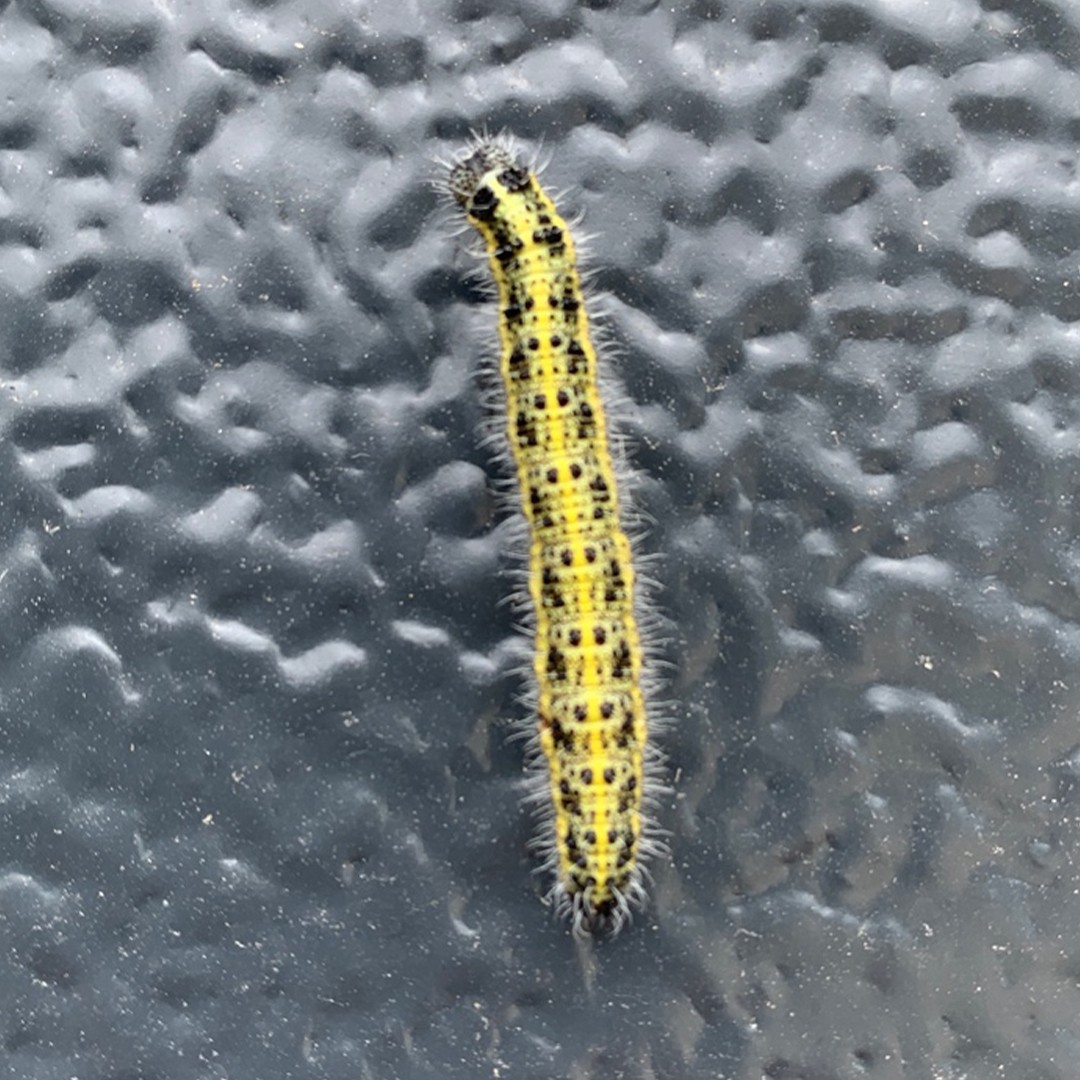
Large white (Pieris brassicae) is visually similar but quite larger than its close relative P. rapae. It lays its eggs on food plants such as cabbages – the origin of its common name – leading to many farmers' classifying this species as a pest.
6. Meadow brown
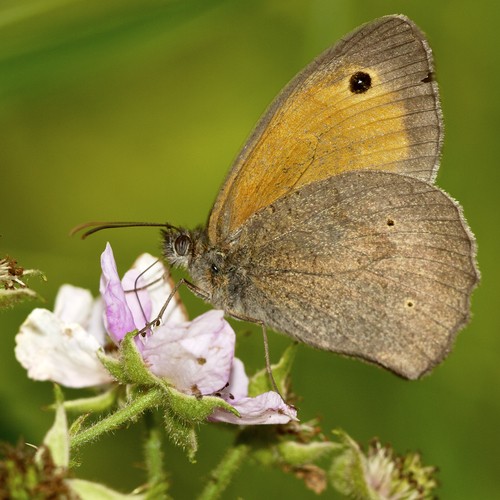
The meadow brown (Maniola jurtina) is similar to the Gatekeeper in the way that it rests with its wings open due to the "eye spots" on either end of its wings that ward off predators. While the color is a deep brown, the caterpillar form is a beautiful bright green with little, white hairs and a dark line leading down its back.
7. Small copper
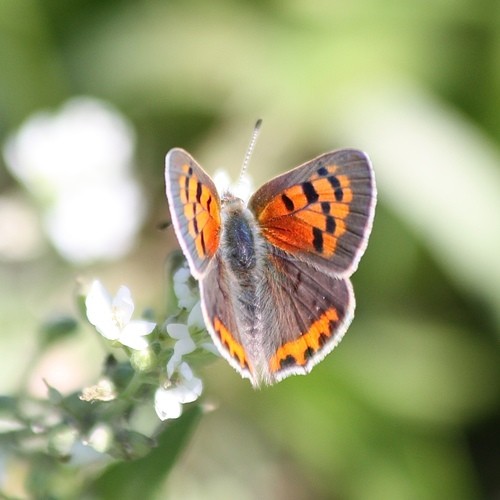
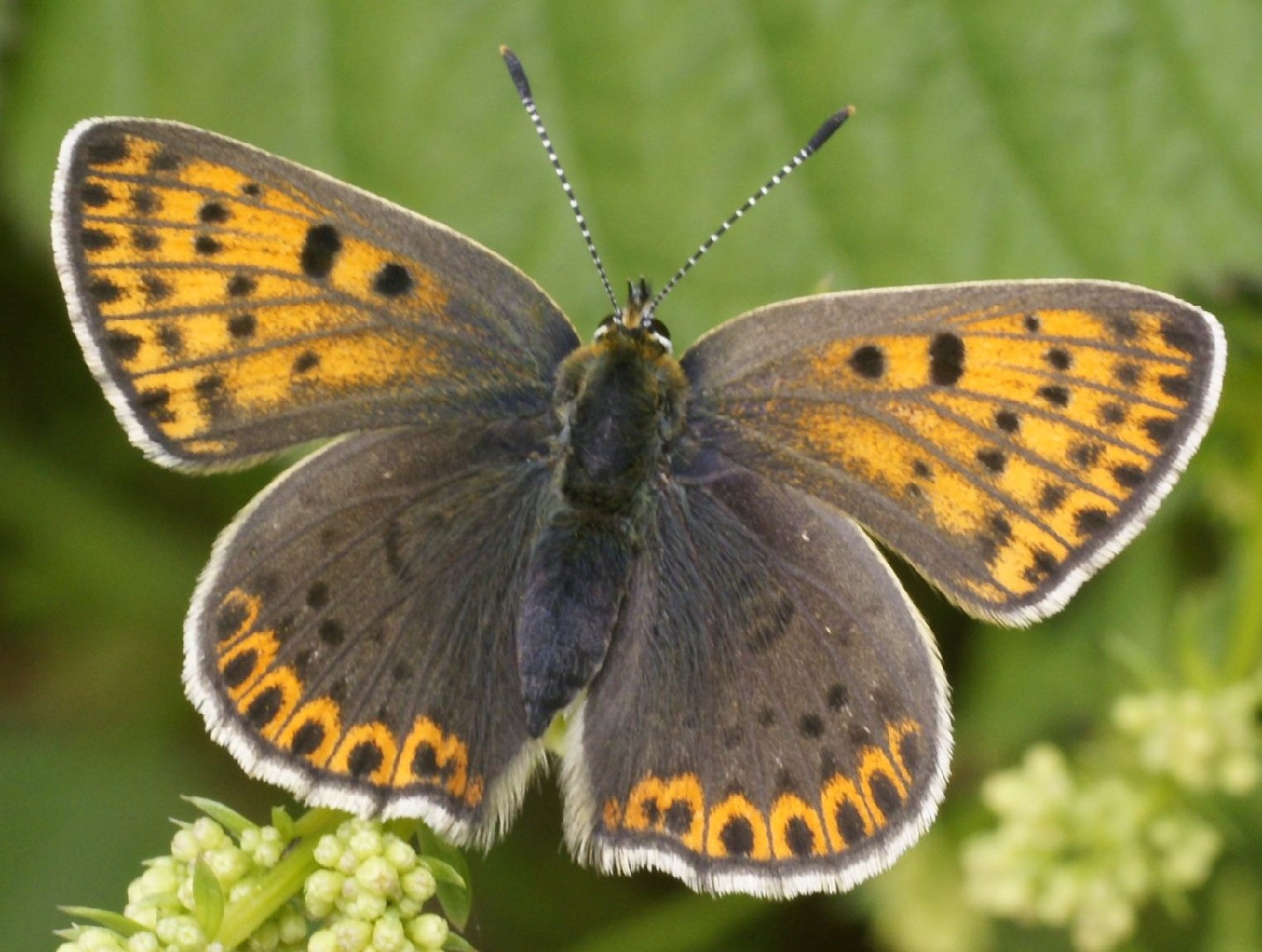
The upperside forewings are a bright orange with a dark outside edge border and with eight or nine black spots. The hindwings are dark with an orange border. Some females also have a row of blue spots inside the orange border and are known as form caeruleopunctata. The undersides are patterned in a similar way but are paler. The black spots on the forewings are outlined in yellow and the dark colouring is replaced by a pale brownish grey. The hindwings are the same brown/grey colour with small black dots and a narrow orange border. The caterpillars (larvae) are usually green, but some have a purple stripe down the middle of the back and along each side.
8. Cabbage white
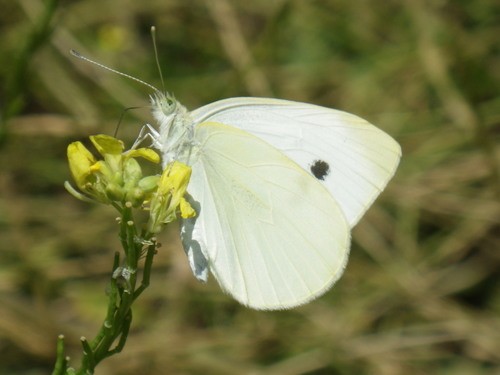
Cabbage white (Pieris rapae) derives its common name from its habits as a caterpillar, which is a ferocious pest for cabbage, kale and broccoli farmers. In North America, it is one of the first butterflies to emerge in spring, heralding the beginning of the season.
9. Ringlet
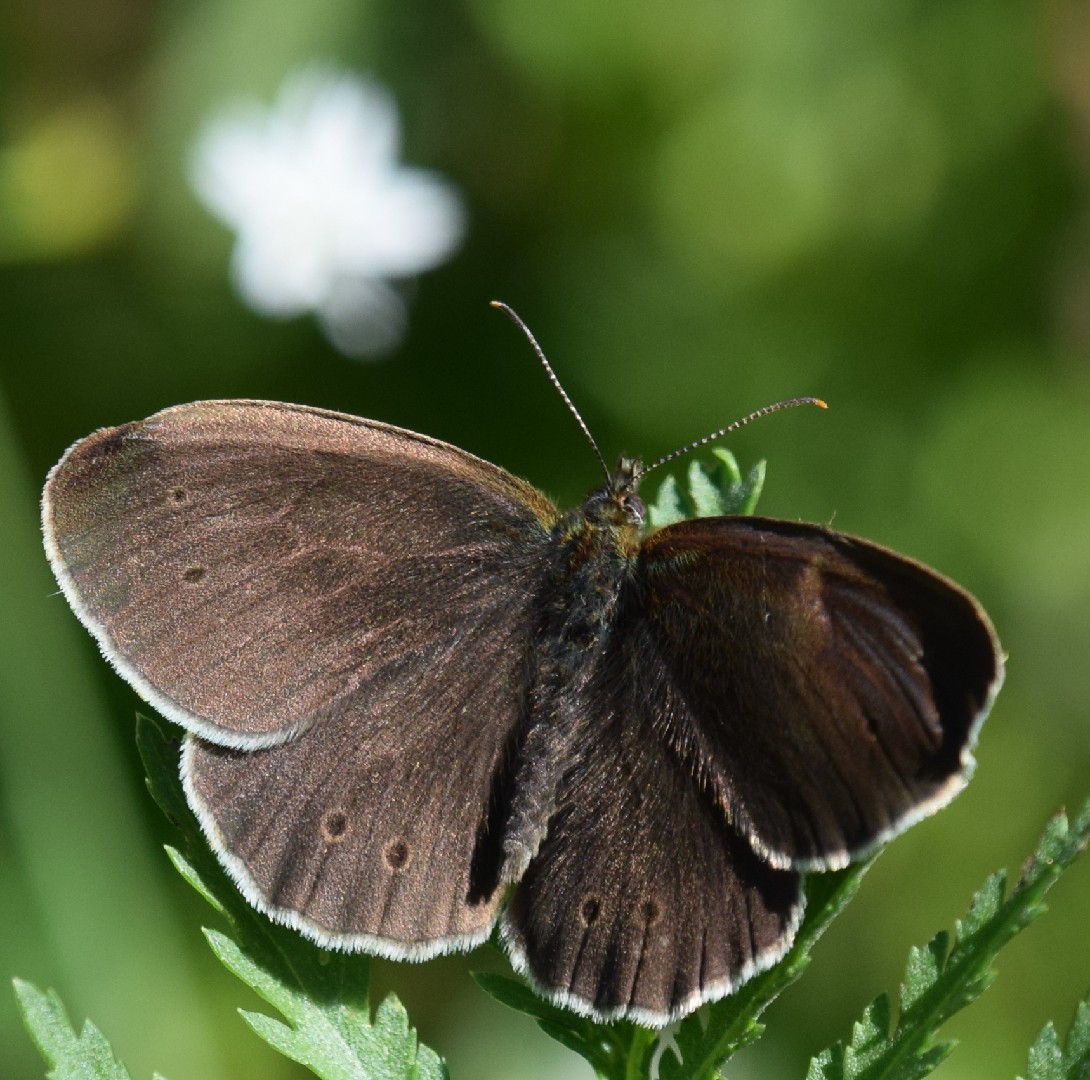
Aphantopus hyperantus is a medium-sized butterfly with a wingspan of up to 3.5 - 4 cm . The wing upper and lower sides are solid brown with small, yellowish-rimmed eyespots. The newly emerged ringlet has a velvety appearance and is almost black with a white fringe to the wings. The number and size of the eyespots is variable, they may be missing on the upper wing surface. The eggs are pale yellow when first laid, but become pale brown.The caterpillars are about 2.5 cm long. They are gray or light reddish brown and have dark, reddish brown and very fine dots. Dorsally there is a dark longitudinal line, which is widened at the segment boundaries. Toward the rear, this line is more intensely colored. The head is darker and has several faint longitudinal stripes.
10. Queen of spain fritillary
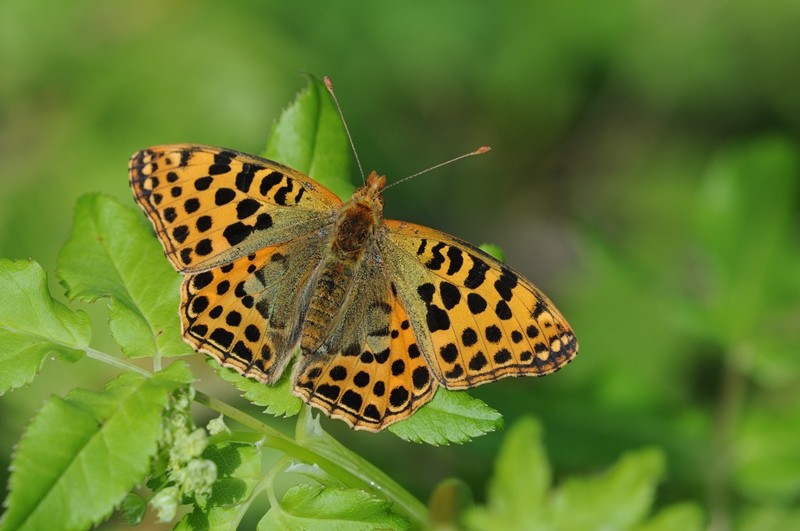
Issoria lathonia is a medium-sized butterfly with a wingspan of 4 - 4.5 cm. The wings show a deep orange-violet background, with rounded black spots arranged in regular rows and suffused with greenish gray in the females. The underside of the hindwings is decorated with large pearly nacreous spots and it is crossed by a postdiscal row of black eyespots with pearly pupils. Some pearly spots also appear at the apex of the forewings. The caterpillar can reach a length of 3.5 cm. It is grayish brown, with black spots, and relatively short brown spines with white tip, and a double row of dorsal white streaks. The suspended chrysalis is dark brown, with a large white saddle-shaped stain and some smaller ones of the same color, resembling a bird's dropping. The imago is rather similar to Argynnis aglaja, Argynnis adippe and Brenthis daphne, which have the same orange color on the upperside of the wings, but show different markings and spots. Moreover, the underside of the hindwings does not have the large pearly spots characteristic of the queen of spain fritillary.
More







