




Top 20 Most Common Insects in Ponta Delgada
Insects, distinguished by their segmented bodies and three pairs of jointed legs, thrive uniquely in every nook and cranny of Ponta Delgada. The diverse landscapes across Ponta Delgada carve out a multitude of eco-niches, encouraging a profusion of insect diversity. These critters, both pesky and beneficial, play pivotal roles in the ecosystem, from pollination to decomposition. Stay tuned as we explore the 20 most common insects found amid Ponta Delgada's rich and varied environments.

Most Common Insects
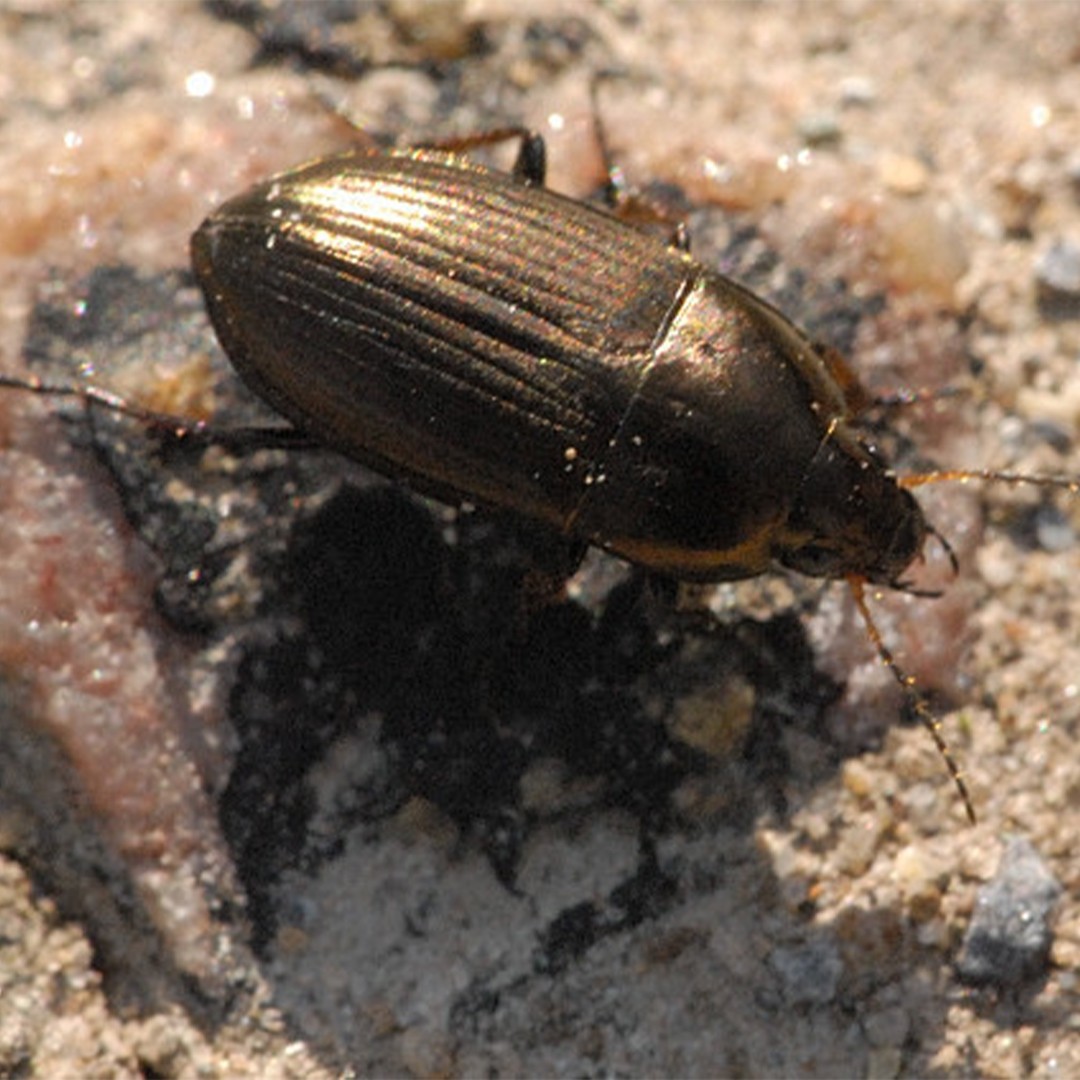
1. Common Sun Beetle
One of the most prevalent ground beetles, the common Sun Beetle is distinctive with its shiny copper look. It is a predator of pests such as apple maggots (Rhagoletis pomonella) and soybean aphids (Aphis glycines Matsumura), both of which cause agricultural damage. Because of this, there are ongoing studies about whether common Sun Beetle can be used as a replacement for some pesticides.
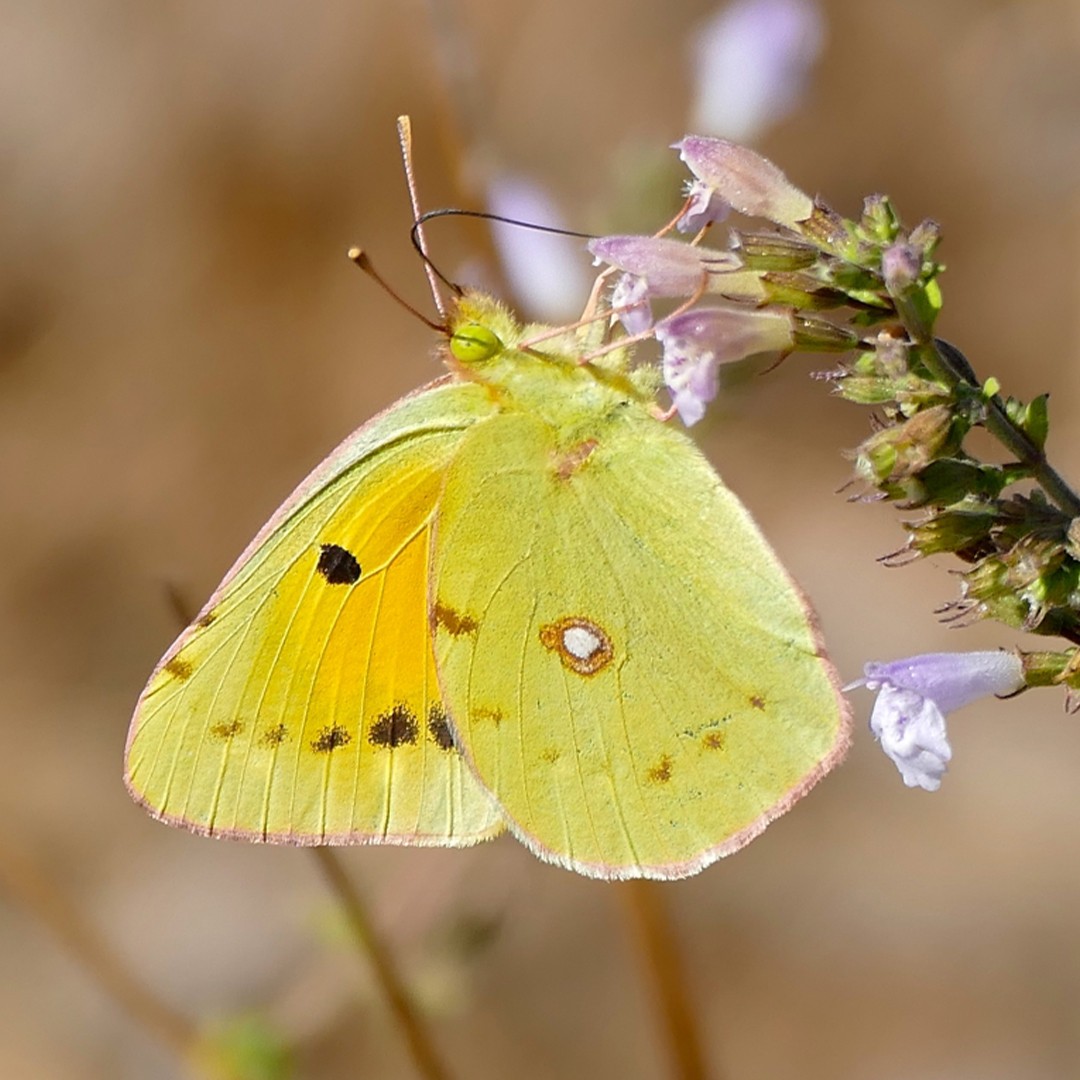
2. Clouded yellow
Colias croceus has a wingspan of 46–54 millimetres (1.8–2.1 in). The upperside of the wings is golden to orange yellow with a broad black margin on all four wings and a black spot near the centre forewing. Usually these butterflies settles with its wings closed, consequently the black margin of the uppersides of the wings is difficultly visible. The underside lacks the black borders and is lighter, with a more greenish tint, particularly on the forewings. In the forewing underside is the same dark spot as on the upperside, but often with a light centre; the hindwing underside has a white centre spot, often with a smaller white or dark dot immediately above it. Sometimes, a row of black dots occurs on the underwings' outer margins, corresponding to where the black border ends on the upperside. Females differ from the males in having yellow spots along the black borders on the upperside. In flight, Colias croceus is easily identifiable by the intense yellow colouring, much brighter than that of the lemon-yellow male common brimstone which also lacks black markings. Like all Colias species they never open their wings at rest. In a small proportion of females (about 5%) the golden upperside colouration is replaced by a pale cream colour. These females have been distinguished as form helice. The pale form helice does not seem to be that distinct as intermediates exist and the variation is to some extent related to humidity during development, with dryer conditions producing paler colouration. These pale forms helice can be confused with Berger's clouded yellow (Colias alfacariensis) and the rarer Pale clouded yellow (Colias hyale). Even the palest C. croceus tends to have more black on the upperside however, in particular on the hindwings. Young caterpillars are yellow-green, with a black head. Later they become completely dark green, with a white red spotted lateral line after the third moult. The pupae are green and have a yellow side stripe. This species is rather similar to Colias myrmidone, Colias chrysotheme, Colias erate, Colias hyale, Colias alfacariensis, Colias caucasica, Colias aurorina. 
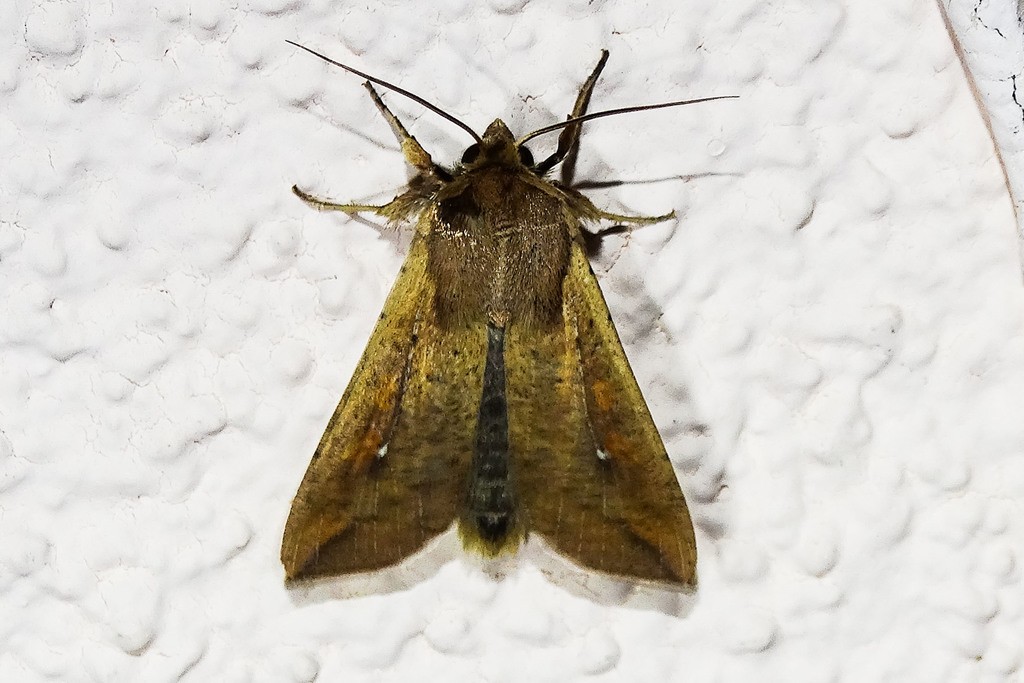
3. White-speck
Mythimna unipuncta, the true armyworm moth, white-speck moth, common armyworm or rice armyworm, is a nocturnal agricultural pest belonging to the family Noctuidae. This moth is also commonly referred to by the scientific name Pseudaletia unipuncta. The species was first described by Adrian Hardy Haworth in 1809. Mythimna unipuncta is found in the Americas and in parts of Europe, Africa and Asia. Its original distribution is North and South America. It has been introduced to other places from there. They are known as armyworms because the caterpillars move in lines as a massive group, like an army, from field to field, damaging crops. The true armyworm has a distinct migration pattern in which they travel north in the spring and south in the fall to ensure that mating occurs in a favorable environment in the summer. While progressing through the life cycle stages of egg, larva, pupa, and adult, this species must avoid attack from predatory bugs, birds, wasp and fly parasitoids, and bacterial and fungal diseases. As polygamous insects, females release sex pheromones and choose multiple males as mates. The production and release of the pheromones are influenced by temperature, photoperiod, and the juvenile hormone. Hearing is an important sense for the true armyworm, necessary for mating and evading bat predation.
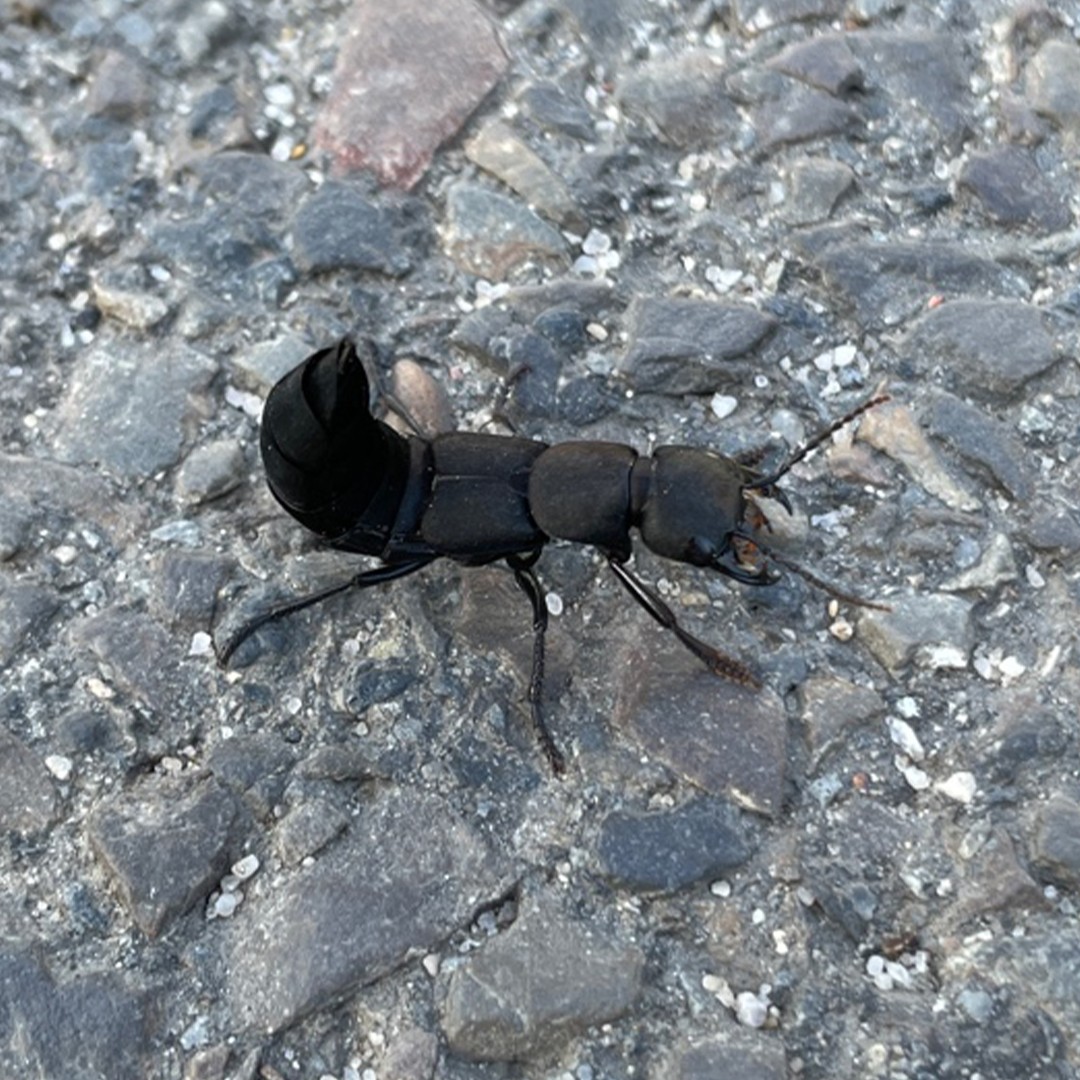
4. Devil's Coach Horse Beetle
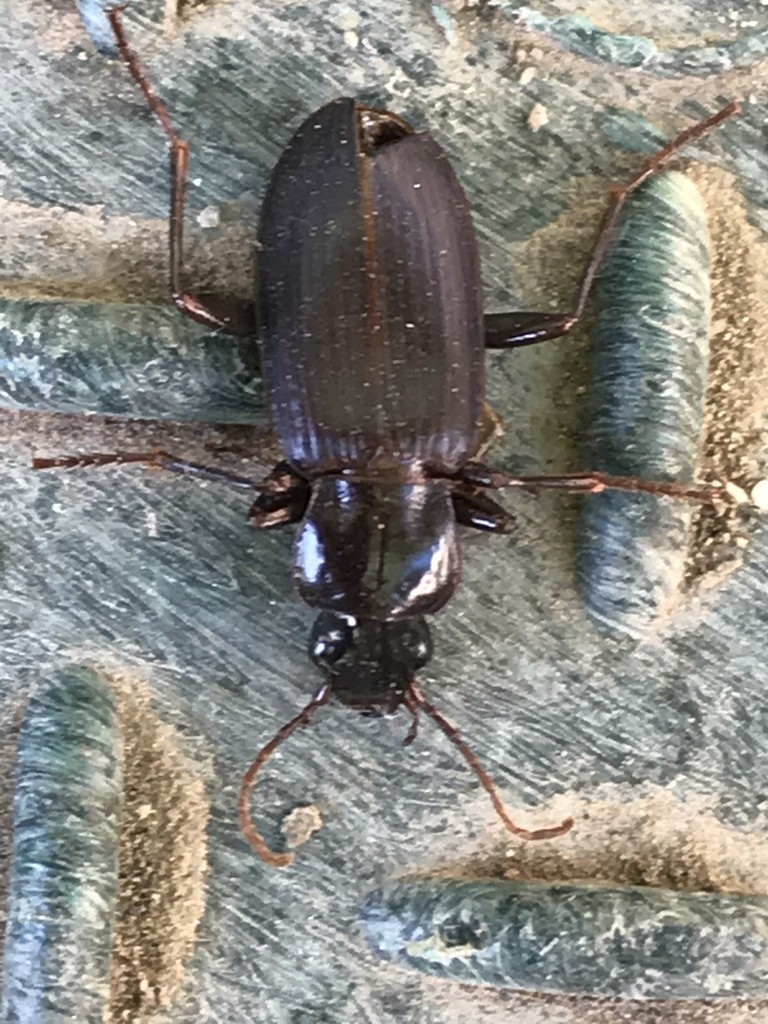
An interesting subject of folklore and myths, the devil's Coach Horse Beetle has long been associated with the Devil and sinister forces, hence its common name. This fast-moving beetle is a voracious predator of other insects and invertebrates. Although it has the ability to fly, it rarely does.
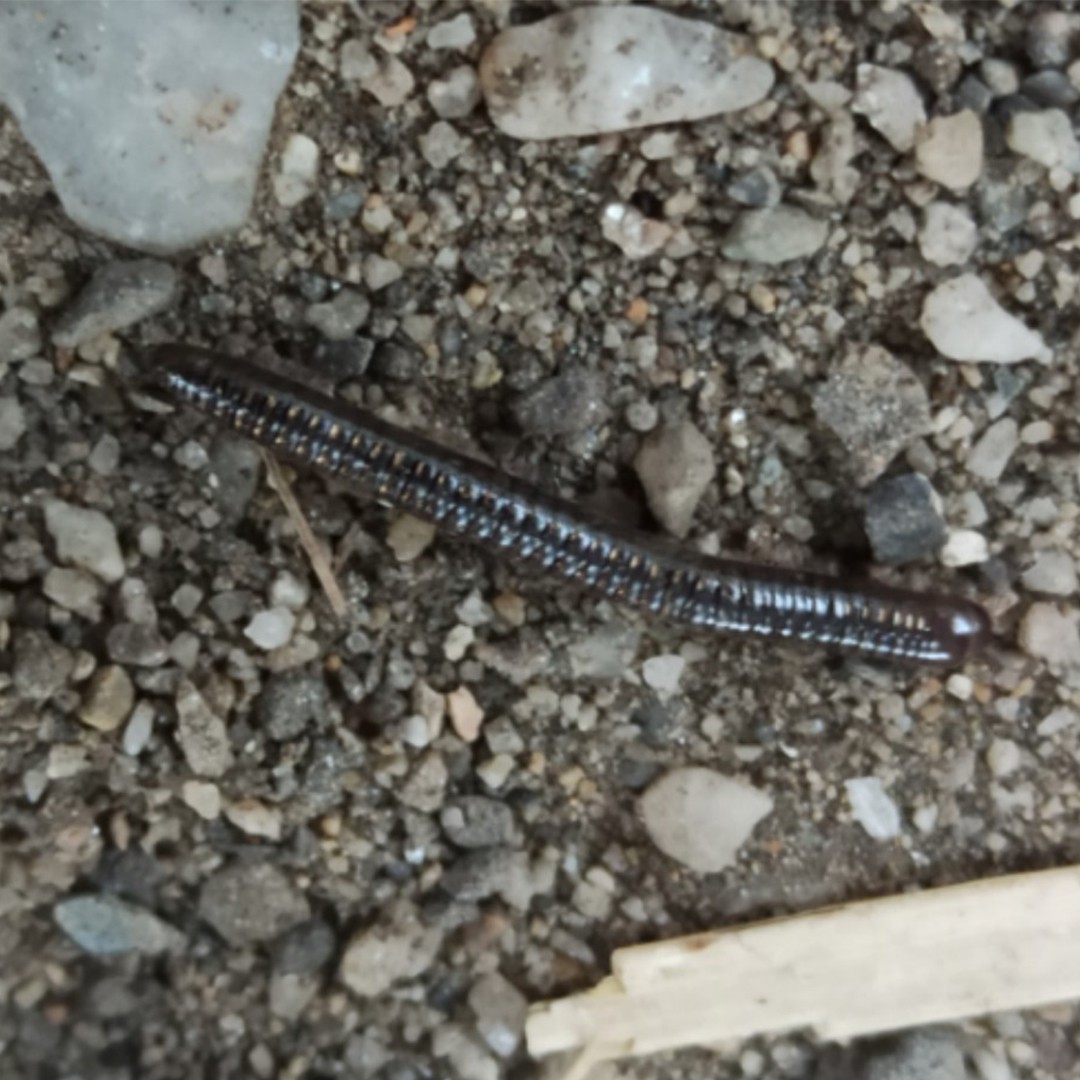
5. Portuguese millipede
The portuguese millipede (Ommatoiulus moreleti) is an herbivorous Myriapoda, meaning "many-legged". It feeds on decaying wood, fungus, and leaf litter, so it can be considered a pest in large quantities. While it cannot harm humans, it can invade homes and destroy crops.
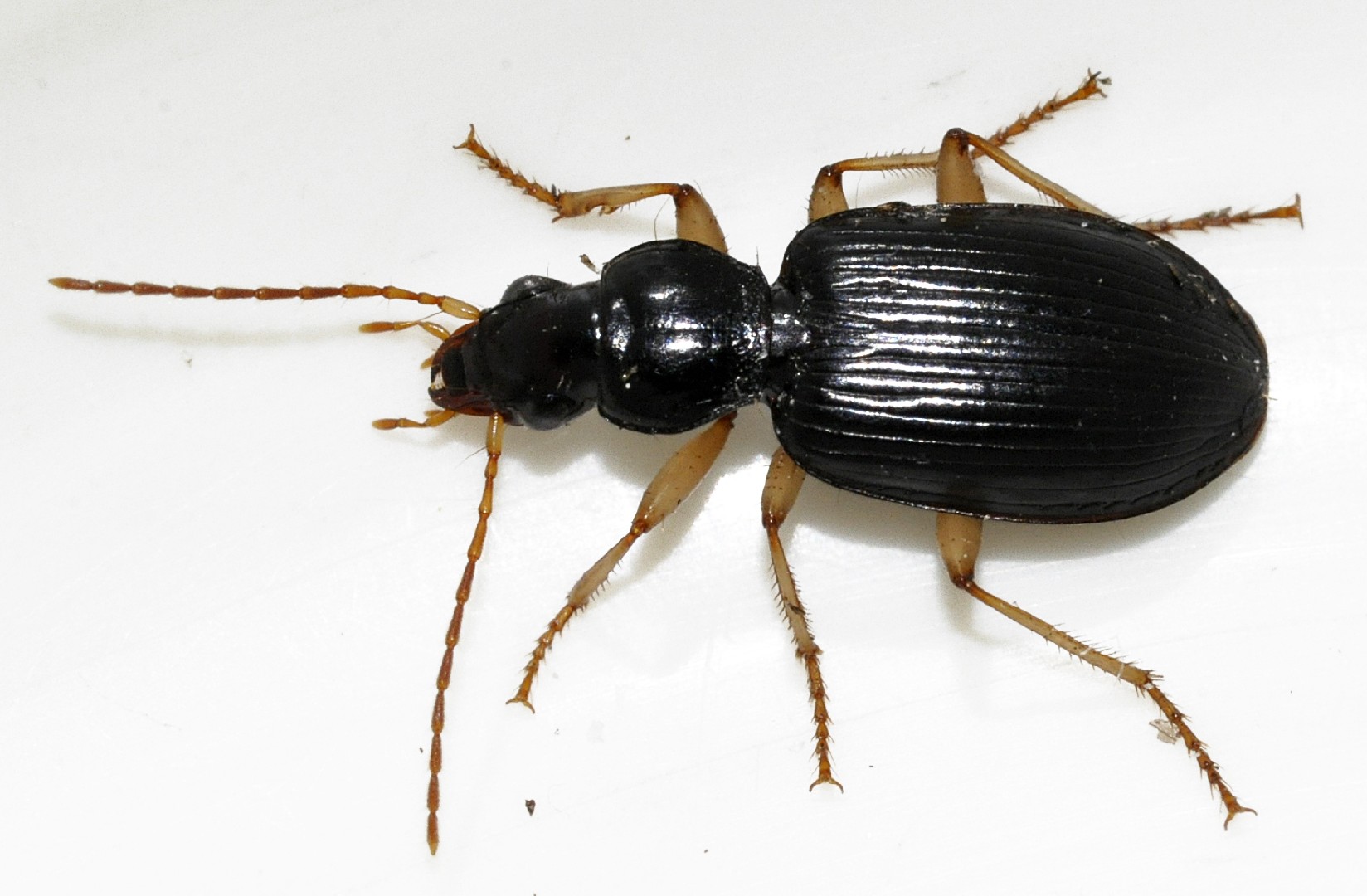
6. White-legged harp ground beetle
Paranchus albipes is a species of ground beetles in the family Carabidae.
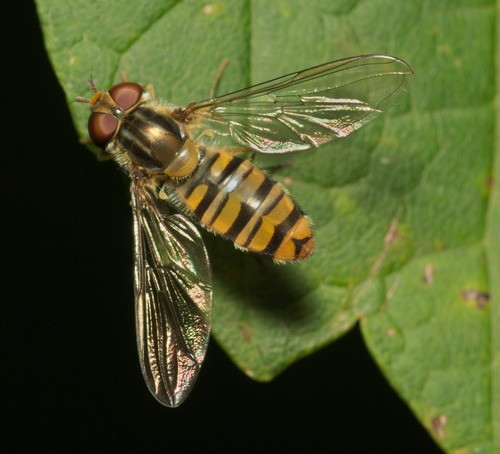
7. Marmalade hoverfly
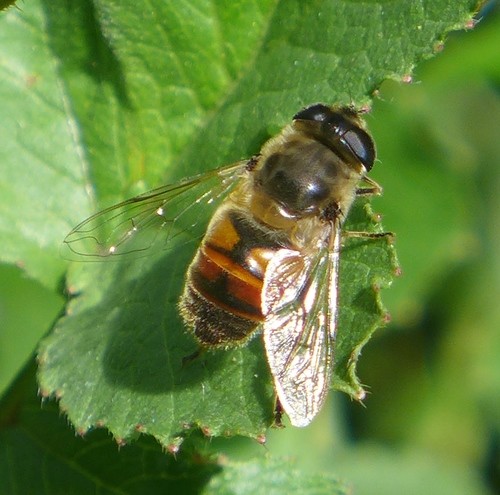
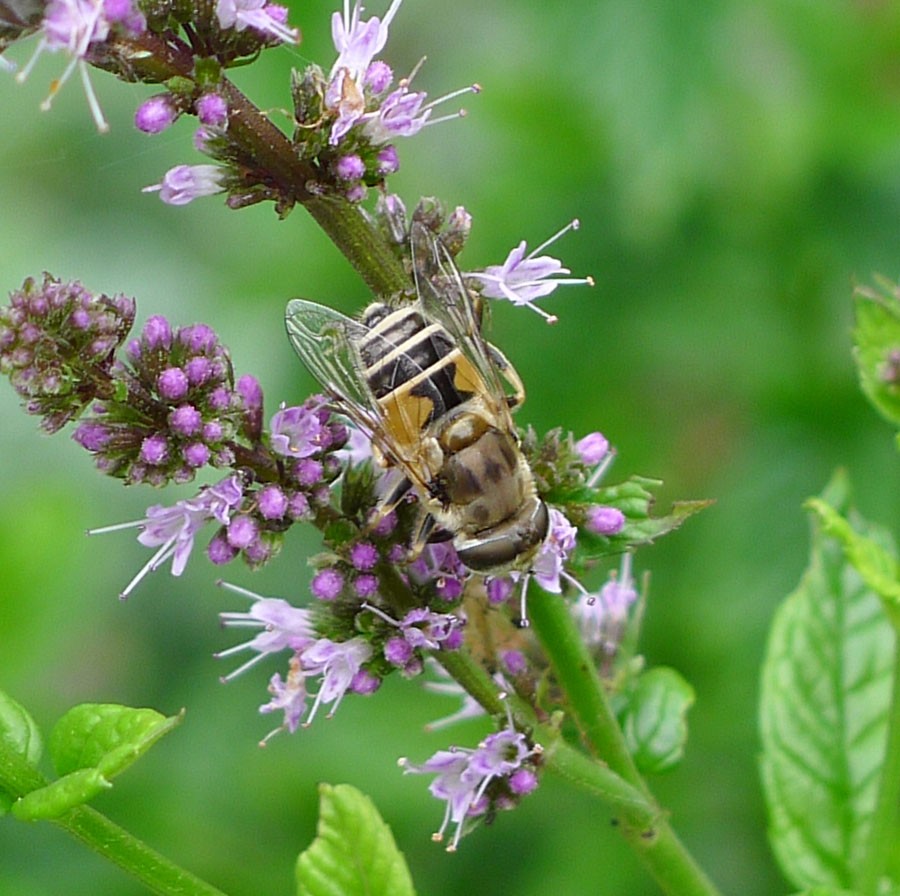
Marmalade hoverfly (Episyrphus balteatus) is a hoverfly species that tends to congregate in groups. This sometimes alarms people who mistake them for wasps, although marmalade hoverfly does not sting and is harmless to humans and animals. It feeds on nectar and pollen grains, possesses the rare ability to crush the latter.
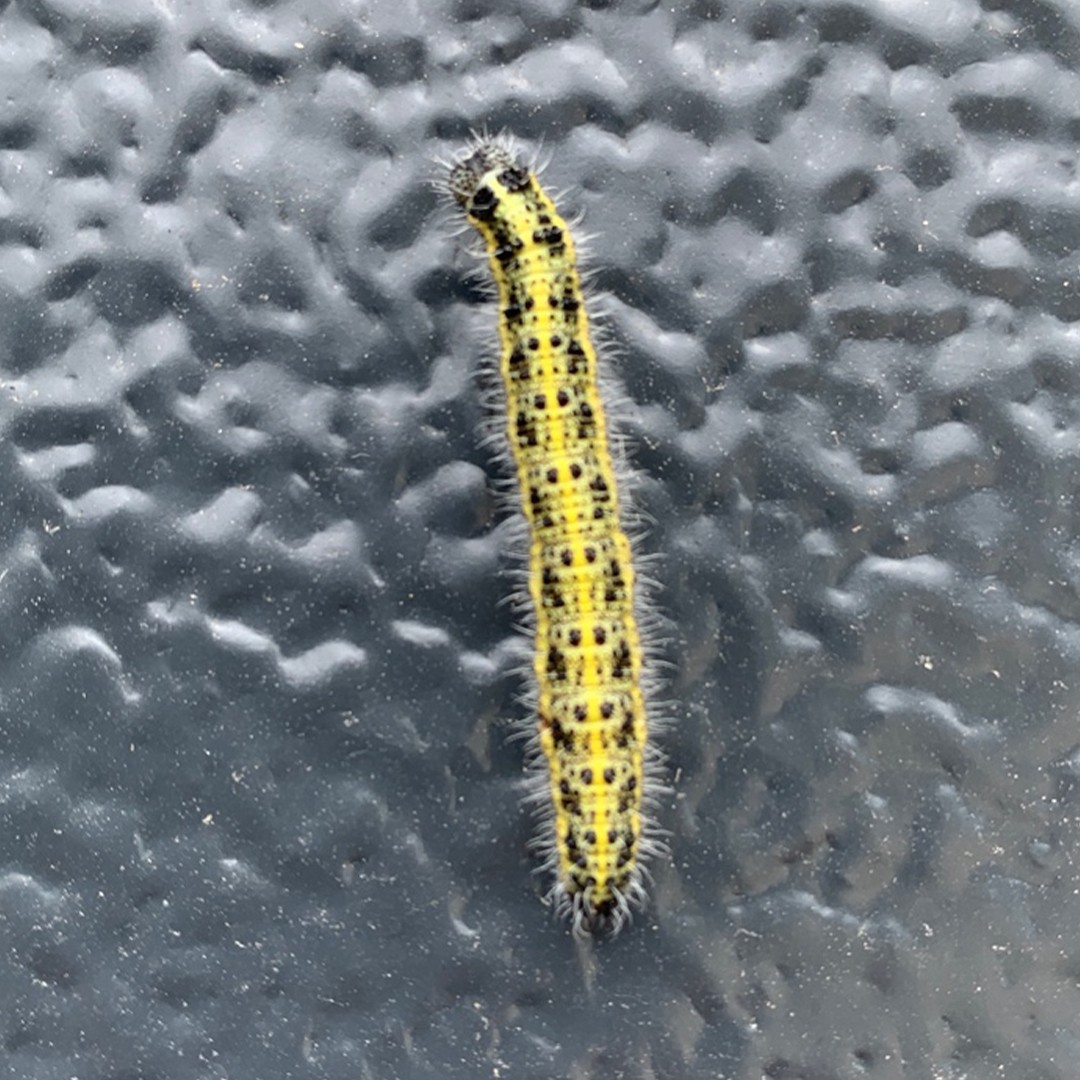
8. Large white
Large white (Pieris brassicae) is visually similar but quite larger than its close relative P. rapae. It lays its eggs on food plants such as cabbages – the origin of its common name – leading to many farmers' classifying this species as a pest.
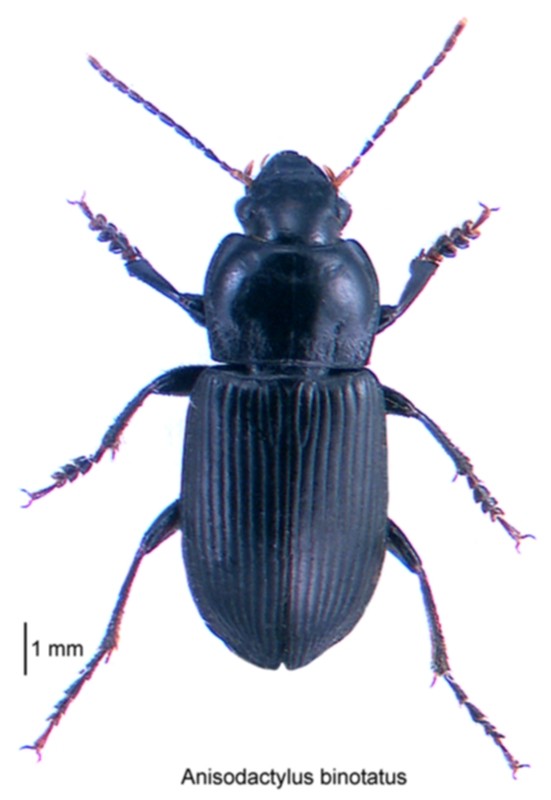
9. Two-marked harp ground beetle
Anisodactylus binotatus is a species of ground beetle native to Europe. It was discovered as being introduced to Canterbury, New Zealand in 1938.
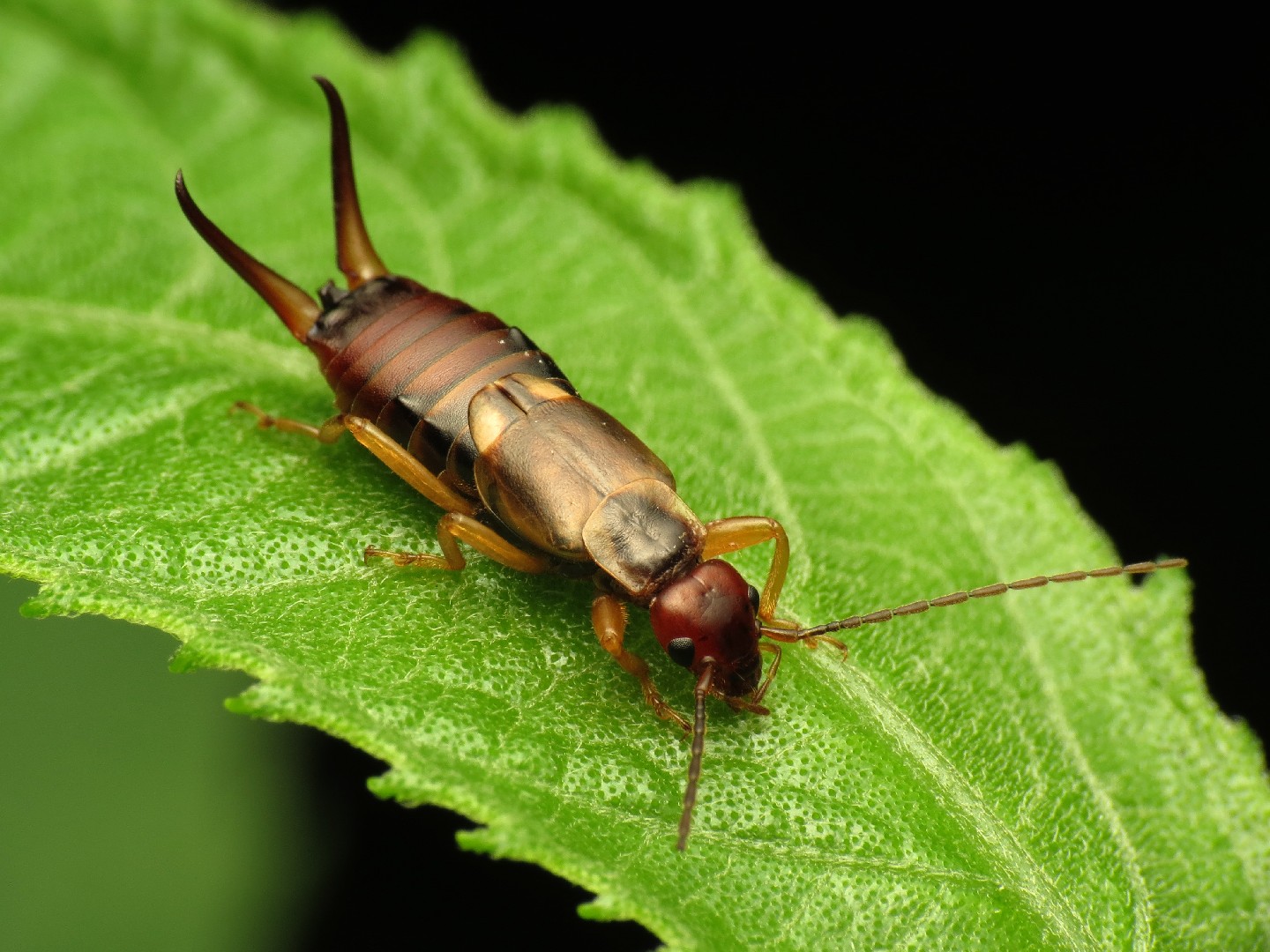
10. European earwig
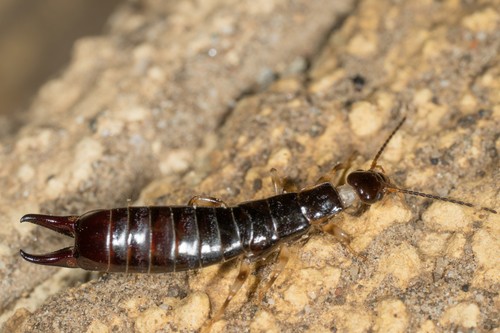
European earwig (Forficula auricularia), despite its name, is a common household occupant across North America. This species distinct differences in appearance between sexes, with males possessing obviously curved pincers whereas those of females are relatively straight. It is a noted agricultural pest and may exude an unpleasant odor, clustering near human dwellings.

More







