




Top 20 Most Common Insects in Ljubljana
Insects, characterized by their unique features like exoskeletons, segmented bodies and impressive adaptability, inhabit diverse habitats within Ljubljana. This region's distinctive geography supports a striking insect diversity. These critters, epitomizing an important part of our ecosystem, play crucial roles, from pollination to pest control. Our list highlights the Top 20 common insects, unveiling the compelling interplay between Ljubljana's environments and its tiny inhabitants.

Most Common Insects
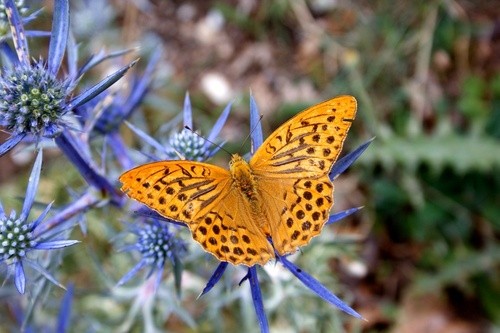
1. Silver-washed fritillary
The silver-washed fritillary (Argynnis paphia) is a beautiful, orange butterfly that is covered in black spots. It earns the "silver-washed" portion of its name through silver streaks you can find running along with it. It produces a scent using "scales" that allows it to distinguish itself when females are trying to locate it.
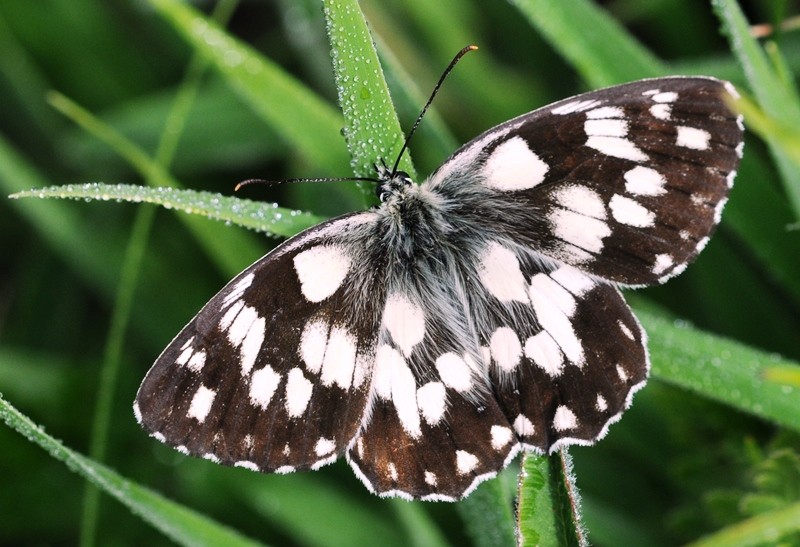
2. Marbled white
Melanargia galathea has a wingspan of 1.8–2.2 in. In these medium-sized butterflies the upper side of the wings is decorated with white and gray-black or dark brown markings, but it is always gray-black or dark brown checkered in the basal and distal areas. The underside is similar to the upper side but the drawings is light gray or light brown. On the underside of the hindwings is present a row of gray eye spots. The males and the females are quite similar, except that some females may have a yellowish nuance on the underside of the wings. The larvae are a lime-green colour, with a dark green line running down the middle of their back. The caterpillars are about 3 cm long. They are green or yellow with some lighter and darker narrow longitudinal lines. The head is always light brown. 
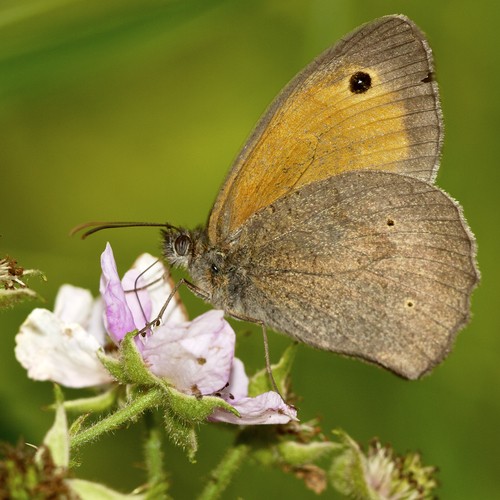
3. Meadow brown
The meadow brown (Maniola jurtina) is similar to the Gatekeeper in the way that it rests with its wings open due to the "eye spots" on either end of its wings that ward off predators. While the color is a deep brown, the caterpillar form is a beautiful bright green with little, white hairs and a dark line leading down its back.
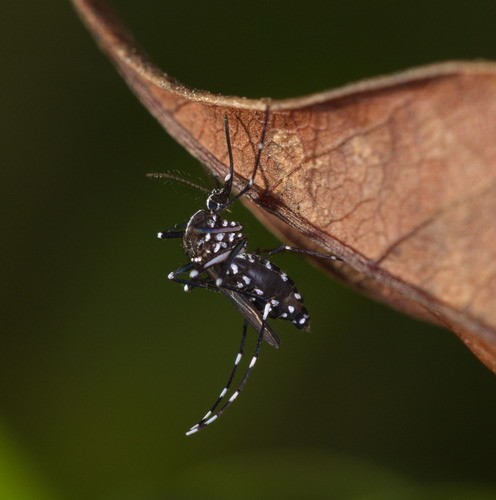
4. Asian Tiger Mosquito
The asian Tiger Mosquito (Aedes albopictus) has recently (the 1970s) infested every corner of the world through the shipment of used tired, lucky bamboo (Dracaena sanderiana), and other similar products. The asian Tiger Mosquito is known to transmit many deadly diseases that include West Nile Virus.
5. Small heath
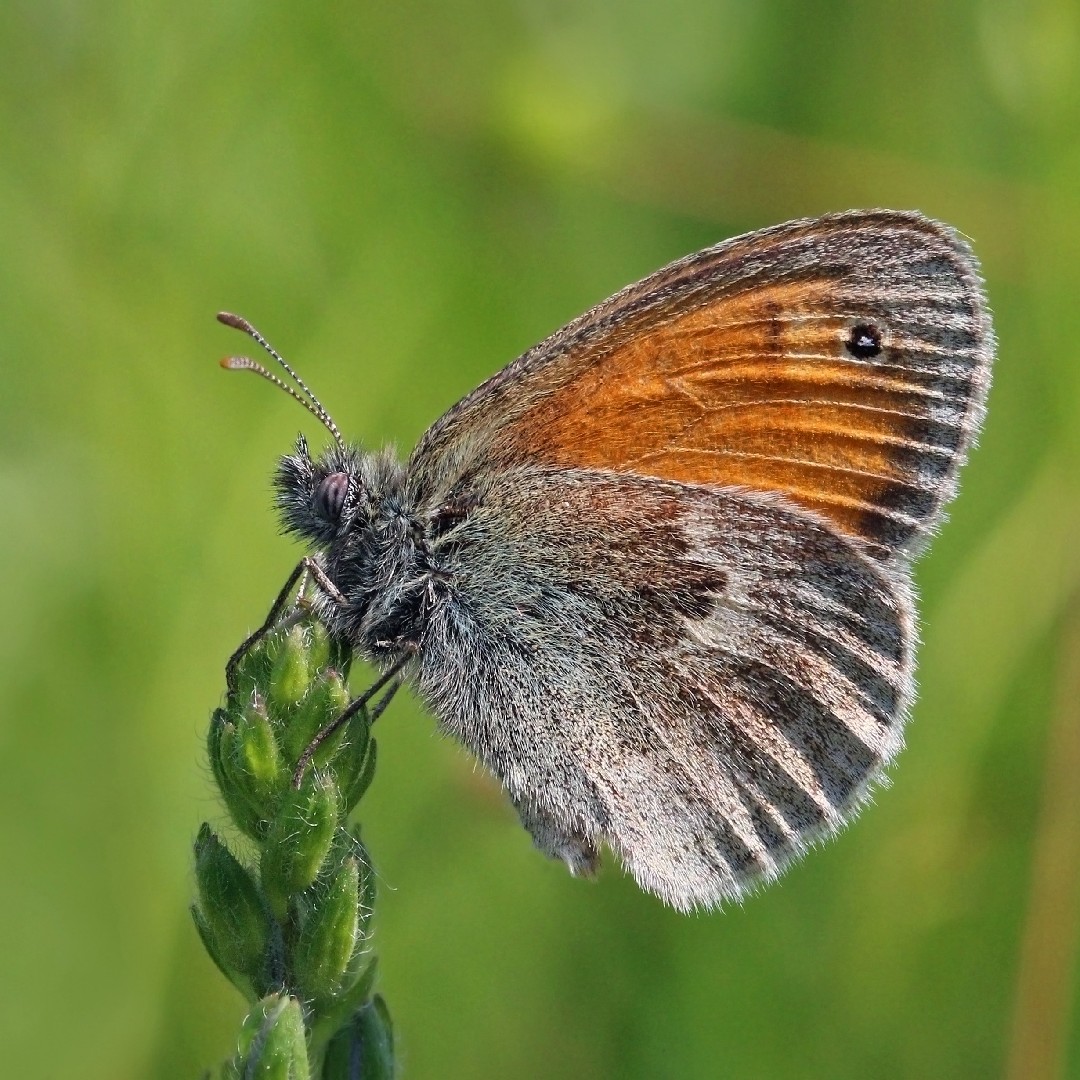
It rests with closed wings when not in flight.
6. Scarce swallowtail
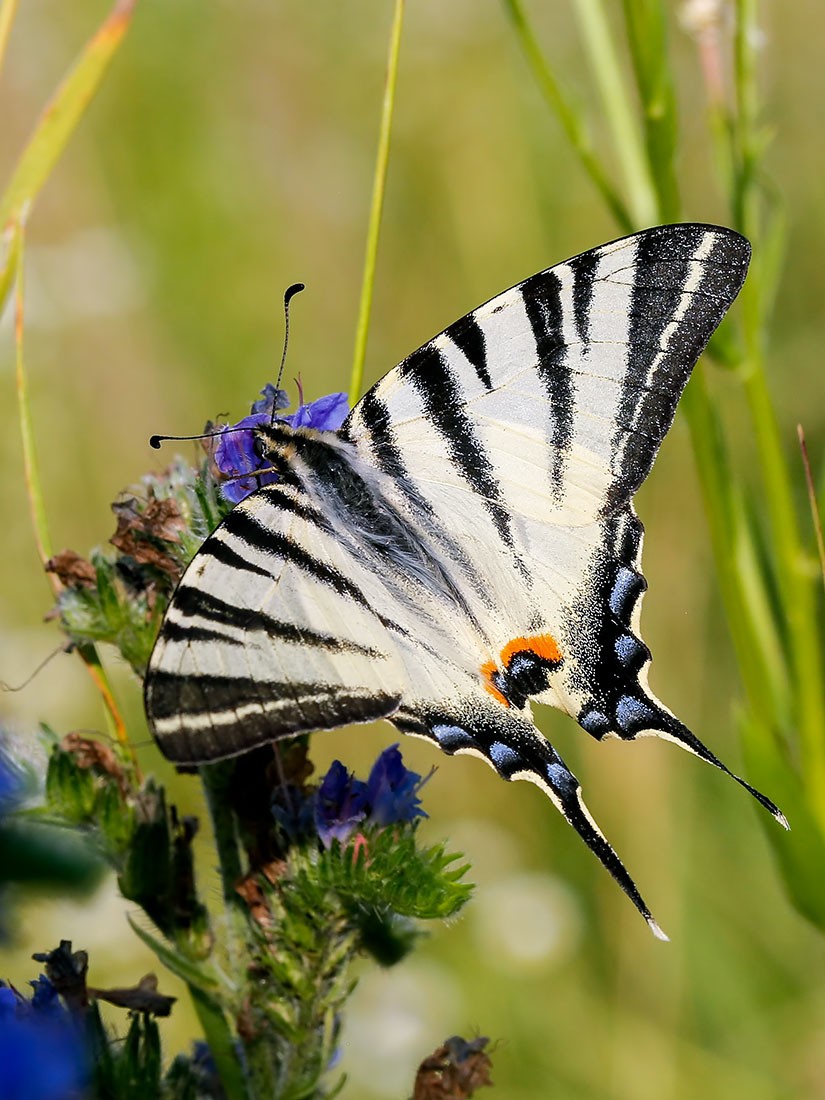
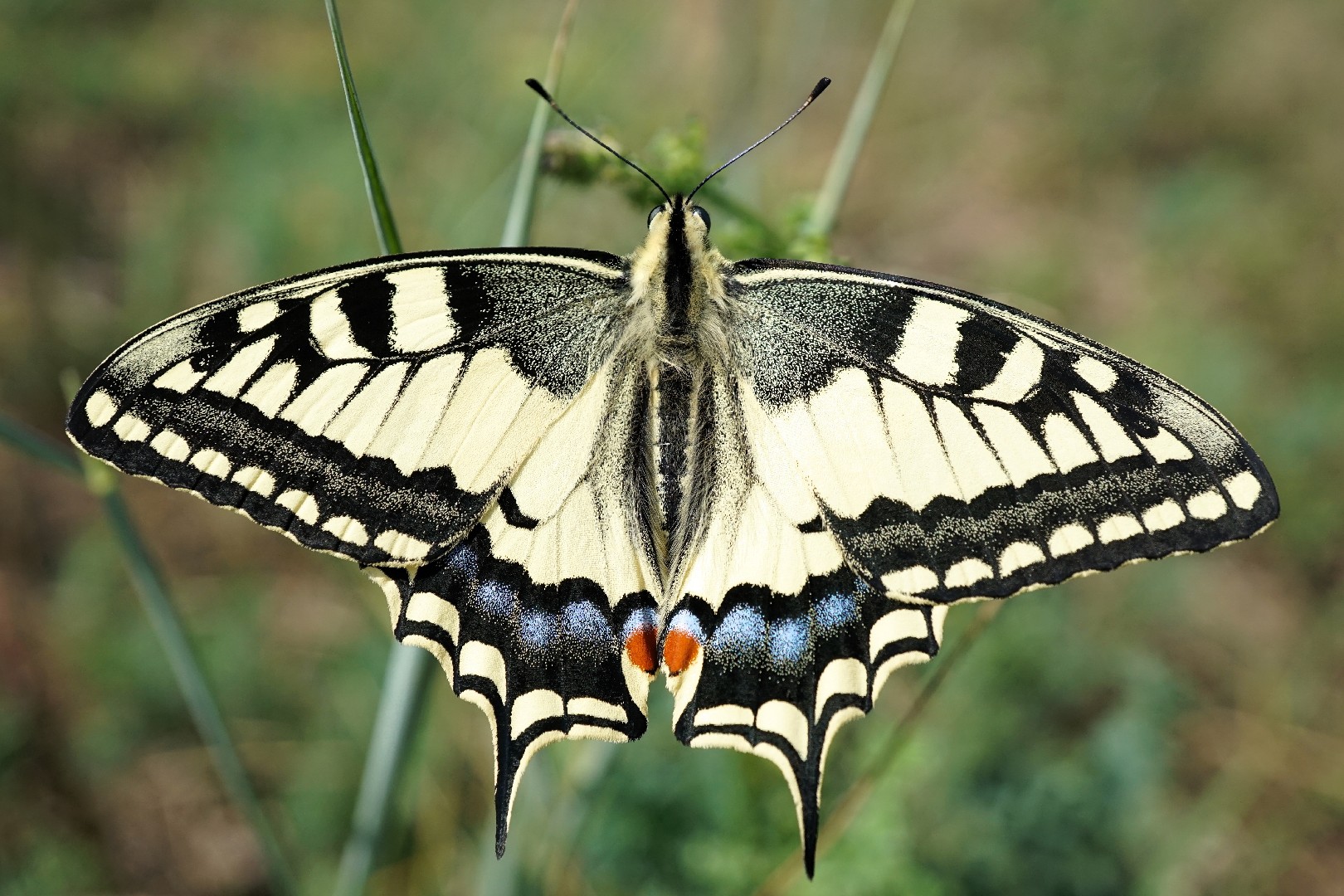
Its slow and floating flight pattern makes it easy to identify the scarce swallowtail as it soars over gardens, orchards, and scrublands. The butterfly has a large presence across Europe, the Middle East, and Asia. The adult lifespan is brief, only two or three weeks. Planting flowers like blackthorn can encourage the butterfly to visit a garden.
7. Oak lace bug
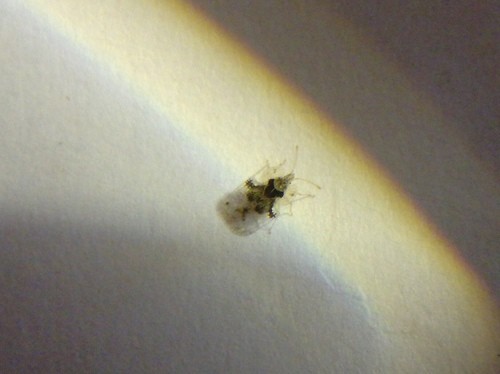
Corythucha arcuata, the oak lace bug is a species of lace bug Tingidae that is a pest of oaks in the Old World. It is native to the New world, and was first observed in Europe in 2000.
8. Locust digitate leafminer moth
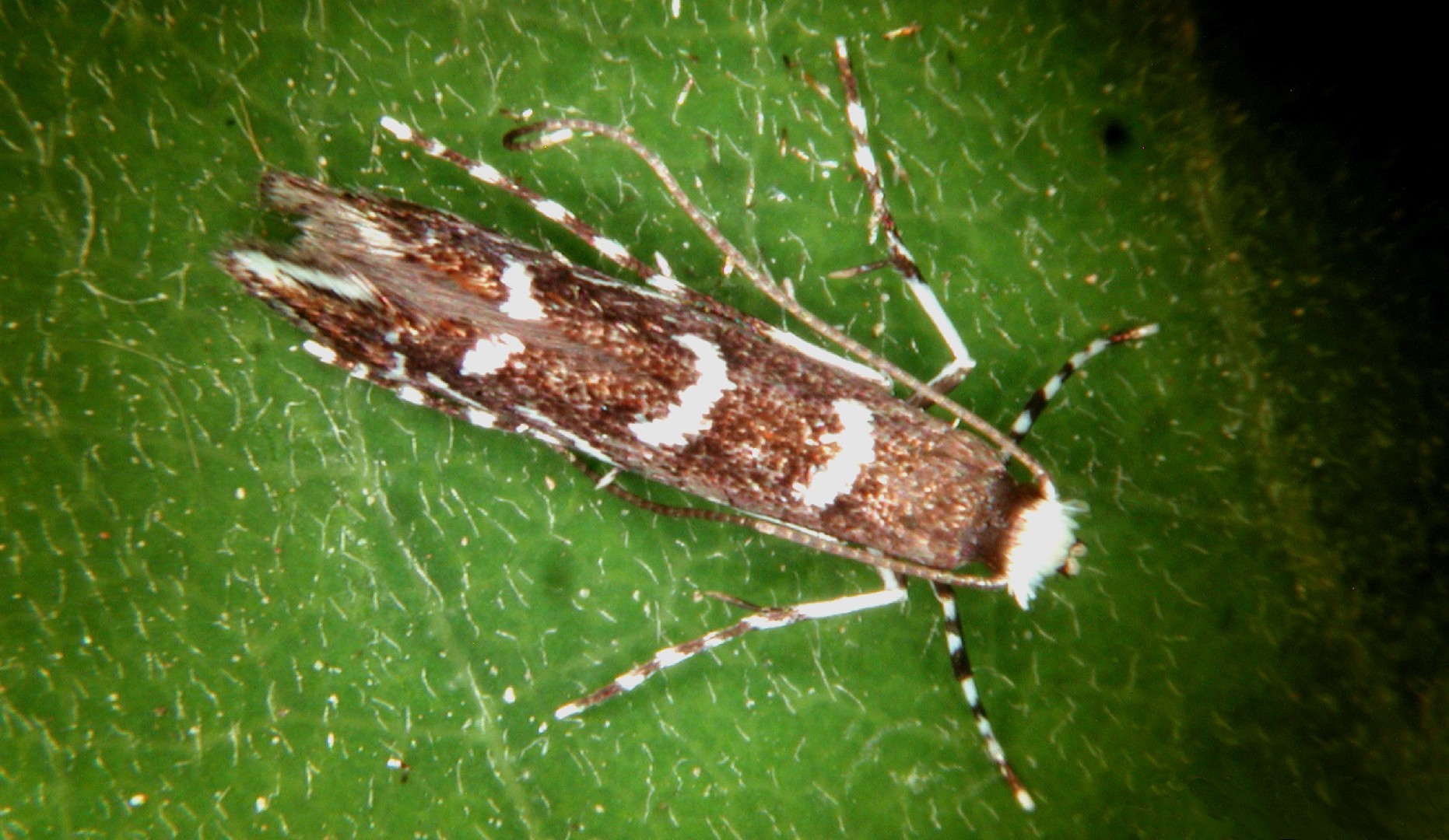
The locust digitate leafminer (Parectopa robiniella) is a moth of the family Gracillariidae. It is native to North America, but was accidentally introduced to Italy, where it was first found in 1970. It has now been recorded from Italy, France, Germany, Slovenia, Croatia, Austria, Slovakia, Romania, Ukraine and Hungary. The wingspan is about 5 mm. The moth flies in two to three generations per year in Hungary. The larvae feed on Robinia species, including Robinia pseudoacacia. It mines the leaves of the host plant. The common name is derived from "digitate", referring to the "finger-like" excavations all around the margins of the central blotch of the mine.

9. Beautiful demoiselle
The body length of larvae is variable and highly dependent on environmental conditions. The final stage (F-0-stage) larvae are 3.5 - 4.5 mm and weigh about 4 mg, slightly below the banded demoiselle. Calopteryx virgo can reach a body length of 5 - 5 cm, with a length of hindwings of 3 - 4 cm. These large, dark damselflies have small hemispherical eyes located laterally on the head, two pair of wings similar in shape and a slender abdomen. The basal area of the wings is transparent, otherwise wings are uniformly colored. The wings are also traversed by a dense network of veins. This species presents an evident sexual dimorphism in colour pattern. The male usually has much more extensive pigmentation on the wings than other Calopteryx species in its range: in the south east of its range (the Balkans and Turkey) the wings are entirely metallic blue while in other areas, there are clear areas at the base and tip of the wing. Immature males show brown wings, as the metallic blue wing color develops only with age. They have metallic blue-green bodies and blue-green eyes. The female has dark brown iridescent wings, a white patch near the tip of the wings (called a pseudopterostigma) and a metallic green body with a bronze tip of the abdomen.
10. Common blue butterfly
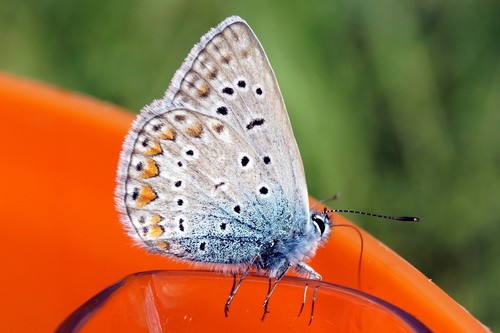
Despite its common name, only male specimens of common blue butterfly (Polyommatus icarus) can accurately be described as blue; the females are predominately gray-brown, with only a dusting of blue and a scattering of orange spots. The adults live for only three weeks before dying.
More







