




Top 20 Most Common Insects in Pretoria
Insects, with their multitude of colors, shapes, and sizes, form a vital part of Pretoria's ecosystem. Their existence is shaped by varying habitat conditions in diverse geographical corners within Pretoria, leading to vast species diversity. Ranging from pests to helpers, insects play crucial roles in the ecosystem, demonstrating the intricate web of life found in Pretoria. We present herewith 'Top 20 Most Common Insects in Pretoria' for your understanding and enjoyment!

Most Common Insects

1. Garden acraea
It has a typical wingspan of 45–50 mm for males and 49–53 mm for females. Adults are on wing year-round, but are more common from October to April. 
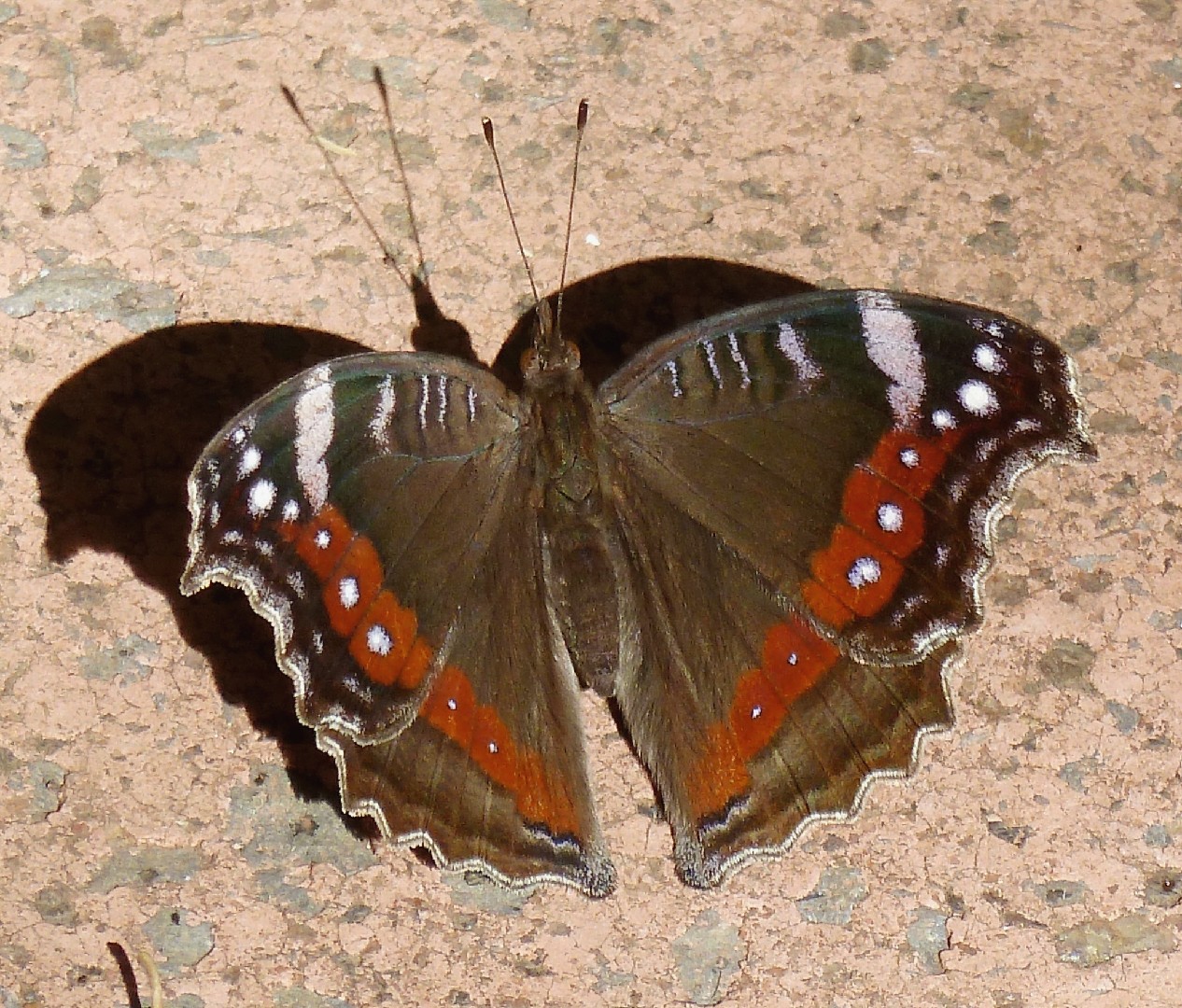
2. Garden inspector
Wingspan: 4.5 - 5 cm for males and 5 - 6 cm for females.
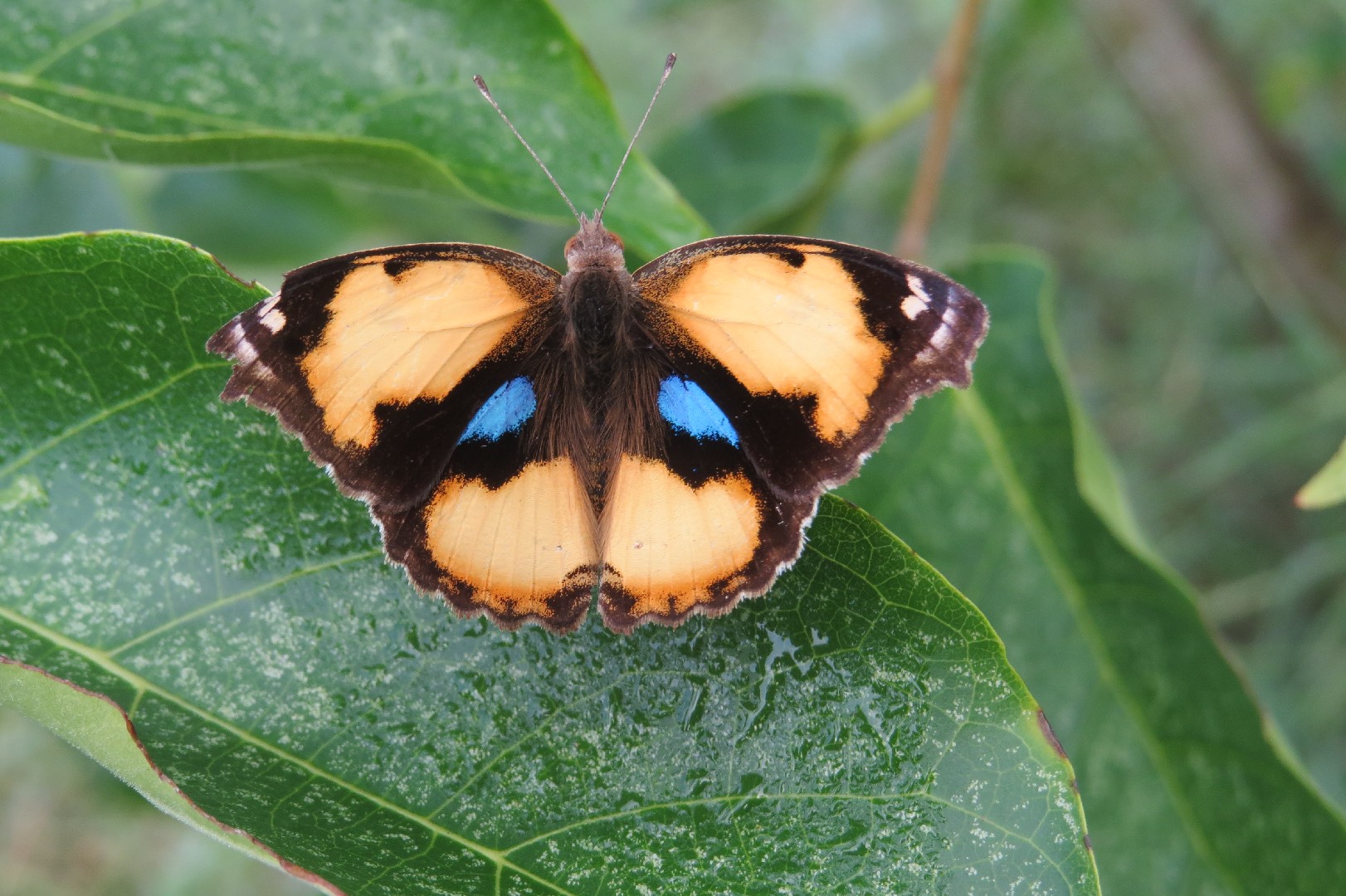
3. Yellow pansy butterfly
The male upperside is bright yellow. The costa of the forewing has a broad triangular jet-black projection downwards at the discocellulars, and the dorsum has a triangular projection upwards near the tornus; this black margin narrows near the middle of the termen and bears on the apex two short transverse preapical white streaks crossed by the black veins. Below these is an obscure ocellus that is sometimes absent. The anterior half and the terminal margin of the hindwing is black, and the dorsum is broadly shaded with brown while the anterior black area has a large brilliant blue spot. The cilia of both forewings and hindwings are white alternated with brown.The underside of the forewing is pale yellow. The cell is crossed by three laterally black-margined orange-yellow bars, beyond that is a short, broad, irregular jet-black oblique band from costa to base of vein 4. The hindwing is greyish yellow, and in the dry season its form is strongly irrorated (sprinkled) with dusky scales. With a prominent transverse brown discal fascia, its margins are highly sinuous. There is a brownish broad shade on the middle of the termen and some obscure lunular marks on the basal area. The antennae is pale, and the head, thorax and abdomen are dark brownish black; beneath that is a dull ochraceous white. The female is similar, although the colours are duller. The cell of the upperside forewing has a more or less complete transverse black fascia and another at the discocellulars. A blue-centred well-marked ocelli is in interspaces 2 and 5 on the disc of the forewing, and smaller ocelli in interspaces 2 and 5 on the disc of the hindwing. The forewings and hindwings have a fairly well-defined pale subterminal line, though the blue spot on the anterior black area on the hindwing is small and ill-defined; the rest is as the male. The underside is also as the male, but generally has heavier and more clearly defined markings.
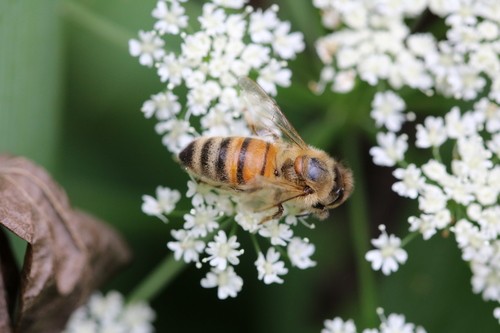
4. Western honey bee
Western honey bee(Apis mellifera) is the most common species of honeybee in the world. Among the first domesticated insects, its cultural and economic impact on humanity has been vast and far-reaching, providing honey, wax and its services as a pollinator. Western honey bee faces challenges worldwide, such as colony collapse disorder, and populations are thought to be decreasing.
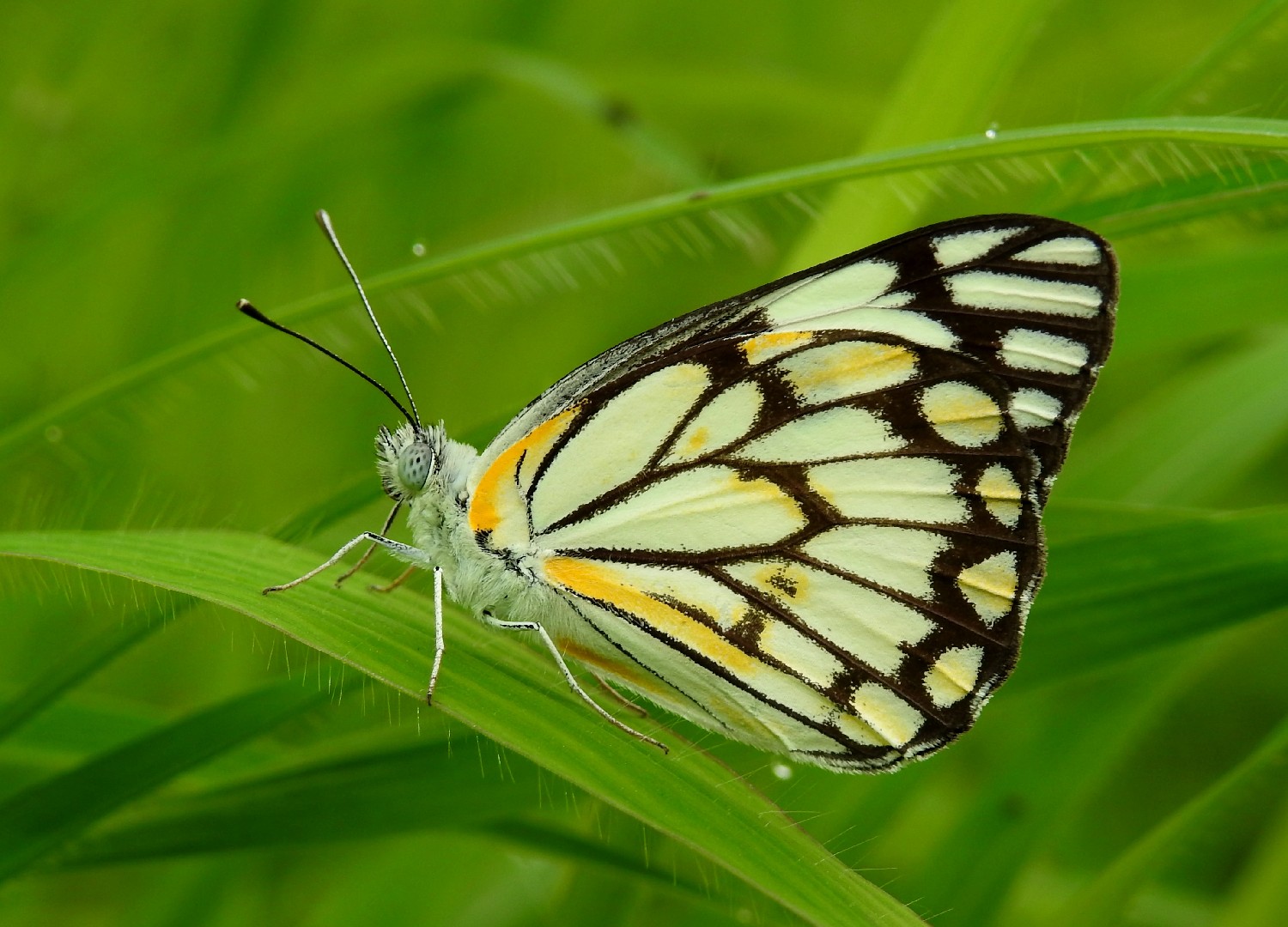
5. Pioneer white
Wet-season form. The upperside of males is white with the forewing having the costa from base to base of vein 11 dusky black and then jet black continuing into a widened and curving short streak along the discocellulars to the lower apex of the cell; apical area diagonally with the termen black, the former with six elongate outwardly pointed spots of the ground colour enclosed one in each of the interspaces 3, 4, 5, 6, 8, and 9. Hindwing: uniform, the black along the venation on the underside seen through by transparency; termen between veins 2 and 6 somewhat broadly black, with a series of four round spots of the ground colour in the interspaces; below vein 2 and above vein 6 the termen is very narrowly black. Underside: forewing white, markings similar, more clearly defined, the white spots within the black apical area larger. Hindwing: yellowish white, all the reins very broadly bordered with black; interspaces 1, 2, 6, and 7 with crossbars of black, beyond which there is a subterminal, somewhat broad, transverse band of black between veins 2 and 6. Cilia of both forewings and hindwings white alternated with black. The ground colour on both upper and undersides variable, often cream coloured above; beneath: in some specimens, the base of cell and the elongate spots in apical area of forewing, and the whole surface of the hindwing varies to rich chrome yellow. Female similar; the black markings on both upper and undersides broader, the white spots on black apical area of forewing often sub-obsolete above. Antennae in both sexes black, sparsely sprinkled with white dots; head, thorax and abdomen above and below white: thorax above often bluish grey. Dry-season form. The dry-season form is similar to the wet-season form but on the upperside the black markings are narrower, the white markings on the black apical area of forewing broader and longer, and on the hindwing the narrow inner margining to the black on the termen very narrow, somewhat obsolescent; therefore, the white subterminal spots have the appearance of opening inwards. Underside: ground colour almost pure white; on the hindwing slightly tinged with yellow. Antennae, head, thorax, and abdomen as in the wet-season form. Wingspan of 4.5 - 6 cm.

6. Multicolored asian ladybeetle
Often confused for the ladybug, multicolored asian ladybeetle (Harmonia axyridis) is a separate species that, unlike the ladybug, is a household pest. It is considered particularly annoying for its habit of returning to places from which it is removed. One of the most variable species in the world, there are many different colors and patterns multicolored asian ladybeetle may display, making identification potentially difficult.

7. Broad-bordered grass yellow
Male in Wet-season form: Upper-side somewhat paler yellow. Fore-wing with the outer marginal black band; the apical edge of costa and the cilia rosy-red. Hind-wing with the black outer band somewhat narrower, macular, the decreasing portions each with a more prolonged inner-tooth, and the yellow ground-colour between each extending to the outer edge. Underside pale yellow, the fore-wing also having a very slightly defined sub-apical inwardly-oblique squamous streak. Fore-wing with the entire costal edge and outer marginal cilia, and also the outer marginal cilia of the hind-wing, rosy-red. Female. Upper-side. Apical edge between the subcostals of fore-wing, and cilia of both wings paler rosy-red. Underside with the markings on hind-wing slightly visible. Fore-wing above with the black outer band broken beneath the lower median veinlet. Hind-wing with the outer band similar to male, its portions slightly broader. Underside similar to male, the markings being slightly more defined.Male in Intermediate form: Upper-side. Fore-wing with the outer band slightly narrower than in wet form; cilia paler red. Hind-wing with the marginal macular band narrower, and composed of smaller portions. Underside similar to wet form. Female. Upperside. Fore-wing with the outer band less broken at its posterior end than in wet form. Hind-wing with the marginal macular band less distinct and narrower. Underside similar to the male.Dry-season form: Both sexes much smaller than in intermediate form. Cilia paler. Male. Fore-wing above with the inner-edge of the marginal band less sinuated than in intermediate form, its posterior end indistinctly broken. Hind-wing with the lower portions of the macular band somewhat larger and less dentate. Underside. Both wings with less defined markings than in intermediate form. Female. Upper-side. Fore-wing with the band slightly broken at posterior end. Hind-wing with the lower portions of band somewhat wider. Underside with the markings indistinct.

8. Citrus swallowtail
Papilio demodocus , also known under the English name Citrus Swallowtail ("Citrus Swallowtail"), is a butterfly from the family of the knight butterflies (Papilionidae).
9. Plain tiger butterfly
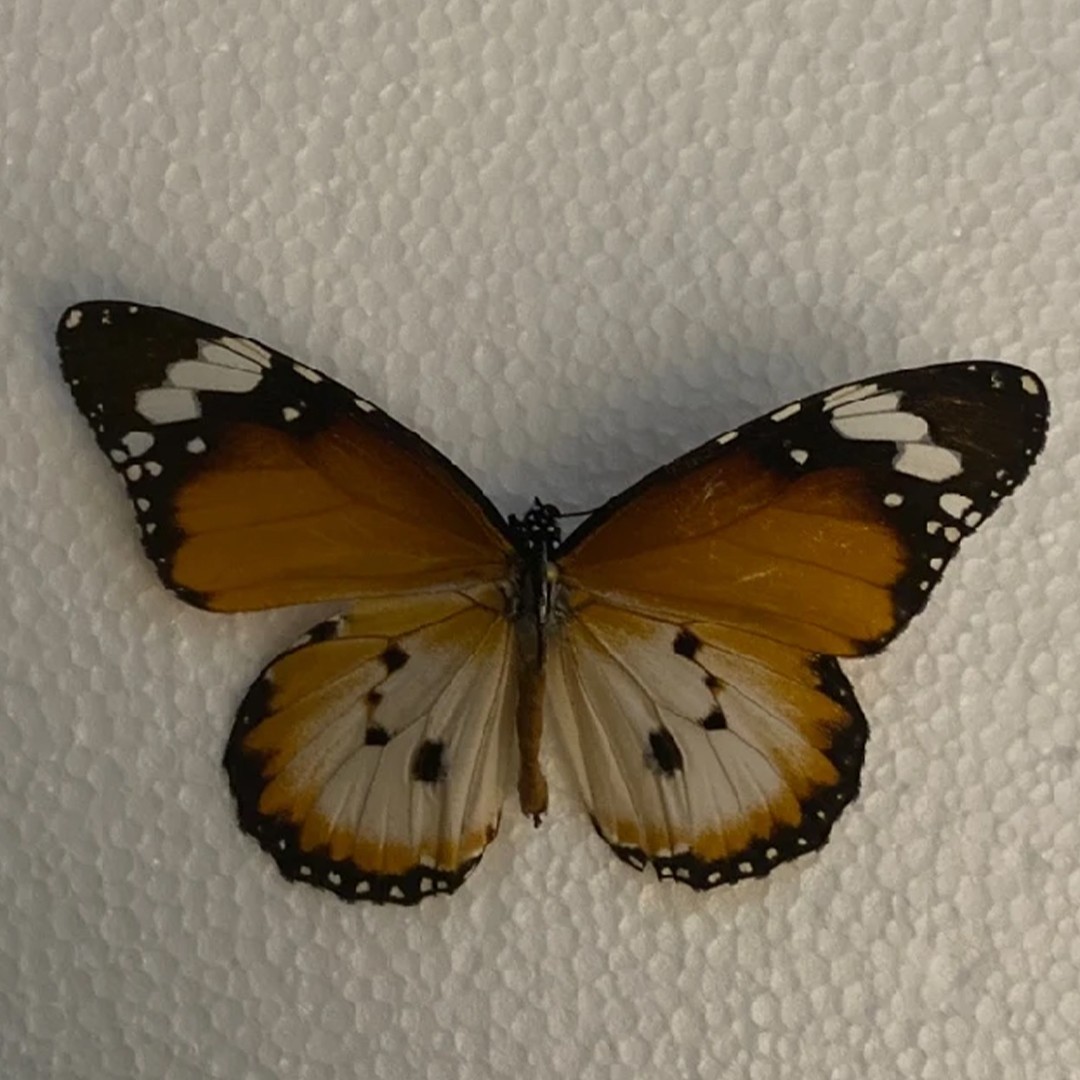
D. chrysippus is a medium-sized butterfly with a wingspan of about 7–8 cm (2.8–3.1 in). The body is black with many white spots. The wings are orange, the upperside brighter and richer than the underside. The apical half of the forewing is black with a white band. The hindwing has three black spots in the center. The wings are bordered in black and outlined with semicircular white spots. This species exhibits slight sexual dimorphism, as the Male has large scent glands on his hindwings, which the female lacks. They appear as a large black spot with a white centre if viewed from the underside D. chrysippus is a polymorphic species, so the exact coloring and patterning vary within and between populations. It is similar in appearance to the Indian fritillary (Argynnis hyperbius), which may coexist with it.
10. Blue pansy
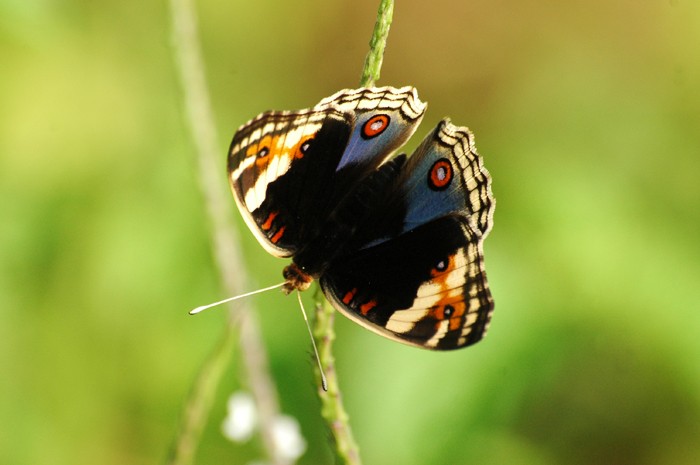
Male upperside: somewhat more than half the forewing from base velvety black, apical half dull fuliginous; cell-area with or without two short transverse orange bars; a blue patch above, the tornus; the outer margin of the basal black area obliquely zigzag in a line from the middle of costa to apex of vein 2, including a large discal, generally obscure ocellus, which, however, in some specimens is prominently ringed with orange yellow. Beyond this a broad white irregularly oblique discal band followed by a short oblique preapical bar from costa; a small black orange-ringed ocellus beneath the bar, a subterminal continuous line of white spots in the interspaces and a terminal jet-black slender line; cilia alternately dusky black and white. Hindwing blue shaded with velvety black towards base; a postdiscal black white-centred orange and black-ringed ocellus in interspace 2, a round minutely white-centred velvety-black spot (sometimes entirely absent) in interspace 5; the termen narrowly white, traversed by an inner and an outer subterminal and a terminal black line; cilia white. Underside forewing: basal half with three black-edged, sinuous, broad, ochraceous-orange transverse bands, followed by the pale discal baud; ocelli, preapical short bar, subterminal and terminal markings much as on the upperside; the discal band margined inwardly by a broad black angulated line which follows the outline of the black area of the upperside. Hindwing irrorated (sprinkled) with dusky scales and transversely crossed by subbasal and discal slender zigzag brown lines and a postdiscal dark shade, on which are placed the two ocelli as on the upperside; subterminal and terminal faint brown lines, and a brownish short streak tipped black at the tornal angle below the lower ocellus. Female. Similar, with similar but larger and more clearly defined ocelli and markings; the basal half of the forewings and hindwings on the upperside fuliginous (sooty) brown, scarcely any trace of blue on the hindwing. Antennae brown, head reddish brown, thorax and abdomen above brownish black: palpi, thorax and abdomen beneath dull white.

More







