




Top 20 Most Common Insects in Canary Islands
Insects, distinct for their exoskeletons and three-part bodies, are an integral part of ecosystems worldwide, including Canary Islands. Geographical diversity influences insect variety, meaning different regions within Canary Islands host unique insect life. Essential in various ecological roles here, insects can be beneficial pollinators or pests impacting human activities. This list highlights the 20 most common species, illustrating the fascinating interplay between insects and Canary Islands's various environments.

Most Common Insects
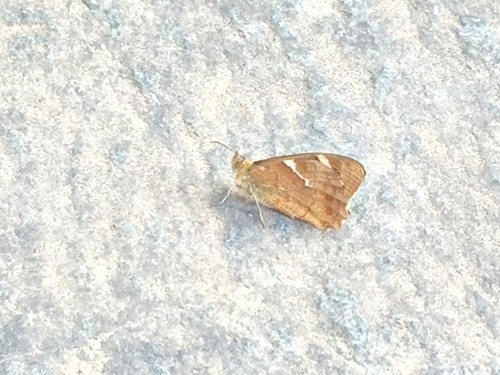
1. Canary Speckled Wood
Pararge xiphioides, the Canary speckled wood, is a butterfly of the family Nymphalidae. It is found in the Canary Islands on La Gomera, La Palma, Tenerife and Gran Canaria. The wingspan is 40–50 millimetres (1.6–2.0 in). Adults are on wing year-round. The larvae feed on various plants, including Brachypodium sylvaticum, Agrostis capillaris, Carex divulsa and Luzula forsteri. It is closely related to the species Pararge aegeria. differing thus xiphioides Stgr. (45a), from the Canary Islands, has the upperside darker on account of the smaller and more red-brown spots, while the underside of the hindwing is lighter, less marmorated and provided with a distinct median band, the costal part of which is shaded with white. 
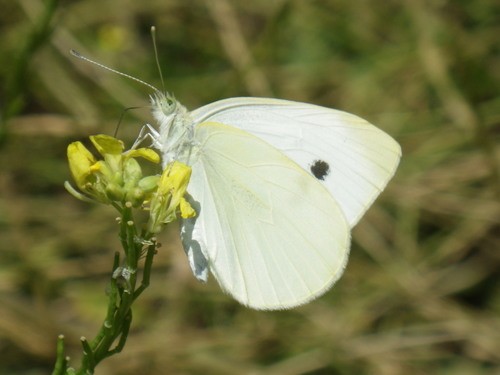
2. Cabbage white
Cabbage white (Pieris rapae) derives its common name from its habits as a caterpillar, which is a ferocious pest for cabbage, kale and broccoli farmers. In North America, it is one of the first butterflies to emerge in spring, heralding the beginning of the season.
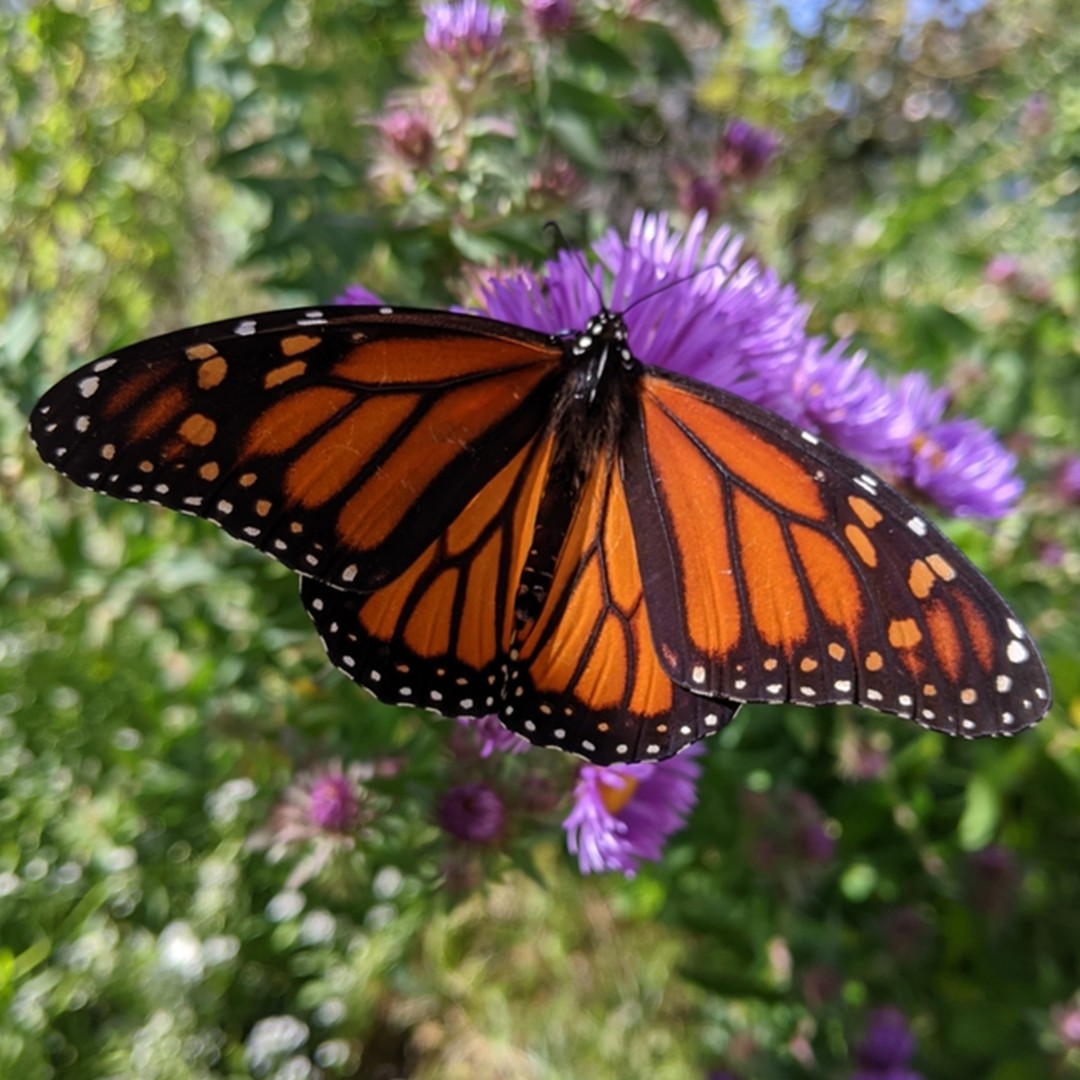
3. Monarch butterfly
The monarch butterfly (Danaus plexippus) is the most recognizable butterfly in North America. It is best known for its appearance, but should be better known for the fact that it has a 3000-mile migration that takes the butterfly 4 generations to complete. Their diet is also a natural deterrent for predators, as they eat milkweed, a poison that induces vomiting.
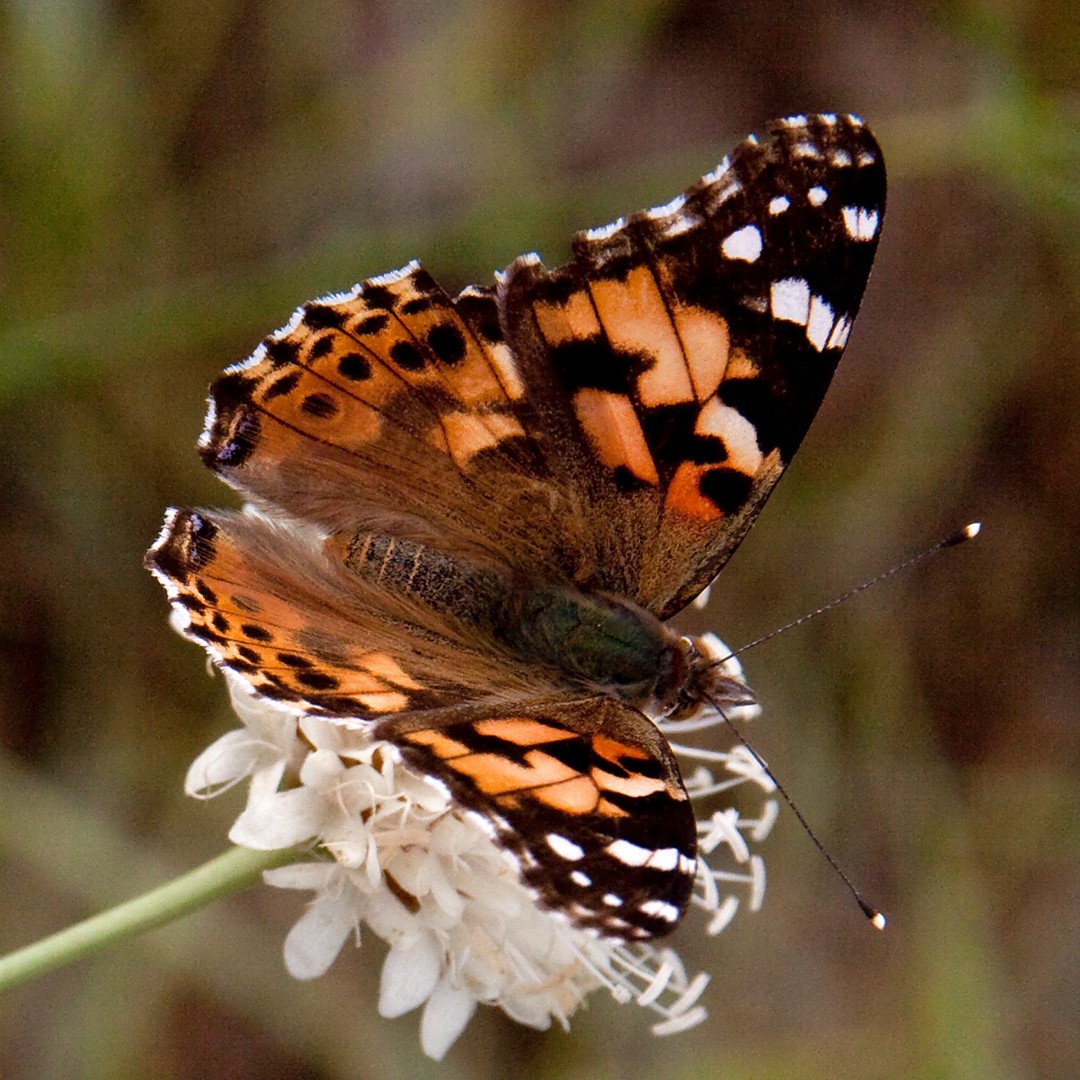
4. Painted lady
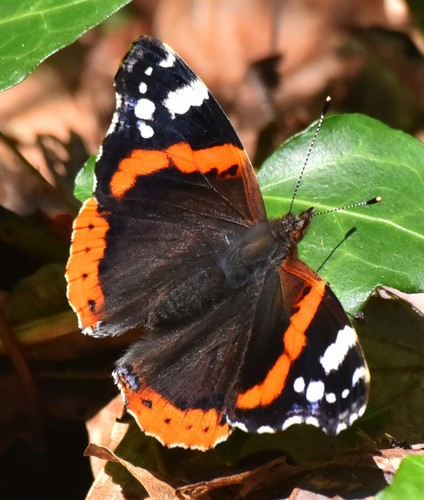
The painted lady is a migratory butterfly that spends part of the year in Northern Africa and then migrates to Europe during the warmer months. Although the adults feed on nectar from flowers, the larvae feed on the leaves of nettles and thistles.
5. Small copper
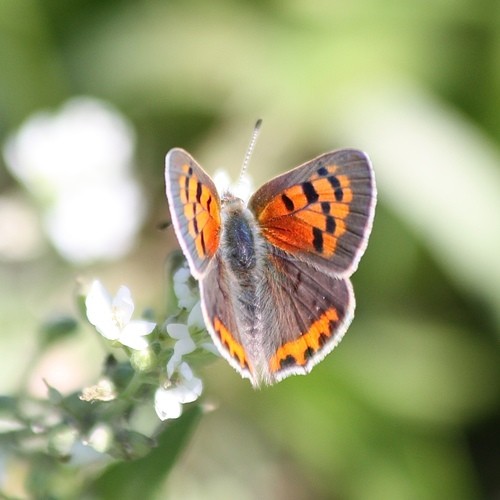
The upperside forewings are a bright orange with a dark outside edge border and with eight or nine black spots. The hindwings are dark with an orange border. Some females also have a row of blue spots inside the orange border and are known as form caeruleopunctata. The undersides are patterned in a similar way but are paler. The black spots on the forewings are outlined in yellow and the dark colouring is replaced by a pale brownish grey. The hindwings are the same brown/grey colour with small black dots and a narrow orange border. The caterpillars (larvae) are usually green, but some have a purple stripe down the middle of the back and along each side.
6. Bath white
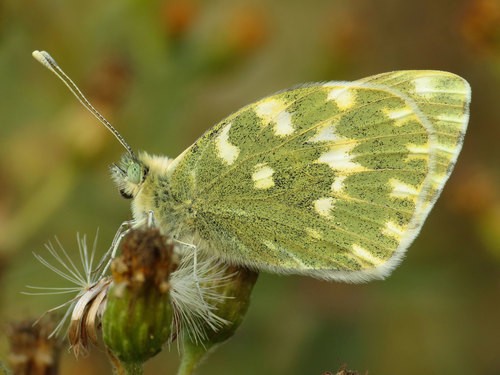
The bath white is a small white butterfly with a wingspan of 45 to 50 mm. The underside of the hindwing has a pattern of greenish blotches, which is characteristic of the Bath whites and easily identifies it fromThe Bath white is a small white butterfly with a wingspan of 4.5 - 5 cm. The underside of the hindwing has a pattern of greenish blotches, which is characteristic of the Bath whites and easily identifies it from other pierids. Sexes can be differentiated by markings on the forewing. The male is differentiated from the female by the markings on the upperside of the forewing. The apex of the forewing is black with white spots and lines. There is a black spot at the end of the cell. In the case of the female, there is an additional discal spot in 1b. The female also has an obscure row of terminal and marginal spots on the upper hindwing. Male: Upperside: white. Forewing: basal half of costa narrowly irrorated with black scales, a broad irregular quadrate black spot over the discocellulars; apex and termen anteriorly, above vein 3 broadly black, with a subterminal series of spots of the ground colour, prolonged as fine lines to the terminal margin. Hindwing: uniform, the markings on the underside showing faintly through; a costal spot before the apex, and in some specimens, some obscure, anterior terminal markings indicated by irrorated black scaling. Underside: white. Forewing: the form of the markings as on the upperside but the base of the cell with an irroration of green scales, the black discocellular spot extended to the costa, often washed with green or with a green centre to the black; the apical patch green not black, with the spots of the ground colour on it ill-defined and obscure; a black or greenish-black spot in the outer half of interspace 1. Hindwing: green; costal margin at base yellow; dorsal margin white; a spot in middle of cell, another above it in interspace 7, a curved irregular discal series of conjoined spots beyond the cell, of which the upper two spots in interspaces 1 to 6, white; the veins sometimes faintly yellow. Antennae dusky-black; head, thorax and abdomen fuscous black; beneath; head, thorax and abdomen white. Female: Upperside: differs as follows: Forewing: a dusky-black streak extends from the base along costa and terminates at the black spot on the discocellulars; a transverse, somewhat quadrate black spot in the outer half of interspace 1, with sometimes a short ill-defined black streak below it; the black area on apex and anterior portion of termen broader, the white spots on it blurred and obscure. Hindwing: a large costal black spot before apex; a broad, black, subterminal, inwardly diffuse, curved band in continuation of the same, and a terminal series of clavate black marks that start from the outer margin of the black subterminal band. Underside: markings much as in the male but broader. Antennae, head, thorax and abdomen as in the male. Wingspan: 5 - 6 cm
7. Scarlet dragonfly
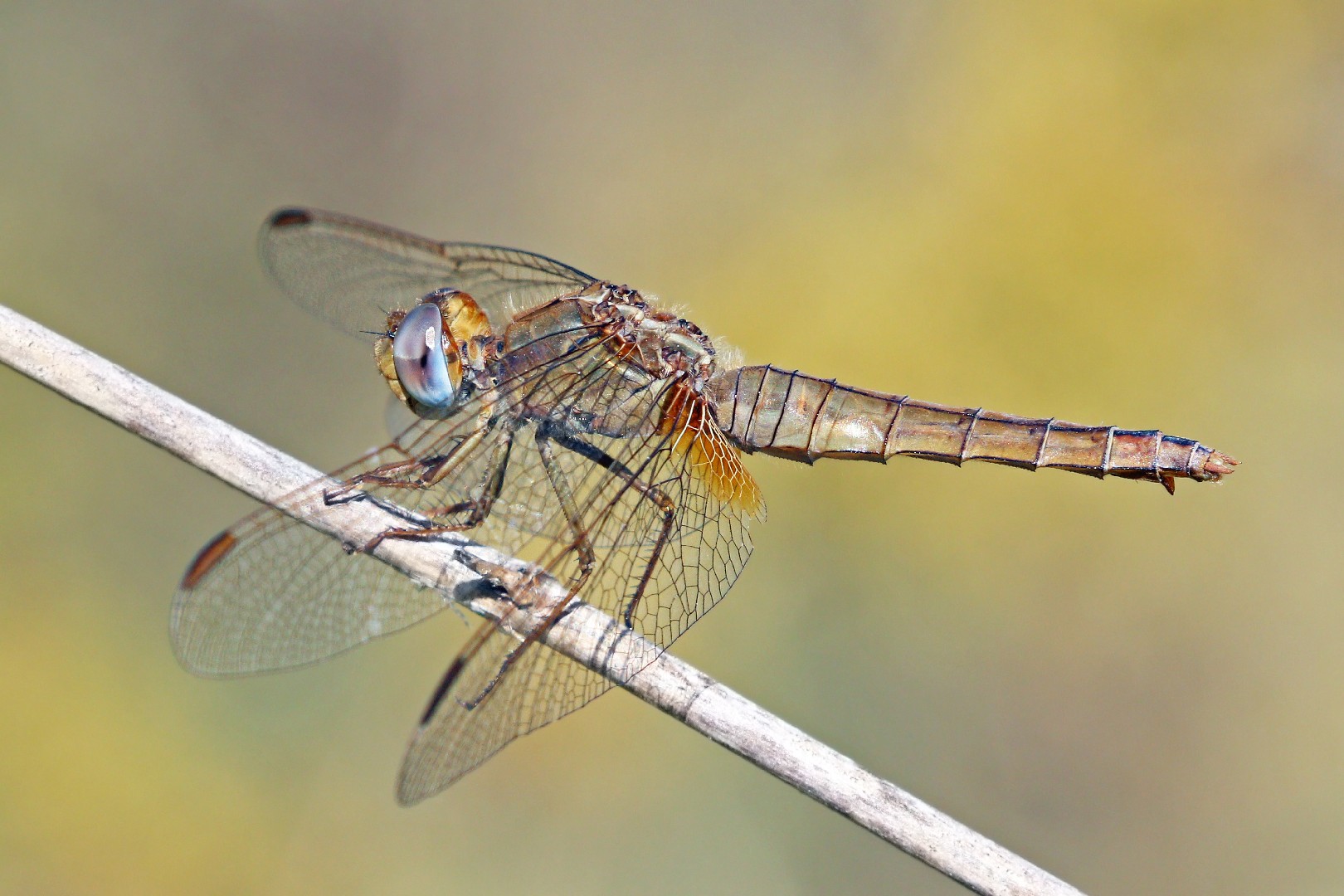
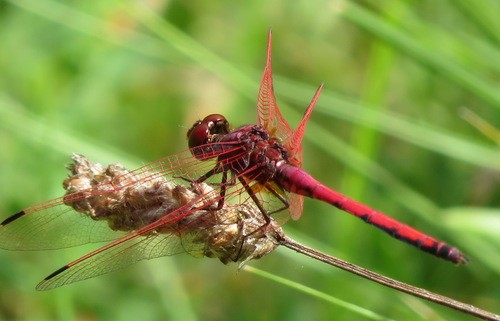
Crocothemis erythraea can reach a length of 3.5 - 4.5 cm. These dragonflies haves a flattened and rather broad abdomen. The adult male scarlet dragonfly has a bright scarlet red, widened abdomen, with small amber patches at the bases of the hindwings. Also the veins on the leading edges of the wings are red. Females and immatures are yellow-brown and have a conspicuous pale stripe along the top of the thorax.

8. Dark grass blue
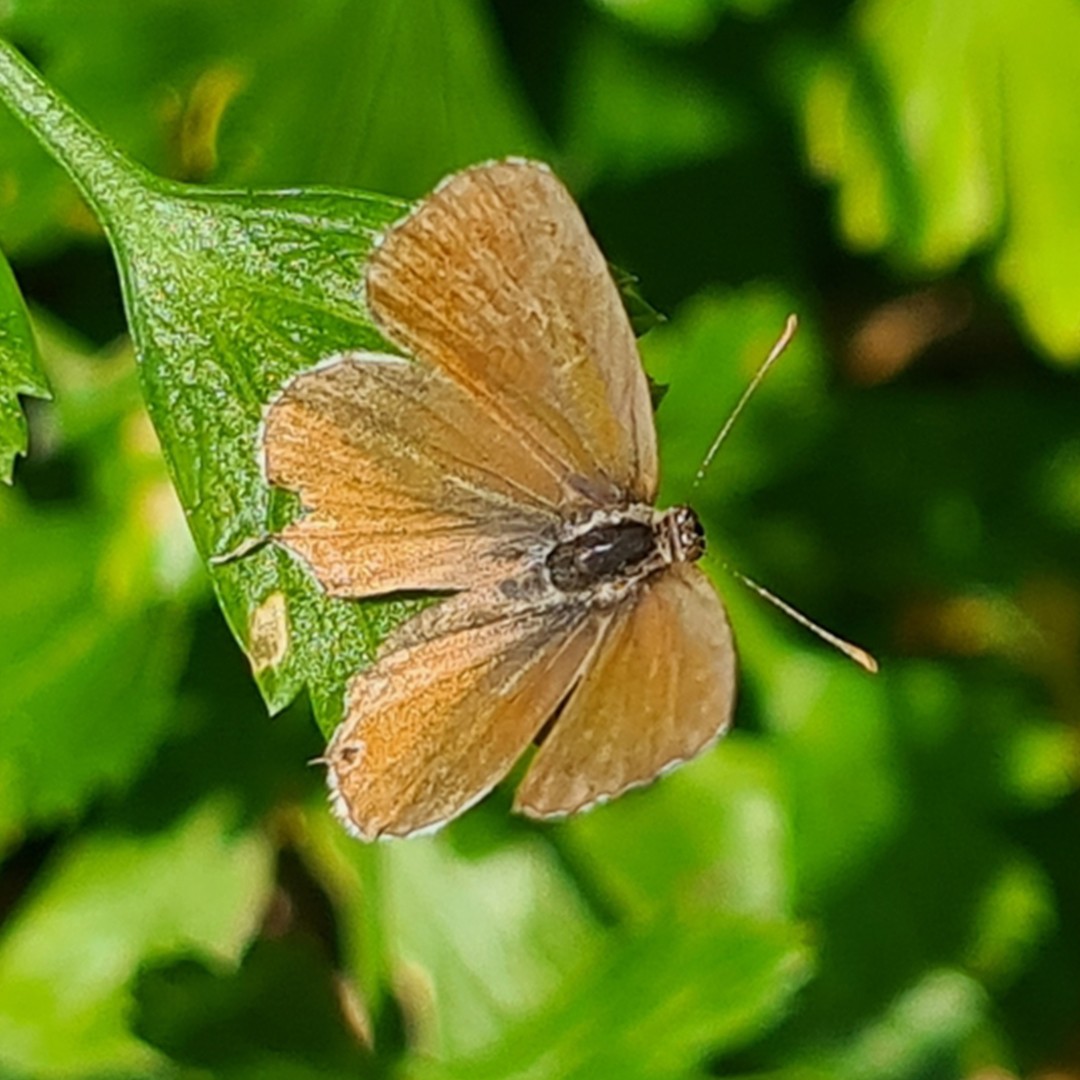
The wingspan is 1.8 - 2.5 cm for males and 2 - 2.5 cm for females.
9. Clouded yellow
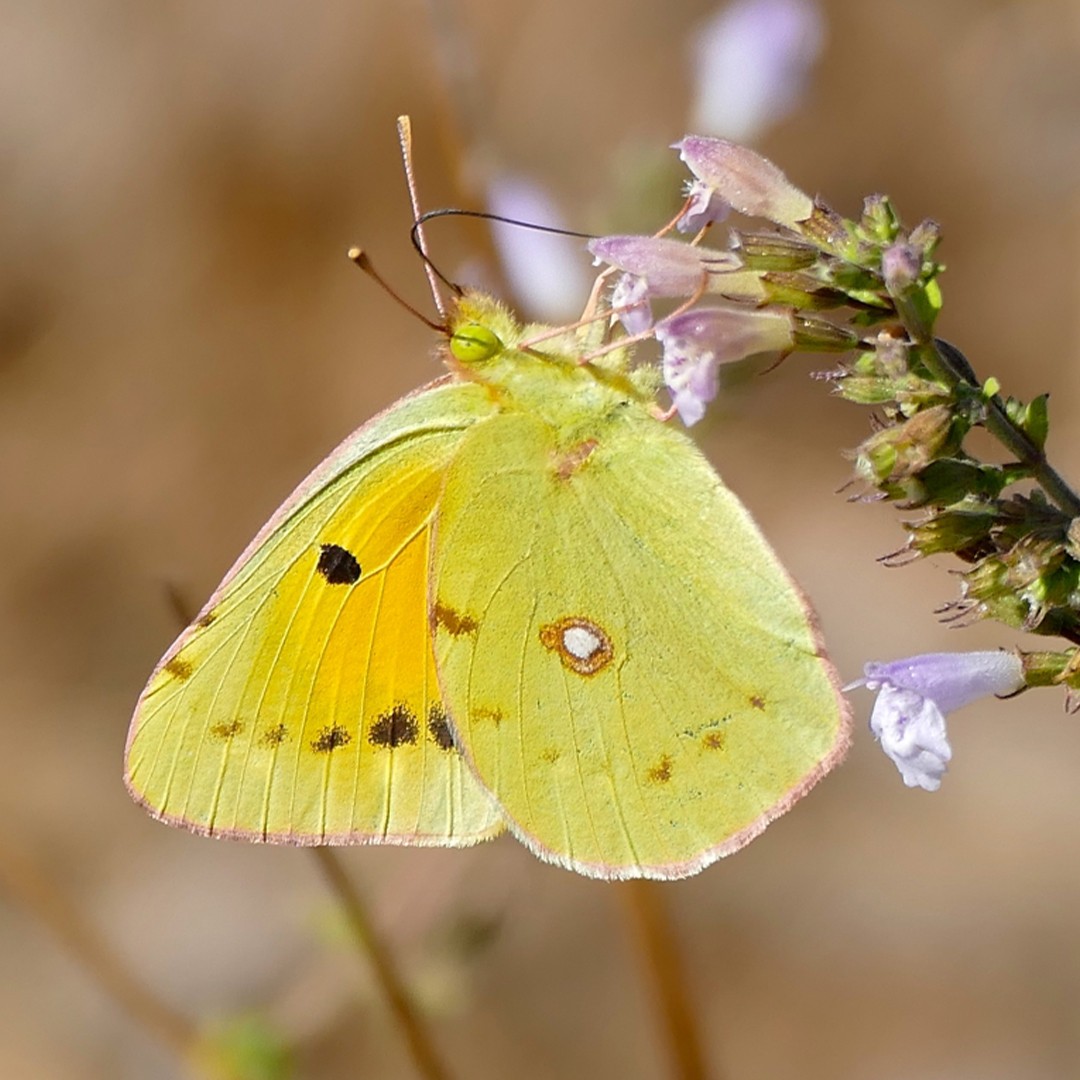
Colias croceus has a wingspan of 46–54 millimetres (1.8–2.1 in). The upperside of the wings is golden to orange yellow with a broad black margin on all four wings and a black spot near the centre forewing. Usually these butterflies settles with its wings closed, consequently the black margin of the uppersides of the wings is difficultly visible. The underside lacks the black borders and is lighter, with a more greenish tint, particularly on the forewings. In the forewing underside is the same dark spot as on the upperside, but often with a light centre; the hindwing underside has a white centre spot, often with a smaller white or dark dot immediately above it. Sometimes, a row of black dots occurs on the underwings' outer margins, corresponding to where the black border ends on the upperside. Females differ from the males in having yellow spots along the black borders on the upperside. In flight, Colias croceus is easily identifiable by the intense yellow colouring, much brighter than that of the lemon-yellow male common brimstone which also lacks black markings. Like all Colias species they never open their wings at rest. In a small proportion of females (about 5%) the golden upperside colouration is replaced by a pale cream colour. These females have been distinguished as form helice. The pale form helice does not seem to be that distinct as intermediates exist and the variation is to some extent related to humidity during development, with dryer conditions producing paler colouration. These pale forms helice can be confused with Berger's clouded yellow (Colias alfacariensis) and the rarer Pale clouded yellow (Colias hyale). Even the palest C. croceus tends to have more black on the upperside however, in particular on the hindwings. Young caterpillars are yellow-green, with a black head. Later they become completely dark green, with a white red spotted lateral line after the third moult. The pupae are green and have a yellow side stripe. This species is rather similar to Colias myrmidone, Colias chrysotheme, Colias erate, Colias hyale, Colias alfacariensis, Colias caucasica, Colias aurorina.
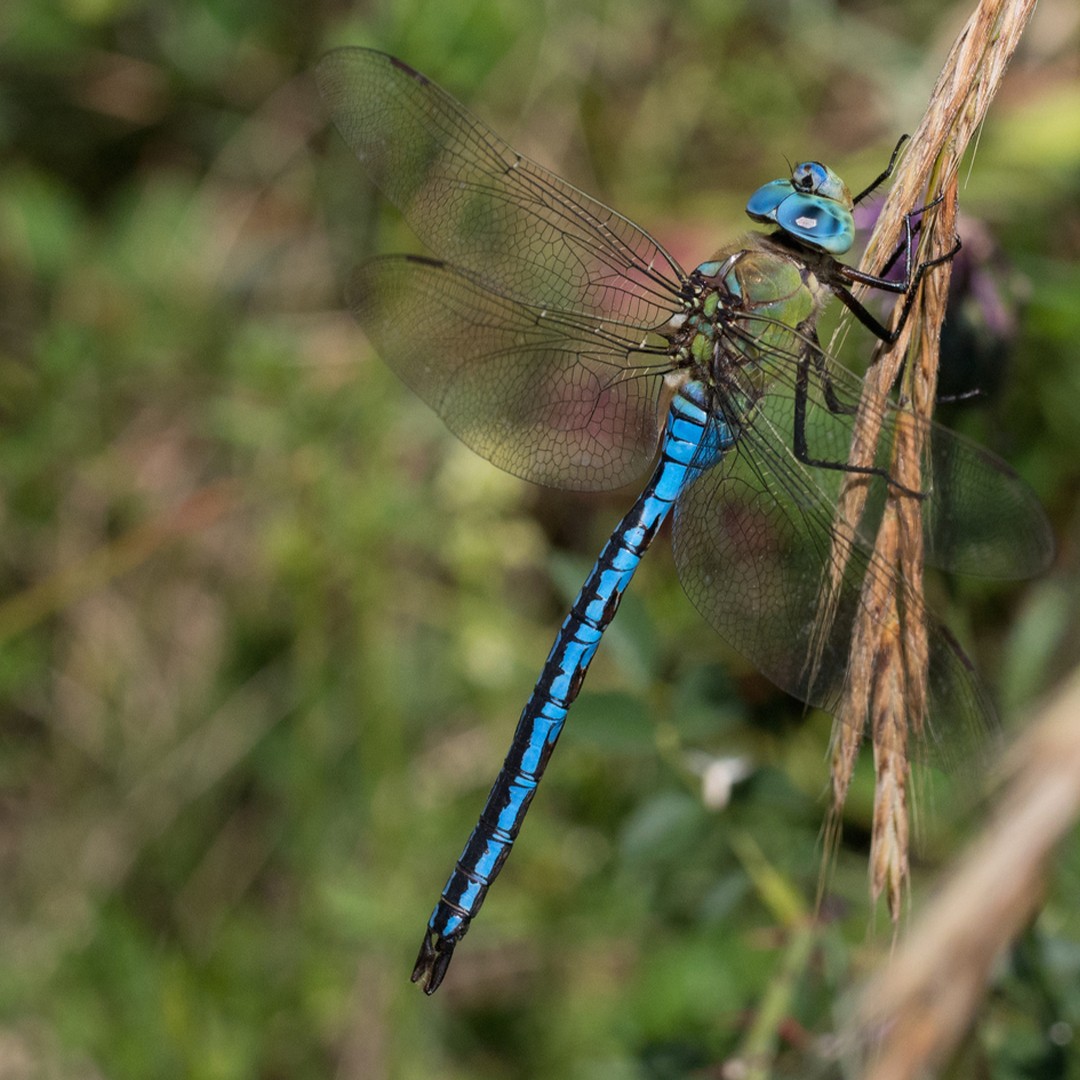
10. Emperor dragonfly
The emperor dragonfly or blue emperor (Anax imperator) is a large species of hawker dragonfly of the family Aeshnidae, averaging 78 millimetres (3.1 in) in length.
More







