




Top 20 Most Common Insects in Gothenburg
Insects, the world's most diverse group of organisms, thrive in various habitats within Gothenburg, adding unique notes of life to its landscape. The state's varying geographical features foster a rich insect diversity, each type playing critical roles in the ecosystem, from pests disturbing agriculture to beneficial species aiding in pollination and decomposition. Uncover the fascinating world of these tiny warriors as we explore the 20 most common insects in Gothenburg to appreciate their significance in our environment.

Most Common Insects
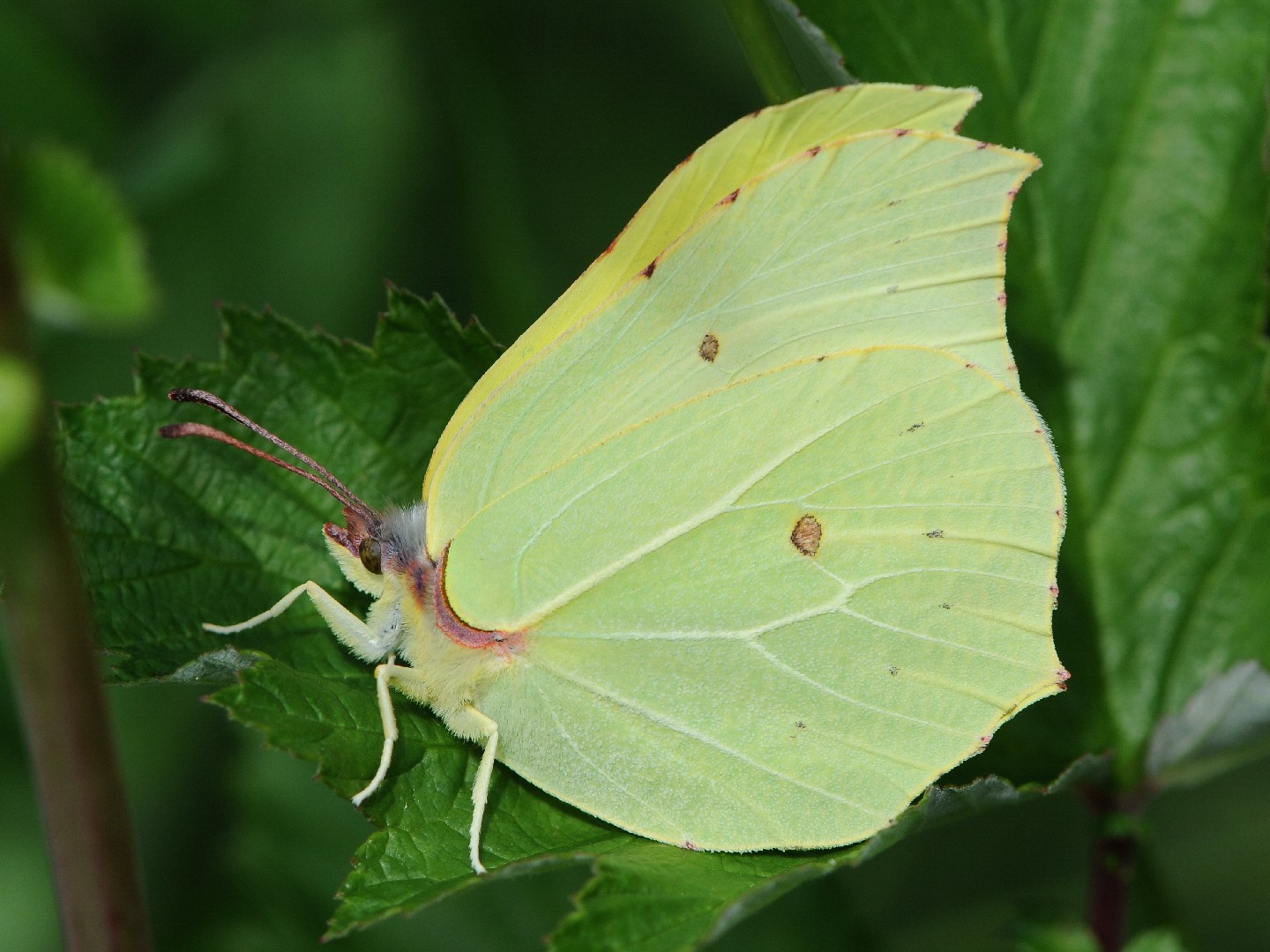
1. Common brimstone
Common brimstone (Gonepteryx rhamni) is an attractive species of butterfly; males display iridescence and have yellow wings, whereas females have white-green, non-iridescent wings. This species is wholly reliant on two species of buckthorn plant to lay its eggs. Consequently, the larvae consume large amounts of buckthorn.
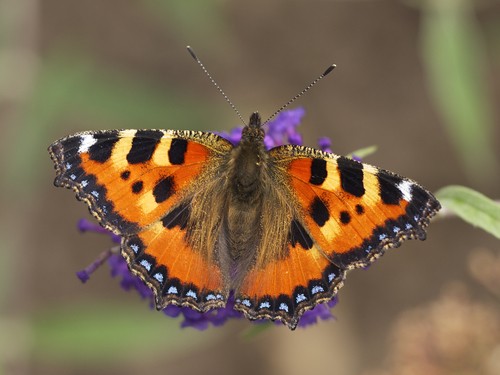
2. Small tortoiseshell
Small and colorful, small tortoiseshell (Aglais urticae) is the national butterfly of Denmark. However, it is capable of surviving anywhere the common nettle leaf may be found, which the larvae of this species depend on. Once among the most common butterflies in Europe and temperate Asia, this species is experiencing rapid declines for reasons still being investigated.
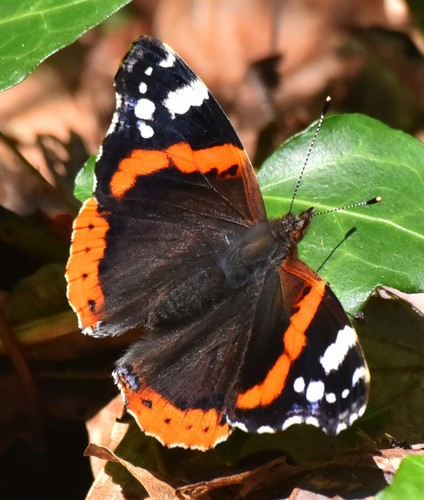
3. Red admiral
Red admiral (Vanessa atalanta) is a visually striking species of butterfly. Unusually territorial, males will compete for choice areas, and females will only mate with males that maintain their own territories. This butterfly is known for being particularly patient with human interactions, even to the point of perching on clothing or flesh.
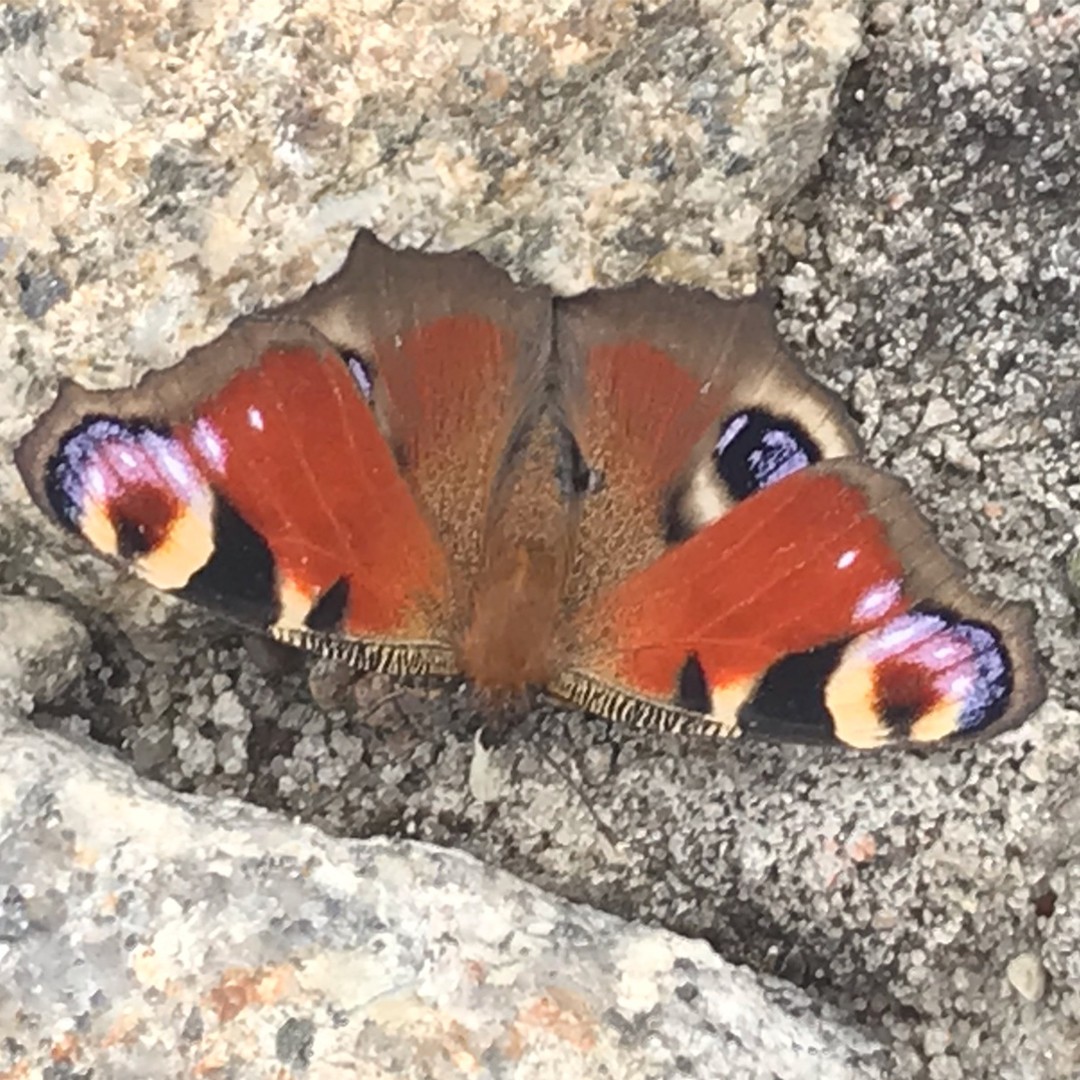
4. European peacock
European peacock (Aglais io) is a colorful butterfly that resides in temperate Asia and Europe – hence its common name. Its prominent eyespots deter would-be predators, who mistake them for the eyes of a bigger, more dangerous species. In recent years, this species appears to be expanding its range into previously uncolonized territory.
5. Shore crab
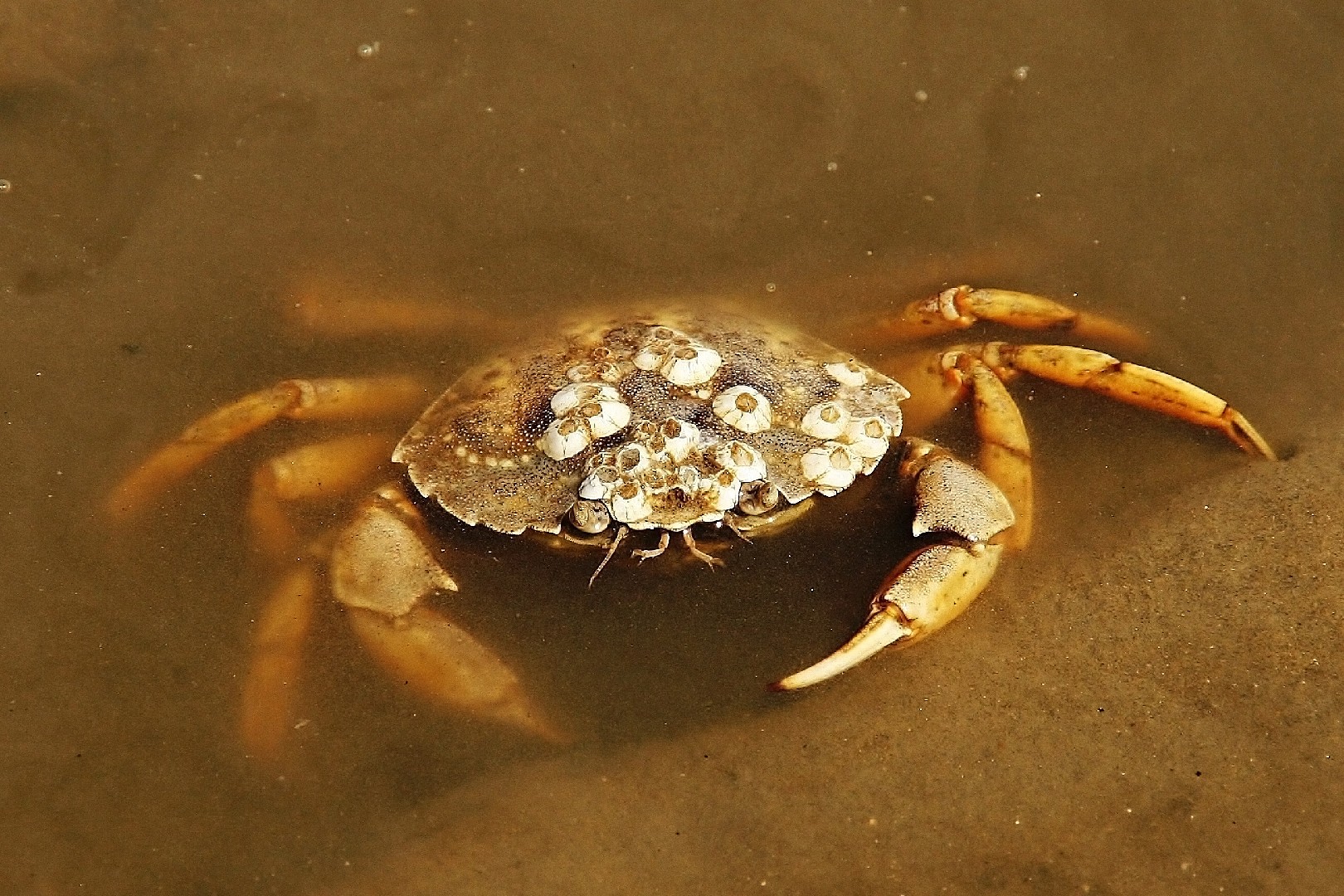
C. maenas has a carapace up to 90 mm (9.0 cm) long and 210 mm (8.3 in) wide, but can be larger outside its native range, reaching 713 mm (28.1 in) wide in British Columbia. The carapace has five short teeth along the rim behind each eye, and three undulations between the eyes. The undulations, which protrude beyond the eyes, are the simplest means of distinguishing C. maenas from the closely related C. aestuarii, which can also be an invasive species. In C. aestuarii, the carapace lacks any bumps and extends forward beyond the eyes. Another characteristic for distinguishing the two species is the form of the first and second pleopods (collectively the gonopods), which are straight and parallel in C. aestuarii, but curve outwards in C. maenas. The colour of C. maenas varies greatly, from green to brown, grey, or red. This variation has a genetic component, but is largely due to local environmental factors. In particular, individuals which delay moulting become red-coloured rather than green. Red individuals are stronger and more aggressive, but are less tolerant of environmental stresses, such as low salinity or hypoxia. Juvenile crabs on average display greater patterning than adults. 
6. Green-veined white
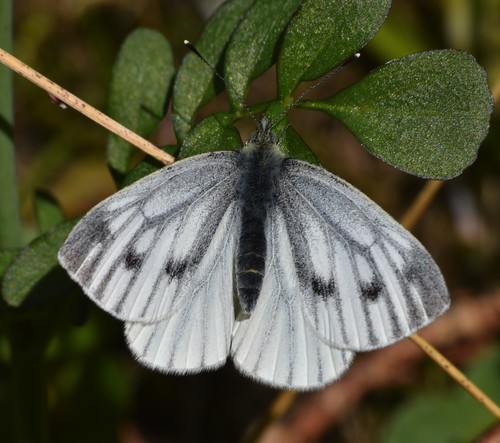
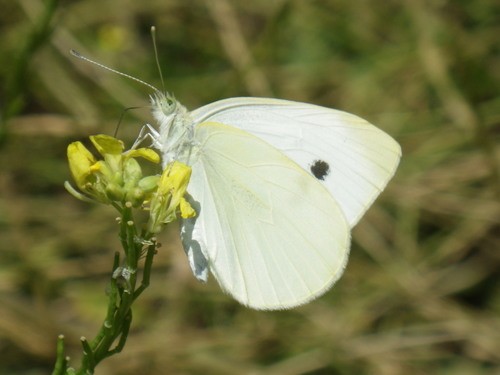
Green-veined white (Pieris napi) is a distinctively white-winged butterfly that lays its eggs in a variety of food plants. This species displays observable differences dependent on sex: males possess only one dark spot on each forewing, whereas females display two. Unlike several of its cousin species, green-veined white prefers not to lay eggs in garden cabbages, rendering it less of a pest to farmers.
7. Meadow brown
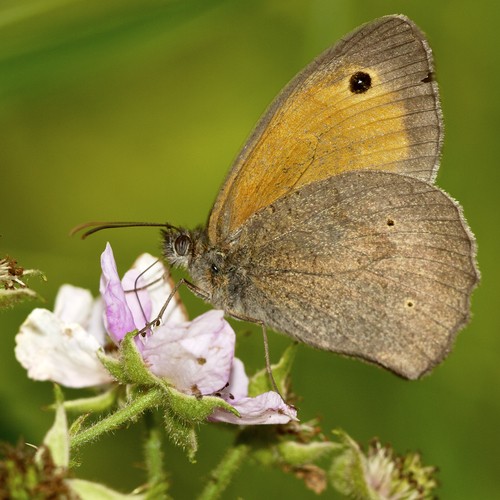
The meadow brown (Maniola jurtina) is similar to the Gatekeeper in the way that it rests with its wings open due to the "eye spots" on either end of its wings that ward off predators. While the color is a deep brown, the caterpillar form is a beautiful bright green with little, white hairs and a dark line leading down its back.
8. Small copper
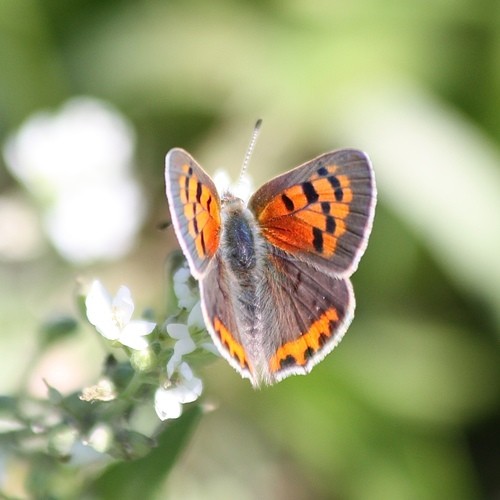
The upperside forewings are a bright orange with a dark outside edge border and with eight or nine black spots. The hindwings are dark with an orange border. Some females also have a row of blue spots inside the orange border and are known as form caeruleopunctata. The undersides are patterned in a similar way but are paler. The black spots on the forewings are outlined in yellow and the dark colouring is replaced by a pale brownish grey. The hindwings are the same brown/grey colour with small black dots and a narrow orange border. The caterpillars (larvae) are usually green, but some have a purple stripe down the middle of the back and along each side.
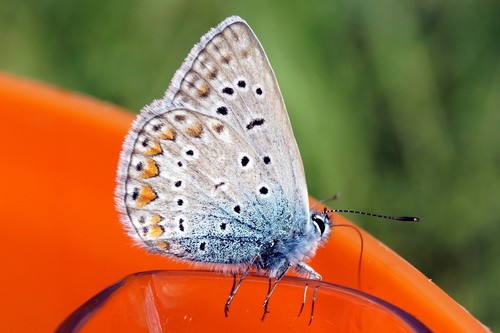
9. Common blue butterfly
Despite its common name, only male specimens of common blue butterfly (Polyommatus icarus) can accurately be described as blue; the females are predominately gray-brown, with only a dusting of blue and a scattering of orange spots. The adults live for only three weeks before dying.
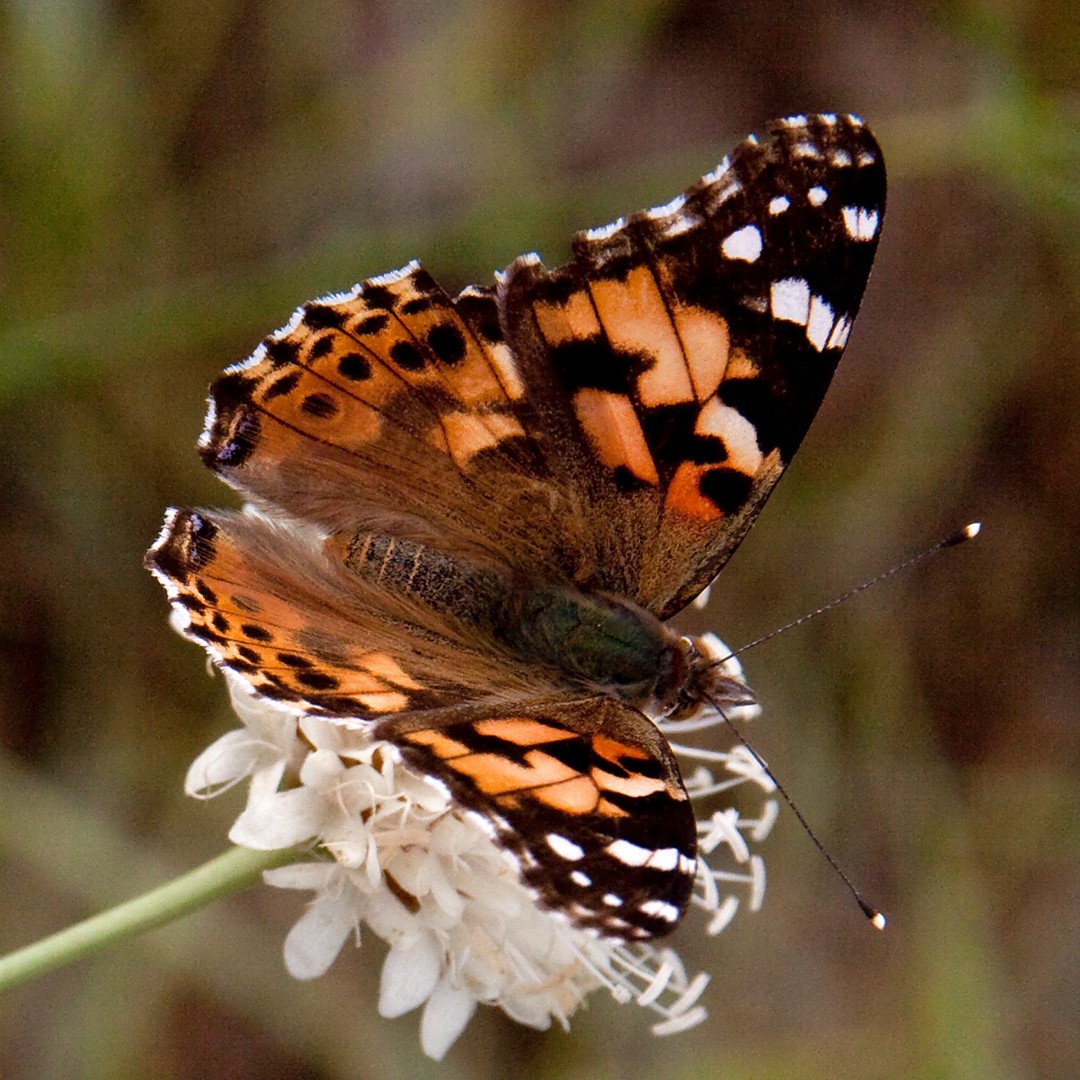
10. Painted lady
The painted lady is a migratory butterfly that spends part of the year in Northern Africa and then migrates to Europe during the warmer months. Although the adults feed on nectar from flowers, the larvae feed on the leaves of nettles and thistles.
More







