




Top 18 Most Common Insects in Saydnaya
Insects - diverse, adaptable, and virtually ubiquitous, are a vital part of our ecosystems. Their presence is strongly influenced by the specific geographic landscapes of Saydnaya. These diminutive creatures take on various roles, from the pesky pests to the unsung heroes of our environment, thereby painting a portrait of the intricate relationship between insects and a state's ecosystem. Dive into our latest list of 18 most common insects in Saydnaya to learn and appreciate their fascinating world.

Most Common Insects
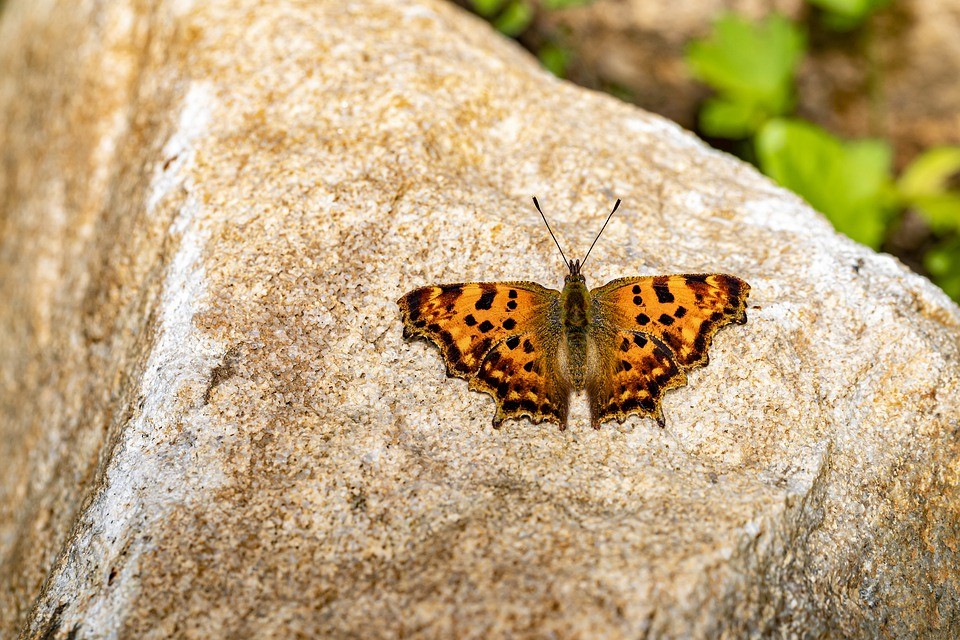
1. Southern comma
P. egea Cr. (= triangulum F., i album Esp., female = vau album Esp.) (64c). A species similar to c-album with the wings more strongly dentate and narrower, and the underside more thinly mormorated and pencilled,the hindwing beneath bearing in the centre a white angle-, hook- or J-mark. The female flying at the same season as the nymotypical has the wings less sharply dentate, is paler, less prominently and more sparsely marked. Ab. autumnalis Curo (? Stefan, i. 1.) (64c as j-album) is the autumn-form, which has the wings more strongly angulate and of a darker ground-colour. The spots are very prominent, the distal margin of both wings is darkened, the light submarginal spots of the hindwing are very distinct, thougli small and isolated, and the underside is darkened. — The larva of the species feeds on Picrataria diffusa Keh. (Urticaceae) in July and October; as food-plants are also mentioned Ulmus, Urtica, Ribes, Lonicera, Corylus (Spuler). It is blackish or slaty grey, with yellow and black belts, the body bearing minute white hairs and dark branched spines; on the back there are pairs of large bluisli black spots on a pale ground; the spirales are edged with yellowish, beneath them there being a reddish yellow line; the head heart-shape with 2 spine-like processes. Pupa grey-brown, luberculate above, without metallic spots, the head not produced. 
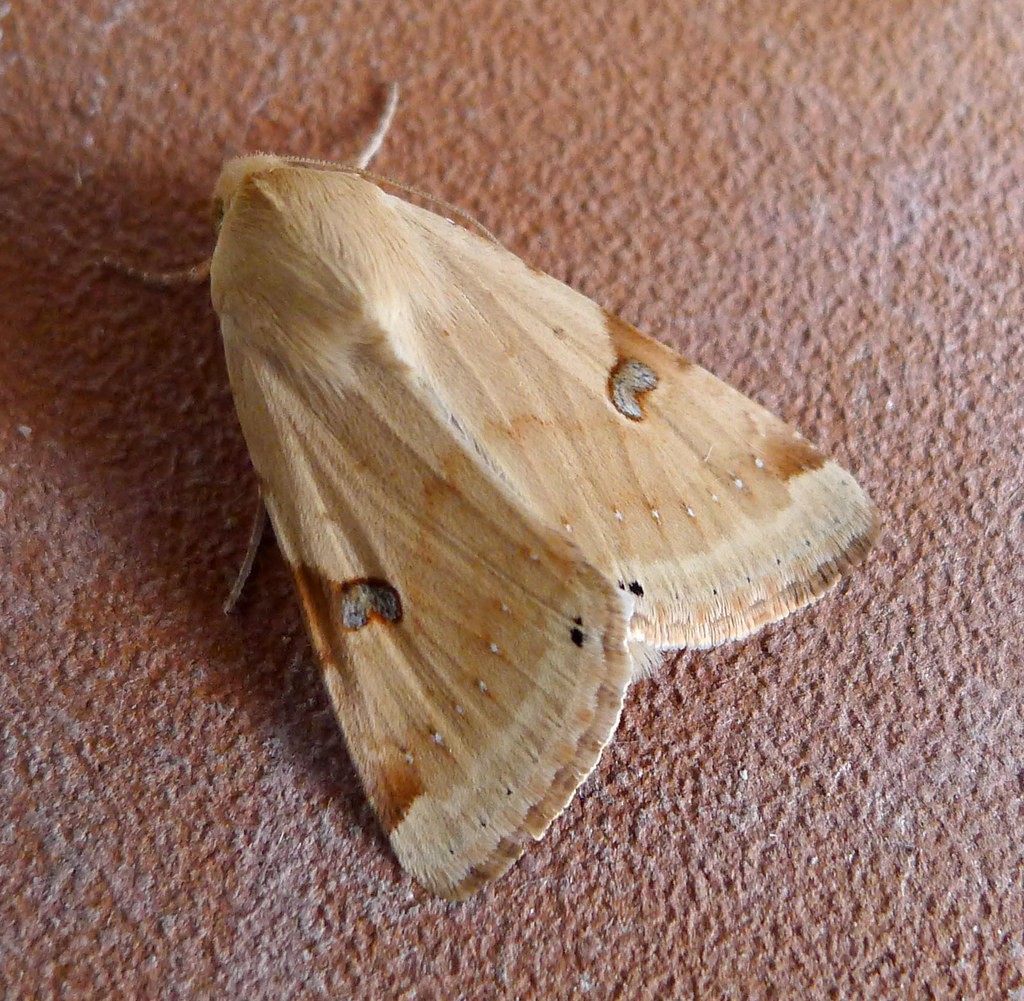
2. Bordered Straw
Heliothis peltigera has a wingspan of 29–40 mm and forewings reaching a length of 16–19 mm. These moths are rather variable in pattern and colour. Forewings are usually greyish ochreous, flushed with pale brown, except the narrow marginal area; lines are brown, indistinct; orbicular stigma is a dark dot. On middle of costa there is a reniform grey dot, with dark brown edge and centre, joined to a brown mark. A brown band appears between outer and submarginal lines. A black dot is present below vein 2 before margin. Hindwings show a broad brown-black marginal border, containing a pale blotch between 2 and 4. Cellspot is dark and fringes are white. Larvae are reddish grey or ochreous, dotted with white. Dorsal and subdorsal lines are dark, while spiracular line is white. This species is quite similar to Heliothis nubigera, that shows less evident kidney markings, and to Helicoverpa armigera, that has lighter colored hindwings.
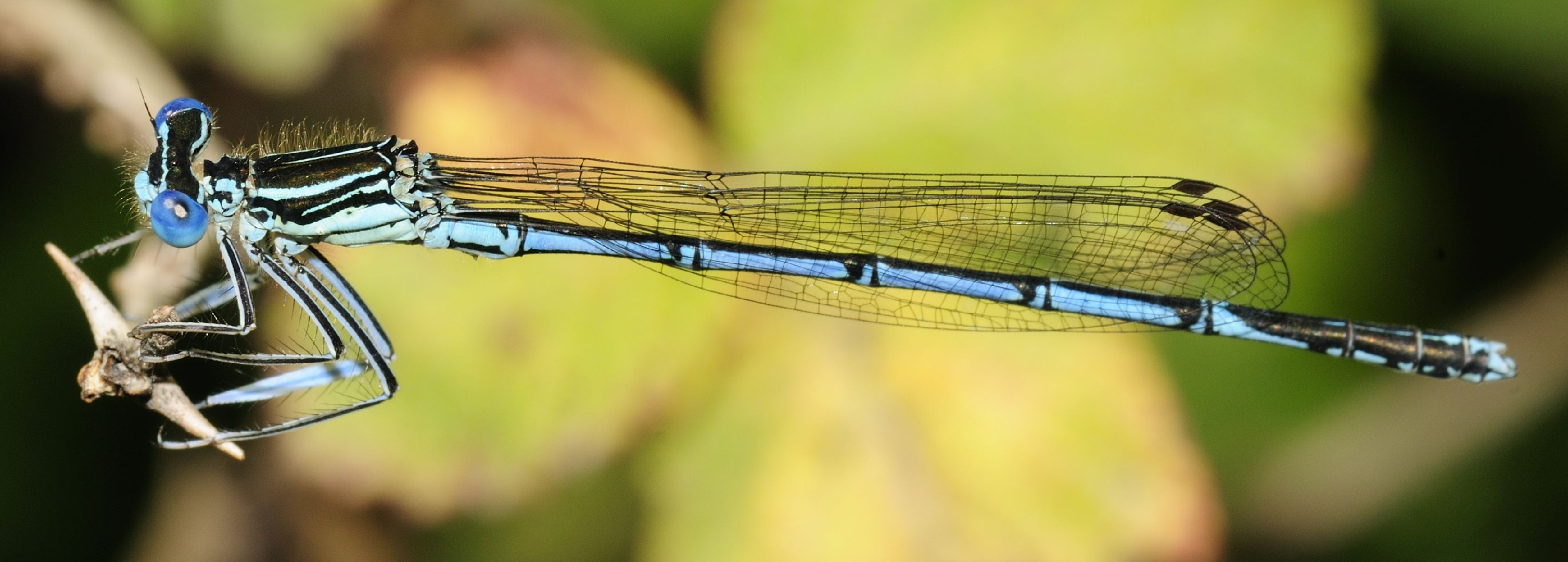
3. White-legged damselfly
The white-legged damselfly or blue featherleg (Platycnemis pennipes) is a damselfly of slow-flowing, muddy waters. It occurs from the Atlantic to Siberia and is often abundant throughout its range.
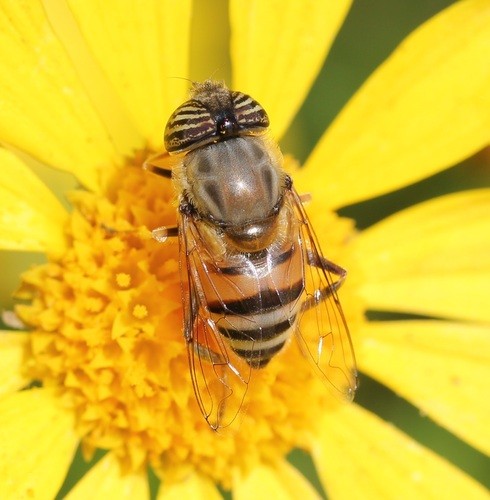
4. Band-eyed drone fly
Eristalinus taeniops can reach a length of 1.09 - 1.4 cm. These hoverflies exhibit a bee-like yellow-black drawing. The thorax has a metallic yellow-brown color and it is densely yellow hairy. Also the scutellum are yellow-brown colored. The abdomen is reddish-yellow, with transversal black bands. The compound eyes have five distinct, vertical, dark stripes. The wings are transparent, usually yellowish-brown at the base, while the halteres are brightly pale yellow colored.
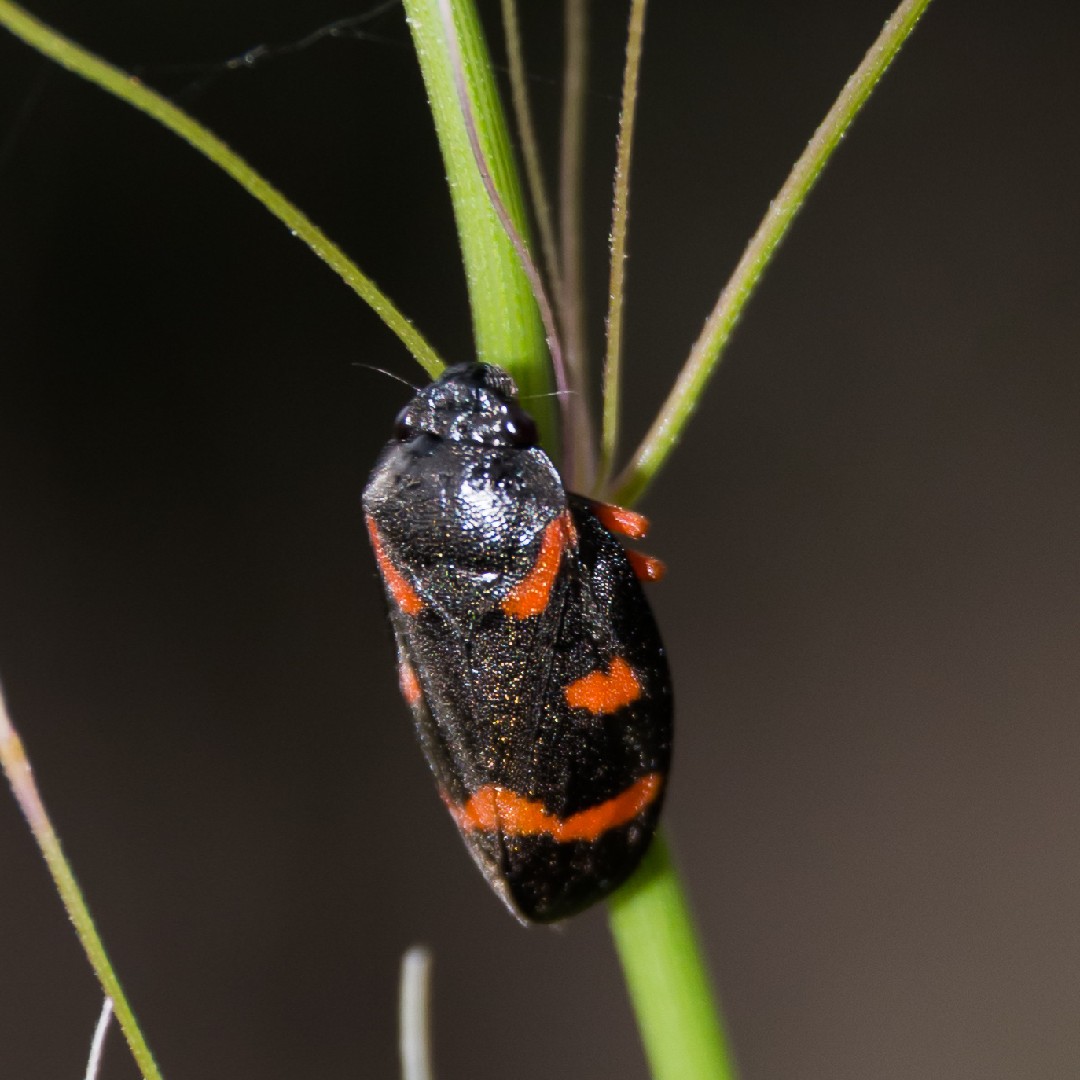
5. Cercopis intermedia
In South Central Europe, blood clots recruited from two genera Cercopis and Haematoloma with a total of five species. On the Balkan Peninsula, another genus of the bloodshot with the species Triecphorella geniculatus is added to Europe. Species of Cercopidae are native to almost all zoogeographischen regions. In the Palaearctic, the blood sclerosis with only twelve species are represented in the tropics, however, they are very rich in species, with not all species outside Central Europe have this black and red color.
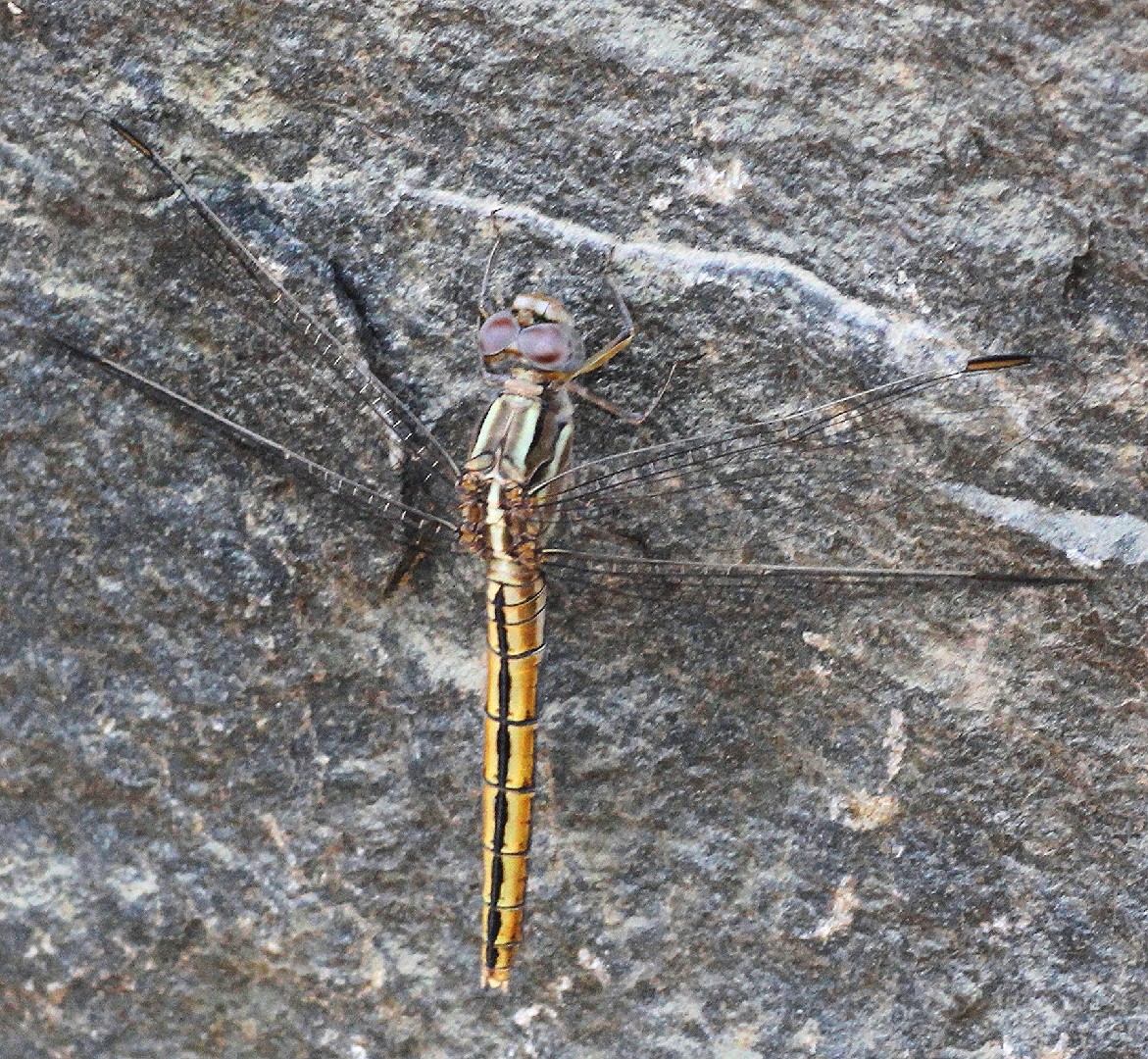
6. Small skimmer
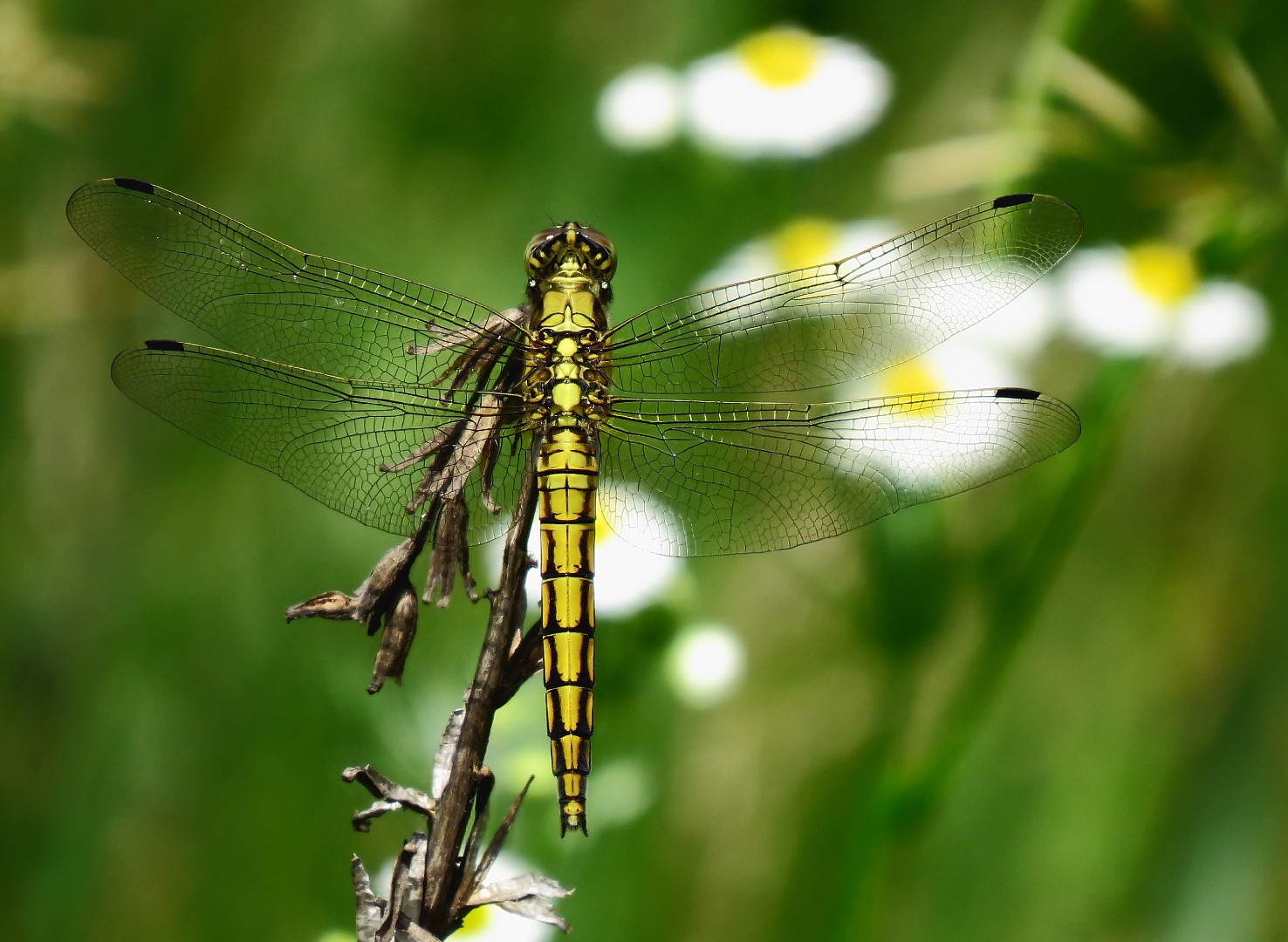
It is a medium-sized dragonfly with brown capped eyes, greenish brown thorax and bluish abdomen. Female lacks the powder blue pruinescence. It prefers medium to slow-flowing streams in the dry zones and hot plains. Adults are common around open rocky and sandy beds of the streams.
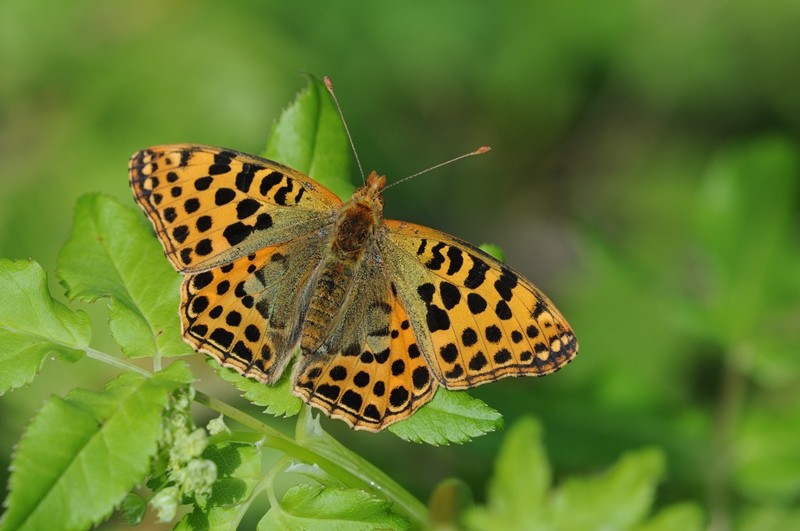
7. Queen of spain fritillary
Issoria lathonia is a medium-sized butterfly with a wingspan of 4 - 4.5 cm. The wings show a deep orange-violet background, with rounded black spots arranged in regular rows and suffused with greenish gray in the females. The underside of the hindwings is decorated with large pearly nacreous spots and it is crossed by a postdiscal row of black eyespots with pearly pupils. Some pearly spots also appear at the apex of the forewings. The caterpillar can reach a length of 3.5 cm. It is grayish brown, with black spots, and relatively short brown spines with white tip, and a double row of dorsal white streaks. The suspended chrysalis is dark brown, with a large white saddle-shaped stain and some smaller ones of the same color, resembling a bird's dropping. The imago is rather similar to Argynnis aglaja, Argynnis adippe and Brenthis daphne, which have the same orange color on the upperside of the wings, but show different markings and spots. Moreover, the underside of the hindwings does not have the large pearly spots characteristic of the queen of spain fritillary.
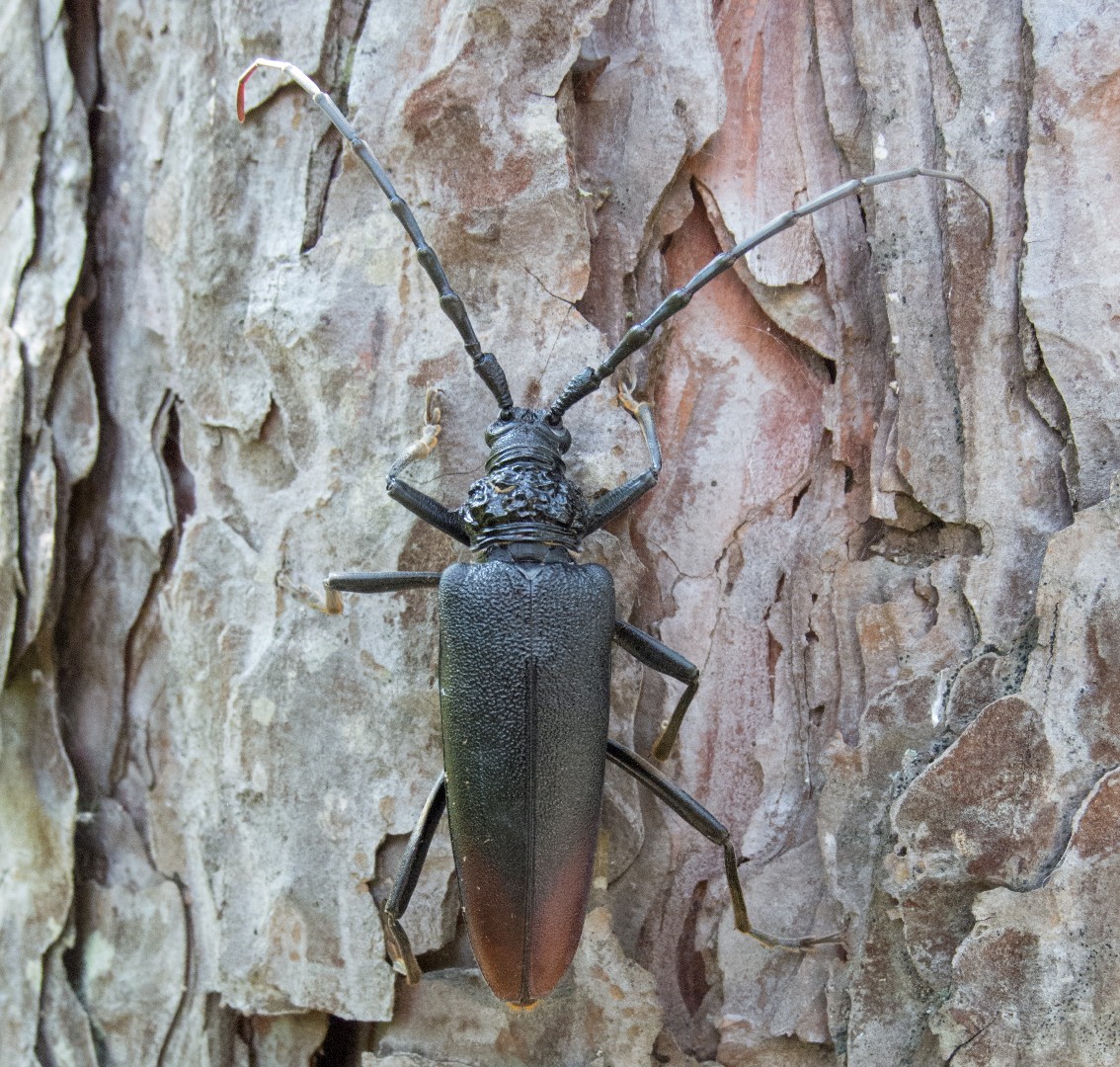
8. Great capricorn beetle
This beetle measures between 41 and 55 mm in body length and is among the largest of the European beetle species. It has an elongated, robust body and, like all members of the longhorn family, it has long antennae. In males, these thread-like antennae are longer than the body, but in females they are only as long as the hard wing cases (the elytra). The legs and body are black, except for the elytra which are reddish-brown towards the tips.
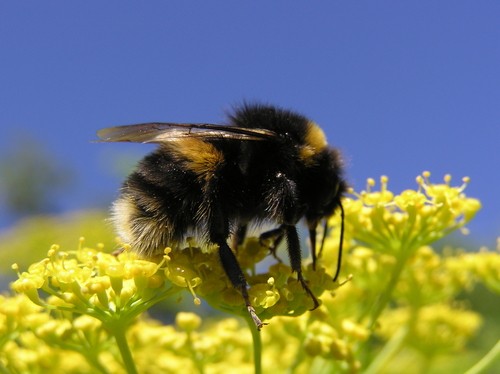
9. Buff-tailed bumble bee
A popular pollinating species in European greenhouses, buff-tailed bumble bee (Bombus terrestris) is one of the more common species of bumblebee worldwide. This species displays comparatively high levels of intelligence, recognizing flowers by color and navigating several miles (if necessary) to return to the hive. Unlike many other bee species, the queen of a buff-tailed bumble bee hive will only mate with one male.
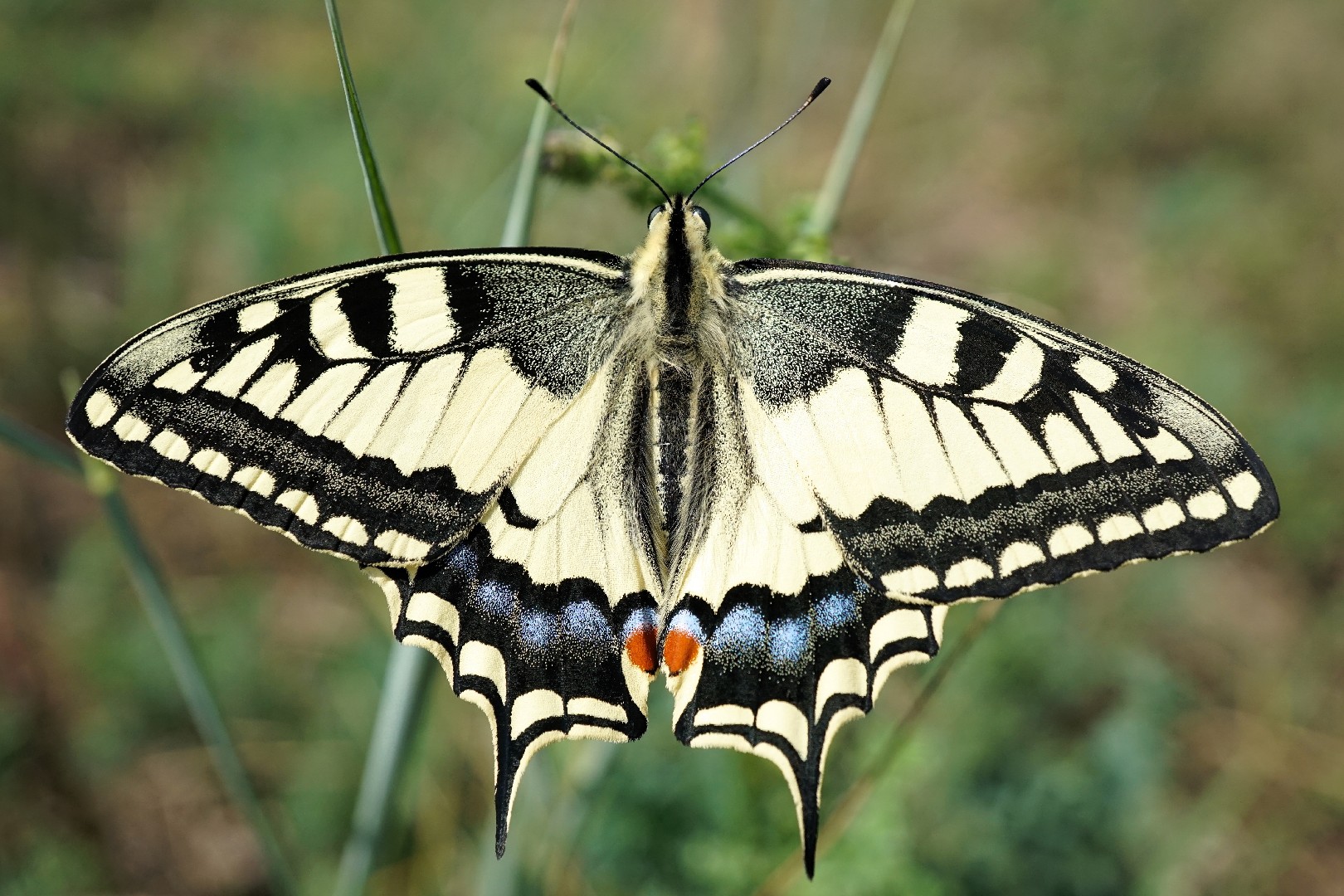
10. Old World swallowtail
The old World swallowtail (Papilio machaon) is commonly just called the "swallowtail," giving it the added title of "old world" to distinguish it and remind us that it comes from the "old world" (Asia, Africa, Europe). The upper side of them is a beautiful combination of pure white with black striping, the underside being a brownish version of the same thing. There is blue and two red dots on its back side.
More