



Top 14 Most Common Insects in Zanzibar
Insects, recognizable by their jointed legs and hard outer shell, thrive in diverse environments within Zanzibar. The unique geography of this region contributes to a fascinating array of insect diversity, ranging from pesky insects to beneficial pollinators. As vital players in the ecosystem, these top 14 most common insects in Zanzibar embody the significance of the intriguing interplay between living creatures and their habitats, shaping both the landscapes and our understanding of nature.

Most Common Insects

1. Citrus swallowtail
Papilio demodocus , also known under the English name Citrus Swallowtail ("Citrus Swallowtail"), is a butterfly from the family of the knight butterflies (Papilionidae).
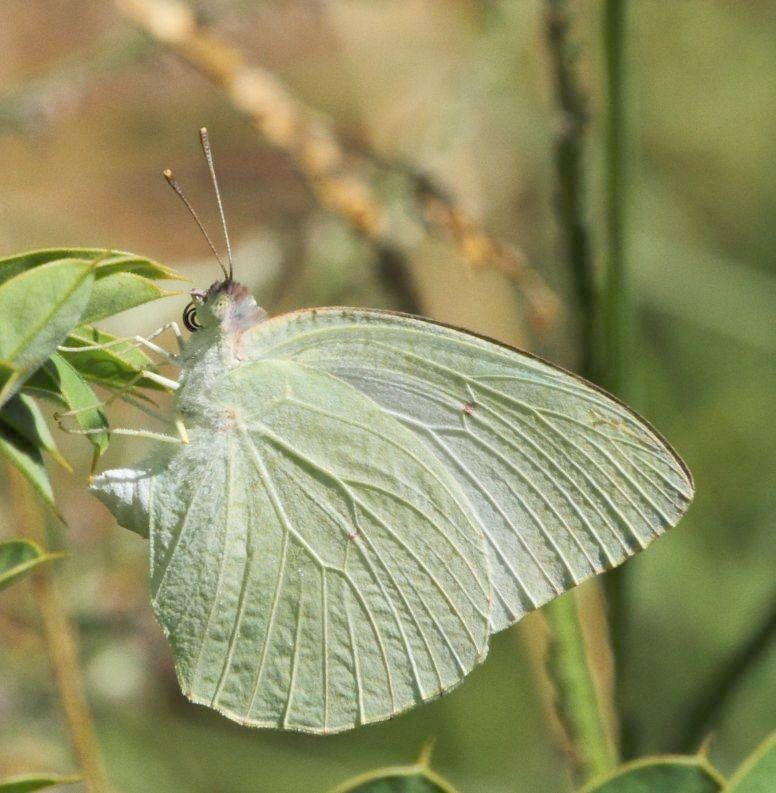
2. African emigrant
The wingspan is 5 - 6 cm for males and 6 - 7 cm for females. 

3. Blue pansy
The wingspan is 4 - 5 cm. The upper surface of the forewings is black with white markings towards the apex. The upper surface of the hindwings is black with white markings on the outer edge, and a characteristic large metallic-blue spot. This blue spot is smaller and more a dull purple in females. The underside of the forewings is brown with white markings corresponding to those on the upper surface. The under surface of the hindwings is almost uniform brown.
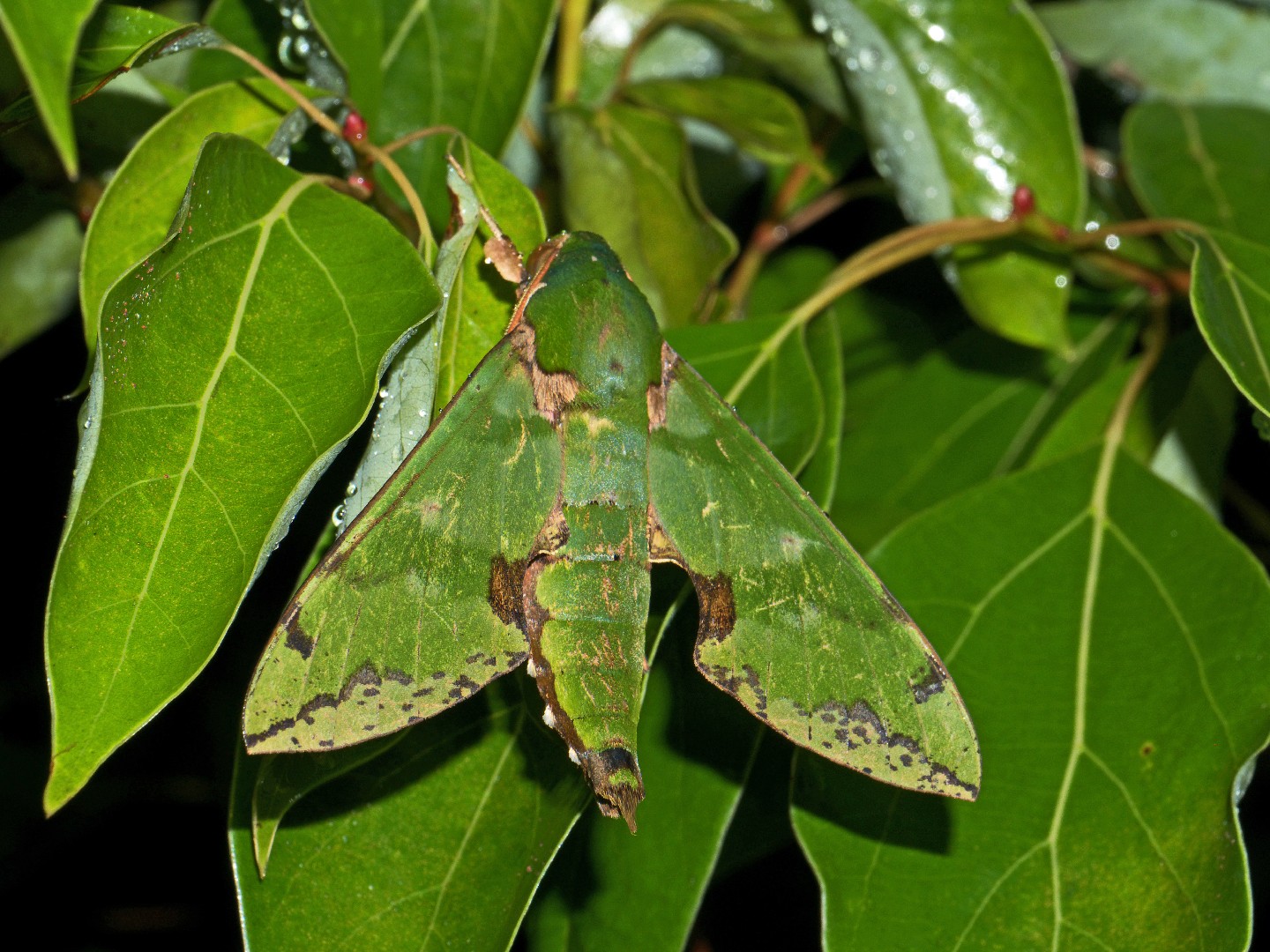
4. Verdant hawk
The length of the forewings is 4 - 5 cm and the wingspan is 10 - 12 cm. The body and forewings are bright deep green. The forewings have a black and white spot at the base, a dark brown spot near the tornus and one or two at the costa. The hindwings are orange yellow with an irregular brown margin turning greenish near the tornus. There is a black spot at the base and a large, elongated black spot from inner margin to vein five.
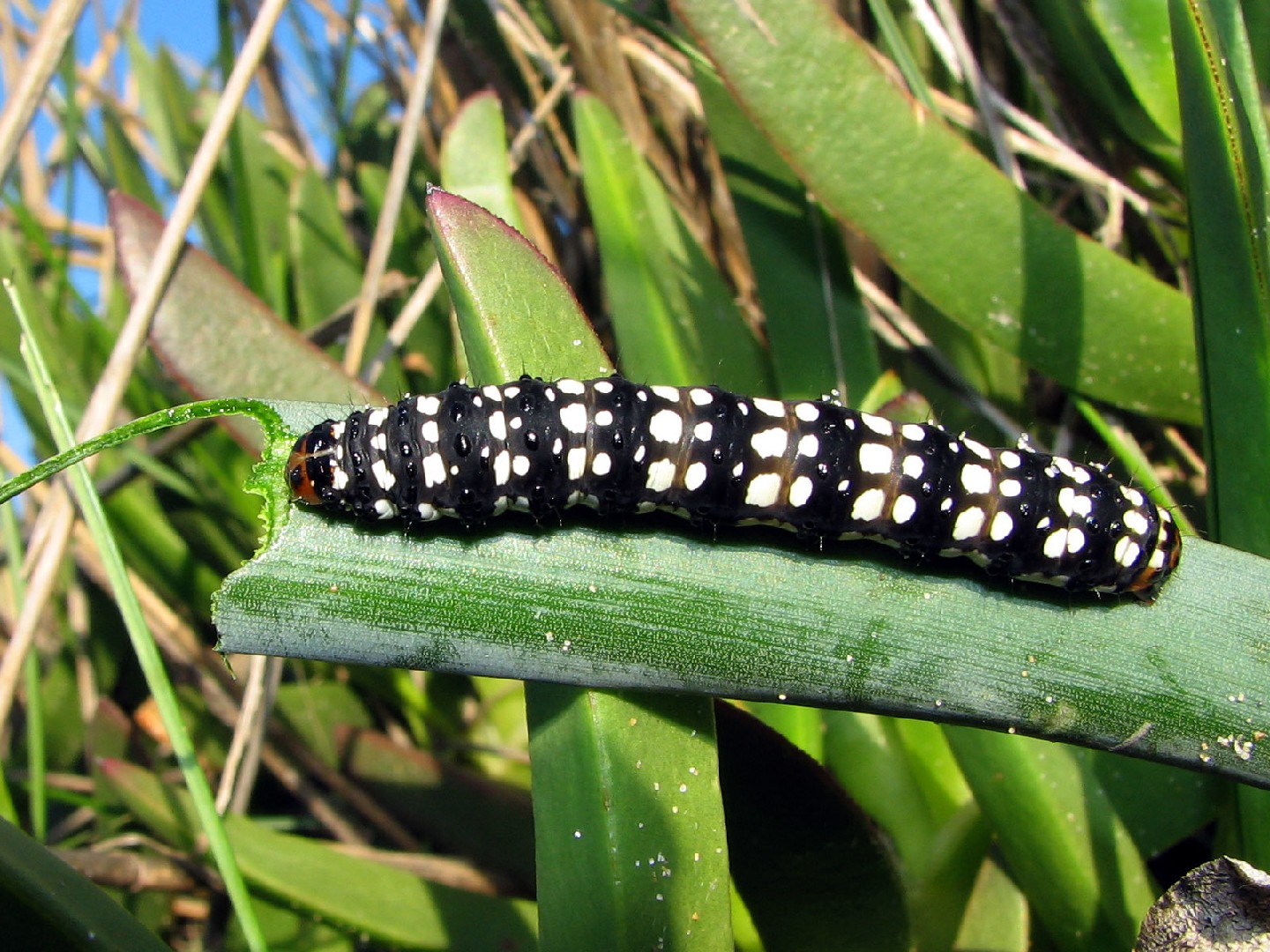
5. Lily borer
The wingspan of the moth is about 4 cm. Its head, thorax and forewings are very dark brown, but paler toward the wingtips. Sub-basal, median and postmedial indistinct waved lines are black. A curved submarginal ochreous line with ferrous colored lunuled found on each side of it. There is a marginal black lunule series. The hindwings are practically white. Tarsi bear black and white stripes.
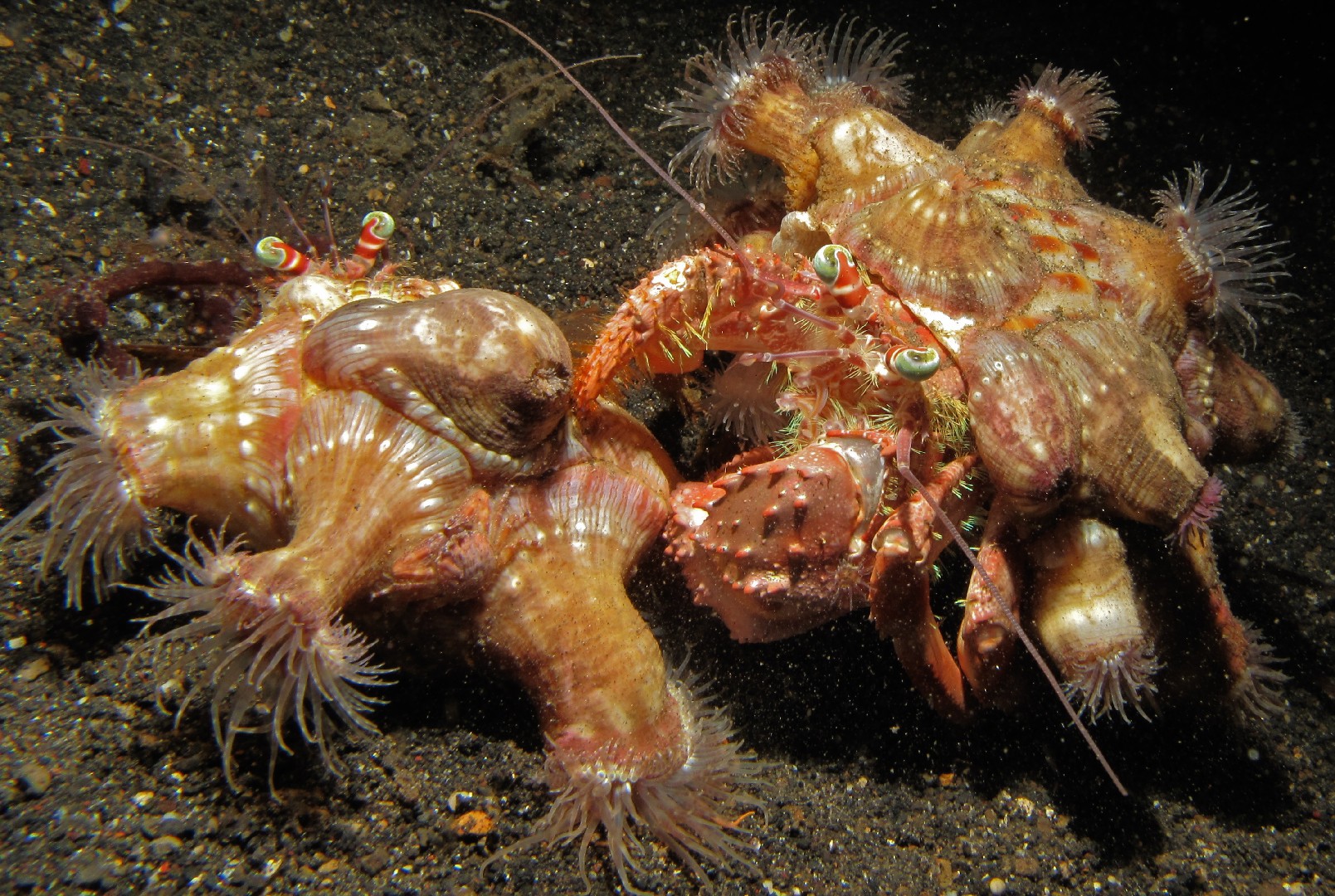
6. Anemone hermit crab
Dardanus pedunculatus usually attain a maximum size of 10 centimetres (4 in). The carapace is mottled in tan and cream, while the eyestalks are white with red bands. The sexes are similar. The left claw is much larger than the right claw.
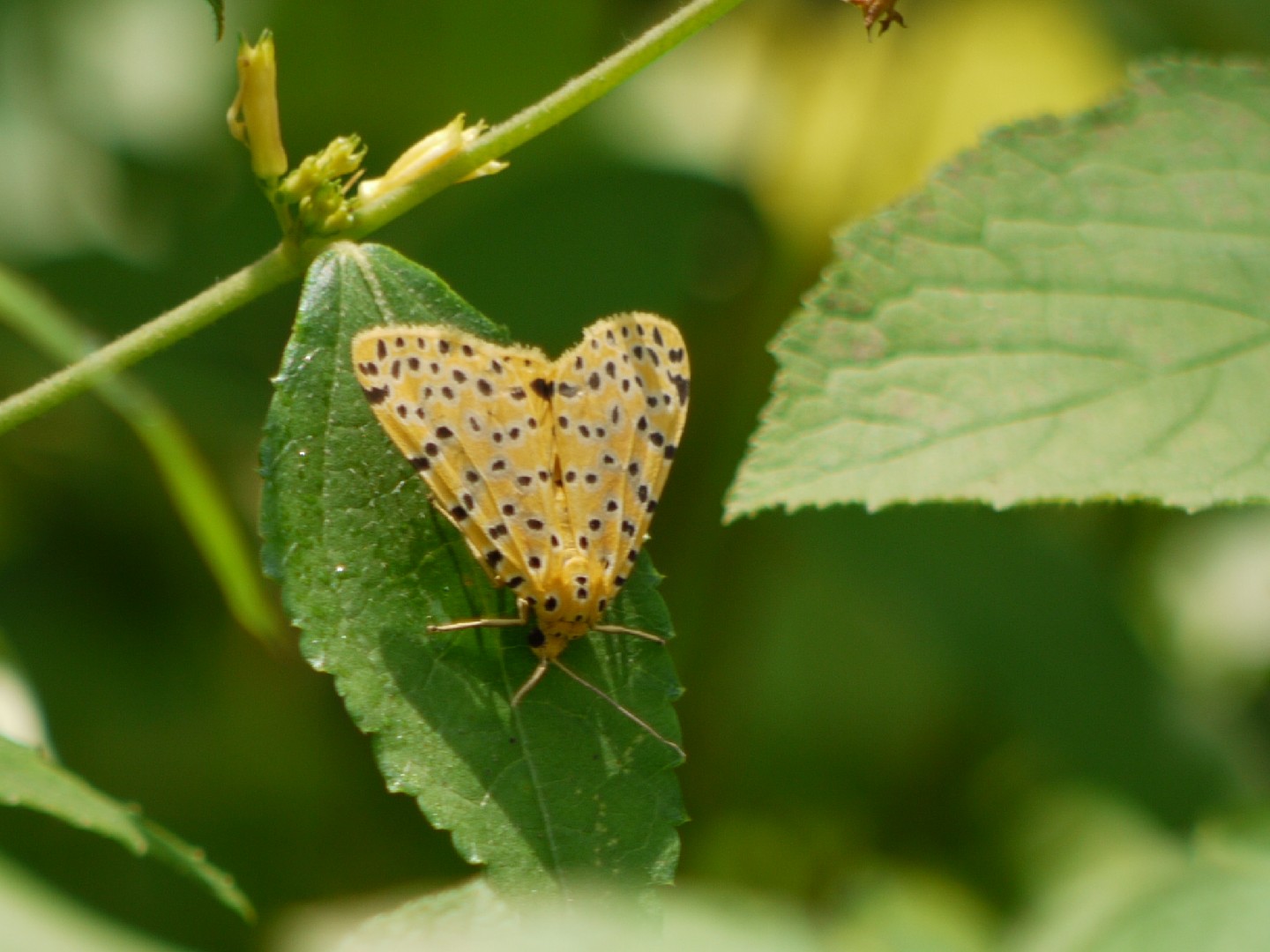
7. Crotalaria pod borer
The wingspan is about 40 mm. The species is extremely variable in wing pattern as well as ground colour. It differs from Mangina argus in the head, thorax and forewing being orange yellowish or whitish. The abdomen and hindwings are bright orange. Markings and spots are similar to its neighbor species. The head of the caterpillar is reddish brown when fully grown. Its body is black with white intersegmental rings that contain broken black transverse lines. Spiracles are in orange patches.
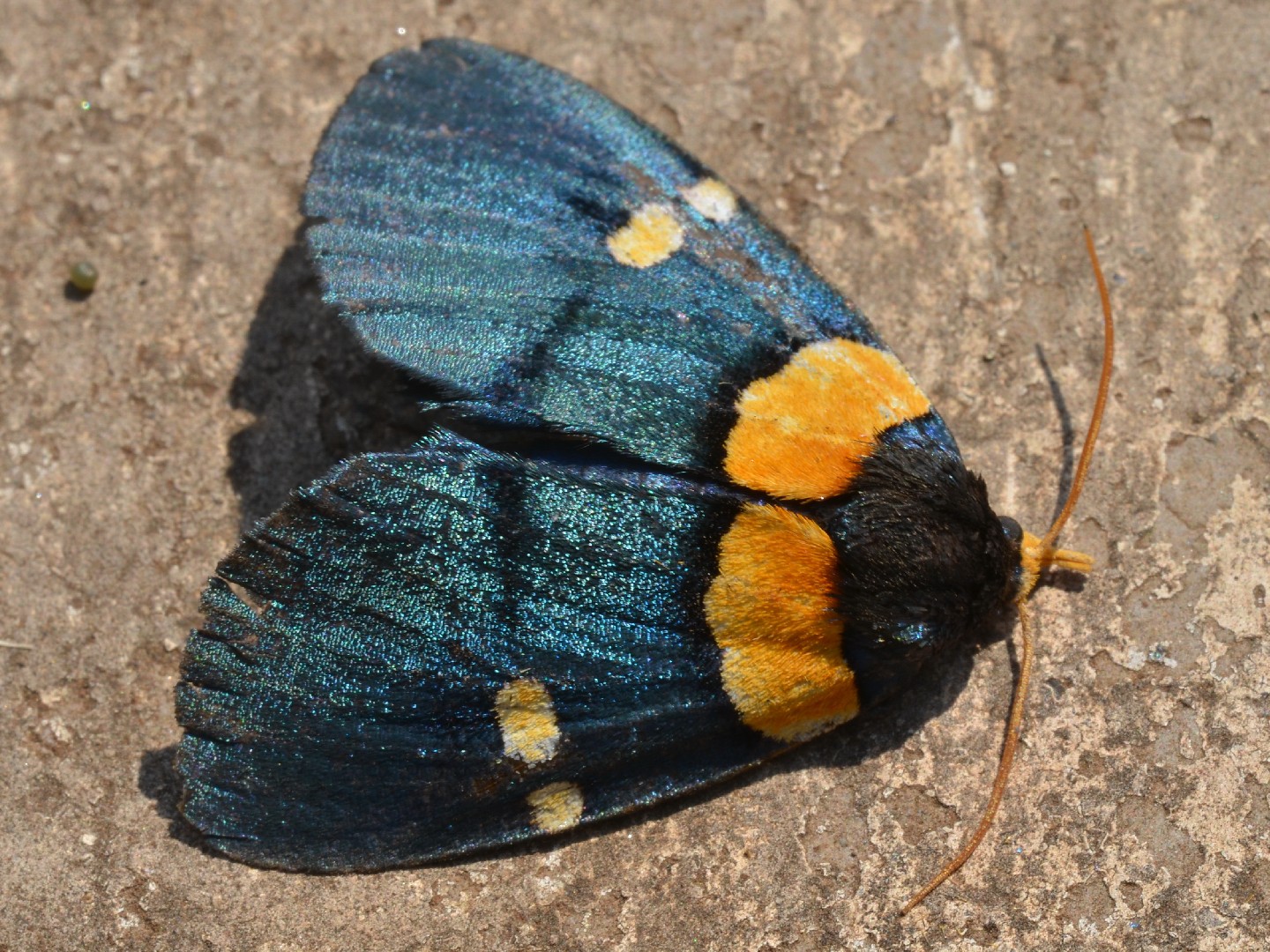
8. African peach moth
The wingspan is about 6 cm.
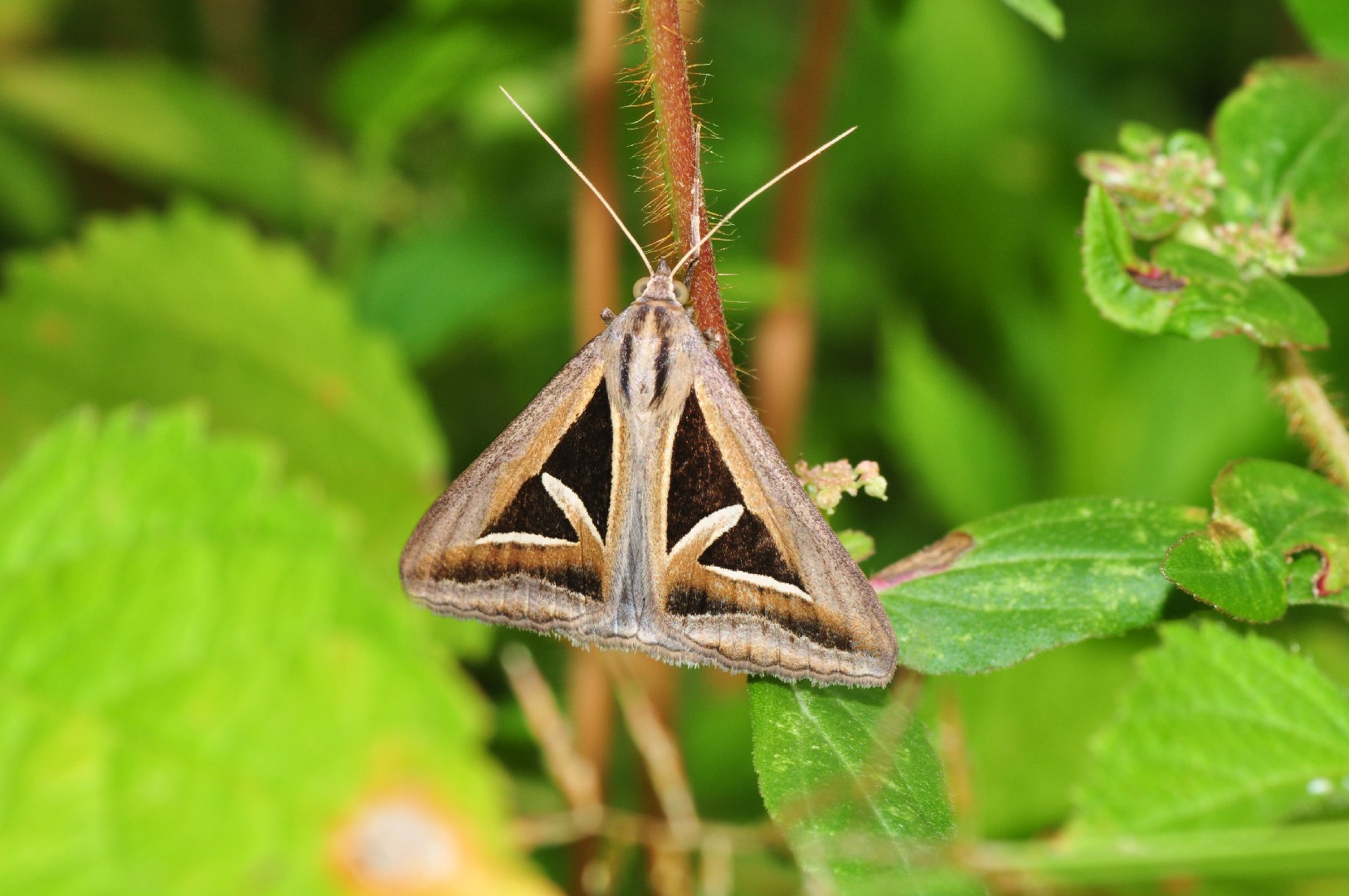
9. Triangles
The wingspan is about 3 - 4.5 cm. Antennae of male ciliated. Mid and hind tibia hairy. Body pale ochreous brown, slightly suffused with fuscous or dark grey brown. Forewings with a large black white-edged triangular patch easily distinguished below the cell from near base to towards outer angle. A similar smaller patch found beyond the cell on vein 5, with some pale fulvous behind it. A slightly sinuous submarginal pale line with patches of black suffusion found inside it and a series of black specks beyond it. A dark marginal line can be seen as well. Hindwings with indistinct medial line and fuscous suffused outer area. Larva has yellow upper half and brown ventral part. The yellow part is broken by longitudinal brown bands, which faints towards posterior and becomes intensive again in prolegs. Eggs olive green and speckled rusty red. First few instars are green with three lateral purple brown lines. Late instars are yellowish. Pupa within a slight cocoon of white silk, which spun amongst leaves.
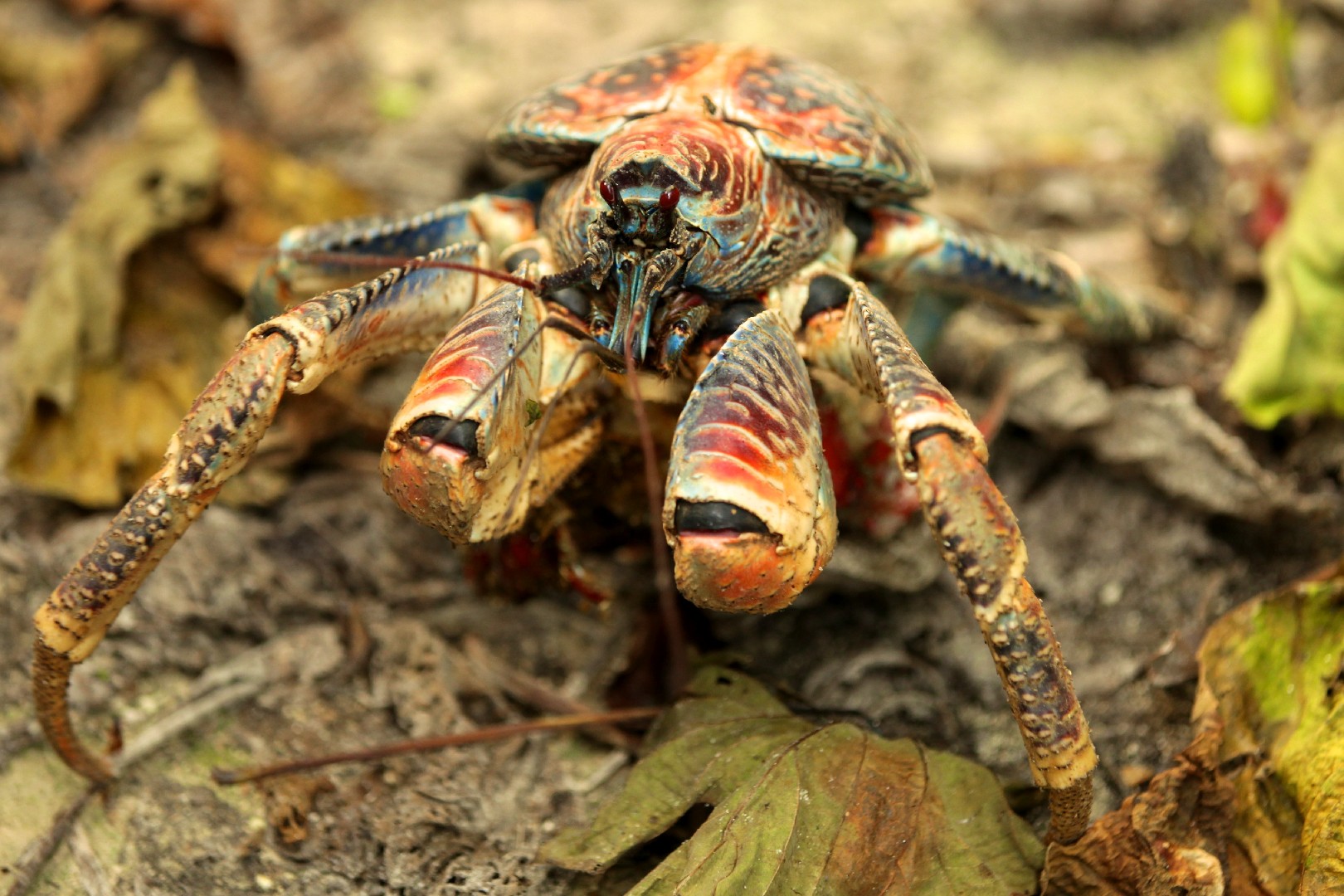
10. Coconut crab
Coconut crab (Birgus latro) is a terrestrial hermit crab found on islands of the Indian ocean, Impressively, it is the largest land arthropod in the world. Coconut crab is an opportunistic feeder, consuming nuts, fruits, tree pith, carrion, or any food source left on the ground. Despite being popularly associated with coconuts palms, coconuts do not make a significant part of its diet.
More