




Top 20 Most Common Insects in Chon Buri
Insects, distinctive for their segmented bodies and jointed legs, thrive across the varied landscapes of Chon Buri. Geological diversity in Chon Buri influences insect populations, creating a rich and nuanced ecosystem. These tiny creatures play pivotal roles as both invaluable pollinators and pesky intruders, a testament to the intricate bond between a region's environment and its insects. Stay tuned as we explore the top 20 most common insects in Chon Buri.

Most Common Insects

1. Weaver ant
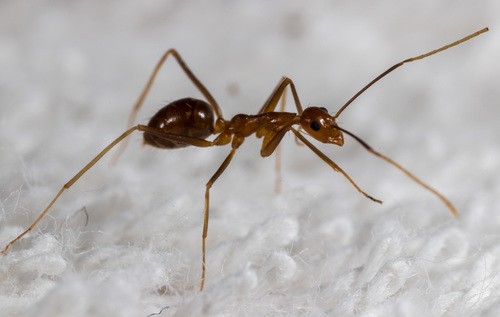
The weaver ant can be found in silk-woven nests in the foliage of Southeast Asia and Oceania. These ants have a painful bite and prey on other small insects. Larvae have many uses for local regions, including being a popular fishing bait and a good choice of bird food.
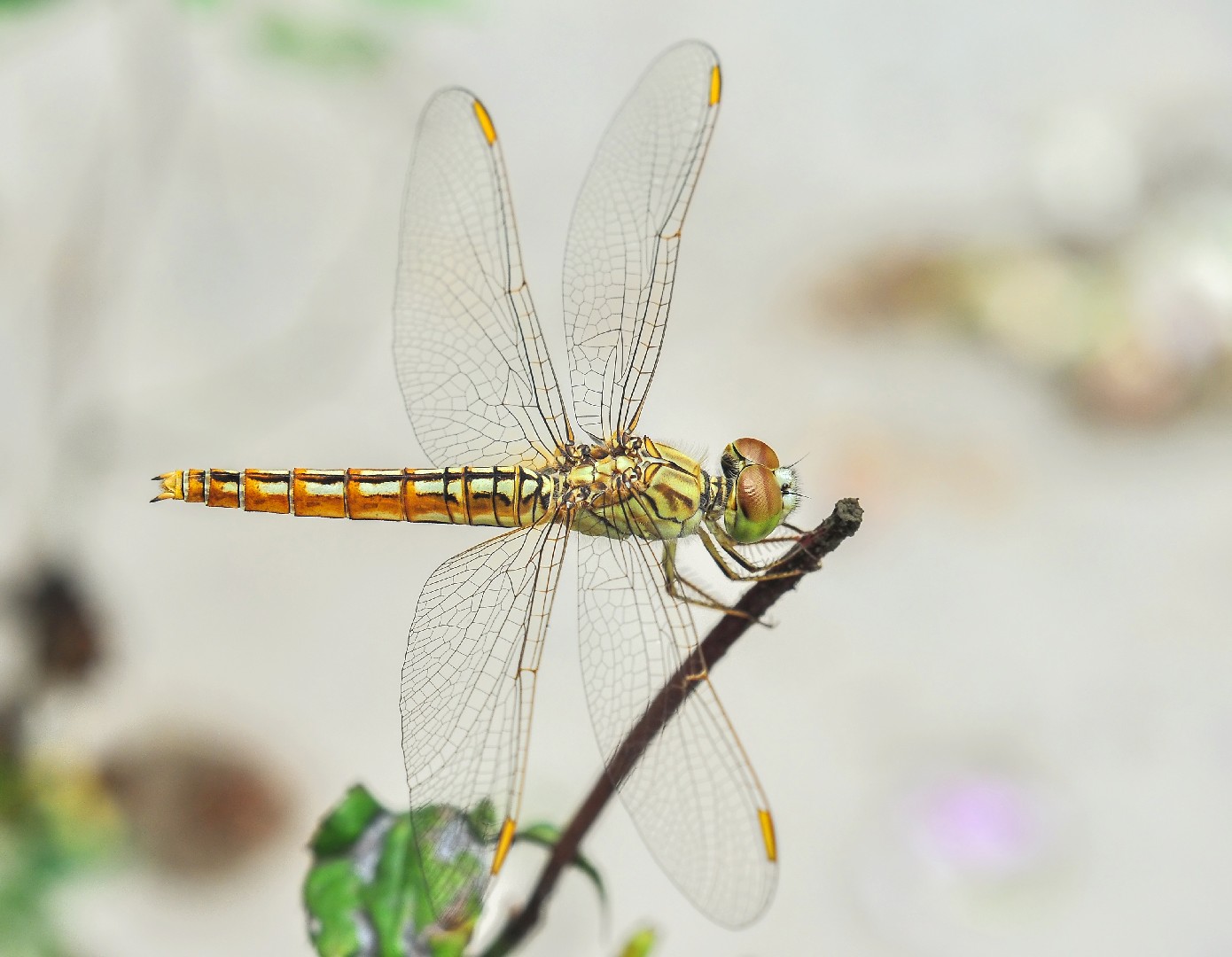
2. Ditch jewel
The species is on the IUCN Red List as not endangered, year of assessment 2010.

3. Scarlet skimmer
The species is on the IUCN Red List as not endangered, year of assessment 2009.
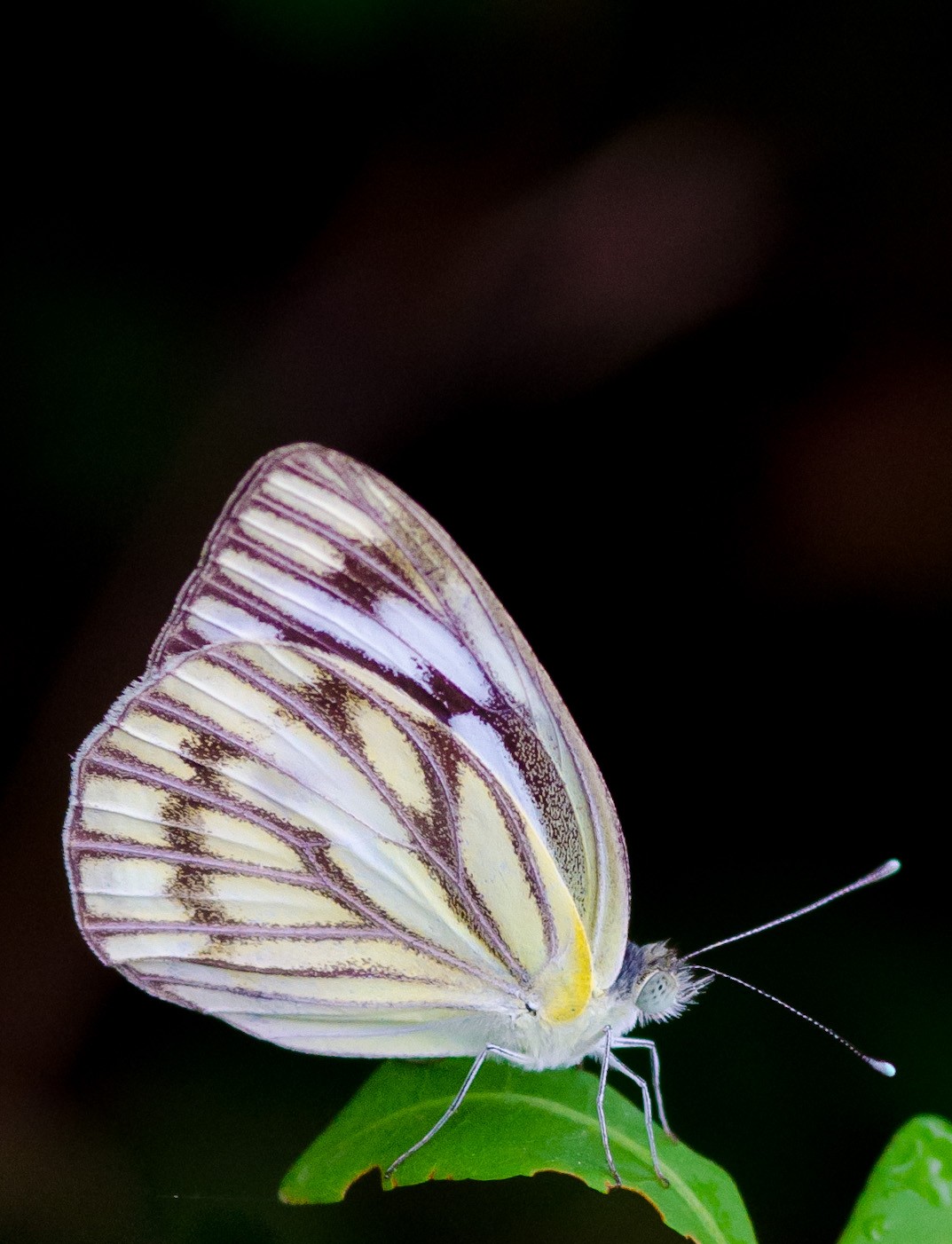
4. Striped albatross
The striped albatross (Appias libythea) is a combination of whites and greys and yellows that allow this butterfly to resemble many different types of flowers. They are part of a family that exhibits mud-puddling, where they stomp about wet puddles in order to get salt.

5. Blue moon butterfly
Hypolimnas bolina, the great eggfly, common eggfly or in New Zealand the blue moon butterfly is a species of nymphalid butterfly found from Madagascar to Asia and Australia. 
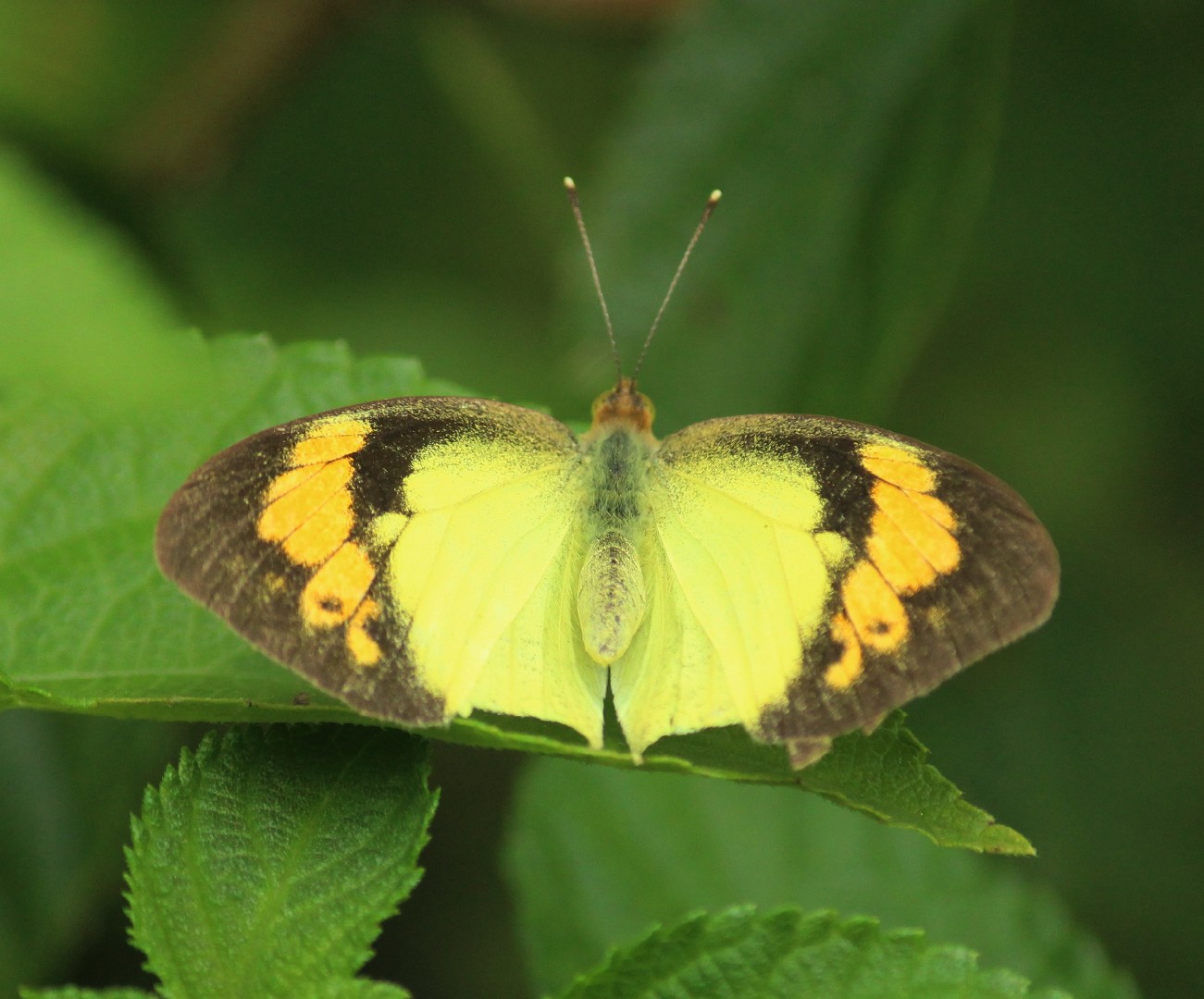
6. Yellow orange tip
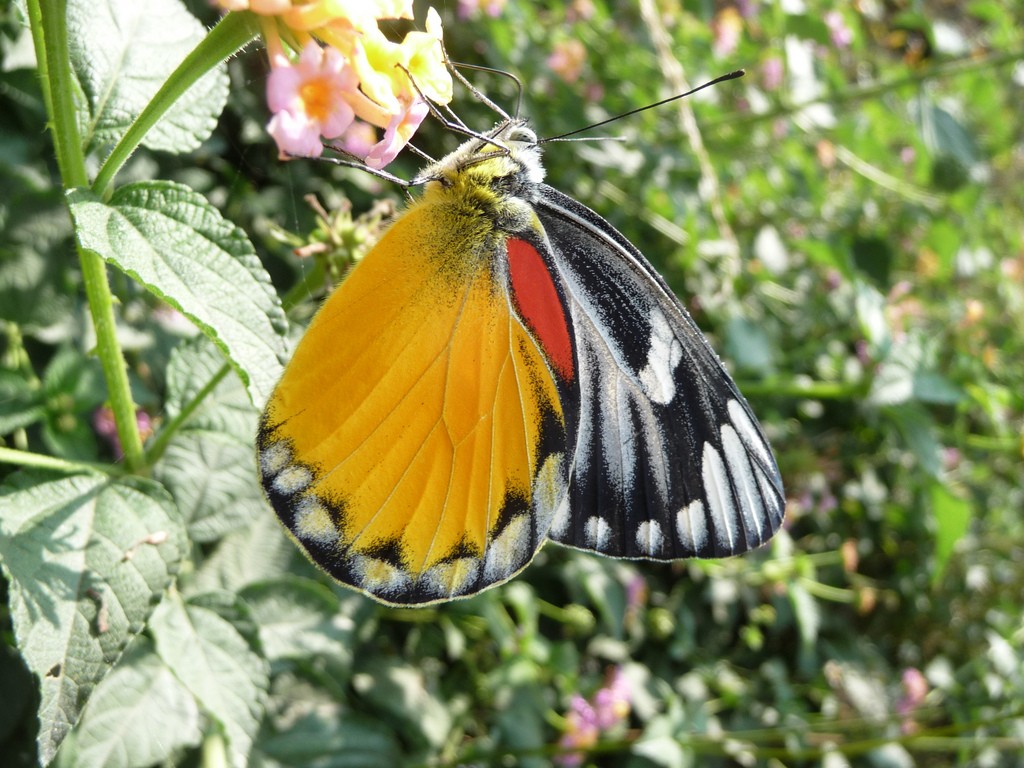
The species wingspan is between 50 and 55 mm. Dry-season brood: Male upperside: deep sulphur-yellow. Forewing: base and basal half of costa thickly irrorated with black scales; apical half of the wing black, with an enclosed, large, irregularly triangular, orange-coloured patch, the apex of which is more or less broadly rounded and blunt; the orange colour extends into the apex of the cell but is interrupted there by a black discocellular spot that spreads diffusely inwards and joins the black oblique bar which forms the base of the orange patch; veins that traverse this latter, black. Hindwing: uniform with a little black scaling at extreme base; termen with a dusky-black somewhat narrow border (sometimes entirely absent) which decreases in width posteriorly. Underside: a darker yellow, sparsely irrorated (sprinkled) with fusco-ferruginous short strigae and minute spots. Forewing: base and posterior area broadly, with a whitish pale virescent (greenish) tint; the strigae and minute spots most numerous towards the apex and along the termen; interspaces 4, 5, 6 and 8 with a curved sub-apical series of small, rounded, dull ferruginous spots and a similar spot on the discocellulars. Hindwing also with a ferruginous spot on the discocellulars, followed by a postdiscal series of similar spots in interspaces 3 to 8, all or most of them centred with white; the spots in interspaces 5, 6 and 8 the largest, those in 5 and 6 often coalescent. Antennae and thorax anteriorly dull ferruginous, thorax posteriorly and abdomen above fuscous black; head, thorax and abdomen beneath yellow. Female upperside: white faintly tinged with yellow. Forewing: apical half black, with an enclosed, irregular, broad, oblique patch of the ground colour that extends into the upper apex of the cell, on the inner side of this the black is reduced to a short oblique bar broadened at the lower apex of the cell, from whence it is continued as a somewhat slender diffuse oblique streak to the tornus, where it broadens again abruptly and meets the black on the termen; the outer margin of the oblique white patch is irregularly crenulate, sometimes trisinuate; the black colour on the apex often forms a right angle on vein 4; on the white patch posteriorly there is a black spot in interspace 2 and another in interspace 3. Hindwing: uniform, a few subobsolete slender, fuscous, transverse strigae posteriorly; the terminal margin sometimes with (more often without) a narrow dusky black edging, broadened anteriorly at the apices of the veins. Underside: similar to that in the male, with similar markings, the ground colour a dark dull ochraceous, the fusco-ferruginous strigae more numerous. Antennae, head, thorax and abdomen as in the male. Wet-season brood: Upperside in both male and female differs in the broader, more pronounced, black terminal edging to the hindwing, which is often remarkably broad, and in the female by the ground colour which is pale yellow. Underside: the fusco-ferruginous strigae and spots often subobsolete, occasionally entirely absent in the male.
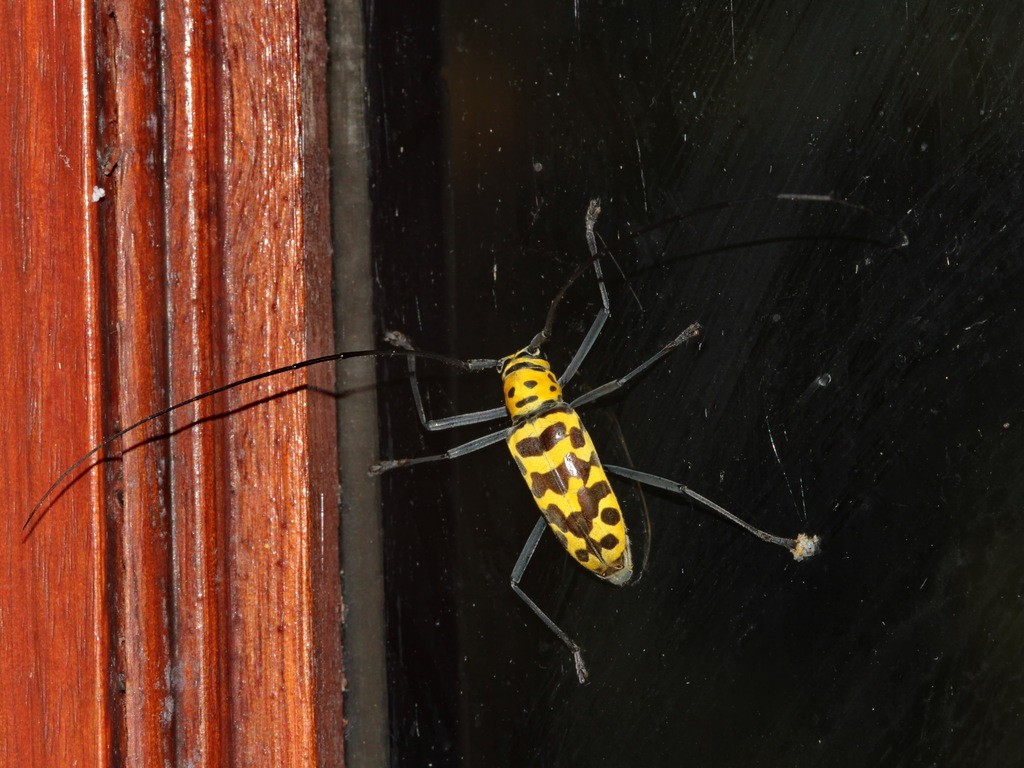
7. Gerania boscii
Gerania boscii is an Asian species of flat-faced longhorn beetle in the subfamily Lamiinae. It is the only species in the genus Gerania (Audinet-Serville, 1835).

8. Crimson marsh glider
The male has a reddish-brown face, with eyes that are crimson above and brown on the sides. The thorax is red with a fine, purple pruinescence. The abdomen, the base of which is swollen, is crimson with a violet tinge. The wings are transparent with crimson venation and the base has a broad amber patch. The wing spots are a dark reddish-brown and the legs are black. The female has an olivaceous or bright reddish-brown face with eyes that are purplish-brown above and grey below. The thorax is olivaceous with brown median and black lateral stripes. The abdomen is reddish-brown with median and lateral black markings. The black markings are confluent at the end of each segment and enclose a reddish-brown spot. The wings are transparent with brown tips. The venation is bright yellow to brown and basal amber markings are pale. The wing spots are a dark brown and the lags are dark grey with narrow yellow stripes.
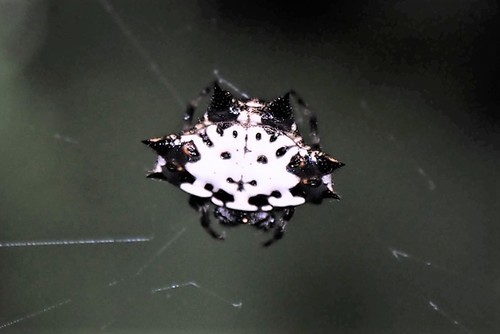
9. Black-and-white spiny spider
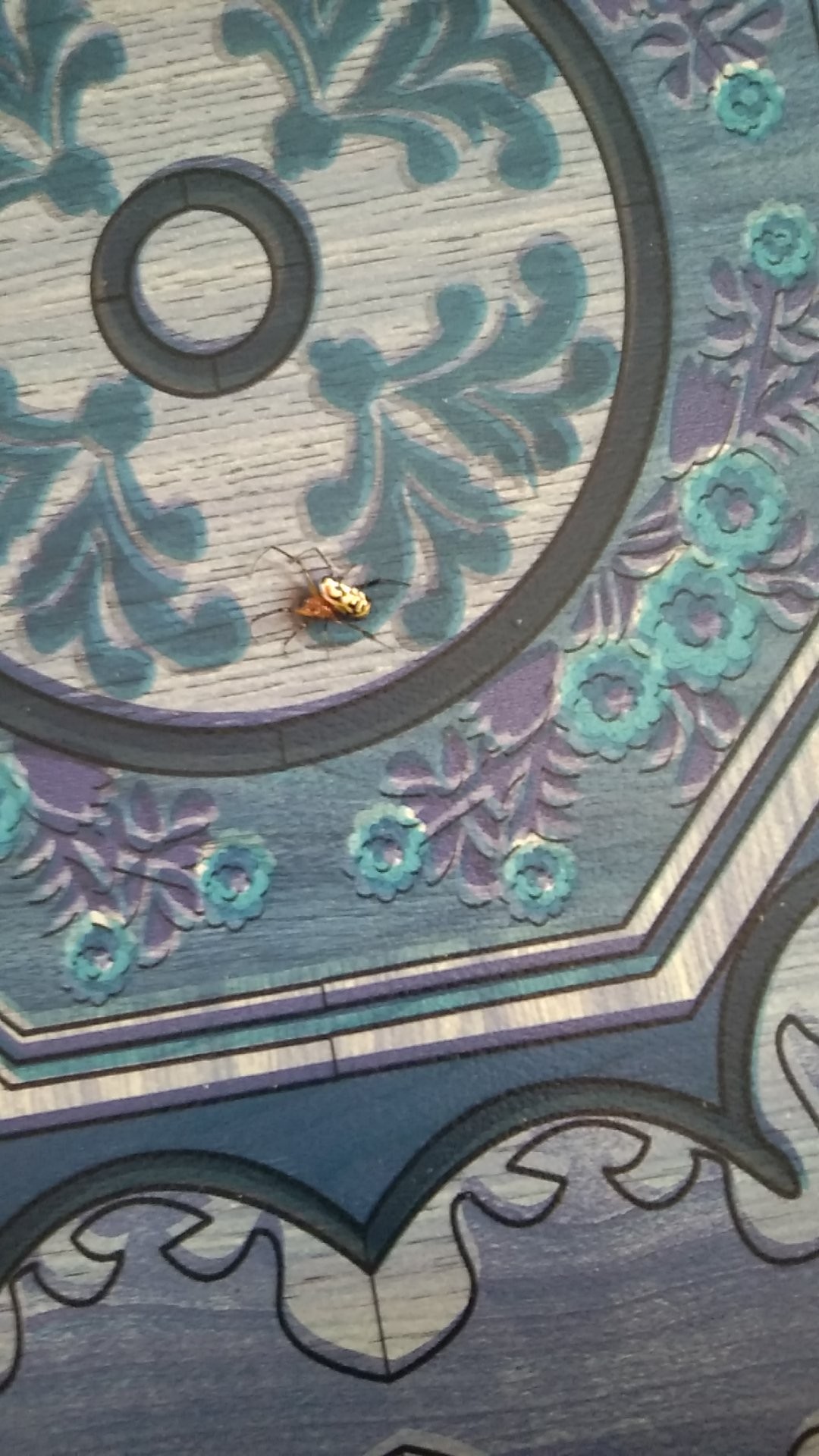
Female black-and-white spiny spider are 6 - 9 mm wide and possess a hard, shiny abdomen armed with six black conical spines. The upper surface of the abdomen is white to yellowish with variable black or dark brown markings and sigilla. Males are much smaller at 3 - 4 mm and in place of spines have small bumps on their abdomens.
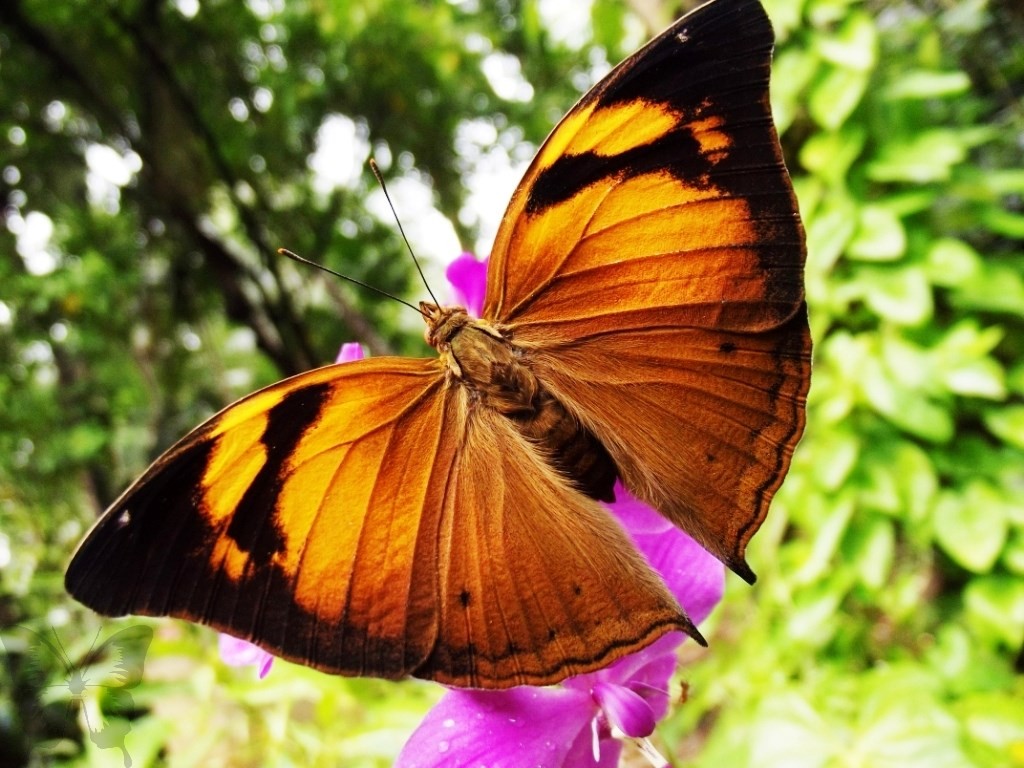
10. Autumn leaf
The larvae are black, with two rows of dorsal white spots. Head with a pair of branched spines; rest of the segments with a dorsal and a lateral row of blue branched spines on each side. The pupae are yellowish with numerous black spots; constricted in the middle; head produced into two points. Male's and female's underside yellowish brown, paling anteriorly to rich golden yellow on the forewing, shading anteriorly into dusky brown on the hindwing. Forewing: the apical half black, following a line from vein 12 opposite the discocellulars, passing through apex of cell, obliquely across middle of interspace 3 and curving down to tornus; a black spot near apex of cell coalescing with the inner margin of 1he black colour; a short, very oblique, broad golden-yellow band, broader in the female than in the male, from middle of costal margin to interspace 5; a spot beyond in line with it in interspace 4; two, sometimes three, minute, preapical white specks; the cilia fulvous (tawny), touched with white, anteriorly. Hindwing uniform; the costal margin broadly as noted above, a subterminal narrow band and narrower terminal line posteriorly, dusky black; a postdiscal black spot in interspaces 2 and 5 respectively; the cilia fulvous. The ground colour varies from reddish to dark greenish brown with irrorations (speckles) of greyish and black scales; apex of the forewing and the terminal margin posteriorly of the hindwing more or less lilacine; forewings and hindwings crossed by a dark narrow discal fascia, generally bordered on the inner side by a greyish line; this fascia bent inwards at right angles above vein 6 of the forewing and in most specimens, bordered internally by a diffuse pale patch and externally by an oblique whitish mark, beyond which is a subcostal white spot, followed by a transverse sinuous postdiscal series of obscure ocelli crossing both wings, each ocellus centred by a minute dot, white on the fore, black on the hindwing. In the male there are generally, but not invariably, a number of whitish spots on the basal areas of both wings. Antennae blackish brown, ochraceous at apex; head, thorax and abdomen dark fulvous brown; beneath, the palpi white, the thorax and abdomen pale brown. Wingspan is about 8 - 9 cm.

More







