




Top 15 Most Common Insects in Hua Hin
Ever wondered about the vast array of insects in Hua Hin? This insect-rich region boasts an impressive collection of unique insects, their diversity directly influenced by varying geographical features. Insects, pivotal to our ecosystem, play different roles from pests to pollinators. Dive into our fascinating roundup of the 15 most common insects; a testament to Hua Hin's diverse environmental tapestry nurturing a rich insect fauna.

Most Common Insects

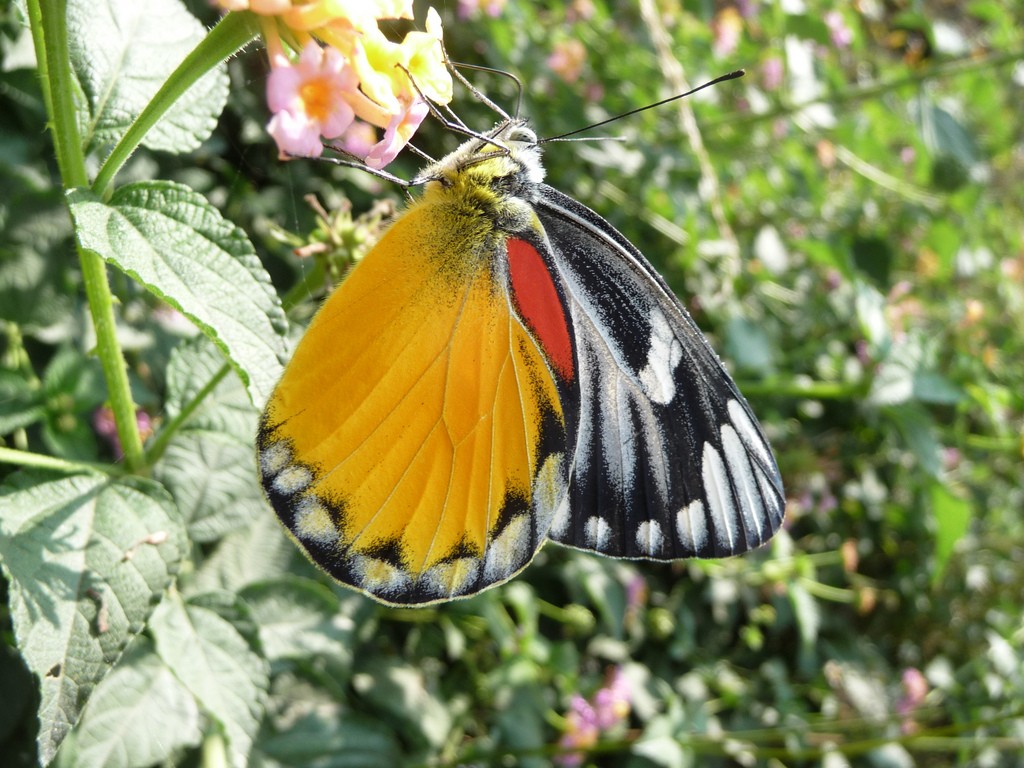
1. Spotted zebra butterfly
Male upperside black with the following white streaks and spots. Forewing cell with a small spot at base followed by three obliquely transverse streaks in middle, none extended to either the subcostal or median veins, and two spots near apex; single slender narrow streaks in interspaces la and 2, and two streaks in interspace 1; above these a spot at base followed by a streak in each of the interspaces 3, 4, 6 and 8, an outer spot only in interspace 5, and a basal spot in interspace 7; finally, a complete series of small subterminal spots. Hindwing: a streak in cell with a spot above its outer apex; a streak followed by a spot in each of the interspaces 1, 6 and 7; three elongate spots in interspaces 2 and 3 and two in interspaces 4 and 5; finally, a series of four slender subterminal lunules in interspaces 2 to 5. Underside similar, with similar but slightly broader markings. Female similar, ground colour duller, more fuliginous black; markings similar, on the forewing slightly broader, on the hindwing slightly narrower, than in the male. 
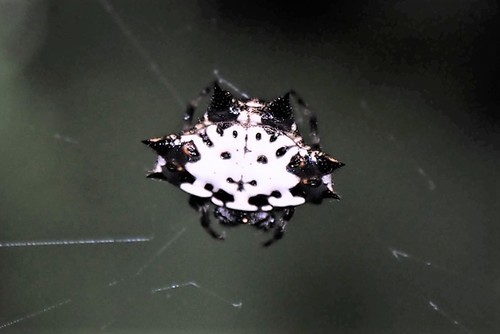
2. Black-and-white spiny spider
Female black-and-white spiny spider are 6 - 9 mm wide and possess a hard, shiny abdomen armed with six black conical spines. The upper surface of the abdomen is white to yellowish with variable black or dark brown markings and sigilla. Males are much smaller at 3 - 4 mm and in place of spines have small bumps on their abdomens.
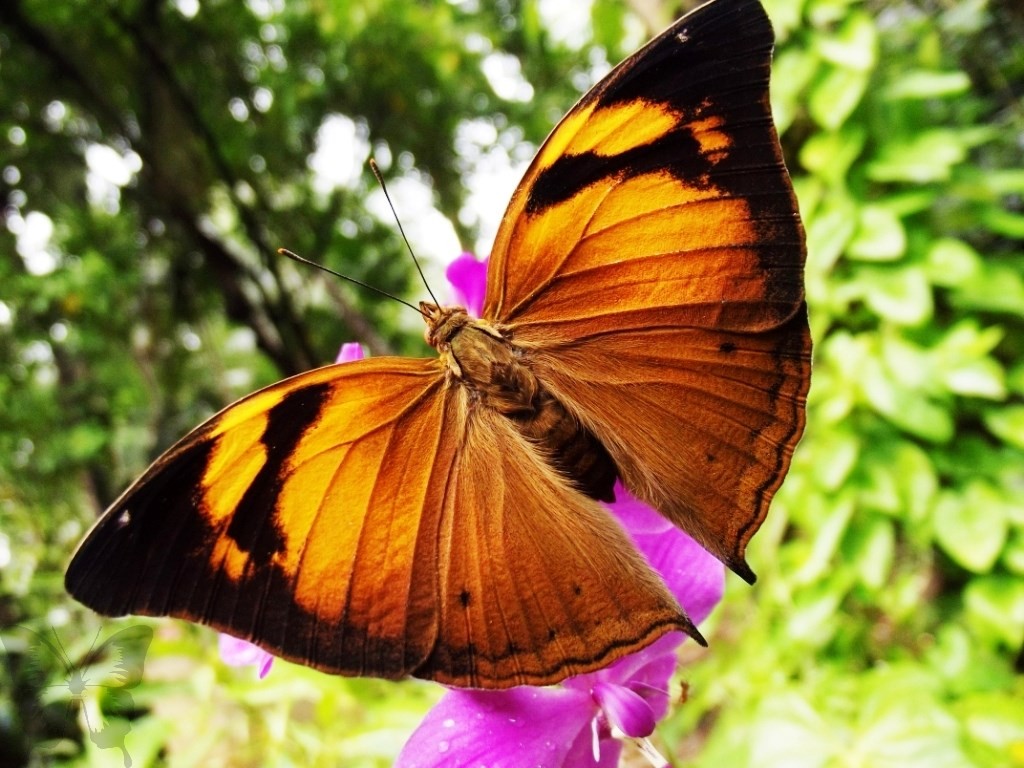
3. Autumn leaf
The larvae are black, with two rows of dorsal white spots. Head with a pair of branched spines; rest of the segments with a dorsal and a lateral row of blue branched spines on each side. The pupae are yellowish with numerous black spots; constricted in the middle; head produced into two points. Male's and female's underside yellowish brown, paling anteriorly to rich golden yellow on the forewing, shading anteriorly into dusky brown on the hindwing. Forewing: the apical half black, following a line from vein 12 opposite the discocellulars, passing through apex of cell, obliquely across middle of interspace 3 and curving down to tornus; a black spot near apex of cell coalescing with the inner margin of 1he black colour; a short, very oblique, broad golden-yellow band, broader in the female than in the male, from middle of costal margin to interspace 5; a spot beyond in line with it in interspace 4; two, sometimes three, minute, preapical white specks; the cilia fulvous (tawny), touched with white, anteriorly. Hindwing uniform; the costal margin broadly as noted above, a subterminal narrow band and narrower terminal line posteriorly, dusky black; a postdiscal black spot in interspaces 2 and 5 respectively; the cilia fulvous. The ground colour varies from reddish to dark greenish brown with irrorations (speckles) of greyish and black scales; apex of the forewing and the terminal margin posteriorly of the hindwing more or less lilacine; forewings and hindwings crossed by a dark narrow discal fascia, generally bordered on the inner side by a greyish line; this fascia bent inwards at right angles above vein 6 of the forewing and in most specimens, bordered internally by a diffuse pale patch and externally by an oblique whitish mark, beyond which is a subcostal white spot, followed by a transverse sinuous postdiscal series of obscure ocelli crossing both wings, each ocellus centred by a minute dot, white on the fore, black on the hindwing. In the male there are generally, but not invariably, a number of whitish spots on the basal areas of both wings. Antennae blackish brown, ochraceous at apex; head, thorax and abdomen dark fulvous brown; beneath, the palpi white, the thorax and abdomen pale brown. Wingspan is about 8 - 9 cm.
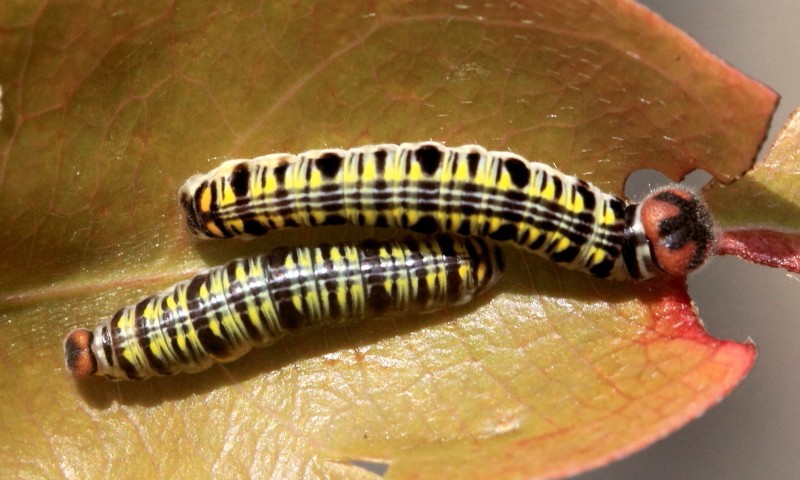
4. Orangetail awlet
Both sexes: The butterfly has a wingspan of 45 to 50 mm. Above, both sexes are an unblemished dark brown. The hindwings have an orange fringe. The abdomen is orange towards the rear. Below, the wings have white patches; the forewings having a large white central patch, and the hindwings having a broad pure white discal band. The male has no brands.
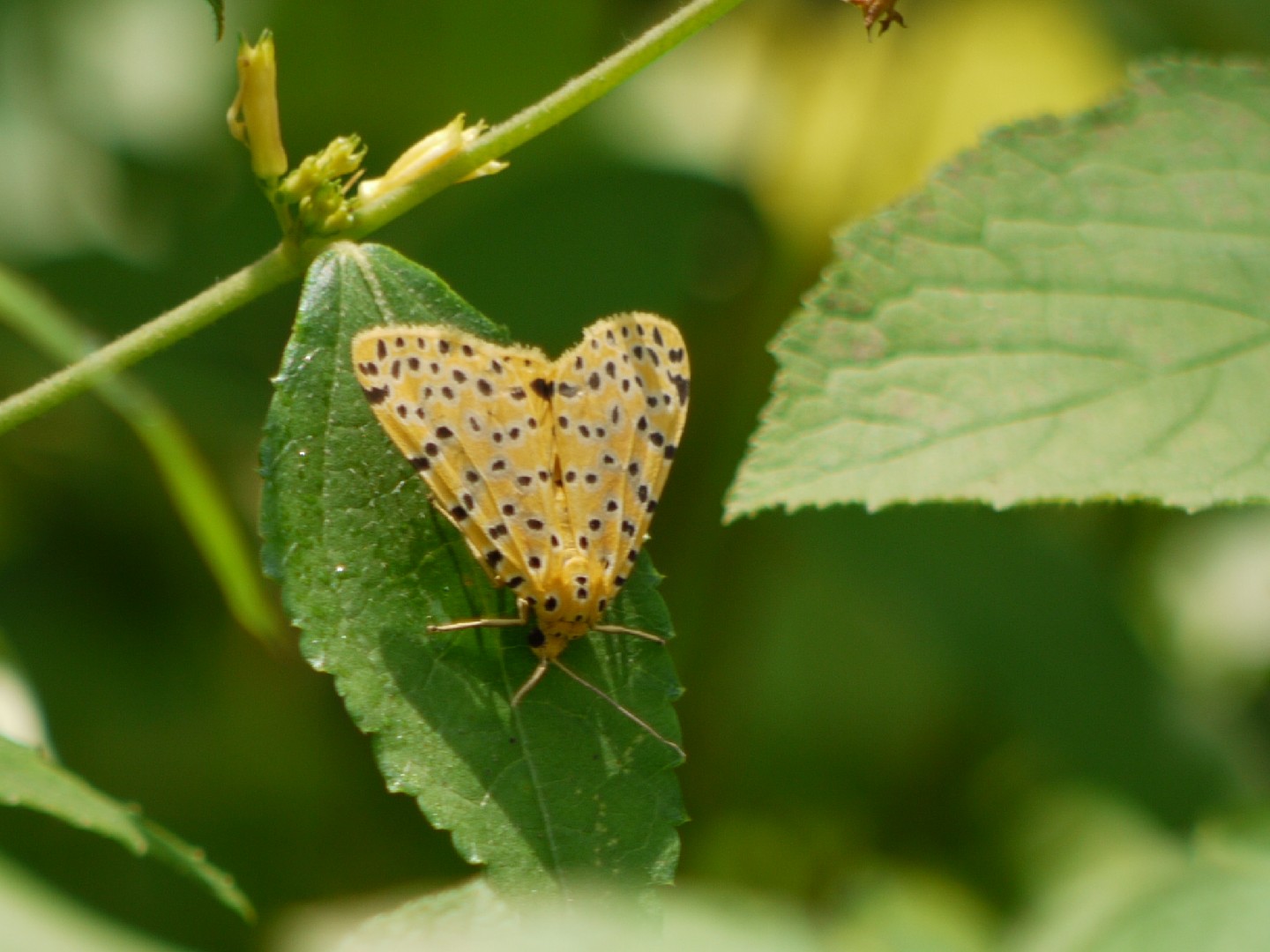
5. Crotalaria pod borer
The wingspan is about 40 mm. The species is extremely variable in wing pattern as well as ground colour. It differs from Mangina argus in the head, thorax and forewing being orange yellowish or whitish. The abdomen and hindwings are bright orange. Markings and spots are similar to its neighbor species. The head of the caterpillar is reddish brown when fully grown. Its body is black with white intersegmental rings that contain broken black transverse lines. Spiracles are in orange patches.
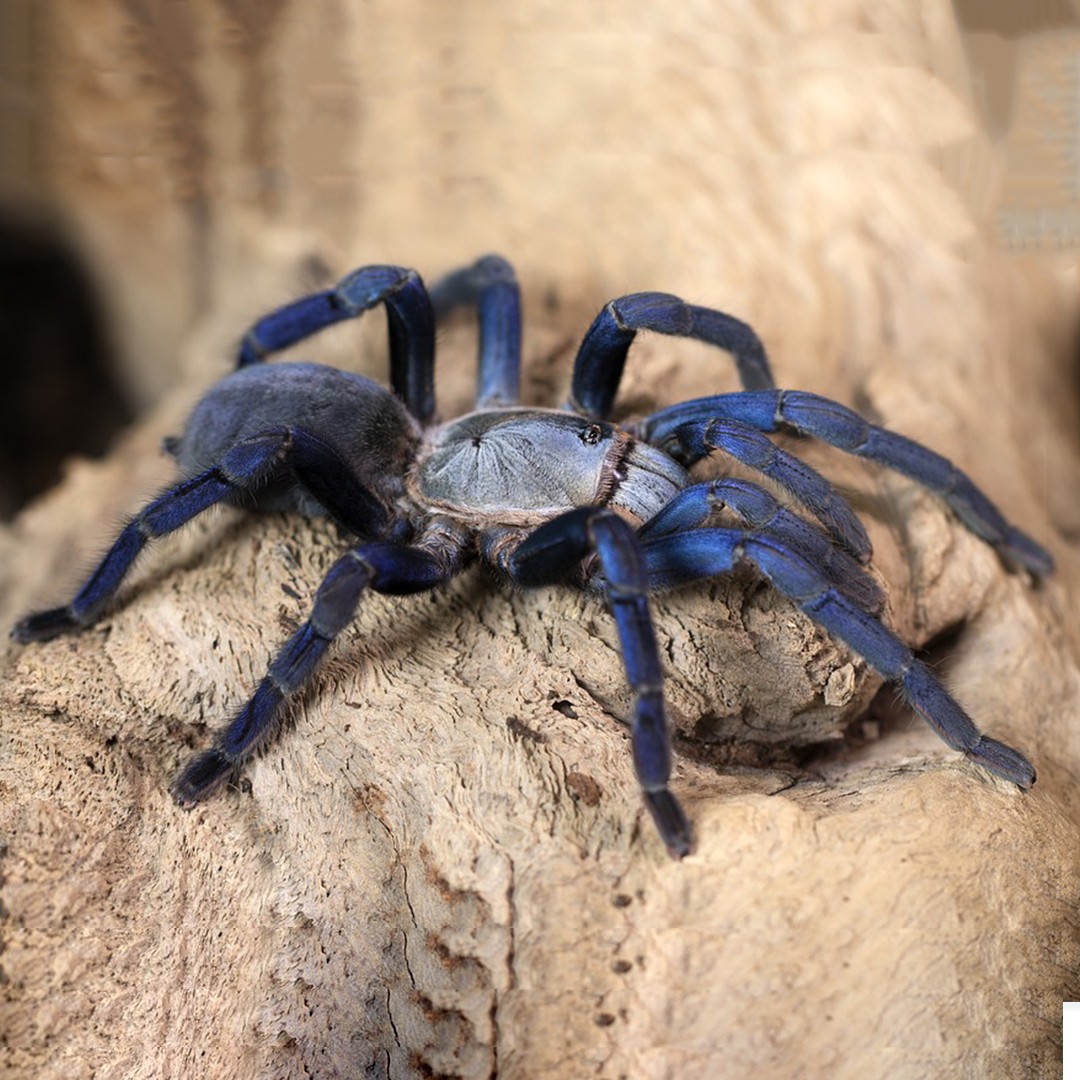
6. Cobalt blue tarantula
The cobalt blue tarantula is a medium-sized tarantula with a leg span around 13 cm (5 in). It is noted for its iridescent blue legs and light gray prosoma and opisthosoma, the latter of which may contain darker gray chevrons. Males and females look the same until the ultimate (final) molt of the males. At this point, the male exhibits sexual dimorphism in the form of a light tan or bronze coloration and legginess. Additionally, males gain a palpal bulb on the pedipalps and tibial apophyses (mating hooks). The female eventually becomes larger than the male and lives years longer. The cobalt blue tarantula is a fossorial species and spends nearly all of its time in deep burrows of its own construction.
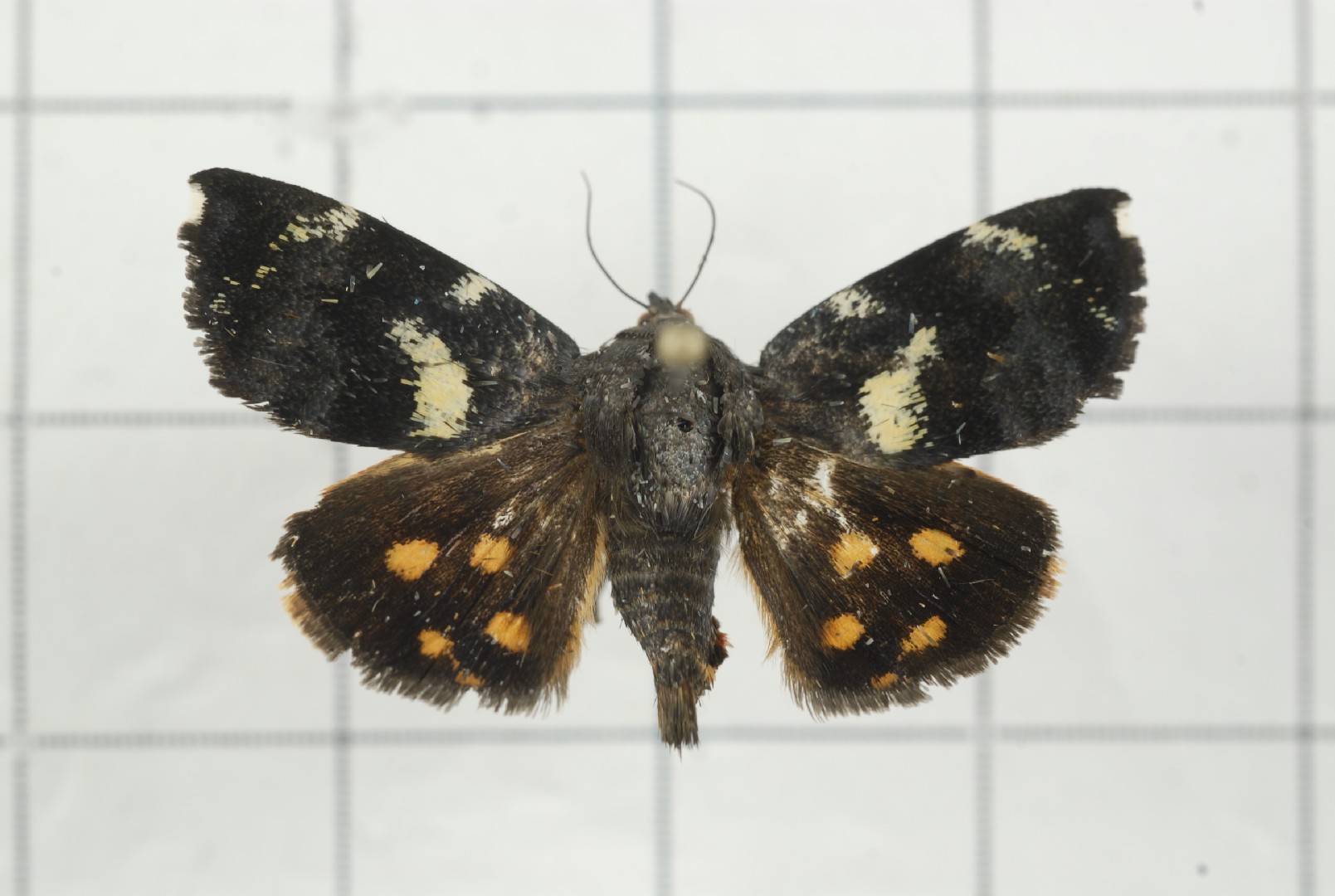
7. Hyblaea constellata
The wingspan is about 40 mm. Forewings with excised outer margin below apex and excurved at center. Head and thorax dark olive-green in color. Abdomen black with orange segmental rings and crimson at sides towards extremity. Forewings are dark olive-green with dark specks, often with two antemedial yellowish-white suffused patches. There is a sub-apical bar and brown apical patch on costa. Hindwings black-brown, with two orange spots beyond lower angle of cell and two spots towards anal angle. Ventral side of forewings is black with orange around costa and inner margin. The base of cell, a band at end of it and one beyond it are all orange. Ventral side of hindwings orange suffused with crimson and with numerous black spots. A black spot can be seen at anal angle. The larvae have been recorded feeding on Tectona grandis and Mallotus species.
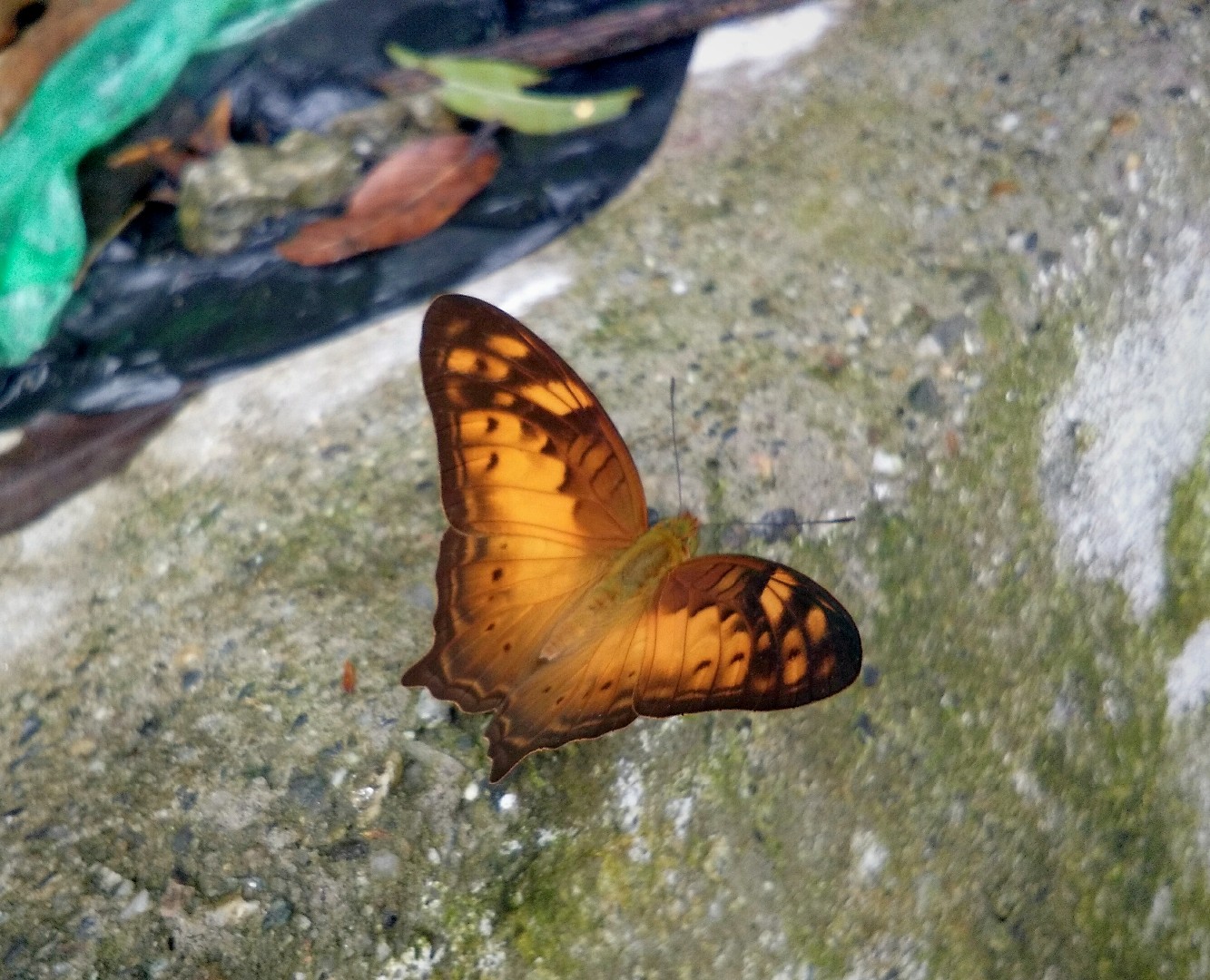
8. Tailed rustic
Vagrans is monotypic genus with the species vagrant (Vagrans egista) a species of nymphalid butterfly found in forested areas of tropical South Asia and Southeast Asia.
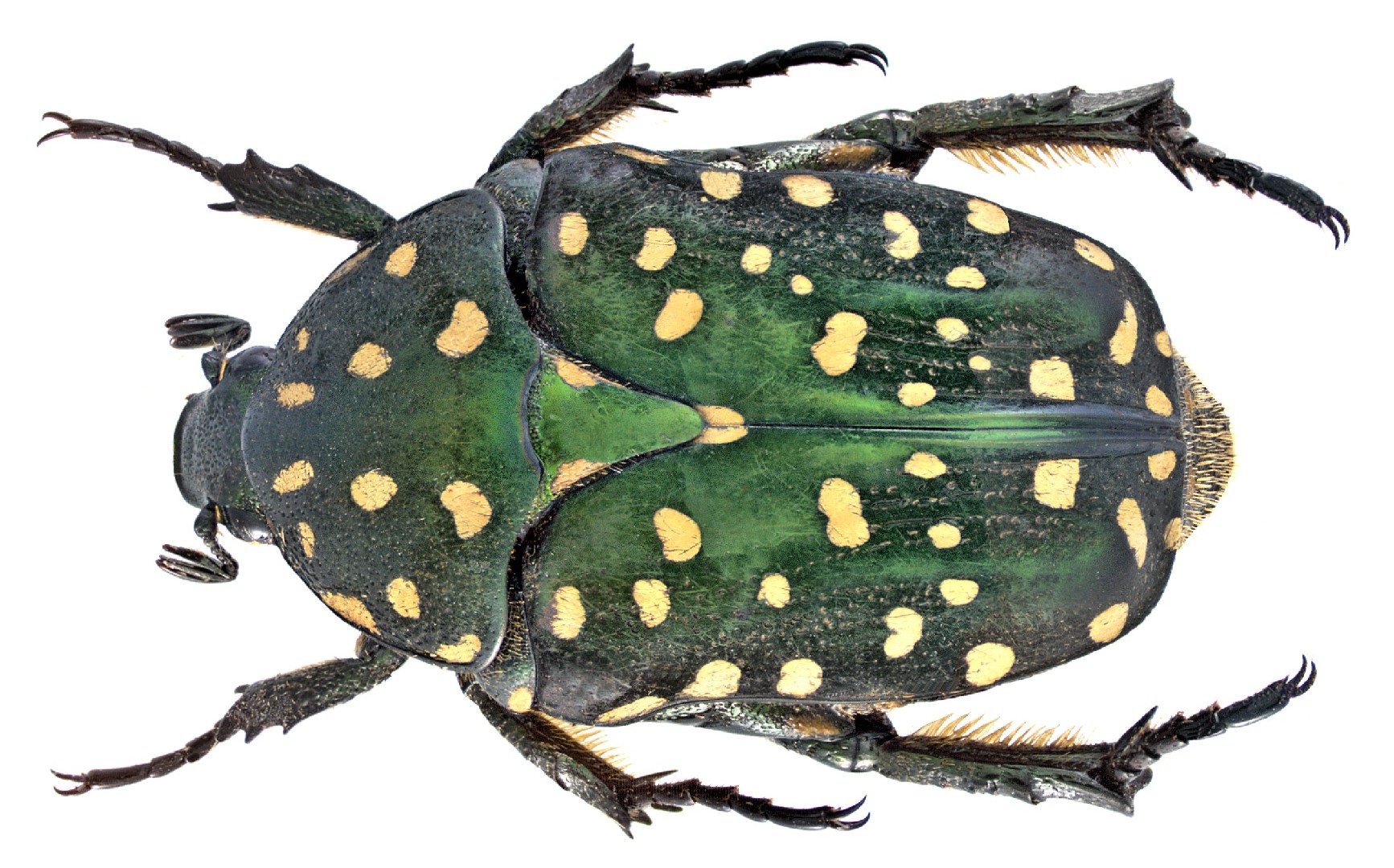
9. Protaetia niveoguttata
10. Himalayan jester
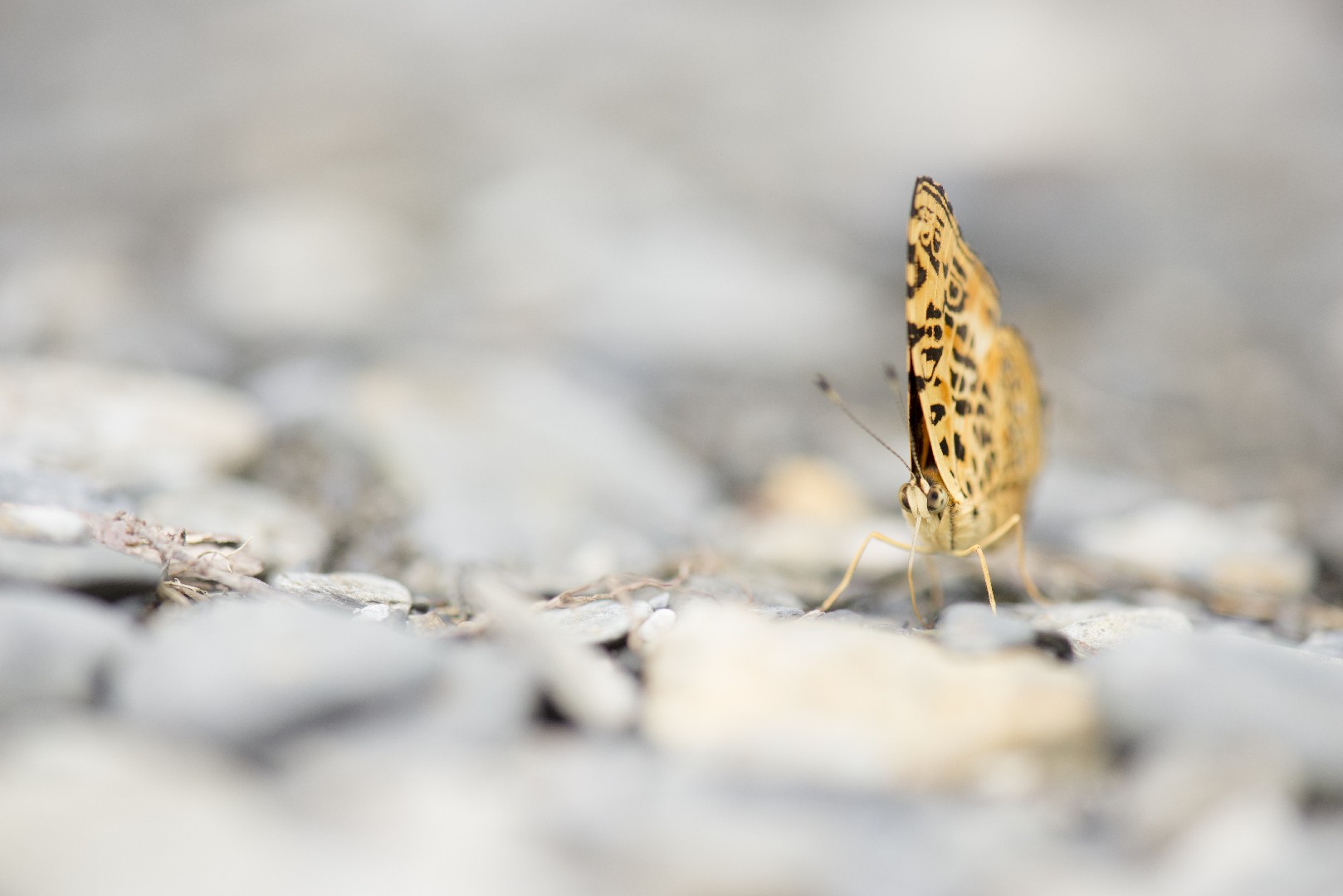
Symbrenthia hypselis, the Himalayan jester, is a species of nymphalid butterfly found in South Asia, and some islands in South East Asia (Sumatra, Java)
More







