




Top 20 Most Common Insects in The Gambia
Insects, with their diverse forms and behaviors, thrive across The Gambia's varied geographical locations. The Gambia's unique geography fosters diverse insect populations, with the most common types varying based on climate, ecosystems, and even human intervention. These insects, both pests and beneficial helpers, are essential to maintaining the health of our environment. Stay tuned as we unveil our exceptional list of '20 most common insects in The Gambia.'.

Most Common Insects
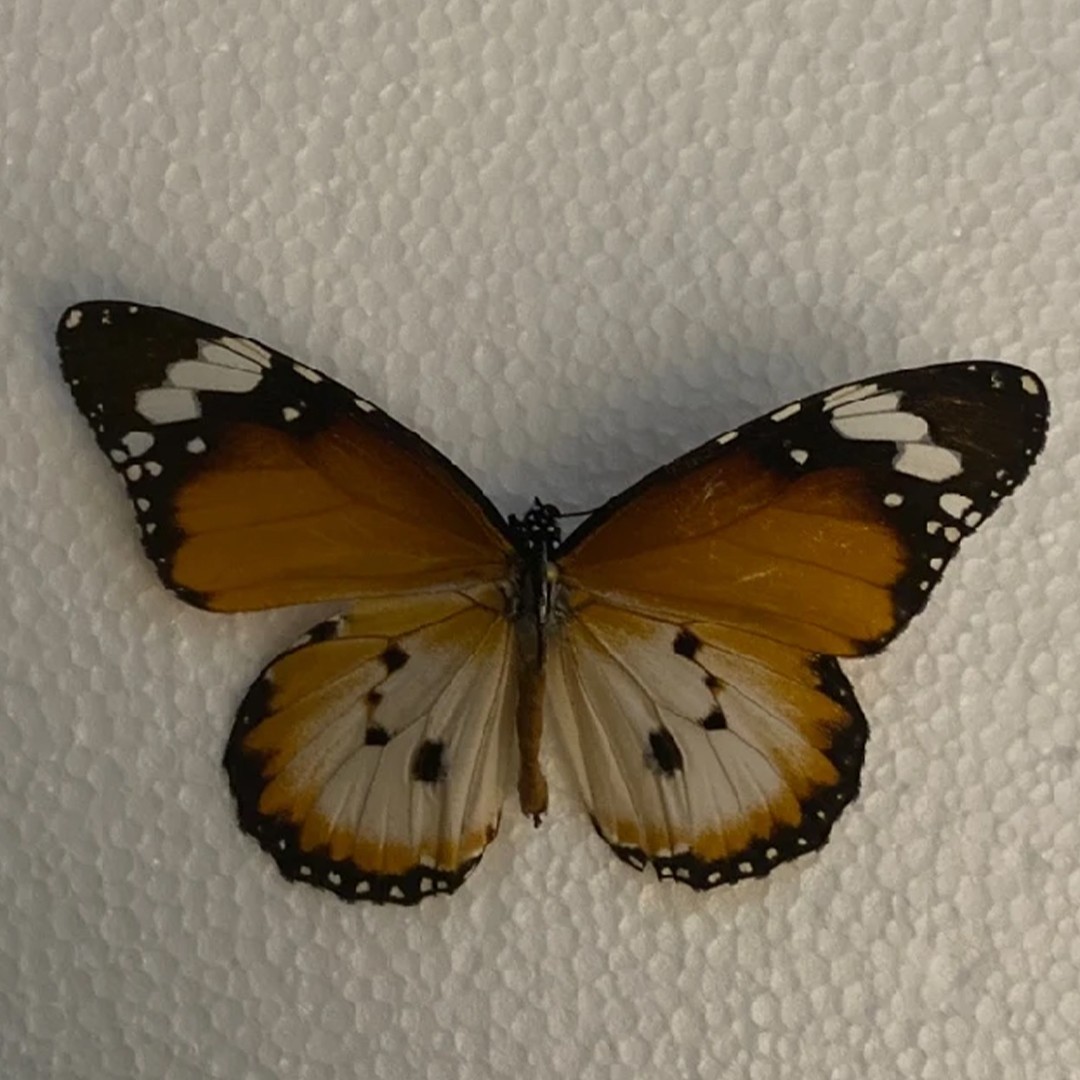
1. Plain tiger butterfly
D. chrysippus is a medium-sized butterfly with a wingspan of about 7–8 cm (2.8–3.1 in). The body is black with many white spots. The wings are orange, the upperside brighter and richer than the underside. The apical half of the forewing is black with a white band. The hindwing has three black spots in the center. The wings are bordered in black and outlined with semicircular white spots. This species exhibits slight sexual dimorphism, as the Male has large scent glands on his hindwings, which the female lacks. They appear as a large black spot with a white centre if viewed from the underside D. chrysippus is a polymorphic species, so the exact coloring and patterning vary within and between populations. It is similar in appearance to the Indian fritillary (Argynnis hyperbius), which may coexist with it. 
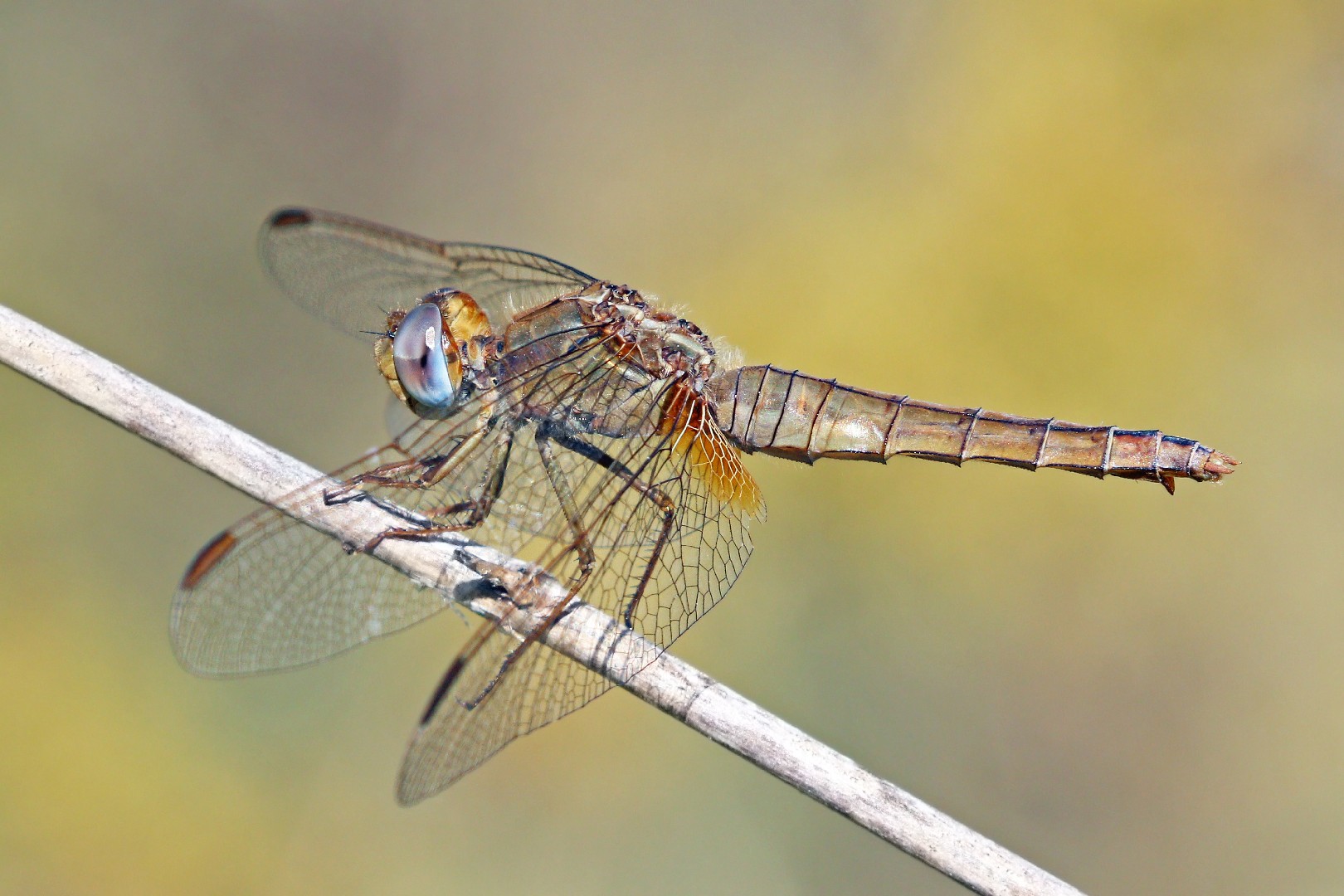
2. Scarlet dragonfly
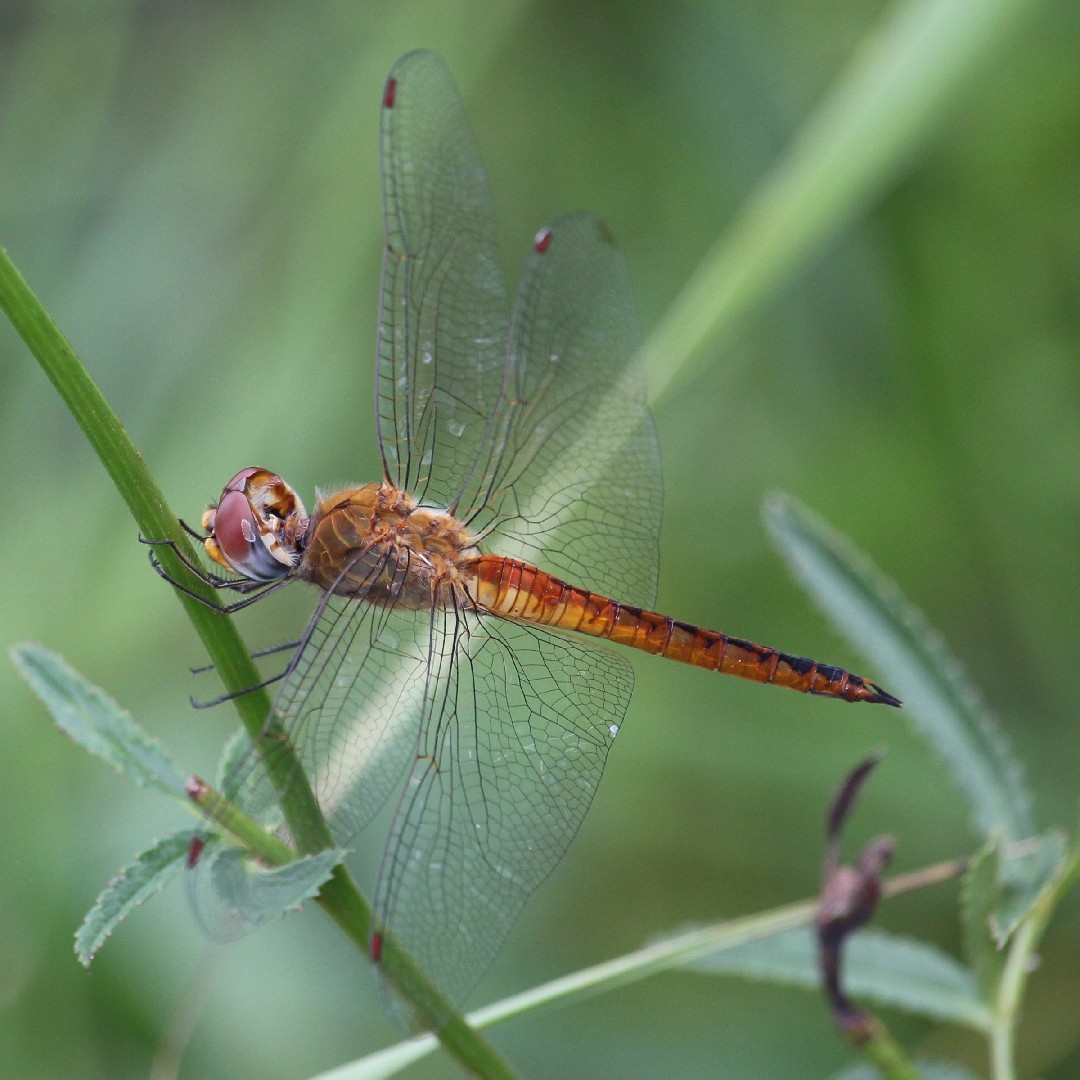
Crocothemis erythraea can reach a length of 3.5 - 4.5 cm. These dragonflies haves a flattened and rather broad abdomen. The adult male scarlet dragonfly has a bright scarlet red, widened abdomen, with small amber patches at the bases of the hindwings. Also the veins on the leading edges of the wings are red. Females and immatures are yellow-brown and have a conspicuous pale stripe along the top of the thorax.
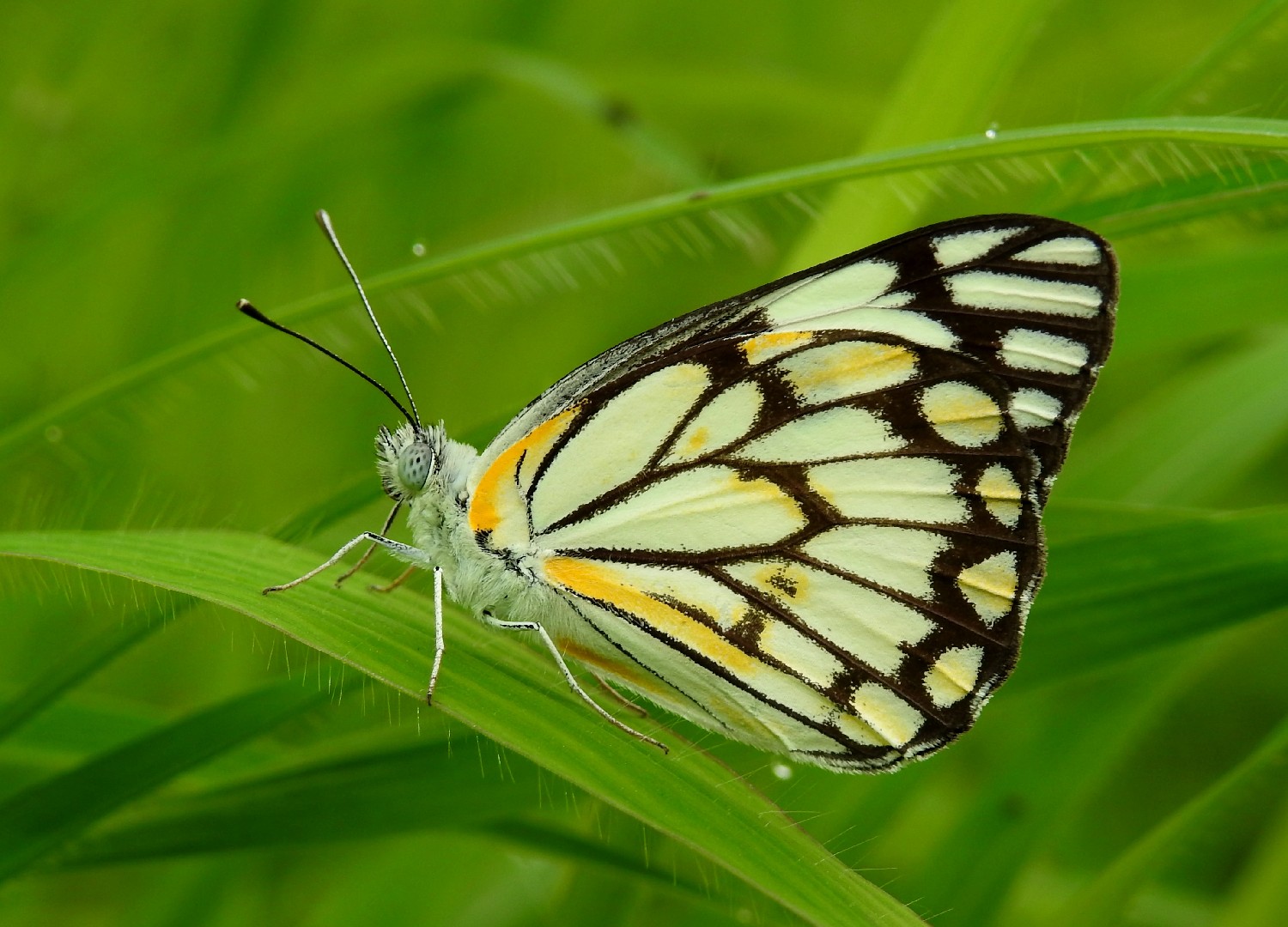
3. Pioneer white
Wet-season form. The upperside of males is white with the forewing having the costa from base to base of vein 11 dusky black and then jet black continuing into a widened and curving short streak along the discocellulars to the lower apex of the cell; apical area diagonally with the termen black, the former with six elongate outwardly pointed spots of the ground colour enclosed one in each of the interspaces 3, 4, 5, 6, 8, and 9. Hindwing: uniform, the black along the venation on the underside seen through by transparency; termen between veins 2 and 6 somewhat broadly black, with a series of four round spots of the ground colour in the interspaces; below vein 2 and above vein 6 the termen is very narrowly black. Underside: forewing white, markings similar, more clearly defined, the white spots within the black apical area larger. Hindwing: yellowish white, all the reins very broadly bordered with black; interspaces 1, 2, 6, and 7 with crossbars of black, beyond which there is a subterminal, somewhat broad, transverse band of black between veins 2 and 6. Cilia of both forewings and hindwings white alternated with black. The ground colour on both upper and undersides variable, often cream coloured above; beneath: in some specimens, the base of cell and the elongate spots in apical area of forewing, and the whole surface of the hindwing varies to rich chrome yellow. Female similar; the black markings on both upper and undersides broader, the white spots on black apical area of forewing often sub-obsolete above. Antennae in both sexes black, sparsely sprinkled with white dots; head, thorax and abdomen above and below white: thorax above often bluish grey. Dry-season form. The dry-season form is similar to the wet-season form but on the upperside the black markings are narrower, the white markings on the black apical area of forewing broader and longer, and on the hindwing the narrow inner margining to the black on the termen very narrow, somewhat obsolescent; therefore, the white subterminal spots have the appearance of opening inwards. Underside: ground colour almost pure white; on the hindwing slightly tinged with yellow. Antennae, head, thorax, and abdomen as in the wet-season form. Wingspan of 4.5 - 6 cm.

4. Citrus swallowtail
Papilio demodocus , also known under the English name Citrus Swallowtail ("Citrus Swallowtail"), is a butterfly from the family of the knight butterflies (Papilionidae).
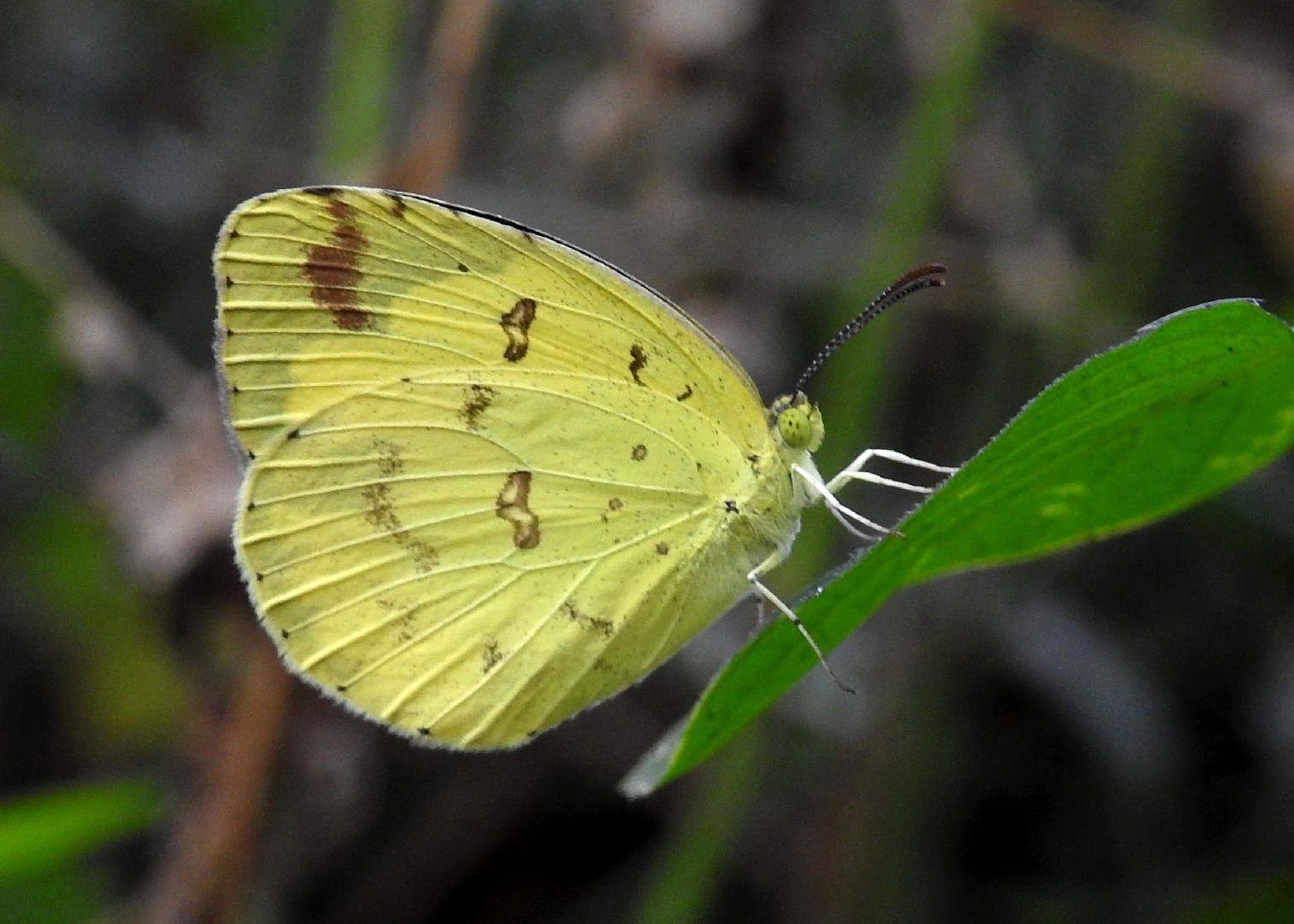
5. Common grass yellow
The common grass yellow (Eurema hecabe) can be found in groups around damp soil. Despite their name, they do not feed on grass, instead, they are known to frequently visit grasslands. It can change its form depending upon the season, as it is far more rough-looking if it comes during the dry season.

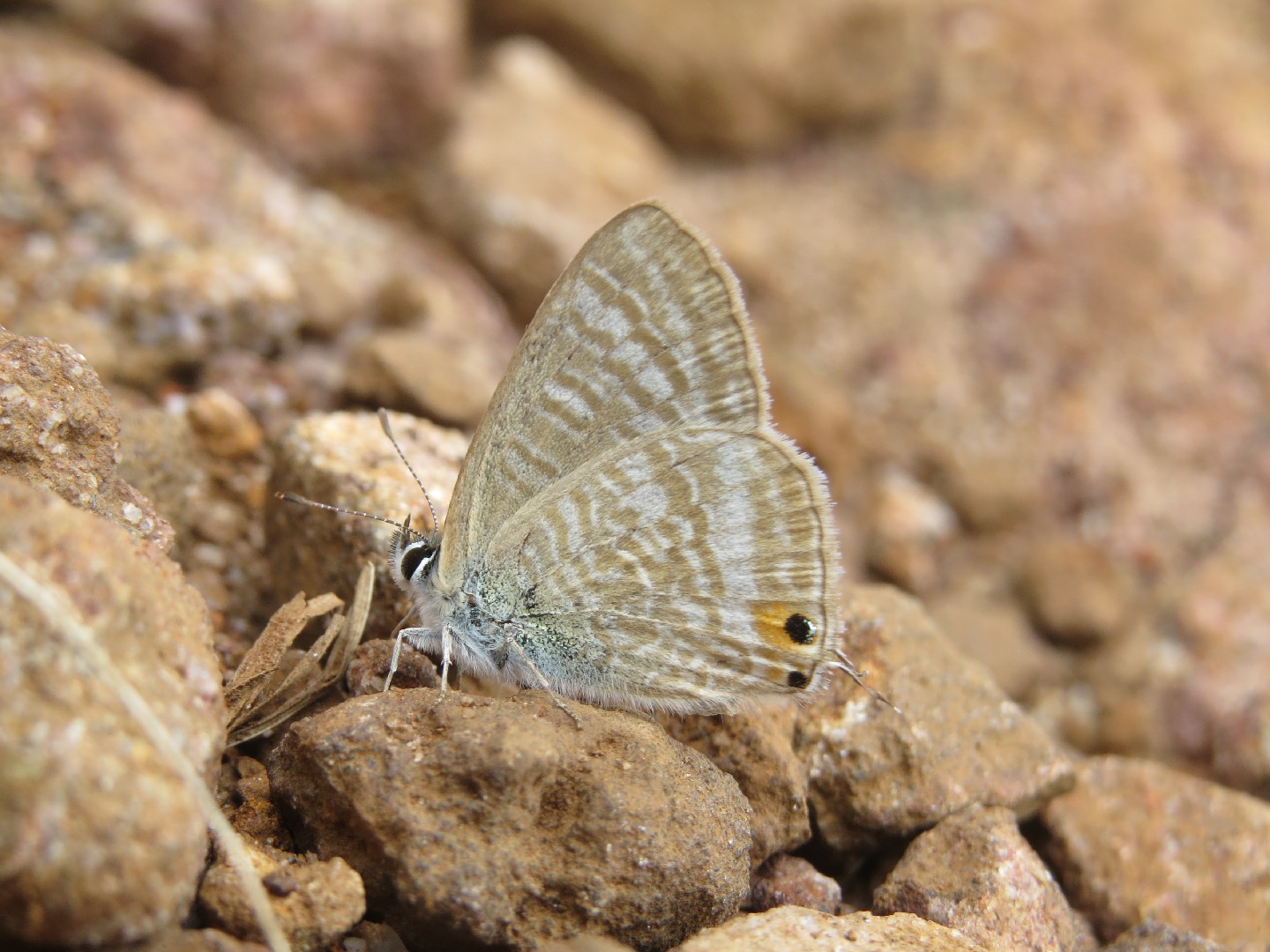
6. Dark grass blue
The wingspan is 1.8 - 2.5 cm for males and 2 - 2.5 cm for females.
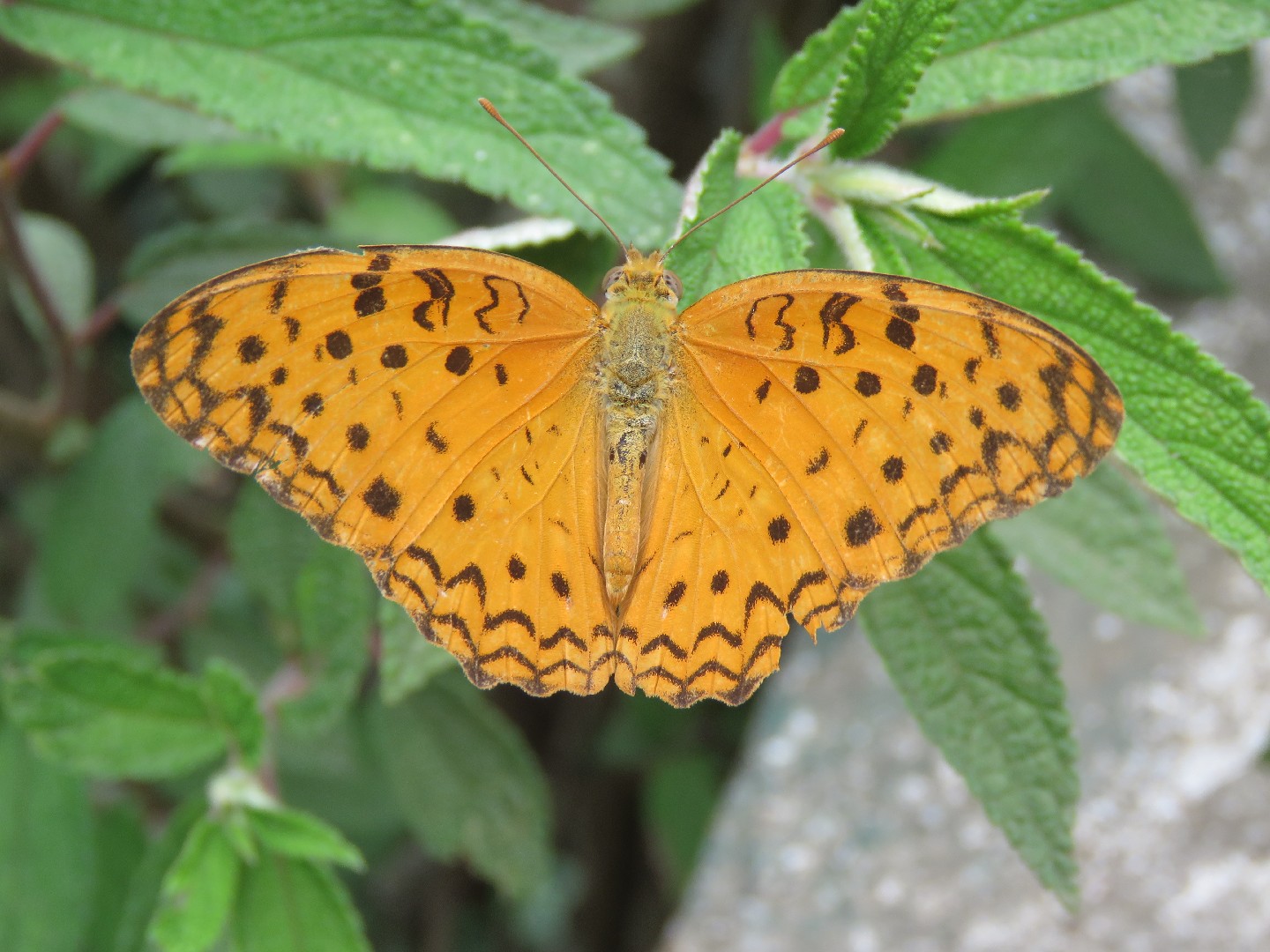
7. Spotted rustic
The spotted rustic is a medium-sized butterfly with a wingspan of 5 - 6 cm with a tawny colour and marked with black spots. The underside of the butterfly is more glossy than the upper and both the male and female are similar looking. A more prominent purple gloss on the underside is found in the dry-season form of this butterfly. Male aud female. Upperside bright yellowish-ochreous. Forewing with two black short slender sinuous bars across middle of the cell, a similar darker pair at its end, followed beyond by a short broad sinuous streak from the costa to the lower radial, and is then succeeded below the cell by an inwardly-oblique series of four irregular-shaped spots, and beyond by a medial-discal transverse row of similarly disposed narrow spots, an outer-discal row of round spots, then an inner submarginal sinuous line, confluent with an outer straight line, and a marginal row of triangular spots. Hindwing with a slightly-defined slender black lunule within the cell, two before its end, and two also above it; a transverse inner-discal irregular series of slender lunules which are slightly pale bordered externally; a medial-discal row of four larger black oval spots, two submarginal sinuous slightly confluent lines, and marginal triangular spots. Underside paler, and with all the markings, as on upperside much less defined; the interspaces of cell-bars and outer markings suffused with violet-grey, and the inner-discal series outwardly bordered with greyish lunules. In some specimens, presumably dry-season, all the markings on the upper and underside are less prominent. Body and palpi above yellowish-ochreous; beneath and also femora beneath greyish-white; tibia and tarsi pale ochreous; antennae ochreous-brown.
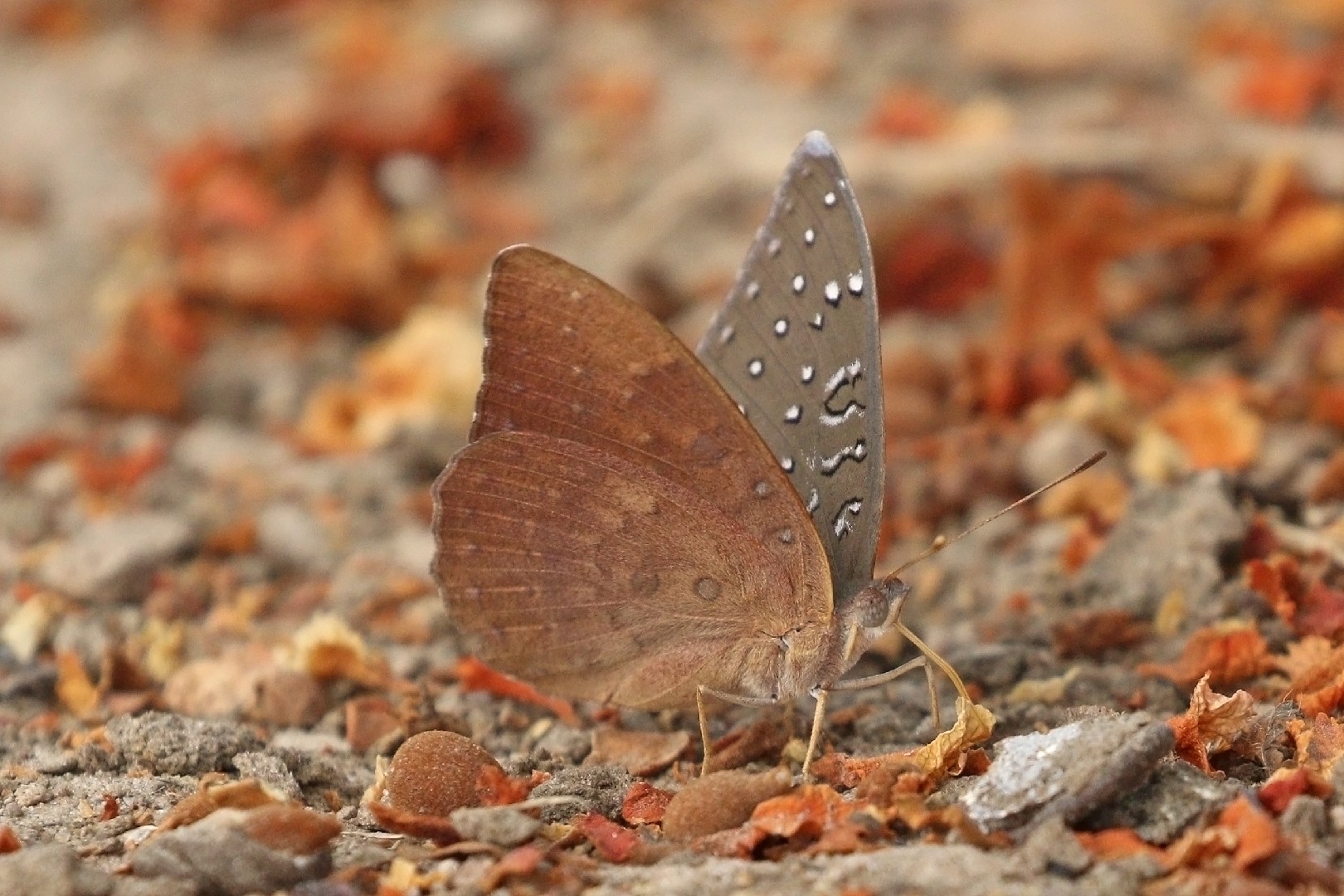
8. Guineafowl
The wingspan is 55–65 mm for males and 60–78 mm for females.
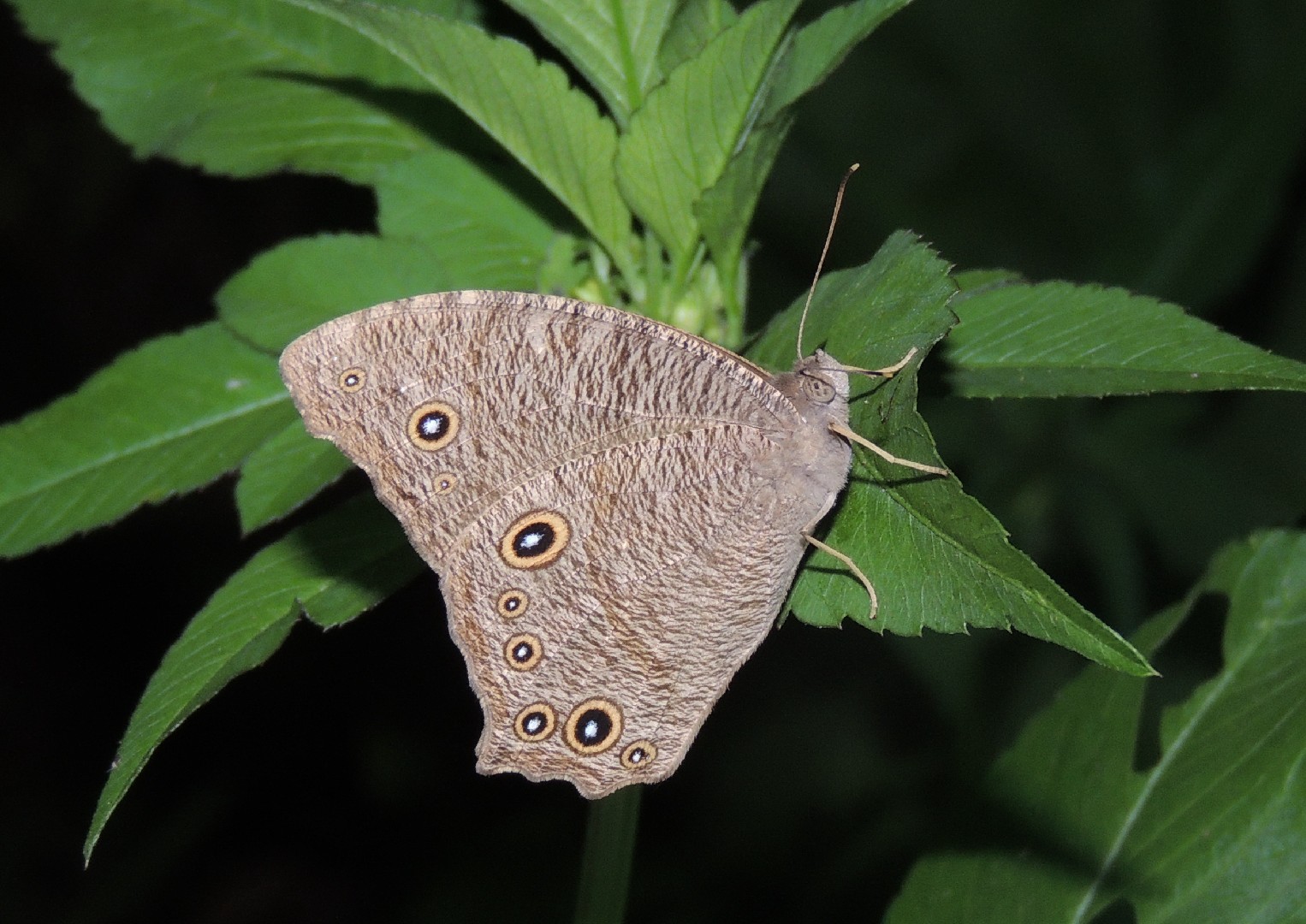
9. Common evening brown
The common evening brown (Melanitis leda) changes its appearance based on the season. During wet seasons, it has a pale brown underside and a dark brown top. Then, during dry seasons, it often has more distinguished bands or spots. It uses these neutral colors to help it blend into leaves and trees. It usually only flies during the evening, resting during daylight.

10. Broad-bordered grass yellow
Male in Wet-season form: Upper-side somewhat paler yellow. Fore-wing with the outer marginal black band; the apical edge of costa and the cilia rosy-red. Hind-wing with the black outer band somewhat narrower, macular, the decreasing portions each with a more prolonged inner-tooth, and the yellow ground-colour between each extending to the outer edge. Underside pale yellow, the fore-wing also having a very slightly defined sub-apical inwardly-oblique squamous streak. Fore-wing with the entire costal edge and outer marginal cilia, and also the outer marginal cilia of the hind-wing, rosy-red. Female. Upper-side. Apical edge between the subcostals of fore-wing, and cilia of both wings paler rosy-red. Underside with the markings on hind-wing slightly visible. Fore-wing above with the black outer band broken beneath the lower median veinlet. Hind-wing with the outer band similar to male, its portions slightly broader. Underside similar to male, the markings being slightly more defined.Male in Intermediate form: Upper-side. Fore-wing with the outer band slightly narrower than in wet form; cilia paler red. Hind-wing with the marginal macular band narrower, and composed of smaller portions. Underside similar to wet form. Female. Upperside. Fore-wing with the outer band less broken at its posterior end than in wet form. Hind-wing with the marginal macular band less distinct and narrower. Underside similar to the male.Dry-season form: Both sexes much smaller than in intermediate form. Cilia paler. Male. Fore-wing above with the inner-edge of the marginal band less sinuated than in intermediate form, its posterior end indistinctly broken. Hind-wing with the lower portions of the macular band somewhat larger and less dentate. Underside. Both wings with less defined markings than in intermediate form. Female. Upper-side. Fore-wing with the band slightly broken at posterior end. Hind-wing with the lower portions of band somewhat wider. Underside with the markings indistinct.




More







