




Top 20 Most Common Insects in Redding
With a dazzling array of insects, Redding is a habitat teeming with life. From the city's lush parks to its suburban backyards, these creatures thrive, reflecting Redding's diverse environments. Insects play crucial roles here, from pests disrupting human activity to beneficial pollinators boosting local plant populations. Get ready to discover the 20 most common insects making Redding buzz with life.

Most Common Insects
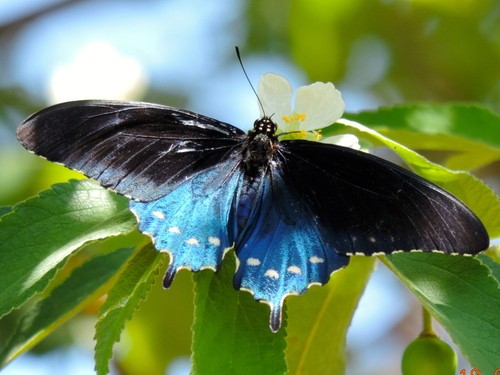
1. Pipevine Swallowtail
The pipevine Swallowtail (Battus philenor) is an insect that is protected globally but is considered a species of special concern in the northern part of their range in Michigan. The name pipevine Swallowtail comes from the common plants that they are hosts of. They are also known as the blue swallowtail due to their brilliant, blue color.
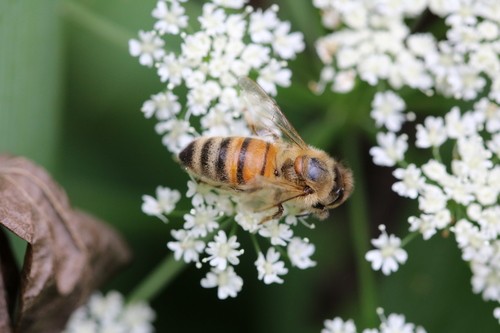
2. Western honey bee
Western honey bee(Apis mellifera) is the most common species of honeybee in the world. Among the first domesticated insects, its cultural and economic impact on humanity has been vast and far-reaching, providing honey, wax and its services as a pollinator. Western honey bee faces challenges worldwide, such as colony collapse disorder, and populations are thought to be decreasing.
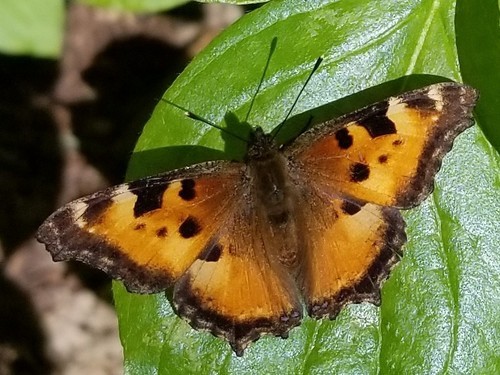
3. California tortoiseshell
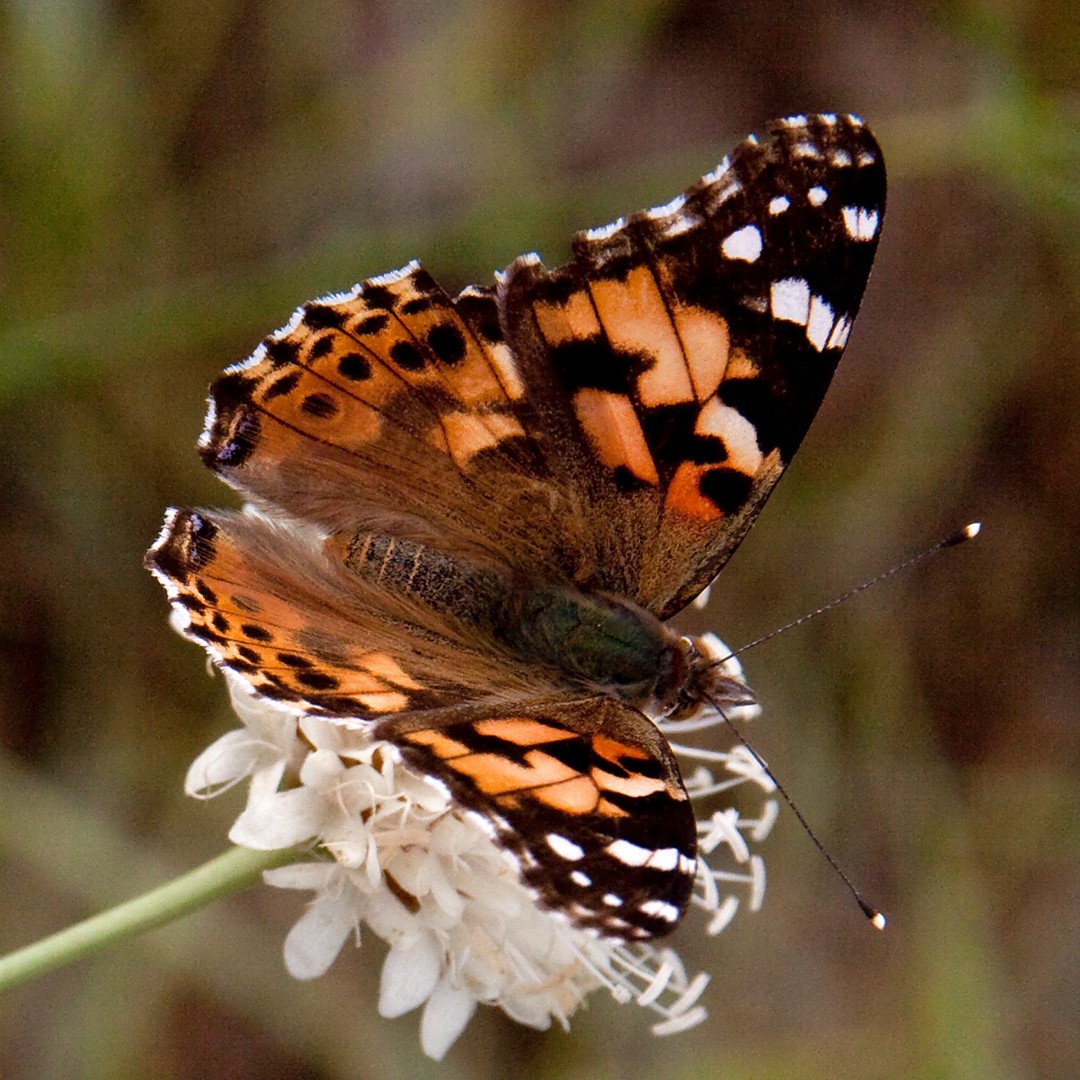
It is recognized for the top of its wings being orange with big black spots (used mainly for camouflage). The browns and grays of the wing underside make it resemble a dead leaf when the wings are closed. Its wingspan varies from 1.25–2.75 in. 
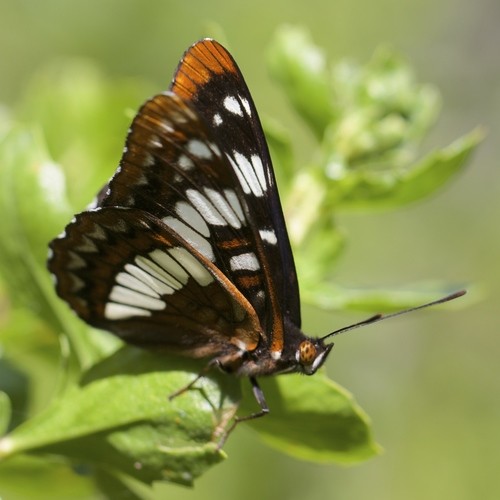
4. Lorquin's admiral
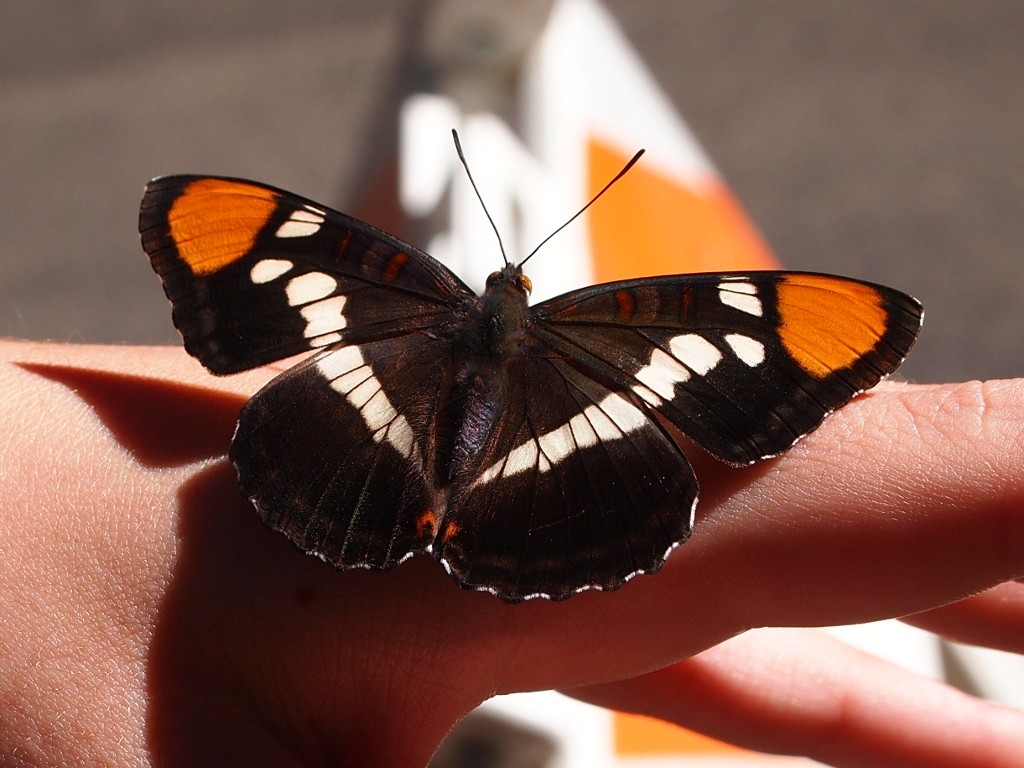
The lorquin's admiral has brown-black wings, each with a row of white spots across it. Its forewings have orange tips. The wingspan is 4.5 - 7 cm; females are generally larger than males. Larvae are usually yellow with a patch of white on the back.
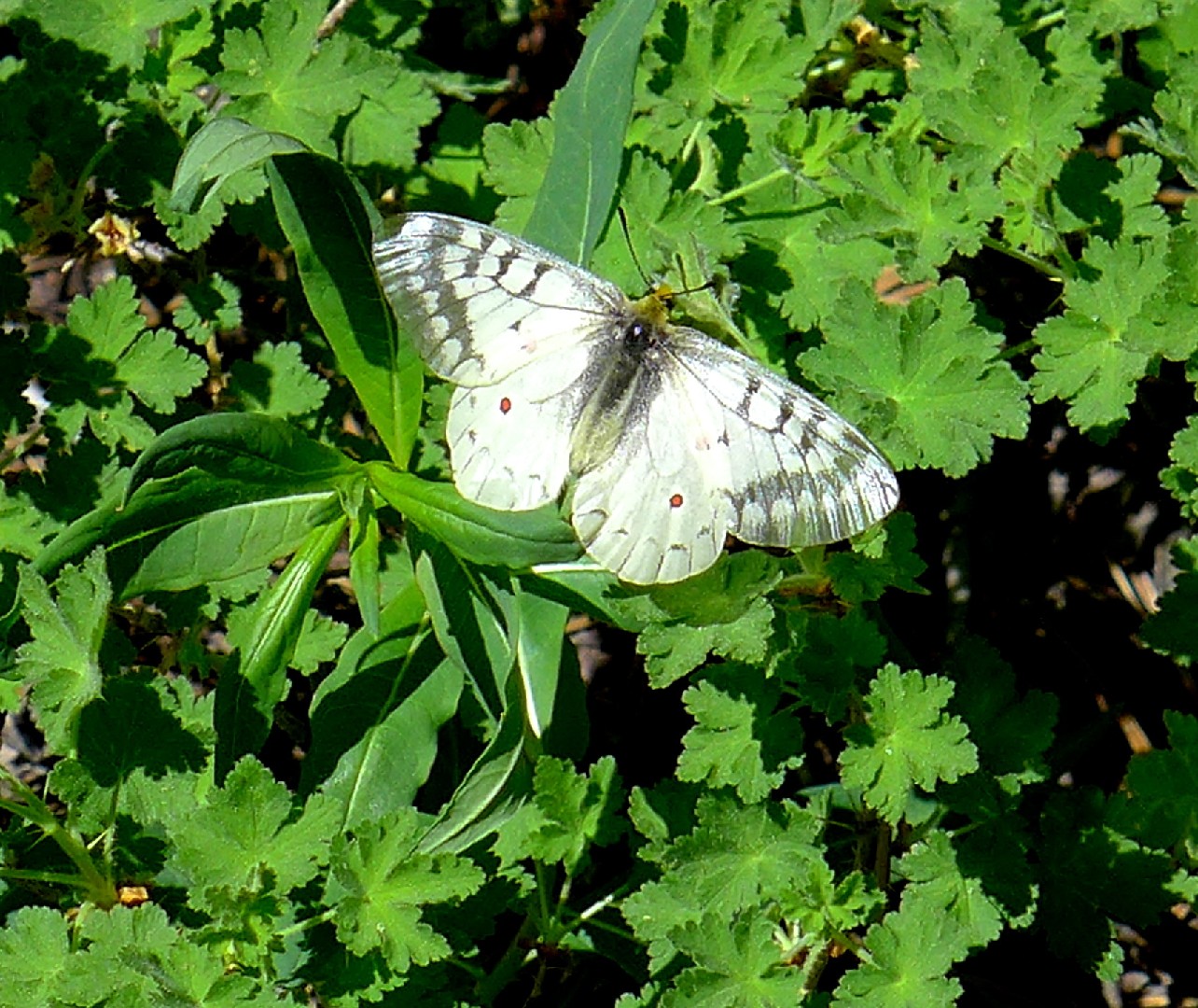
5. Clodius parnassian
Ground-colour white, only in the female the short costal band placed outside the cell connected with the hindmarginal spot by an irregular dusty band, the glossy submarginal band of the forewing sharp but narrow, the male with small, the female with larger, crescent-shaped submarginal spots on the hindwing; on the latter the anal spot mostly centred with red.
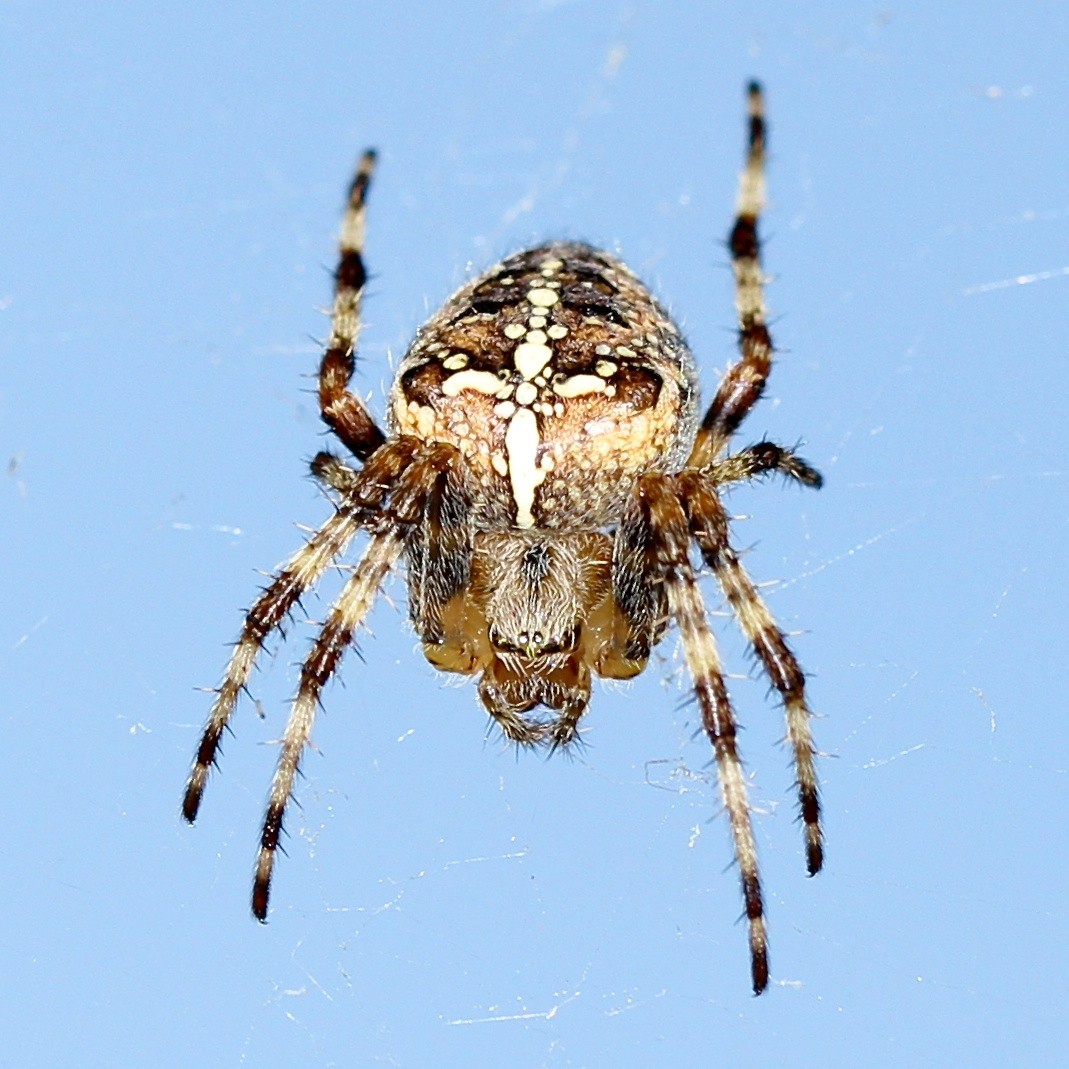
6. Crowned orbweaver
A common species of orb-weaver, crowned orbweaver (Araneus diadematus) builds large and noticeable webs. Only the females build webs, and they may prey upon their mates before, during or after engaging in sexual intercourse. Crowned orbweaver is reluctant to bite humans and will not do so unless scared or provoked. It avoids danger by vibrating in its web until it becomes a blur, confusing predators.
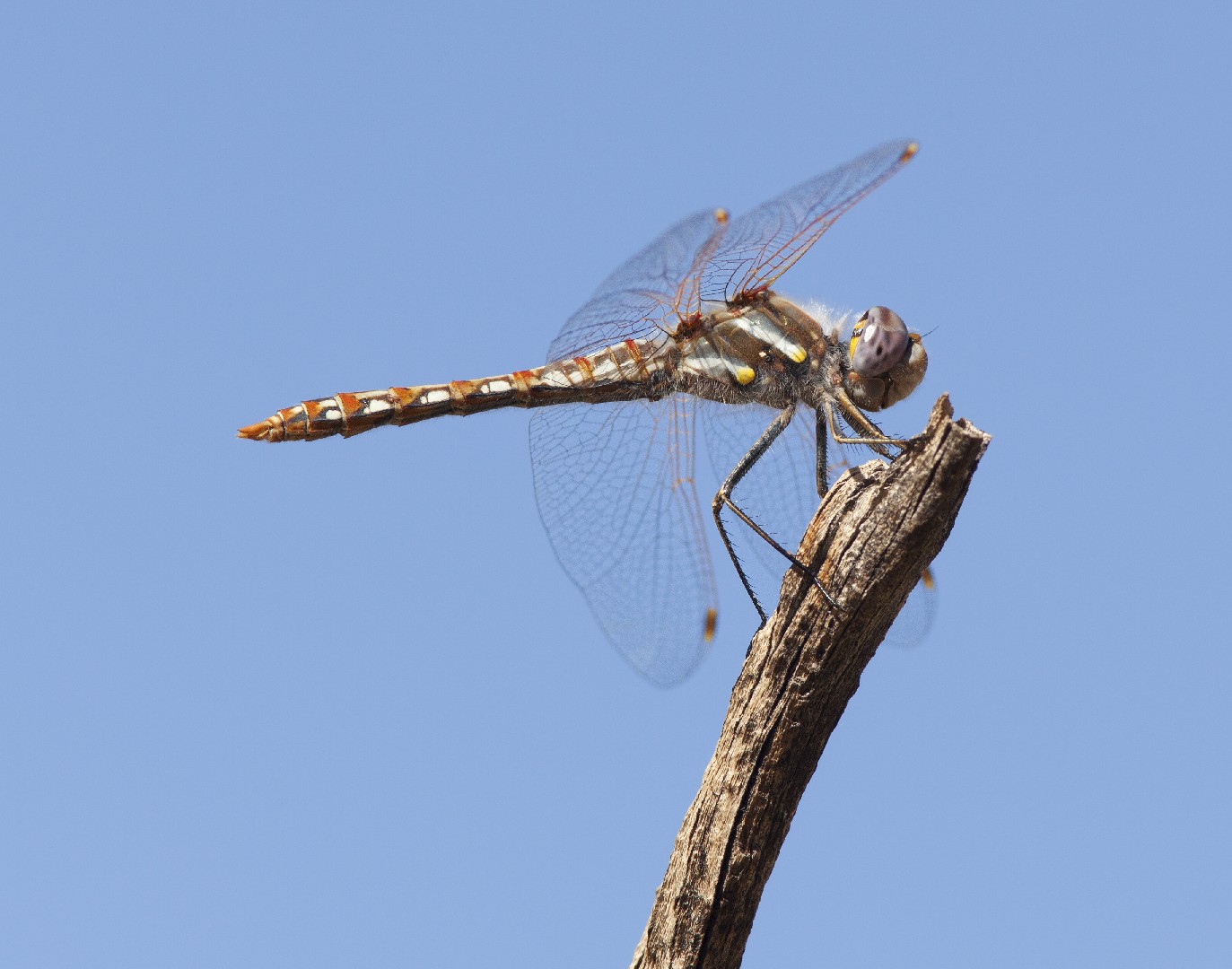
7. Variegated meadowhawk
The variegated meadowhawk is a small to medium-sized dragonfly with a slender abdomen, often reaching a length of 4.5 - 23 cm. The male is commonly dark brownish black with an abdomen of bright red, pink, and golden brown. The thorax may be marked with a pair of yellow dots on each side. The leading edges of the wings are marked with pinkish. The females are similar in color but not as brightly colored, with gray and yellow replacing the red of the male. Young variegated meadowhawks are much paler and mottled with pale green, pale yellow, golden brown, and orange.
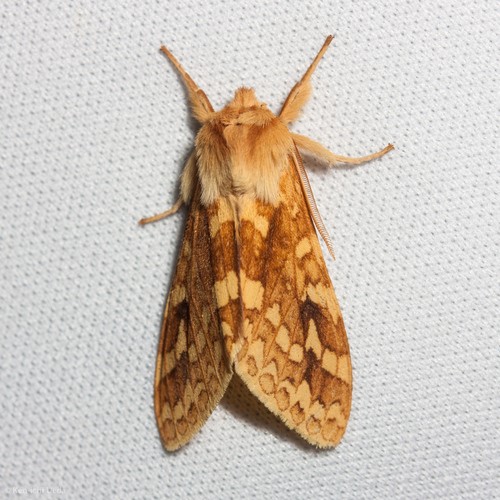
8. Spotted tussock moth
The spotted tussock moth (Lophocampa maculata) gets its name from the long tufts of hair it has as a caterpillar. The adults are a mix of yellow and brown while the larvae are a fuzzy pattern of yellow and black. These larvae are pests because they consume a wide range wood, including birch, oak, maple, and willow.
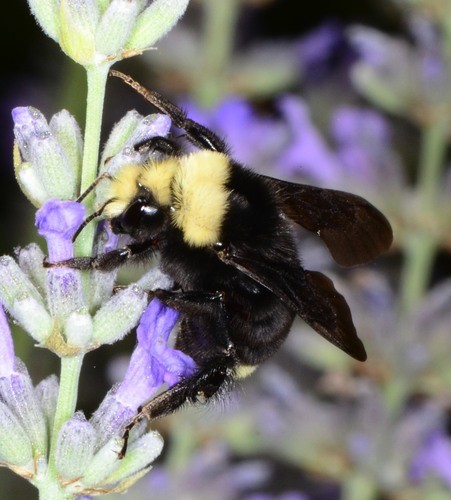
9. Yellow-faced bumble bee
The yellow-faced bumble bee (Bombus vosnesenskii) is known for its mostly black body with a yellow face. Their population is not dropping, but continued expansion of urban human populations is causing some difficulty for this bee to make nests. But what it does find it tends to monopolize due to its early arrival in the season.
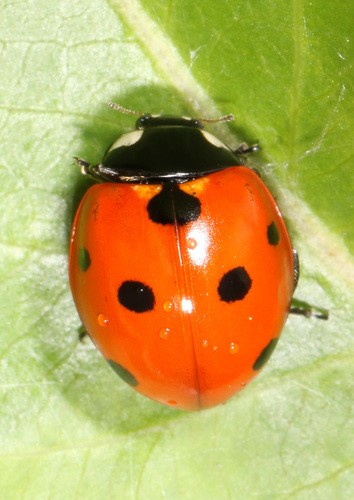
10. Seven-spotted ladybug
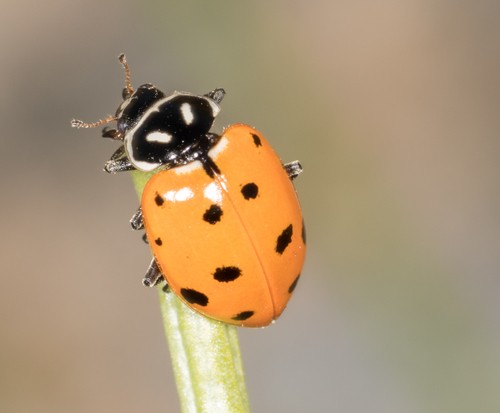
Seven-spotted ladybug (Coccinella septempunctata), known in North America as the "seven-spotted ladybug," is the most common species of ladybird in Europe and the official state insect of five U.S. states. While not native to North America, it has established itself there after being introduced to control aphid populations. Its bright coloring deters predators, and it may also play dead or secrete foul-smelling liquids to discourage consumption.
More







