




Top 20 Most Common Insects in Bend
Insects, those remarkable creatures with exceptional diversity, inhabit every corner of Bend, each playing a vital role in balancing the local ecosystem. Ranging from beneficial pollinators to pesky nuisances, each of the 20 common insects uphold unique ecological duties. Understanding these insects in Bend not only unravels the intricate web of urban biodiversity but also showcases the delicate, vital relationship between city environments and their tiny inhabitants.

Most Common Insects
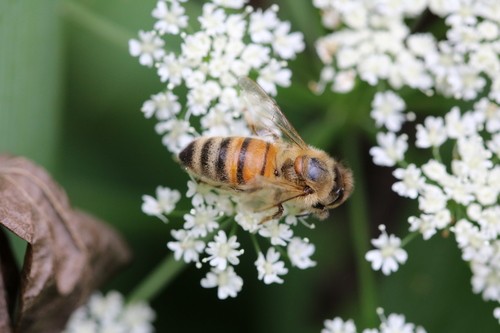
1. Western honey bee
Western honey bee(Apis mellifera) is the most common species of honeybee in the world. Among the first domesticated insects, its cultural and economic impact on humanity has been vast and far-reaching, providing honey, wax and its services as a pollinator. Western honey bee faces challenges worldwide, such as colony collapse disorder, and populations are thought to be decreasing.
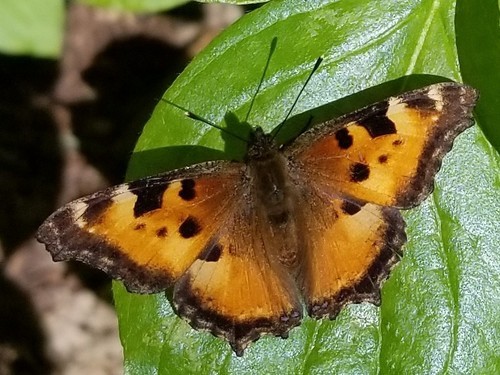
2. California tortoiseshell
It is recognized for the top of its wings being orange with big black spots (used mainly for camouflage). The browns and grays of the wing underside make it resemble a dead leaf when the wings are closed. Its wingspan varies from 1.25–2.75 in. 
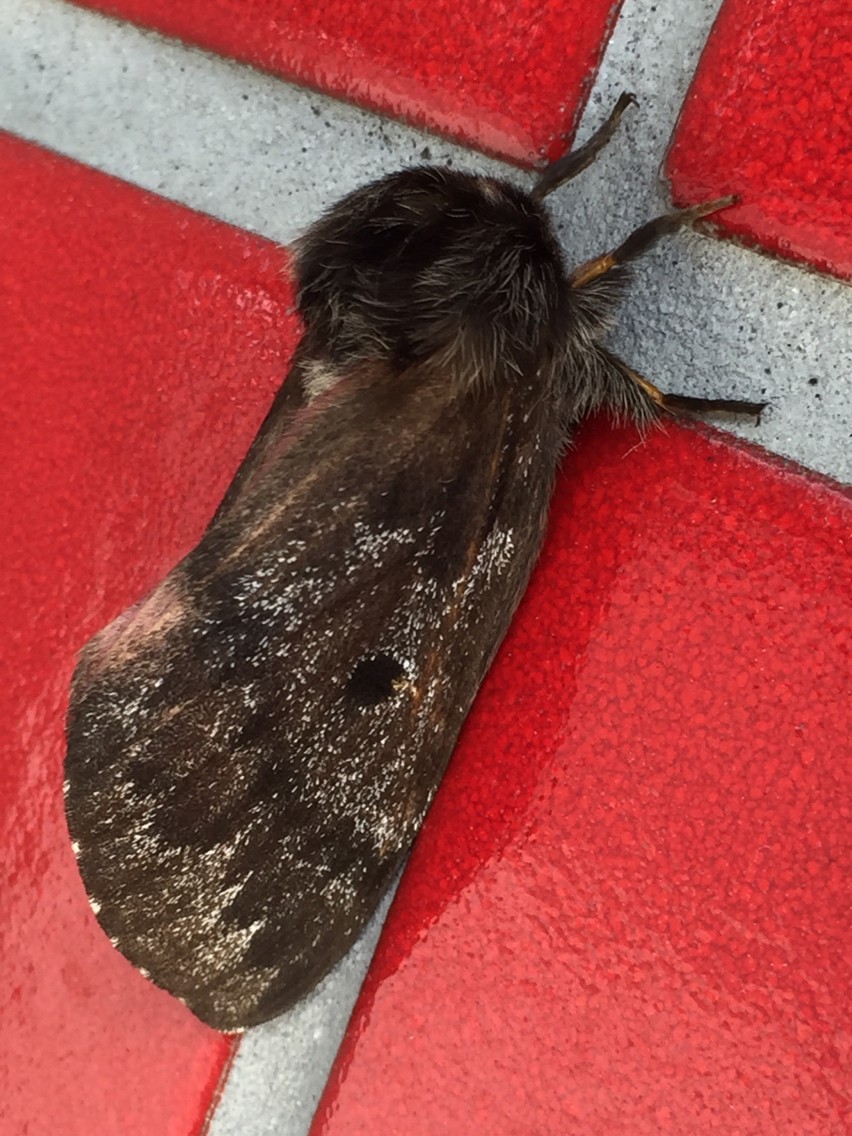
3. Pandora pine moth
The pandora pine moth (Coloradia pandora) thankfully isn't associated with some end of the world prophecy. Instead, these are simple, brown moths that are known to feast on pine trees. The United States Forest Service has had to instigate certain control measures to prevent them from eating these leaves. This has put them in conflict with the Paiute tribe, who eats these creatures.
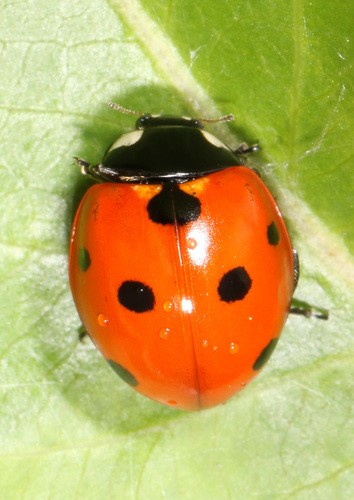
4. Seven-spotted ladybug
Seven-spotted ladybug (Coccinella septempunctata), known in North America as the "seven-spotted ladybug," is the most common species of ladybird in Europe and the official state insect of five U.S. states. While not native to North America, it has established itself there after being introduced to control aphid populations. Its bright coloring deters predators, and it may also play dead or secrete foul-smelling liquids to discourage consumption.
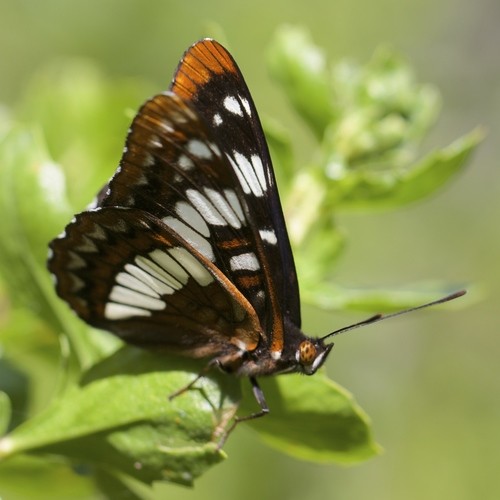
5. Lorquin's admiral
The lorquin's admiral has brown-black wings, each with a row of white spots across it. Its forewings have orange tips. The wingspan is 4.5 - 7 cm; females are generally larger than males. Larvae are usually yellow with a patch of white on the back.
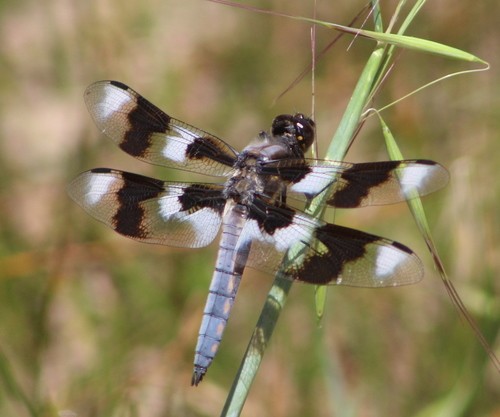
6. Eight-spotted skimmer
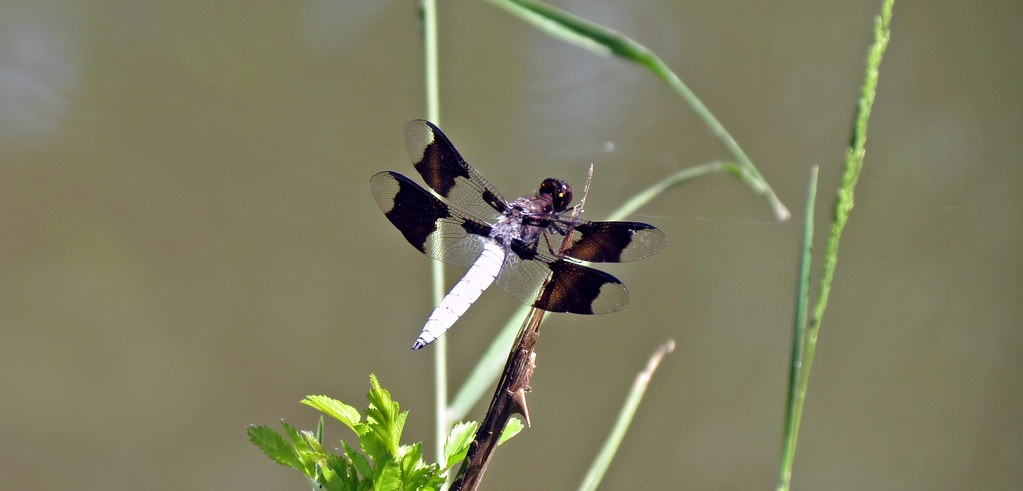
The eight-spotted skimmer (Libellula forensis) is identified by the eight black markings on its wings. It is occasionally confused with the Twelve-spotted skimmer that is sometimes called the Ten-spotted skimmer. You may attempt to desperately count the number of spots on these fast-moving skimmers, but the major differentiation in this one is the lack of black tips on their wings.
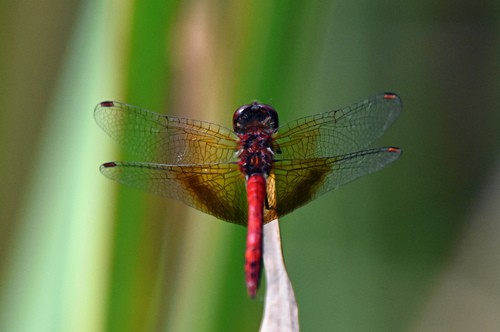
7. Band-winged meadowhawk
Sympetrum semicinctum can reach a length of 2.5 - 3.5 cm, with a wingspan of 4.5 - 6 cm. The male has a bright red abdomen with black markings on the lower sides and on the top of the segments 8 and 9, creating a U like pattern. The thorax is brownish red and the sides show three irregular black stripes. Face and eyes are dark red. The legs are black. The hind wings have a rusty patch at the base, covering one-third of the wings, while the front wings are almost completely transparent. Pterostigma is blackish red. The female is mainly greenish-yellowish or orange, with red over green on eyes and extended blackish markings on the abdomen. Mature females sometimes turn red like males, while immature males are yellow like females and slowly reach their red coloration.
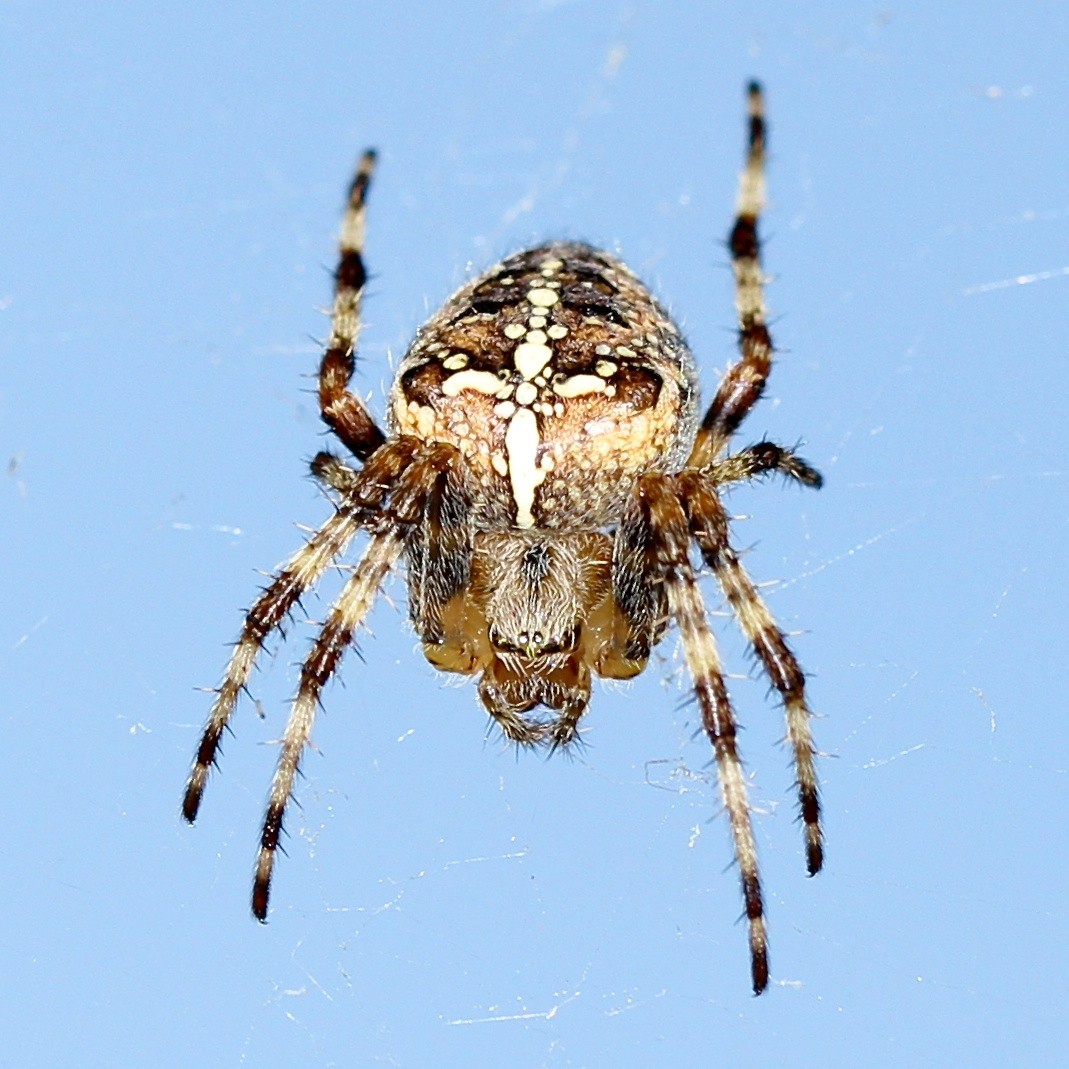
8. Crowned orbweaver
A common species of orb-weaver, crowned orbweaver (Araneus diadematus) builds large and noticeable webs. Only the females build webs, and they may prey upon their mates before, during or after engaging in sexual intercourse. Crowned orbweaver is reluctant to bite humans and will not do so unless scared or provoked. It avoids danger by vibrating in its web until it becomes a blur, confusing predators.
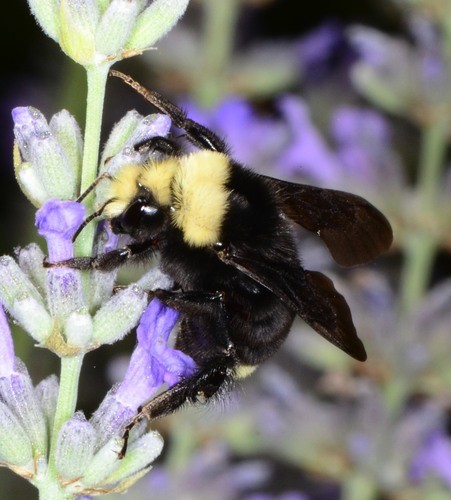
9. Yellow-faced bumble bee
The yellow-faced bumble bee (Bombus vosnesenskii) is known for its mostly black body with a yellow face. Their population is not dropping, but continued expansion of urban human populations is causing some difficulty for this bee to make nests. But what it does find it tends to monopolize due to its early arrival in the season.
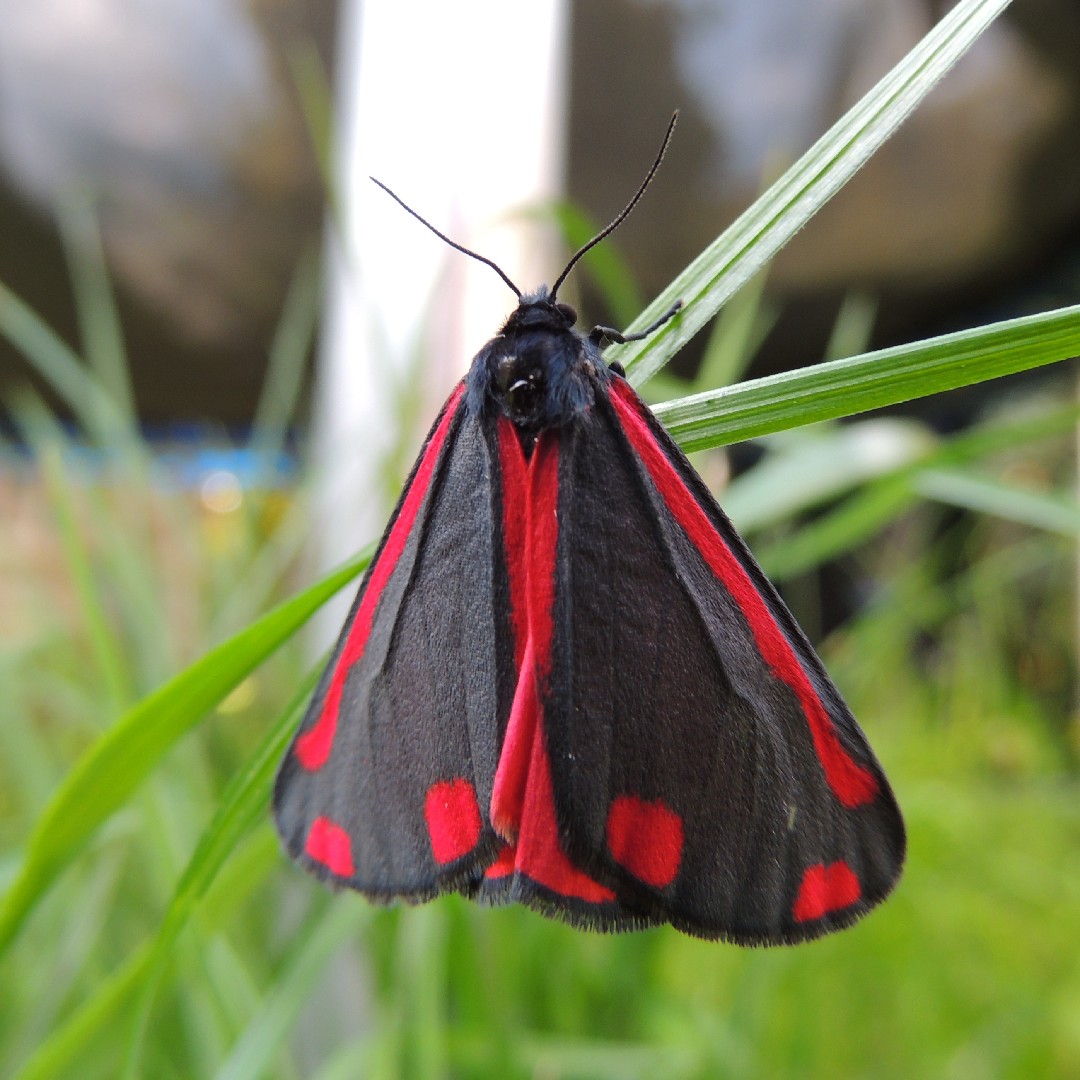
10. Cinnabar moth
The cinnabar moth (Tyria jacobaeae) has bright red and black coloring as an adult, but orange and black stripes as a larva. The adults are active both during the day and at night, usually near coastal grasslands. The larvae feed on the exotic tansy ragwort (Jacobaea vulgaris), which is a dangerous agricultural weed.
More







