




Top 20 Most Common Insects in Klamath Falls
Insects, with their unique features and adaptability, have found a home within the diversity of Klamath Falls's environments. Their role in Klamath Falls is undeniably crucial, as they contribute to the balance of the ecosystem whether as pests or beneficial critters. Join us as we explore the top 20 most common insects in Klamath Falls, serving as a testament to the city's thriving biodiversity.

Most Common Insects
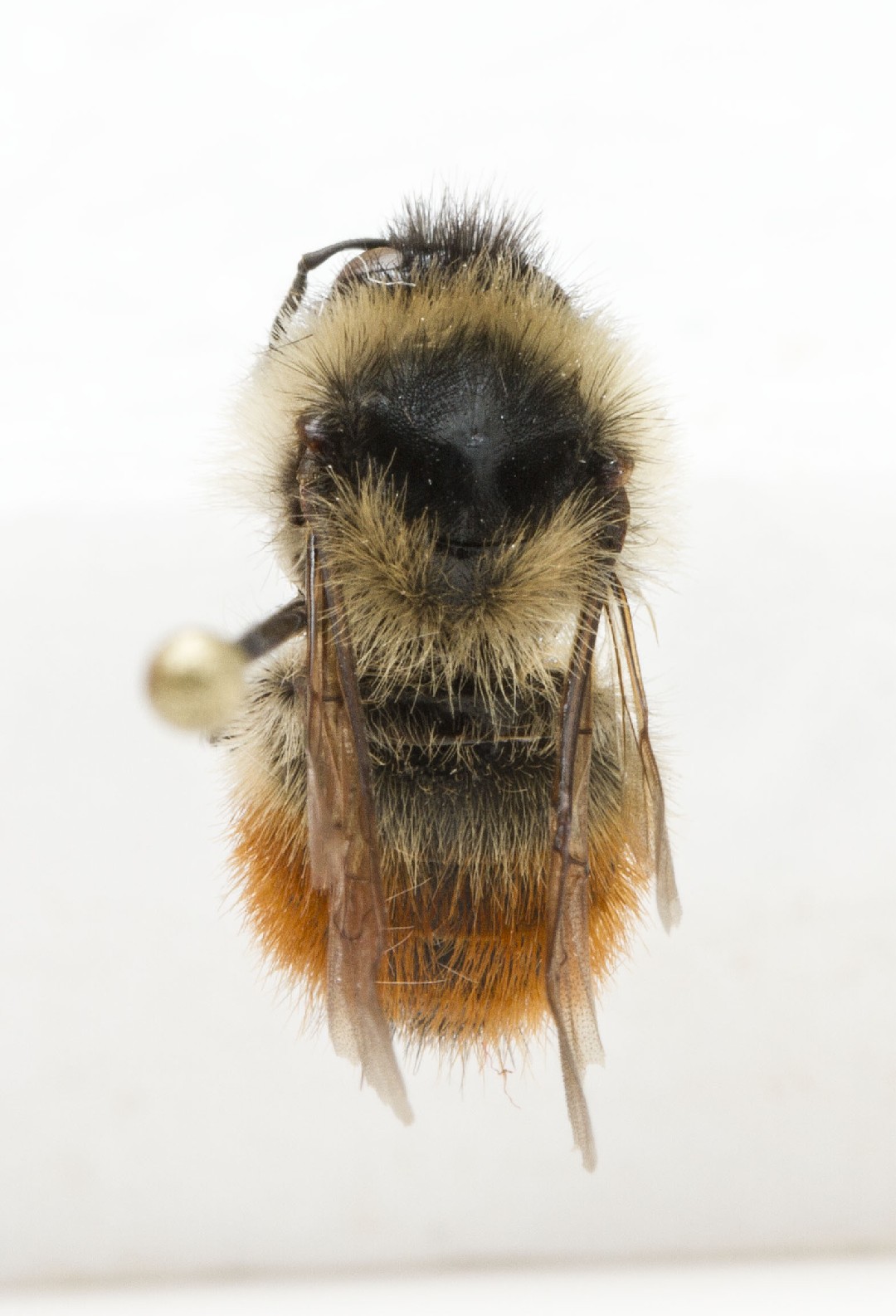
1. Red-belted bumble bee
The queen is 1.6 - 1.8 cm long and just under 1 cm wide at the abdomen. It is black with scattered gray and yellowish hairs on the head. The abdomen has many bright yellow hairs and areas of reddish hairs. The worker is 1.1 - 1.2 cm long and 5 mm wide at the abdomen. It is similar to the queen but it may have longer hairs. The male is 1.2 - 1.3 cm long and 5 mm wide at the abdomen. It is mostly black with more yellow on the head and abdomen. This species displays four genetically-controlled color polymorphisms: the second and third abdominal terga may have red or black hairs, and the fourth and fifth may be either yellow or black. 
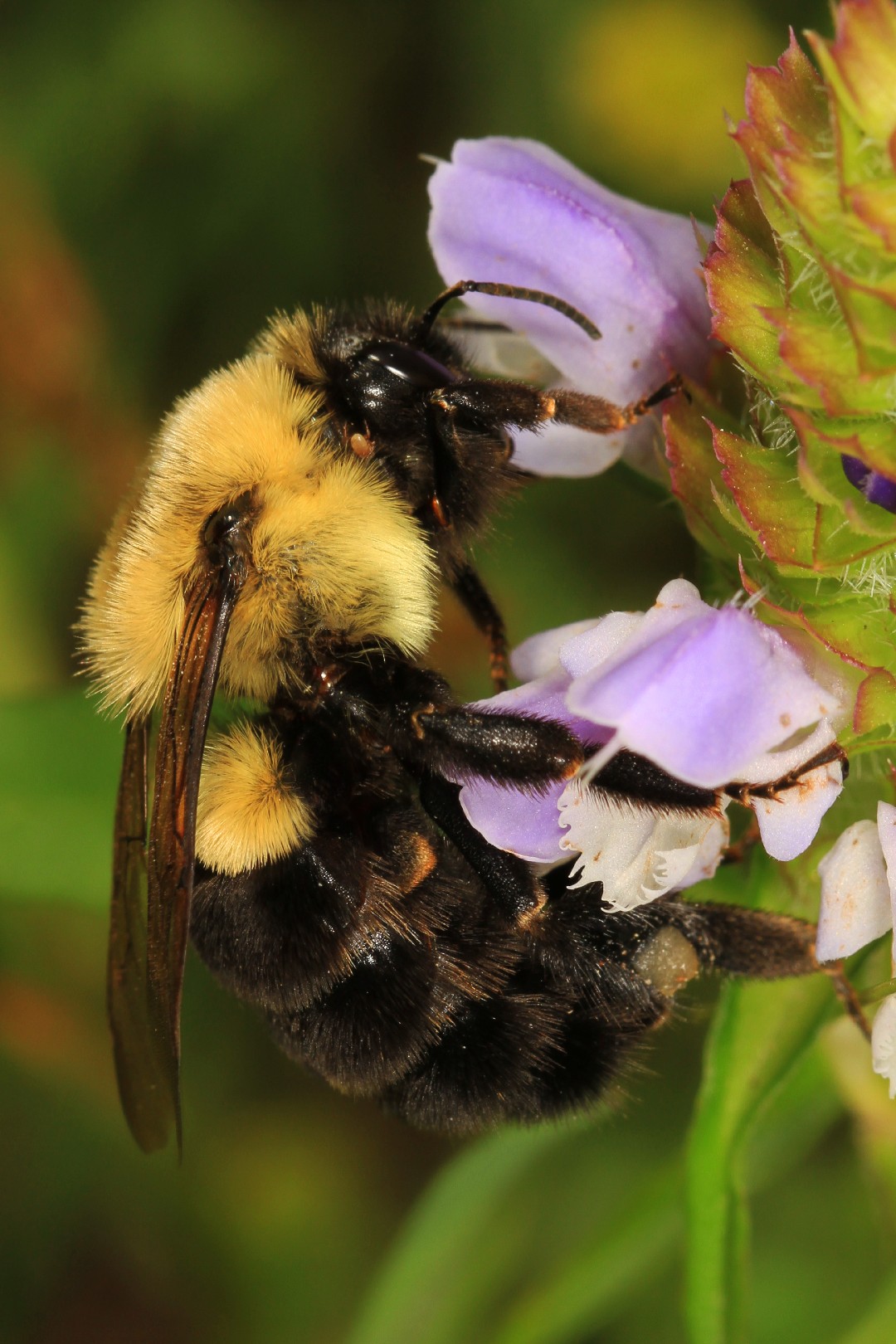
2. Brown-belted bumble bee
The brown-belted bumble bee (Bombus griseocollis) can be distinguished from other bumble bees because of the brown belt on its abdomen. It's often found in urban landscapes, near sunflowers, thistles, and milkweed. The males often fly very high in search of females, and they've even been spotted at the top of the Empire State Building.
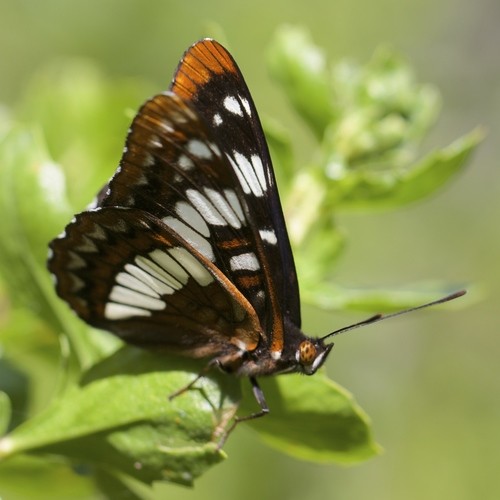
3. Lorquin's admiral
The lorquin's admiral has brown-black wings, each with a row of white spots across it. Its forewings have orange tips. The wingspan is 4.5 - 7 cm; females are generally larger than males. Larvae are usually yellow with a patch of white on the back.
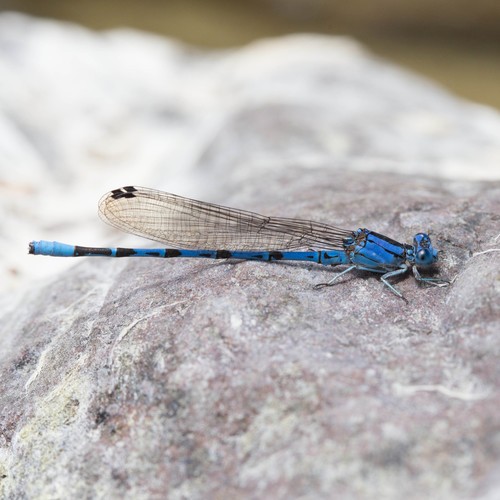
4. Vivid dancer
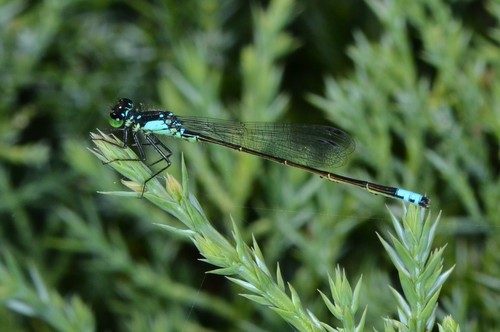
The scientific name of the species was first validly published in 1865 by Hagen in Selys.
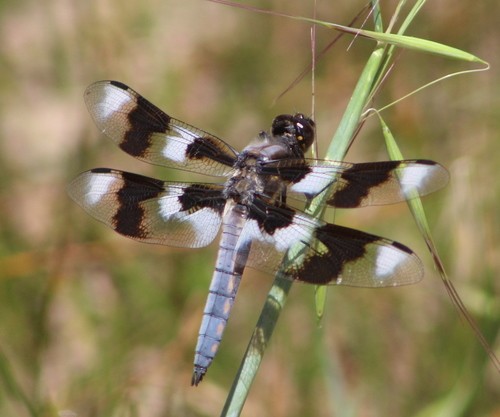
5. Eight-spotted skimmer
The eight-spotted skimmer (Libellula forensis) is identified by the eight black markings on its wings. It is occasionally confused with the Twelve-spotted skimmer that is sometimes called the Ten-spotted skimmer. You may attempt to desperately count the number of spots on these fast-moving skimmers, but the major differentiation in this one is the lack of black tips on their wings.
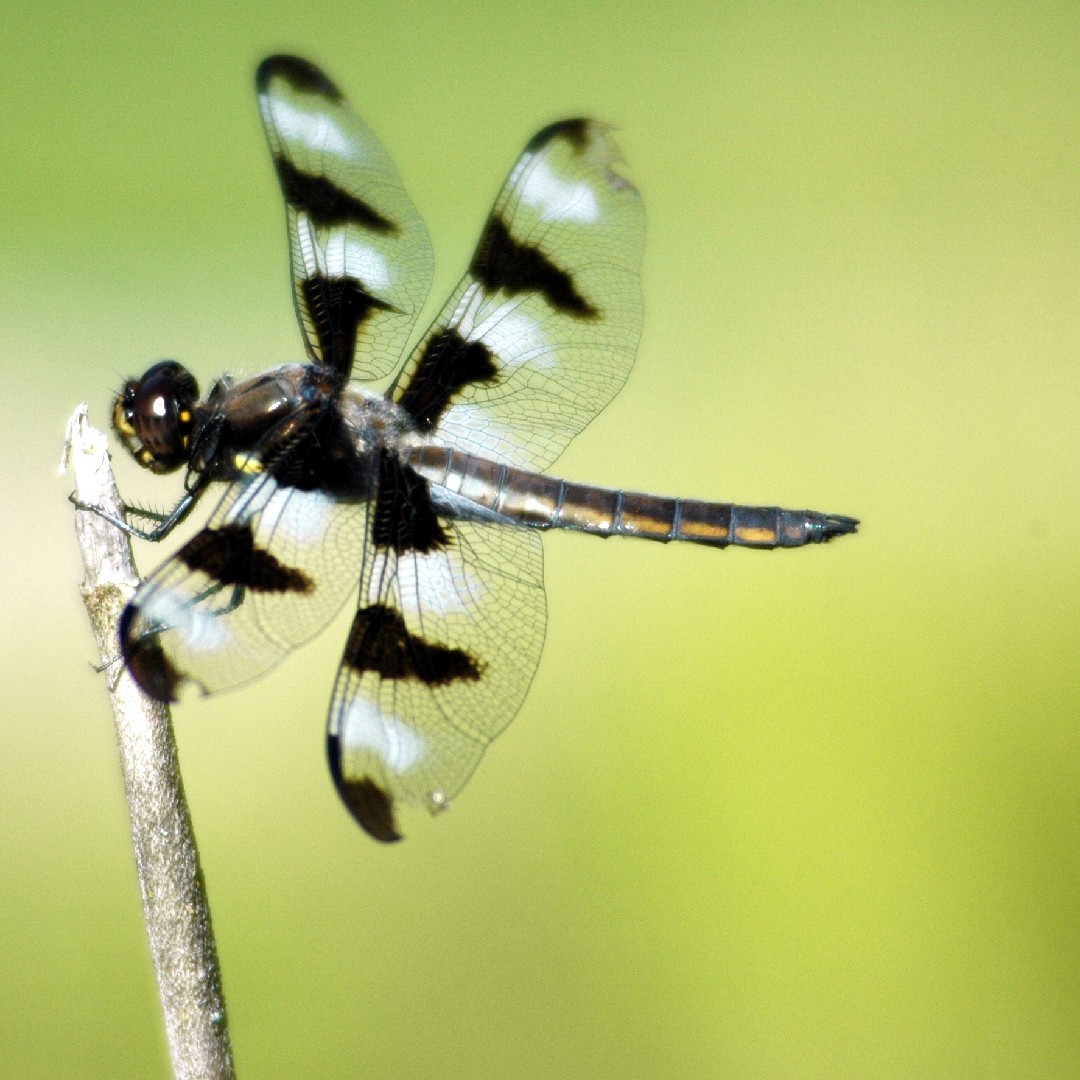
6. Twelve-spotted skimmer
The twelve-spotted skimmer (Libellula pulchella) is otherwise known as the ten-spotted skimmer depending on the amount of dots you would like to count. Mature males have twelve brown wing spots and eight white wings spots. They are also known to be pretty massive; this makes them easy to identify.
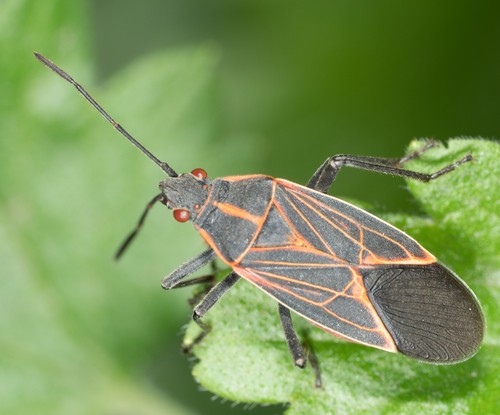
7. Western box elder bug
The western box elder bug (Boisea rubrolineata) is most recognized by the annoyance it causes during the fall, as it has a tendency to invade homes in search of warmer protection. It has a prominent red border against a dark body that makes it easily identifiable. Other than this, they are a fairly harmless insect which may only damage some commercial fruits occasionally.
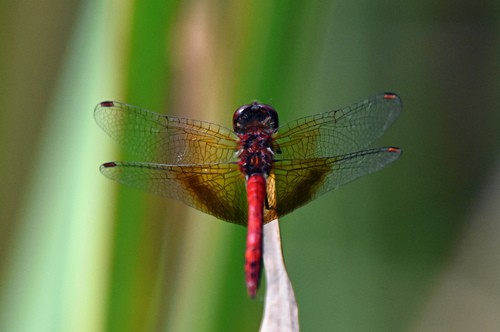
8. Band-winged meadowhawk
Sympetrum semicinctum can reach a length of 2.5 - 3.5 cm, with a wingspan of 4.5 - 6 cm. The male has a bright red abdomen with black markings on the lower sides and on the top of the segments 8 and 9, creating a U like pattern. The thorax is brownish red and the sides show three irregular black stripes. Face and eyes are dark red. The legs are black. The hind wings have a rusty patch at the base, covering one-third of the wings, while the front wings are almost completely transparent. Pterostigma is blackish red. The female is mainly greenish-yellowish or orange, with red over green on eyes and extended blackish markings on the abdomen. Mature females sometimes turn red like males, while immature males are yellow like females and slowly reach their red coloration.
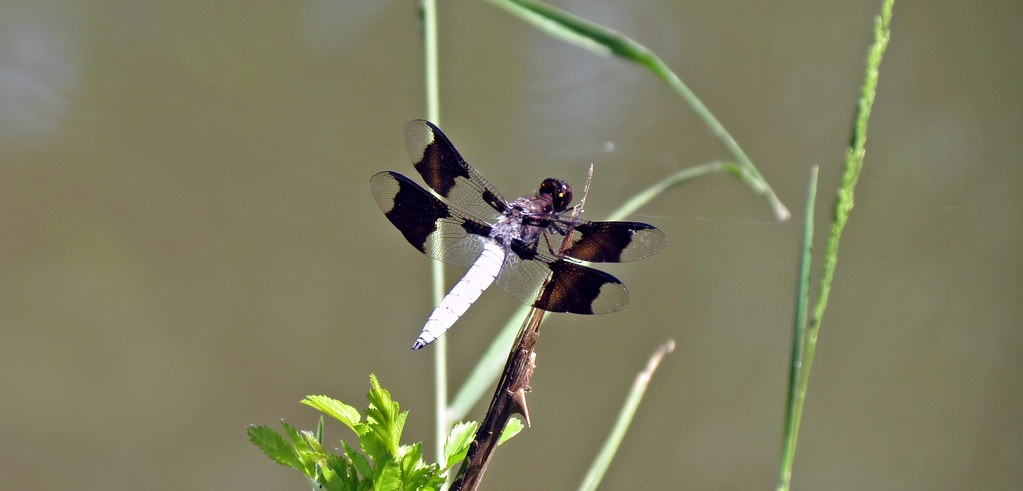
9. Common whitetail skimmer
Common whitetail skimmer has black bands on its translucent wings which make it easy to identify. The common whitetail skimmer is found throughout North America and serves a vital ecological purpose. The dragonfly’s compound eyes provide it with a 360-degree field of vision, allowing it to spot prey like spiders and other nuisance insects.
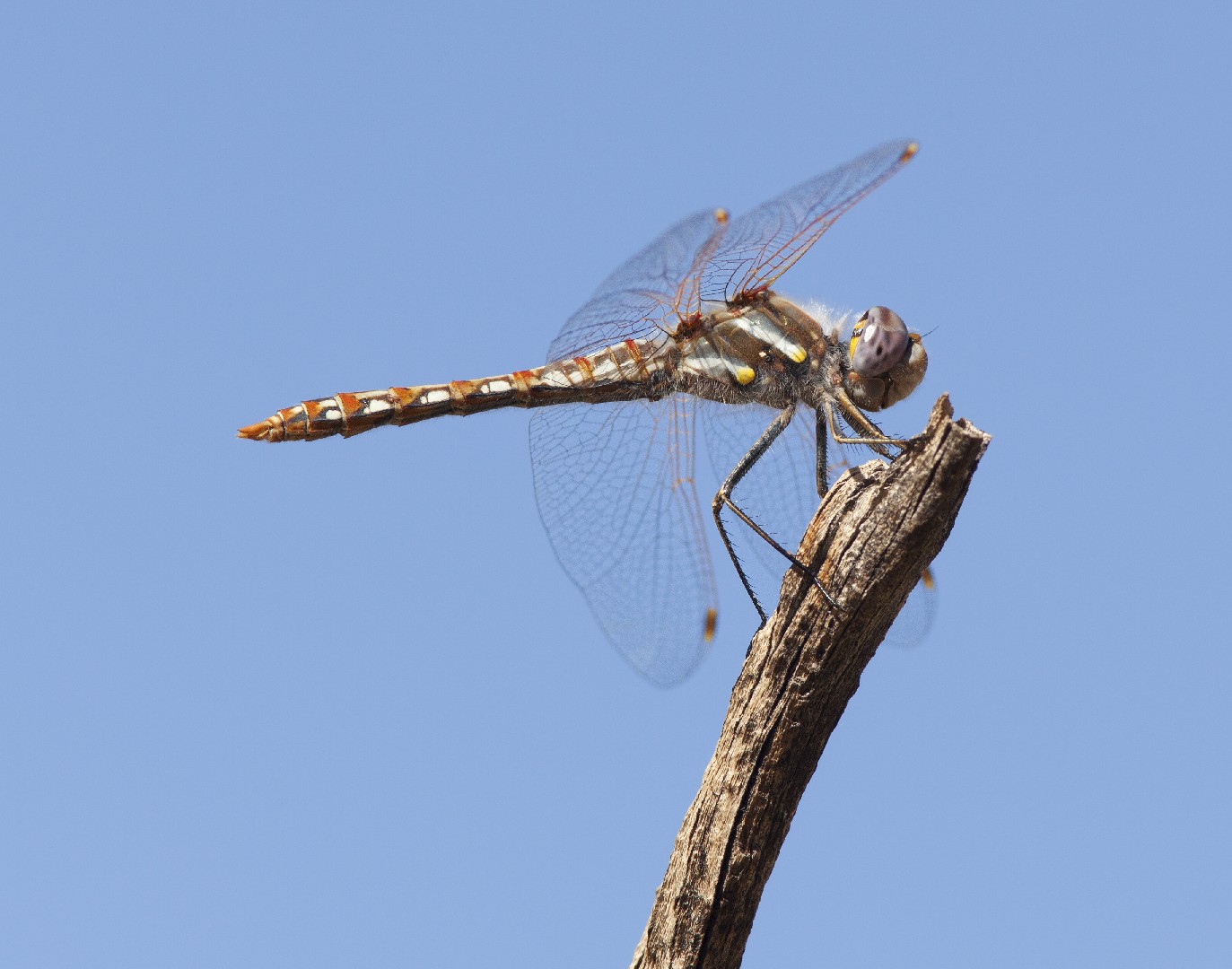
10. Variegated meadowhawk
The variegated meadowhawk is a small to medium-sized dragonfly with a slender abdomen, often reaching a length of 4.5 - 23 cm. The male is commonly dark brownish black with an abdomen of bright red, pink, and golden brown. The thorax may be marked with a pair of yellow dots on each side. The leading edges of the wings are marked with pinkish. The females are similar in color but not as brightly colored, with gray and yellow replacing the red of the male. Young variegated meadowhawks are much paler and mottled with pale green, pale yellow, golden brown, and orange.

More







