




Top 20 Most Common Insects in South Carolina
Insects, with their distinct features and adaptations, thrive in diverse habitats within South Carolina. The varied landscapes of South Carolina, from coastal areas to mountain ranges, foster a myriad of insect species. Insects play vital roles in our environment, from harmful pests impairing our homes to beneficial insects aiding in pollination. By delving into our list of the top 20 most common insects, you'll gain a fascinating perspective on the complex network of life that flourishes here in South Carolina.

Most Common Insects
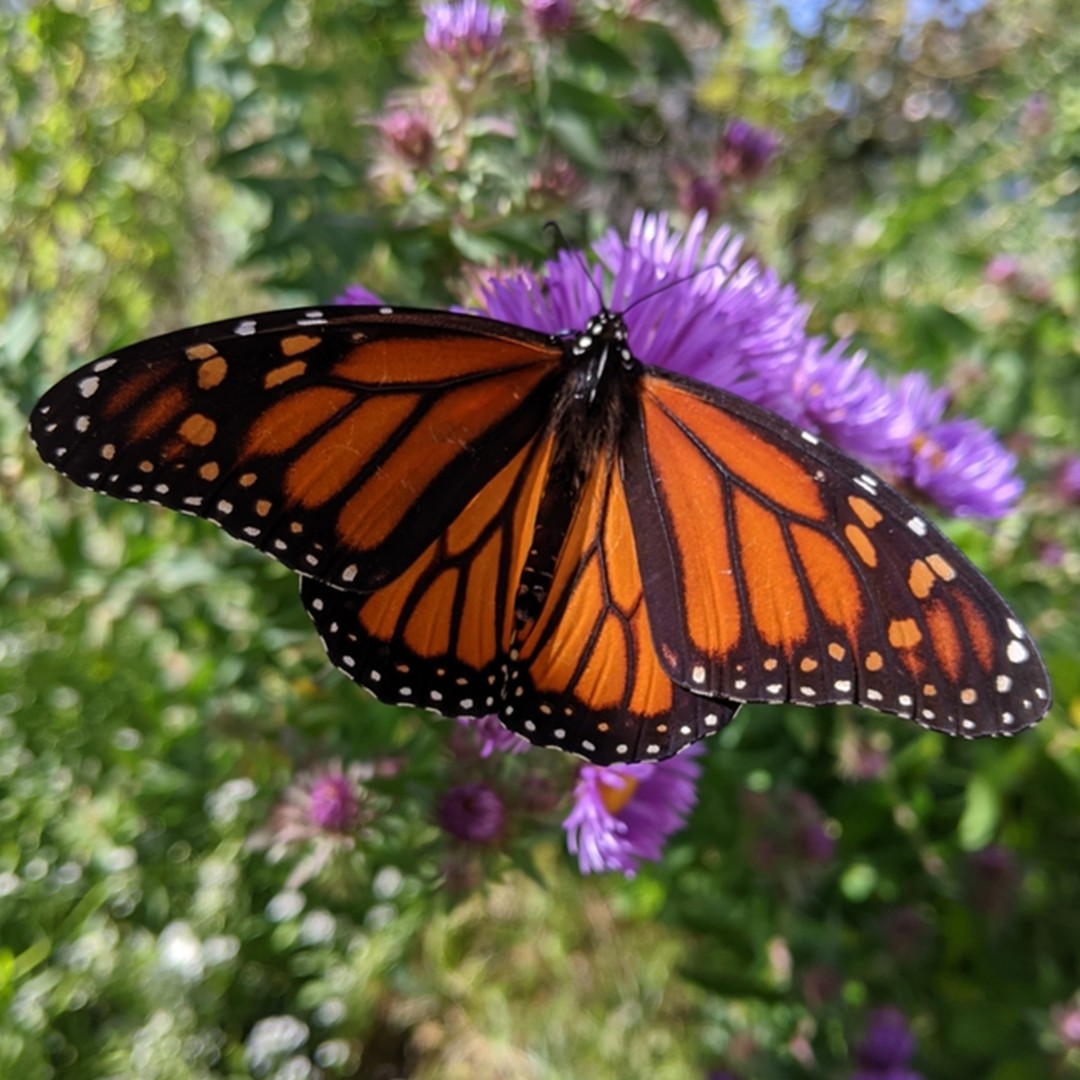
1. Monarch butterfly
The monarch butterfly (Danaus plexippus) is the most recognizable butterfly in North America. It is best known for its appearance, but should be better known for the fact that it has a 3000-mile migration that takes the butterfly 4 generations to complete. Their diet is also a natural deterrent for predators, as they eat milkweed, a poison that induces vomiting.
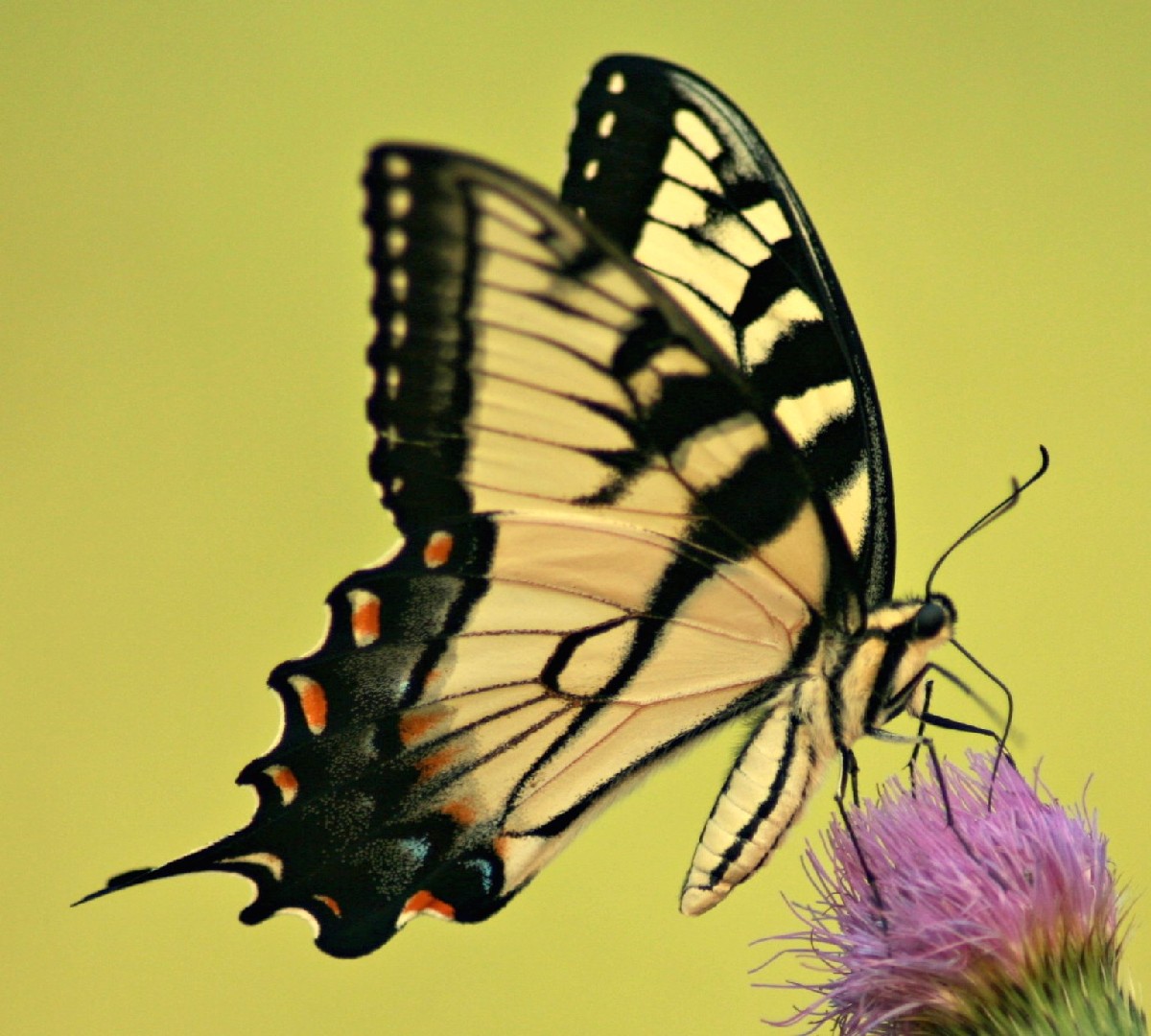
2. Eastern tiger swallowtail
Eastern tiger swallowtail (Papilio glaucus) is among the most recognizable butterflies in the eastern United States, where it inhabits a variety of habitats. This species is diurnal and usually solitary, preferring to fly high above the ground until the time comes to mate. Caterpillars display eyespots to deter birds in between some molting phases.
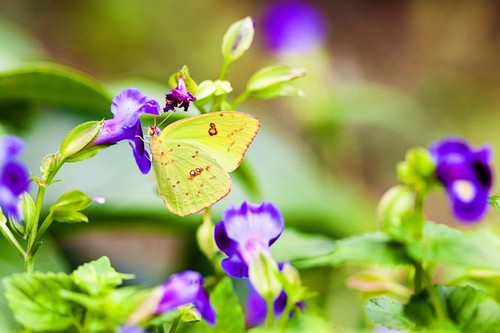
3. Cloudless sulphur
The cloudless sulphur (Phoebis sennae) is known for being a small, yellow butterfly with two dots on either wing. Despite it not being very extravagant, there are those that may think that to be cute. They are known to be long-tongued butterflies that can reach the nectar in tubular flowers.
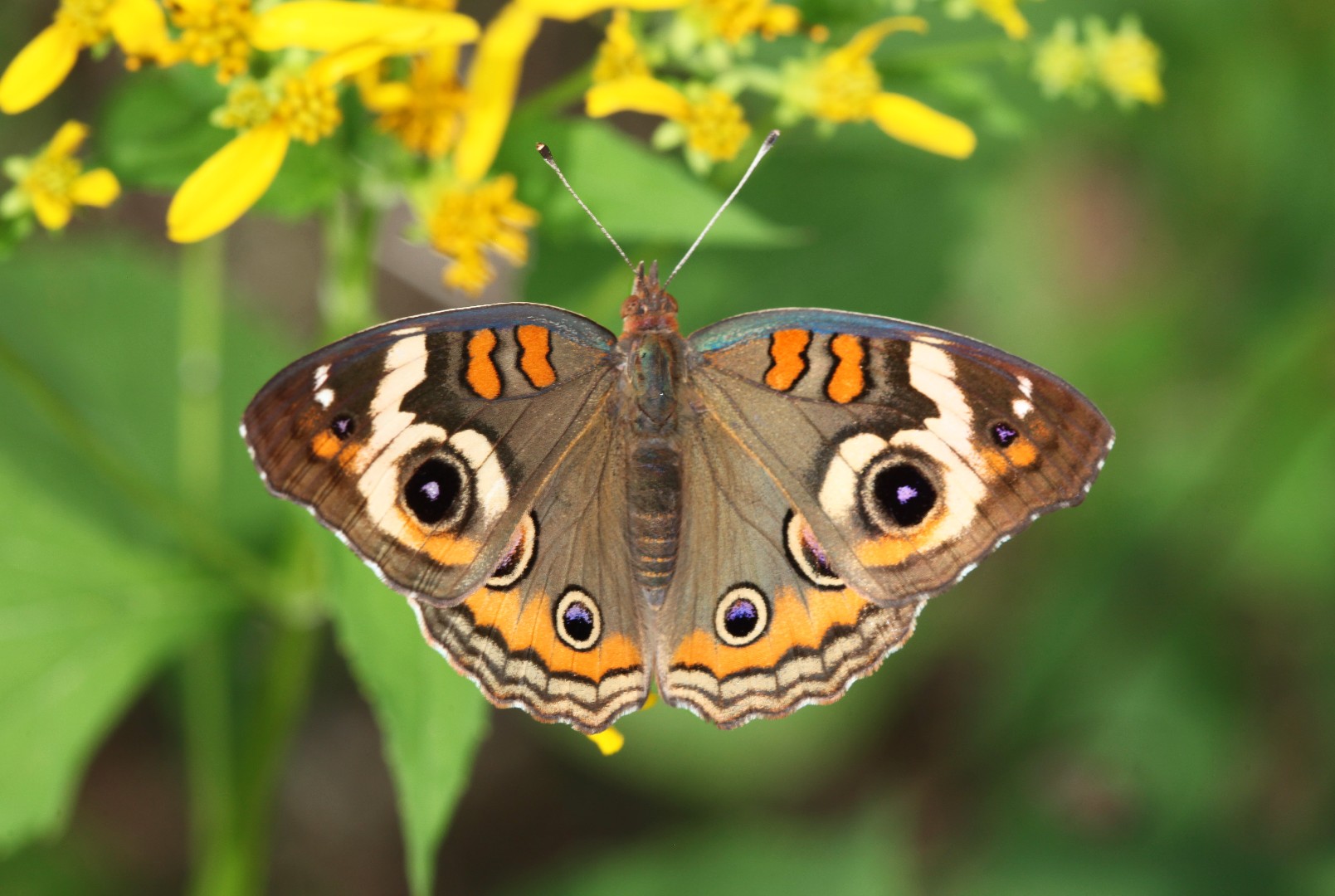
4. Common Buckeye
The common Buckeye (Junonia coenia) has distinguishable target-shaped spots on its dark wings, along with patches of orange and white. It produces multiple generations each year as it migrates to sunny landscapes. When it flies, it moves rapidly in an irregular pattern, often low to the ground.

5. Multicolored asian ladybeetle
Often confused for the ladybug, multicolored asian ladybeetle (Harmonia axyridis) is a separate species that, unlike the ladybug, is a household pest. It is considered particularly annoying for its habit of returning to places from which it is removed. One of the most variable species in the world, there are many different colors and patterns multicolored asian ladybeetle may display, making identification potentially difficult.
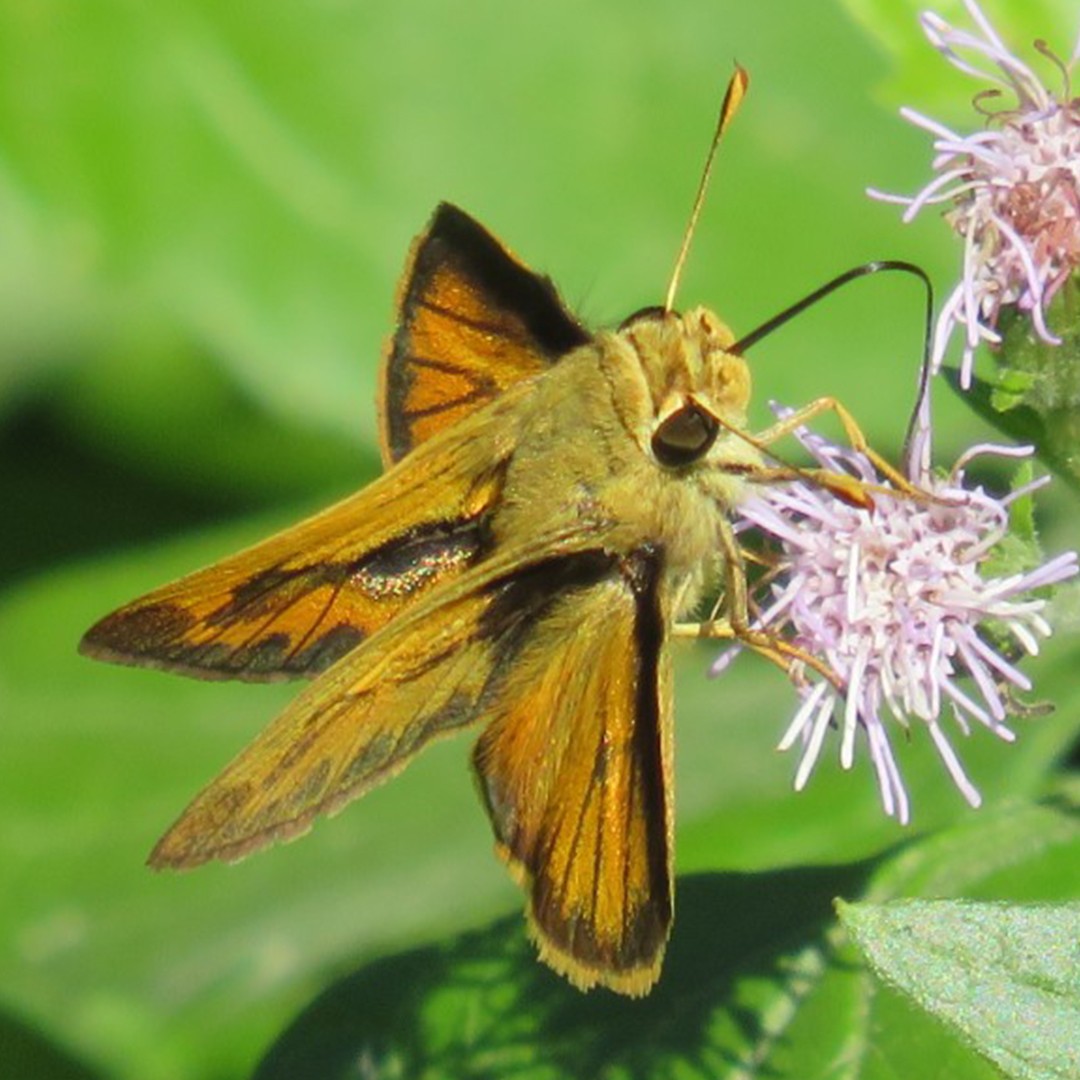
6. Fiery skipper
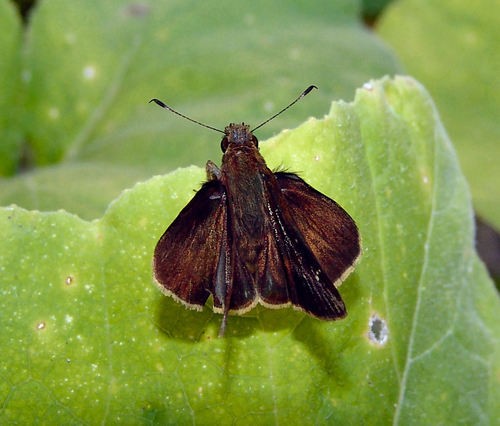
The fiery skipper (Hylephila phyleus) is a butterfly of the family Hesperiidae and is approximately 1 inch (2.5 cm) long. The males are orange or yellow with black spots while the females are dark brown with orange or yellow spots. The caterpillars are greenish pink with a black head. The caterpillars are often considered pests and can feed on Bermudagrass, creeping bentgrass, and St. Augustine grass. Fiery skippers, along with all other species of skippers and skipperlings, can hold their wings in a "triangle" shape. The forewings are held upright, and the hindwings are folded flat. This position is thought to better absorb the sun's rays. The fiery skipper lives in North and South America, from Canada to Argentina. It is a migratory species. 
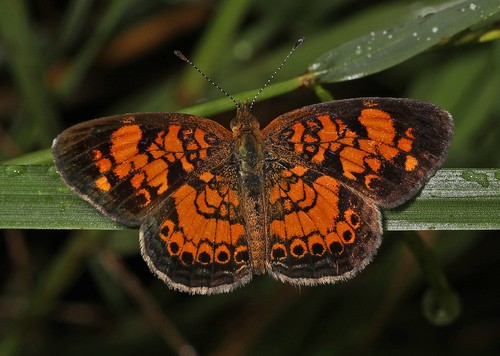
7. Pearl crescent
The pearl crescent (Phyciodes tharos) is an orange butterfly that lives in open areas that are generally moist and sunny. These butterflies are attracted to puddles, and the males will often fight with other male butterflies that land near the same puddle. However, females are not as aggressive and prefer to stay in groups.
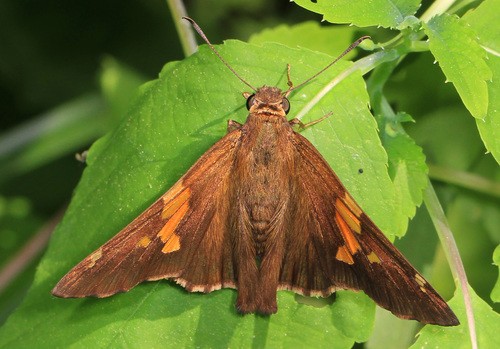
8. Silver-spotted skipper
The silver-spotted skipper (Epargyreus clarus) constructs a series of nests throughout its development that depends on its growth stage. Its caterpillar form is considered a major homebody, as they rarely leave the spot they call home. When they are adults, males perch on high branches in order to claim and defend favorable territory. Unusually, silver-spotted skipper adults never visit yellow flowers.
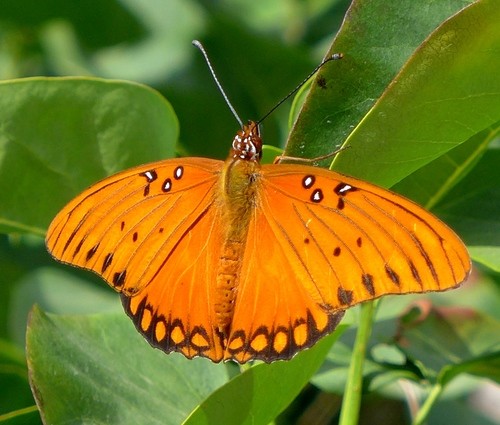
9. Gulf fritillary
The gulf fritillary (Agraulis vanillae) is a bright orange butterfly with small black spots, but the larvae are bright orange with multiple black spines. The larvae are big fans of passionflower, they feed on the leaves. These beautiful butterflies are most commonly seen in fields, pastures, yards, and parks.
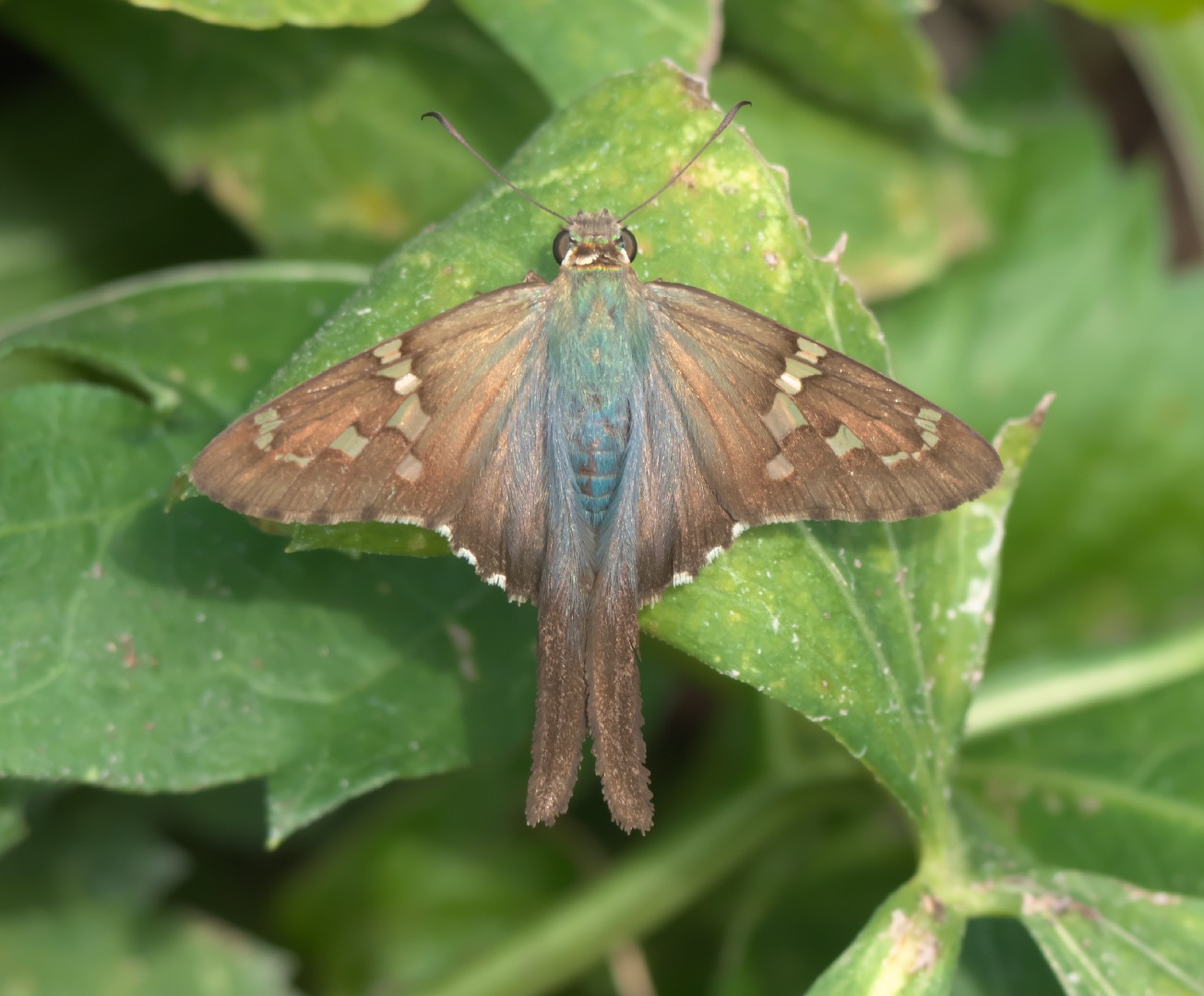
10. Long-tailed skipper
It is a showy butterfly, with wings of light brown tinted with iridescent blue, and two long tails extending from the hindwings. The robust body is light blue dorsally. It has a large head, prominent eyes, and a wingspan between 4.5 cm and 6 cm.


More







