




Top 20 Most Common Insects in Lubbock
Discover the diverse world of insects in Lubbock. Each critter, whether it's an iridescent butterfly or a tunneling earthworm, contributes significantly to our ecosystem. Uncover the top 20 most common insects and explore fascinating facts about their lifestyles. See how urban and natural environments influence the insect population, spotlighting heroes and pests alike, as, truly, every bug matters in Lubbock's rich, intricate web of life.

Most Common Insects
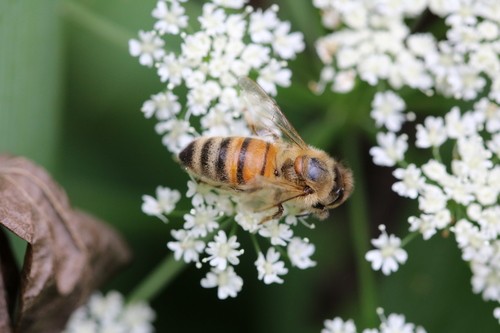
1. Western honey bee
Western honey bee(Apis mellifera) is the most common species of honeybee in the world. Among the first domesticated insects, its cultural and economic impact on humanity has been vast and far-reaching, providing honey, wax and its services as a pollinator. Western honey bee faces challenges worldwide, such as colony collapse disorder, and populations are thought to be decreasing.
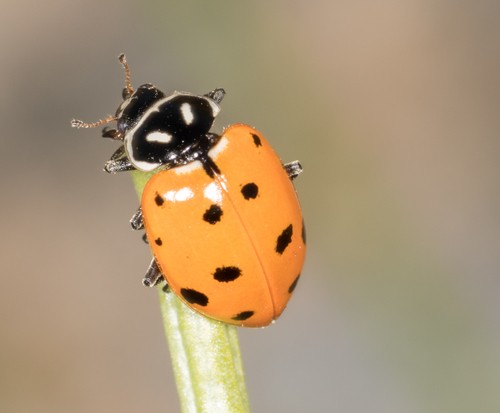
2. Convergent lady beetle
The convergent lady beetle (Hippodamia convergens) is one of the most common lady beetles in North America, which is a great thing given that it is a common biological control agent of aphids. They lay a good chunk of eggs over a couple of months. If you have ever seen a small, black alligator-like insect, you may have seen one of its larva.
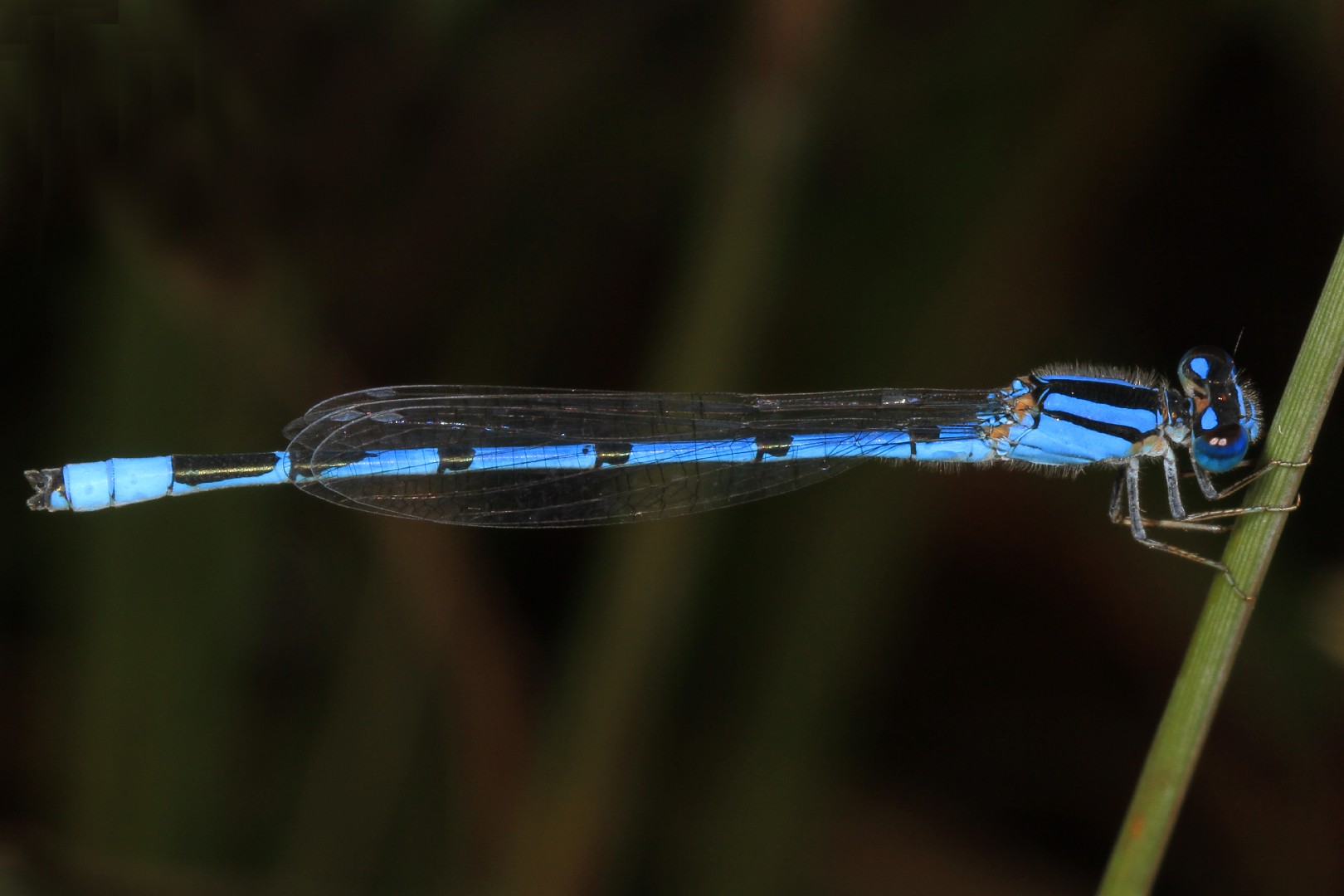
3. Familiar bluet
The scientific name of the species was first validly published in 1861 by Hagen.
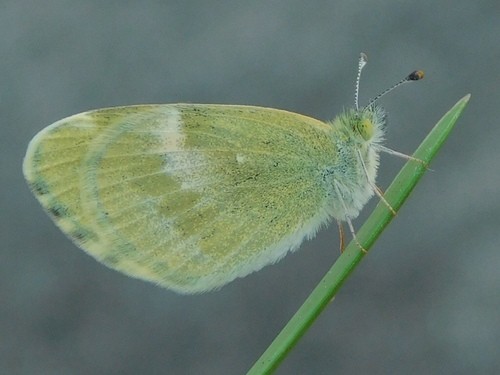
4. Dainty sulphur
The upperside of the wings is yellow with the tip of the forewing being black. Black bars extend along the trailing edge of the forewing and the leading edge of the hindwing. Male dainty sulphurs have an oval scent patch (called an androconial spot) in each hindwing bar. The androconial spot is reddish orange but fades to pale yellow after death. The underside of the wings varies depending on the season. Summer individuals have yellowish hindwings whereas winter individuals have greenish-gray hindwings. Both forms have black spots near the forewinge ng margin and have a yellowish-orapatch near the base of the forewing. 
5. Variegated meadowhawk
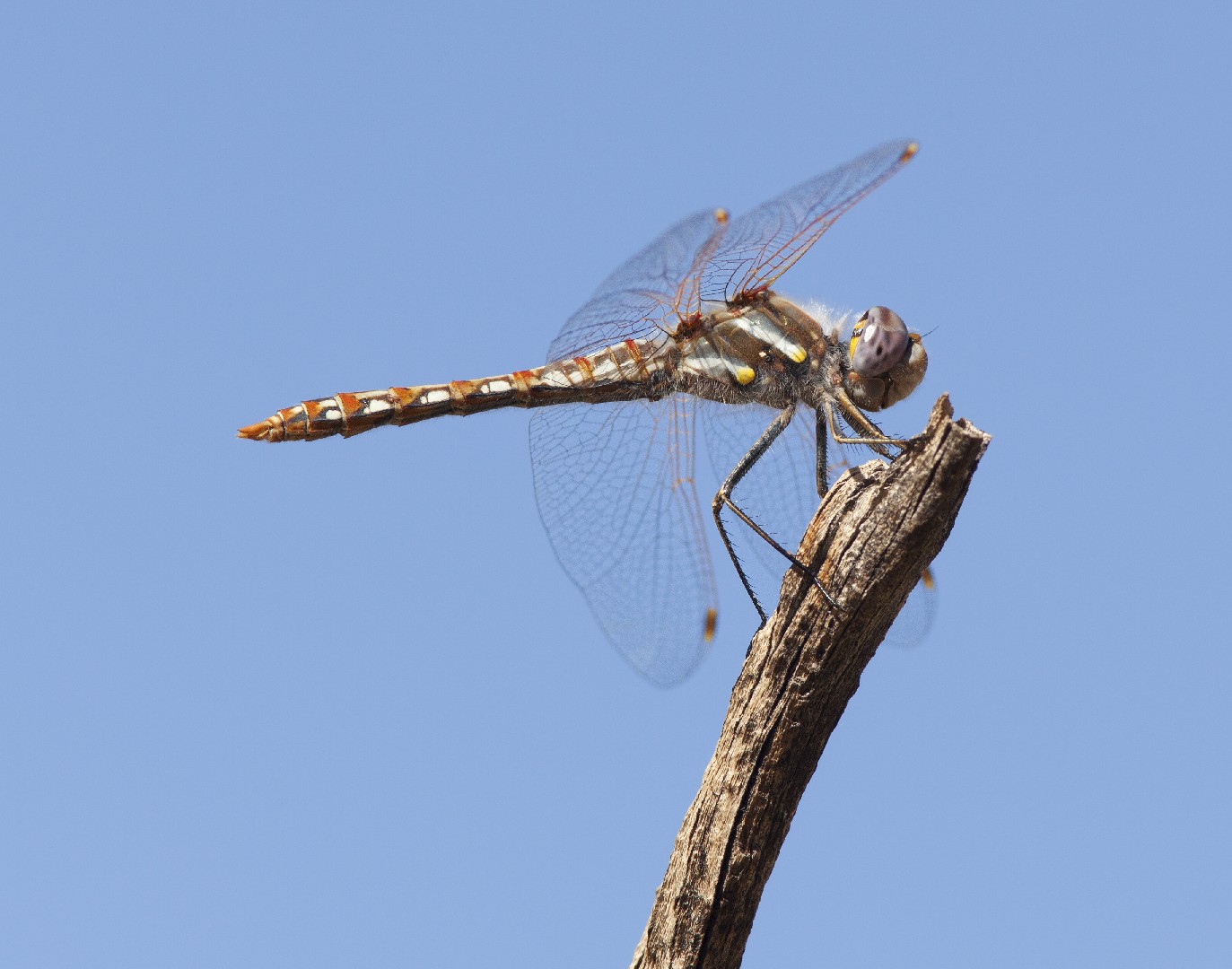
The variegated meadowhawk is a small to medium-sized dragonfly with a slender abdomen, often reaching a length of 4.5 - 23 cm. The male is commonly dark brownish black with an abdomen of bright red, pink, and golden brown. The thorax may be marked with a pair of yellow dots on each side. The leading edges of the wings are marked with pinkish. The females are similar in color but not as brightly colored, with gray and yellow replacing the red of the male. Young variegated meadowhawks are much paler and mottled with pale green, pale yellow, golden brown, and orange.

6. Blue dasher
The name Pachydiplax longipennis implies that the blue dasher has long wings due to the "longipennis" section literally translating to it. But this would be misleading, as the insect does not have particularly long wings. Instead, they stick out with vibrant blue colors. The dasher part of their name may be in reference to their voracious diet, as they can eat up to 10 percent of their body weight daily.
7. Western pygmy blue
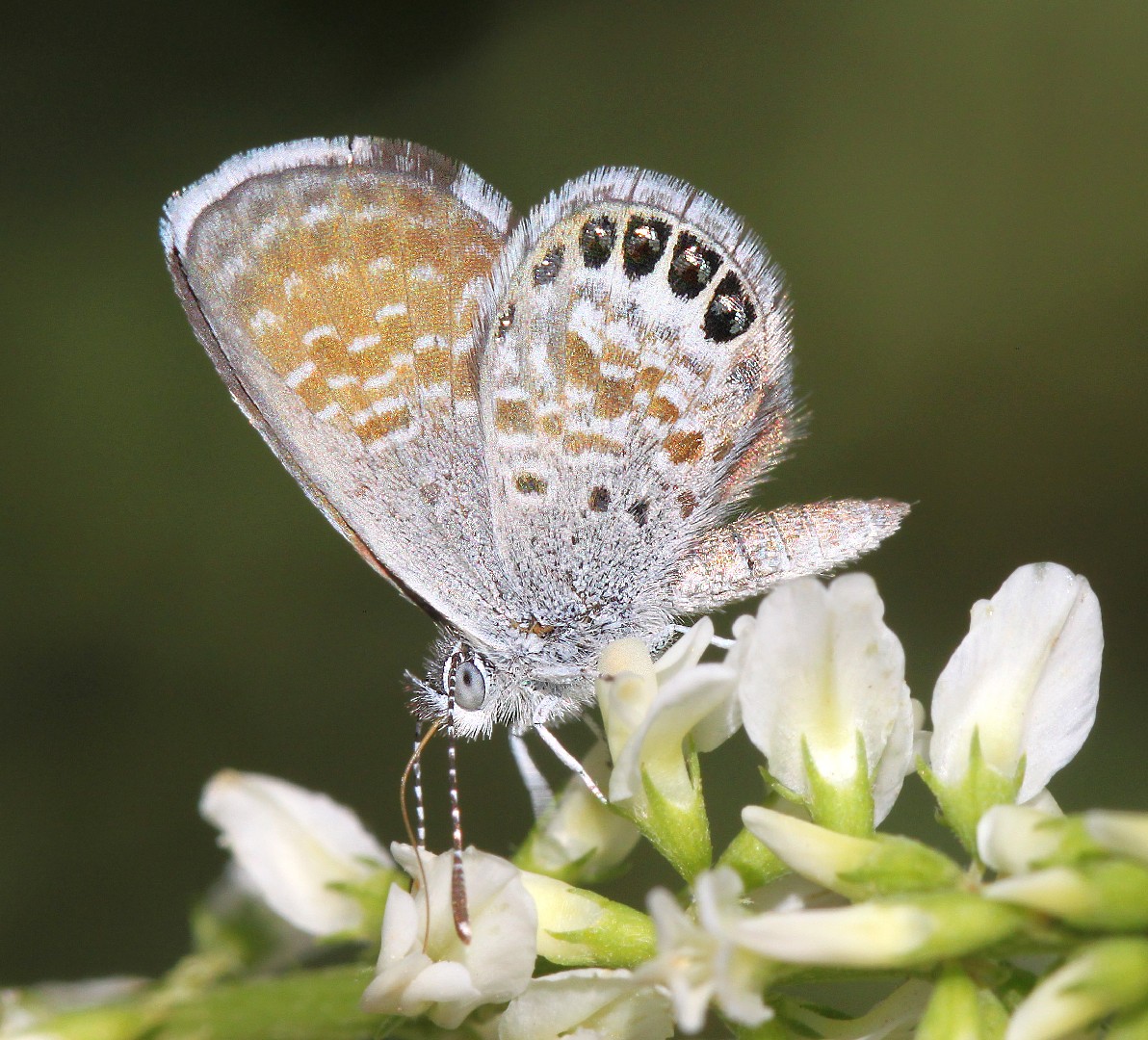
The upperside is copper brown with dull blue at the bases of both wings. The underside of the hindwing is copper brown with white at the base; the fringe mostly white, with 3 small black spots near base, and a row of black spots at outer margin. The wingspan is 1.2 - 2 cm.
8. Reakirt's blue
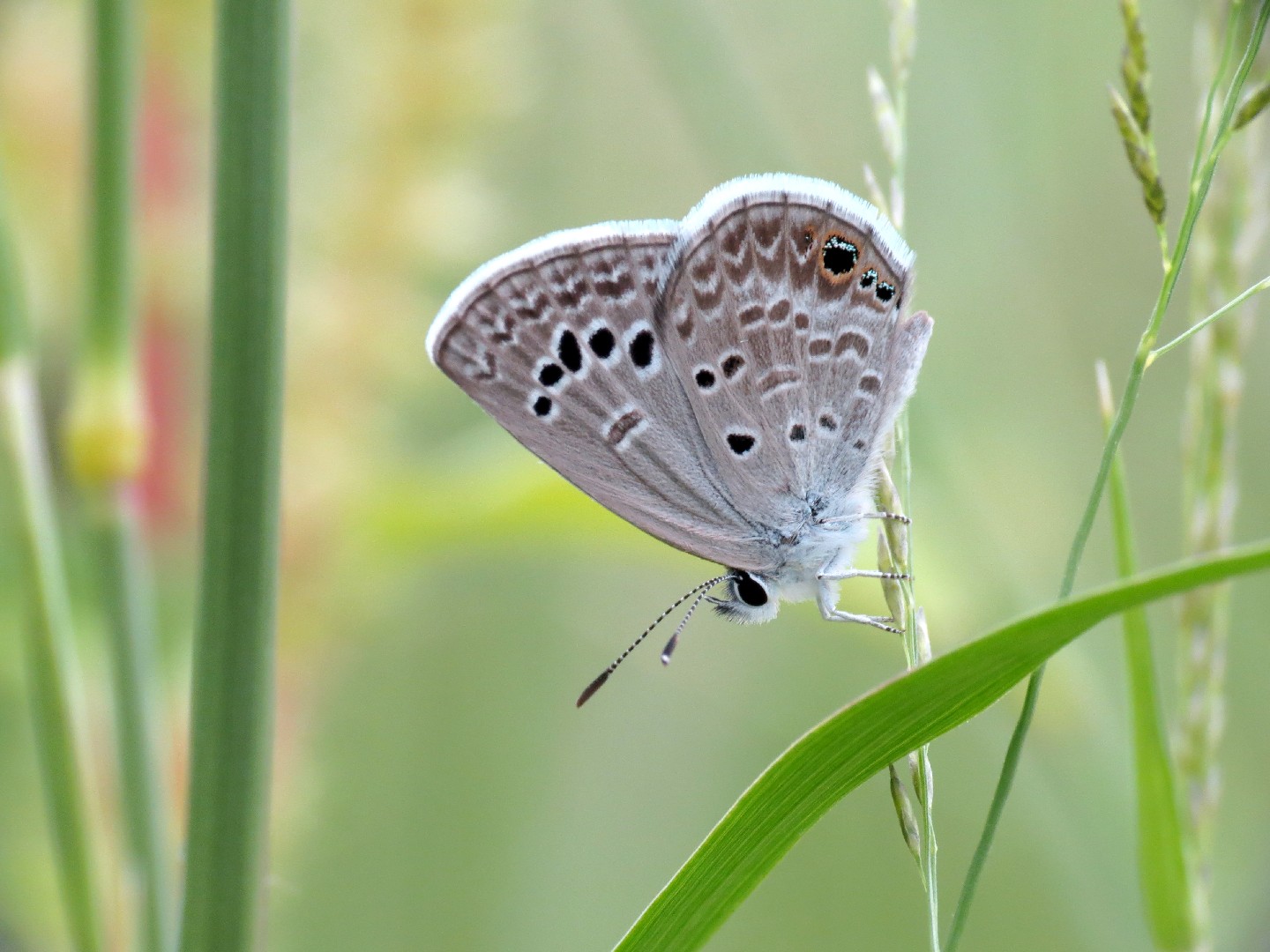
The wingspan is 1.6 - 2.5 cm.
9. Gray hairstreak
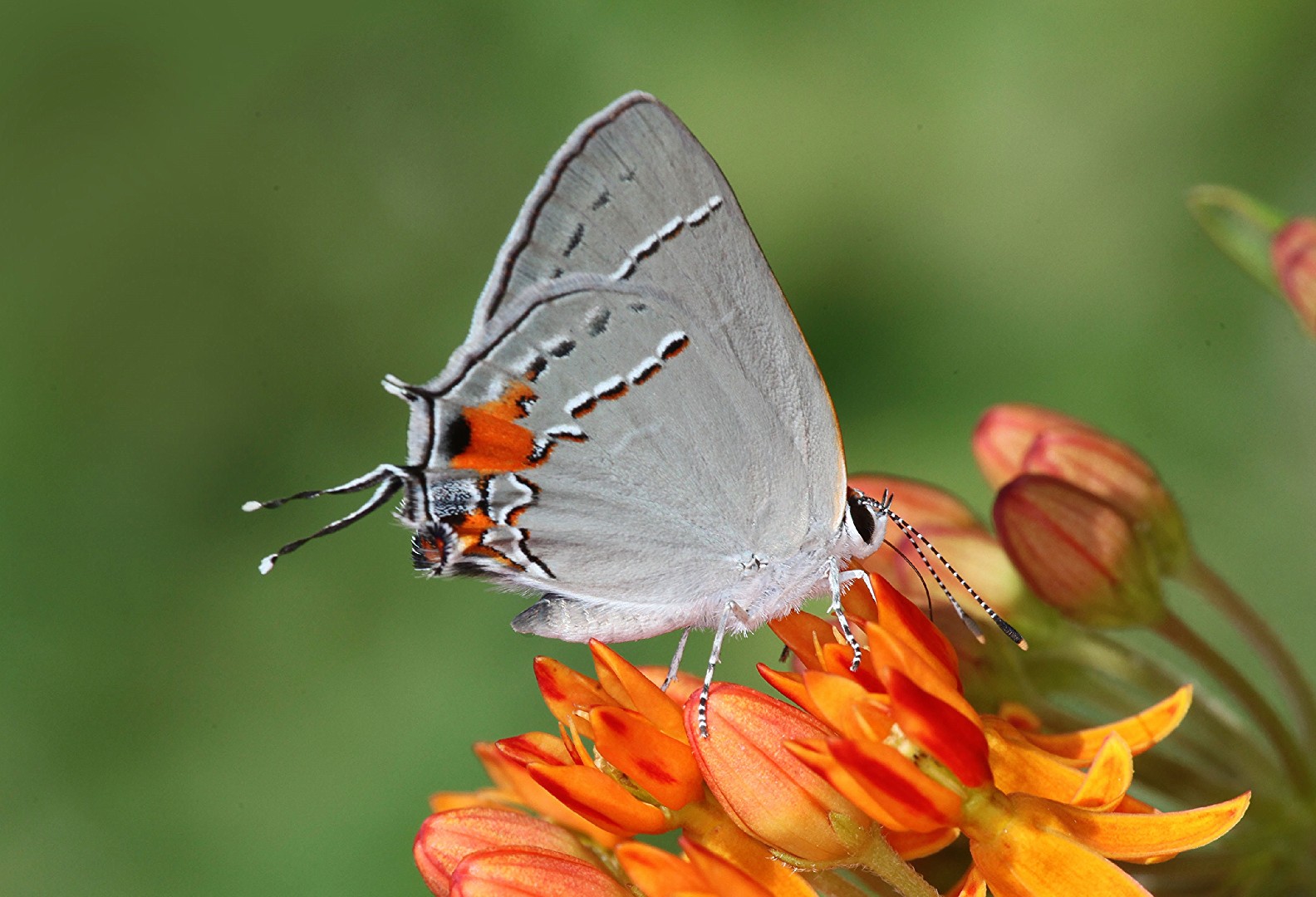
Strymon melinus is a butterfly of the family Blüullingen (Lycaenidae) of the subfamily of Hairstreak (Theclinae).
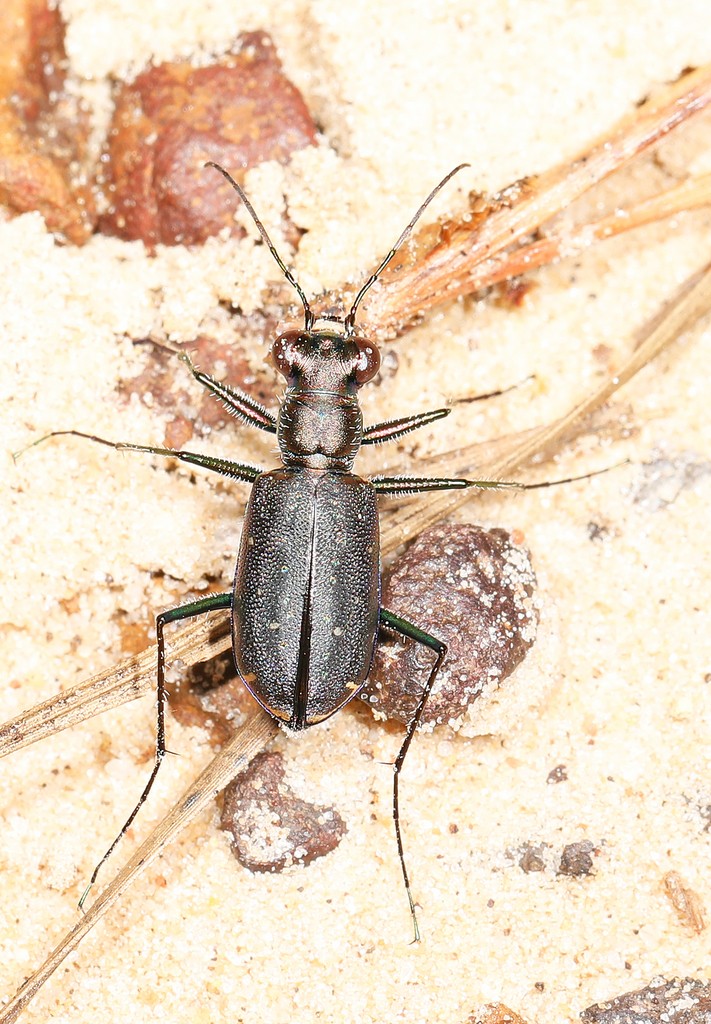
10. Punctured Tiger Beetle
Cicindela punctulata, the punctured tiger beetle, is a species of tiger beetle (subfamily Cicindelinae) commonly found across much of the United States, southeastern Canada, and in parts of northern Mexico.


More







